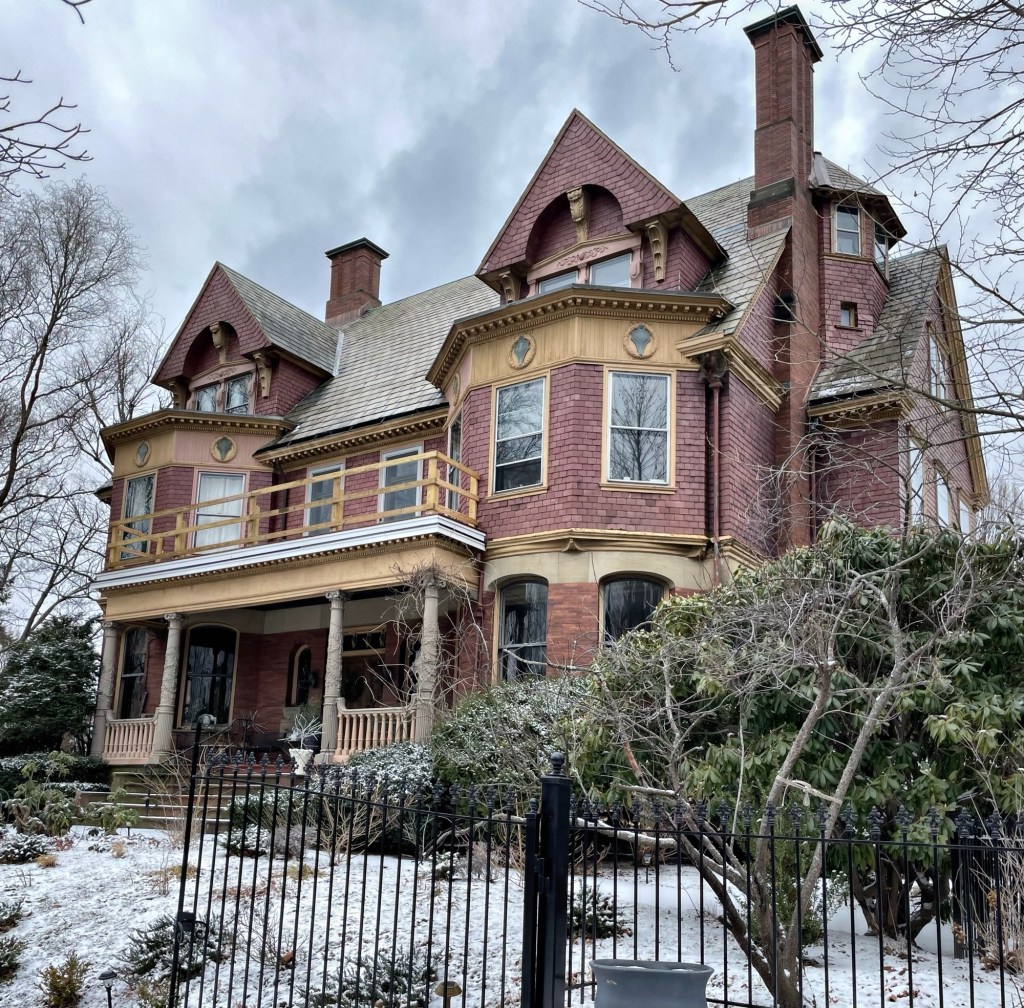
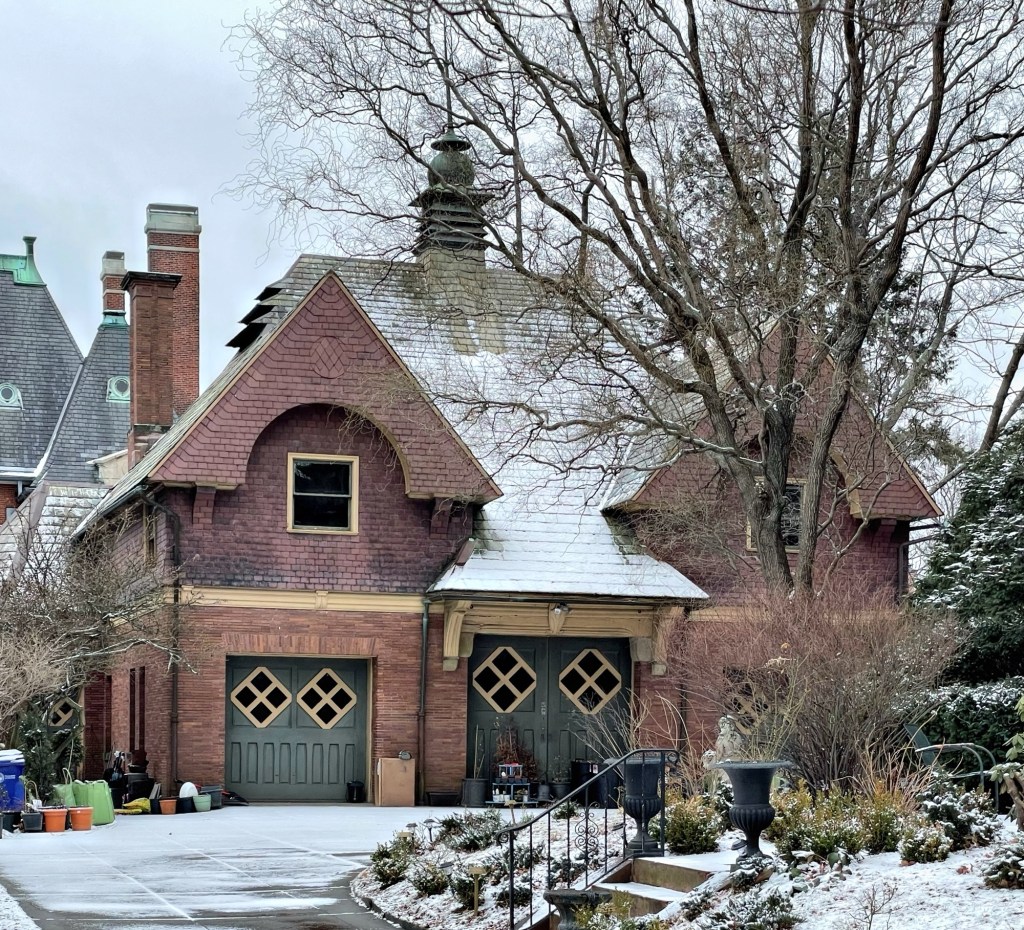
With red brick and slate siding and all the finest trimmings, this house looks like a present wrapped under the Christmas tree! The Joseph Fletcher House is located at 19 Stimson Avenue in Providence, Rhode Island, and is an excellent example of a Queen Anne residence with the innovative use of siding types often found in the style. The residence was built in 1889 for textile manufacturer, Joseph Edward Fletcher (1866-1924), the son of wealthy, English-born manufacturer, Charles Fletcher. The Fletcher house and adjacent stable were designed by Stone, Carpenter & Willson, one of the most prestigious architectural firms in New England at this period. It is believed that the site was developed by Charles Fletcher, as a wedding gift to his 23-year-old son and daughter-in-law following their marriage. The home was recently sold, and the interiors are as stunning as the exterior!
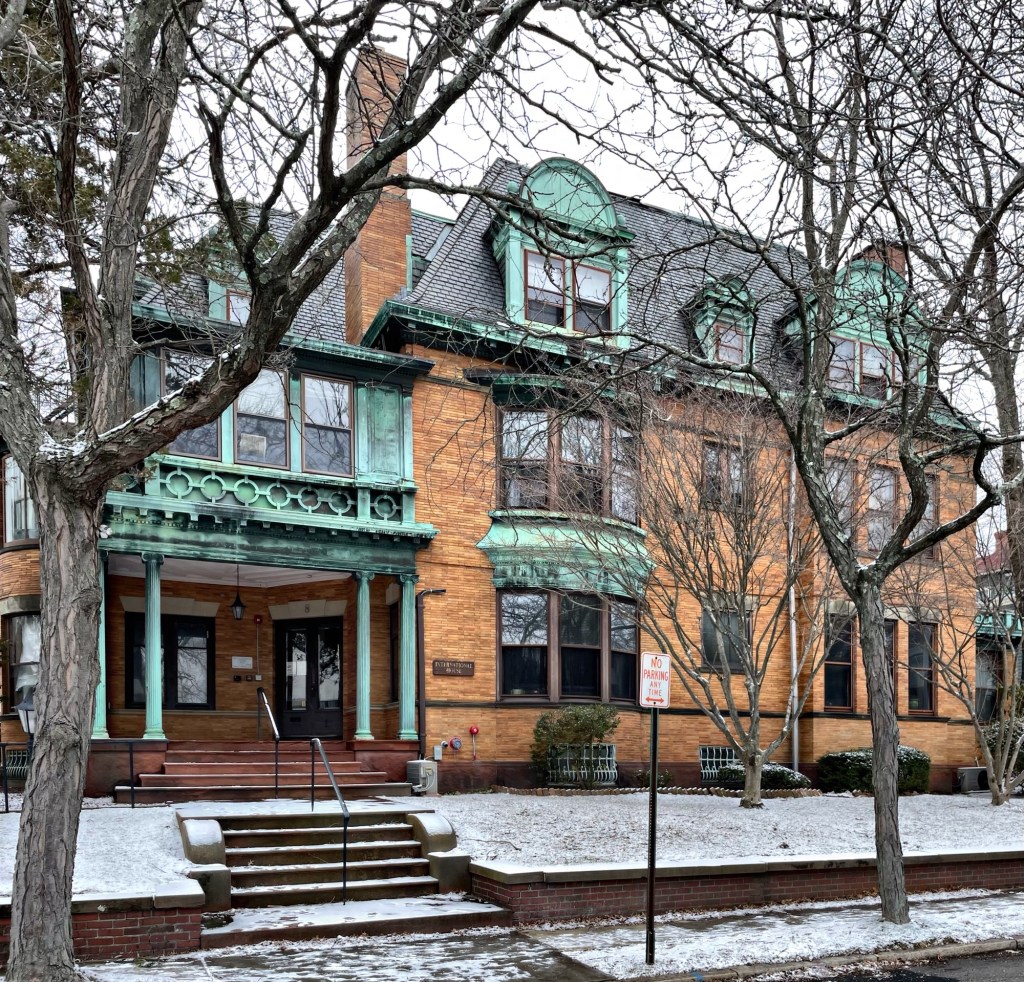
The Byron Thomas Potter House is located at 8 Stimson Avenue in Providence, Rhode Island, and is one of the city’s few examples of the Beaux Arts architectural style in a single-family residence. The Beaux Arts style uses an Italian Renaissance form and materials (Roman bricks), classical Greek and Roman decorative elements like columns and balustrades, and a steep mansard roof punctuated by large dormers, to create a grand and imposing architectural statement. The house was designed by 1896 by local architect, Edward I. Nickerson, who was known for his use of traditional forms in an unconventional manner, with emphasis on ornament and differing materials; with this house being a great example of his work in his later years. The residence was built for newlyweds Helen Sheldon Potter and Byron Thomas Potter, a real estate and insurance broker. The residence is now occupied by the International House of Rhode Island, a non-profit that provides a “home away from home” for international students, scholars, professors, researchers, and their families by providing a venue for folks of different backgrounds, ethnicities, and life experiences to celebrate our similarities and differences and envision a world in which friendship and understanding beat anonymity, isolation, and ignorance. The world needs more of this.
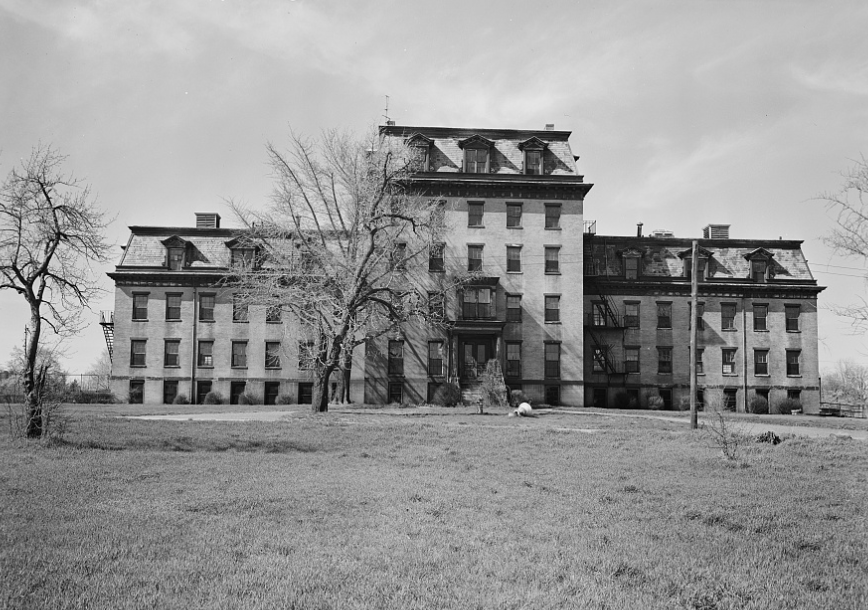
C.1958 photo before demolition. Courtesy of Library of Congress.
Built in 1828, Dexter Asylum was a “poor farm,” an institution housing the indigent, elderly, and chronically unemployed, located in the East Side of Providence, Rhode Island. Poor farms were common before the introduction of Social Security and welfare benefits in the United States, considered a progressive method for dealing with poverty. Ebenezer Knight Dexter (1773-1824) was a wealthy mercantile trader in Providence, who in 1800, built Rose Farm, a gentleman’s farmhouse on what was then, the outskirts of Providence. Upon his death in 1824, he bequeathed to the town 40-acres of the farmland to the north for use as a poor farm or almshouse site. The building was completed by 1828 and was originally three stories, and later expanded with a mansard roof and dormers sometime later in the 19th century. Dexter also stipulated that a stone wall would surround the site, and parts of it remain to this day. As with many poor farms and almshouses of the period, residents worked farmland and cared for pigs and a herd of dairy cows; they lived in this large building, strictly segregated by sex. Residents were essentially inmates, indentured for periods of six to twelve months, and could not leave the property without a ticket of permission. In the interwar period, “inmate” population there declined and changing views on how to assist the poor caused the City to abandon the facility. After decades of legal troubles and stipulations of the Dexter will, in 1956, the plot was auctioned off, and Brown University purchased the site. The grounds are now used by some of the Brown University athletic facilities. The city set aside the money from the sale to create the Dexter Donation, which gives annual grants to assist the city’s poor, providing an enduring legacy of Dexter’s Asylum.
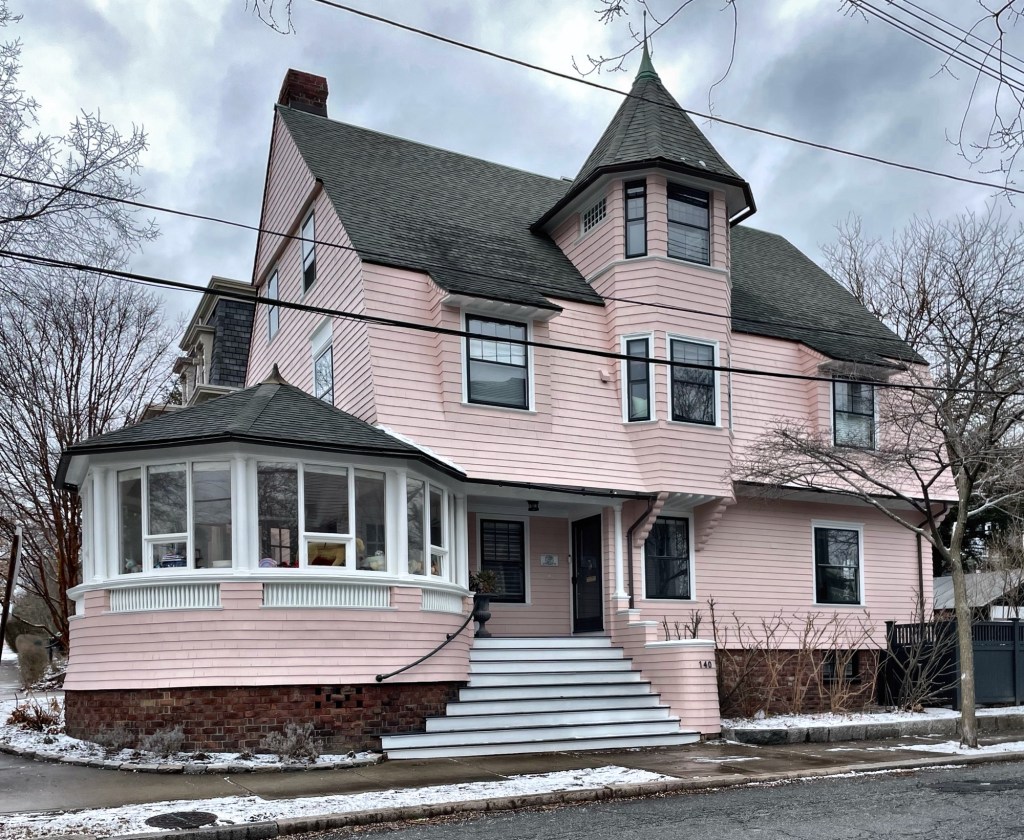
Talk about a statement! This pink, Shingle style house is located at 140 Brown Street in the fashionable College Hill section of Providence, Rhode Island. Built in 1890 for William and Katherine Crandall, the Shingle style residence stands out for its cantilevered two-story tower and corner rounded porch at the corner, and of course the continuous shingled facades. William T. Crandall was the president of the Union for Christian Work, a religious charitable institution which provided aid to needy children in Providence. Augustus R. and Ida W. Peirce would board in the home for decades, and were likely family, inheriting the property upon Katherine’s death in 1932. The architect could not be located.
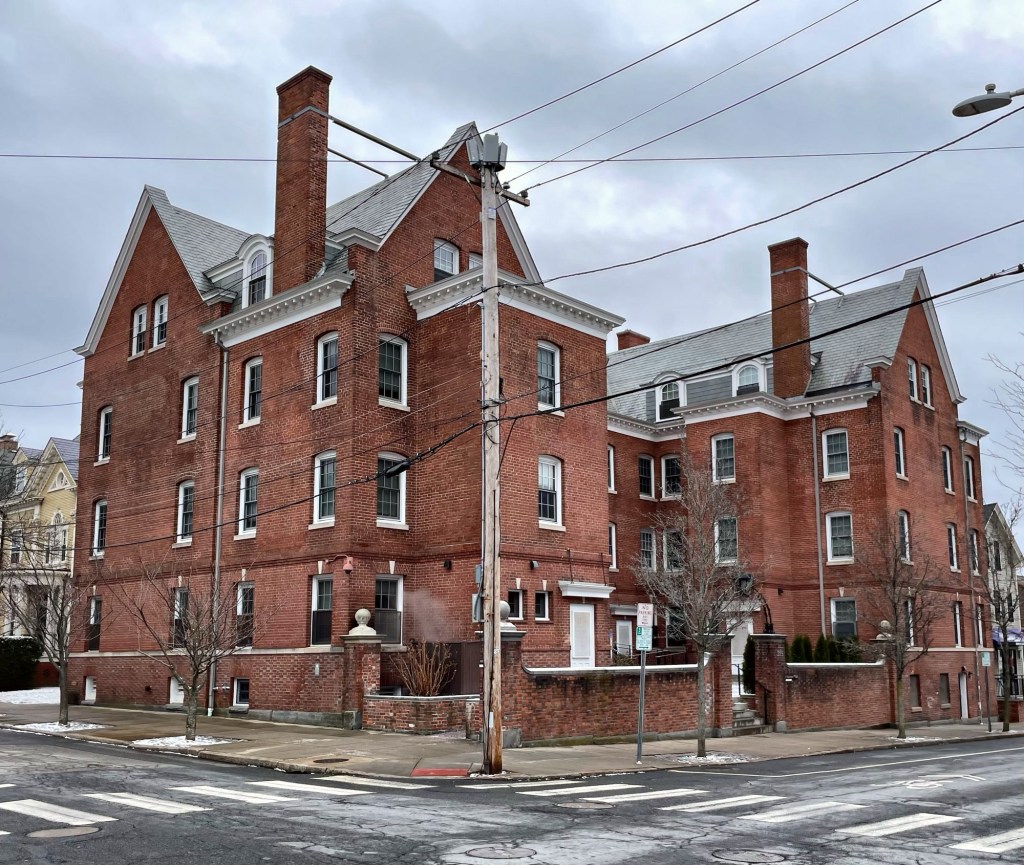
Apartment buildings get a bad rap, largely because of the cheaply built monstrosities built after WWII through today; but apartment buildings can be dignified and fit within their surrounding context, it just takes good design. These are the Cushing Apartments at Thayer and Bowen streets in Providence’s College Hill neighborhood. The building was constructed in 1902 for owner, Stephen Cushing Harris, from plans by young architect Frederick Ellis Jackson (1879-1950), who would have been in his mid-20s when he designed it! While not an academic example of the Tudor or Colonial Revival styles, the building blends both in a unique U-shaped form. The building is supposedly wood-frame and was eventually purchased by Brown University in 1963. The college renovated the building in 2012 to serve as an upperclassman dormitory with LBB Architects and Gilbane Construction overseeing the project. The building adds a subtle density to the block without being overbearing with the courtyard design.
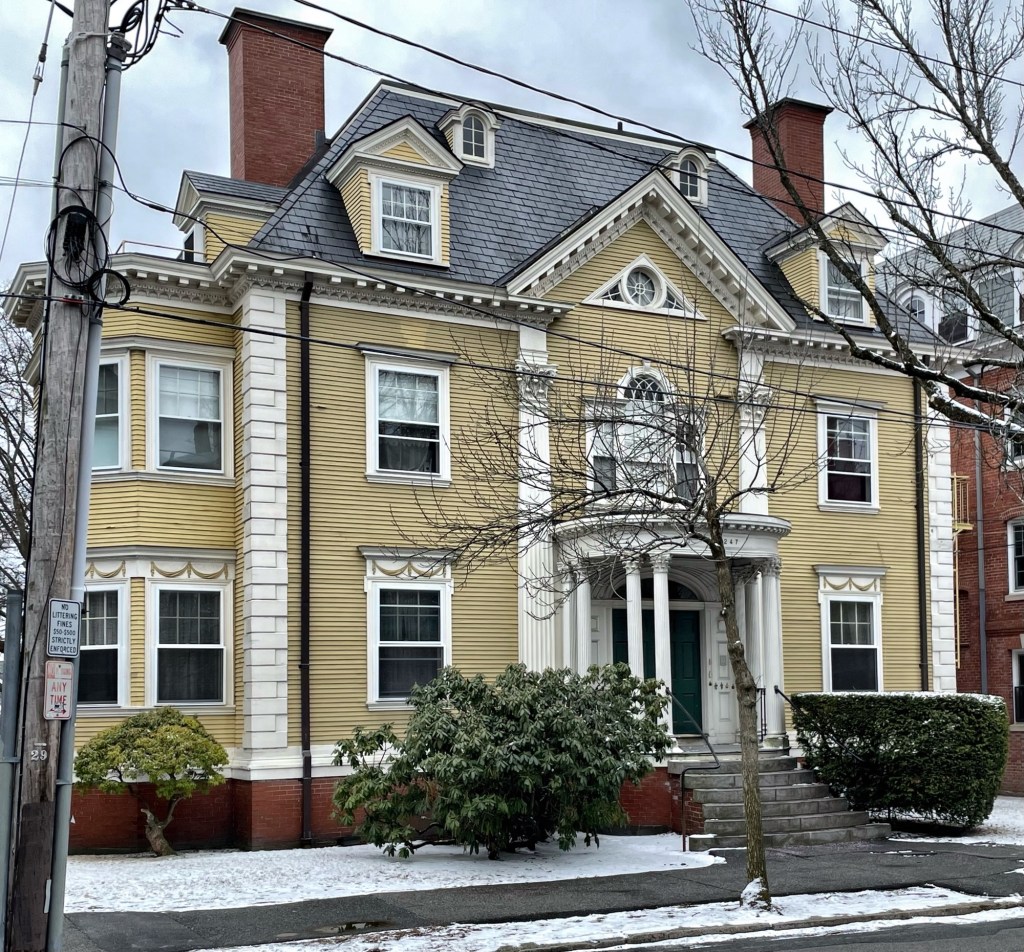
The Francis and Sarah Cranston House is located on Bowen Street in the College Hill section of Providence, Rhode Island. Built circa 1895 for Francis Augusta Cranston (1837-1909) and his wife, Sarah (Hill) Cranston, the house is one of the best residential examples of Colonial Revival architecture in the city. Francis was the son of Barzillai Cranston, a descendant of Gov. Samuel Cranston, who held office from 1698 to 1727, being elected to office 30 times; serving as governor longer than any other individual in the history of Rhode Island. Francis worked as cashier of the Old National Bank of Providence for over fifty years and built this residence to settle into retirement. The residence is unique for its high-sloping hipped roof with two layers of dormers, corner quoins, Palladian window, and Ionic portico. I could not locate the architect, but if anyone knows, I’d love to give them their deserved credit!
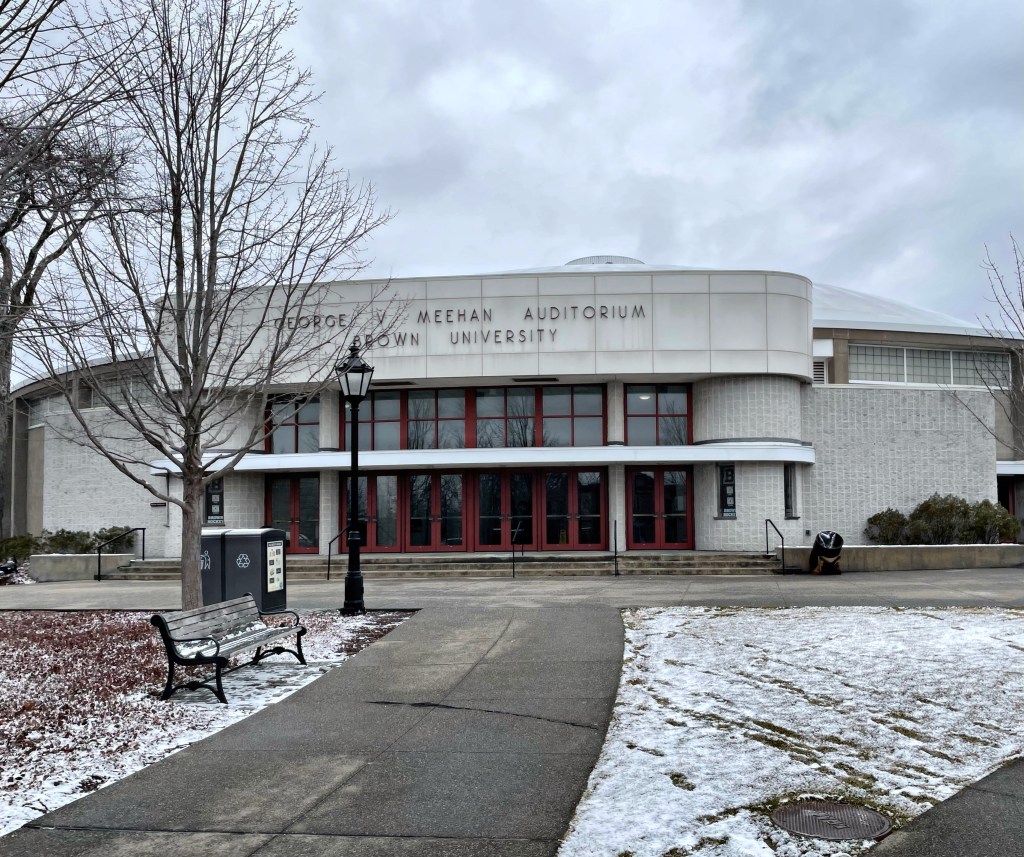
Across from the new Nelson Fitness Center at Brown University in Providence, Rhode Island,Meehan Auditorium is an excellent example of a 1960s institutional athletic facility. The auditorium was dedicated at the Brown-Princeton hockey game on January 6, 1962 and was named after George V. Meehan, donor of half a million dollars for its construction. The new facility filled the need for a skating rink and large auditorium for indoor functions, specifically for ice skating and hockey and was the first building of the new athletic plant at Aldrich-Dexter Field east of the campus. The building was designed by Perry, Shaw, Hepburn & Dean, a prominent firm who designed many collegiate buildings in the 20th century, all over New England.
There are fewer and fewer historic movie theaters in America, largely due to the proliferation of larger theaters at the end of the 20th century and the more recent trend of streaming. Smaller, family-owned theaters are becoming rare, so if we value the charm and character of these spaces, we have to support the arts at these spaces! The Avon Cinema is located in Providence’s East Side neighborhood and premiered on February 15, 1938 with the French film Beethoven’s Great Love (titled “The Life and Loves of Beethoven” in the U.S.) The theater was originally constructed in 1915 and operated as the Toy Theater for a few years before it closed. After decades, the building was purchased by the Dulgarian Brothers, who reopened the theater, naming it Avon. The Dulgarian family has owned and operated the theater to this day and have made a point to restore the building and maintain the historic charm.
The College Hill neighborhood of Providence has some of the finest residential architecture in New England, and some really fun stories of those who built these grand homes. In 1859, the house was built with a concave mansard roof punctuated with dormers and a bold bracketed cornice below. The use of round headed windows on the second floor is a really great design detail. The residence was first owned by Eliza Talbot Almy (1808-1886), who held the title to the property. Wives holding the title of properties in this period was fairly common as it would protect their personal property and residence from financial risk if the husband was met with lawsuits or financial hardship. Eliza’s husband was cotton broker and manufacturer Samson Almy (1795-1876), who had already been sued in a case heard before the United States Supreme Court in 1851. After Eliza’s death in 1886, her daughter, Susan Smith (1837-1917) and husband, Amos Denison Smith (1835-1912), a Civil War veteran, occupied the house into the early 20th century.
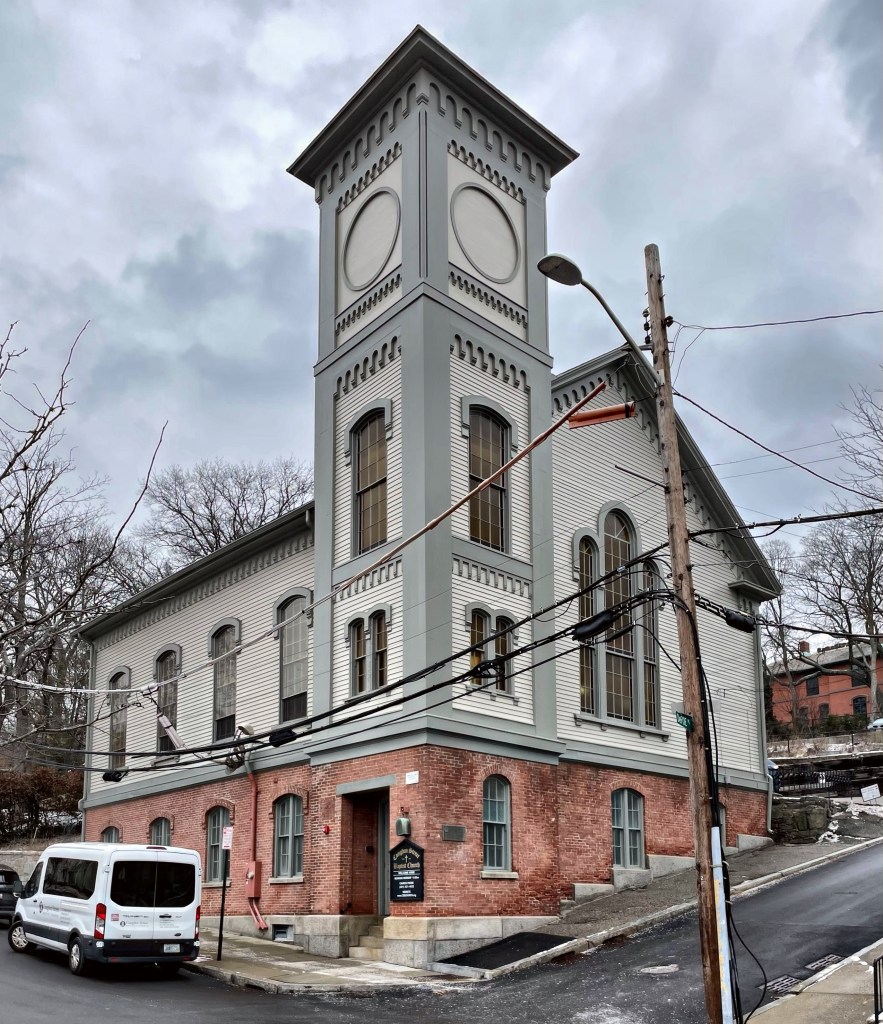
The Congdon Street Baptist Church on College Hill is extremely significant as part of the rich history of Providence. Its origins began in 1819, when Moses Brown, an abolitionist, industrialist and member of the Brown Family (who profited on the institution of slavery) gave land to “the people of color” of Providence for a schoolhouse and meeting house. The original building stood slightly north of the present structure and it was built in 1821. The structure provided the first schoolhouse for Black children in Providence. In 1869 the building was torn down, without the approval or knowledge of the congregation by white neighbors because “its proximity displeased them”… Eventually the congregation arranged an exchange of lots with one of the church’s neighbors and architects Hartshorn & Wilcox were commissioned to design the new church building. Hartshorn was the successor of Thomas A. Tefft and this church echoes many of his designs in the Italianate style. The new building was completed in 1875 at the cost of $16,000. It was renamed the Congdon Street Baptist Church. The church has since 1875 served as an important landmark and gathering place for many Providence’s Black residents past and present.



 Buildings of New England