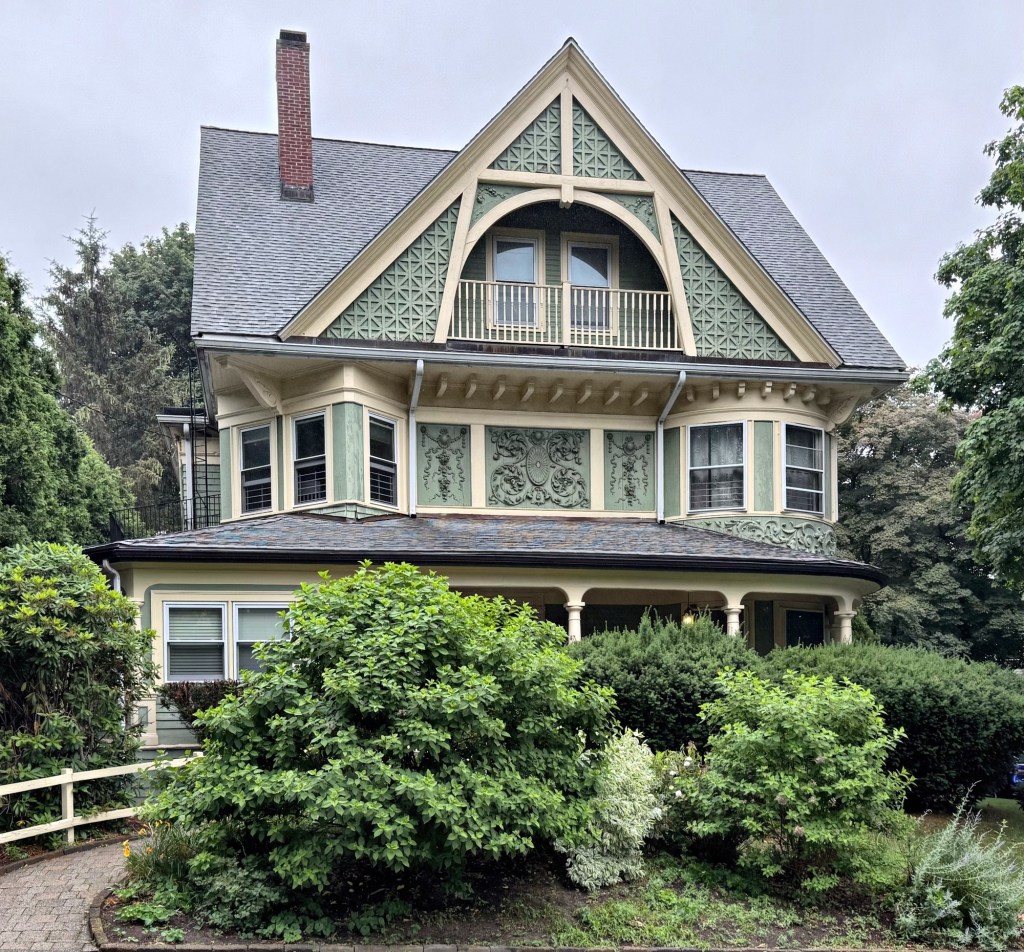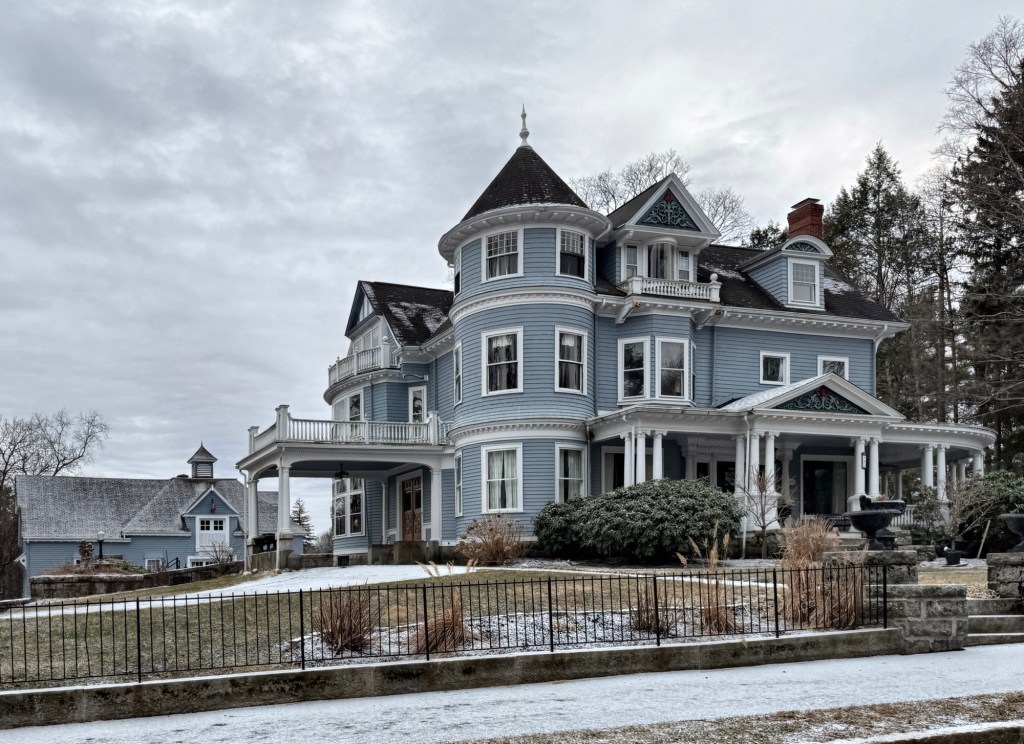
Richard P. Spencer House – Deep River Public Library // 1881

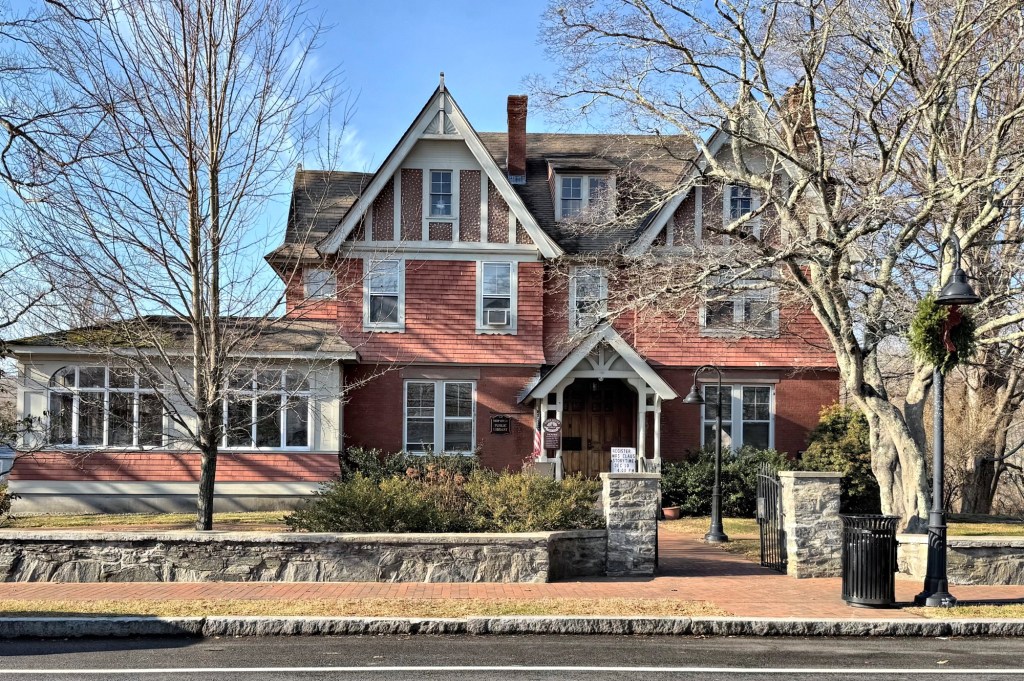
The finest extant Queen Anne Victorian-era house in the town of Deep River, Connecticut, is located on Main Street and since the 1930s, has been home to the town’s public library! How’s that for adaptive reuse?! This residence was built in 1881 for Richard Pratt Spencer (1820-1910), a local prominent businessman who lived to be 90 years old. Spencer lived here with his second wife, Juliana Selden, who was 32 years his junior, and three children until his death in 1910. When Spencer’s widow died in 1932, the heirs sold the property to the Saybrook Library Association (before the town renamed Deep River in 1947), which then, in turn, sold the building to the town for a small price in order to convert it into a library. Opened to the public in 1931, the Deep River Public Library has been preserved inside and out with historic fireplaces, woodwork, and features. The only notable change occured in 1995 when a children’s room addition was built to resemble an old porch. The library even retains the original pebbledash finish in the gables, a rare detail not commonly found in typical old houses of the period.


Dr. Tappan Eustis Francis House // 1879

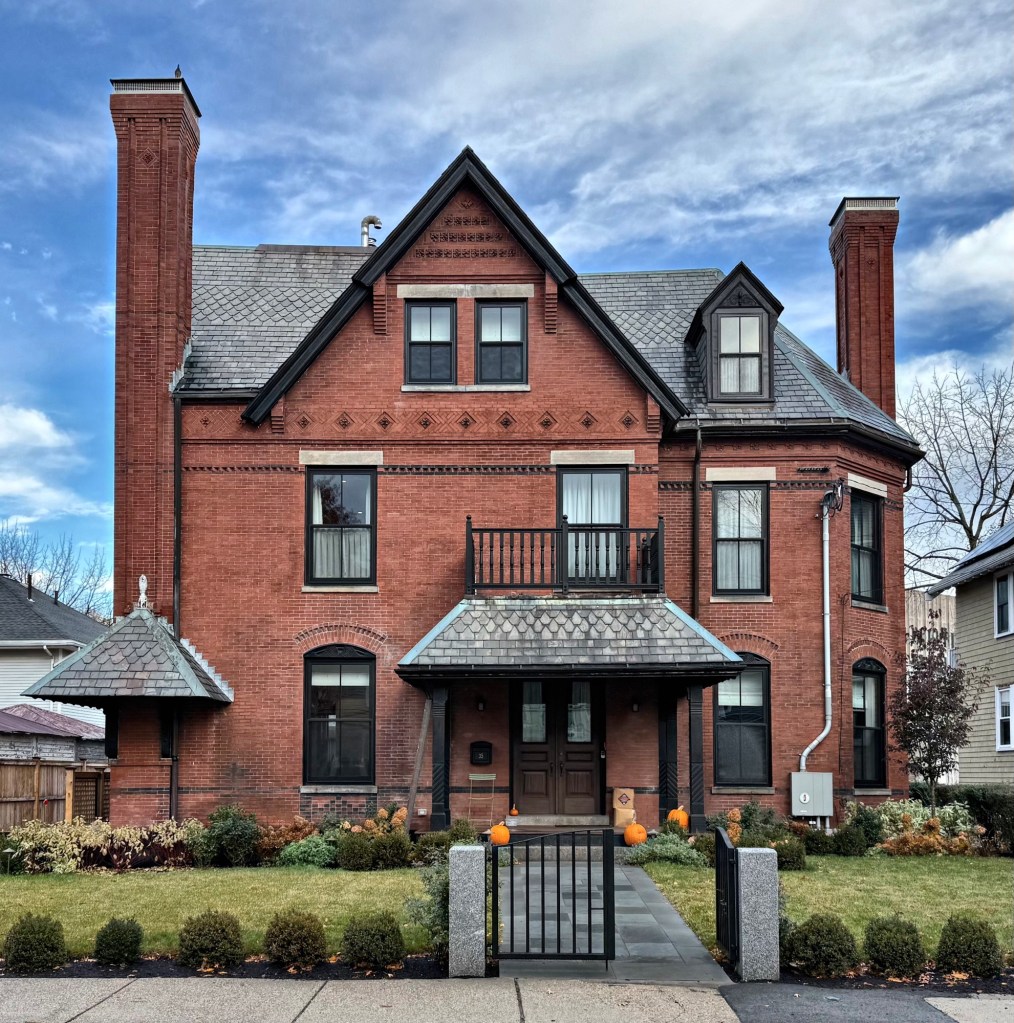
Located on Davis Avenue, a narrow residential street in Brookline Village, the Dr. Tappan Eustis Francis House is an unusual work by an architect that differs from the style they became best-known and sought after. Dr. Tappan Eustis Francis (1823-1909) graduated from Harvard College in 1844 and Harvard Medical School in 1847 and moved to Brookline where he practiced medicine for over 50 years. For his Brookline residence, Dr. Francis hired William Ralph Emerson, who has become best-known for his Shingle style designs and summer cottages that lined the New England coastline and in Boston suburbs, to furnish plans for his suburban residence. For Dr. Francis’ home, Emerson envisioned a brick house in the English Queen Anne style. The tall chimneys with panel brick designs, corbeled brick brackets and terra-cotta decorations in the gable peaks, and the massive slate-roofed entry porch are all stunning features on the house; but the most intriguing has to be the bracketed hood on the corner of the house which originally sheltered a wooden bench, as depicted in an 1879 drawing.

Robbins House // c.1850

Originally built in the 1840s or 1850s, this stunning house on Main Street in Chester, Vermont, was “Victorianized” in the late 19th century through applied ornament, a tower, and porches. Historic maps show that this house was owned by Cyrus Robbins and his wife, who likely had the residence built in a vernacular example of the Greek Revival style, with a 2 1/2-story form with gable roof oriented towards the street. The corner pilasters remain as do the original facade windows with five on the first floor, three on the second, and a single window in the upper floor. By the late 1800s, the house was modernized with the addition of the wrap-around porch with decorative spindles and ornament and the octagonal turret with wood shingle conical roof. Today, the house is painted colors to highlight the Queen Anne appearance and details.

William Pollard House // 1899

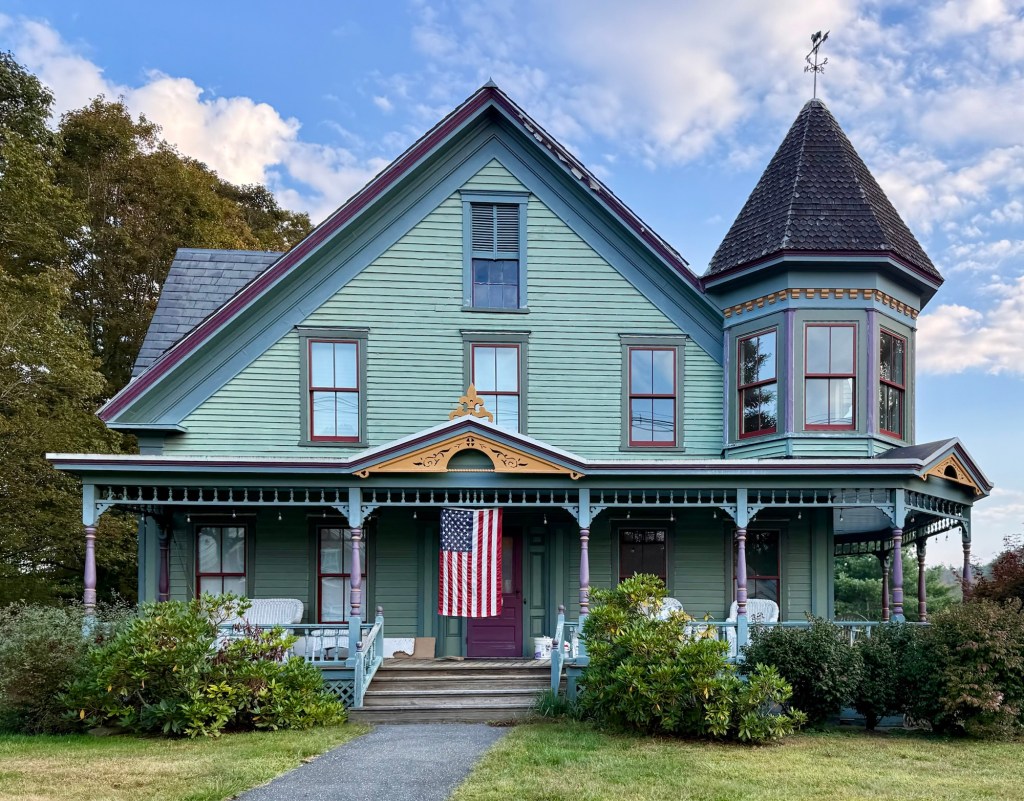
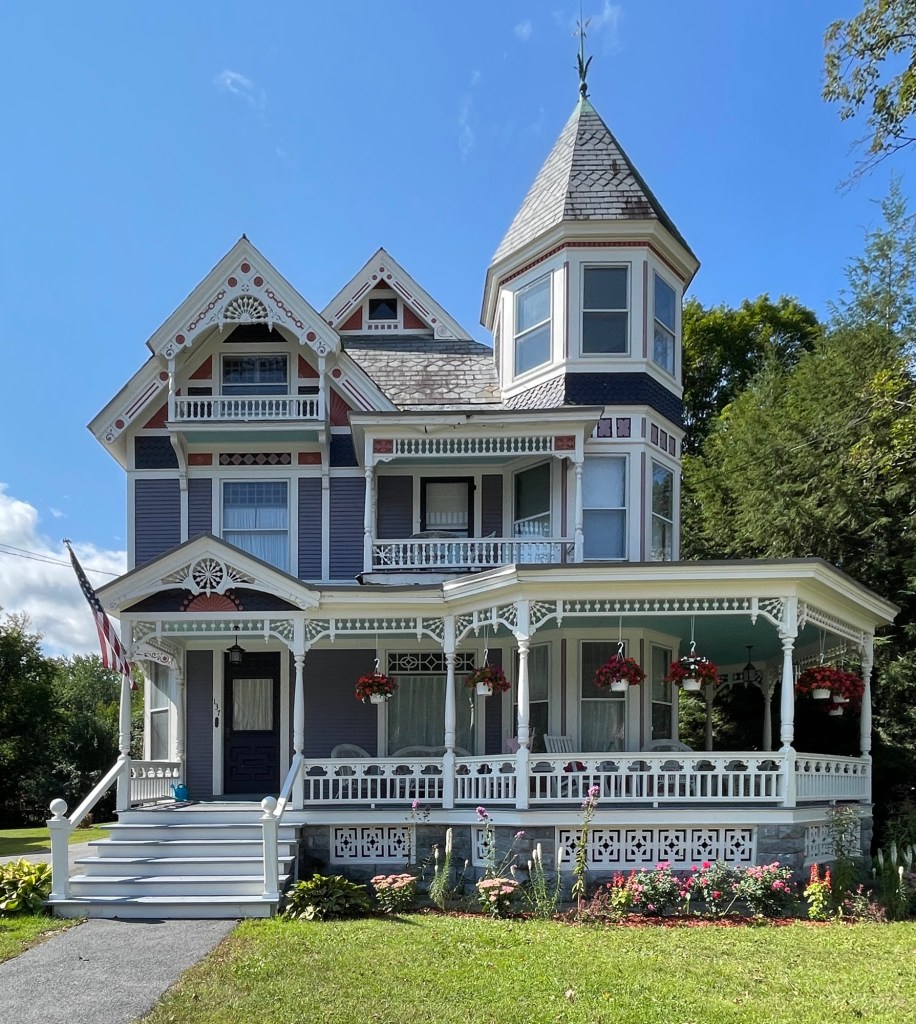
This high-style and ornamental house in Chester, Vermont, ranks among the state’s best examples of the Queen Anne style. The residence was constructed in 1899 for William Pollard (1854-1941), a local businessman who owned a shirtwaist manufactory in town with his brother, who lived next door. The painted-lady Victorian house features an asymmetrical plan highlighted by a three-story octagonal corner tower that is surrounded by a wrap-around porch with a delicate spindled frieze. The use of accent colors in the paint scheme further highlight the millwork details on the residence, which have all been preserved for well over a century. 

Kingston Waterworks Pumphouse // 1888

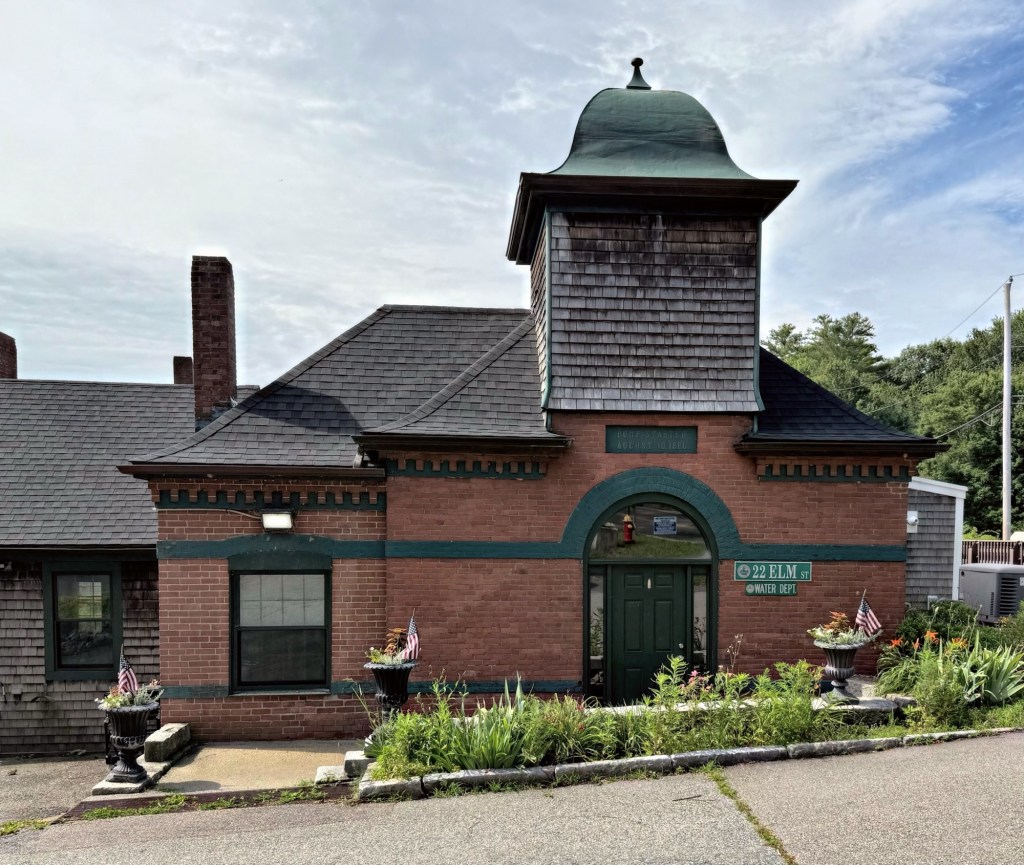
The Queen Anne style pumphouse of the Kingston Waterworks in Kingston, Massachusetts, is a unique brick building capped with a hipped roof and wood shingle tower over the arched entrance, surmounted by a bell-cast metal roof. The structure was built in 1888 from plans by Quincy Adams Faunce, a mason, who likely worked with an architect to design the building. Before the building was completed, residents had to pump and transport their own water. This was until the first private Kingston Aqueduct Company formed, when householders of means bought stock in the company. The Aqueduct Company used a natural spring near a local pond. Before the waterworks, water was piped through the village through hollowed logs with their joints covered with iron bands. The building remains a well-preserved and significant structure that allowed Kingston to grow from a sleepy agricultural town to a vibrant community.

Lynch House // 1889

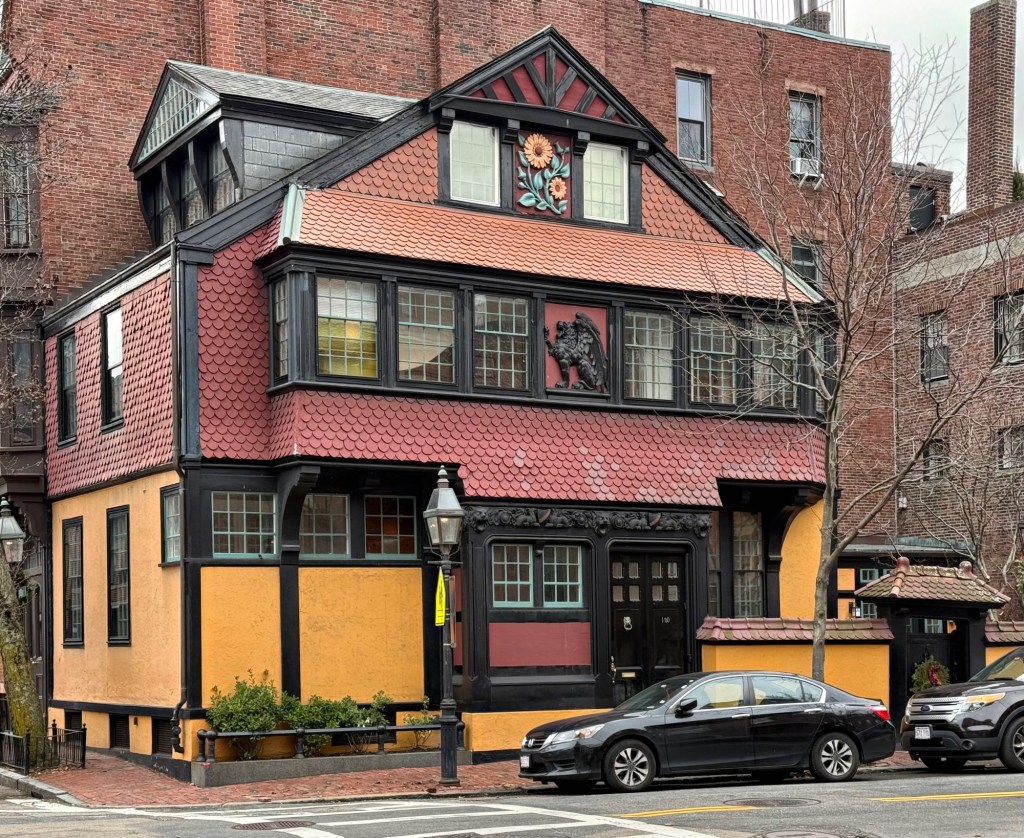
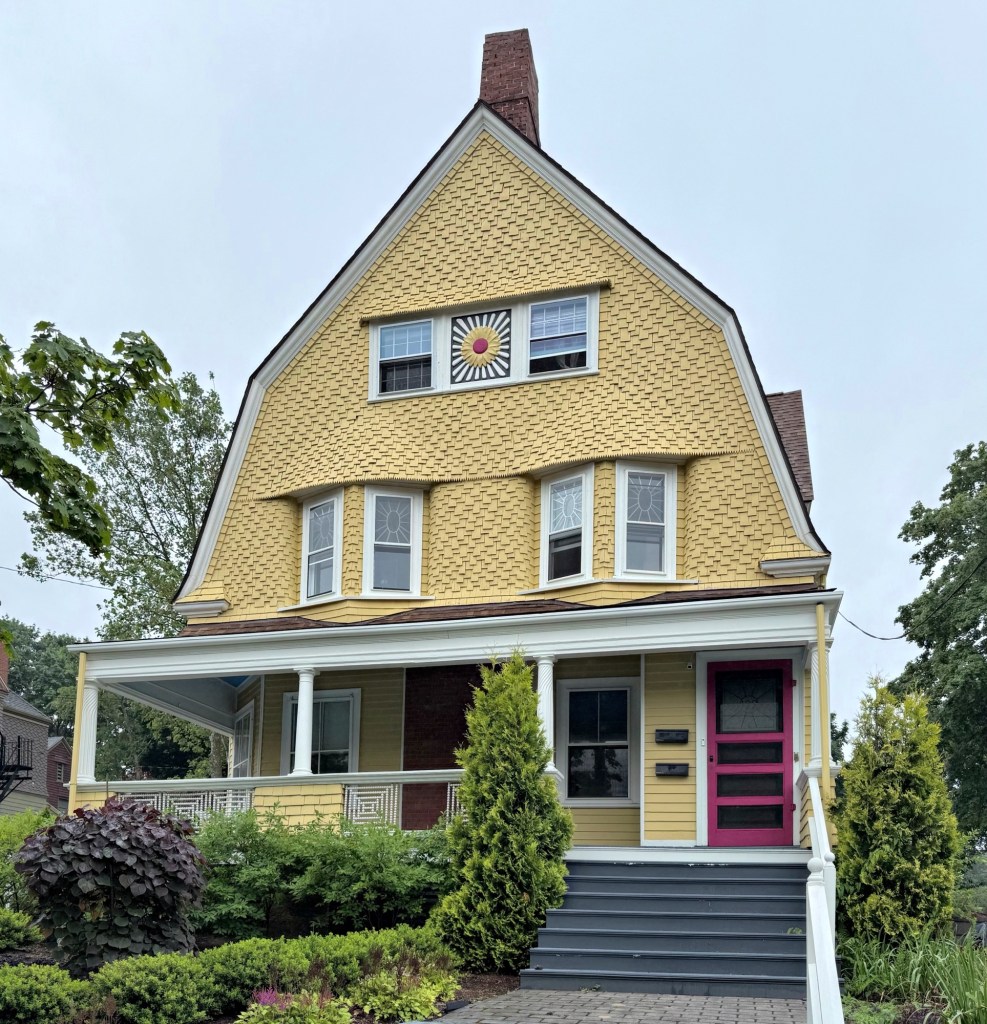
One of the most unique and enchanting houses in the Ashmont Hill neighborhood of Dorchester is the Lynch House (aka the Sunflower House) at 102 Ocean Street, a landmark example of the Queen Anne architectural style. This residence was designed in 1889 by architect Samuel J. Brown, who worked in the firm of Cummings and Sears before opening his own office in Boston, where he specialized in residential designs. The first owners were Edward C. Lynch, a stair builder, and his wife, Petronella P. Lynch, who was born in Sweden and emigrated to the United States. Architecturally, the Lynch House features a prominent gambrel roof that swells out over the second-floor inset windows, clapboard and shingle siding, sawtooth shingled details over the windows, and the sunflower motif in a panel at the third floor.

Mary E. C. Bates House // c.1894

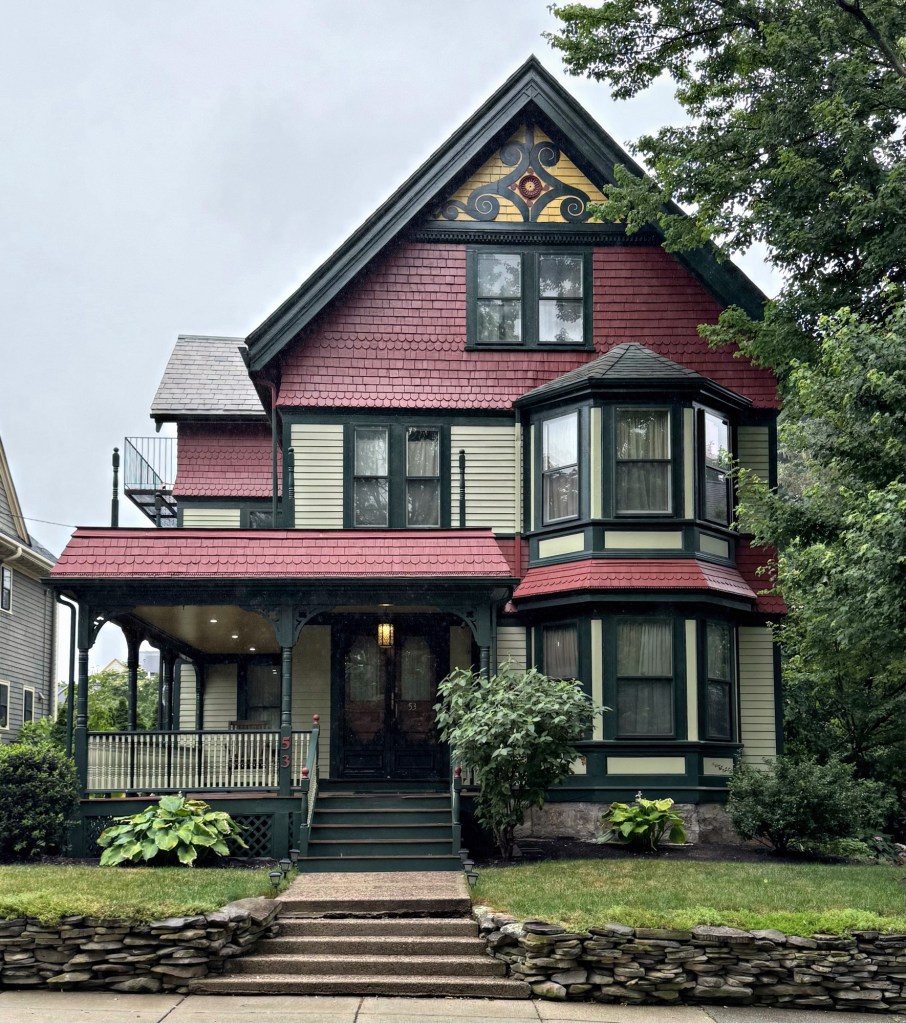
One of the many spectacular Queen Anne style houses in the Ashmont Hill neighborhood of Dorchester (Boston) is this c.1894 residence at 53 Ocean Street. The house was built for Mary Elizabeth (Cushing) Bates and her husband, Henry L. Bates. Henry worked as a bookkeeper and the couple was able to afford a house lot in the fashionable Ashmont area of Dorchester, and had this home built. In the early 20th century, the couple purchased a then-vacant lot next-door at 57 Ocean Street, and had the current house there built, renting it out for years for supplemental income. Hallmarks of the Queen Anne style seen in the Bates house include: varied siding types, large porch supported by turned posts, asymmetry, projecting bay window, and applied ornament seen here in the gable.

George and Emma James House // 1894

Built in 1894 for George and Emma James, the house at 47 Ocean Street in the Ashmont area of Dorchester, stands as one of the finest high-style examples of a Queen Anne single-family residence in Boston. George James was born in Vermont and worked as a farmer before moving to Boston, where he found work as a shoe manufacturer, opening offices and manufacturing facilities in the Leather District. The house was clearly designed by a skilled architect, and historians note that the residence was the design of architect S. Edwin Tobey, a skilled proponent of the Queen Anne style, seen here with its incredible detailing and unique form. The high-relief carvings in the gable and panels stand out, along with the recessed porch, and historic stable at the rear.

Sidney A. Kimber House // c.1894

Built by 1894, this fabulous Queen Anne victorian house can be found on Ashmont Street in Dorchester, and it has a period-appropriate color scheme. The residence here was built for Sidney Arthur Kimber (1866-1956) a London-born printing expert, who for years worked at the University Press in Cambridge. Mr. Kimber was an expert on printing and wrote many books on the subject; he even built a working model of the first printing press brought over from England to Cambridge in 1638. The Kimbers lived here for just a few years before moving, and the house was sold a few times until the first long-term owner, Helena T. Shortell. The house is lovingly preserved and features a unique entry tower capped by an ogee roof.

John E. Sylvester House // 1884

One of the many beautiful old Victorian houses in the Prospect Hill area of Somerville can be found here on Summit Avenue, a tree-lined street with sweeping views to Boston and other neighborhoods. This house was built in 1884 for John Edwards Sylvester (1839-1901) and his wife Clarissa (Clara). The Queen Anne style house has a brick ground floor with shingled walls above. The facade is dominated by its gable roof with varied shingle siding, decorative belt course, and oriel window with highly ornate pediment above. The house was likely designed by the Boston firm of Sturgis & Brigham, who included Sylvester in their list of clients. Mr. John E. Sylvester was head of the John E. Slyvester Co. in Somerville, a spike manufacturing company started by his father. After John died in the home from heart failure in 1901, his widow, Clara, remained in the home with her daughter until after WWI, when the property was sold.