Essex County Jailkeeper’s Residence // 1813

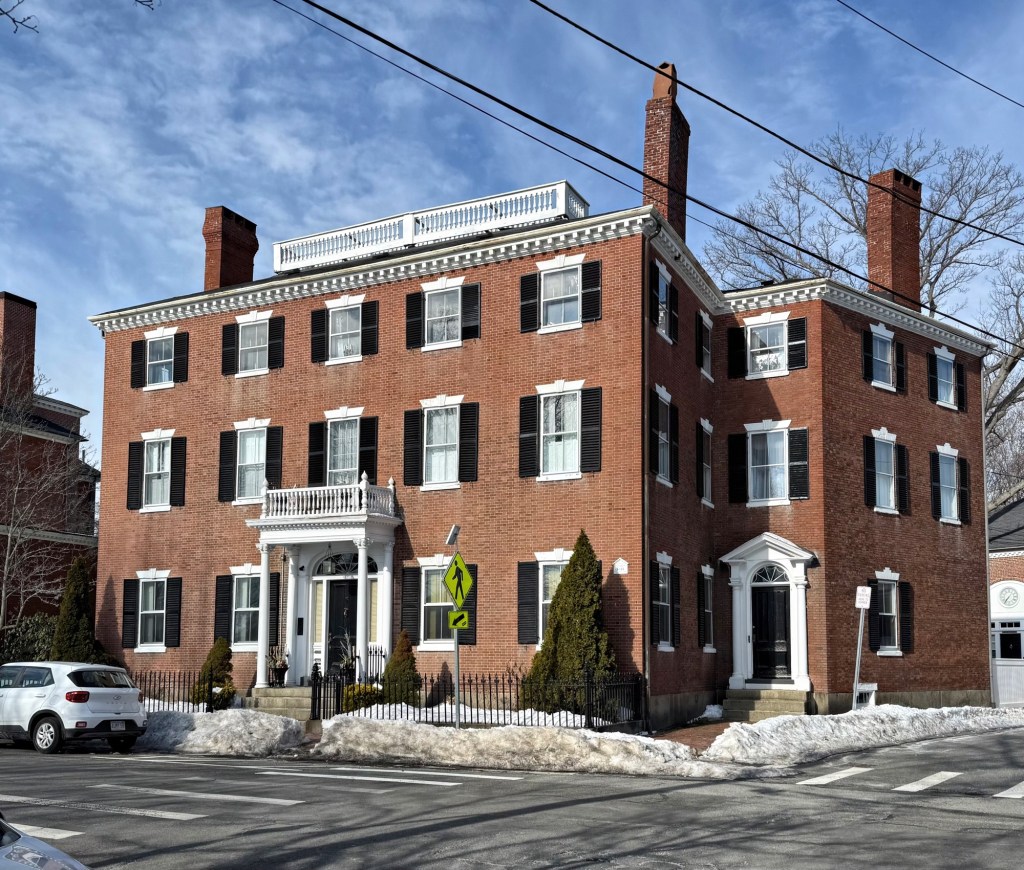
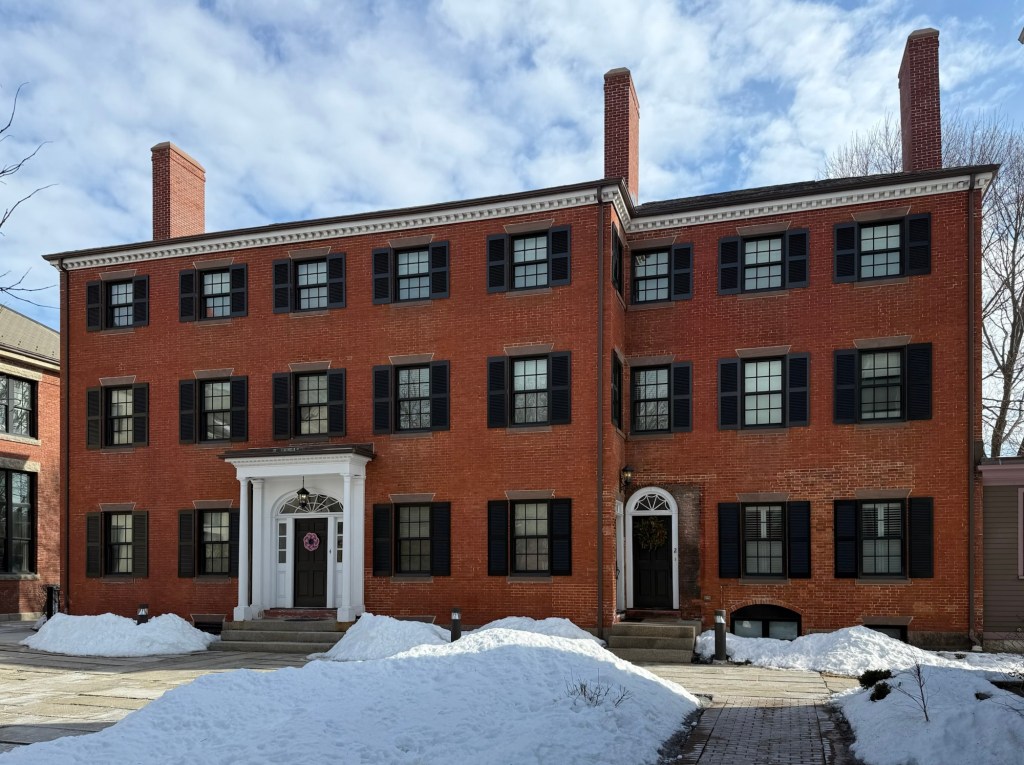
Built adjacent to and two years after the construction of the Essex County Jail in historic Salem, Massachusetts, this 1813 brick Federal style house was originally the jailkeeper’s residence. It has been speculated that the house was built by Samuel Field Mclntire (1780-1819), son of preeminent Salem carver and master carpenter, Samuel Mclntire, although there is no conclusive evidence. The house displays a 5 x 2-bay massing and is capped by a hip roof with three, large brick chimneys and a center entry with elliptical fan light transom, sidelights, and shallow portico. The jail was in operation until 1991, and at that time was considered the oldest active penitentiary in the United States. Years prior, in 1984, several detainees had successfully sued the county for inadequate living conditions, leading to the closure of the building. A preservation restriction was established for the building and in 2009, the property was conveyed to a developer who converted the complex into 23 apartments, with 19 in the old jail, three in the old jail keeper’s residence, and one in a converted carriage house. The great preservation/adaptive reuse firm of Finegold Alexander Architects furnished the plans for the successful renovation that provided a new life for a once crumbling eyesore.
Former Essex County Jail // 1811

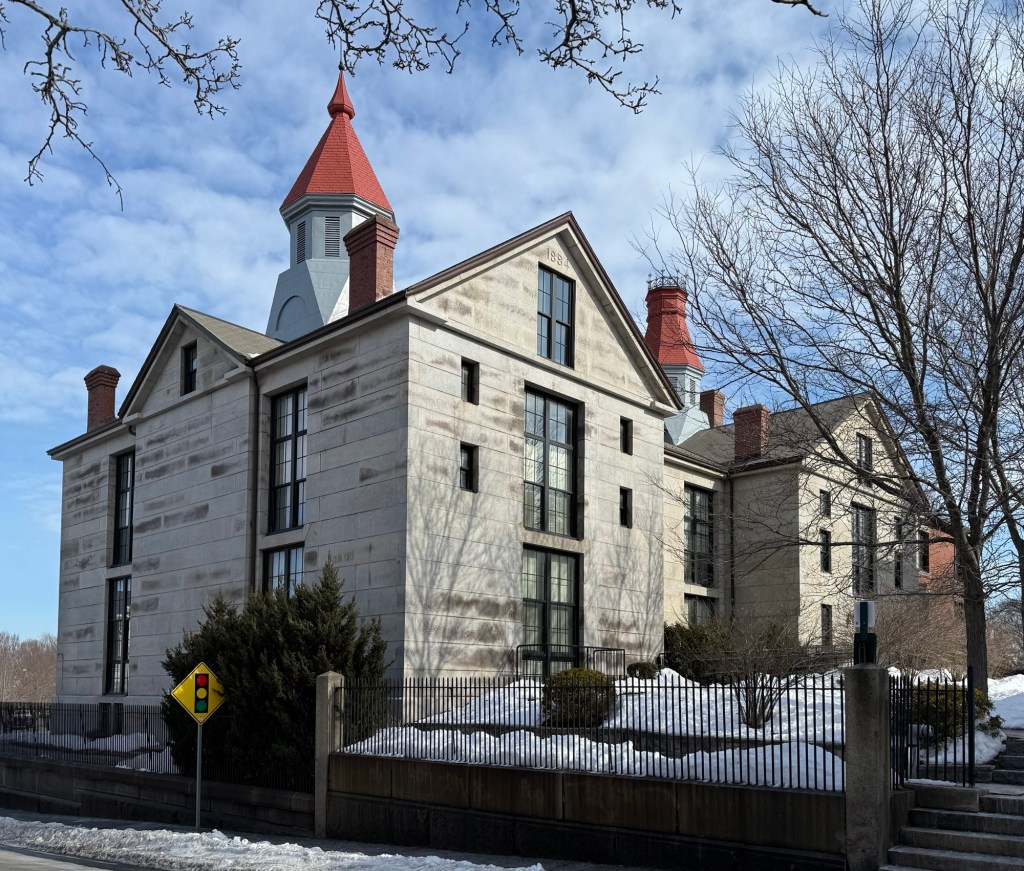
The former Essex County Jail is a large and significant building in Salem, Massachusetts, that has seen a recent rebirth thanks to the intersection of historic preservation and the demand for new housing in many New England communities. Constructed of large, Rockport granite blocks, the building was constructed in two phases—the section to the east was constructed in 1811-13 while the parallel west wing dates to 1884, with each of the construction dates inscribed at the top of the pediments on the south elevation. Completing the complex is the 1813 Jailer’s Residence which sits at the edge of the now enclosed courtyard. Those who were committed here were largely sentenced to short terms, many for the offense of drunkenness or petty theft. Inside, prisoners did all the labor, such as cooking, baking, firing the boilers, etc., with the female inmates making clothing for all inmates. The jail was in operation until 1991, and at that time was considered the oldest active penitentiary in the United States. Years prior, in 1984, several detainees had successfully sued the county for inadequate living conditions, leading to the closure of the building. A preservation restriction was established for the building and in 2009, the property was conveyed to a developer who converted the complex into 23 apartments, with 19 in the old jail, three in the old jail keeper’s residence, and one in a converted carriage house. The great preservation/adaptive reuse firm of Finegold Alexander Architects furnished the plans for the successful renovation that provided a new life for a once crumbling eyesore.
Perkins-Monroe House // 1811

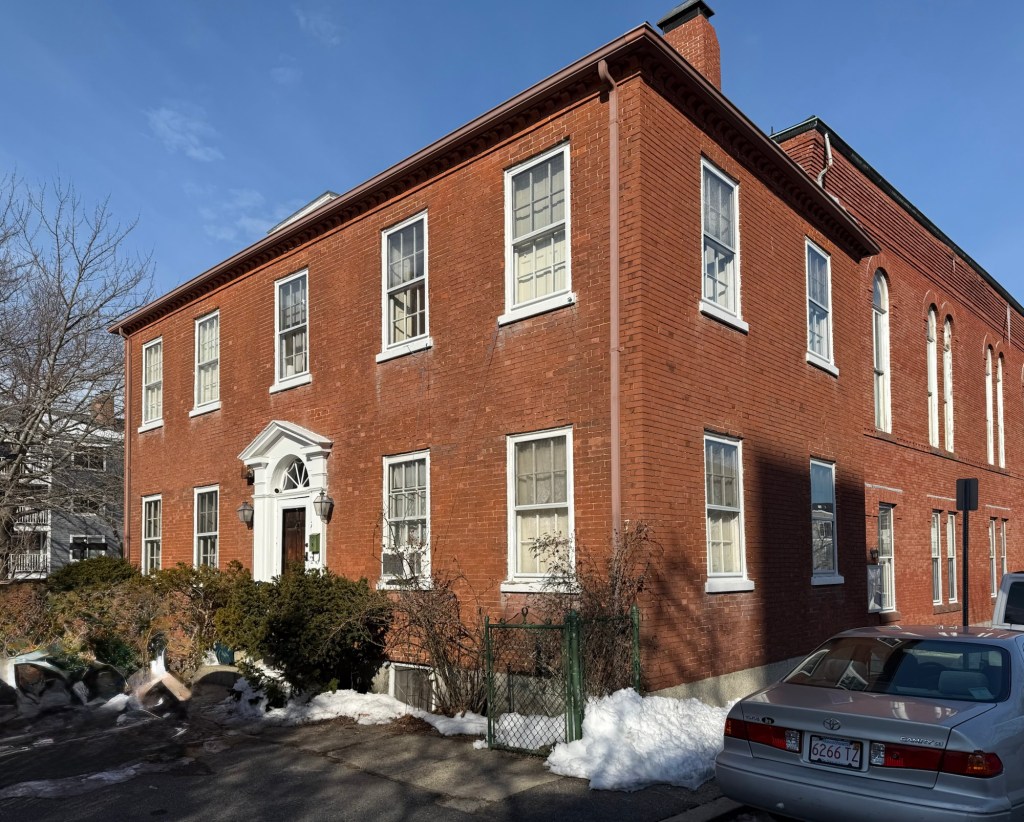
This brick, Federal style house, is located adjacent to the First Universalist Church of Salem amongst a sea of urban renewal-period housing, and is a reminder for Planners to think about the long-term implications in their work. This house was built in 1811 for Thomas Perkins, a local merchant whose brother was its first occupant. After successive ownership throughout the 19th and early 20th centuries, in 1950, Bessie E. Monroe purchased the premises and moved into the home. When the city began urban renewal planning for the area in the 1960s, the building was occupied by Bessie Monroe, who at the time was an elderly woman. The Salem Redevelopment Authority acquired the house through eminent domain and the house was targeted for demolition. The Redevelopment Authority, concerned with how relocation would affect Bessie Monroe’s health, decided to take the property but allow Mrs. Monroe to live there until her death. This decision delayed the planned demolition of the building, even though all other targeted properties were demolished. Luckily, the renewal plan changed its focus from new construction to restoration of existing buildings between the time of the taking and Bessie Monroe’s death. The building was then sold to an owner interested in restoring the structure, now the building is listed on the National Register of Historic Places and is a testament to the benefits of preservation over short-sighted planning policy. 

First Universalist Church of Salem // 1808

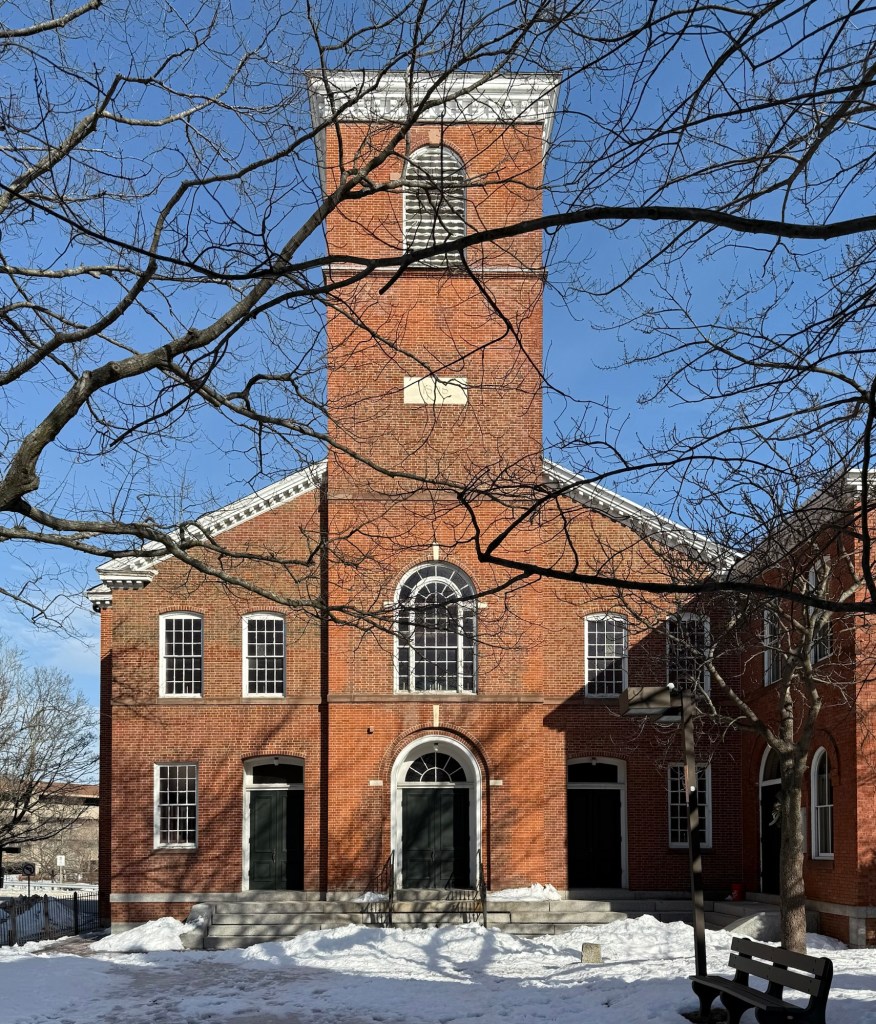
The First Universalist Church of Salem, Massachusetts, is a landmark example of a brick, Federal style church in New England. Tucked away within a network of Urban Renewal-era townhomes and backing up into a busy thoroughfare, the church is overlooked by many who pass behind its rear elevation, not knowing how special the building’s primary facade truly is! The church was constructed between 1808-1809 with early Church records showing that the interior carvings were done by Samuel McIntire, a Salem native, who was trained as a wood carver and later became an architect. It is unclear if any of McIntire’s work remains as numerous building modifications were completed throughout the 1800s; including a major exterior remodel in 1855 by architect Enoch Fullerchanging the appearance from Federal to Italianate. The church would again fall back to changing tastes in 1924, when they restored to an approximation of its original appearance by the office of R. Clipston Sturgis, a prominent Boston architect who specialized in Colonial Revival architecture. While the building’s significance is lessened by the urban renewal infill and streets surrounding it, the building remains one of the oldest in Salem and a significant architectural landmark in the city. 

White-Lord House // 1811

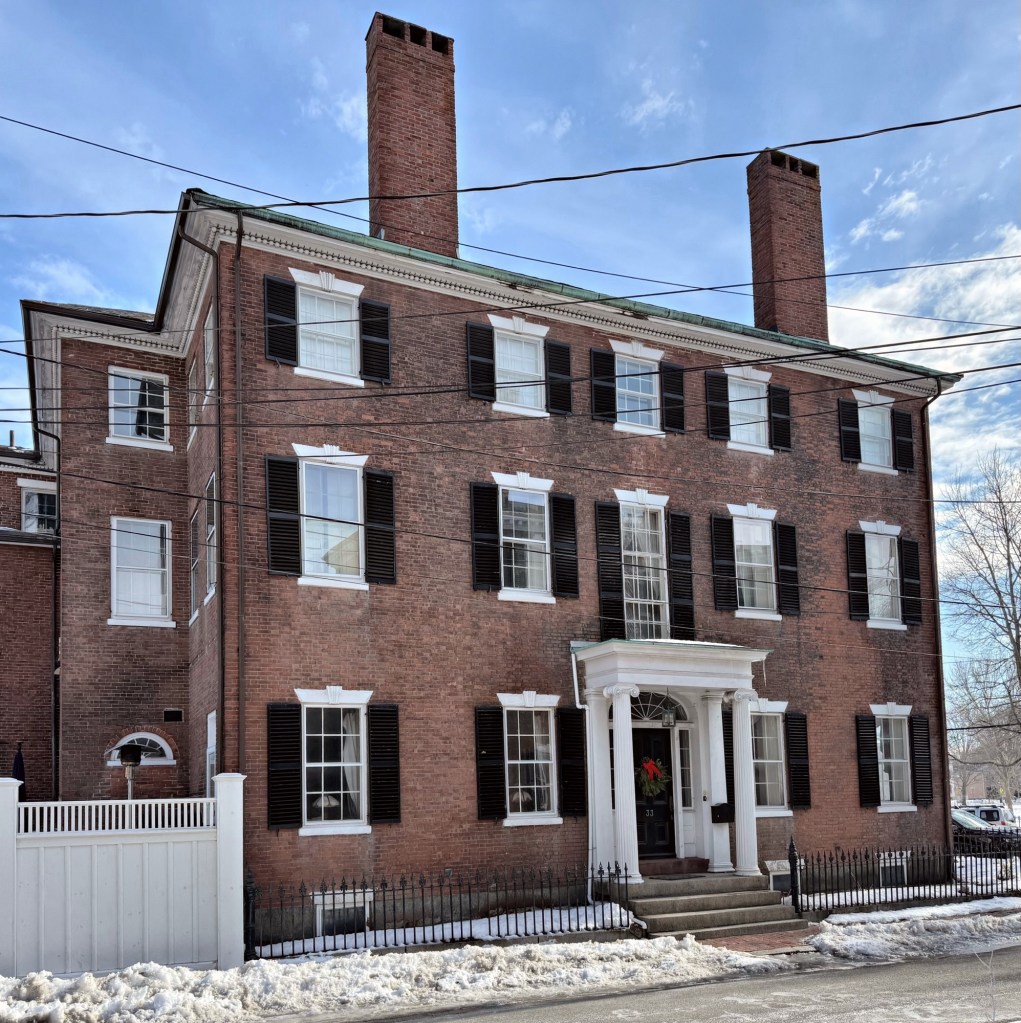
The White-Lord House at 31 North Washington Square in Salem, Massachusetts, is one of a row of stately brick, Federal style mansions built for wealthy 19th century merchants overlooking the bucolic Salem Common. This house was built in 1811 for merchant Stephen White by master mason Joshua Upham (1784-1858), adjacent to his brother’s mansion across the street. It was later the home of merchant John W. Rogers from 1831 to 1844 and merchant Thomas P. Pingree from 1844 to 1858 before it was acquired by Nathaniel Lord in 1858 and members of the family continued to occupy the house for the next ninety years. George R. Lord (1817-1891) was a lawyer and assistant Clerk of the Courts. The exterior of the White-Lord House has changed little beyond the switch to the two-over-two sash windows sometime in the latter half of the 19th century.

White-Silsbee House // 1811

The White-Silsbee House is a stately, Federal period, brick mansion built in Salem, Massachusetts for wealthy merchant, Joseph White. Constructed in 1811 for Joseph White, Jr., the house uniquely faces Oliver Street and not the Salem Common, like that of his brother’s home nextdoor. Joseph White (1780-1816) was bred to the sea, and grew up at the time of Salem’s commercial expansion into the markets of India, China, and Sumatra in the far reaches of the Indian Ocean. Captain White evidently had command of an East India vessel on at least one voyage. After Joseph White’s untimely death in 1816, at the age of 36, his widow Eliza continued to live here until 1831 when the property was sold to William Silsbee (1779-1833), a merchant, and his wife, Mary. The three-story, hipped-roof, dwelling featuring a fan light transom and Ionic portico. Most of the windows contain 6/6 sash with exterior storm windows, capped by splayed stone lintels with molded and beaded keystones. A full-length window is centered above the entrance porch; the third story windows are shortened.

Payson-Fettyplace House // 1845

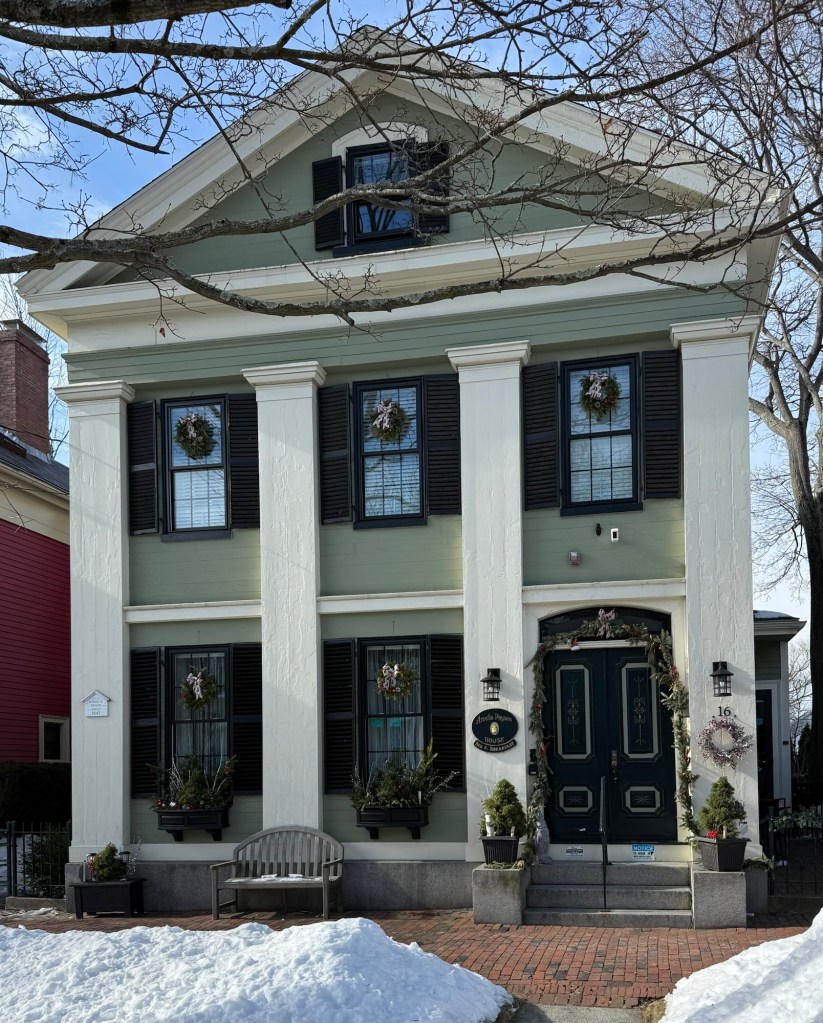
Behold, one of the finest, and well-preserved Greek Revival style homes in Salem. This is the Payson-Fettyplace House on Winter Street, built in 1845 with its gable facing the street to create a pediment, a wide entablature and cornice, and pilasters on the flushboard façade, which together make the building read more like a Greek temple than a residential home. The residence was built for Edward H. Payson, a bank officer, and his wife, Amelia, who lived in the home for only two years before moving into a larger residence across the street just two years after this house was completed. The property was sold to a Carleton Dole of Maine and again sold in 1850 to Thomas J. Fettyplace. The Fettyplace family were based out of Marblehead and many of them relocated to Mobile, Alabama, to make money in the cotton and shipping industry in the South. Thomas purchased this home in Salem for his mother who spent her final years here until 1861. After the Civil War, the Fettyplace brothers would move back north and this home remained in the family until 1912. The house is now a bed & breakfast known as the Amelia Payson House, named after the original owner.

Thomas Hovey House // c.1785

This lovely three-story frame house on Winter Street in Salem was built in the 1780s for mason, Thomas Hovey. The structure’s front-end, five-by-one-bay portion with stone foundation was built first, in the Federal style, likely with traditional finishes seen in the early Federal period. The building’s rectangular shape, hipped roof, molded corner boards, and foreshortened third-story windows are indicative of its Federal-era origins. By around 1870, the Italianate decorative features, including a hooded double-door entrance, two-over-two windows, a second-story bay window, a bracketed cornice, and bracketed window lintels, were added to the exterior in an effort to modernize the home by later owners. Like many other houses in Salem, this building was extensively documented by Historic Salem Inc. who compiled a detailed history of this and hundreds of other homes nearby.

Conway-Trumbull House // 1848

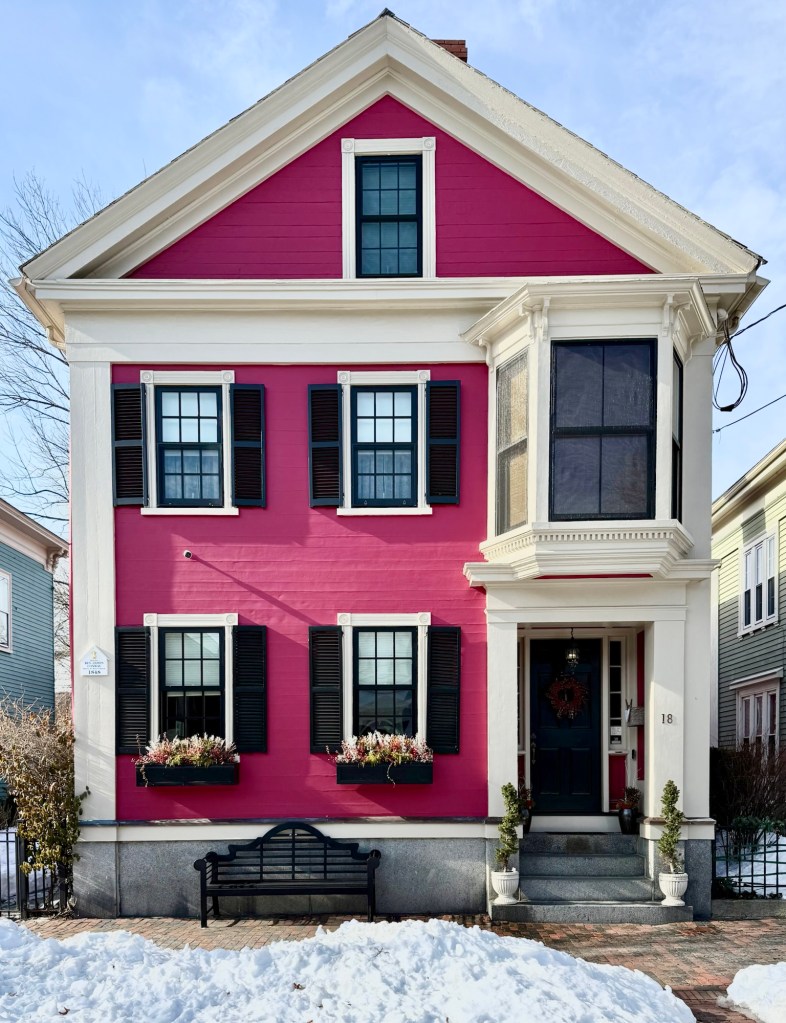
Built in 1848 for Rev. James Conway of Salem, this stunning Greek Revival home on Winter Street blends architectural integrity with a bold pop of color! James Conway was born in Ballinamore, Ireland and moved to the United States and was ordained as a Catholic priest. He was a missionary with the Penobscot Tribe in Maine, before preaching in Lowell and later in Salem, Massachusetts. When he moved to Salem, he had this house on Winter Street built with flush board siding, paneled side-hall entry, and moulded window surrounds with corner blocks. Conway would later sell the property to Edward Trumbull, a Salem merchant and later to Ebenezer Putnam. It was likely Putnam who added the oversized second-story bay window on the facade of the house.

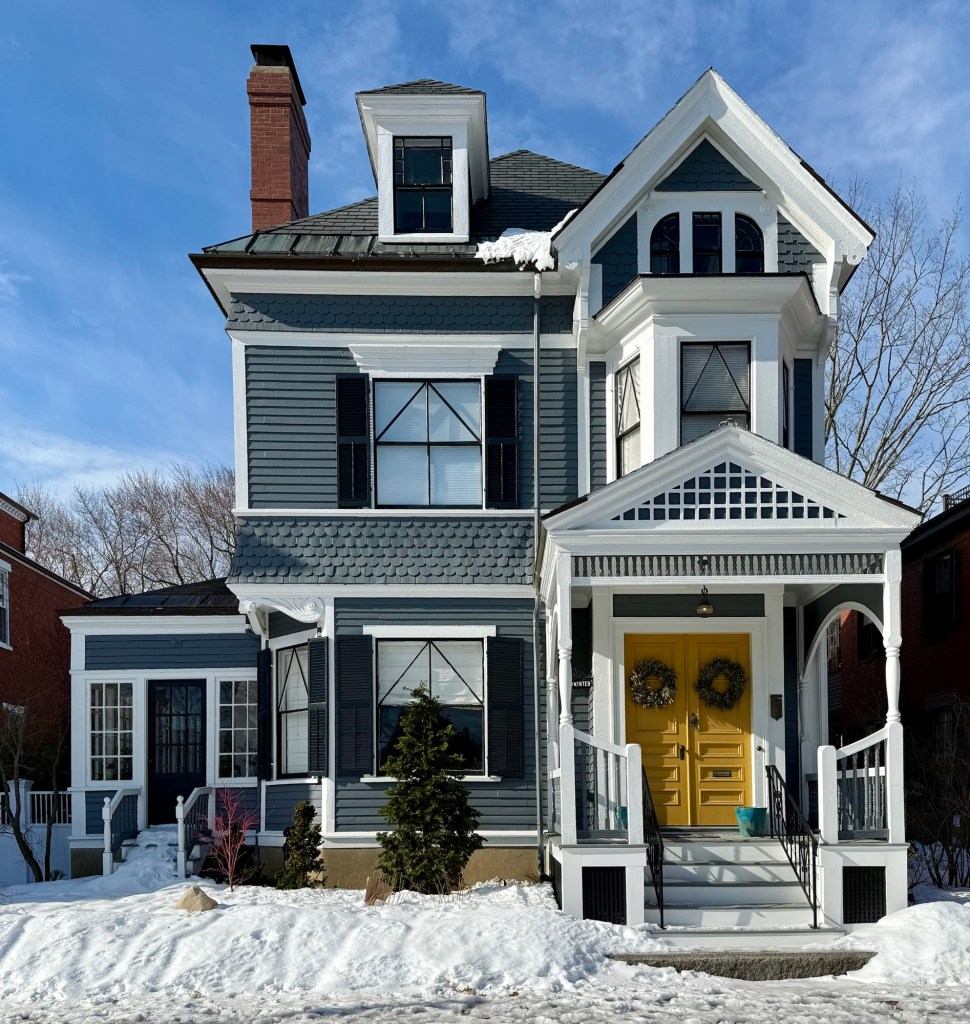
Odell House // 1887

Built in 1887 for Charles Odell and his wife, Alice, this Queen Anne house on Winter Street in Salem, Massachusetts, stands out as a high-style example of Victorian architecture on the street notable for early-mid 19th century architecture. The house lot was purchased by the Jewett Family who lived in the brick house next door and long used the lot as a garden. Charles and Alice Odell married in 1888, so this Victorian home was built for the newlywed couple to raise their family. Charles A. Odell (1863-1931) worked at his father’s insurance and real estate business, later assuming ownership of business upon death of his father and was a district agent for New England Mutual Life Insurance Company. Sheathed in a combination of wood clapboards and shingles in a variety of patterns, the house has a steeply hipped, slate roof punctuated by cross gables and hipped dormers. The predominant window sash style consists of a distinctive sash in which the upper displays a triangle with central muntin over a conventional two-light lower sash. The property has been lovingly preserved for well over a century and is a landmark example of a Queen Anne style house in Salem.