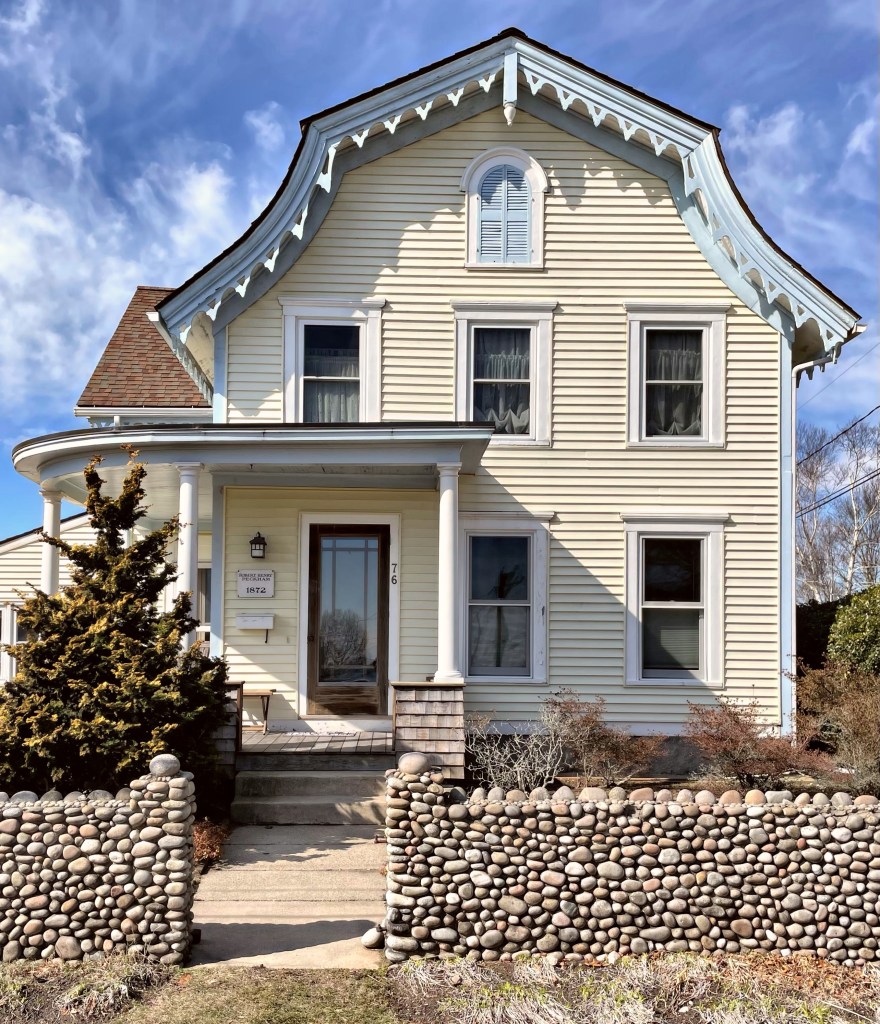
Another of Noank’s stunning Victorian-era seaside cottages is the 1872 Robert Henry Peckham house which is located across the street from the village’s most ornate cottage, the Deacon Robert Palmer House (featured previously). The house exhibits a gambrel roof which reads as a mansard roof at the side elevations. A round arched window is set into the gable end. Decorative cut bargeboards add much complexity to the design. It appears that in the early 20th century, as Noank was re-establishing itself as an artist colony, the owners added the small wrap-around porch and stone garden wall.
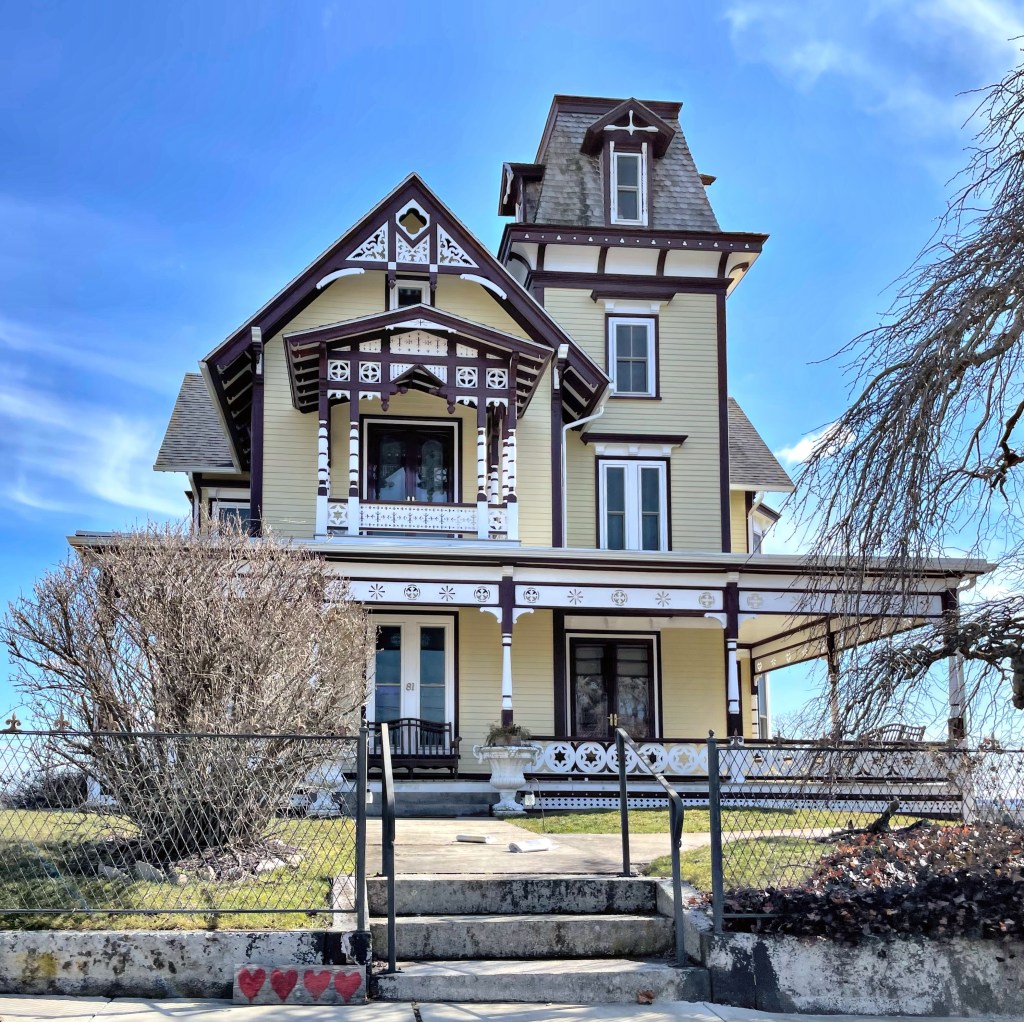
Perched on the highest hill in the coastal village of Noank, Connecticut, you will find this absolutely enchanting gingerbread Victorian mansion. The house was built in 1884 for Deacon Robert Palmer (1825-1913), a wealthy man who wasn’t only deacon of the village’s Baptist church, he was the owner of a flourishing shipyard, and it was his shipyard workers who built him, with loving care, a house he could be proud of! Robert ran the shipyard in town first with his brother, and then with his son. During the late nineteenth and early twentieth centuries the shipyard was the largest facility for building and repair of wooden vessels in southern New England, employing over 300 men. The yard specialized in building railroad car floats, schooner barges, and dump scows as well as fishing smacks. Robert Palmer and Son went out of business in 1914 with the passing of the Robert. The Stick style mansion with mansard roofed tower remained in the Palmer family until the early 2000s when it sold and was restored to her former glory. The residence features exposed rafters, a pagoda-like second story balcony, a frieze with geometric cut-outs, and a wrap-around porch which provides sweeping views of the ocean. I can only imagine how beautiful this old Victorian is on the inside!
The College Hill neighborhood of Providence has some of the finest residential architecture in New England, and some really fun stories of those who built these grand homes. In 1859, the house was built with a concave mansard roof punctuated with dormers and a bold bracketed cornice below. The use of round headed windows on the second floor is a really great design detail. The residence was first owned by Eliza Talbot Almy (1808-1886), who held the title to the property. Wives holding the title of properties in this period was fairly common as it would protect their personal property and residence from financial risk if the husband was met with lawsuits or financial hardship. Eliza’s husband was cotton broker and manufacturer Samson Almy (1795-1876), who had already been sued in a case heard before the United States Supreme Court in 1851. After Eliza’s death in 1886, her daughter, Susan Smith (1837-1917) and husband, Amos Denison Smith (1835-1912), a Civil War veteran, occupied the house into the early 20th century.
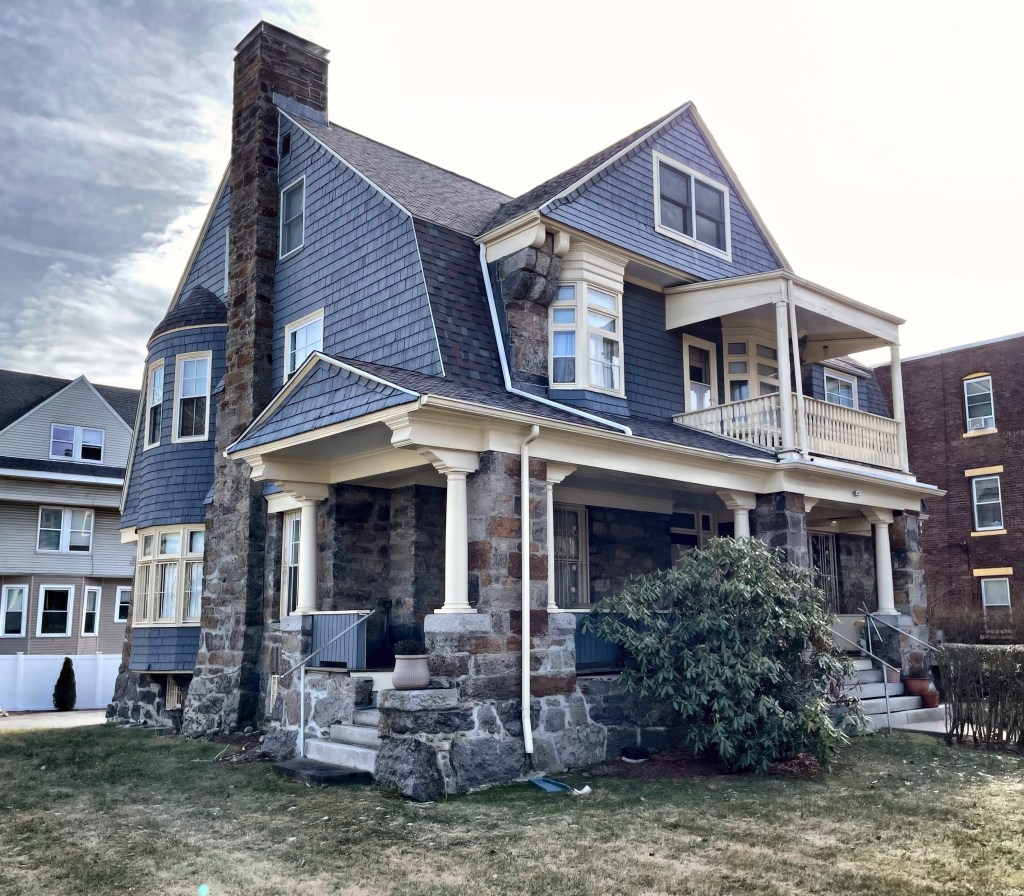
Roxbury is not well-known for its Shingle style architecture, but this example might change that! This dwelling was built around 1895 by the heirs of Horatio Harris on family land that was subdivided for house lots at the end of the 19th century. The expansive Harris estate was developed, largely on speculation and included some amazing single family homes, rowhouses and multi-family dwellings. This Shingle style home appears to have also been built on speculation and was owned by the Harris heirs for some time. The property was occupied for some time by Peleg E. Eddy and his wife Caroline in the earliest years of the house’s existence. I could not locate the architect, but it could be estimated as a design by J. Williams Beal, a local architect who was commissioned to design the nearby Harriswood Crescent development for the Harris family. The design features a Roxbury puddingstone first floor and chimney which contrast elegantly with the shingle siding.
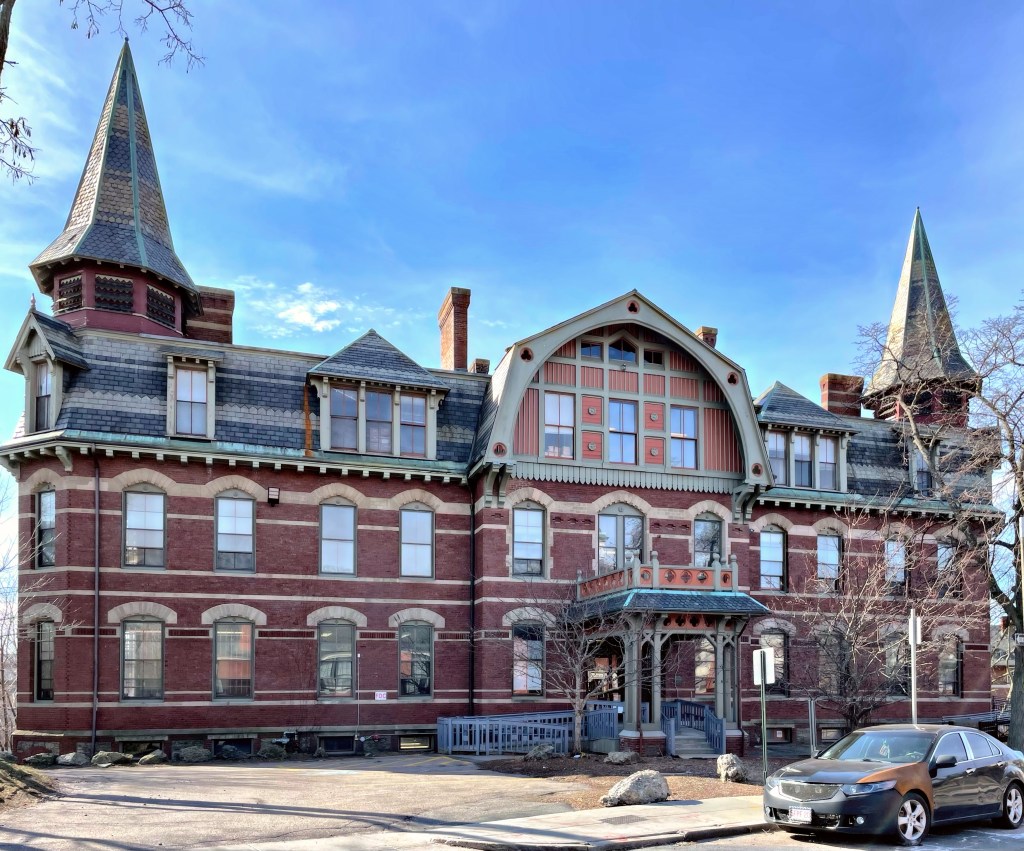
Following the construction of Cary Cottage at the New England Hospital for Women and Children in Roxbury (last post), architects Cummings and Sears turned their attention to designing the most important facility in the complex, the large two-story Zakrzewska Building built in 1873. It is a fine example of polychromatic High Victorian Gothic style with Stick detailing. The building is characterized by its decorative stone and brick string courses, arched window heads, polychrome slate roof, end towers, and a gambrel dormer. The building was named after Dr. Maria Zakrzewska (1829-1902), a Polish-American doctor who moved to the United States in 1853, eventually settling in Boston in 1859, working as a professor of obstetrics at the New England Female Medical College. There, she realized that women in medicine did not have the same opportunity to advance in their field and left, launching her own hospital, the New England Hospital for Women and Children. It was the first in Boston, and the second hospital in America, to be run by women physicians and surgeons. Dr. Zakrzewska knew that the opportunity to work with large numbers of patients was vital if women physicians were to achieve the same levels of training and standards of practice as male physicians. The hospital became a primary training hospital for several generations of women physicians, and also trained nurses. The hospital was extremely successful and remains a medical institution to this day, as the Dimock Health Center.
The New England Hospital for Women and Children (known today as the Dimock Community Health Center), is comprised of eight major buildings on a nine acre site located on a small hill in the Roxbury neighborhood of Boston, close to the border with Jamaica Plain. The complex is significant for its role in the history of women in medicine as both a teaching and a practicing hospital, as well as for its architecture. The facility was incorporated as the New England Hospital for Women and Children in 1863, almost five years before Roxbury was annexed to Boston. The Hospital was founded by Dr. Marie E. Zakrzewska together with Lucy Goddard and Edna Dow Cheney in order to provide women with medical care by competent physicians of their own sex and to educate women in the study and practice of medicine. As such, it was one of the first hospitals of its kind in America. The oldest building in the complex is the Cary Cottage, pictured here. The charming building was constructed in 1872 by the architecture firm of Cummings & Sears. The Cary Cottage served as the hospital’s original maternity cottage, and is also important as an almost intact example of Stick Style architecture. The building was intentionally detached from the general surgical facilities to minimize the dangers of infection during childbirth.
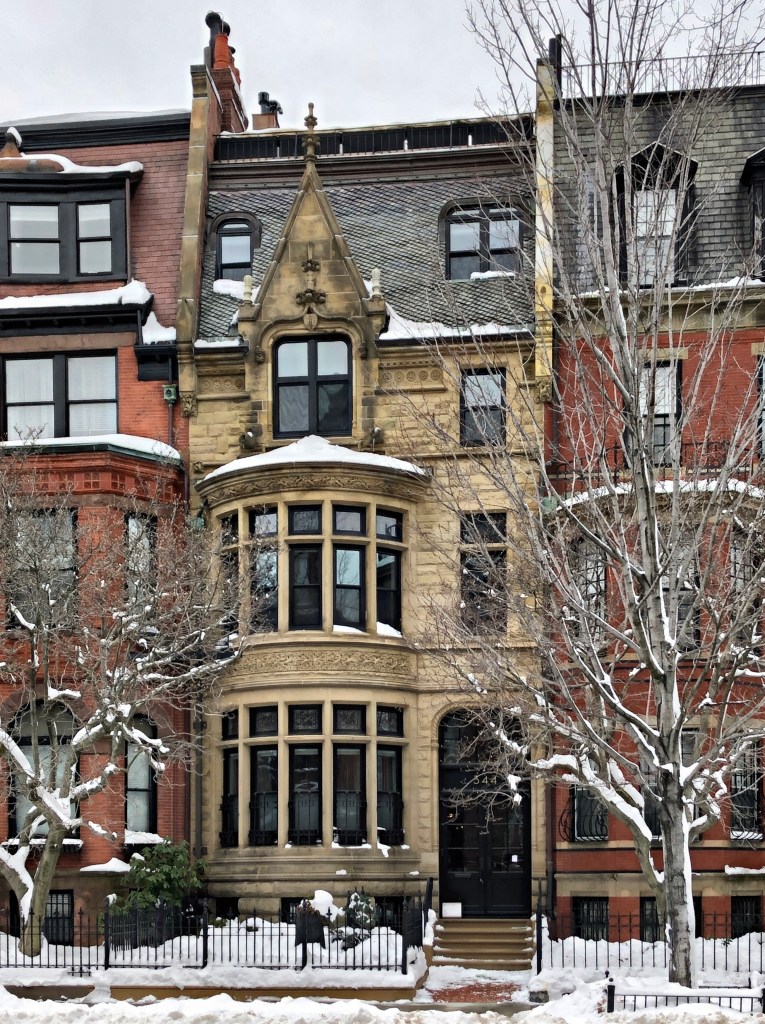
Another of my favorite townhouses in the Back Bay neighborhood of Boston is this Victorian Gothic mansion on Beacon Street, built for Daniel and Mary Knowlton. The residence was designed by the firm of Allen and Kenway and built in 1880 and stands out architecturally for its use of style and use of material amongst a sea of brick. A former cotton merchant, Daniel Knowlton was treasurer of the Flexible Shoe Nail Company and later worked as a stockbroker. The large single-family dwelling was converted into four condominium units in 1989, but has since been switched back to a single-family residence. It sold for $11.2 million dollars as a five bedroom, six full and two half bath home in 2017. Yikes!
Another of Portland’s stunning mid-19th century commercial blocks is the Thompson Block, built in 1868. The structure is one of the most high-style commercial buildings in Maine and is in a great state of preservation. The building was designed by George M. Harding, a VERY busyarchitect after the disastrous Great Fire of 1866, which destroyed much of Downtown Portland. The building stands three-stories tall with a polychrome slate mansard roof providing a full fourth floor, a subtle and great way to get extra height without making a building too overbearing. The mansard is broken up at the facade by dormers with round-arch windows and keystoned and eared hoods. If only all cities held off urban renewal, we would have so many more structures like this!
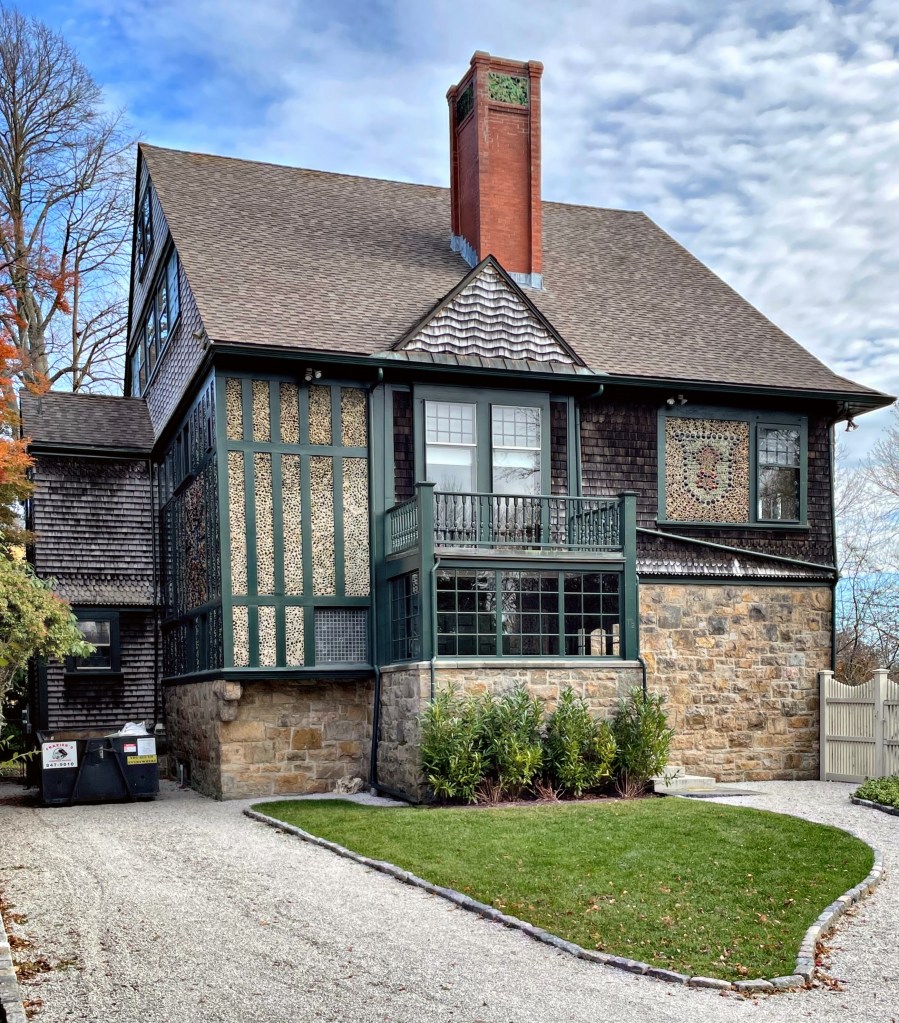
One of the most well-designed and least-pretentious summer cottages in Newport is this charming dwelling on a dead end street. The Samuel P. Tilton Cottage was designed in 1880 by the prestigious firm of McKim, Mead & White as an idiosyncratic blending of Queen Anne and Shingle architectural styles. Mr. Tilton was a milliner (maker and seller of women’s hats) with stores in Boston and Paris, France. He had this cottage built to summer close to the nation’s wealthiest, likely marketing some hats at elaborate Gilded Age events. The facade is assertively Queen Anne with its massing and decorative panels, with shingled side elevation seemingly sprouting from the earth. The architectural terminology for these unique decorative panels is “sgraffito” where here, cement or plaster siding is set and adorned with shells, pebbles, colored glass, and pieces of coal into a cartouche design. The house is one of the finest in Newport, and shows that bigger isn’t always better!
This charming Victorian cottage in Newport was built in 1878 for Henrietta and Dr. Stephen Cambreleng Powell as their summer cottage. The well-connected couple hired New Haven architect David R. Brown to design the residence, which is an excellent example of the Queen Anne and Stick/Eastlake architecture styles. David Brown, the architect, apprenticed under the famed Henry Austin for years in New Haven, Connecticut before becoming a partner of the firm. As any good summer cottage needs a fun name, the couple named their cottage “The Anchorage”. The cottage is now known as the Old Beach Inn, and is among Newports many charming old inns.
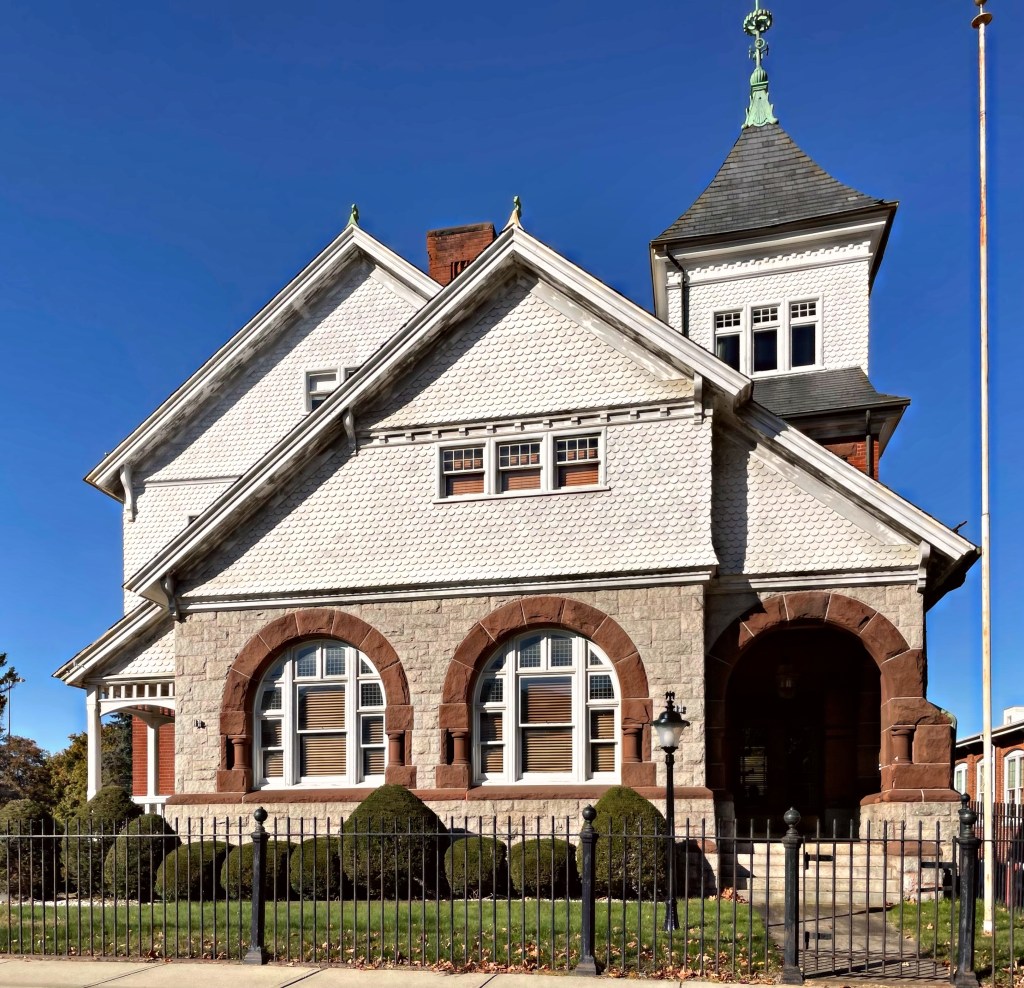
South of the Ware River in Ware’s Industrial Village, you will find this absolutely charming former manufacturing office on the side of the road. The building was constructed in 1885 for the George H. Gilbert Co., a textile manufacturer, as the company offices. The building’s architect could not be readily located, but the building appears to have been the work of a skilled designer. When the Gilbert Company relocated north to a new industrial village of Gilbertville, the Joseph T. Wood Shoe Company moved in. The building now appears to be owned by the present occupant of the mill building nextdoor, American Athletic Shoe Company. The former Gilbert Co. Office is one of the more high-style buildings in the town of Ware and exhibits the best in Queen Anne and Romanesque Revival architecture.
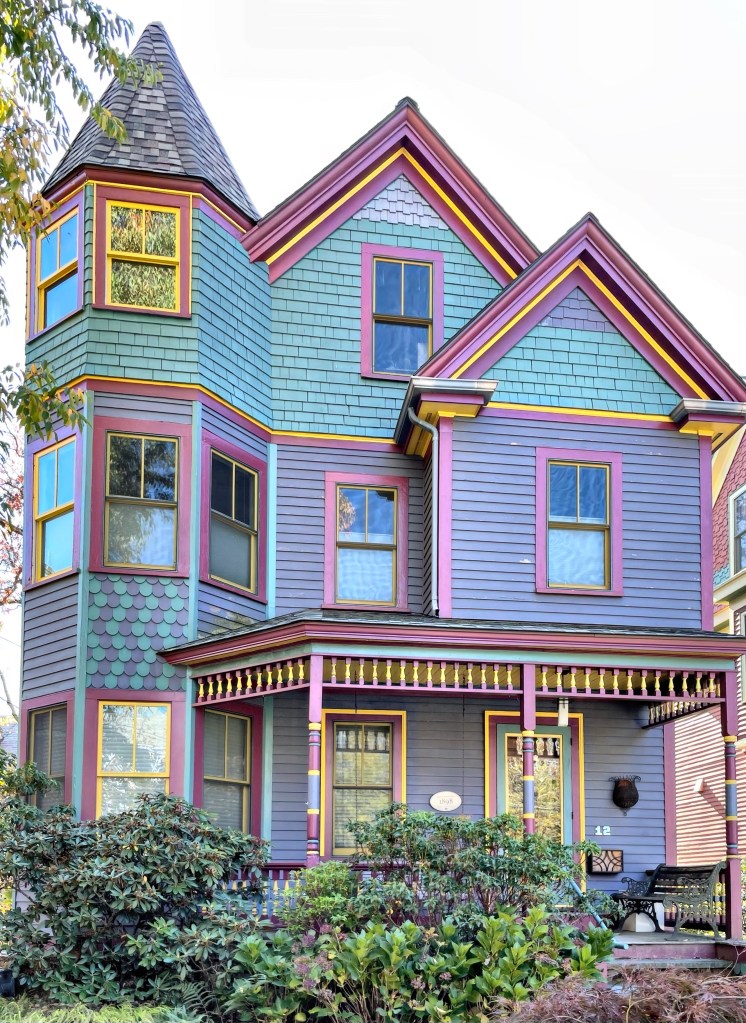
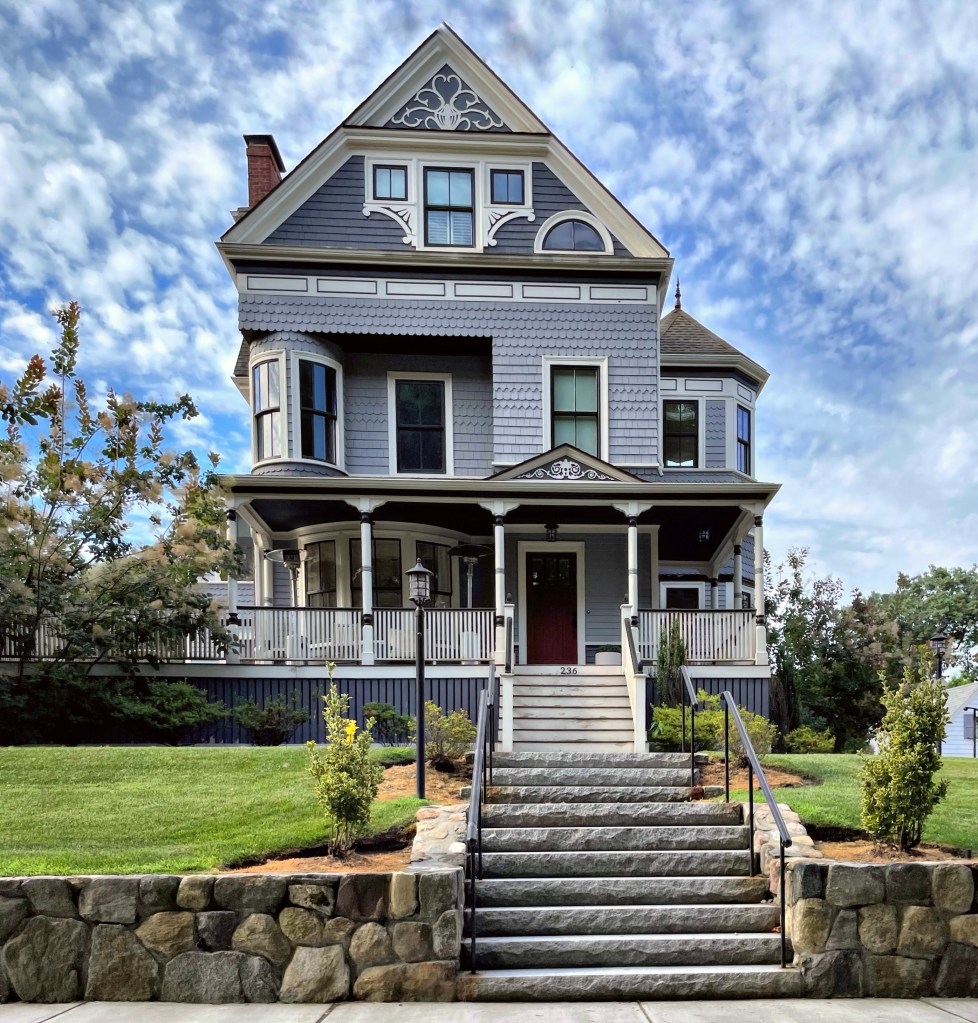
Behold this Queen Anne painted lady in all her glory! This home was constructed in 1898 as a late Victorian addition to Newton’s built landscape. The home’s earliest known owner was a T. C. Sullivan, who left the property to his family upon his death. The house is painted some pretty bold colors, which does an effective job at highlighting the many architectural details and intricacies in the design, but the home would have never been painted like this historically. A little history lesson: the “painted lady” trend took off in San Francisco when after WWII, disinvestment in the urban core led many Victorian homes there to be demolished, altered and covered with siding, and many were painted gray with war-surplus Navy paint (battleship gray). In 1963, San Francisco artist Butch Kardum began combining intense blues and greens on the exterior of his Italianate-style Victorian house. His house was criticized by some, but other neighbors began to copy the bright colors on their own houses. Kardum became a color designer, and he and other artists / colorists began to transform dozens of gray houses into Painted Ladies. By the 1970s, the colorist movement, as it was called, had changed entire streets and neighborhoods. This process continues to this day. The trend took off all over the United States as urban centers saw re-investment and gentrification. While not historically appropriate, the Painted Ladies can really make people happy and show pride in ownership.
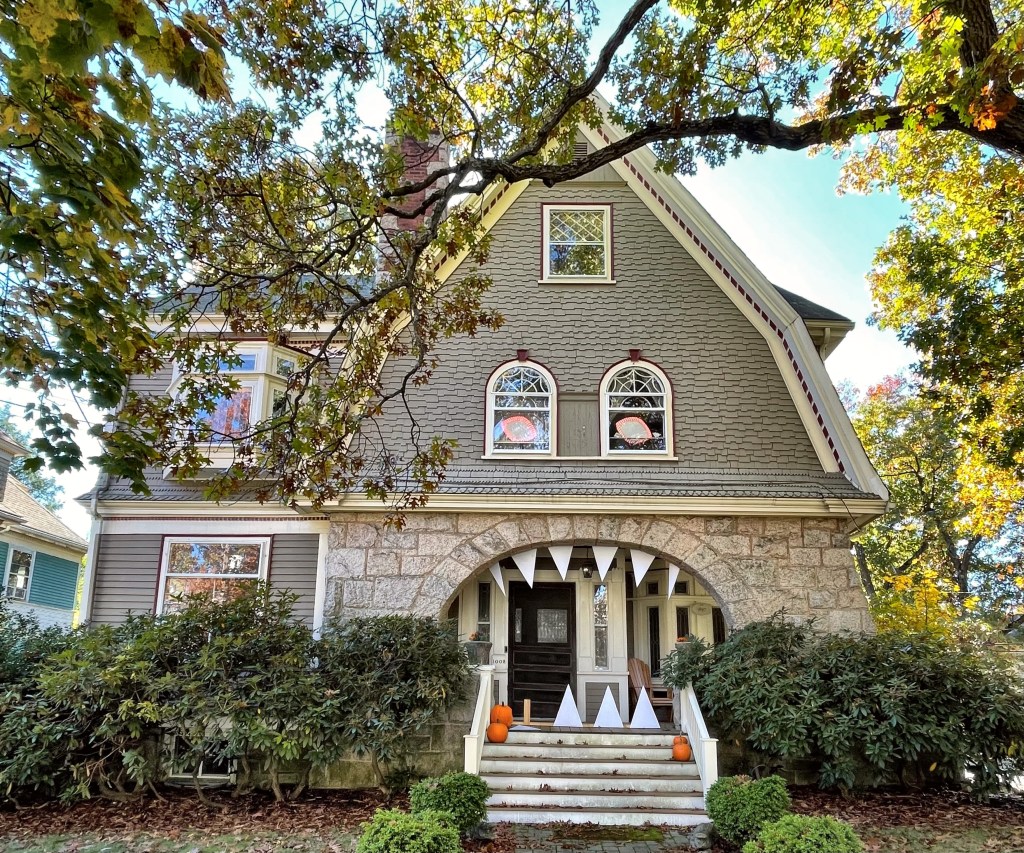
Happy Halloween! To celebrate I wanted to feature one of the more creatively decorated houses in the Boston area, which blends spookiness with architecture! This is the Barrows-Goddard House, so named after its first two owners. The house is located in Newton and was built in 1898 as an eclectic Queen Anne/Shingle style home. The original owner was Joseph Barrows, who developed the property and sold it within a year, relocating to a new home on a less busy street. The property was owned next by Christopher Goddard, an insurance agent with offices in Boston. Architecturally, the gable roof of the main block is intersected by an over-scaled gambrel cross-gable clad in patterned cut wood shingles. The focal point of the design is the Syrian-arched entrance porch of coursed, dressed fieldstone which this time of year, eats trick-o-treaters!
In 1895, when the Queen Anne style was no longer in vogue among architects and builders in the Boston area, the Allston Real Estate Company took a gamble and built this house in a scarcely developed section of Waban Village in Newton on spec, hoping to find a buyer. They found one in Oscar Raymond Rice and his wife Maud Lois Sargent Rice. Oscar worked as a salesman, and Maud volunteered locally with various causes. The family home is a great example of Queen Anne Victorian architecture with varied siding styles, asymmetry, a tower, rounded bay window, porch with turned posts, and applied decoration in the gables. The house underwent a large renovation about five years ago and it still looks great! The listing from 2017 gives me serious house envy.
Eclectic homes that can not be pigeonholed to a single architectural style are among my favorite as they blend features elegantly into a single, unique composition. This house on Windsor Road in the Waban village of Newton, Massachusetts is an example of an “eclectic” late 19th century home. This old house exhibits elements of the Queen Anne and Tudor Revival styles. The house was built in 1897 for Daniel and Ida Baker. After their death, the home was purchased by a James H. Mason, who got it for an estimated $25,000 in 1909. A listing at the time mentions the property included a 14-room house and large stable, the latter still stands at the rear of the lot (since converted to a car garage).