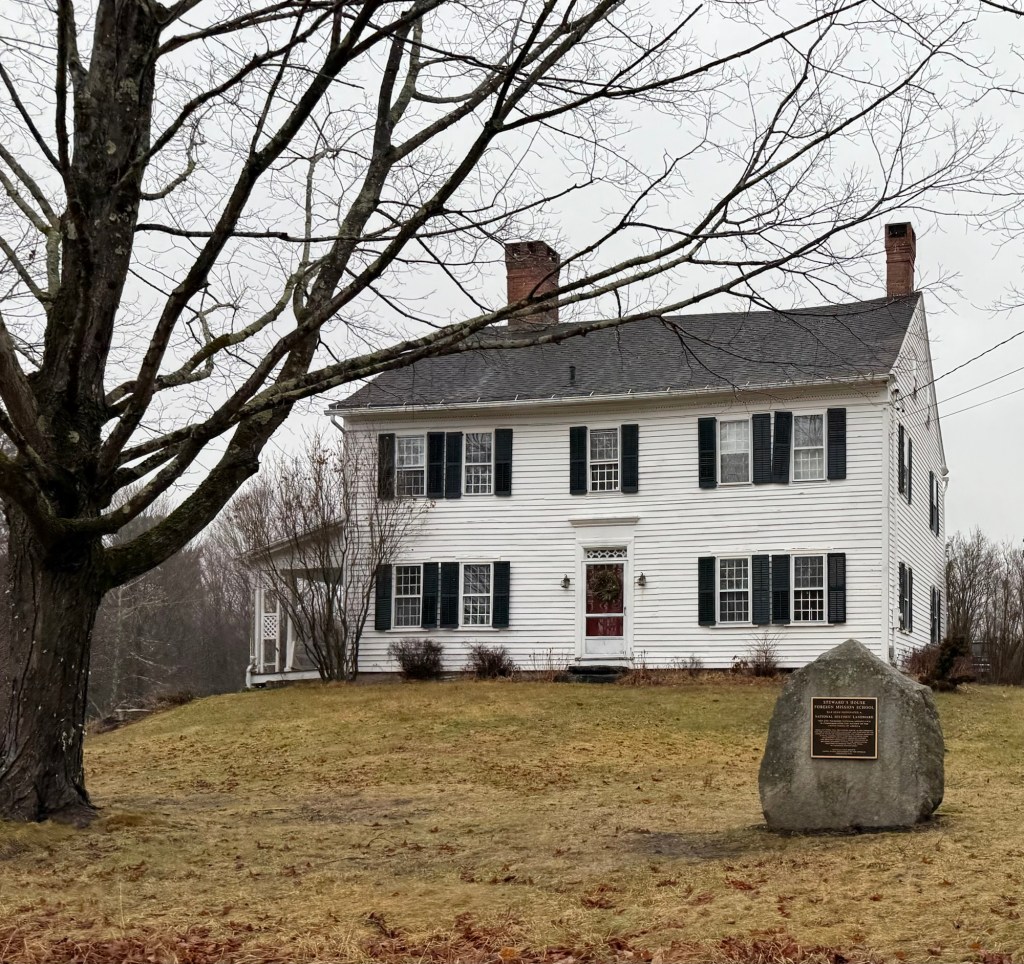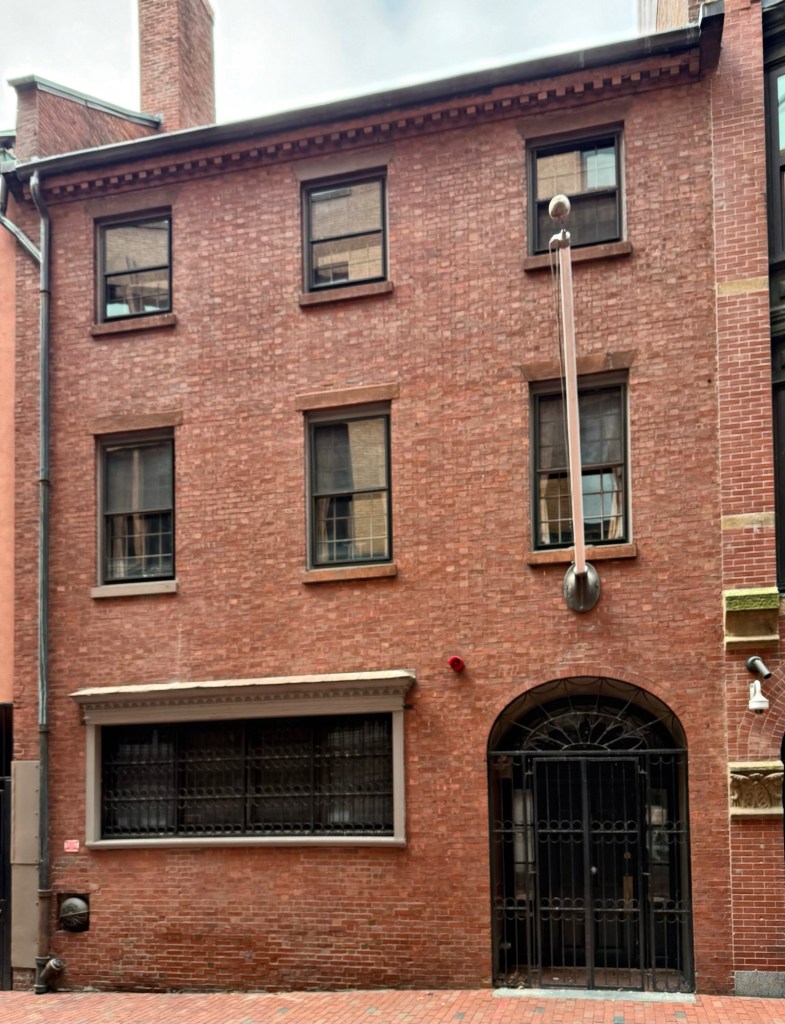
John Northrop House // c.1814

Cornwall’s Foreign Mission School, which began operations in 1817, was virtually unique in the United States, educating both Native Americans and young men from around the globe, including Hawaiian, Bengali, and Japanese. The school was created for the purpose of educating youths of “heathen” nations, to convert them to Christianity, educate them, and train them to become preachers, translators, and teachers back in their native lands. The problematic nature of the school’s seemingly forced assimilation, causing the erasure of cultures, paired with the disdain for foreign students in town lead to much animosity towards the school in Cornwall. The tension reached a head when in 1824, John Ridge, a student at the Foreign Mission School and the son of a Cherokee leader, began a courtship with Sarah Northrop, the white daughter of the school’s steward. A year later they married. Additionally, in 1826, another Foreign Mission School student, Elias Boudinot (John Ridge’s cousin), fell in love with a young Cornwall girl named Harriet Gold, they married in 1826. These marriages were generally opposed to and racism caused support for the school to dissolve, closing by 1827. This c.1814 house was the home of John Northrop, the father of Sarah Northrop, and steward to the Foreign Mission School. The family home, seen here, was also used to house some students while they attended the school. The Northrop House remains one of the few extant buildings with direct ties to this school. The house is one of 65 National Historic Landmarks in Connecticut.

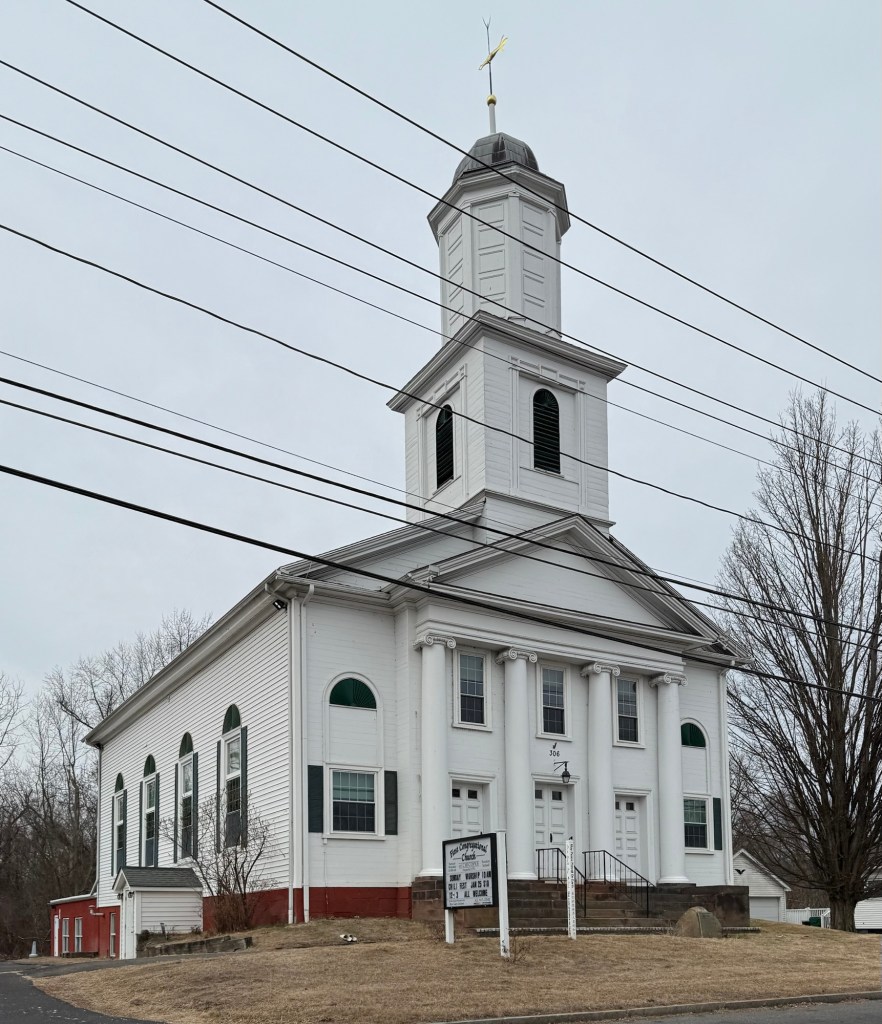
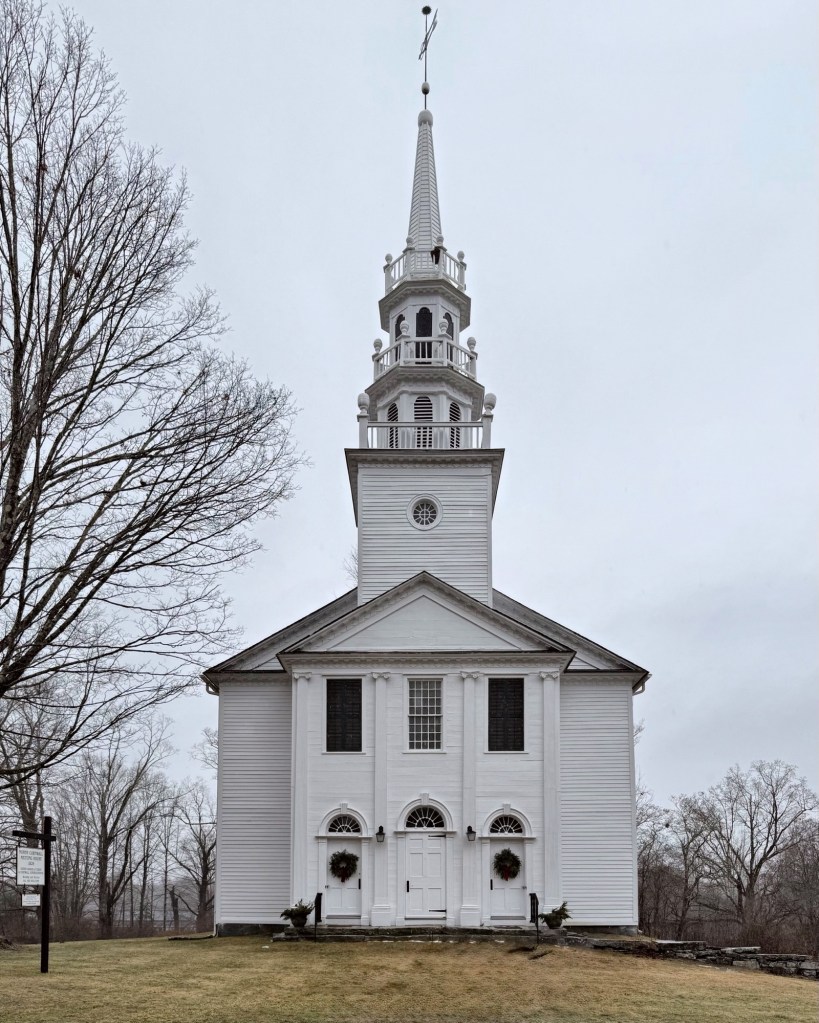
North Cornwall Congregational Church // 1826

During the nineteenth century several small rural settlements dotted the landscape in Cornwall, Connecticut. In 1782, a group of “strict Congregationalists” seceded from the established Congregational church in town and constructed a “second” church in Cornwall Center. Following this, the town was divided into north and south parishes, with First Church built on the town center and the Second Church, this building, constructed in North Cornwall village in 1826. The North Congregational church is among the town’s finest Federal style buildings in the region and features three entrances with fanlight transoms and the bays of the facade are broken up by two-story fluted pilasters.

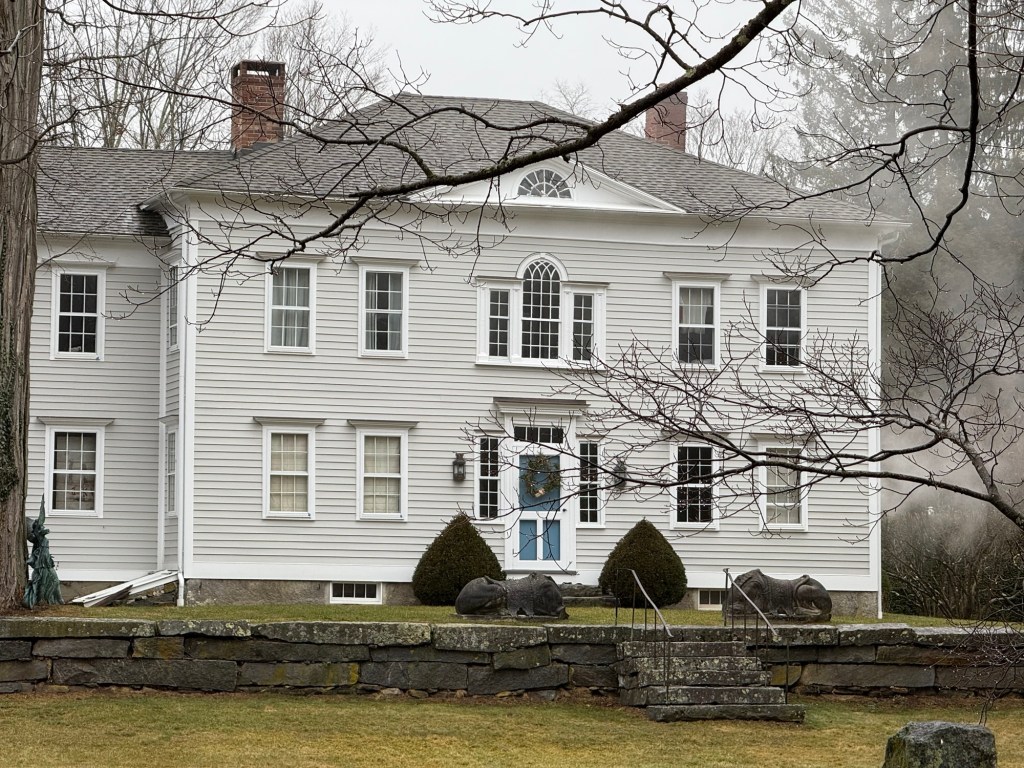
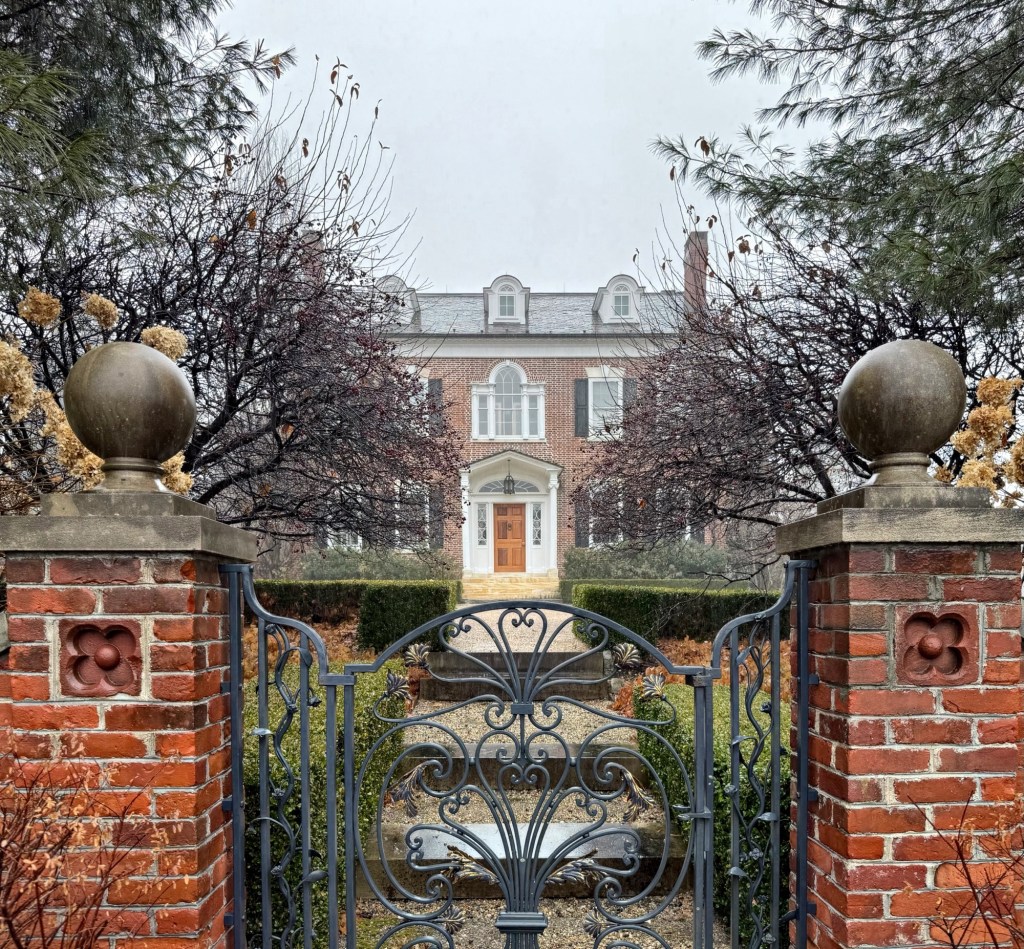
Birdsey Hall // c.1804

Built circa 1804 in the form of an English country estate house, Birdsey Hall stands as the finest property in the town of Goshen, Connecticut. The residence was built for Birdsey Norton (1763-1812), a wealthy cheese merchant who was said to have been inspired to build a country estate after travelling the American south on business. The high-style Federal/Adamesque mansion features expansive grounds bounded by brick walls and Victorian gardens. The property was later owned by Fred Favorite and Robert Devoe, friends of Liberace, who operated an antique store. Birdsey Hall remains one of the finest Federal estates in Connecticut.

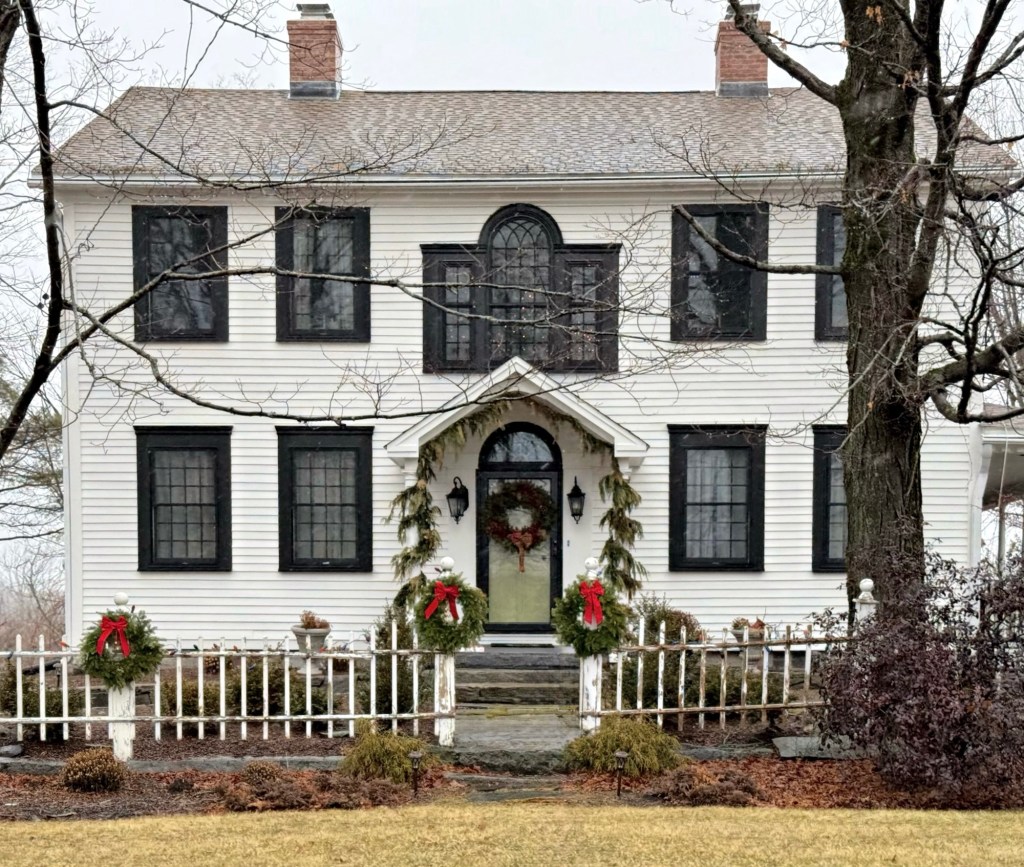
Thompson-Sperry House // 1803

In 1803, General David Thompson (1766-1827) and his wife, Sybil (Norton) Thompson, moved into this recently completed Federal style residence on North Street, the main road through Goshen Village, Connecticut. David Thompson was a merchant and partner in the firm Wadhams & Thompson, occupying a store nearby the Congregational Church. Business partners David Thompson and David Wadhams built near-identical houses across the street from each other, though the Wadhams house has since been gut renovated and lost much of its original fabric. The Thompson House stands out for its Palladian second-story window, glazed with interlacing arcs. The property was owned at the end of the 19th century by Albert Sperry, a Civil War veteran.

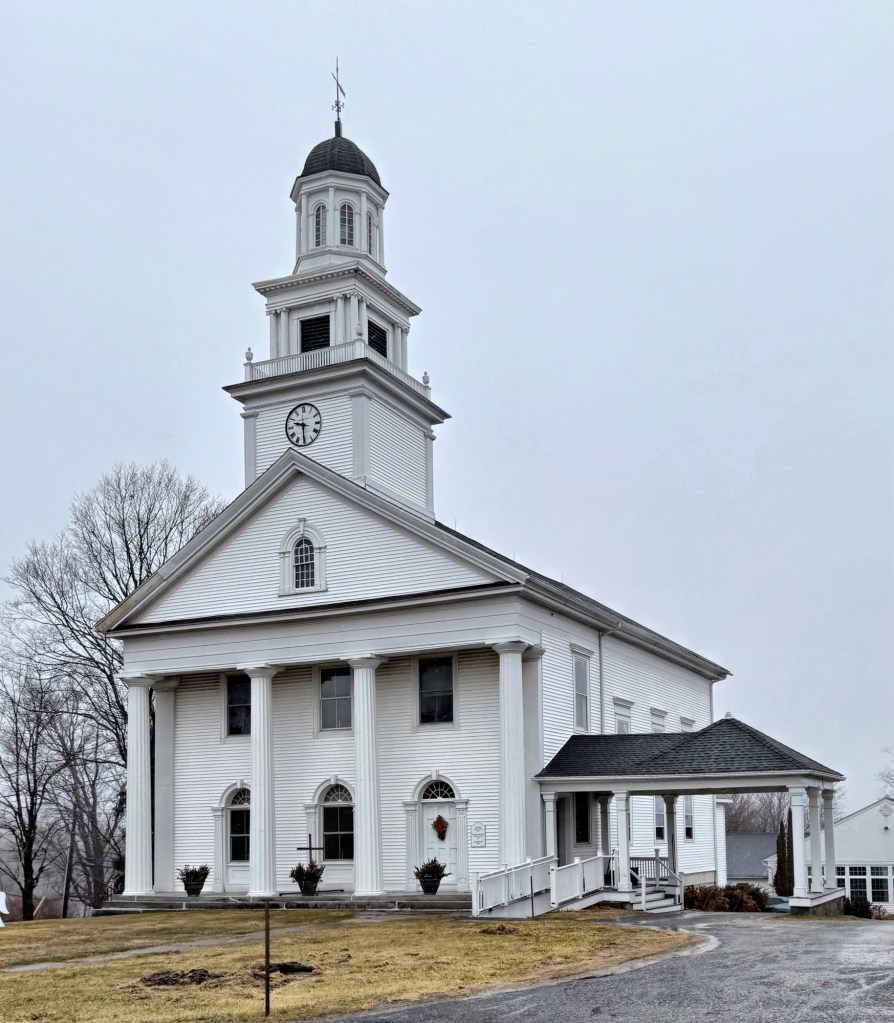
Goshen Congregational Church // 1832

The town of Goshen, located in Litchfield County, is located in the northwestern part of Connecticut was first settled by European colonizers in 1738, with the town incorporating a year later. The community was named after the Land of Goshen, a part of ancient Egypt in the Bible. Goshen primarily grew as rural and agricultural in character, with limited industry and commercialization compared to other nearby towns. The town center village was home to the Congregational Church as far back as 1750. In 1832, the present Congregational Church was built from plans by Benjamin E. Palmer, a carpenter-builder who also built the Windham County Courthouse in Brooklyn, Connecticut. The church blends both Federal and Greek Revival styles, and Palmer likely took inspiration from Asher Benjamin’s design guidebooks. The church retains much of its original character even with the altered steeple, porte-cochere, and conversion of three-door facade to a single-entrance in 1894.

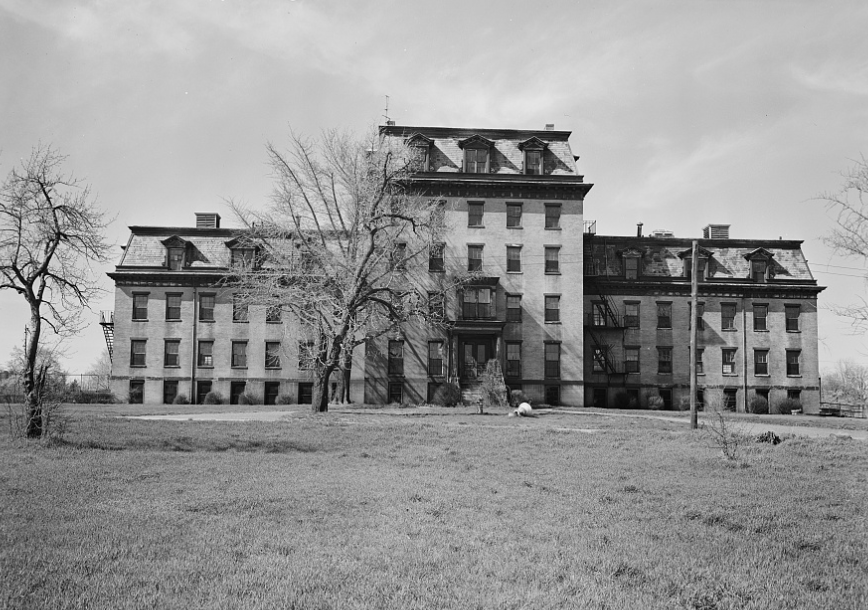
Dexter Asylum // 1828-1958

C.1958 photo before demolition. Courtesy of Library of Congress.

Built in 1828, Dexter Asylum was a “poor farm,” an institution housing the indigent, elderly, and chronically unemployed, located in the East Side of Providence, Rhode Island. Poor farms were common before the introduction of Social Security and welfare benefits in the United States, considered a progressive method for dealing with poverty. Ebenezer Knight Dexter (1773-1824) was a wealthy mercantile trader in Providence, who in 1800, built Rose Farm, a gentleman’s farmhouse on what was then, the outskirts of Providence. Upon his death in 1824, he bequeathed to the town 40-acres of the farmland to the north for use as a poor farm or almshouse site. The building was completed by 1828 and was originally three stories, and later expanded with a mansard roof and dormers sometime later in the 19th century. Dexter also stipulated that a stone wall would surround the site, and parts of it remain to this day. As with many poor farms and almshouses of the period, residents worked farmland and cared for pigs and a herd of dairy cows; they lived in this large building, strictly segregated by sex. Residents were essentially inmates, indentured for periods of six to twelve months, and could not leave the property without a ticket of permission. In the interwar period, “inmate” population there declined and changing views on how to assist the poor caused the City to abandon the facility. After decades of legal troubles and stipulations of the Dexter will, in 1956, the plot was auctioned off, and Brown University purchased the site. The grounds are now used by some of the Brown University athletic facilities. The city set aside the money from the sale to create the Dexter Donation, which gives annual grants to assist the city’s poor, providing an enduring legacy of Dexter’s Asylum.

Rose Farm – Ebenezer Knight Dexter House // 1800

When Ebenezer Dexter built this country retreat in 1800, it stood at the eastern edge of settlement in Providence, Rhode Island. Several of the city’s wealthy residents maintained country seats on the then rural outskirts of the city, but Rose Farm is the only remaining gentleman’s farmhouse from the period in this part of the city, surviving over two centuries of development pressure and economic recessions. The house stands out amongst a neighborhood of mid-to-late 19th century residences, for its refined form and simple symmetry. Rose Farm is a wood-frame dwelling with brick end walls and exceptionally tall chimneys at the hipped roof, which once had two levels of a decorative balustrade. Ebenezer Knight Dexter (1773-1824), was a businessman and philanthropist, who left the bulk of this farmland to establish a home for the poor, Dexter Asylum, on land to the north. John Stimson bought the farmhouse and surrounding land in 1837 and the property directly surrounding the farmhouse was later subdivided with large residential lots, with the neighbrohood filling-in by the late 19th century.

Derby Summer House // 1793

The Derby Summer House sits on the Glen Magna Farms property in Danvers, Massachusetts, and is a rare and excellent example of a formal 18th century garden house in the Federal Style. The structure was built in 1793-94 by Samuel Mclntire, the noted craftsman-carpenter of Salem, on the country farm of Elias Hasket Derby in South Danvers. The Derby Farm was sold off by the family, but in 1901, Mrs. Ellen Peabody Endicott, a descendant of the original owners, bought the Derby Summer House and transported it to Glen Magna Farm, their own summer residence. A shopping center now occupies the original location of the Derby Farm. Inside the structure on the first floor, there are two small rooms which are divided by a central hall that extends through the structure. The steps and vestibule at this level are surfaced in white marble. The second floor, where tea was served, was decorated in an Oriental manner. A wood parquet floor, dating from the first decade of this century is still in place. The structure with its carved figures has been studied and replicated by architects and historians for decades, but nothing beats the original.


Glen Magna Farms // c.1790

Glen Magna Farms is a historic estate located in Danvers, Massachusetts, and it is one of the lesser-known historic properties of this stature. During the War of 1812, Joseph Peabody, the wealthiest Salem shipping merchant of his day, bought a 20-acre Danvers farm with a dwelling house. The c.1790 house was likely updated at this time in a higher example of the Federal style, and used as a summer residence the family would escape to during the warmer months. Peabody purchased additional property and Glen Magna grew to over 130-acres. William Crowninshield Endicott, who served as Secretary of War during the Grover Cleveland administration, married Ellen Peabody, granddaughter of Joseph Peabody in 1859. The couple would inherit Glen Magna and later hire the firm of Little, Browne, and Moore in the 1890s to renovate the mansion and update the gardens. Ellen Peabody Endicott would also have the Derby Summer House added to the grounds by 1901. In 1963, the Danvers Historical Society purchased the house and eleven acres of surrounding gardens which they painstakingly restored to their early 20th century condition. Glen Magna can now be rented out for weddings and other events!

Fowler House // 1809

Photo courtesy of Wikimedia commons.

The Fowler House is located in the Danversport section of Danvers, Massachusetts, and is one of the town’s few brick Federal period homes. The residence was built in 1809 by builders Levi Preston and Stephen Whipple for Samuel Fowler Jr., an early Danvers industrialist and landowner in this part of town. The property was passed down through generations of the Fowler family and ultimately acquired by the Society for the Preservation of New England Antiquities (SPNEA, now known as Historic New England) as their second property acquisition in 1912. Uniquely, Historic New England granted life occupancy of the house to the two unwed Fowler sisters, who had resided here, even as it was converted into a museum. When bought by SPNEA, some members were concerned that the Fowler house was not grand or architecturally interesting enough to warrant its acquisition, Samuel Appleton, the founder, stated, “As might be expected, the Fowler home reflects the simple tastes of its owner. As seen from the square the house is as severely simple as it could be. It depends for its effect on its very simplicity and admirable proportions. The principal features of the house may be said to be simplicity, good taste, solid construction, splendid preservation, and homogeneity.” The property was eventually sold by Historic New England to a private owner, but a preservation easement by the Society ensures its preservation for the future. The Fowler House was recently listed for sale, and the property retains many historical features, including original ca. 1810 wallpaper in the main two-story entry hall and a large hearth in the main kitchen, its original floors, plaster, woodwork and other features.