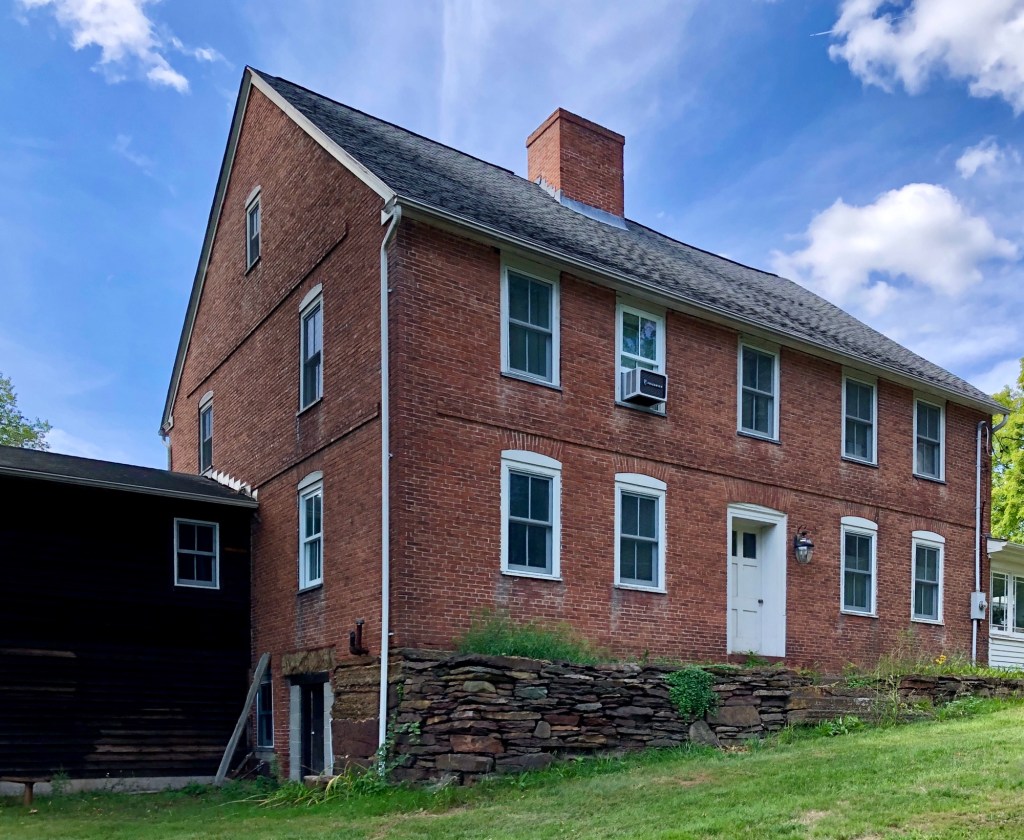
Maxwell-Barton House // 1803

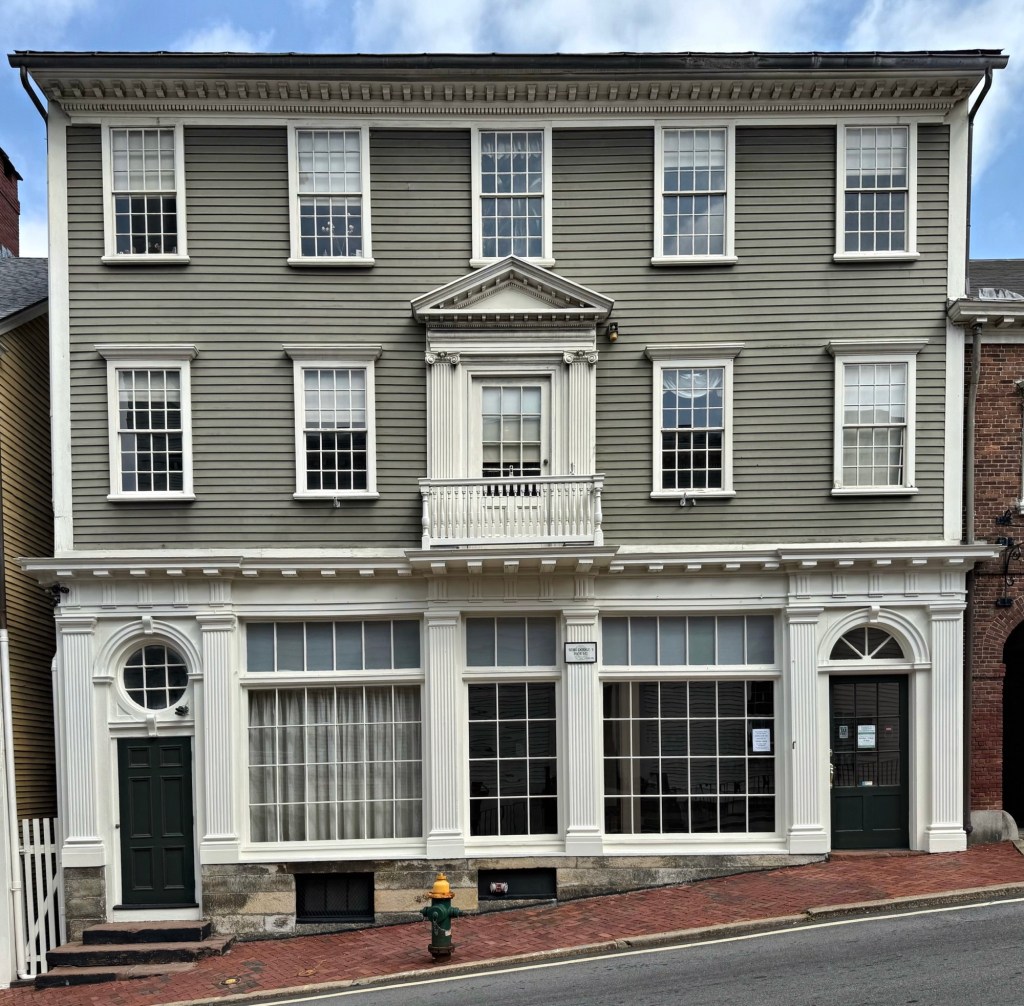
Built in 1803 for Captain Level Maxwell (1754-1828), this five-bay, Federal style house built of brick, is located on Main Street in Warren, Rhode Island, and has ties to the community’s maritime past. The original owner, Level Maxwell, was a member of the wealthy Maxwell Family who built their wealth in shipbuilding and the triangle trade. Level Maxwell was a captain and invested in ships, including the schooner Abigail, which would become Warren’s first slave ship in 1789, two years after slave trading had been declared illegal for Rhode Island residents. The Abigail was designed with a middle deck less than five feet high, where the kidnapped Africans would be imprisoned, with sources stating that 64 African men, women and children were forced onto the ship and then imprisoned for two months on the journey across the Atlantic. Eleven enslaved people died on the journey and were likely thrown overboard into the open sea, with the surviving 53 people sold into slavery in the Caribbean, with the Abigail returning home with the profits. It is unclear if Level Maxwell lived in this house or built it for sale, but the property was owned in the mid-19th century by George A. Barton, a merchant. The property was owned in the late 20th century by Mary King, who restored the old house and operated her antique store from the residence. Architecturally, the home exhibits many features of the Hazard-Gempp House nearby on Liberty Street, and was likely constructed by the same builder.

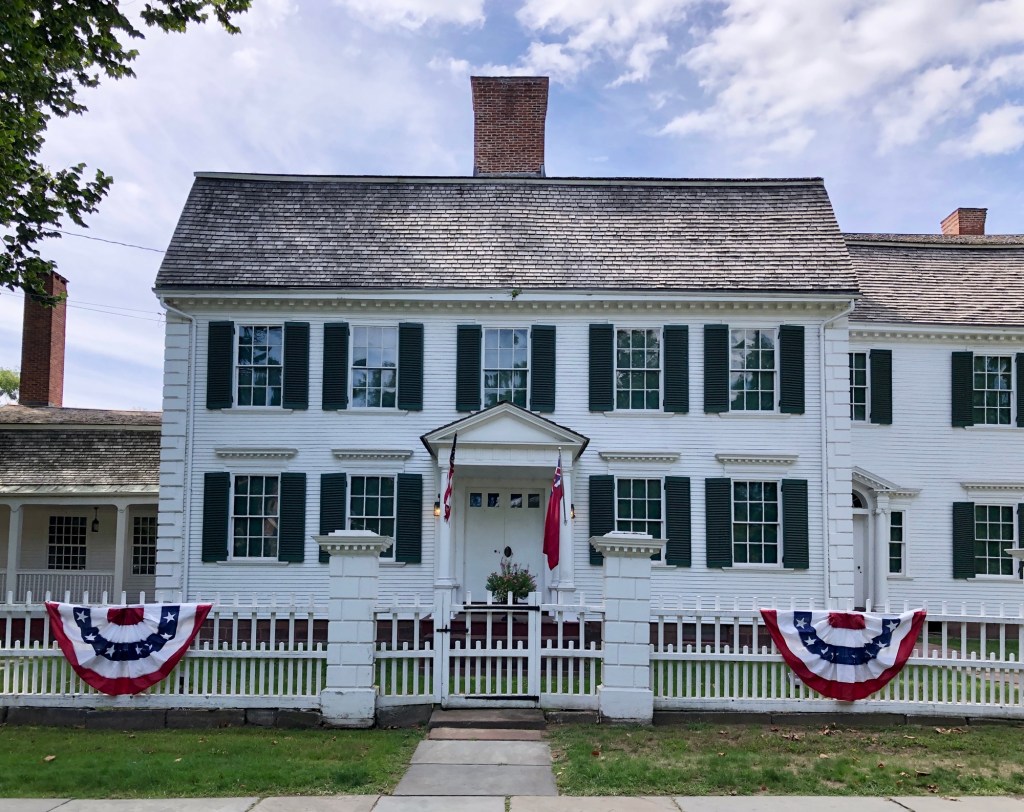
Hazard-Gempp House // c.1800

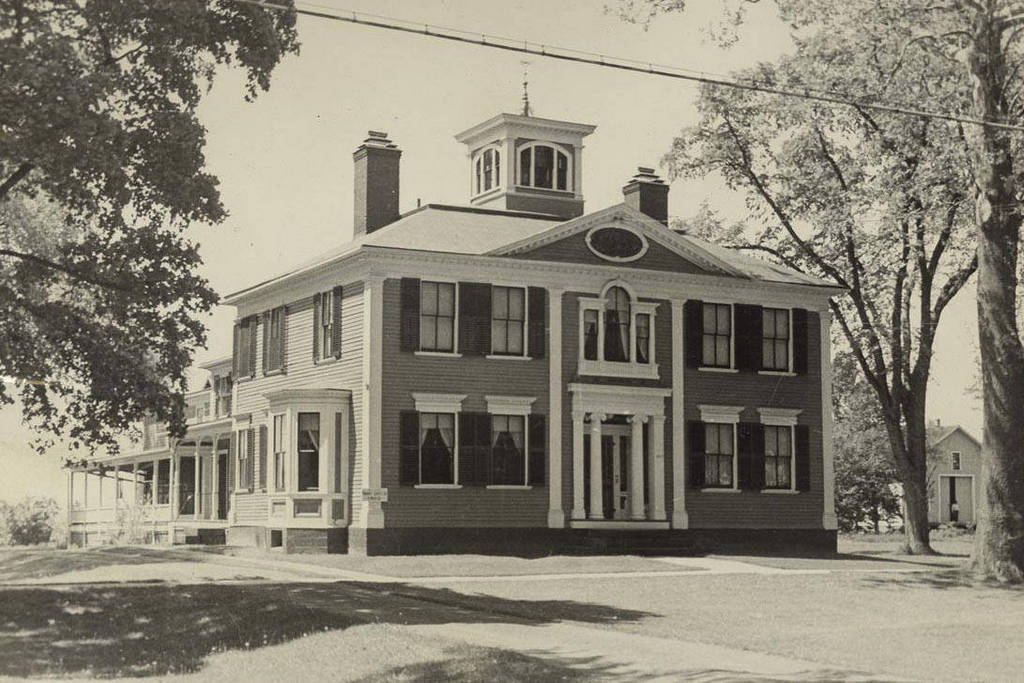
This elegant brick Federal style residence in Warren, Rhode Island, was built around the turn of the 19th century, sometime after Liberty Street was laid out in the mid-1790s. An excellent example of the Federal style finished in brick, the three-bay residence features a projecting belt course between the first and second stories, corbels and flared lintels at the windows, a hipped roof surmounted by a small, centered platform, and an elaborate entry with pediment and elliptical fanlight transom. The builder is not known at this time, but the house was owned by George C. Hazard and later inherited by his son, George G. Hazard and later by Mary Jane Hazard, who remarried to Lucius Warner. In the early 20th century, the property was purchased by Gottlieb and Louise Gempp, proprietors of the local American-German Club. Despite having its brick painted, the Hazard-Gempp House remains as one of the town’s great and well-preserved Federal period homes built of brick.

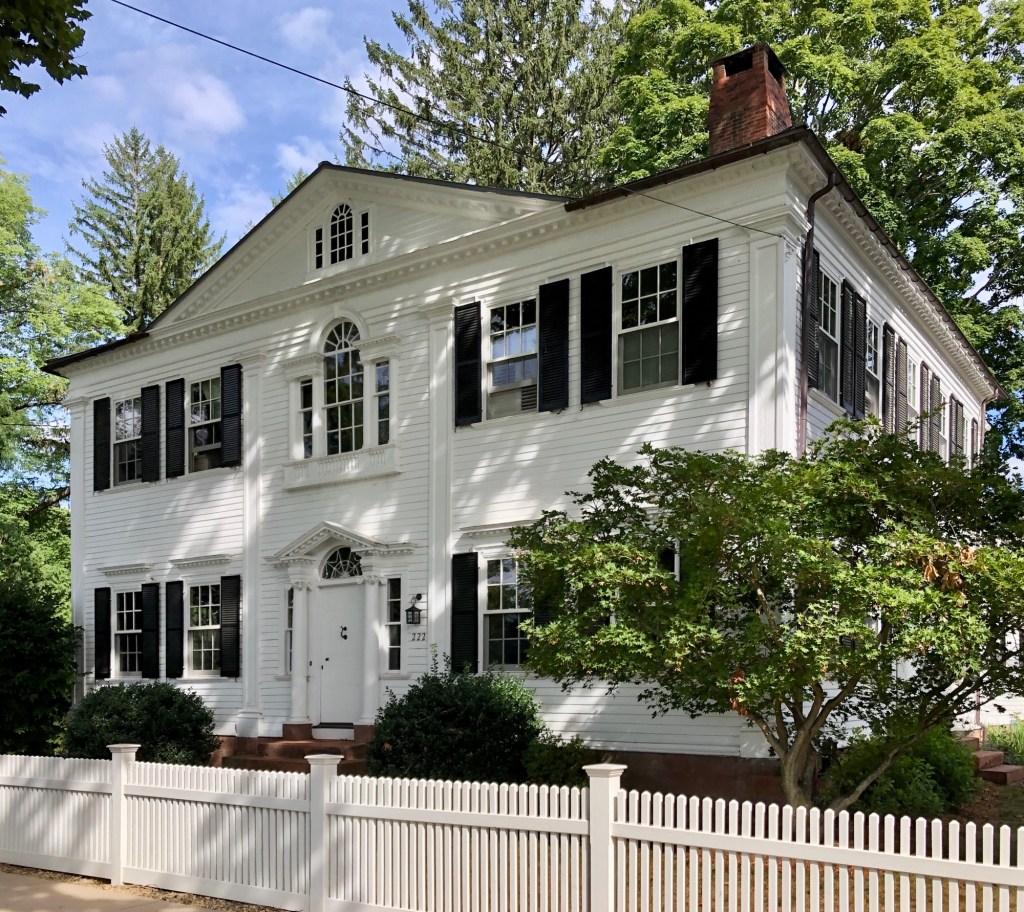
General Nathan Miller – Commander Joel Abbot House // 1789

The Miller-Abbott House at 33 Miller Street in Warren, Rhode Island, is significant architecturally as well as for its owners, who included a Patriot in the American Revolution and naval officer. The first owner, Nathan Miller (1743-1790) was a prominent local shipbuilder in Warren, Brigadier General of the Rhode Island Militia during the Revolutionary War, and delegate for Rhode Island to the Confederation Congress in 1788. This home was built in 1789, a year prior to his death in 1790; after-which, the general’s daughter, Abigail, and her husband, Charles Wheaton inherited the property and lived here with Nathan’s widow, Rebekah. In 1803, the house was expanded, likely when the right two bays were added to the home. Their daughter Laura married Joel Abbot in 1825 and resided here afterwards. Joel Abbot (1793–1855) was a Naval officer in the War of 1812, and after later important promotions, in 1852, he was made Commander by Commodore Perry. Soon after, Commodore Perry asked Abbot to accompany him on his famous Japan expedition, where U.S. ships sought to explore, surveying, and the establish diplomatic relations and negotiate trade agreements with the various nations in Japan, the first time in history. General Abbot died in Hong Kong in 1855 and his body was returned to Warren for burial. The Miller-Abbot House remains well-preserved despite replacement windows and retains its large side and rear yards in the dense downtown.

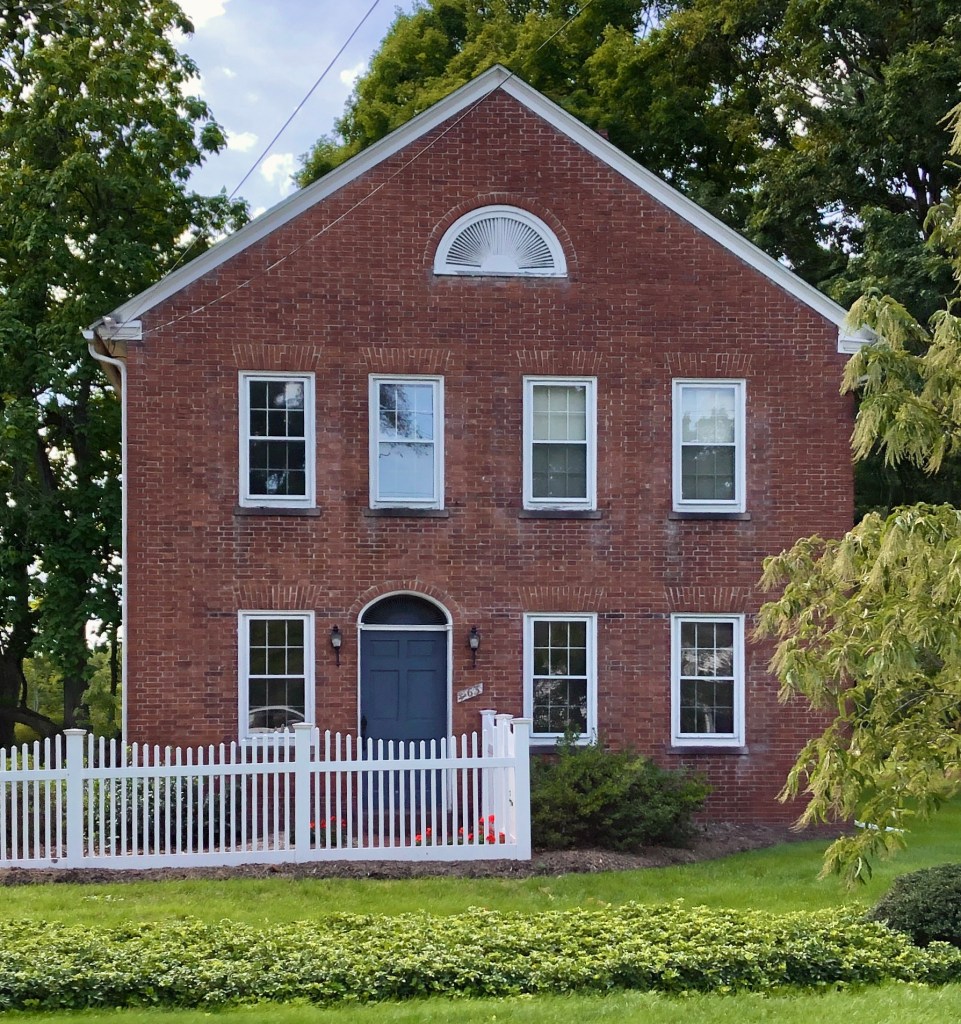
Charles Street Meeting House // 1807

The Charles Street Meeting House at the corner of Charles and Mount Vernon streets in Boston’s Beacon Hill neighborhood is one of the finest examples of a Federal period meeting house in New England. The building is thought to have been designed by architect, Asher Benjamin, due to its similarities to his Old West Church on Cambridge Street built a year prior. At the time of construction in 1807, the church stood near the banks of the Charles River, but is now a distance away from the Charles following a land-filling campaign to expand buildable land in the city. The Charles Street Meeting House consists of a two-story gable-roof main structure with a three-story tower on the south (primary) elevation that supports a clock tower and wooden cupola with double Ionic pilasters supporting the domed roof. The building was constructed for the Third Baptist Church congregation, who used the nearby Charles River for baptisms. In the years before the American Civil War, it was a stronghold of the anti-slavery movement, and was the site of notable speeches from such anti-slavery activists as Frederick DouglassWilliam Lloyd GarrisonWendell PhillipsHarriet Tubman and others. The Baptists sold the structure to the First African Methodist Episcopal Church in 1876, which was part of the first Black independent denomination in the United States. The AME Church sold the building in 1939 to the Charles Street Meeting House Society, and after a period of use as an Albanian Orthodox church, it was sold to the organization that is now, Historic New England, who were required to keep restrictions to preserve the building’s exterior. It served as a Universalist church from 1949 to 1979 with rented space inside to tenants, including a LGBT newsletter, Gay Community News, which was founded in the building in 1973. In 1980 the Meeting House was purchased by the Charles Street Meeting House Associates, who worked with the architectural firm of John Sharrat Associates to restore the building and adaptively reuse it into four floors of offices, with retail on the ground floor.

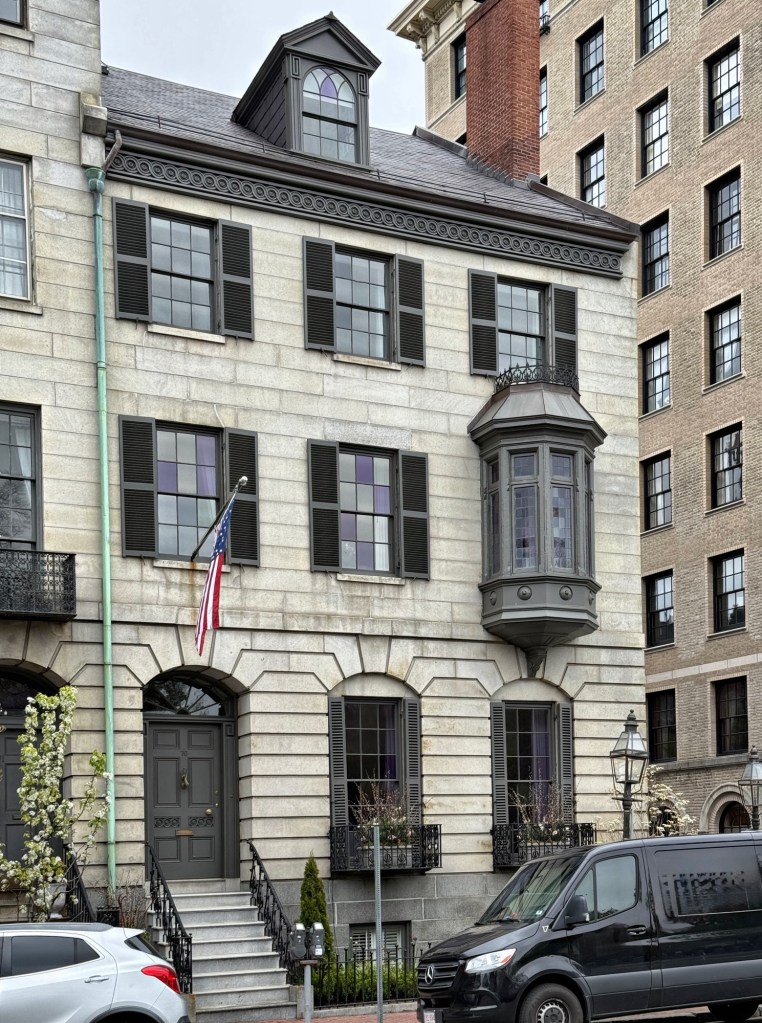
Cotting-Russell Mansion // 1812

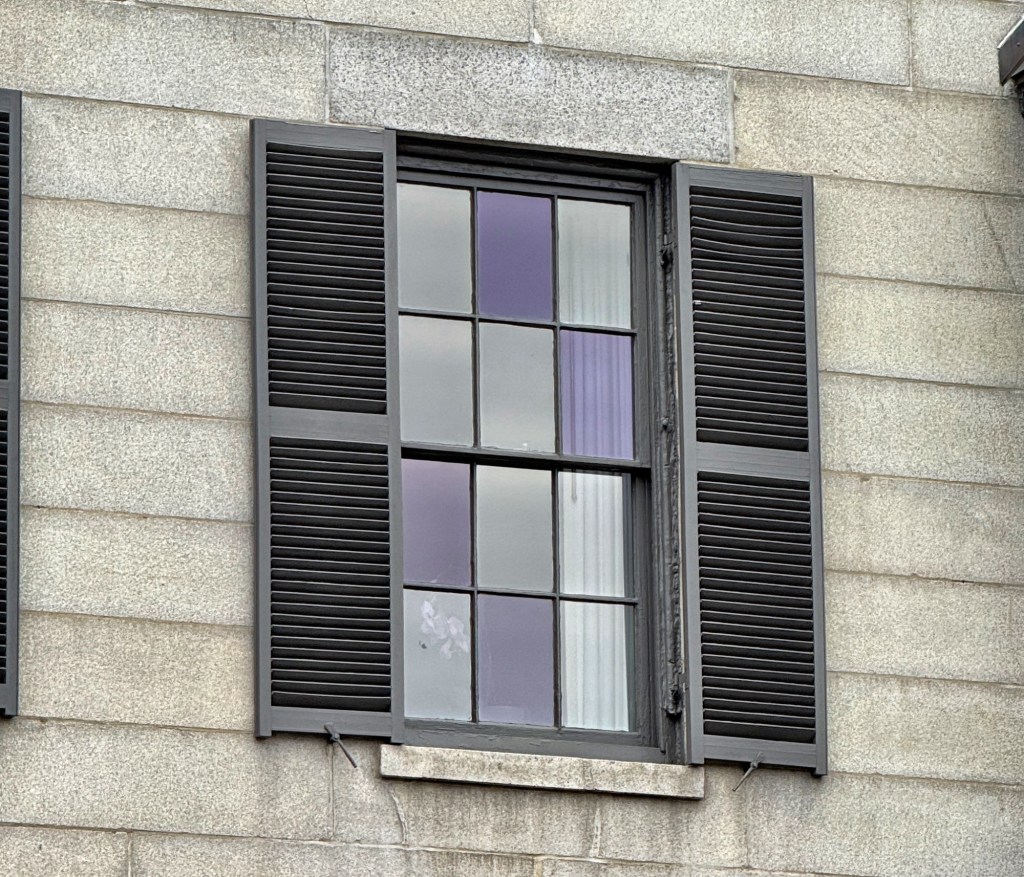
Walnut Street in Boston’s Beacon Hill is one of the finest short streets that showcases some of the best examples of 19th century residential architecture in Massachusetts. Built in 1812, the house at 8 Walnut Street, is an excellent example of a Federal style mansion updated after the Civil War with new window sashes and projecting oriel window. The recessed off-center entrance consists of a front door which is flanked by multi-pane sidelights and surmounted by an elliptical fan light. On either side, columns support the cornice-headed entablature which disrupts the painted stone beltcourse between the first and second floors. The mansion was built by Uriah Cotting (1766-1819) a prominent real estate developer. When this house was completed, Cotting the property to Nathaniel Pope Russell, an insurance man who rented the property. Dr. George Parkman rented this house at the time of his tragic death at the hands of a Harvard Medical School professor in 1849. Mrs. Parkman and their son, John E. Parkman resided here until after the trial, when they moved to a larger residence on Beacon Street.

Motley-Davis Mansion // 1811

This stately Federal style mansion at 10 Walnut Street in Beacon Hill, was built in 1811 for Ebenezer Francis as an investment property on land he had purchased from Uriah Cotting, one of the premier real estate developers of 19th century Boston. By 1823, Thomas Motley, the father of historian John Lothrop Motley, lived here, and hosted impromptu melodramas enacted by a young John Motley and two of his friends,
Wendell Phillips and Thomas Gold Appleton, both of whom lived close by on Beacon Street. After the Civil War, the property was owned by James Davis (1806-1881), a wealthy coppersmith who co-founded The Revere Copper Company with Joseph Warren Revere, grandson of Paul Revere. James Davis remodelled the Federal style house with Second Empire detailing including a brownstone-faced first story and quoins, with an oriel window at the second story, and a slate mansard above a bracketed cornice. During the 1920s, 10 Walnut Street’s Victorian facade was removed and a Federal Revival facade was constructed in its place, closer to original conditions. Today, the Motley-Davis Mansion rises four stories from a low granite basement to a flat roof enclosed by a low parapet. The off-center entrance is marked by columns supporting a cornice-headed entablature. This entablature interrupts the continuous stone belt course separating the first and second stories. What a beauty.

Callender-Sedgwick House // 1802

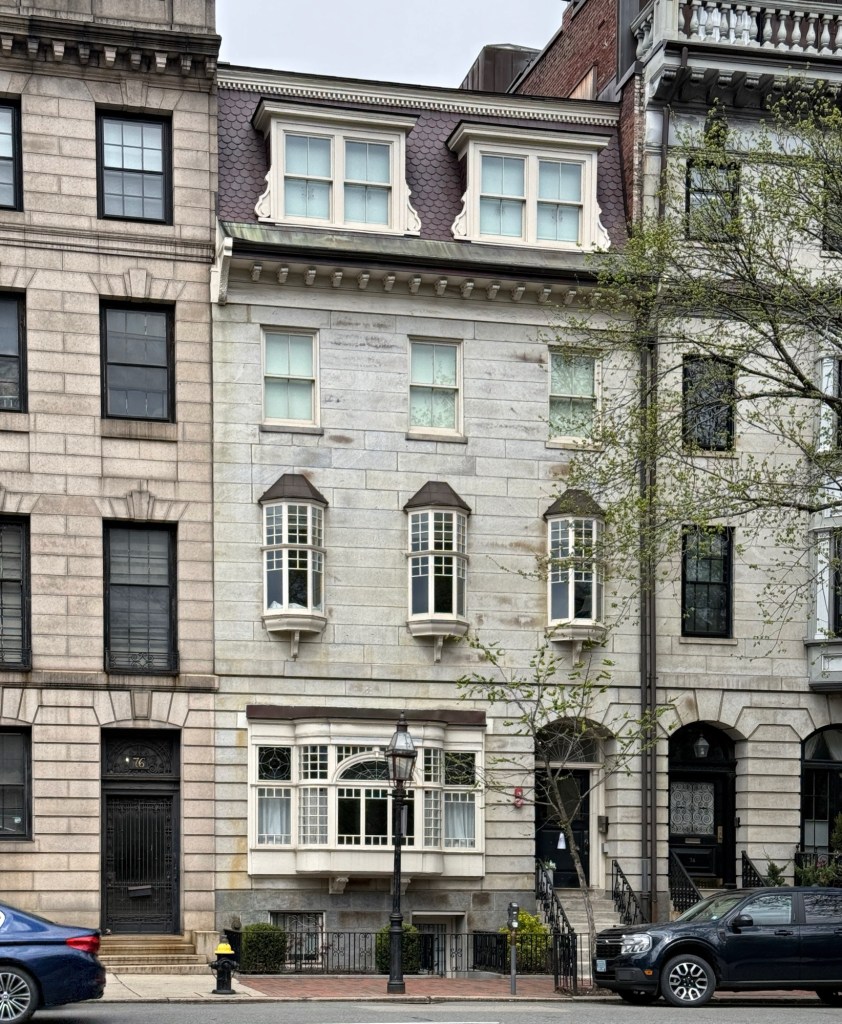
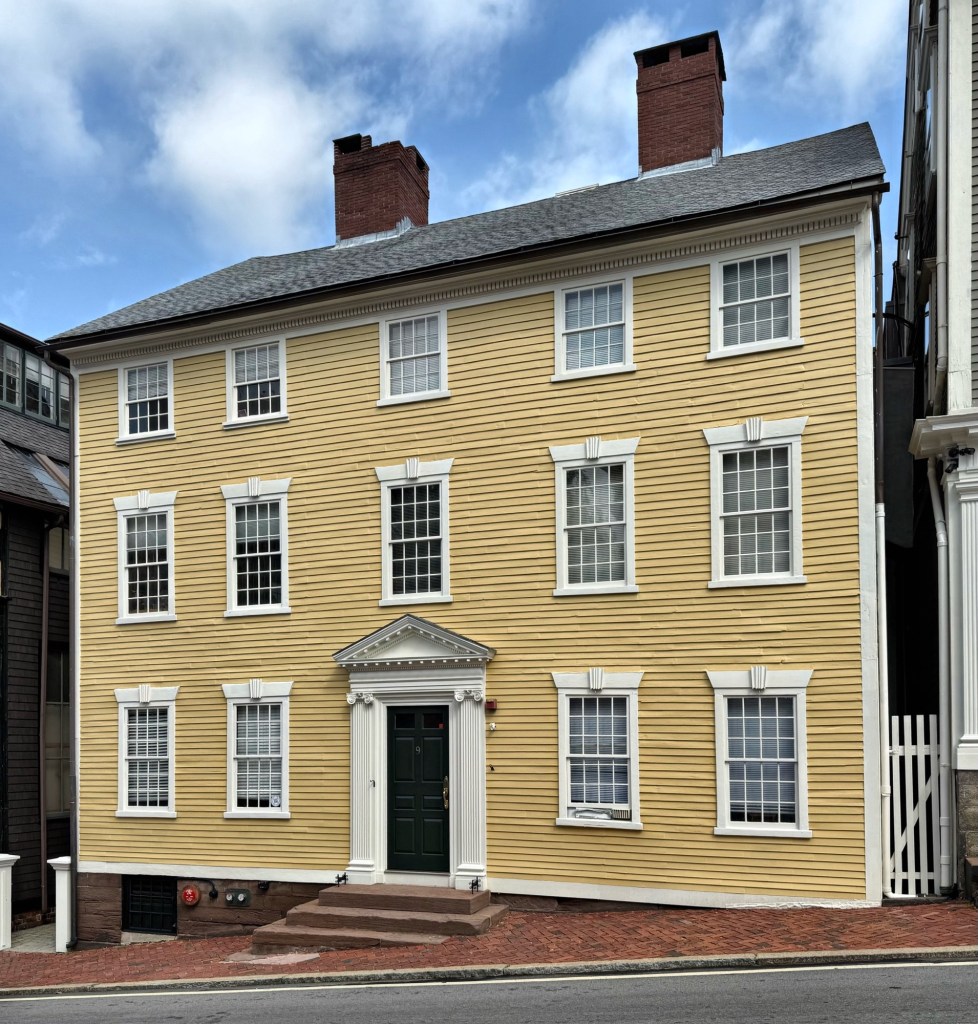
Built in 1802, this large residence at 14 Walnut Street is among the oldest extant mansions on the South Slope of Beacon Hill and includes a large hidden garden behind a granite block retaining wall. John Callender, Clerk of the Supreme Judicial Court of the Commonwealth, purchased land at the corner of Mount Vemon and Walnut streets for $2,000 and immediately started construction on his requested “small house finished for little money $5,000-$7,000”, but this was anything but modest. The house originally had its primary facade facing Mount Vernon Street, but in 1821, Walnut Street was lowered by city officials, so Callender had the granite retaining wall built for the garden and new entry built on Walnut Street. Mr. Callender lived here until his death in 1833 and the property was purchased by members of the Lyman family and later by Harriot Curtis (1881-1974) an early amateur female skier and golfer who used her fortune as a philanthropist, funding medical facilities in Boston for impoverished immigrants and served as dean of women in Hampton Institute in Virginia, an HBCU from 1927-1931. The most significant owner, Ellery Sedgwick (1872-1960), lived here from 1908 until his death in 1960. Sedgwick worked as editor of the Atlantic Monthly (now known as The Atlantic), and under his ownership, the magazine became one of the most circulated magazines in the world. The Callender-Sedgwick House features unique flushboard siding, providing a seamless surface that resembles a masonry wall when painted earth tones and a 19th century oriel window. The brick end elevation is punctuated with bays of hung windows and the recessed entry with a long, granite garden wall which has been well-preserved by owners.


Lyman-Paine Mansion // 1824

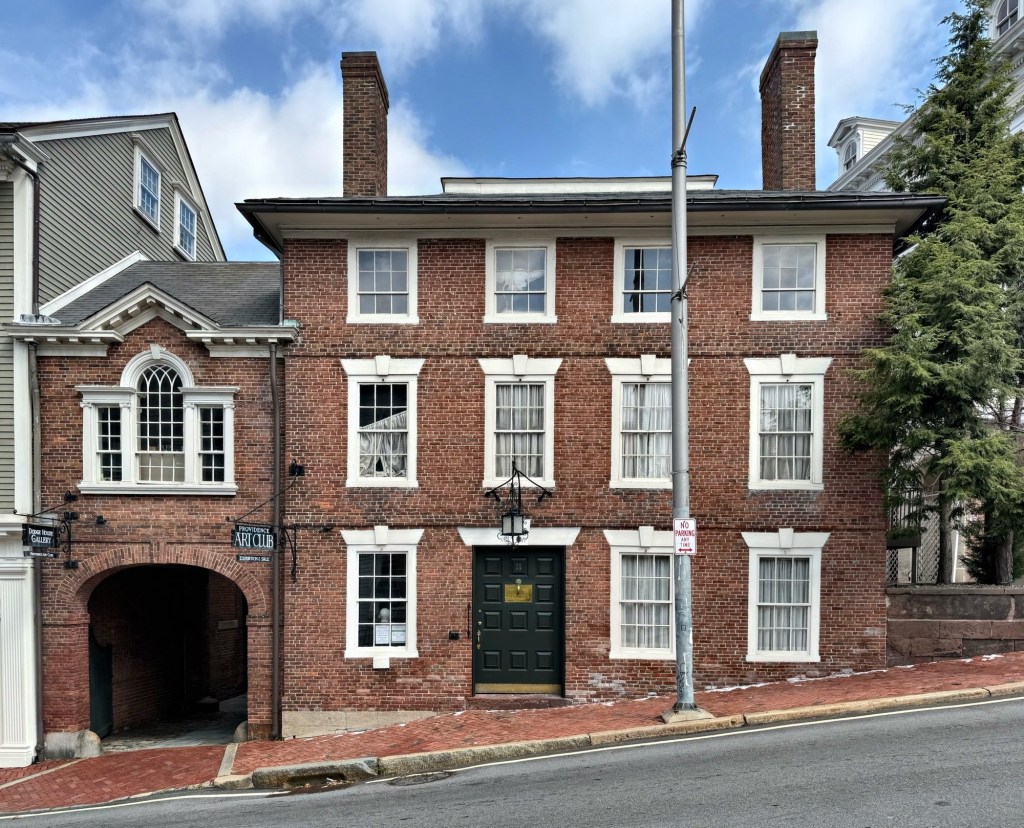
The Lyman-Paine Mansion at the corner of Joy and Mount Vernon streets in Boston’s Beacon Hill neighborhood is an architecturally significant Federal style house designed by a skilled architect and was owned by members of prominent local families. This four-story mansion was designed in 1824 by architect Alexander Parris for George Williams Lyman (1786-1880), a shipping merchant who became one of the Boston Associates, a group of wealthy Bostonians who funded the expansion of New England textile mills, which helped grow many industrial communities all over the region in the 19th century. This house served as Lyman’s winter estate, his summer mansion was the the Lyman Estate, “The Vale”, in Waltham, which he had inherited from his father. Upon George Lyman’s death in 1880, Lydia Lyman Paine, George’s youngest daughter, inherited this Beacon Hill mansion. Lydia’s husband, Robert Treat Paine, was a graduate of Harvard and a successful local attorney. Mr. Paine retired from law in 1872 to become the treasurer for the new Trinity Church building committee, where he averted a fiscal crisis during the mid-1870s when Henry Hobson Richardson’s cost overruns in designing the new Copley Square church threatened its completion. In addition to his pro bono work with Trinity’s finances, Paine was deeply interested in improving the quality of life of the working class, founding building and loan associations and institutes to allow immigrants to buy homes in the Boston area. In addition to their Joy Street mansion, the Paines had a country estate called Stonehurst, which is adjacent to the Vale in Waltham; it was renovated by Richardson. The mansion was converted to apartments (now condos) in the mid-20th century, and maintains its unique, vernacular Federal character, with asymmetrical facade and oddly placed and shaped windows.

Mitchell-Pratt House // 1820

This architecturally unique and stunning Federal­ style house in Chester, Connecticut, was built in 1820 on the Middlesex Turnpike by Abram Mitchell for $10,000, double what he originally hoped to pay for the residence. The principal builder was Samuel Silliman, a locally well-known master carver, who clearly showcased his skill inside and out, much of which has been preserved by two centuries of owners. In 1845, the property was purchased by George Spencer, and presented as a wedding gift for his daughter, Julia, who married Dr. Ambrose Pratt (1814-1891). Dr. Pratt became well-known for his practice of hydropathology and temporarily used his house as a sanitarium known as the Chester Water Cure. The house was acquired by the local Roman Catholic Church and became the parish center until the residence was purchased and moved away from the busy street to its current location in 1966. In the 1980s, the house was purchased by famed artist, Sol Lewitt. The house has a large spider web window, still containing the original glass over the door and full-height pilasters dividing bays and inside, many stunning carved mantles and woodwork.

Jonathan Warner House // 1798

The Jonathan Warner House in Chester, Connecticut, is one of the finest Federal style houses in the state and has been meticulously preserved for over two centuries. The house was built in 1798 by Jonathan Warner (1756-1828), a wealthy farmer who invested in merchant shipping ventures and also operated the nearby Chester–Hadlyme ferry transporting people across the Connecticut River for a fee. When he built his house Jonathan Warner used local workmen and timber, importing glass and paint from New York, wallpaper from Hartford, and stone and hardware were brought from Connecticut and New York. The farmhouse remained in the Warner family until 1922 when it was purchased by Malcolm Brooks, who retained all of the receipts and correspondence on the house’s construction and maintenance. Architecturally, the house stands out for its proportions and detailing, specifically at the front door with fanlight and sidelights, which are framed by fluted pilasters, pediment and dentil molding. There is a Palladian-esque window above the entry which is framed by two free standing Ionic columns on brownstone pedestals. What is your favorite detail of this house?

Ezra L’Hommedieu House // c.1835

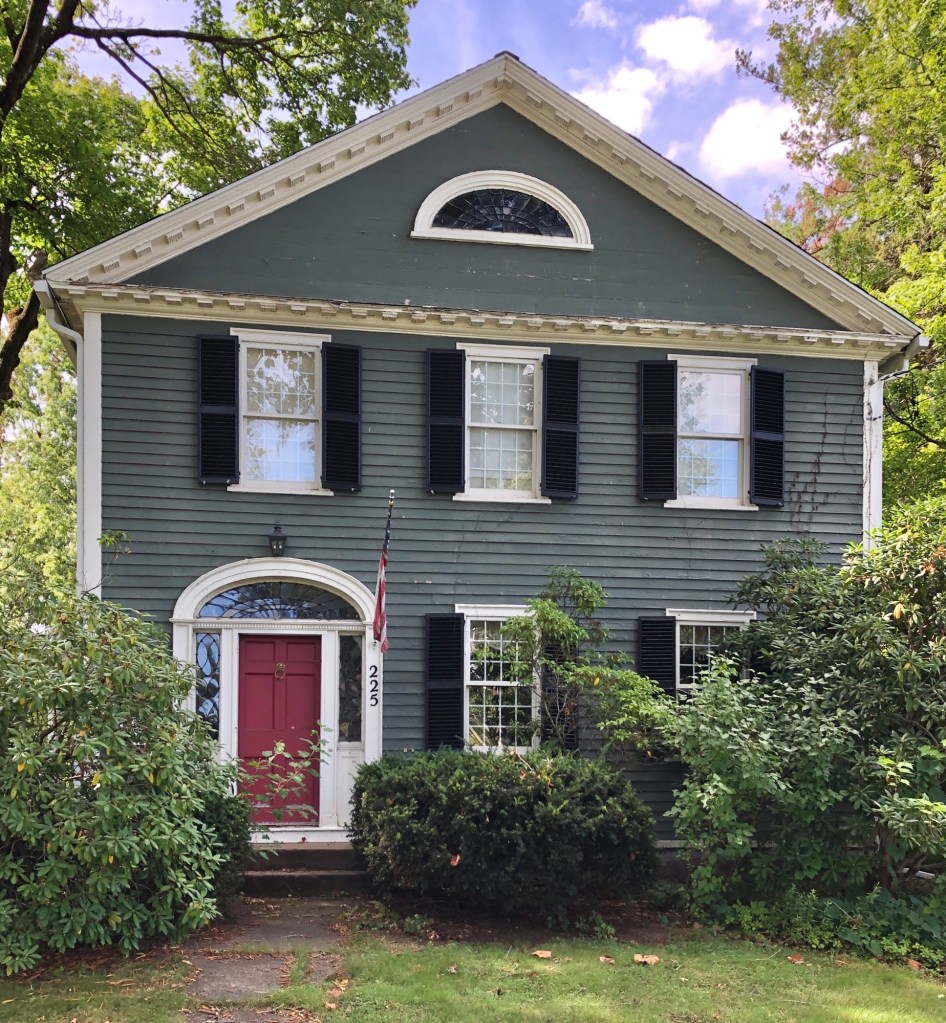
Ezra L’Hommedieu (1772-1860) settled in Chester, Connecticut, in 1812 with his brother Joshua, and built a factory on the south branch of the Pattaconk Brook, which cut through the small village. The brothers manufactured gimlets (not the cocktail), a small wood-boring hand tool used to drill precise pilot holes for screws or nails, preventing wood from splitting and making driving fasteners easier. Ezra invented and patented the single-twist ship auger in 1812, which helped propel Chester into a prominent ship-building community. From his success, Ezra had this residence built on North Main Street in about 1835, which, like his brother’s house on Maple Street, blends Federal and Greek Revival styles elegantly.

Buck-L’Hommedieu House // c.1755

This beautiful Federal style side-hall house is located on Maple Street in Chester, Connecticut, and (at least a part of it) was built by 1755 by Isaac Buck, who deeded half of the property to his son, Justus, during his lifetime. In the early 1800s, the property was purchased by Joshua L’Hommedieu (1787-1880), a manufacturer, who had the property redeveloped or redesigned in the Federal style giving it the appearance we see today. The house has its gable end oriented to the street with an elliptical fan and dentil block detailing.

Leet-Ely House // c.1787

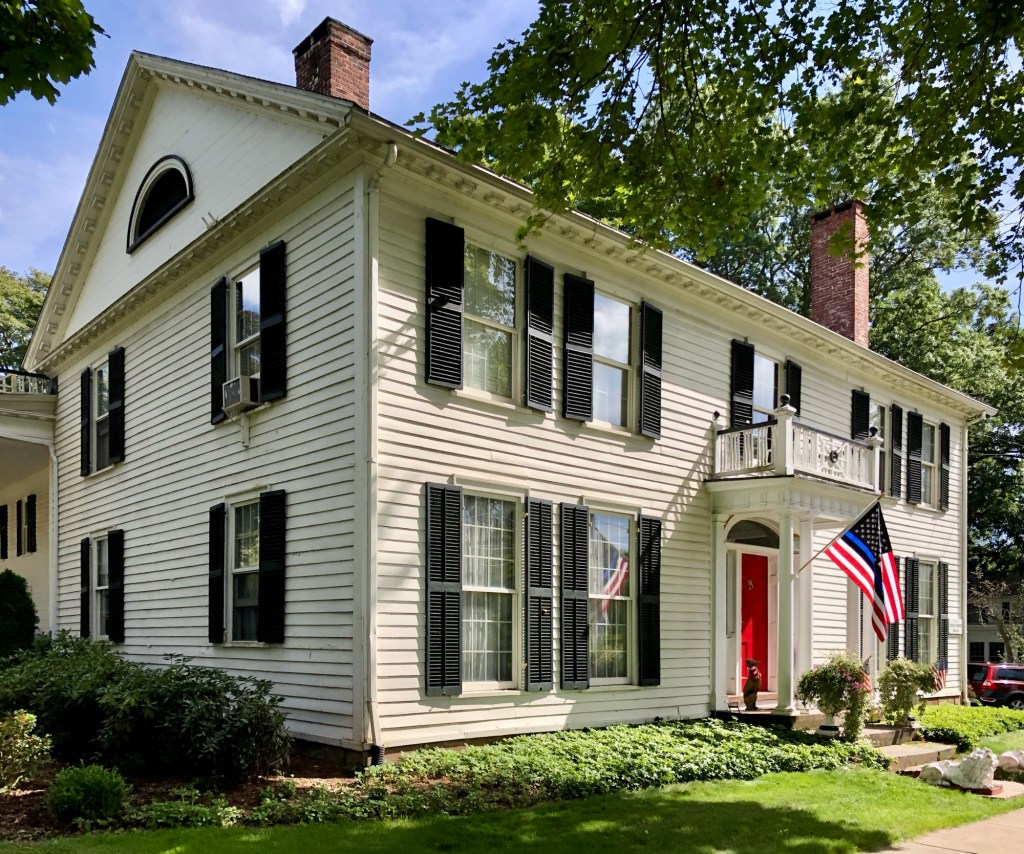
One of the finest homes in Chester, Connecticut, can be found on Liberty Street, a short distance to the village green. The Federal style house dates to about 1787 and was built by Gideon Leet, a Revolutionary War veteran and joiner as his own residence. After Gideon’s death, the property was purchased by Dr. Richard Ely (1765-1816), who may have expanded the residence, and worked locally as a town doctor. The property remained in the Ely familyfor generations and minimal changes have occured to the exterior as a result of this. The modillon cornice, corner quoins, and fanlight transom sheltered under a columned portico add to the charm of this great house. 

James Baldwin House // c.1785

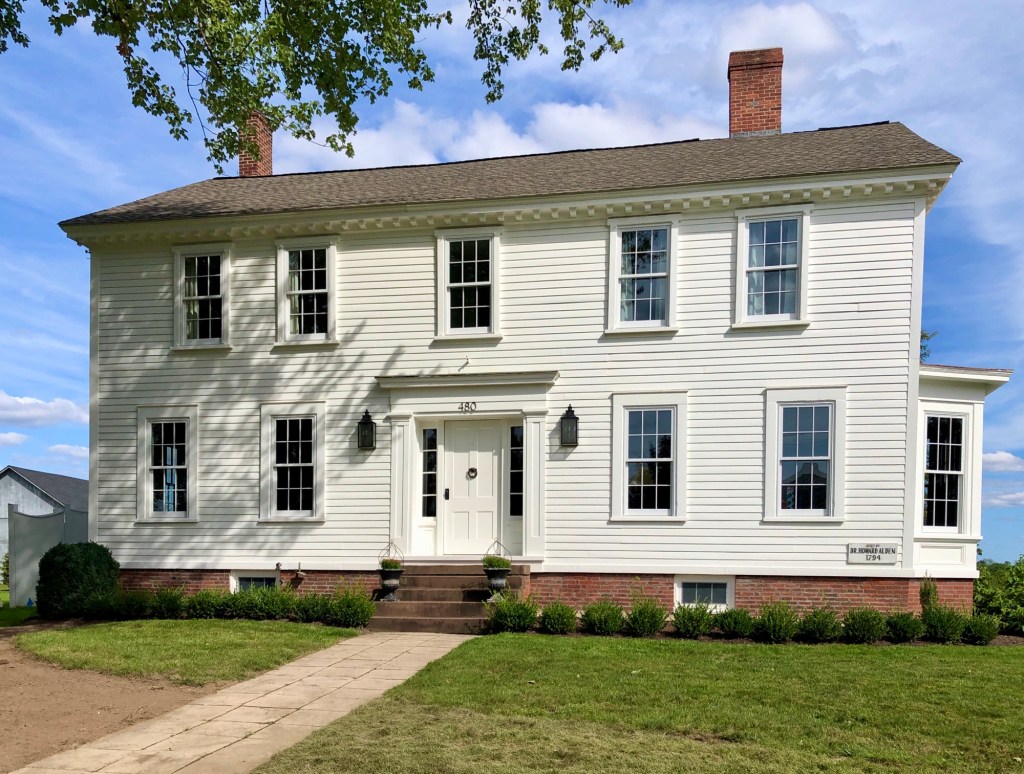
James Baldwin (1742-1818) lived in present-day Chester, Connecticut, and upon the outbreak of the Revolution, joined the forces of Capt. Richard Douglass’ company as a private and fought for liberty. Upon the conclusion of the war, Baldwin returned to Chester and had this house built facing the village green. The transitional late-Georgian and Federal style house has a center chimney and very simple trim with an elliptical fanlight transom over the central door. The house has a wood shingle roof, typical of the early houses of the time. Pvt. Baldwin died in 1818 and his property was inherited by his daughter, Lydia Baldwin Sawyer and her husband, David Sawyer, and later in the 19th century by their eldest daughter, Lucina Morgan, and her husband, Jonathan. The home has been meticulously preserved by the later owners, important as one of the early surviving homes near the village green.

Chester Meetinghouse // 1793

The Saybrook Colony was established in 1635 and covered a large geographic area near the mouth of the Connecticut River in Connecticut.  This area was later subdivided into different towns after colonial era villages were established, each with their own church congregations. As was common in the colonial era, these divisions were centered on the establishment of separate church congregations. The Fourth Ecclesiastical Society of Saybrook in what is now the town of Chester, Connecticut, was established in 1742. As the town grew, this building was constructed in 1793 as Chester’s second meeting house and served as a church until 1846, when the third Meeting House was built. In 1847, the Town of Chester acquired this old meetinghouse and from that date until 1960, it was used as the Town Hall. In 1876, the old meetinghouse was renovated with a new, projecting main entrance added to the south side of the building when the Old Town Hall enjoyed its heyday as a theater and concert hall. The Old Town Hall witnessed many events under its roof, including hosting P.T. Barnum’s Tom Thumb, who performed here, as did musical events, high school proms, and school graduations. The building had become threatened following the construction of the new Chester Elementary School, which better-hosted events, in the 1960s. Luckily, in 1970, the newly formed Chester Historical Society acquired the building and restored it as a significant piece of the town’s rich history.