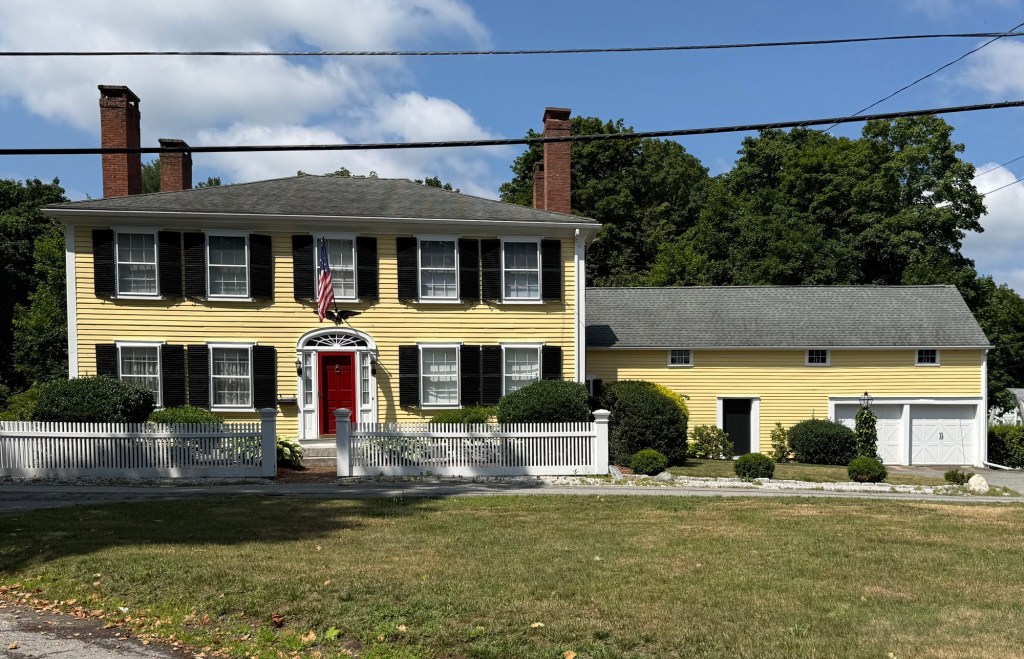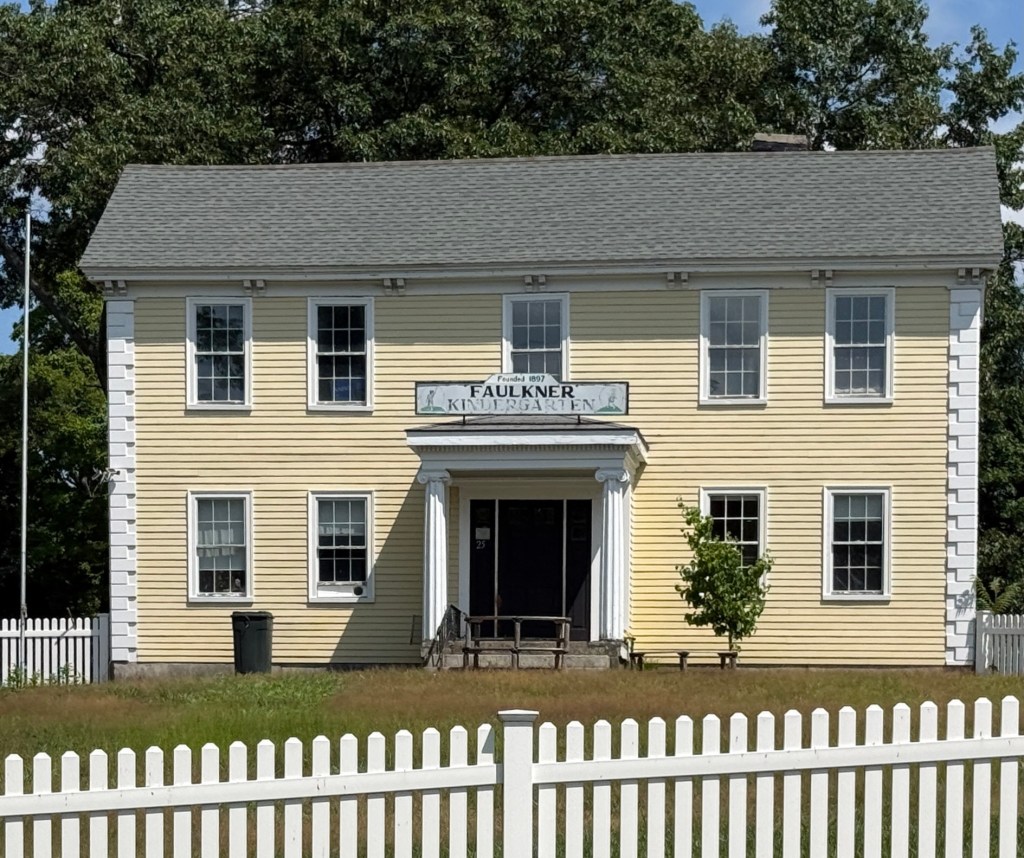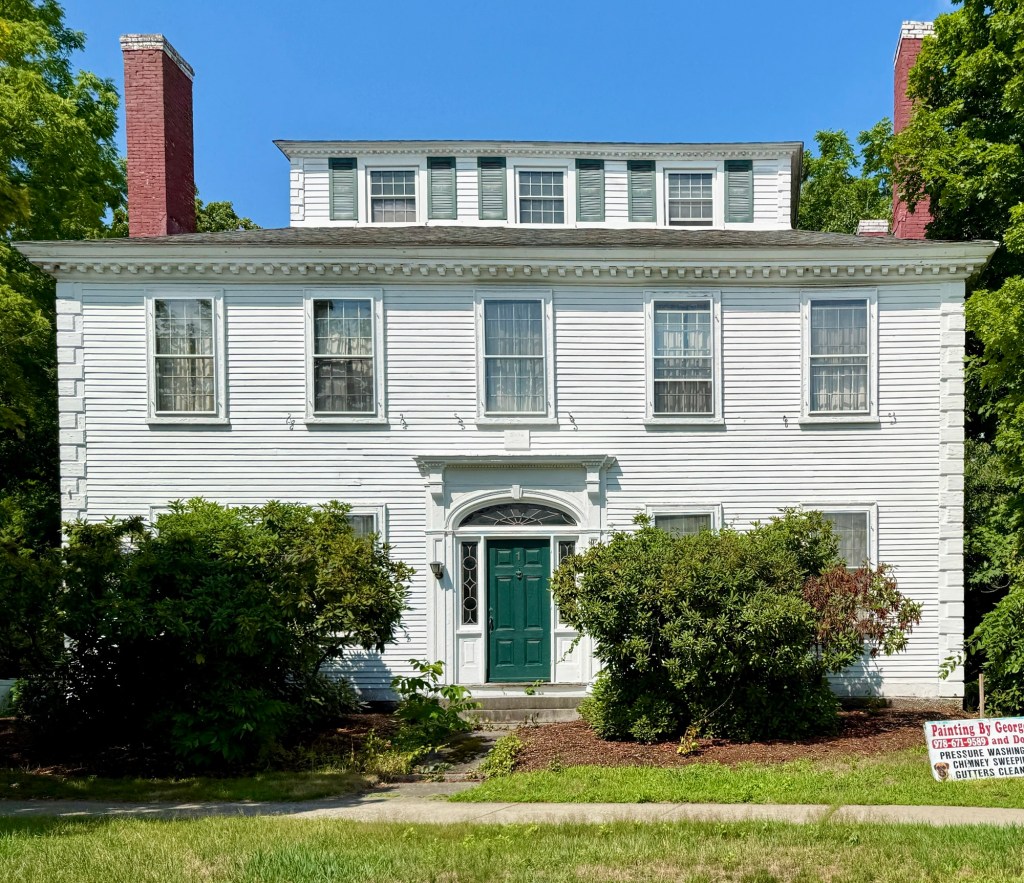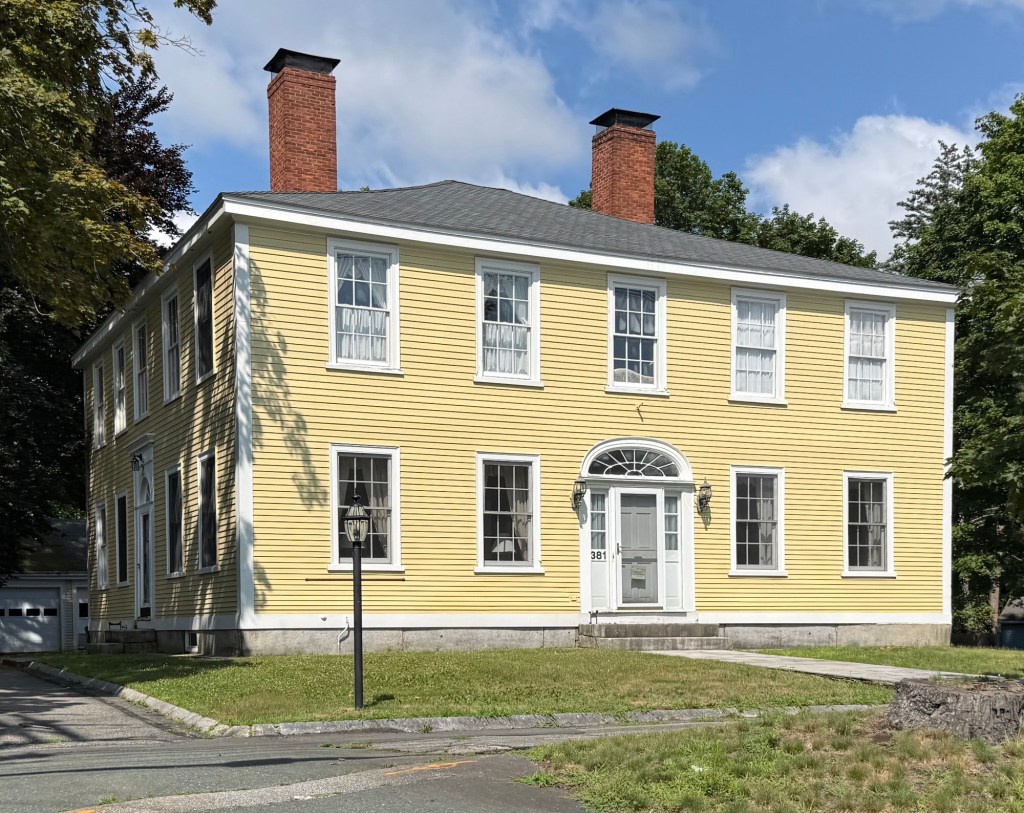
Eddy-Cutler House // c.1806

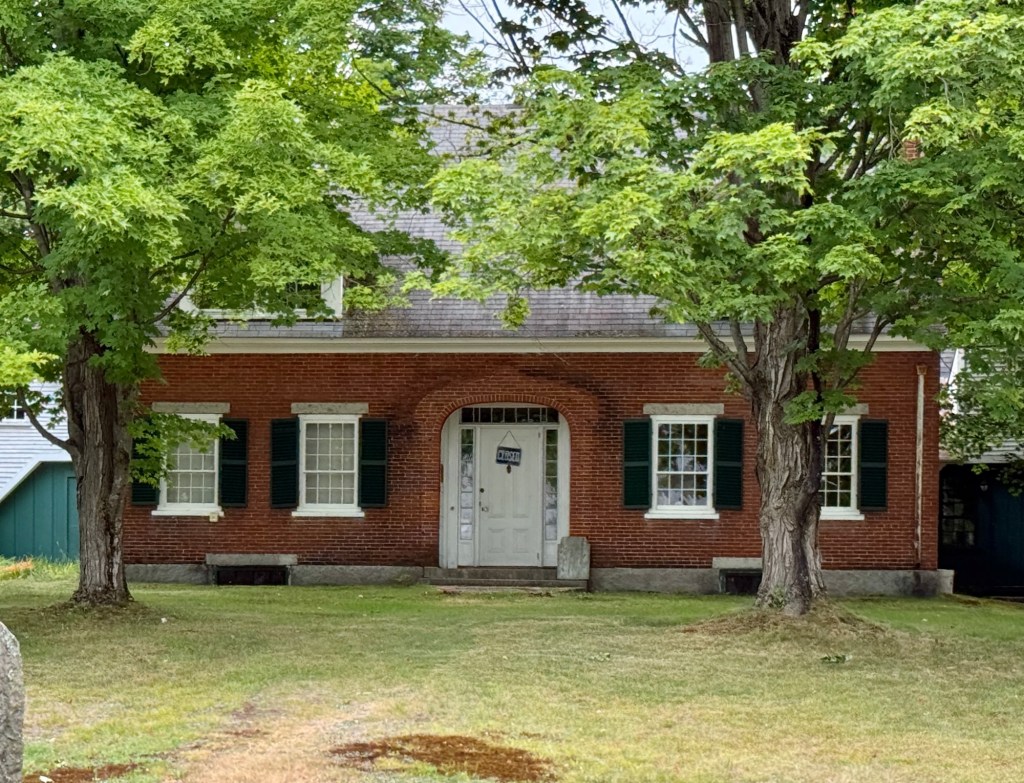
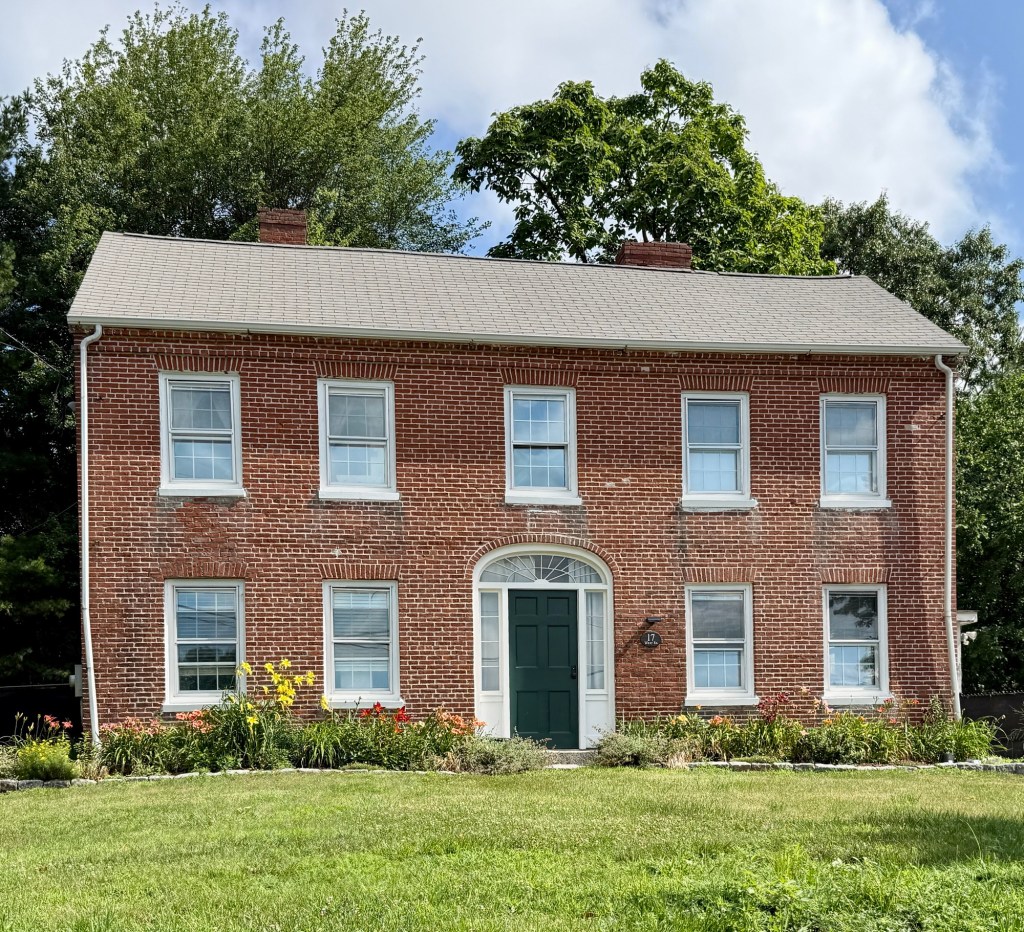
Located next door to the Rebecca Maxwell Phillips House on State Street in Warren, Rhode Island the Eddy-Cutler House remains as one of the finest Federal style residences built of brick in the charming waterfront town. Warren merchant and slave trader Benjamin Eddy purchased this desirable house lot in 1806 from John Throop Child, a town councilman and slave owner in 1774 who built slave ships before the Revolutionary War. Benjamin Eddy began construction on his mansion by 1806, and it was completed sometime before the War of 1812. Like many of the town’s wealthiest residents, Benjamin Eddy was engaged in the slave trade. Captain Benjamin Eddy was captain of at least three slave voyages, delivering 139 captives to docks in Charleston, South Carolina, in June 1806 alone. In 1808, just before the “Act Prohibiting the Importation of Slaves” he purchased and imprisoned 176 Africans – the largest number ever carried on a Warren slave ship. Nineteen died during the return voyage. When he reached Charleston, South Carolina the remaining 157 people were sold into slavery. At the time, the sale would have returned nearly $33,000. He would return home to this mansion on money profited from human suffering, a story as American as apple pie. In 1871, the Eddy Homestead was sold to Charles R. Cutler, a ship master and whaler who had many successful voyages to the Indian Ocean before working in the manufacturing of cotton cordage. The three-story, five-bay Federal style mansion of brick features a Victorian-era porch, but retains its Palladian window with blind fan and lights over the entry and belvedere at the roof. Once painted, the brick is now slowly being re-exposed, a great sight to see.

Rebecca Maxwell Phillips House // 1806

The Rebecca Maxwell Phillips House at 26 State Street in Warren, Rhode Island, is one of the state’s finest examples of the Federal style of architecture, though the building was funded through profits off of enslaved people. The house was funded by Warren resident, Squire James Maxwell for his daughter, Rebecca, and is traditionally said to have been a wedding present or possibly a gift to potential suitors to his daughter. The Maxwell family’s immense wealth was partially resulted from the illegal sale of enslaved Africans, including those illegally transported on his schooner, Abigail, which left Warren in September 1789. The captain of the vessel, Charles Collins, purchased 64 slaves on the coast of Africa, and sold them in the Americas by June of 1790. Of the 64 captives embarked on the ship, only 53 survived the voyage. This home was occupied by Rebecca Maxwell and her new husband, William Phillips. The three-story mansion exhibits a pedimented fanlight transom, corner quoins, and a shallow hipped roof. The property is located on an oversized lot which contains a massive Japanese Beech tree in the side yard, which is said to have been brought from Japan by Commodore Joel Abbot, who lived nearby, in 1853.

Cole-Richmond House // c.1740

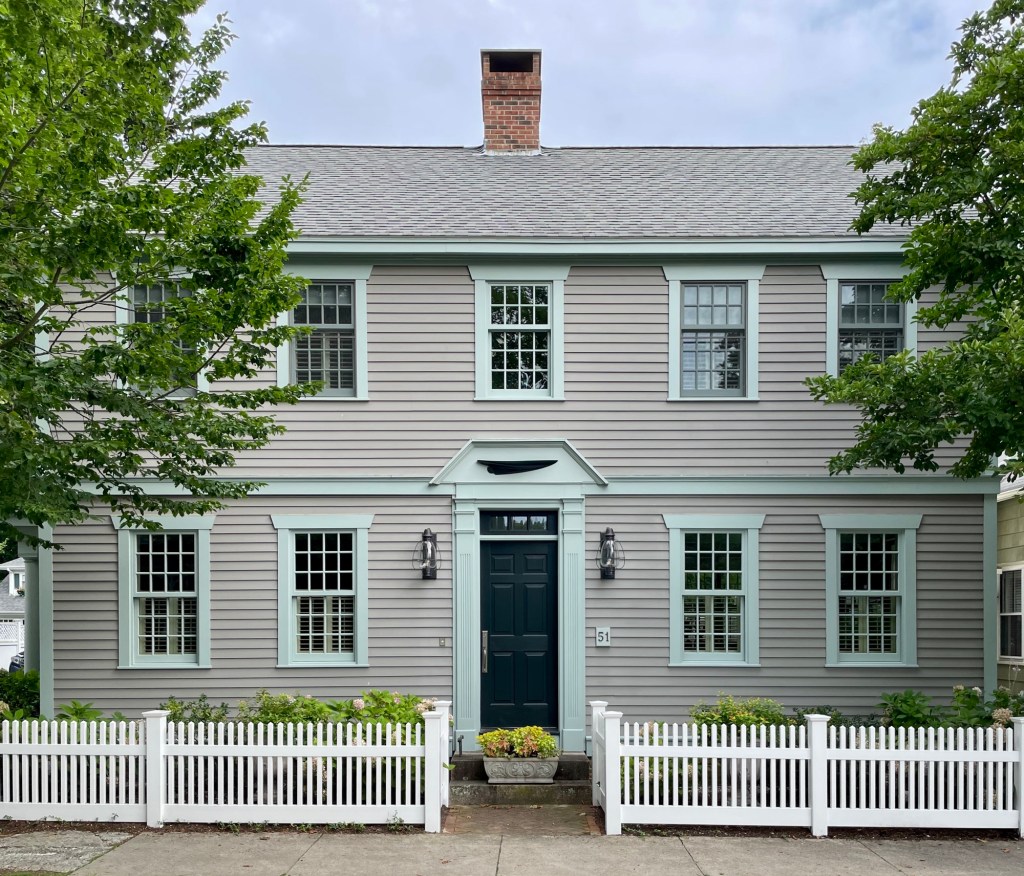
This large house on State Street in Warren, Rhode Island, has a plaque that dates it to around 1740, but it must have been relocated to this site or been built later as the street it is located on was initially laid out in 1790. The large, two-story, Federal style house exhibits a large central chimney and five-bay facade and has recently been restored. It looks great! According to sources, the property was owned by members of the Cole Family, a prominent local family who engaged in the sale and transportation of enslaved Africans in the 18th and 19th centuries. The house was eventually owned by Charles Richmond in the mid-19th century and is typical of the many great historic homes in Warren.

Lewis T. Hoar House // c.1800

While a part of this Warren, Rhode Island, home may date from as early as the late 18th century, it was completely “modernized” in the mid-19th century by owner, Lewis T. Hoar, a successful housewright, giving us the playful design we see today. Lewis Thomas Hoar (1810-1881) worked in partnerships, building many of the stately Italianate style residences in the village of Warren before entering politics, where he was elected as a state representative. Rather than building his own home from scratch, Lewis updated an earlier Federal period house, retaining its Federal-era hipped roof with monitor, but added the more intricate bay windows and porch, embellished with carved balustrade, brackets and ornament. The large property even retains a Second Empire style stable or barn, which has been preserved by later owners. 

Charles Wheaton Jr. House // c.1815

Charles Wheaton (1761-1863) enlisted in the his local militia at just 14 years old and served in Colonel Robert Elliott’s Regiment of Artillery to protect Narragansett Bay. After the war, Charles settled in Warren, Rhode Island, and married Abigail Miller. They would have at least nine children, with one of their children, Charles Wheaton, Jr., (1791-1863) marrying Abiah Goodwin Turner in 1815, the daughter of a wealthy sea captain. Around the time of their marriage, they built this house on Liberty Street in Warren in the Federal style with a three bay facade, monitor on hip roof, and portico at the entrance with Ionic columns. By the end of the 19th century, the house was enlarged and a bay window was added over the entry portico.

Salisbury-Johnson House // 1823

One of the great Federal style homes in the charming downtown of Warren, Rhode Island, the Salisbury-Johnson House at 43 Miller Street features many of the hallmarks of the prominent architectural style. The main body of the house was constructed by 1823 after Theophilus Salisbury (1781-1835) purchased the house lot at the corner of Union Street, possibly being moved from another site to the present location at this time. The two-story, five-bay façade is detailed by quoined corners and an exceptional center entrance with sidelights and large, elliptical blind fan carved from a single piece of wood. After later owners, the property was purchased by Rodolphus B. Johnson (1816-1884), a wealthy shipping agent who owned whaling ships and ran a wharf at the foot of Johnson Street nearby.

Maxwell-Barton House // 1803

Built in 1803 for Captain Level Maxwell (1754-1828), this five-bay, Federal style house built of brick, is located on Main Street in Warren, Rhode Island, and has ties to the community’s maritime past. The original owner, Level Maxwell, was a member of the wealthy Maxwell Family who built their wealth in shipbuilding and the triangle trade. Level Maxwell was a captain and invested in ships, including the schooner Abigail, which would become Warren’s first slave ship in 1789, two years after slave trading had been declared illegal for Rhode Island residents. The Abigail was designed with a middle deck less than five feet high, where the kidnapped Africans would be imprisoned, with sources stating that 64 African men, women and children were forced onto the ship and then imprisoned for two months on the journey across the Atlantic. Eleven enslaved people died on the journey and were likely thrown overboard into the open sea, with the surviving 53 people sold into slavery in the Caribbean, with the Abigail returning home with the profits. It is unclear if Level Maxwell lived in this house or built it for sale, but the property was owned in the mid-19th century by George A. Barton, a merchant. The property was owned in the late 20th century by Mary King, who restored the old house and operated her antique store from the residence. Architecturally, the home exhibits many features of the Hazard-Gempp House nearby on Liberty Street, and was likely constructed by the same builder.

Hazard-Gempp House // c.1800

This elegant brick Federal style residence in Warren, Rhode Island, was built around the turn of the 19th century, sometime after Liberty Street was laid out in the mid-1790s. An excellent example of the Federal style finished in brick, the three-bay residence features a projecting belt course between the first and second stories, corbels and flared lintels at the windows, a hipped roof surmounted by a small, centered platform, and an elaborate entry with pediment and elliptical fanlight transom. The builder is not known at this time, but the house was owned by George C. Hazard and later inherited by his son, George G. Hazard and later by Mary Jane Hazard, who remarried to Lucius Warner. In the early 20th century, the property was purchased by Gottlieb and Louise Gempp, proprietors of the local American-German Club. Despite having its brick painted, the Hazard-Gempp House remains as one of the town’s great and well-preserved Federal period homes built of brick.

General Nathan Miller – Commander Joel Abbot House // 1789

The Miller-Abbott House at 33 Miller Street in Warren, Rhode Island, is significant architecturally as well as for its owners, who included a Patriot in the American Revolution and naval officer. The first owner, Nathan Miller (1743-1790) was a prominent local shipbuilder in Warren, Brigadier General of the Rhode Island Militia during the Revolutionary War, and delegate for Rhode Island to the Confederation Congress in 1788. This home was built in 1789, a year prior to his death in 1790; after-which, the general’s daughter, Abigail, and her husband, Charles Wheaton inherited the property and lived here with Nathan’s widow, Rebekah. In 1803, the house was expanded, likely when the right two bays were added to the home. Their daughter Laura married Joel Abbot in 1825 and resided here afterwards. Joel Abbot (1793–1855) was a Naval officer in the War of 1812, and after later important promotions, in 1852, he was made Commander by Commodore Perry. Soon after, Commodore Perry asked Abbot to accompany him on his famous Japan expedition, where U.S. ships sought to explore, surveying, and the establish diplomatic relations and negotiate trade agreements with the various nations in Japan, the first time in history. General Abbot died in Hong Kong in 1855 and his body was returned to Warren for burial. The Miller-Abbot House remains well-preserved despite replacement windows and retains its large side and rear yards in the dense downtown.

Charles Street Meeting House // 1807

The Charles Street Meeting House at the corner of Charles and Mount Vernon streets in Boston’s Beacon Hill neighborhood is one of the finest examples of a Federal period meeting house in New England. The building is thought to have been designed by architect, Asher Benjamin, due to its similarities to his Old West Church on Cambridge Street built a year prior. At the time of construction in 1807, the church stood near the banks of the Charles River, but is now a distance away from the Charles following a land-filling campaign to expand buildable land in the city. The Charles Street Meeting House consists of a two-story gable-roof main structure with a three-story tower on the south (primary) elevation that supports a clock tower and wooden cupola with double Ionic pilasters supporting the domed roof. The building was constructed for the Third Baptist Church congregation, who used the nearby Charles River for baptisms. In the years before the American Civil War, it was a stronghold of the anti-slavery movement, and was the site of notable speeches from such anti-slavery activists as Frederick DouglassWilliam Lloyd GarrisonWendell PhillipsHarriet Tubman and others. The Baptists sold the structure to the First African Methodist Episcopal Church in 1876, which was part of the first Black independent denomination in the United States. The AME Church sold the building in 1939 to the Charles Street Meeting House Society, and after a period of use as an Albanian Orthodox church, it was sold to the organization that is now, Historic New England, who were required to keep restrictions to preserve the building’s exterior. It served as a Universalist church from 1949 to 1979 with rented space inside to tenants, including a LGBT newsletter, Gay Community News, which was founded in the building in 1973. In 1980 the Meeting House was purchased by the Charles Street Meeting House Associates, who worked with the architectural firm of John Sharrat Associates to restore the building and adaptively reuse it into four floors of offices, with retail on the ground floor.