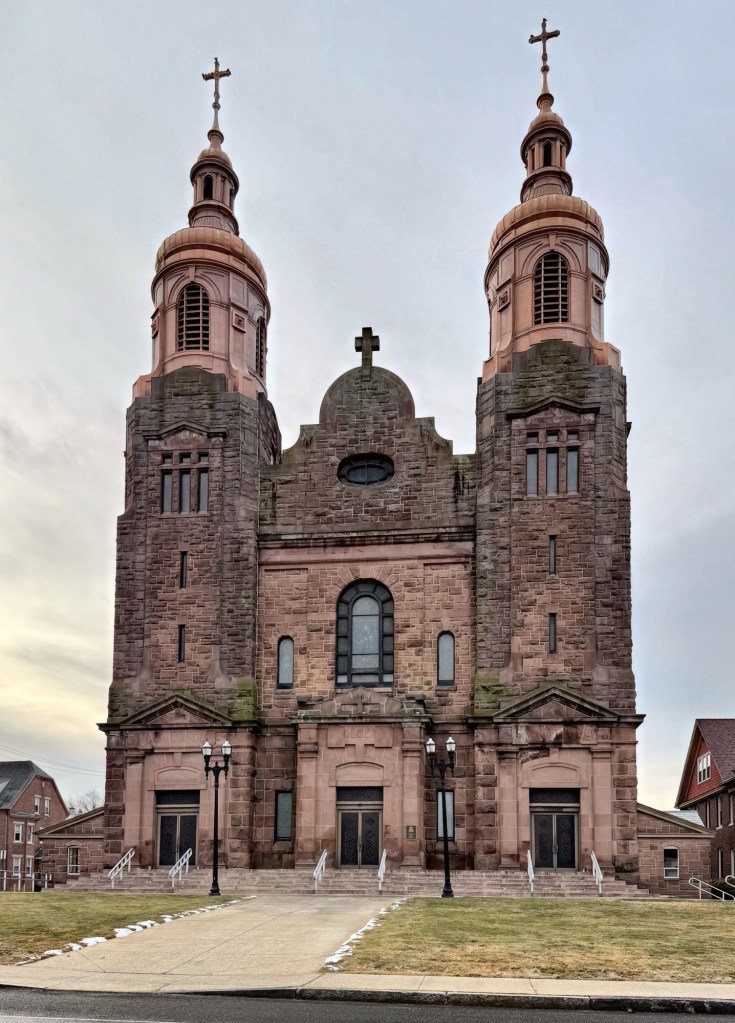
Basilica of St. Stanislaus // 1908

The Basilica of St. Stanislaus is a landmark church building in Chicopee, Massachusetts, with strong ties to the city’s industrial and immigrant past as well as a landmark of the city’s rebirth and growth. The congregation was founded and financed by Polish immigrants who had arrived in Chicopee, beginning in the 1880’s. The young Poles were determined to establish and finance their own church in which they could worship in their own native language and espouse their Polish customs and traditions with a sense of community. The church was founded at a time where Polish immigrants were settling in Chicopee, finding work at local factories. The Polish population of Chicopee surged in the late 19th into the early 20th centuries from just 200 residents in 1885 to over 9,000 in 1914. The first St. Stanislaus Church was a small frame structure built on this site in 1891. The present church was built in 1908 from the designs of architects Robert J. Reiley and Gustave E. Steinback and is Byzantine Revival in style. Constructed of brownstone with cathedral-like qualities, the facade is dominated by a pair of monumental masonry towers. Its spires are composed of copper drums which are surmounted by graceful belvederes and are pierced by arched openings. In 1991, Pope John Paul II raised the status of the church to a “minor basilica“, a classification that remains to today, one of just a handful in New England.

Ames Manufacturing Company Complex // 1847+

Until the early 19th century, Chicopee, Massachusetts, was little more than an agricultural district of Springfield (from which it separated in 1848). Several early mills began to harness the power of a 50-foot drop-off in the Chicopee River, but it was not until the introduction of outside capital from Boston-based industrialists, that Chicopee became an industrial powerhouse. The Dwight textile mills which quickly developed required a wide variety of related manufactures. Edmund Dwight, owner of the Dwight Mills procured brothers Nathan Peabody Ames and James Tyler Ames to relocate their edge tool business from Chelmsford to Chicopee, they did. In 1834, the Ames Manufacturing Company was incorporated with a capital of $30,000 and buildings were erected along the Chicopee River, just east of the Dwight Mills. By 1835, the company was creating works in brass and bronze, and in 1845, an iron foundry was added. The company used the foundries for casting statuary and producing cannons and cannonballs for the US Military. Additionally, the bronze doors of the East Wing of the United States CapitolDaniel Chester French‘s Minuteman statue at the Lexington-Concord bridge and the large equestrian statue of George Washington at the Boston Public Garden were cast at the Ames Factory. After a period of decay in the latter half of the 20th century, the largest buildings of the complex were restored and converted to housing, today known as Ames Privilege.

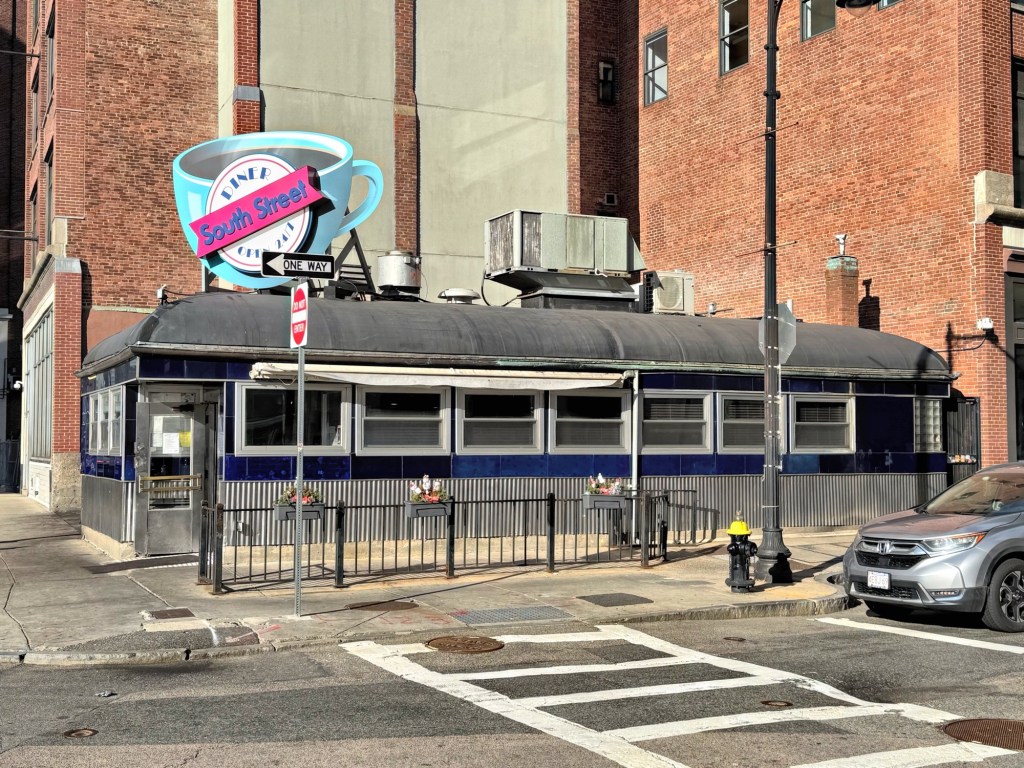
South Street Diner // c.1947

One of the hidden gems of Boston can be found tucked away in the Leather District, one of the last remaining diner cars in the city, this is South Street Diner. At this site, at the corner of South and Kneeland streets, a diner car has existed since about 1935. In 1947 the present diner car was built by the Worcester Lunch Car Company and moved on this site as the Blue Diner opened, possibly named after its patrons, largely blue-collar workers. The diner would be renamed the South Street diner in 1992, a name that has stuck ever-since. The diner attracts tourists, nearby workers, and drunken college students, serving as a much-needed melting pot for people of different backgrounds to grab a good bite to eat.

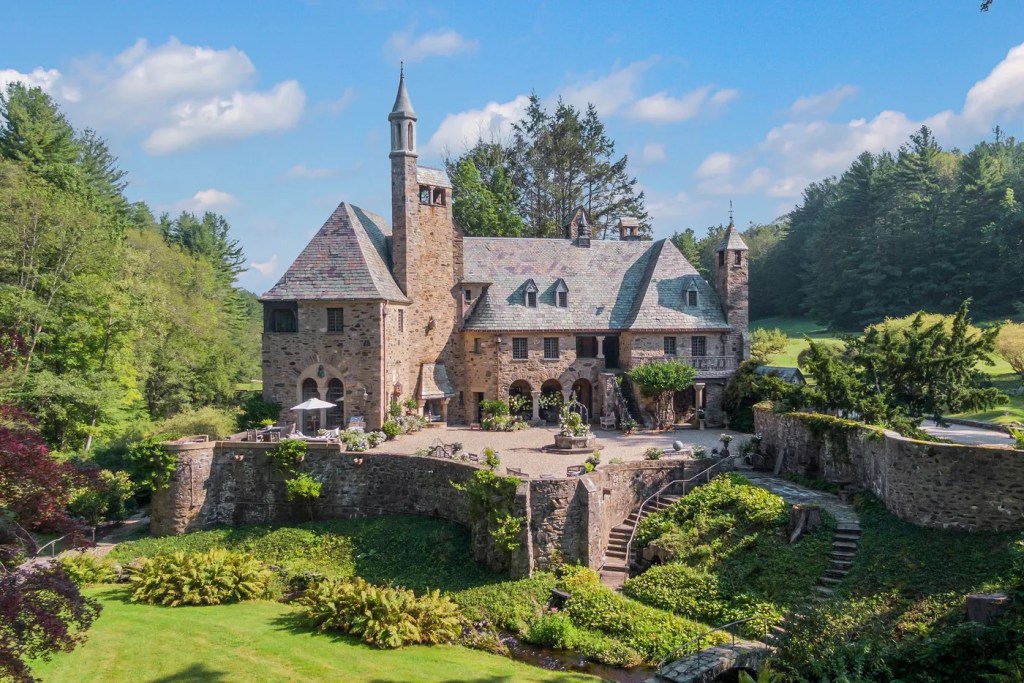
Hidden Valley Castle // 1921

Photo from listing.

A castle can be found in the small town of Cornwall, Connecticut! Set amongst 275 acres of woodland and streams, with several outbuildings on the property, this whimsical castle looks like it was dropped here from Cornwall, England, but it actually dates to the 1920s. Hidden Valley Castle, had its beginnings when socialite Charlotte Bronson Hunnewell Martin envisioned building a unique country retreat for herself and her husband, Dr. Walton Martin, in the Litchfield Hills of Connecticut as a summer retreat. Just before this, Charlotte had bought a group of 20 brownstones in Manhattan on 48th and 49th Streets, between Second and Third Avenues, and converted them into charming townhouses around a central Italian-inspired garden. Called Turtle Bay Gardens, the houses were highly acclaimed and almost immediately attracted prominent and celebrated residents. The Cornwall Castle was designed by architect, Edward Clarence Dean, who also redesigned the Turtle Bay Gardens for the couple. Dr. Martin imported many of the materials as well as the 100 workmen required to build the castle, a project that lasted five years. Charlotte would also have a cottage built on the estate and hired young Italian artist, Vincenzo Rondinone, to be her resident artist on the estate to create unique vases, bowls, and pots to be used at the house and to be given as gifts to visitors and friends. The property was restored in recent years and put up for sale, with the cottage sold as a separate dwelling.

West Cornwall Covered Bridge // 1864

The West Cornwall Covered Bridge spans the the Housatonic River in the town of Cornwall, Connecticut and is one of three historic covered bridges in the state. Records indicate that a bridge was in this location as early as 1762, but many were destroyed by floods and storms over the years, and even in the past century, flooding as a result of the 1938 New England hurricane and the flood of 1955, threatened to wash the bridge away, but she survived. The 172-foot bridge has been depicted in paintings, photographs, and movies, including Valley of the Dolls a 1967 film. The charm of a historic New England covered bridge is so enchanting and has been a draw for tourists to stop by this amazing town for decades.

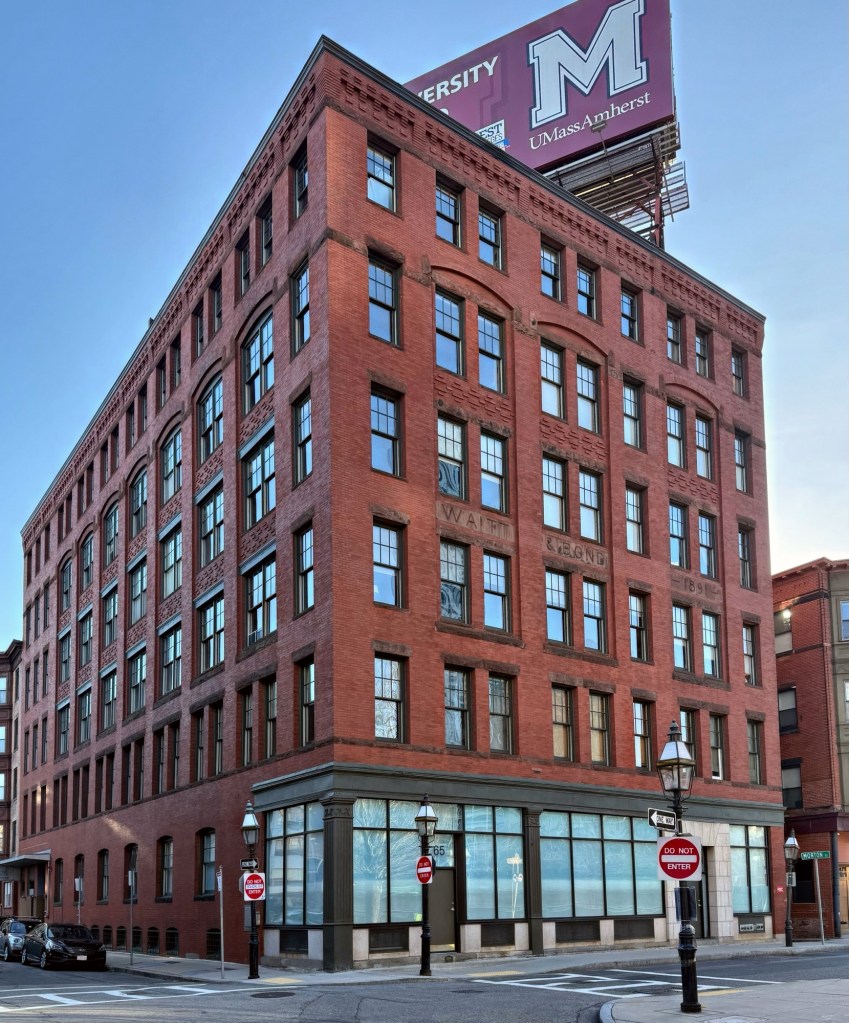
Waitt and Bond Building // 1891

One of several late 19th-century industrial buildings in the North End, the Waitt & Bond Building stands on Endicott Street, looking over the scar on the landscape that is I-93. This six-story building was constructed in 1891 and is the oldest extant building in Boston associated with cigar manufacturers Henry Waitt (1842-1902) and Charles H. Bond (1846-1908), who started business in 1870. The business relocated from Saugus to Boston in 1873 and moved into this building upon its completion. Waitt & Bond produced handmade cigars with each employee hand-rolling over 300-a-day. The architect, Ernest N. Boyden, designed the building in the Panel-Brick and Romanesque styles with decorative brick panels, cornice, and arched detailing. Rooftop billboard signage (blight) was first added to the building in 1956, with increased visibility via the elevated John Fitzgerald Expressway (the Central Artery). By the early 1960s, Joseph Castignetti moved his men’s clothing store, Castignetti Brothers, to this location. In 2001, the building was converted into 28 loft-style condos, an early sign of the gentrification to come to the North End.

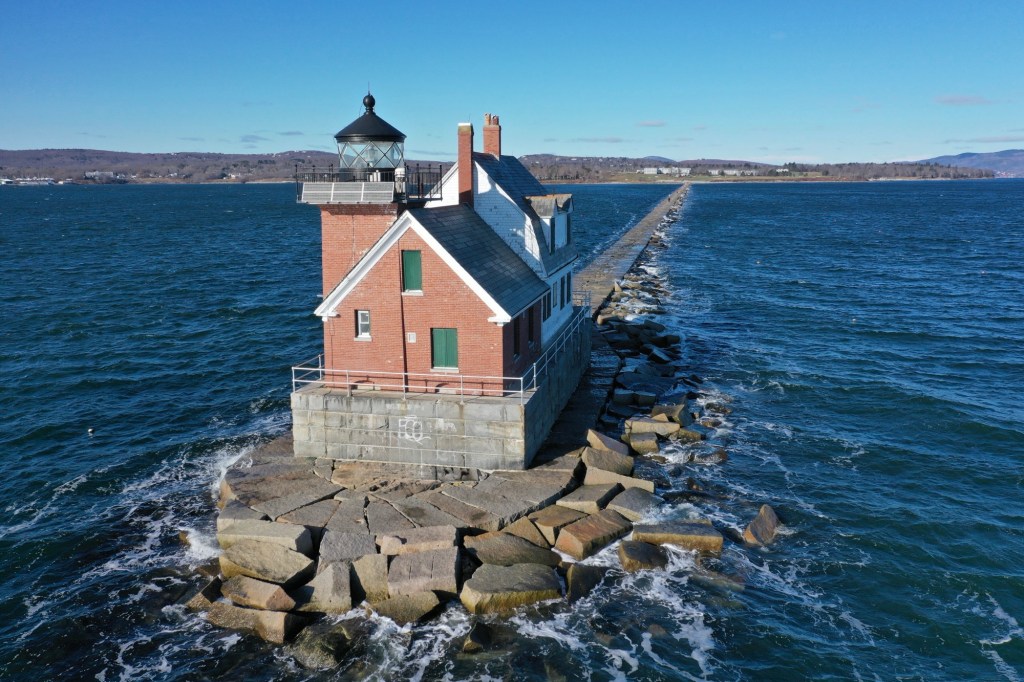
Rockland Harbor Breakwater Light // 1902

The Rockland Harbor Breakwater and Lighthouse is arguably the most iconic structure in the coastal town of Rockland, Maine. As Rockland was a major port and harbor, relying on the transportation of lime and shipbuilding for its economy, protecting the harbor was of paramount importance. Major storms in the 1850s highlighted the need for improved harbor protection, but federal appropriations for a breakwater were not approved until 1880. Between 1880 and 1900 the United States Army Corps of Engineers, under a series of Congressional appropriations, built the breakwater, a 4,364 foot long wall in the harbor built of locally quarried blocks of granite. It is truly a feat of engineering! The lighthouse standing at its end was added in 1902. The iconic breakwater is accessible by those who brave the crashing waves and distance to the end of the nearly mile-long walk out to the lighthouse. The structure is today maintained by volunteers and the City of Rockland.

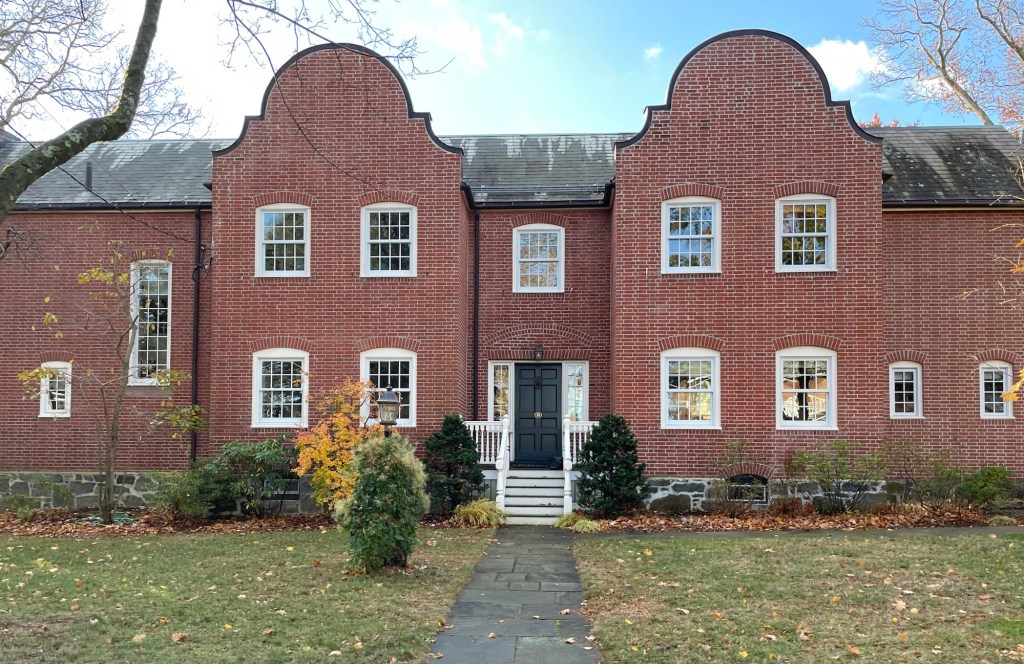
Chester-Rowley House // 1897

This unique brick house is located on Devon Road in Newton Centre, and was built in 1897 for Arthur Herbert Chester and Elizabeth S. (Rich) ChesterArthur H. Chester (1868-1898) worked in real estate, largely in the office of J. Montgomery Sears. He acquired a large house lot in Newton Centre, and had this unique Jacobean Revival residence built for his young family. Sadly, within a year of its completion, Arthur died of Malarial Fever at the age of just 30 years old in 1898. Elizabeth, his widow, would retain the house for a decade longer before it sold to Henry Esmond Rowley and his wife, Josephine. While it looks like a brick house, this residence is actually wood-frame with a brick veneer, a cost-saving measure to still give a stately appearance. The house is notable for its twin rounded gable parapets at the façade and lack of ornate trimmings. The house was covered in white paint for years, but the owners recently removed all the paint from the brick.

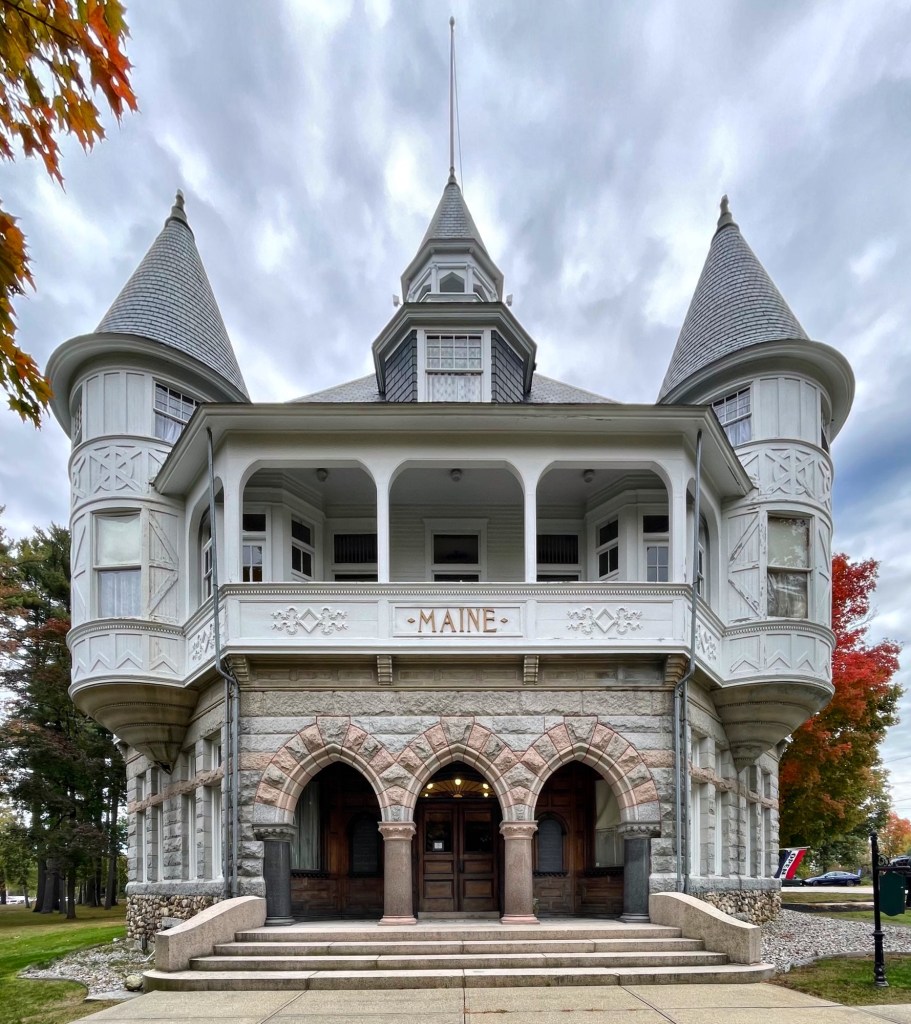
Maine State Building // 1893

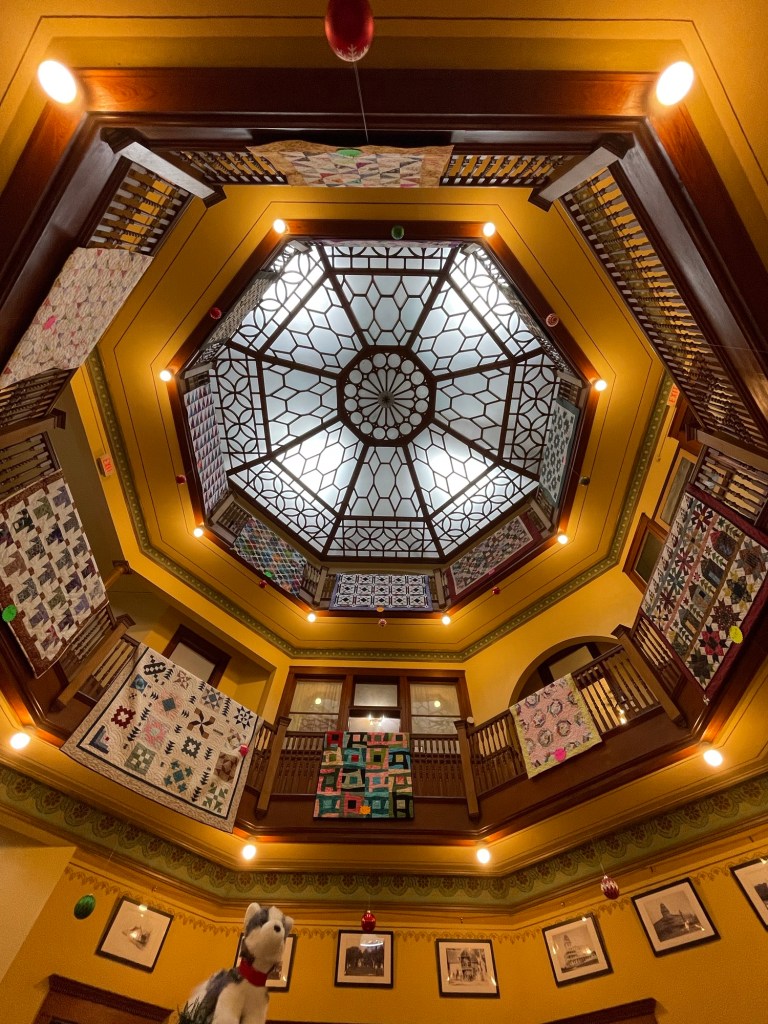
The Maine State Building is a one-of-a-kind landmark located in the Poland Springs Historic District of Poland, Maine, though it was not originally built in this location! The Victorian structure was built in 1893 at the Columbian Exposition in Chicago (aka the Chicago World’s Fair) as one of the State Buildings constructed by each U.S. state to highlight their history. Designed by Chicago architect Charles Sumner Frost, a Lewiston, Maine native and MIT graduate, the building was constructed of granite with a slate roof. After the close of the fair, the Ricker family of Poland Spring, purchased the building from the state. They had it dismantled, moved to Maine, and rebuilt on their resort, which brought even more visitors to their property. In Maine, it reopened in 1895 as a library and art gallery for their hotel guests. Along with the Norway Building in Norway, The Dutch House in Brookline (a personal favorite), the Palace of Fine Arts (now the Museum of Science and Industry) and World Congress Auxiliary Building (now the Art Institute of Chicago) in Chicago, the Maine State Building is one of the few remaining buildings from the 1893 World’s Fair, and the only State Building remaining. It has been lovingly preserved and operated by the Poland Spring Historical Society, who operate the building as a museum.

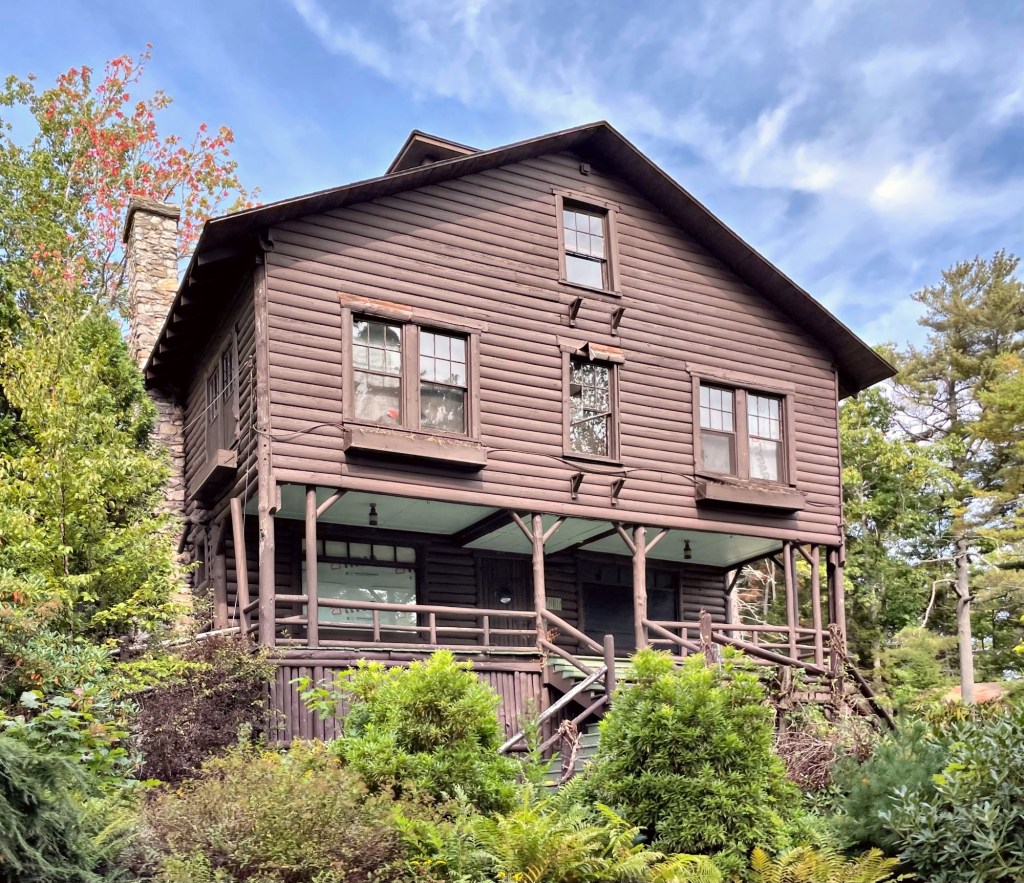
Sprucewold Lodge // 1927

Sprucewold Lodge, nestled in the picturesque coastal town of Boothbay Harbor, Maine, boasts a rich history that dates back to the early 20th century. Established in 1911 by a group of visionary investors and rusticators, the lodge was designed as a summer retreat for families seeking solace in nature. Like the Spruce Point Inn, the building was developed with modest means, but quickly expanded and grew as the unique and rugged site on Spruce Point drew flocks of visitors every year. Its unique blend of craftsman and Adirondack style architecture and stunning natural surroundings quickly made it a popular destination. The investors hired Portland architect John P. Thomas to design a grand log hotel. The hotel was advertised as the largest log cabin in the world until it burned down just years later in 1930. A 31-room annex, this building, was added in 1927 and assisted to serve the over 60 rental cabins, tennis courts, a swimming pool, recreation hall, and a thirty-car garage. When the original Sprucewold Lodge burned down, this building became the new lodge, and it has remained so nearly 100 years later. This enclave of rustic log cabins on Spruce Point is very evocative of the early days of Maine, and it is easy to see why the state garnered the nickname, Vacationland.