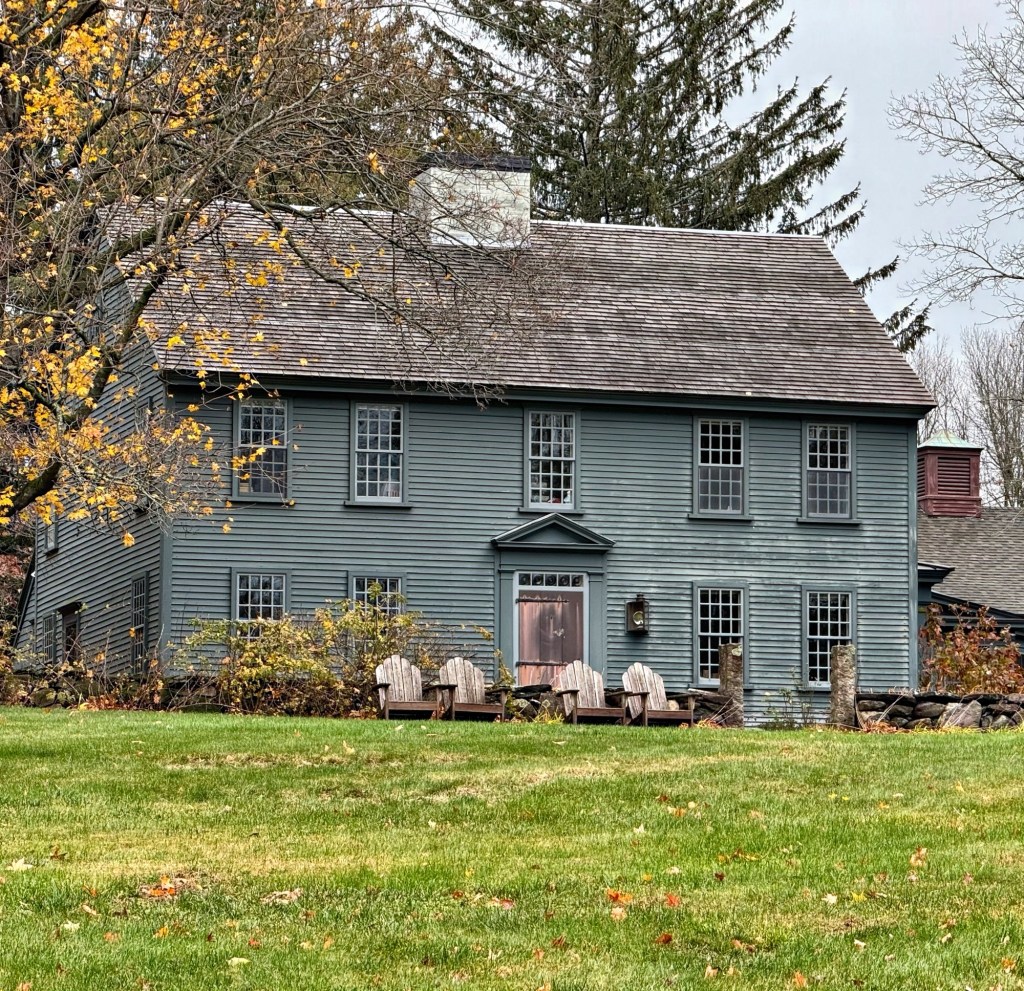
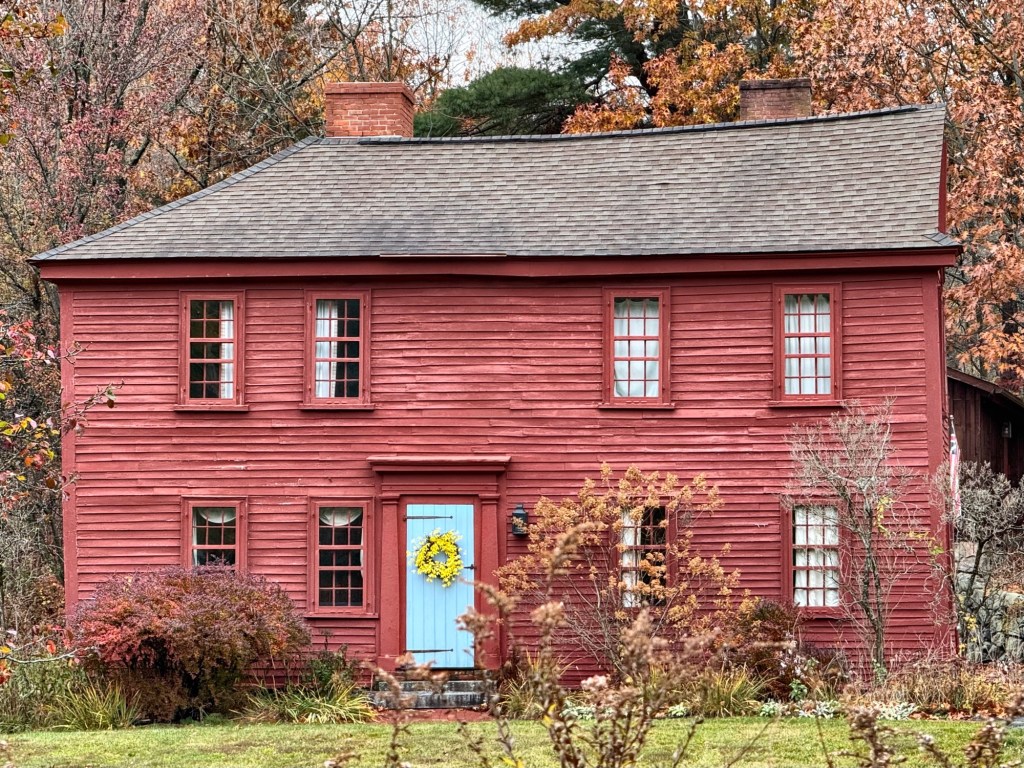
This large First Period house in Wayland dates to the early 18th century and was originally located in Kingston, Massachusetts, and moved to its present location in the 40s. The historic home was built by 1713 for Jonathan Bryant (1677-1731). After 250 years in Kingston, the house was threatened with demolition, and was ultimately saved by Wayland resident, Allan Finlay. Allan was a member of the town’s Planning and School boards, and was active in overseeing the Modern expansion of Wayland’s schools in the 1950s and 60s. In 1941, Finlay had this house disassembled and rebuilt on land on Old Sudbury Road for his family. The house, with its expansive setback, overlooks preserved wetlands.
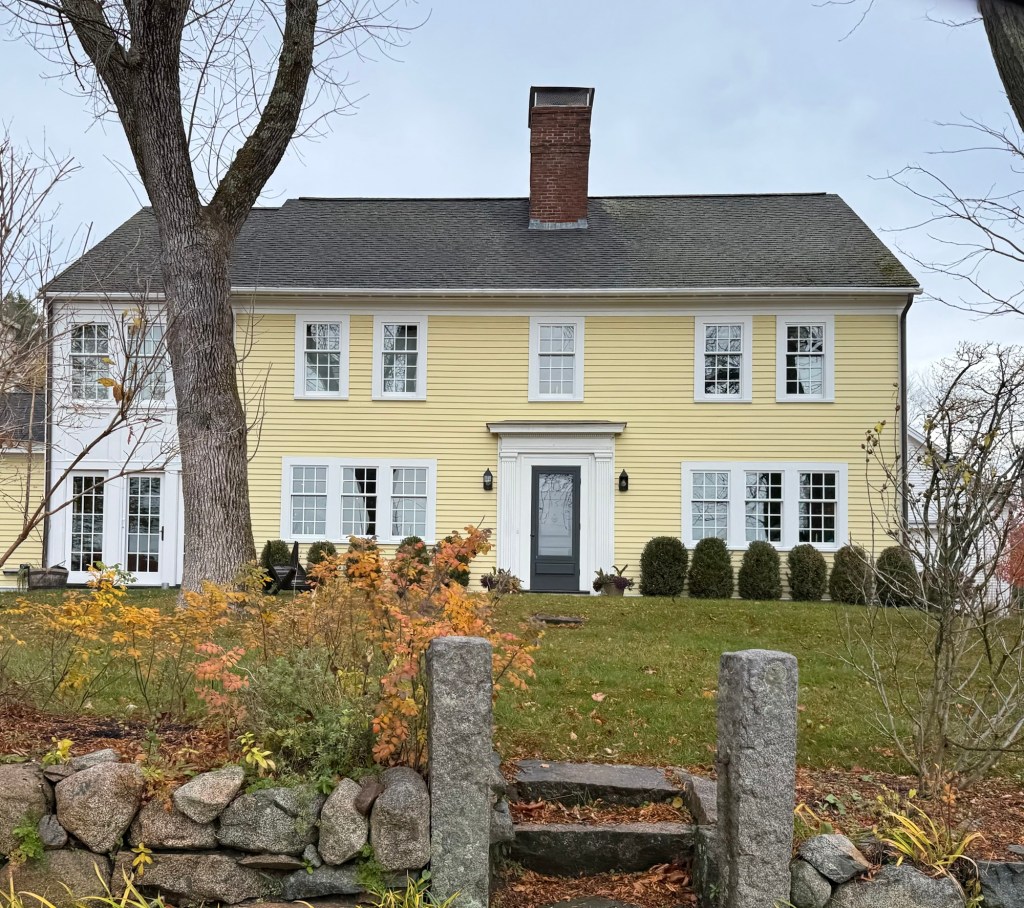
Benjamin Adams (1750-1843) was born in Milton, but relocated to East Sudbury (later renamed Wayland) and purchased property here from a Bezaleel Moore, a tanner and farmer. Soon after moving to town, in 1775, he mustered with the minutemen under the command of Capt. Nathaniel Cudworth. After the conclusion of the war, Benjamin married Elizabeth “Betsy” Adams and they expanded the old farmhouse (today at 34 Lincoln Road) and raised their children here. The property remained in the family until 1873 when it was purchased and operated as a dairy farm. In the 1920s, the farmhouse was expanded with Colonial Revival additions and a renovation for use as a summer residence and gentleman’s farm. It is believed that some of the interior wood paneling inside the house was added at this time and was salvaged from the Pequod Inn, which was razed around that time.
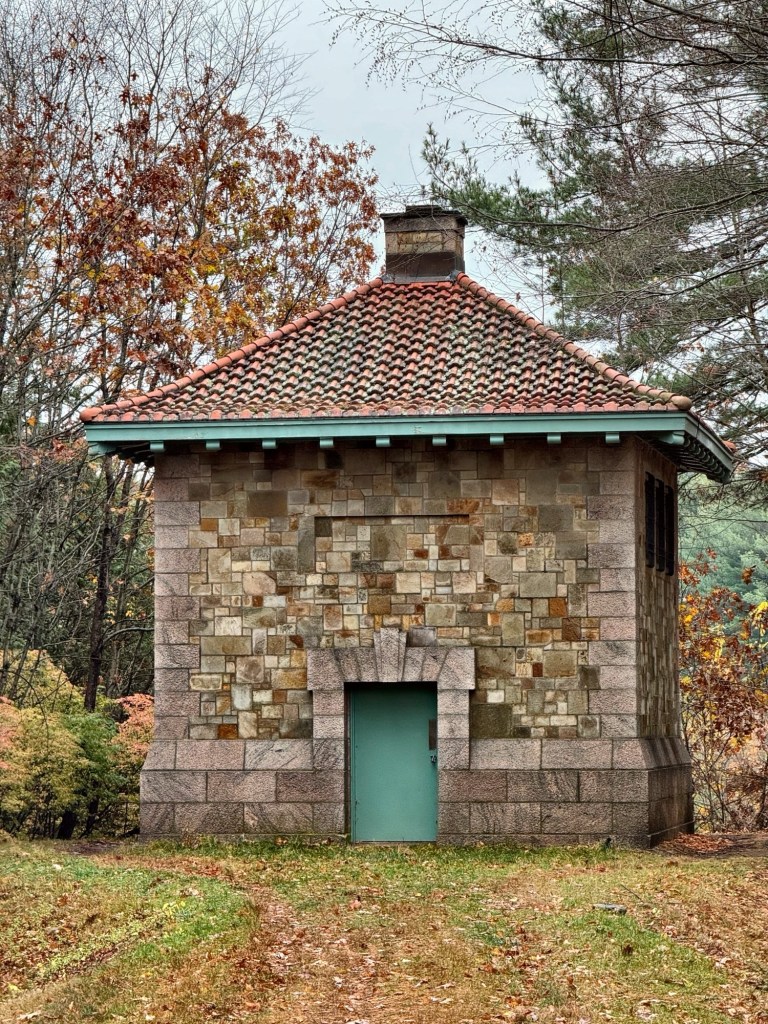
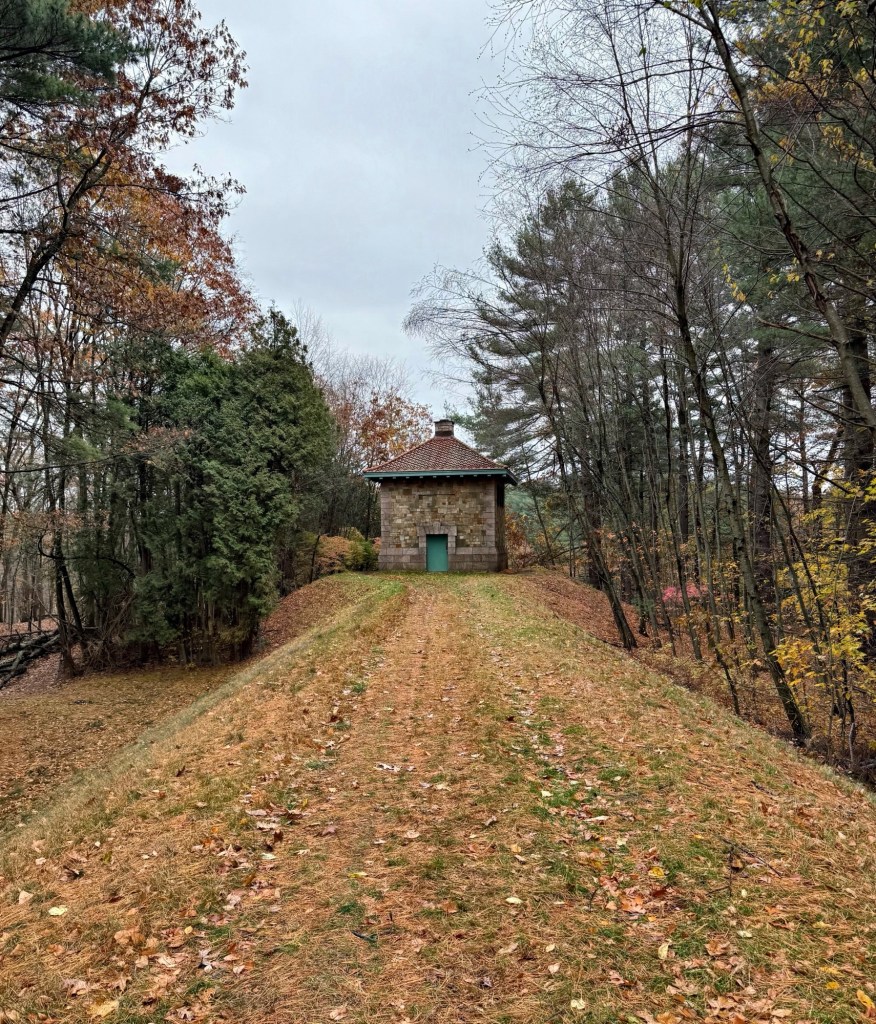
The Weston Aqueduct was designed to deliver water from the Sudbury Reservoir in Framingham to the Weston Reservoir in Weston, Massachusetts. Built between 1901 and 1903, the aqueduct was designed to provide water to the suburbs north of Boston. All of the buildings that shelter the aqueducts above-ground elements, including this structure in Wayland, were designed by the architectural firm of Shepley, Rutan and Coolidge, with landscaping along the route and at the reservoir designed by the Olmsted Brothers, landscape architects. This siphon house, known as the Happy Hollow Siphon House was built in 1903 and was an important part of the aqueduct system, as it transferred water through varied elevations using gravity and pressure to move the liquid without a pump. The aqueduct route is now a long, linear path and remains owned by the Massachusetts Water Resource Authority.
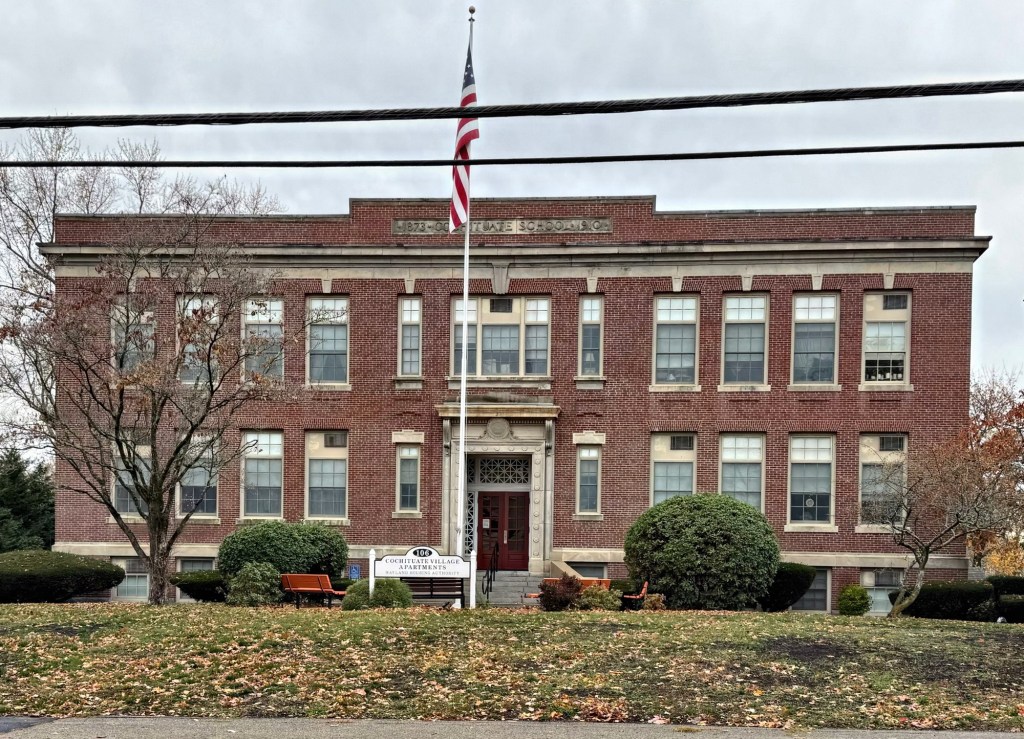
The Cochituate School in Wayland, MA, was built in 1910 to educate the Cochituate Village’s growing student population. The industrial village was dominated by shoe manufacturing with workers largely consisting of first- and second-generation European immigrants who moved to New England for work. Boston architect, Willard P. Adden, designed the school, which replaced an earlier schoolhouse on the site that was outgrown. The two-story, brick school was expanded following WWII, when a long rear ell with classrooms and a cafeteria was designed by Perry, Shaw & Hepburn. In the 1990s, the old Cochituate School was renovated and converted to senior housing administered by the Wayland Housing Authority.
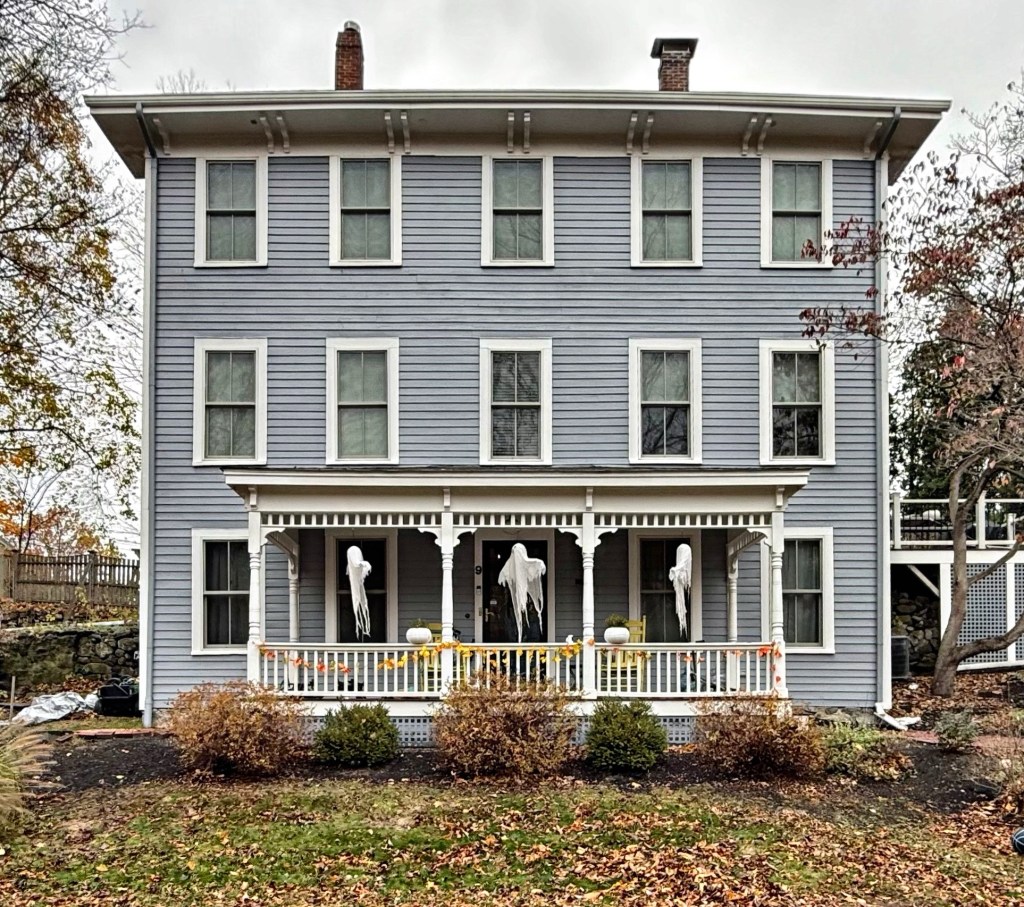
This unique residence in Wayland, Massachusetts, is tucked away on Corman’s Lane, a dead-end street near Snake Brook, a small stream leading into Lake Cochituate. The house was built around 1870 for George William Risley (1836-1913), a shoe manufacturer and Civil War veteran who settled in Cochituate Village and ran a factory there. Risley was active in town affairs and served as Selectman in 1872, the year in which the annual meeting authorized the selectmen to petition the General Court for Cochituate to separate from Wayland. The petition was ultimately never was filed and Cochituate remains a part of Wayland. The Risley House has five bays and a shallow side gable roof with broad, overhanging eaves supported by brackets. A central porch runs along part of the facade and has intricate turned posts and spindlework. The home remains in great shape and is evocative of mid-late 19th century industrial housing built for factory managers.
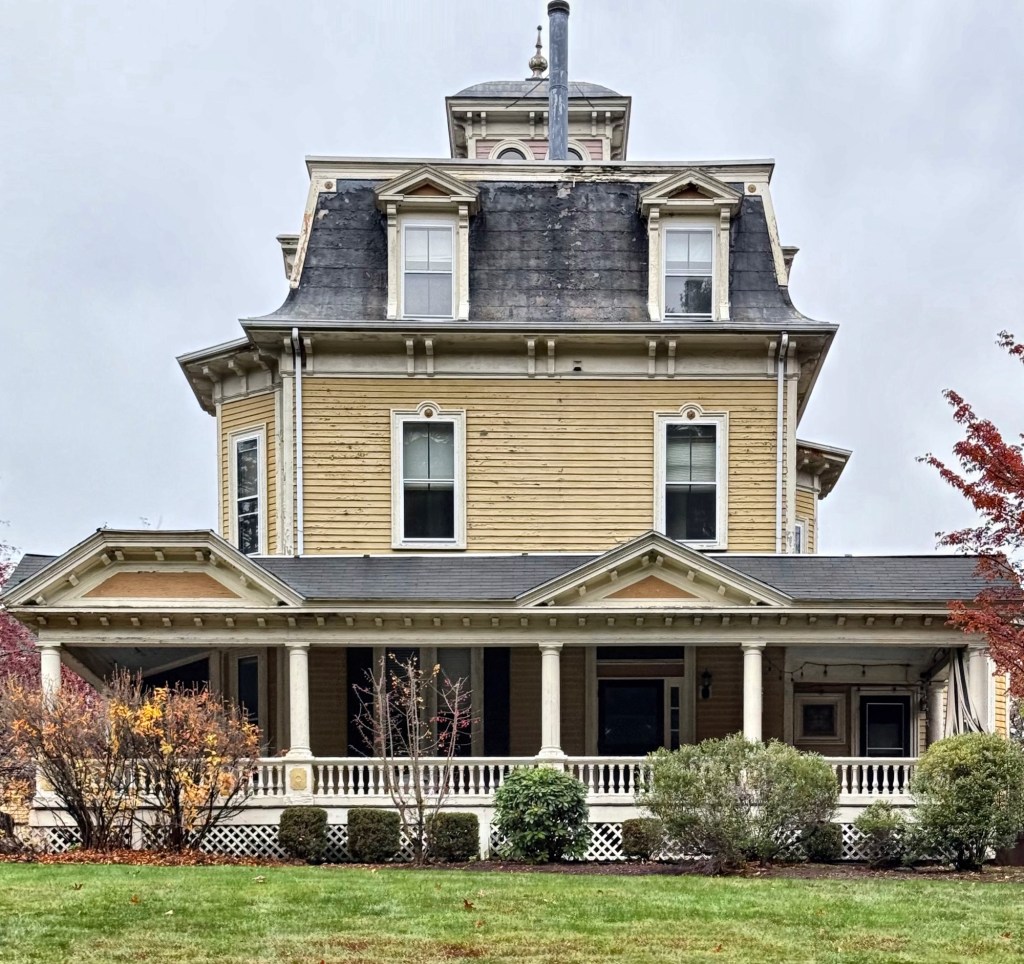
The Damon-Griffin House at 92 Commonwealth Road in Wayland, Massachusetts, is one of the exemplary buildings constructed in the Cochituate village in town, which prospered in the 19th century and centered around industry. This stately Second Empire style mansion is sited on a rise in the land overlooking Lake Cochituate and was completed in 1869 for George A. Damon (1826-1885), a wealthy businessman. George Damon died in 1885, and the house was sold to Wallace Griffin, one of the Griffin brothers who worked for the Bent Company, a prominent local shoe manufacturer. In 1890, Noble Griffin bought the house from his brother and, as his business prospered, proceeded to fix up the house as the showplace of a successful shoe manufacturer. In the mid-20th century, the Damon-Griffin House became a funeral home, and later was purchased by a developer who subdivided the land to build a suburban-style development of detached homes behind the house, and constructed an addition to the rear with more condominium units.
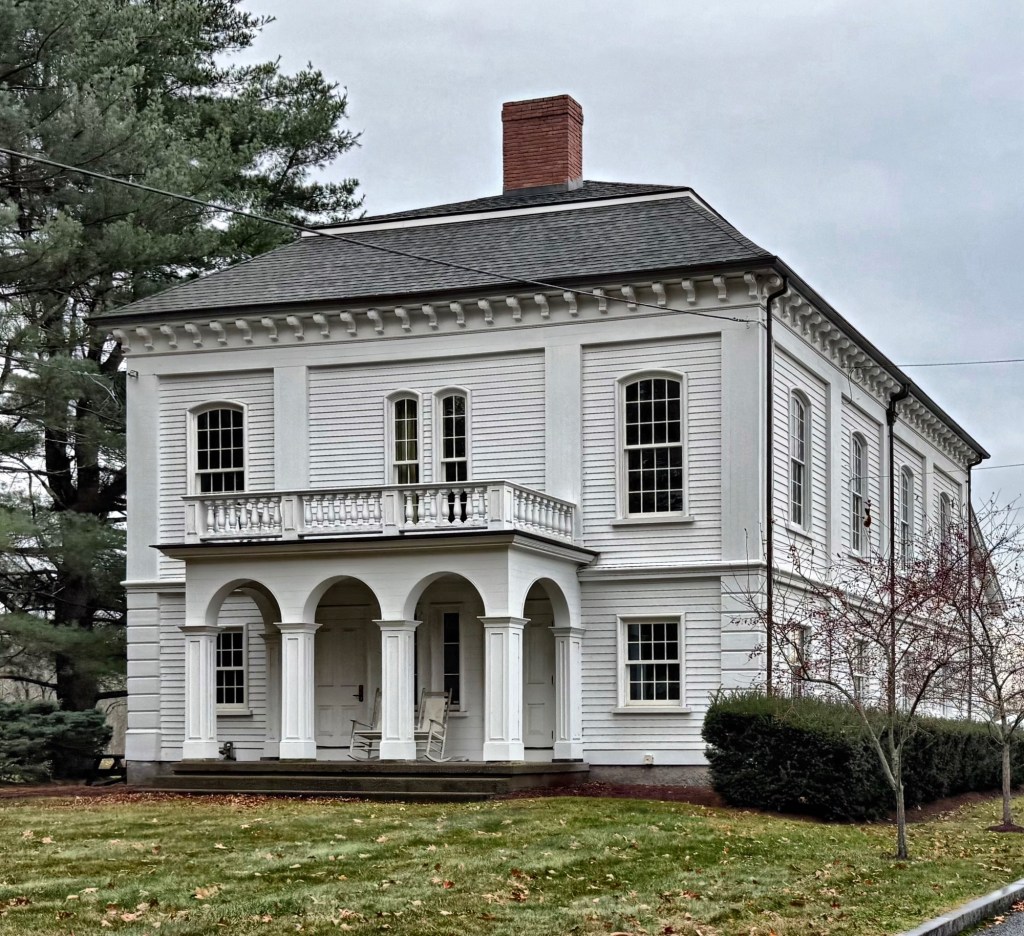
In 1854, at the annual Town Meeting at Wayland, residents voted to build the community’s first High School, this structure, which was completed in 1855. The roughly square building is Italianate in style with the round arched windows and bracketed cornice, but with some holdover features common in Greek Revival architecture, including the tall pilasters dividing the bays, and projecting portico supported by square paneled columns. A few years after opening, the new High School was so underused, the local grammar school held some classes here. By the 1880s, high school students were sent to school outside of town. As the town population began to increase and the size of the student body necessitated a new high school. The town considered repair of this building, which had suffered from neglect, or construction of a new building. In the end, money was appropriated to build a new High and Grammar School in 1896. The town had the first school moved slightly on the town lot to allow space for the new, second school, and sold the 1850s schoolhouse to the local chapter of the Independent Order of Odd Fellows, known as Pequod Lodge. The second high school was demolished in 1978, over a decade after the present High School was built by The Architect’s Collaborative (TAC). In 1978, the Old Wayland High School was sold to the neighboring Trinitarian Church and has been used for administrative purposes and church meetings.
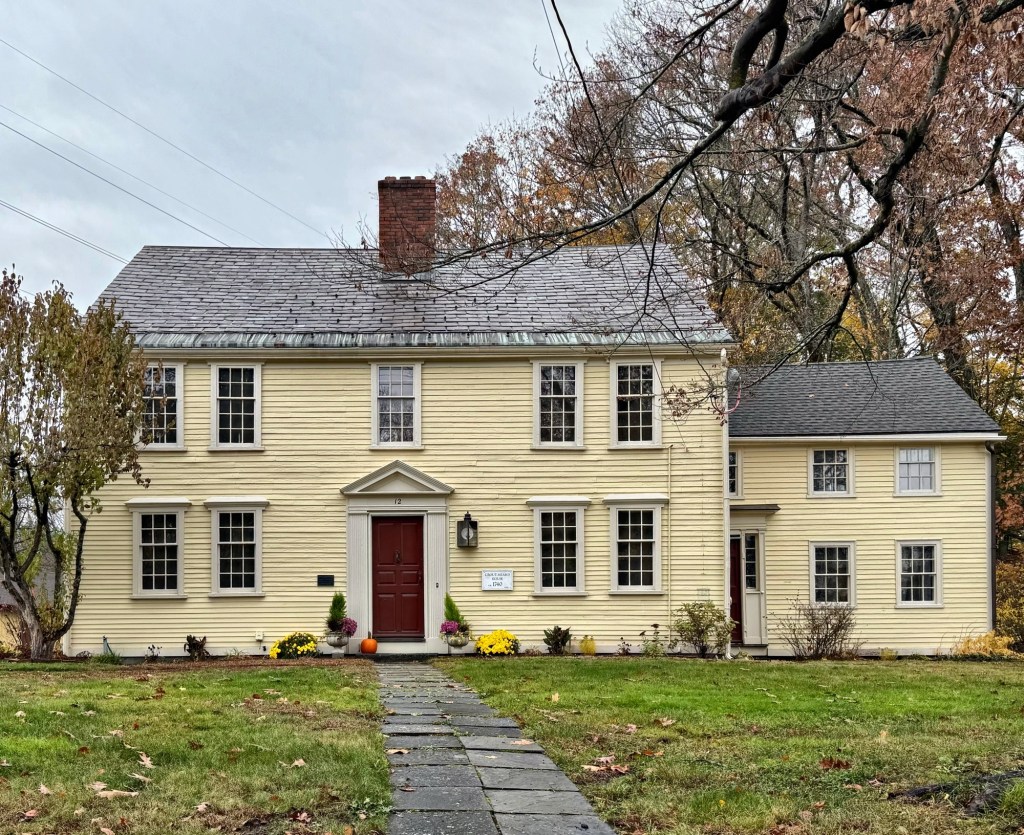
The Grout-Heard House on Cochituate Road in Wayland, Massachusetts, is one of the oldest extant residences in the community and architecturally significant as it shows the evolution of architectural tastes throughout the centuries. The house was built around 1743 for Jonathan Grout (1701-1748), a grandson of an original settler in the area, by the time of his marriage to Hannah Heard in 1743. Early records suggest that the house was originally just one bay deep and two-stories tall with a central entry. The property was sold in 1744 to Richard Heard, Jonathan’s brother in-law. In 1787, Silas Grout (1755-1820), a blacksmith, purchased the house and likely added rooms on the rear of the house. In 1822, Silas’ descendants added the side ell and the residence became a double-house in the mid-19th century. The house was moved from the site to make room for the 1870s Town Hall, and the rounded two-story side bay was added. After the Town Hall was razed in the 1950s, the Grout-Heard house was moved back to its original site in 1962. Since that date the Grout-Heard House has been the offices, research center, artifact repository and house museum of the Wayland Historical Society, who added a two-story Modern addition at the rear.
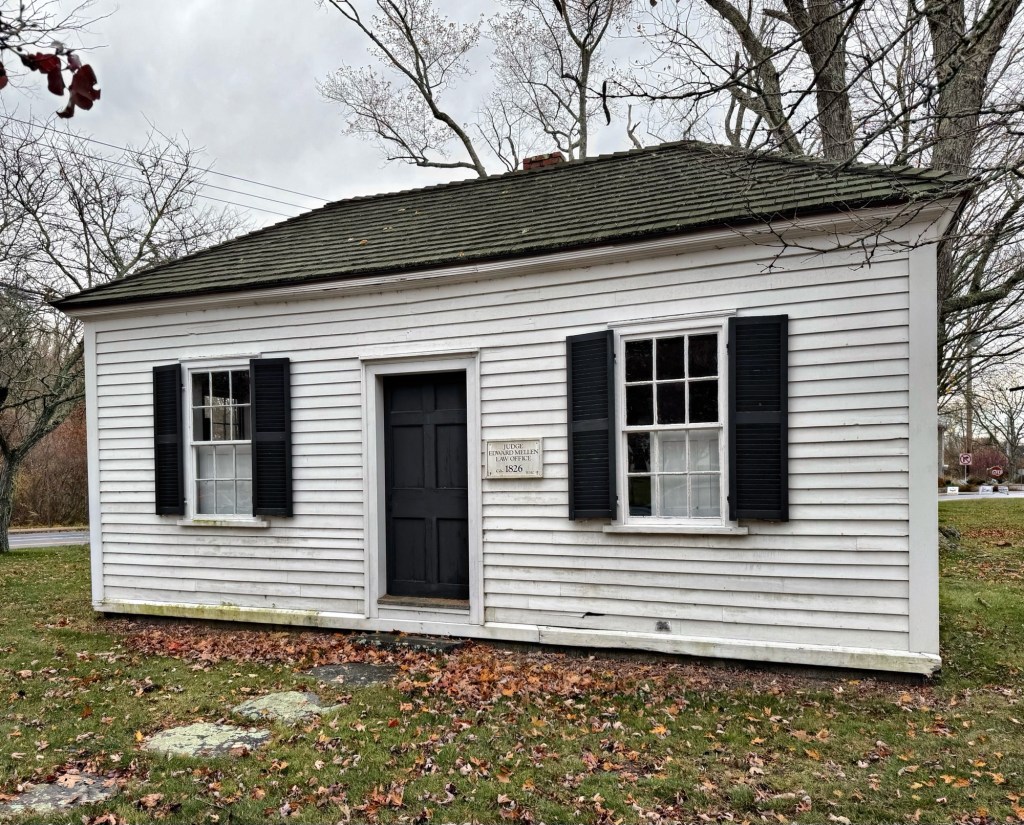
Samuel H. Mann (1801-1838), a lawyer, acquired the Dr. Ebenezer Ames House on Cochituate Road in 1829, only a month before his marriage to Isabella Ross. At about that time, Mann built this small law office across the road from his home, where he would practice law. It is not clear why, but within a year, Mann sold the house and this law office to Judge Edward Mellen (1802-1875), who was appointed Chief Justice of the Massachusetts Court of Common Pleas in 1855 and practiced law in Wayland until his death in 1875. After his death, the law office sat largely vacant until during World War II, when a newsletter to soldiers, The Village Bugle, was published here. After this, a couple of businesses used the former law office in the 1950s and 1960s until the owner donated the lot to the Town of Wayland in 1971. The diminutive building is a charming, and well-preserved example of a vernacular, Federal period professional office building that mimics the form and materials of the Ames House to which it was long affiliated with.
 Buildings of New England