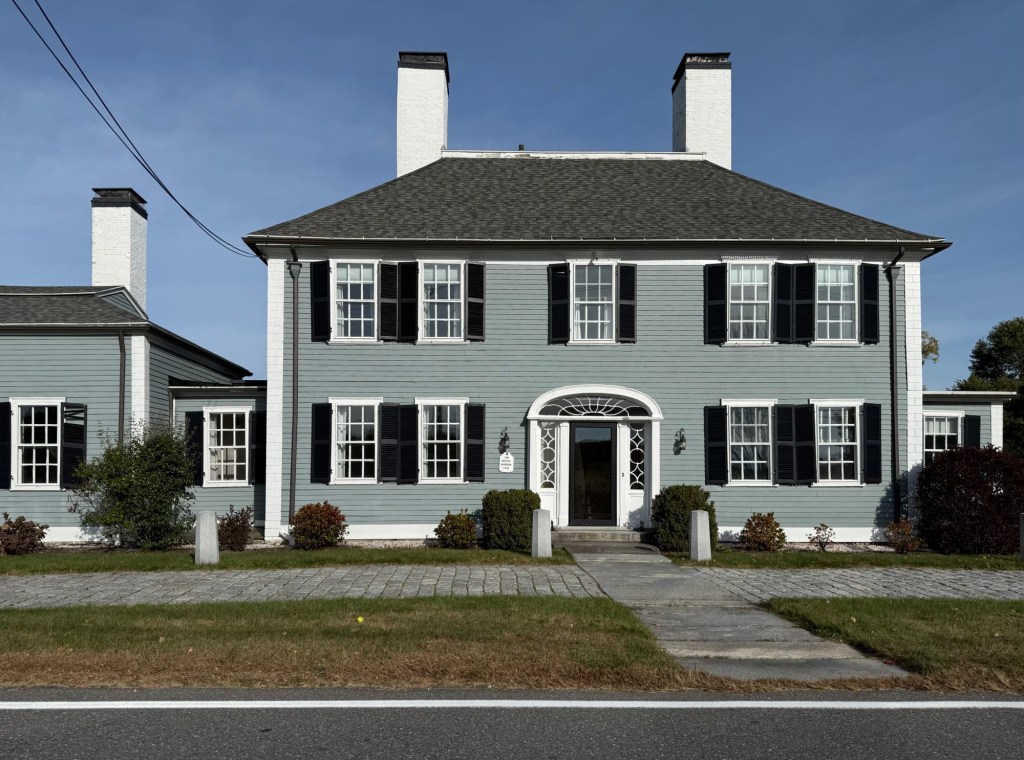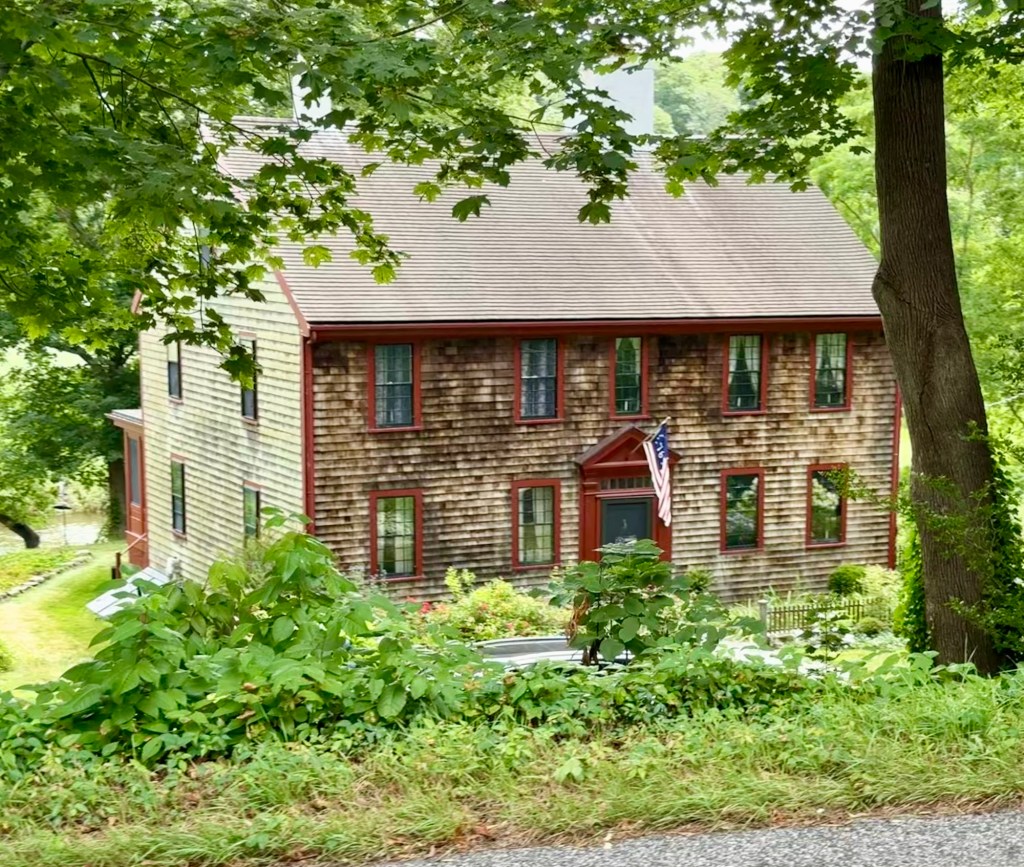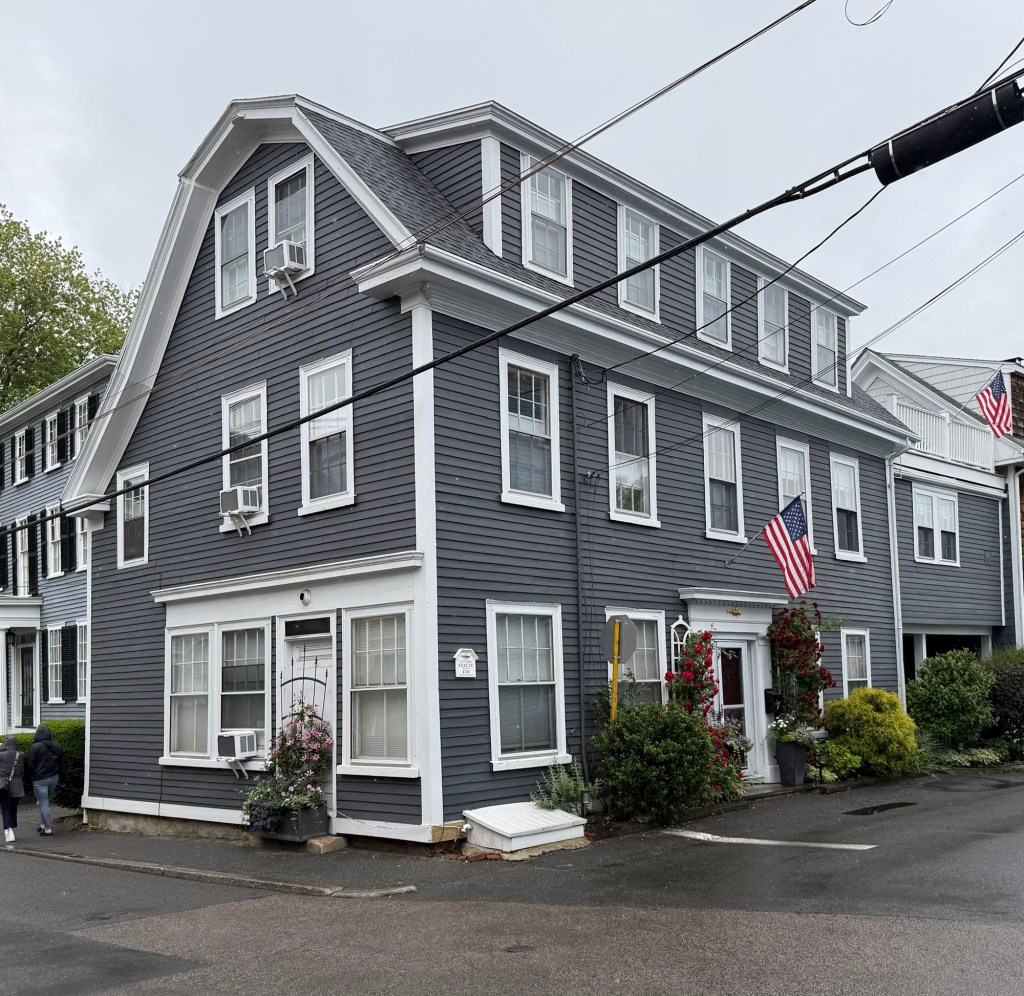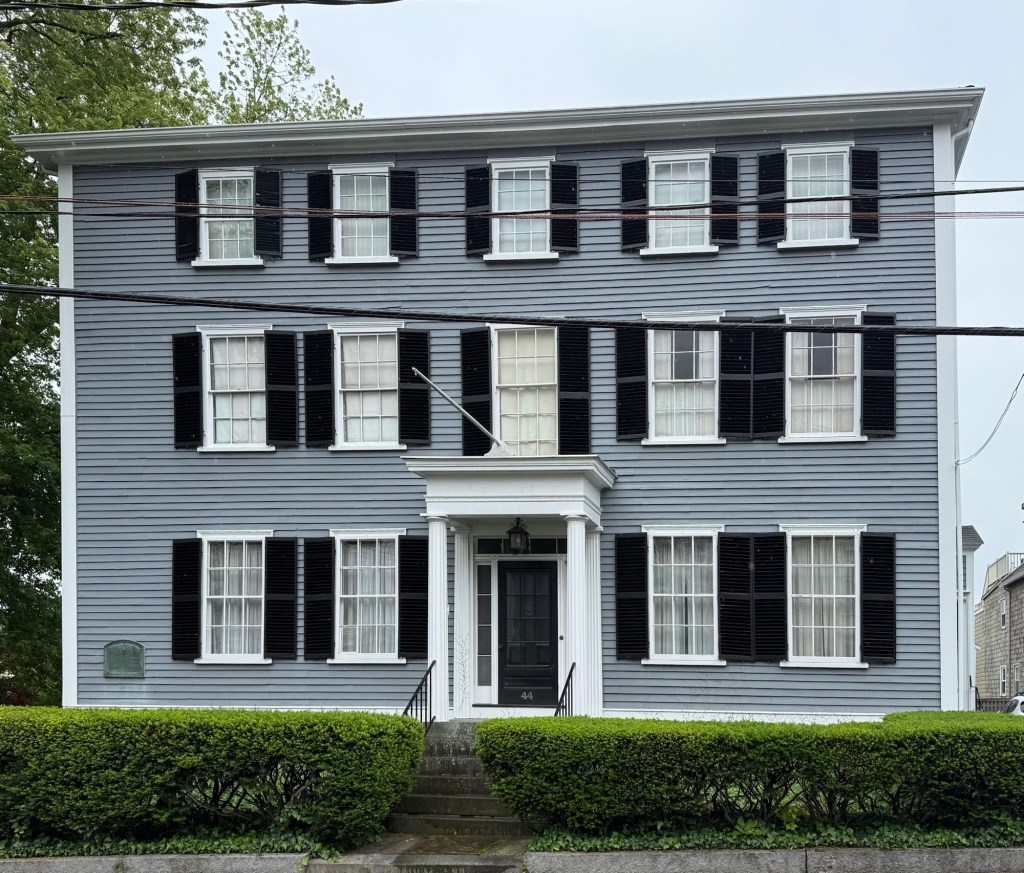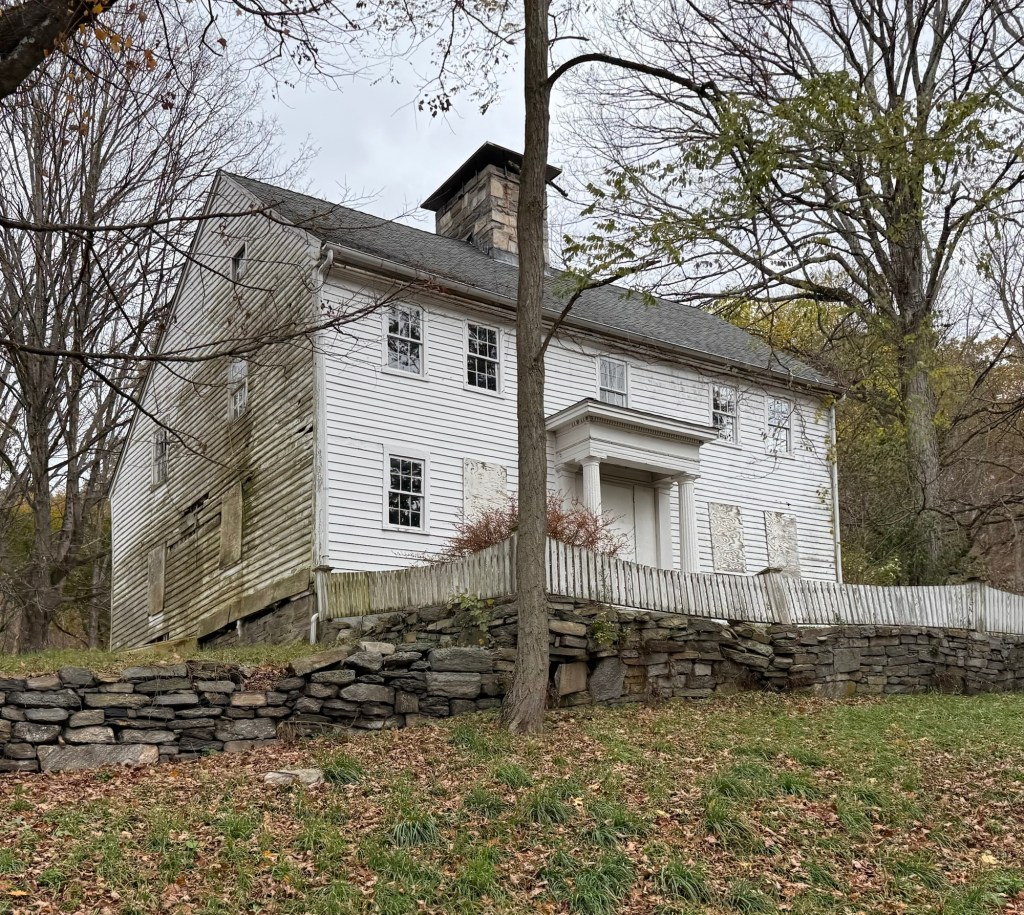
Elbridge Gerry House // c.1734

The Elbridge Gerry House is a historic house on Washington Street in Marblehead, Massachusetts that was built by local merchant, Thomas Gerry around the time of his marriage to Elizabeth Greenleaf. Architectural evidence suggests that the house was a two-story L-shaped Georgian frame structure, that in about 1820, was raised to its present three-story form in the Federal style. It was in this house that Founding Father, Elbridge Gerry (1744-1814) was born, and spent many formative years in. Gerry was a wealthy merchant, politician, and diplomat who served as the fifth vice president of the United States  under President James Madison from 1813 until his death in 1814, and is arguably best-known for Gerrymandering. The term, originally written as “Gerry-mander,” first was used on March 26, 1812, in the Boston Gazette — a reaction to the redrawing of Massachusetts state senate election districts under then-Gov. Elbridge Gerry. One of the remapped, contorted districts in Essex County (where Marblehead is located) was said to resemble the shape of a mythological salamander, hence the name “Gerry-mander”. The newly drawn state senate district in Essex County was lampooned in cartoons as a strange winged dragon, clutching at the region. Elbridge Gerry would live mostly in Cambridge and the family home was sold by around 1820 and modernized about that time.

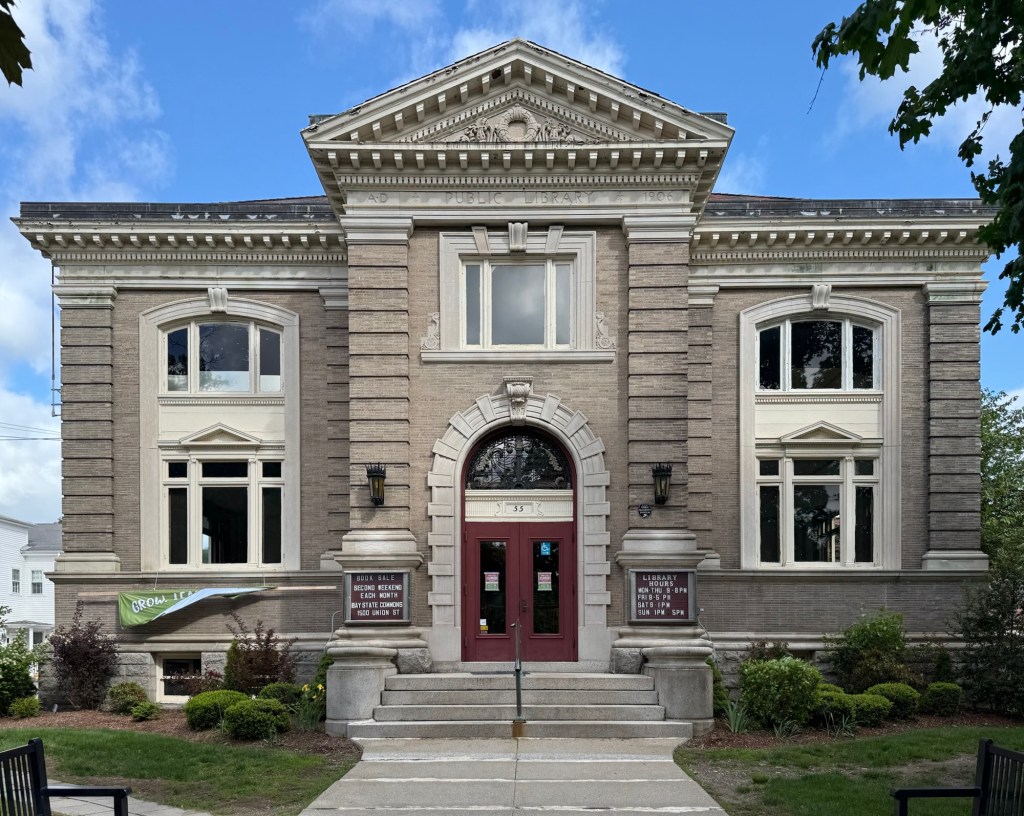
Westborough Public Library // 1908

The Westborough Public Library is a handsome, two-story, masonry building with additions to showcase the growth and importance of the library to the community. This building was constructed in 1908, replacing a small space in the first floor of the old Town Hall (since demolished) as the community’s first purpose-built library. The structure was designed by architect Penn Varney, who specialized in civic buildings in New England. The Classical Revival style building is constructed of buff brick with stone trimmings. Of particular note, the quoined arched entry and pediment with central wreath motif, add much to the design. The library was eventually outgrown, and in 1980, an addition was added to the rear, in a style taking cues from the main building, but clearly of its time. The Town of Westborough about to undergo a restoration and renovation to the library, including a new roof, HVAC systems, interior renovations and the restoration of the 1908 windows.

Former Somerville District Courthouse // 1925

The former Somerville District Courthouse at 19 Walnut Street in Union Square, is a two-story masonry building constructed in 1925. While much smaller and less ornate than other courthouses, the small building is significant as the first courthouse built in the young city and an architecturally significant example of a Classical Revival style civic building designed by architect Charles R. Greco. The building served as the Somerville District Courthouse until the late 1960s, when the legislature authorized a new district courthouse. The City of Somerville purchased the old courthouse in 1969, and the building has housed offices for the City’s Recreation Commission since that time. Interestingly, the building was used for the filming of a courthouse scene in the 1980’s “Spencer for Hire” TV detective show.

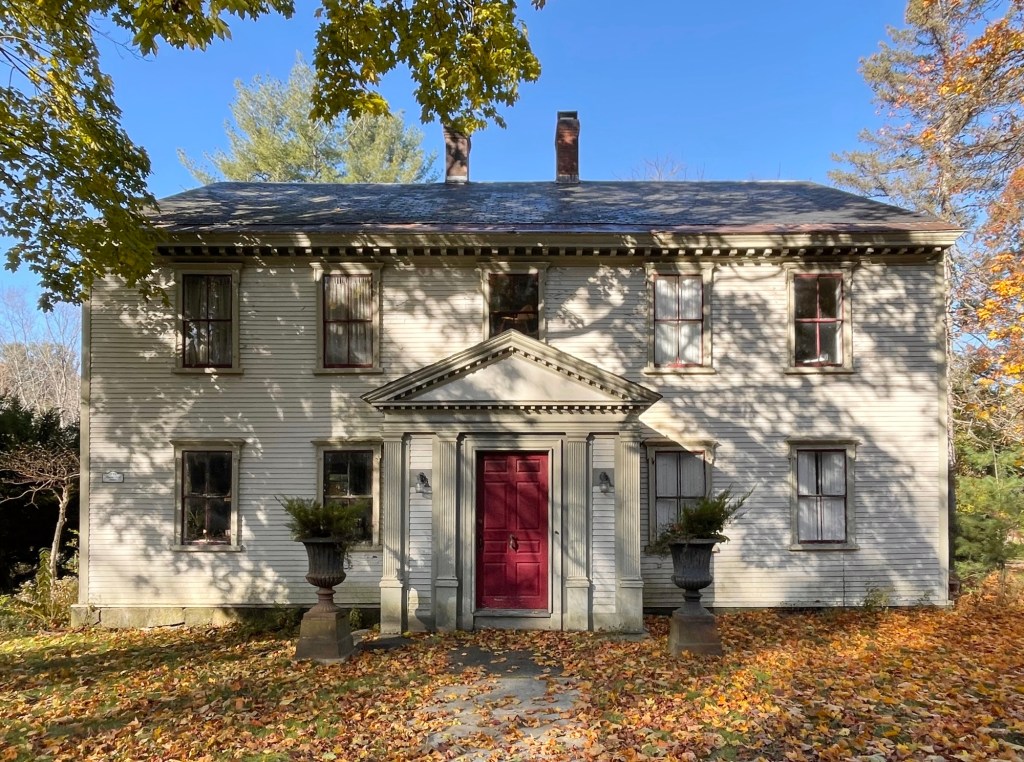
Joseph Cleverly House and Shop // 1832

This late example of a Federal style five-bay house is located at 78 Adams Street in Abington, Massachusetts. The house was constructed in 1832 for Joseph Cleverly (1797-1888), a shoe manufacturer who married Sally Gloyd, the daughter of a wealthy shoe manufacturer in town. Mr. Cleverly built the adjacent stable and shop where he held his horses and manufactured his products. The vernacular barn/shop is a rare survivor of the type and is a visual representation as to the importance of shoe manufacturing for the town of Abington.

John L. Sullivan House // c.1812

This modified Federal style cottage in Abington, Massachusetts, is known locally as the last home of World Heavyweight Champion bare knuckle boxer, John L. Sullivan. John Sullivan (1858-1918) died in this house on February 2, 1918, of heart disease, but left behind a legacy that will last forever. The house was originally constructed around 1812 for Jacob Cobb, a Deacon of a local church and after successive ownership, the house was purchased by boxer John Sullivan, to celebrate his retirement. As a professional fighter Sullivan was nicknamed The Boston Strongboy, and was one of the first great American boxers and was the last world champion bare-knuckle boxer. He had a record of 47 wins, 1 loss and 2 draws, with 38 wins by knockout in his career. Sullivan’s blustering personality and fabled strength gained him a great following, and he would be inducted into the International Boxing Hall of Fame as part of its original class. As champion he earned more than $1 million but squandered it. A hard drinker during his ring career, he later became an advocate of prohibition and delivered many lectures on the subject. His brick Federal house in Abington was modernized by him, adding the dormer and full-length front porch supported by rubblestone columns.

Paul and Caroline Hunt House // 1905

Paul Hunt, the son of famous painter, William Morris Hunt, and the nephew of famed architect Richard Morris Hunt, built this house in Brookline, Massachusetts for $15,000 for him and his wife, Caroline. Paul had been involved in real estate development in Bar Harbor, Maine, where his mother had a summer cottage, and while not an architect himself, he was very interested in design and took a keen interest in developing estates with the family funds. While developing property in the summer enclave of Bar Harbor, Maine, Paul met the Bar Harbor architect, Milton W. Stratton, and the two collaborated in the construction of houses there and two adjacent homes in Brookline. The two-story house is wood frame construction with a stucco finish on the exterior. Spanish Colonial Revival in style, the roof is hipped with terra cotta tile, as is the roof of the verandah which extends across the facade. In 1911, Paul Hunt worked with architect William Ewing Harding to add the two-story wing on the side of the house, which is built over the driveway, creating a really unique (though not as functional) design element. 

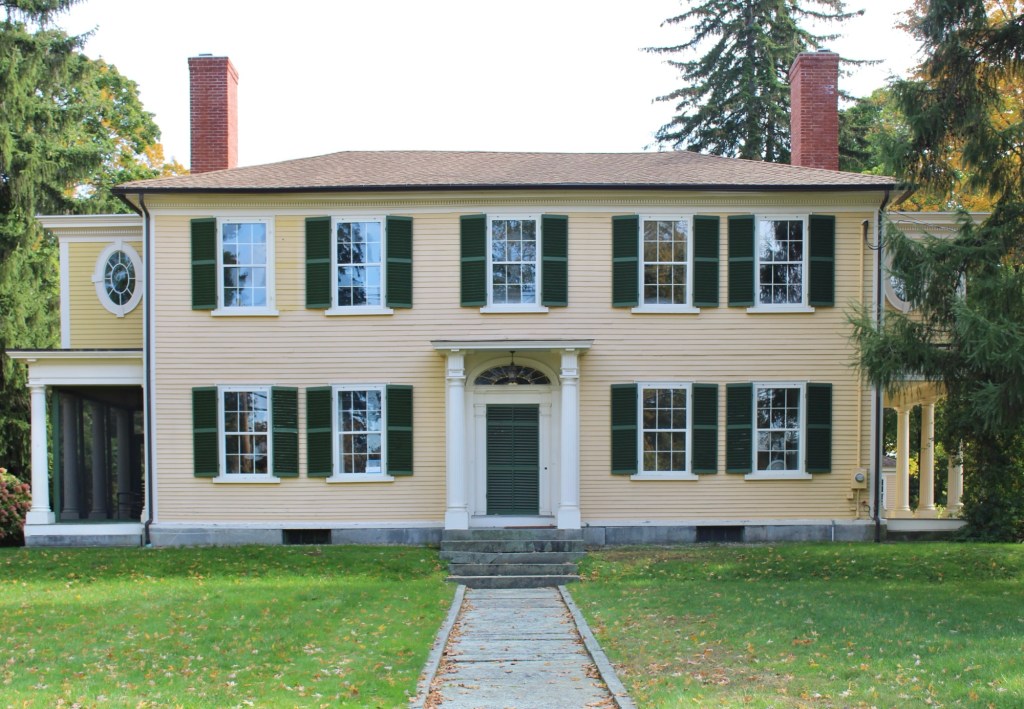
Captain John Clark House // 1802

The Captain John Clark House in Canterbury, Connecticut, is one of the finest examples of the Federal style of architecture in New England, and has remained in a fine state of preservation since its construction in the early 19th century. The house was built by 1802 for John Clark (1731-1834), who purchased an earlier home on the site from and had it either taken down or enlarged to its present appearance. The mansion is symmetrical with five bays, central entry and twin chimneys projecting through the hipped roof. The central bay is a showstopper with its triangular pediment at the roofline containing a fanlight, Palladian window at the second floor, and main entrance with its own pediment, sidelights, fanlight transom, all framed by two-story columns. The house’s south facade is equally beautiful with its own Palladian window and entrance.

Dr. Andrew Harris House // c.1820

This house is located across from the iconic Prudence Crandall House in Canterbury, Connecticut, and is another excellent example of a high-style Federal home in the town’s main village. Built in circa 1820, this residence was the home of Dr. Andrew Harris (1787-1840), one of two physicians in Canterbury in the early 19th century. After Dr. Harris’ death, the property was owned by Hiram and Nancy Waldo, who altered the house with the addition of a Victorian observatory at the rear, two-over-two sash windows, and an entry porch with paired door entrance.

Central Falls Police Station and Courthouse // 1914

Built jointly by the city of Central Falls and the state of Rhode Island, this Classical Revival style building originally contained both the local police station and a district court house. The symmetrical building was designed by William R. Walker and Son, a Providence design firm, who specialized in large, civic and commercial buildings. The gray brick building is trimmed with limestone and stands three-stories under a hipped tile roof capped by decorative cresting. In the 1970s, the courthouse moved out and the entire building came into the ownership of the City of Central Falls and is today owned by the Central Falls Redevelopment Agency, which frankly worries me about the future of this important building. Does anyone know about plans for the building? 

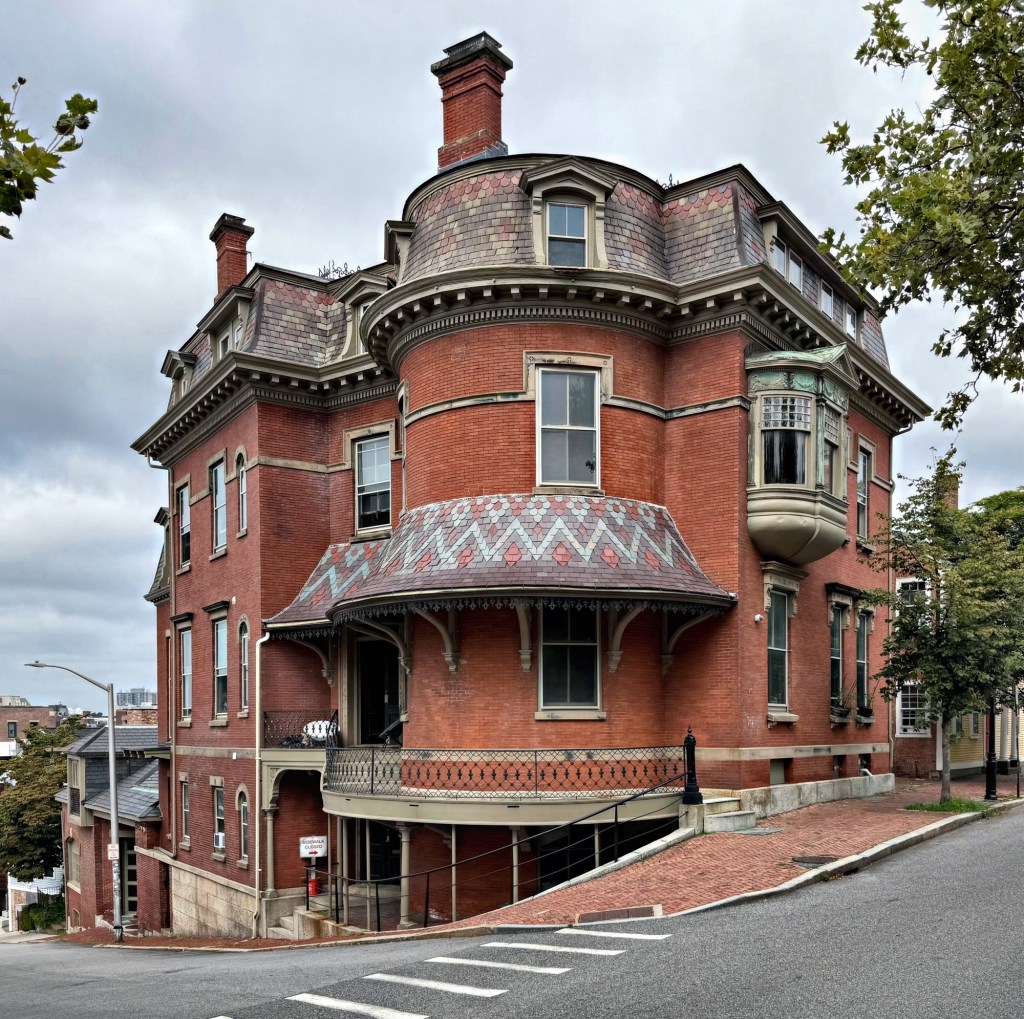
Forrester-Peabody House – Salem Home for Aged Men // 1818

Overlooking the Salem Common, this 1818 Federal style dwelling has served as everything from a single-family home to a boarding house and ultimately an assisted living facility, showcasing that old buildings can always be repurposed into new uses. The home was built for Captain John Forrester, son of Simon Forrester, one of Salem’s most successful merchants. The Forrester House was purchased in the 1830s by George Peabody, who added the one-story ballroom wing. Peabody lived in the house until 1892 and the building later housed the Salem Club, a men’s social organization with over two-hundred well-connected members. In the 1920s, it became the Bertram Home for Aged Men, named after Captain John Bertram, who founded the organization in 1877 as a charitable residence providing housing and socialization space for aged men in Salem. The home had fallen into disrepair when it was closed in 1988, to reopen two years later as the first free-standing assisted living community for men and women in Massachusetts, today known as the Bertram House.