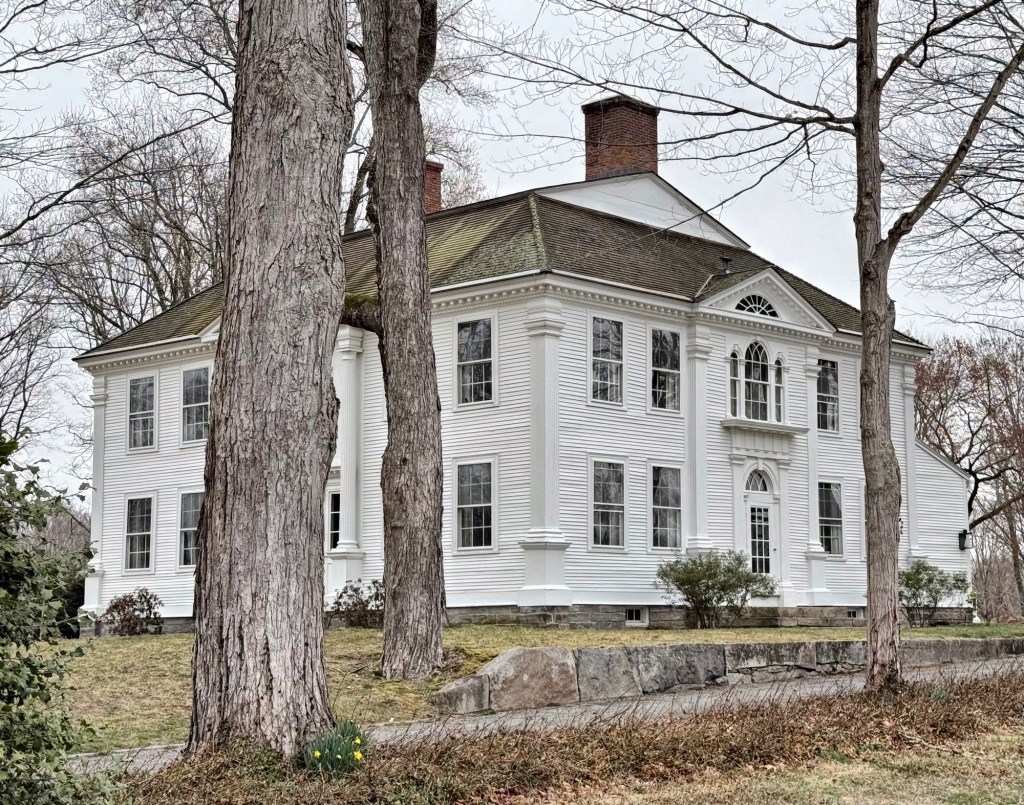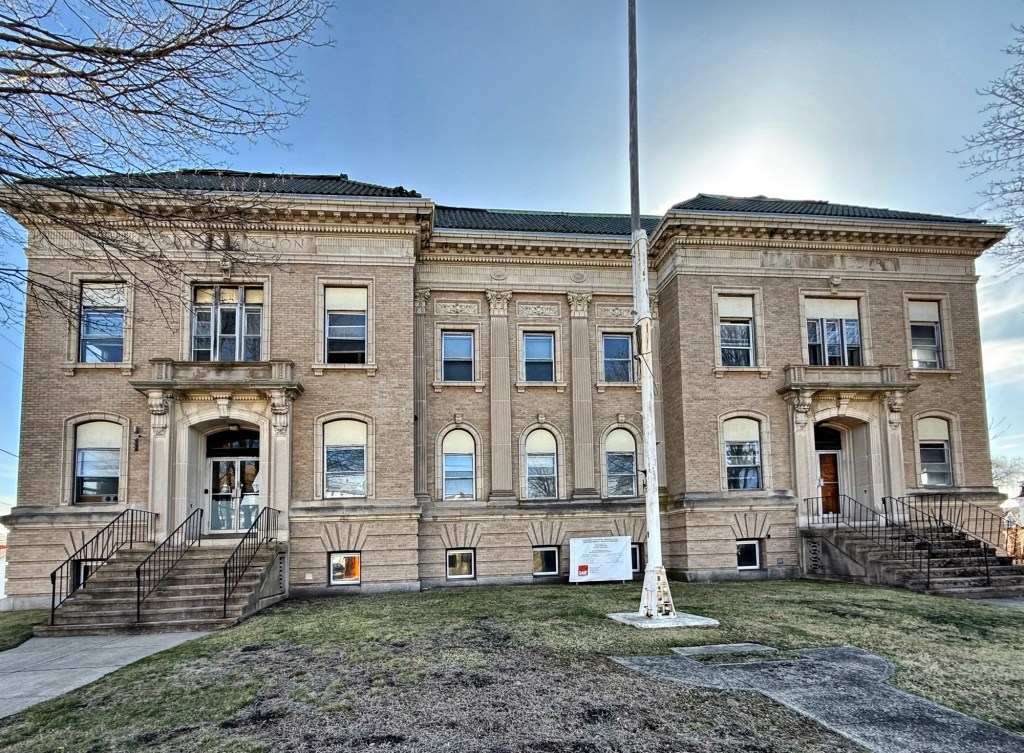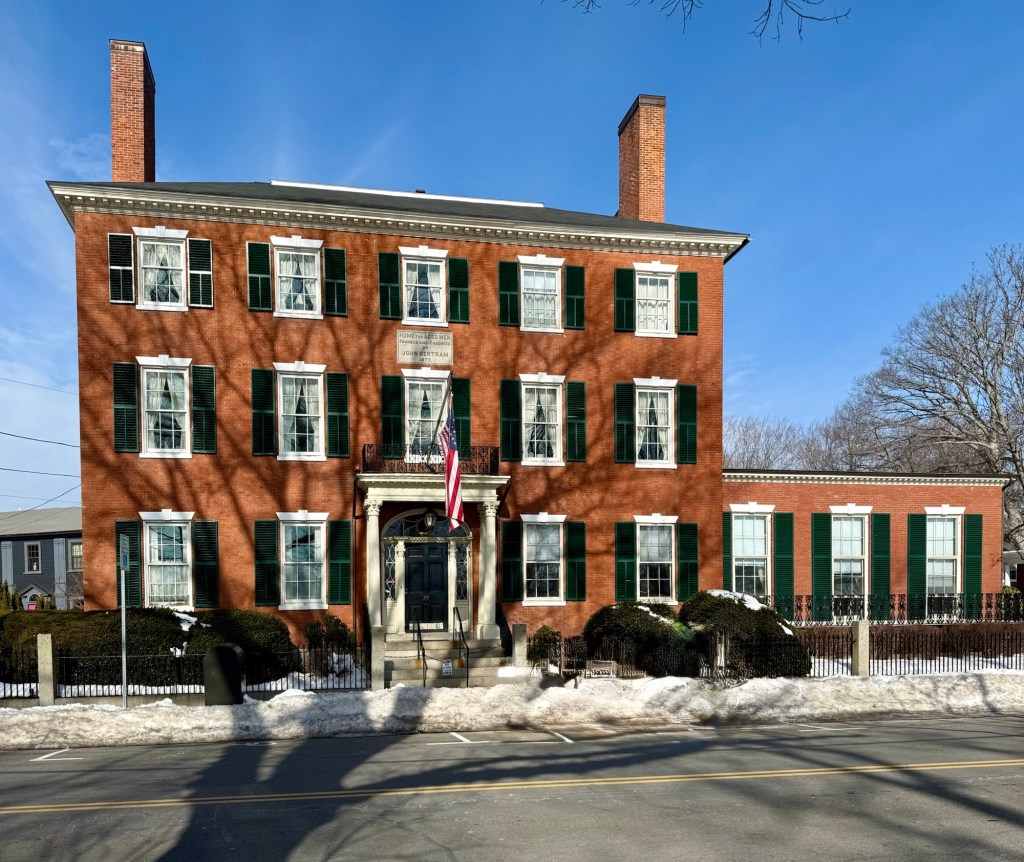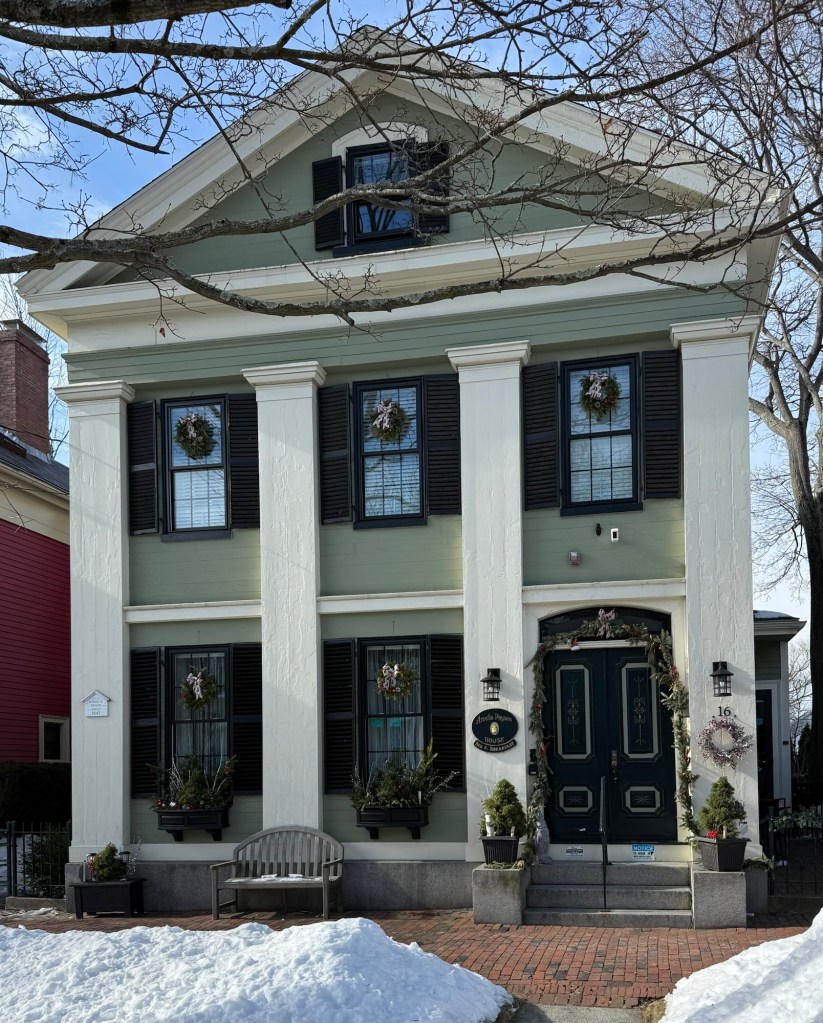
Forrester-Peabody House – Salem Home for Aged Men // 1818

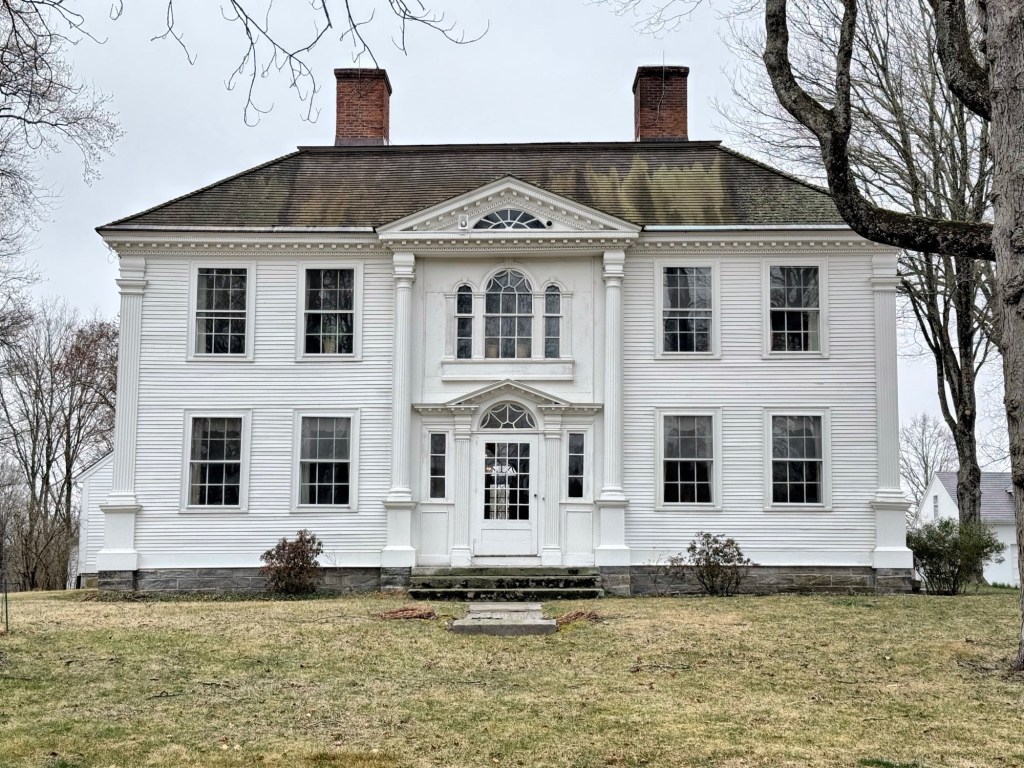
Overlooking the Salem Common, this 1818 Federal style dwelling has served as everything from a single-family home to a boarding house and ultimately an assisted living facility, showcasing that old buildings can always be repurposed into new uses. The home was built for Captain John Forrester, son of Simon Forrester, one of Salem’s most successful merchants. The Forrester House was purchased in the 1830s by George Peabody, who added the one-story ballroom wing. Peabody lived in the house until 1892 and the building later housed the Salem Club, a men’s social organization with over two-hundred well-connected members. In the 1920s, it became the Bertram Home for Aged Men, named after Captain John Bertram, who founded the organization in 1877 as a charitable residence providing housing and socialization space for aged men in Salem. The home had fallen into disrepair when it was closed in 1988, to reopen two years later as the first free-standing assisted living community for men and women in Massachusetts, today known as the Bertram House.

Payson-Fettyplace House // 1845

Behold, one of the finest, and well-preserved Greek Revival style homes in Salem. This is the Payson-Fettyplace House on Winter Street, built in 1845 with its gable facing the street to create a pediment, a wide entablature and cornice, and pilasters on the flushboard façade, which together make the building read more like a Greek temple than a residential home. The residence was built for Edward H. Payson, a bank officer, and his wife, Amelia, who lived in the home for only two years before moving into a larger residence across the street just two years after this house was completed. The property was sold to a Carleton Dole of Maine and again sold in 1850 to Thomas J. Fettyplace. The Fettyplace family were based out of Marblehead and many of them relocated to Mobile, Alabama, to make money in the cotton and shipping industry in the South. Thomas purchased this home in Salem for his mother who spent her final years here until 1861. After the Civil War, the Fettyplace brothers would move back north and this home remained in the family until 1912. The house is now a bed & breakfast known as the Amelia Payson House, named after the original owner.

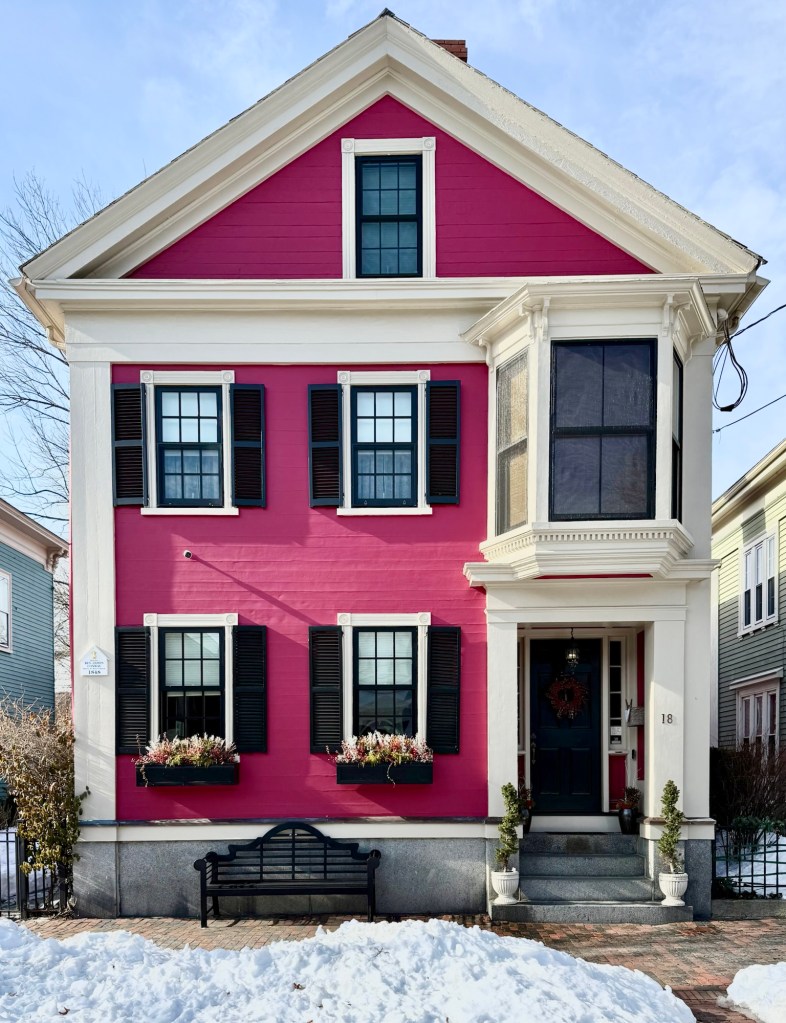
Conway-Trumbull House // 1848

Built in 1848 for Rev. James Conway of Salem, this stunning Greek Revival home on Winter Street blends architectural integrity with a bold pop of color! James Conway was born in Ballinamore, Ireland and moved to the United States and was ordained as a Catholic priest. He was a missionary with the Penobscot Tribe in Maine, before preaching in Lowell and later in Salem, Massachusetts. When he moved to Salem, he had this house on Winter Street built with flush board siding, paneled side-hall entry, and moulded window surrounds with corner blocks. Conway would later sell the property to Edward Trumbull, a Salem merchant and later to Ebenezer Putnam. It was likely Putnam who added the oversized second-story bay window on the facade of the house.

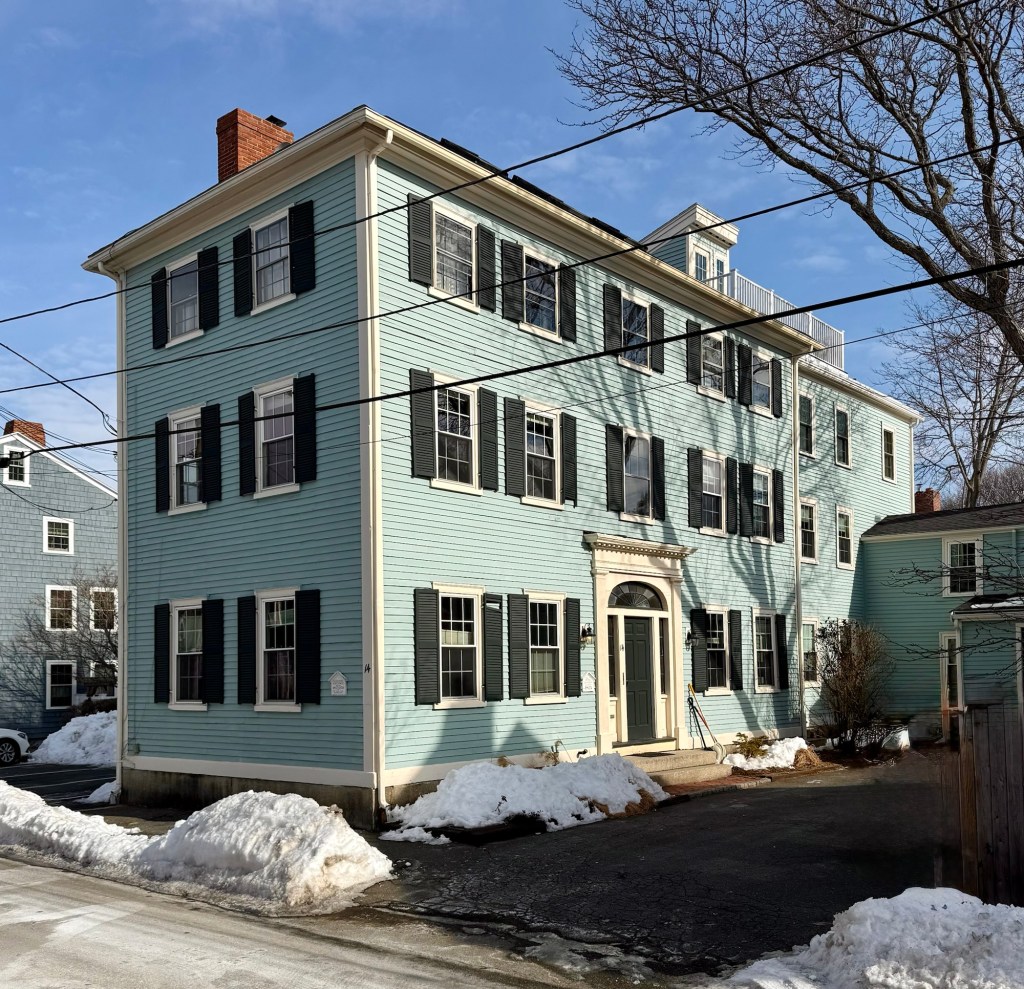
Joseph Story House // 1811

Built in 1811 for Joseph Story, lawyer, politician, and judge of the United States Supreme Court, this stately brick residence on Winter Street in Salem, Massachusetts, is significant, not only for its architecture, but for its esteemed owners. Judge Joseph Story (1779-1845), who was then Speaker of the House of Massachusetts in 1810, purchased this house lot near the Salem Common, and proceeded to have this three-story brick house constructed. By the time it was finished, Story had been appointed by President Madison to the bench of the United States Supreme Court. He was just 32-years-old when nominated to the bench. The house is also the birthplace in 1819 of Story’s son William Wetmore Story, a well-known sculptor. Judge Story would reside here until 1829, when he moved to Cambridge in order to pursue his work at the new Harvard Law School. The property was sold in 1831 to Robert Upton (1788-1863), a self-made merchant heavily engaged with trade in South America. Robert Upton and his sons were among the most important men in Salem in the 1830s-1850s, for they were able to maintain a successful foreign commerce, and keep ships and men employed, at a time when Salem was otherwise fading as a seaport. The house has been lovingly maintained by centuries of stewards, and the house was designated as a National Historic Landmark in 1973.

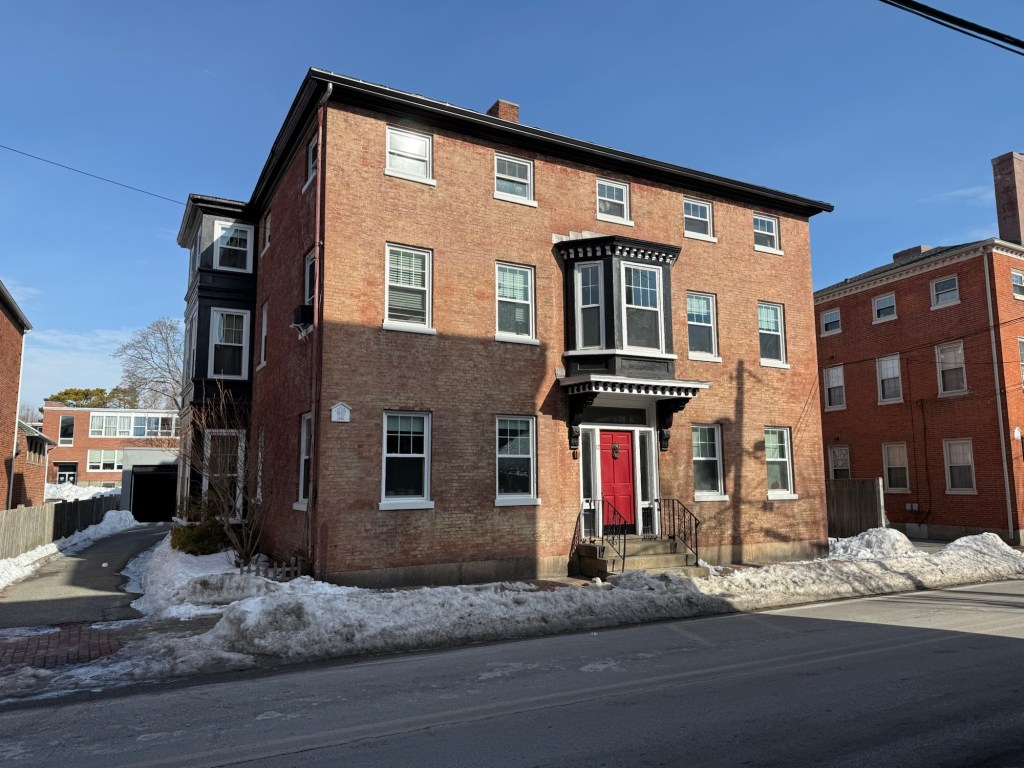
Brown-Battis House // 1851

Captain Nathaniel Brown (1800-1866), a master mariner in Salem, built this fine brick house on Brown Street in 1851. Captain Brown bought the lot from the heirs of Nathaniel Kinsman in 1850, with an older house already occupying the site. The existing house was razed and construction began on this house, with it completed by 1851. The building is unique as it resembles the Federal period form of the five-bay and three-story residence with shortened third-floor windows under a low hipped roof. Although the Federal period waned in popularity by the 1830s, this house clearly took cues from the earlier homes nearby. Following Nathaniel Brown’s death in 1866, James Herrick Battis, a tobacconist and cigar manufacturer, purchased the home. City records state that Battis was issued a building permit in 1878 for an addition to the dwelling. It is probable that the bay windows and front door hood were also added at this time, giving the residence more of an Italianate style. Battis continued to own the property until his death in 1891. By 1930, the residence was converted into apartments and was known as the Conant Apartments. It remains a six-unit apartment building today.


Edgerly-Hawthorne House // 1824

The Edgerly-Hawthorne House on Mall Street, near the Salem Common, is one of the most significant residences in Salem, Massachusetts. The Federal style residence was built in 1824 for Peter Edgerly, who ran a teamster/trucker or distribution company in Downtown Salem. After a decade, Peter became insolvent and the property was sold to Joseph Leavitt, a wealthy property owner in Salem. This house is best-known as the place where Salem-born Nathaniel Hawthorne and his family, lived from 1847 to 1850, and where he wrote The Scarlet Letter. It was in the room closest to the street, on the third floor, that Hawthorne sat at his desk and wrote the American masterpiece of fiction. After publishing The Scarlet Letter, Hawthorne moved to the Berkshires and then back to Concord, Massachusetts, never to live in Salem again. In c.1906, the Edgerly-Hawthorne House was photographed by the Detroit Publishing Company highlighting some landmarks in town. The house looks nearly identical from when it was built over 200 years ago!

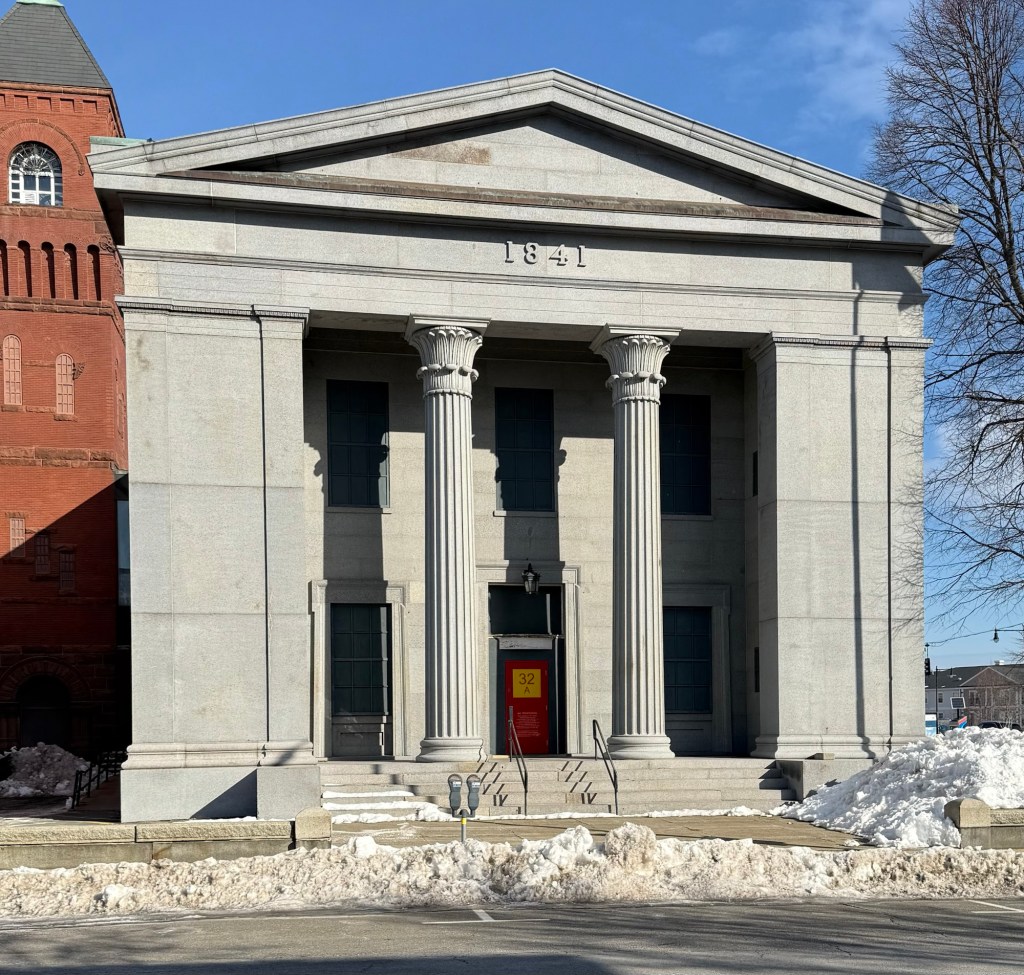
Essex County Old Granite Courthouse // 1841

Aligned in a row on the north side of Federal Street in Salem, the Essex County Court complex is a tour de force of the evolving architectural tastes of three centuries. At the eastern edge of the complex, the Old Granite Courthouse stands as the oldest of the group. The two-story temple-form building is of rectangular plan with gabled roof oriented towards the street. The facade features a recessed porch with paired columns surmounted by Greek Corinthian capitals which are set between broad, squared Doric corner pilasters. The granite building was designed by architect, Richard Bond (1797-1861) of Boston, and the structure is often referred to as one of the finest Greek Revival-style Civic buildings in New England. The courthouse remained in use until the J Michael Ruane Judicial Center at the end of the block was completed in 2012. The Old Granite Courthouse and adjacent Old Superior Courthouse were both vacated and have been essentially mothballed ever-since under the ownership of the Division of Capital Asset Management and Maintenance as surplus. The fate of the two buildings remains undetermined.

Captain John Felt House // 1757

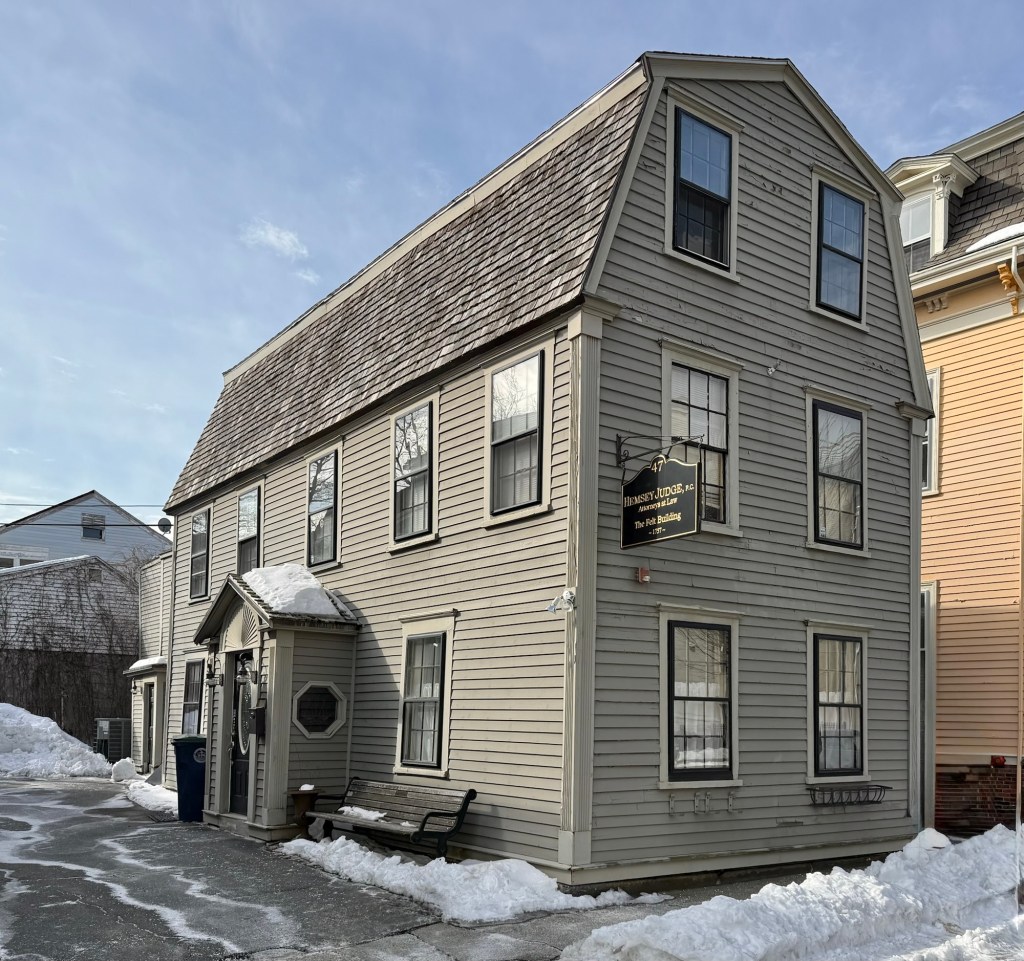
The Captain John Felt House on Federal Street in Salem, Massachusetts, is a surviving Georgian residence with ties to the American Revolution. In May 1757, John Felt purchased a lot on present-day Federal Street from Benjamin Lynde for 52 pounds, and began building his family home here. John Felt, a Salem native, worked as a “shoreman,” but was primarily an owner of vessels involved in the coasting trade, also owning a large warehouse to store the goods from the West Indies brought in by his ships. Felt’s title of “Captain” came from his involvement in the Essex county militia. Captain Felt was a key figure in Leslie’s Retreat, also called the Salem Gunpowder Raid, which took place on February 26, 1775, in Salem. British Colonel Alexander Leslie led a raid to seize suspected cannons from a makeshift Colonial armory in Salem. Instead of finding artillery, Leslie encountered an inflamed citizenry and militia members ready to stop his search. These colonists flooded Salem’s streets, preventing Leslie’s passage and forcing him to negotiate. Ultimately, the Salemites convinced the British Regulars to stand down and return to Boston. No shots were fired, and no one was seriously injured—but tensions were high and a skirmish was evident until Captain Felt stated, “If you do fire, you will all be dead men.” Had a soldier or a colonist gone rogue and fired their weapon, the American Revolution might have begun in Salem, and not Concord just weeks later. After the Revolution, Captain Felt sold his house and moved to present-day Danvers. After centuries of successive ownership by merchants, today, the Felt House is used (at least in part) as professional law offices.

Roughwood // 1891

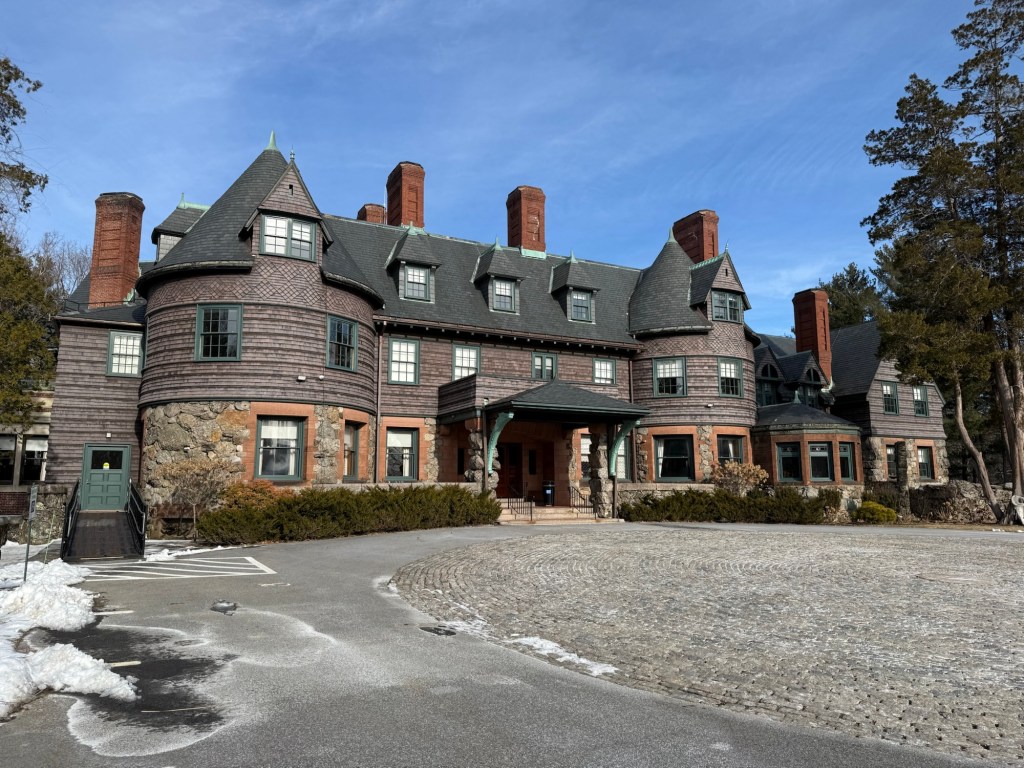
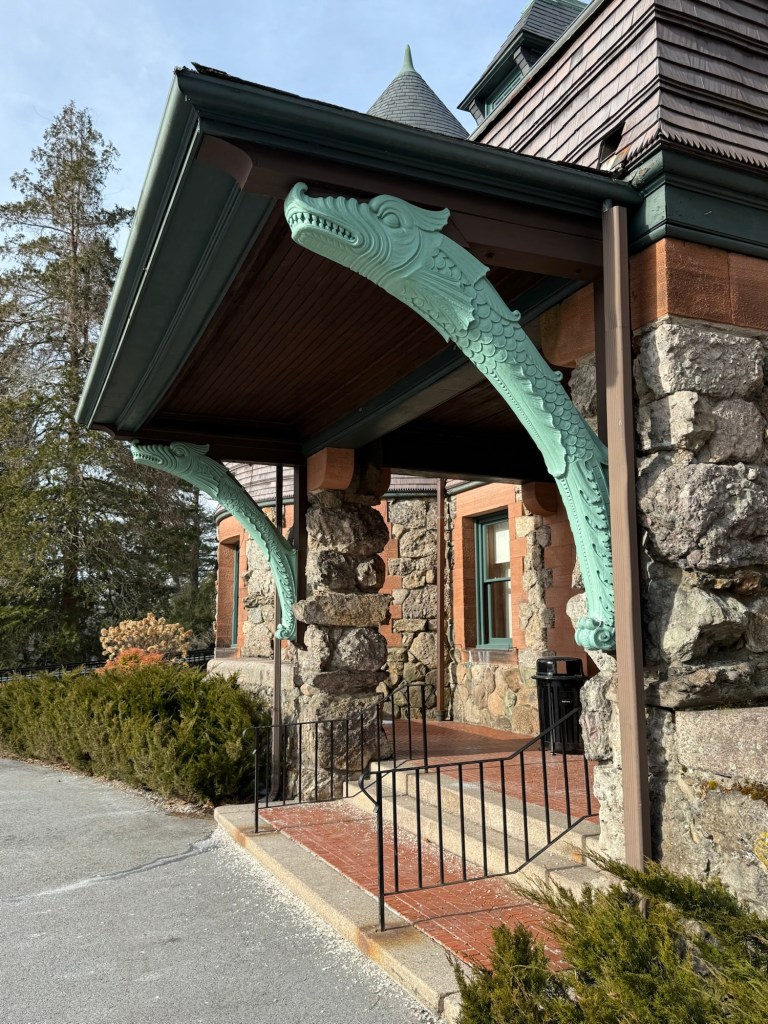
Roughwood is a historic estate house on Heath Street in Brookline, Massachusetts. The main residence and the various outbuildings on the grounds were designed by the Boston architectural firm of Andrews, Jaques and Rantoul, and built in 1891 as the summer estate of William Cox, a wholesale dealer in the footwear industry. Mr. Cox died in 1902 and the property was sold to Ernest Dane, the year before he married Helen Pratt, the daughter of Charles Pratt, a wealthy New York businessman and philanthropist. Mr. Dane was a banker who served as President of the Brookline Trust Company. The Dane’s owned the property for decades until the property was eventually purchased by Pine Manor Junior College in 1961. The estate house remained a centerpiece of the campus. In the early 21st century, Pine Manor College saw financial distress, and was saved by Boston College, who acquired the campus and its existing students as Messina College, which opened in July 2024 for over 100 first-generation college students. Architecturally, Roughwood is a high-style example of the Queen Anne/Shingle style of architecture. The mansion is built with a puddingstone and brownstone first floor and a second floor of varied patterns of wood shingles, all capped by a slate roof. The facade is dominated by towers and dormers and the great rustic entrance portico with dragon’s head brackets. To its side, a 1909 Tudor Revival addition served as a music room for the Dane’s family and while stylistically unique, is designed with impeccable proportions.

Old Boston Public Library // 1855-1898

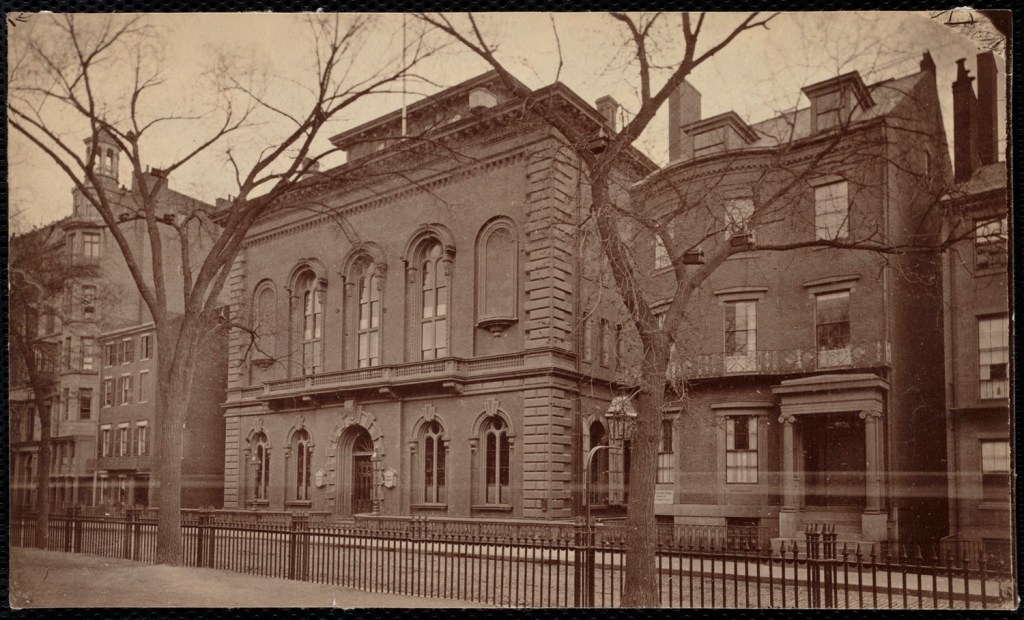
Courtesy of BPL collections.

Established in 1848, the Boston Public Library was the first large, free municipal library in the United States. The Boston Public Library’s first building of its own was a converted former schoolhouse located on Mason Street that opened to the public in 1854. As soon as the library occupied the building, it was apparent that the amount of visitors and collections could not effectively be held in the cramped quarters. Planning began almost immediately for it’s first purpose-built library. Less than a year later, in December 1854, library commissioners were authorized to purchase a lot and fund the construction of the new library. A desirable building lot on Boylston Street, opposite the Boston Common, was purchased and a public invitation for proposals from architects was held. The requirements for the building included: a library hall with alcoves capable of containing on fixed shelves at least 200,000 volumes, a general reading room with ample accommodations at tables for at least 150 readers, a ladies reading room, an adjacent library room for the arrangement of 20,000 books “most constantly demanded for circulation,” and quarters for the Trustees and Librarian. The facade was to be of brick, with stone dressing”. The selected design by architect, Charles Kirk Kirby, was for this handsome Italianate style building which took nearly three years to build, opening in September 1858. Twenty years later, as the library outgrew that space, the Trustees asked the state legislature for a plot in the newly filled Back Bay, and planning began on the McKim Building, built in 1895 down Boylston Street. This building, the first purpose-built Boston Public Library building, was demolished in 1898, and replaced by the ten-story Colonial Theater Building. It stood just 40 years.

Edgar Allan Poe Birthplace // c.1805-1965

Courtesy of BPL archives

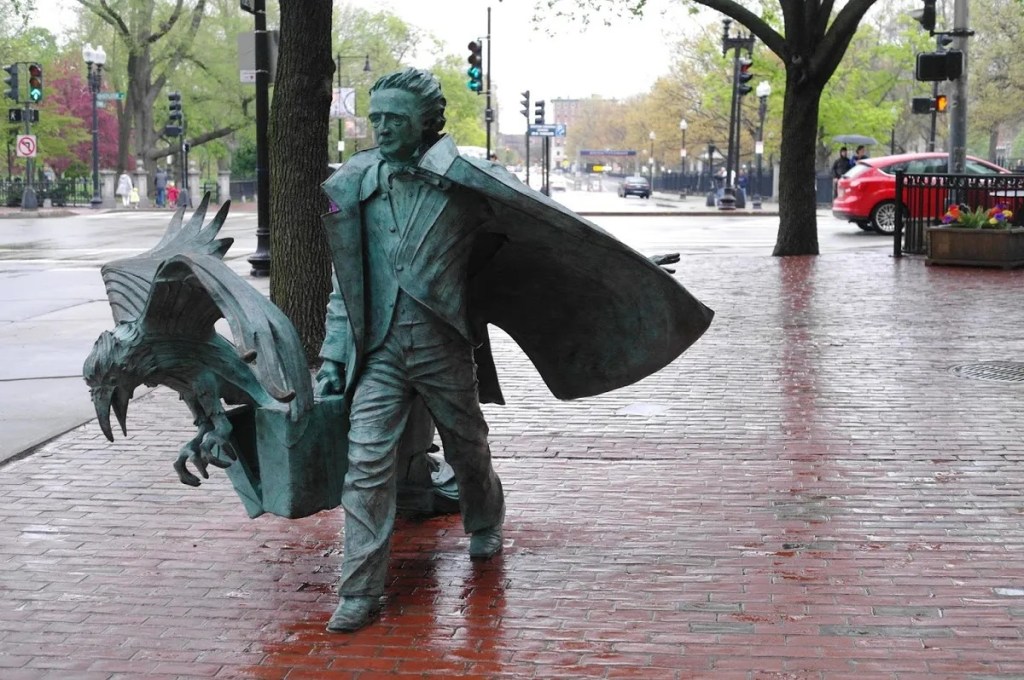
Famed author Edgar Allan Poe was born in this house on Carver Street in Boston, Massachusetts, on January 19, 1809, the second child of American actor David Poe Jr. and English-born actress Elizabeth Arnold Hopkins Poe. His father abandoned the family in 1810 and his mother died a year later from pulmonary tuberculosis. He would be adopted by John Allan, a merchant and slaver in Richmond, Virginia, his adopted family gave him the name “Edgar Allan Poe”. He would live a somewhat nomadic life, moving around often to cities all over the East Coast until his death in 1849 in Baltimore. Although it was his birthplace, Poe’s troubled early childhood likely contributed to his disdain for Boston, where he often referred to Bostonians as “Frogpondians,” after the frog pond on Boston Common, though as an insult. The poet’s seminal work The Raven was published in January 1845 to widespread success. Several months later, Poe was invited to read at the Boston Lyceum with the support of James Russell Lowell, a Harvard professor and editor of The Atlantic Monthly. It did not go well. His childhood home on Carver Street would be razed by 1962 and is presently a surface parking lot for an electrical substation. The city would honor its macabre author by renaming an alley off Boylston Street, Edgar Allan Poe Way, and in 2014, the City commissioned a public statue titled, “Poe Returning to Boston“. Designed by Stefanie Rocknak, the statue depicts Poe walking, facing away from the Boston Common. His figure is accompanied by an oversized flying raven; his suitcase lid has fallen open, leaving a “paper trail” of literary works embedded in the sidewalk behind him.

Walker Building // 1891

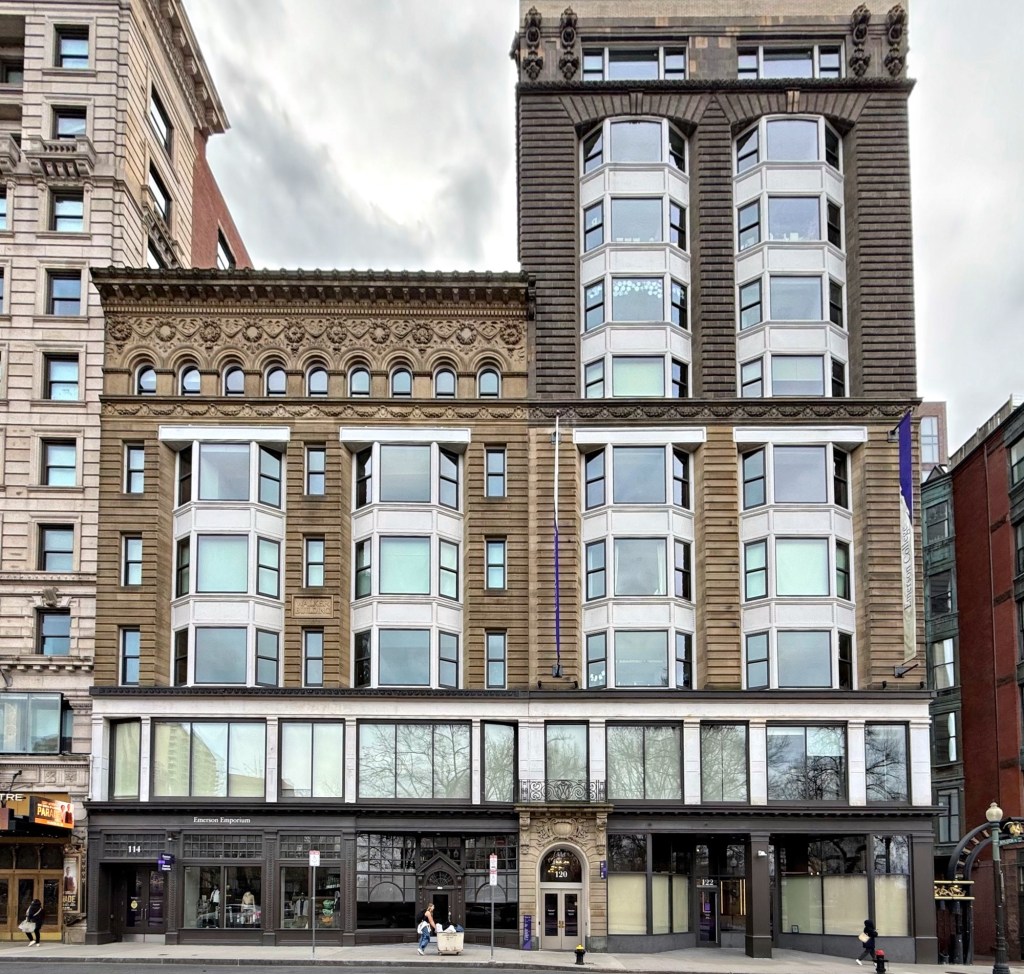
On Boylston Street overlooking the Boston Common, this historic building with two distinct parts is not photographed as much as some of its neighbors, but it is an important visual reminder of the period of growth and development in the city in the late 19th and early 20th centuries. This is the Walker Building, an early office building that was constructed beginning in 1891 in two phases by owner Joseph W. Walker. Mr. Walker hired the architectural firm of Winslow & Wetherell to design the building, which was finished in the Romanesque Revival style with a notable cornice with nine-bay arcade of arched windows and ornate wreath and swag motifs. A major tenant in the building was the Boston office of the S. S. White Dental Manufacturing Company, the largest dental manufacturing company in the world. Less than a decade after the six-story Walker Building opened, Joseph Walker purchased and razed the parcels nextdoor and again hired the same firm (at this time renamed Winslow & Bigelow), to expand the Walker Building, building a ten-story addition in a similar style. The second Walker building housed piano company showrooms and offices along with professional offices of numerous architects and professionals. The Walker Building is now owned by Emerson College, and is used as classrooms, computer labs, and study spots for students with the dining center and bookstore in the former retail spaces.

Edward Bellamy House // c.1840

The Edward Bellamy House is the only National Historic Landmark in Chicopee, Massachusetts. Its landmark designation was in honor of journalist and Utopian writer Edward Bellamy (1850–1898), whose home it was for most of his life. The house is located on Church Street in Chicopee Falls, an industrial village in town, which developed around mills and the Chicopee River. Built in for Harmon Rowley, a town selectman and local merchant around 1840, the house would later be purchased in 1852 by Rufus King Bellamy, a Baptist minister, moved the family into this house after its construction. The house, where Edward Bellamy spent much of his childhood is a well-preserved example of a late-Greek Revival residence, and today serves as a museum with rented offices that explores Bellamy’s ideas on social reform, economic justice, and the future of society. From this house, Edward Bellamy wrote  Looking Backward, a utopian novel that was instantly popular. Within a year it had sold 200,000 copies, and by the end of the 19th century had sold more copies than any other book published in America up to that time except for Uncle Tom’s Cabin by Harriet Beecher Stowe and Ben-Hur: A Tale of the Christ by Lew Wallace. His visionary work, which proposed a world free of poverty and class divisions, sparked a nationwide movement and influenced early American socialism. Edward Bellamy died of tuberculosis at his home, ten years after the publication of his most famous book. He was 48 years old. Today, the house stands as a reminder of Bellamy’s lasting legacy and his role in shaping conversations about social progress in the late 19th and early 20th centuries.

Former Chicopee Public Library // 1911

Tucked to the side of the towering City Hall building on Market Square in Chicopee, Massachusetts, this long-vacant former public library is undergoing a major renovation to convert the building to a business incubator and community hub. The library was built in 1911 and was designed by the Springfield architectural firm of Kirkham & Parlett and is a great example of a Classical Revival style civic building with its strict symmetry, Ionic columned and pedimented entrance, and corner quoins. The original town library was organized as early as 1846 under the name “Cabot Institute” a subscription-based library. In 1853, the Cabot Institute donated its collection of nine hundred books to form a public library. The town voted that year to support a public library from tax dollars, making the Chicopee Public Library the first library funded by public funds in Western Massachusetts. The library was located in the City Hall building when it was completed in 1871, and was later moved out of the building to make space for the Board of Aldermen offices. In 1907, Mrs. Sarah Cooley Spaulding bequeathed $20,000 in her will towards a new library building as a memorial to her late husband, Justin Spaulding, and in May 1913, the Chicopee Library opened its first building built solely for the purpose of being a library. The library was expanded in the latter half of the 20th century and ultimately outgrew its space, with the City building a new library in 2004 on Front Street. This library closed at that time and had sat vacant until plans were unveiled to re-imagine this significant building as a community hub. I love to see old buildings repurposed rather than demolished!

Albany Building // 1899

One of the last major 19th century buildings erected in Boston’s Leather District is also one of the finest examples of Beaux Arts architecture in the city. This is the Albany Building, built in 1899, and fills an entire city block. The Albany Building was designed by Peabody and Stearns and built by Norcross Brothers as the offices for the United Shoe Machinery Corporation. Its two-story base is adorned with swags and cartouches and its fifth floor is topped with a complex cornice. The use of beveled corners and ornate detailing break up the massing of the building which otherwise, would read like a box. The building today serves as an important visual gateway into the Leather District and its context of late 19th century commercial blocks centered around the leather and shoe manufacturing businesses.