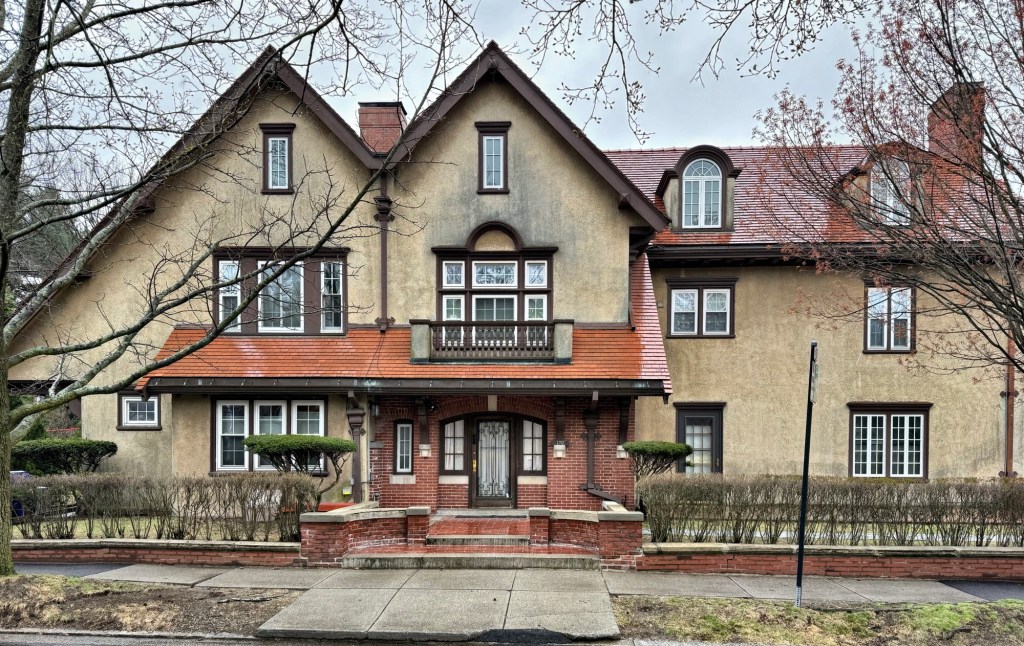
Renton Whidden House // 1912

One of the finest Arts and Crafts style “cottages” in the Cottage Farm neighborhood of Brookline, Massachusetts, can be found on Ivy Street as the Whidden House. The property here was developed by Renton Whidden (1859-1942), a real estate developer and politician elected into the Massachusetts House of Representatives, who purchased a house lot from Thomas B. Hall, who owned a house next door. Renton Whidden hired architect, Arthur Hunnewell Bowditch, to furnish plans for the large home, which was completed in 1912. The stucco house features a brick entrance with projecting roof off the front, a unique twin gabled facade, segmental arched dormers, and a Palladianesque window and balconette above the front door.

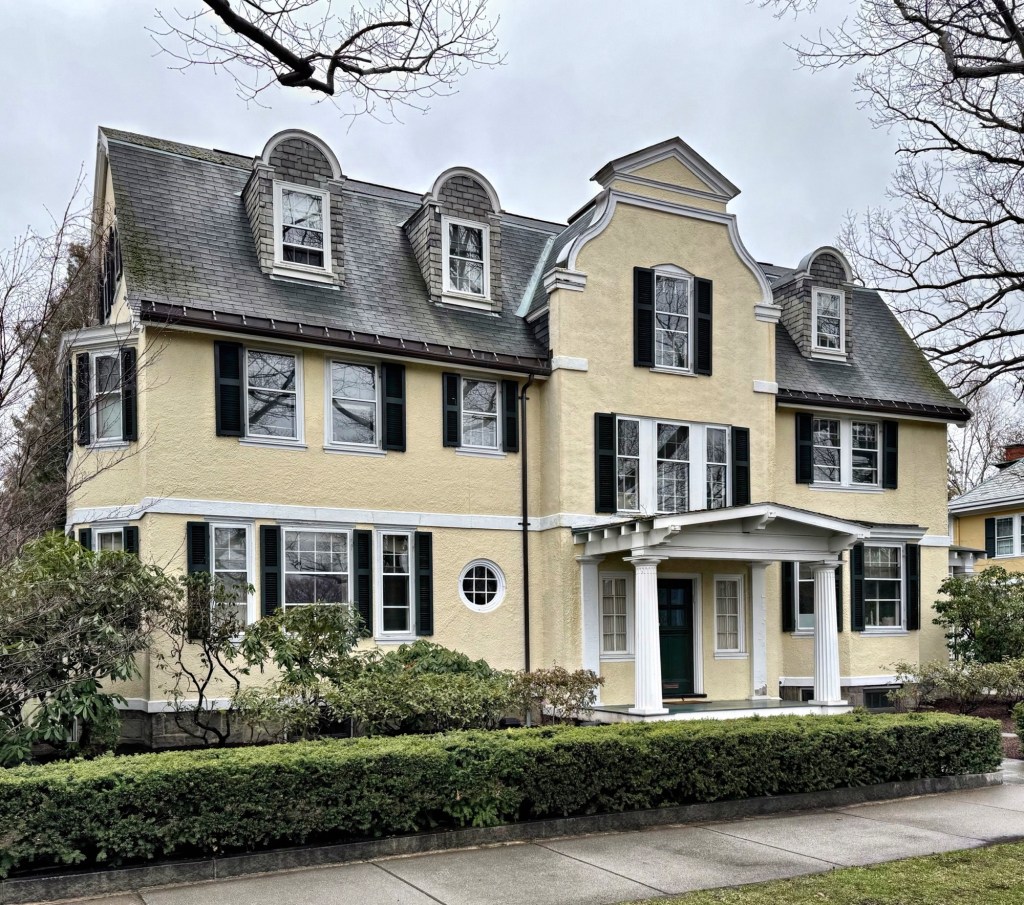
Harry W. Cotton House // 1905

In 1905, George H. Cotton and his wife, Cora S. Cotton, purchased a house lot on Amory Street in Brookline and hired famed architect, William Gibbons Rantoul, to design this home for their son and daughter-in-law. George Cotton was a manufacturer of brass tubing and also the founder of the Belmont Springs Water Company and maintained homes in the Back Bay of Boston and in Belmont. His son, Harry W. Cotton, also worked for the American Tube Works and lived in this home with his family. The Cotton House is an architectural blending of Dutch Renaissance Revival and Arts & Crafts styles. The stucco siding and entry portico are in the Craftsman style, while the prominent Flemish gable on the central pavilion and round arched pediments for the dormers are in the Flemish mode.

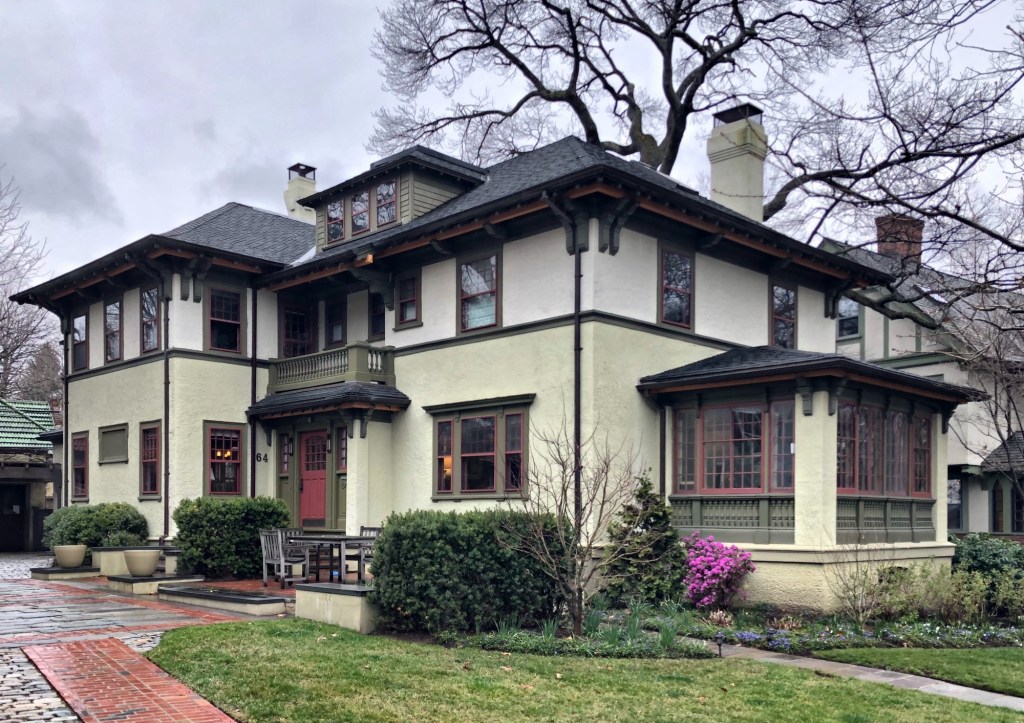
Partridge House // c.1908

Located on Amory Street in Brookline, this handsome Arts and Crafts style residence dates to about 1908 and while clearly Craftsman in style, does appear to follow the horizontality and form of the Prairie School of architecture, popularized by famed architect, Frank Lloyd Wright. While the architect of this house is unclear, we do know that the first owners were Mr. Frank T. Partridge and his wife, Edith Stevens Partridge. The stucco house features a horizontal belt course, shallow hip roof with broad eaves supported by brackets, and elaborate entry and porches. The colors enhance the architecture of the home perfectly. 

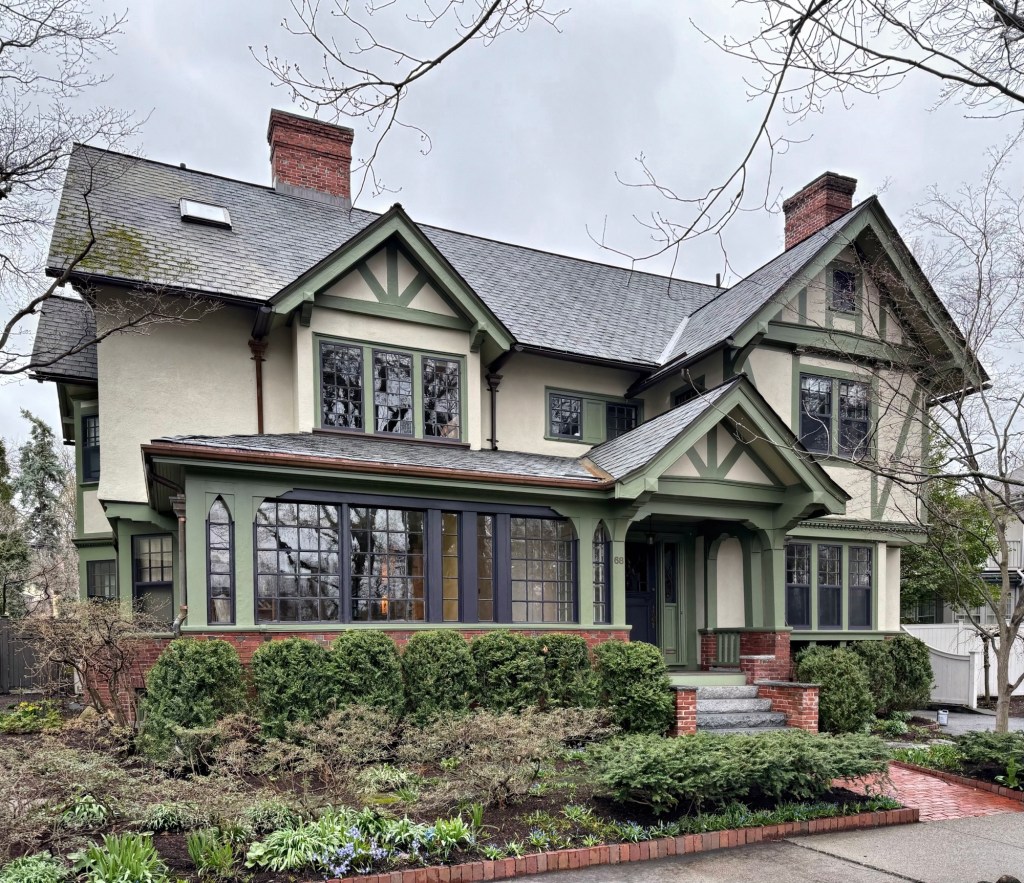
Moseley-Widger House // 1906

One of the many houses in the Cottage Farm-adjacent neighborhoods of Brookline, Massachusetts, is this great blending of the Tudor Revival and Arts and Crafts styles of architecture, which dominated residential architecture in the Boston suburbs in the early 20th century. This residence was built in 1906 for Mr. Frank Moseley and his wife, Martha Hawes Moseley from plans by architect Robert C. Coit. Covered in stucco siding and half timbering, the charming house evokes the countryside of England, right here in Brookline. After WWI, the house was owned by Ms. Lizzie Widger, a water color artist and member of Copley Society of Boston, and her husband, Samuel Widger, a cotton broker. The Moseley-Widger House looks as it did 120 years ago and is in a great state of preservation, thanks to generations of loving stewards.

Judge Philip Rubenstein House // c.1915

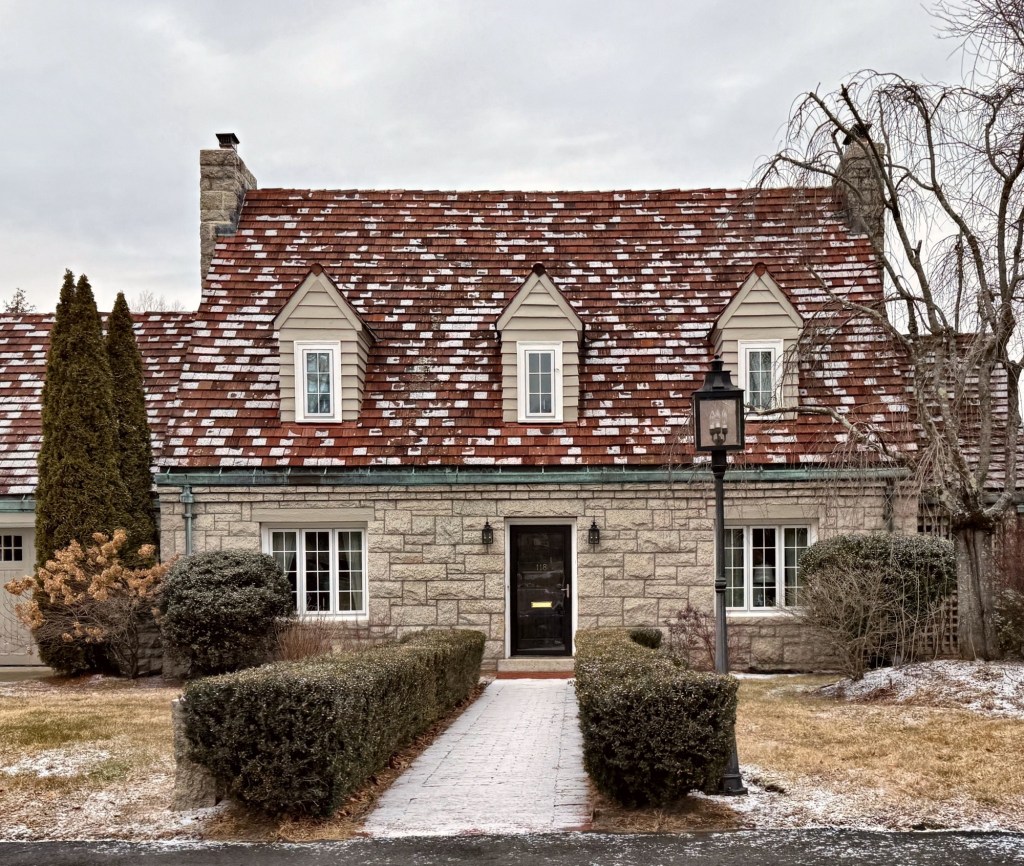
In the early 20th century, the suburban development of Longwood in Brookline saw another period of rapid development. Larger estates were subdivided and developed with all kinds of housing from single-family mansions to middle-class homes to large apartment buildings. One of the more modest-sized houses built in the first decades of the 20th century was this house, one of a collection of stuccoed homes on Colchester Street. The house was purchased by Judge Philip Rubenstein, the first member of the Jewish faith to serve on the Massachusetts bench and one of the first three judges of Boston’s juvenile court, the first in the country. The unique home is clad with stucco with a terracotta shingle roof and Colonial Revival style entry, showing an effective blending of the Arts and Crafts and Colonial styles.

George and Effie Mead House // 1911

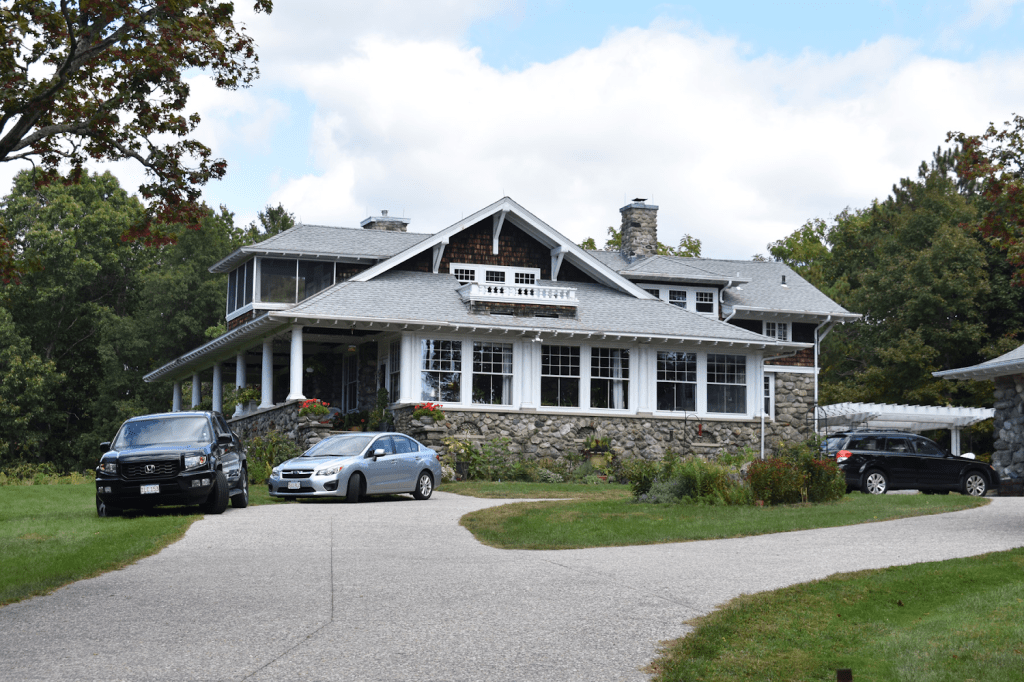
Prominently sited upon a hill on a dead-end street in West Acton, Massachusetts, this Craftsman Bungalow is a very elaborate and well-preserved example of the style. The house was built in 1911 for George Varnum Mead (1861-1940) and his wife Effie Wright Mead (1860-1926) as their summer home when they weren’t living in Somerville. Mr. Mead was born in West Acton to Varnum Balfour Mead, who operated the A. O. W. Mead Company, a produce marketing business in Acton and Boston. Varnum’s brother built an elaborate Second Empire style mansion in town which was featured on here yesterday. George Mead followed his father’s footsteps and worked in the family business, which was in operation starting in the 1840s. The A. O. W. Mead Company gathered produce from farmers all over West Acton, kept the produce in cold storage facilities erected by the family, and sent it to Boston for sale at Quincy Market until George’s death in 1940. The Craftsman style house has a fieldstone base, low, overhanging flared gable roof, and is sheathed in shingle siding. Characteristic features include the multiple dormers, exposed rafter tails, grouped windows, and the large fieldstone chimney.

Elwin Cove // 1908

While Blue Hill has historically been a summer colony for wealthy city-dwellers to escape to experience the beauty of Maine, it has never gotten the coverage as Bar Harbor or the other Mount Desert Island towns. Many of Blue Hill’s summer cottages are more refined and hidden away amongst the trees, and that is how the town likes it, unpretentious. I was lucky enough to take a wrong-turn and stumbled upon this gem of a cottage between the Blue Hill village and East Blue Hill, I had to take a photo! Upon further research, the rambling cottage was built in 1908 for Ellen and Edward J. Brooks of New Jersey. The cottage was named Elwin Cove, possibly as a merge of their children’s names ELinor and WINfred.

Oliver Johnson House // 1905

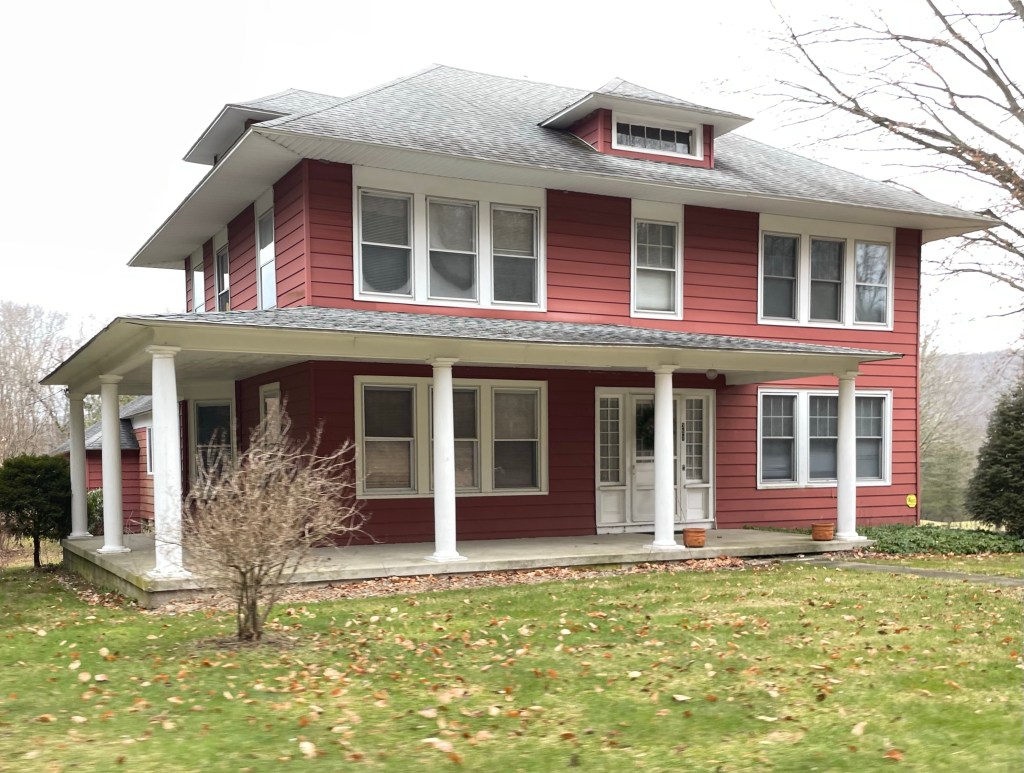
Prairie style architecture is not nearly as common in New England as it is in the Mid-western United States. The style was almost always seen in early 20th century residential designs and is characterized by horizontality, low slope roofs, overhanging eaves, and open interior floor plans. This New England vernacular version of the Prairie style employs some Arts and Crafts influence with Tuscan columned porch and wood frame construction, rather than the more bulky and bold use of brick and stone. This residence sits on a busy state route in the sleepy town of Franklin, Connecticut. This house appears to have been built for Oliver Johnson who was about seventy by the time the house was built. Do you know of any other Prairie Style houses in New England?

Wilkinson House // 1908

Waban Village in Newton, Massachusetts has dozens of amazing examples of early 20th century residential architecture, possibly the best collection in the Boston area! This Arts and Crafts style residence was built around 1908 for William and Delia Wilkinson the former of the two owned the William H. Wilkinson Company, which manufactured oiling devices and oil cups for steam engines. Delia, his wife, owned their family home under her name. The home is an excellent example of the Craftsman style, with stucco siding, thick rounded column supporting the inset porch, oh and that catslide roof!!

Bauckman House // 1915

The Arts & Crafts movement in architecture provided some of the most stunning and well-designed properties of the early 20th century but sadly, there are not too many examples here in New England. When I find some, I always get excited and pull over to snap a photo! This home on busy Beacon Street in Waban, Newton, was built in 1915 for Harry W. Bauckman a salesman in Boston. The designs are credited to architect James G. Hutchinson, who specialized in Arts & Crafts and Tudor style buildings in the area. The Bauckman House is Foursquare in form which basically segments the house into four, large rooms on each floor with a stairhall in the center. The home is clad with banded shingles which extend to the piers at the porch, a subtle nod to Shingle style architecture. SWOON! I was later informed by a follower that this was also the home of landscape historian and author Judith Tankard for some time.