Leland Homestead // 1843

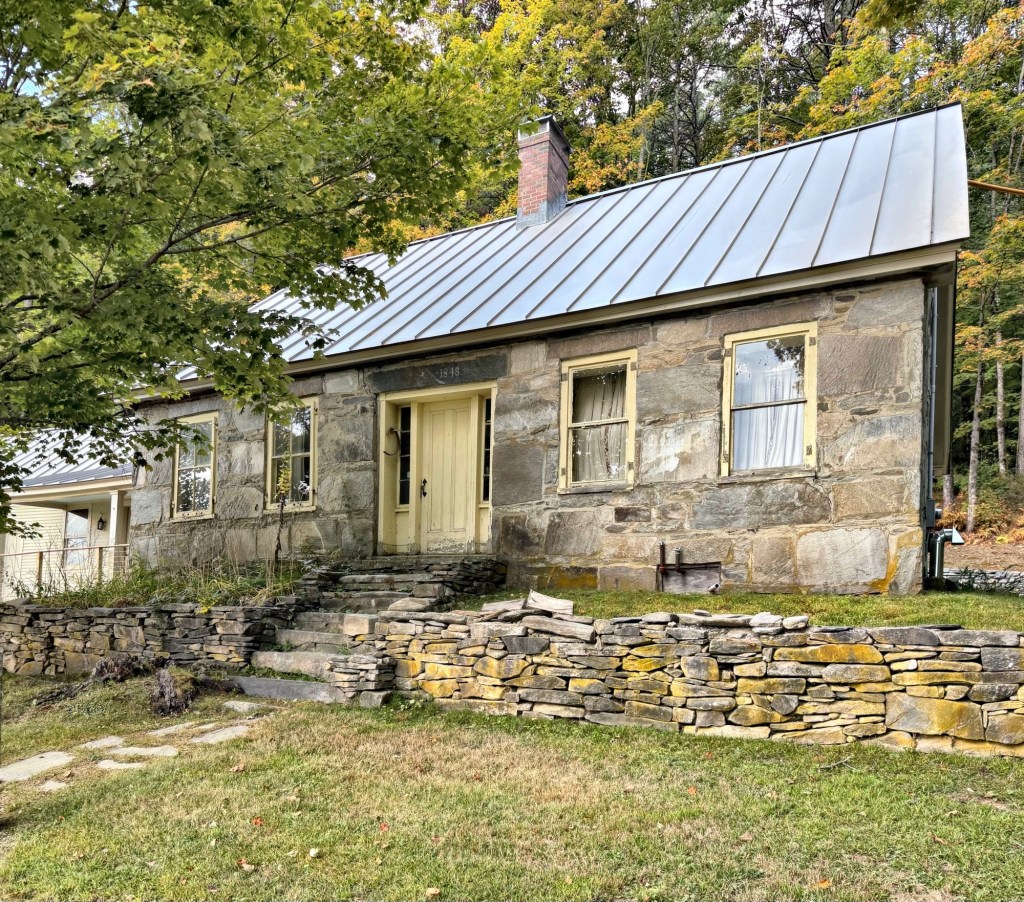
The small, rural Town of Baltimore, Vermont, was originally a part of Cavendish but due to the geography and a mountain separating the village from the main town, residents here voted in 1793 to set off as its own town. The nomenclature of the town name, Baltimore is not clear, as the city in Maryland was named for George Calvert, first Baron Baltimore, who was granted that colony in 1632, but there is no evident connection between the two communities. The word Baltimore itself is Celtic for “large town”; appropriate for Calvert’s colony, perhaps, but hardly for this Vermont town, which is one of the smallest in the state in terms of population or square miles. The town has always been a community without a distinctive village center and has long been primarily farmland, with properties bounded by stone walls and forests. This stone house on Harris Road in Baltimore was built in 1843 by Joshua Leland and his wife, Betsy Boynton. A history of the town speaks of the house, “It was one of the most attractive houses ever built in Baltimore, a well-built front hall and stairway, four fair-sized pleasant rooms downstairs, three well-arranged chambers and a convenient back stairway, all well-finished”. The home, with its date of construction over the front door, remains one of the most historic and well-preserved buildings in the town of just over 200 residents.

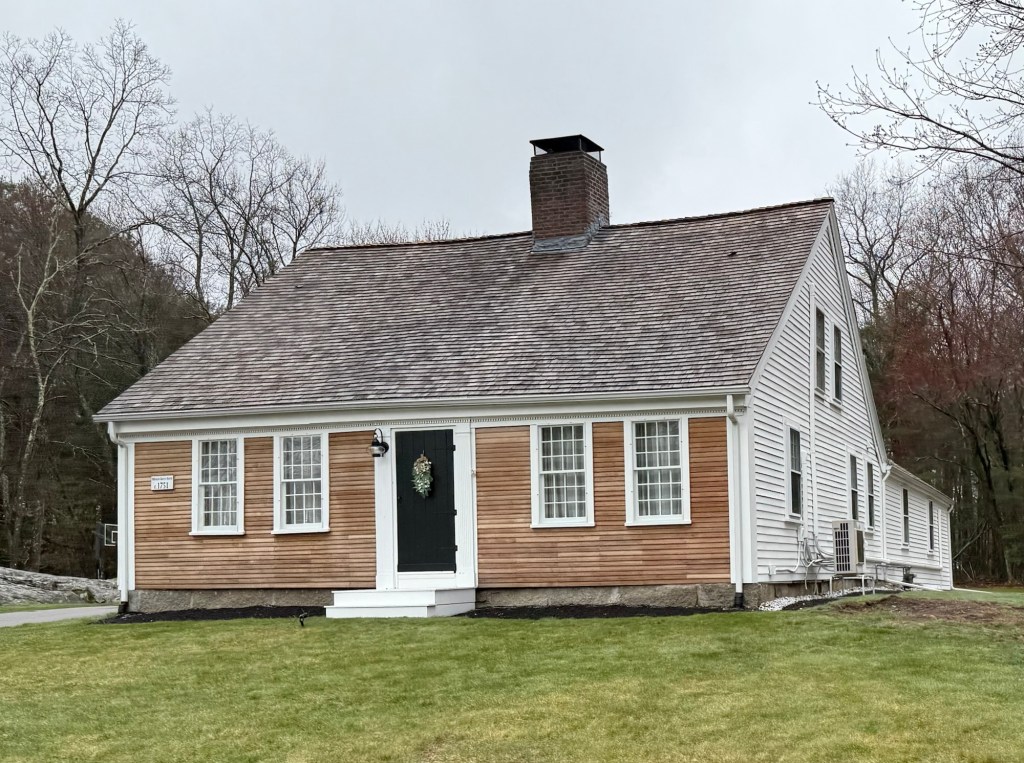
Samuel J. Nutter House // c.1750

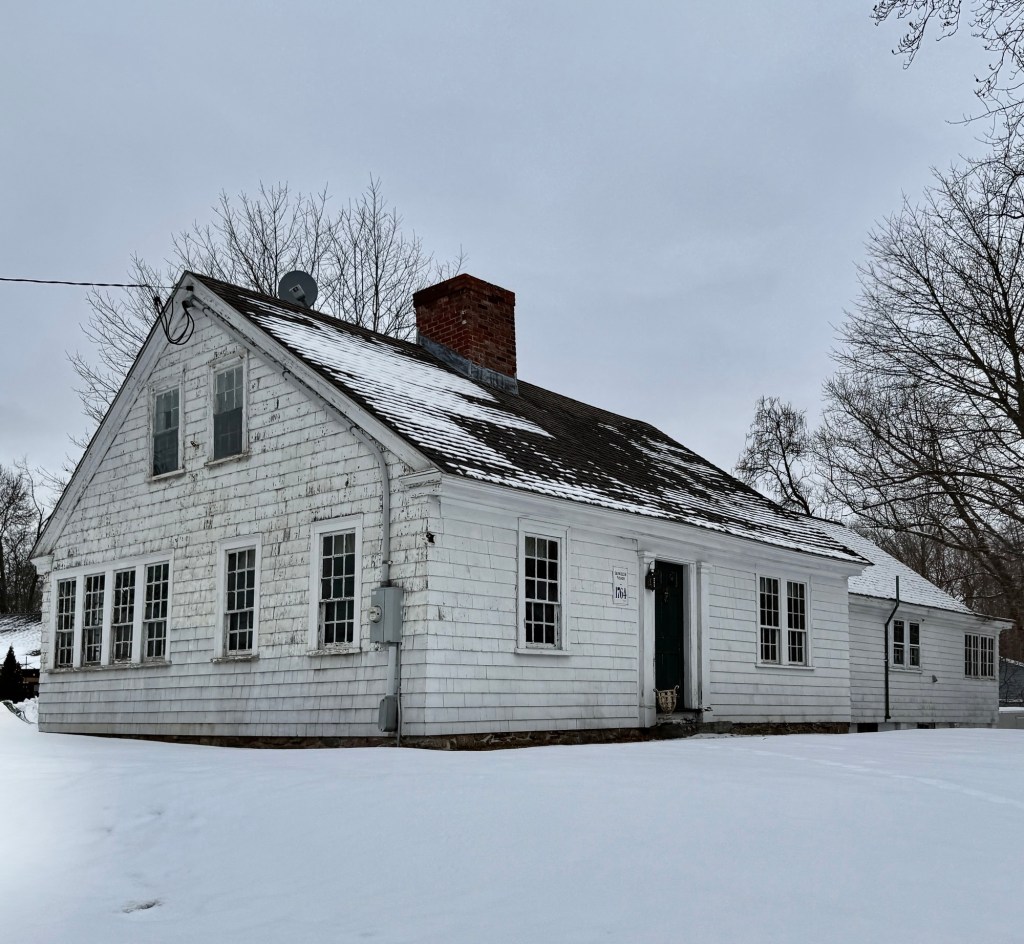
The Samuel J. Nutter House on Indian Pond Road in Kingston, Massachusetts, is a fairly rare example of a half-cape Georgian-era home in New England. Local history states that the house dates to before the American Revolution and was constructed as an early half-cape, with an off-center door flanked by two bays of windows. The small house form would allow the owner to add on additional bays to make it a 3/4- (has a door with two windows on one side and a single window on the other) or full-cape (with a central door and two windows on each side) as the family and prosperity grew. This house was built as a half-cape and has not changed in its over 275-year existence, besides the addition of a barn and one-story connecting addition to it. The house was originally located elsewhere in town, but was relocated to the site in about 1830 by Samuel Nutter (born Nutt and changed his name in 1825), who married Mercy Washburn that year. The Nutter Family farmed here until the early 1900s.

Orcutt-Ford Homestead // c.1751

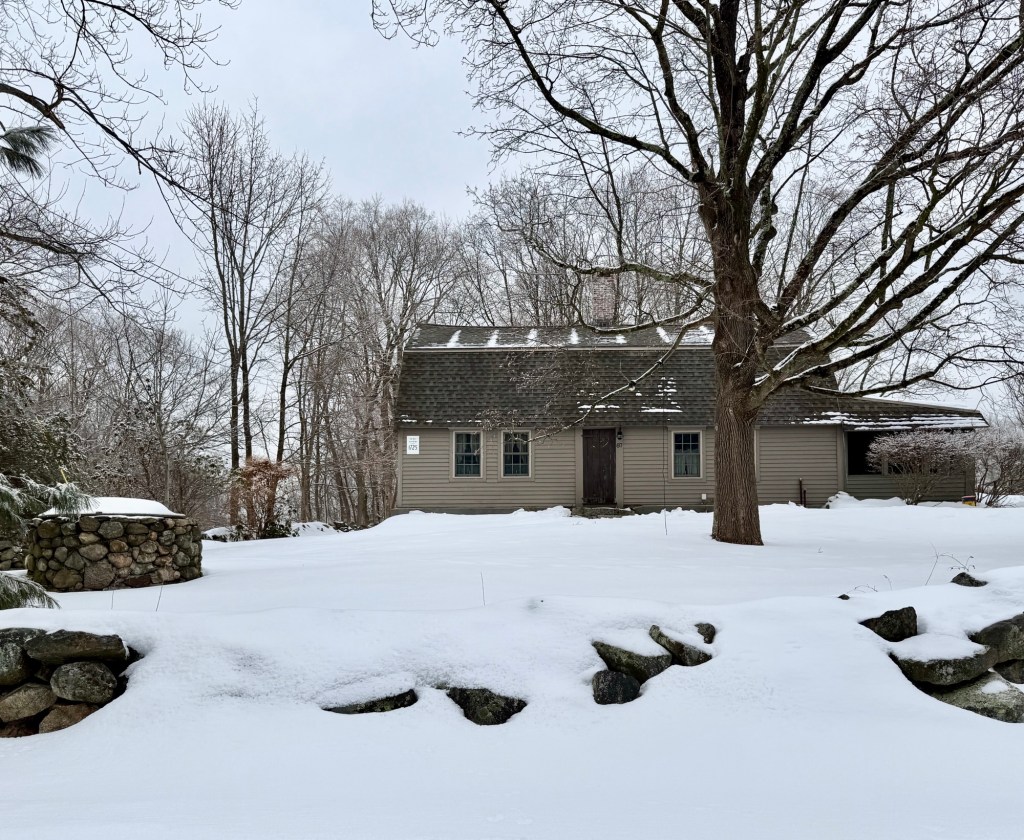
In about 1751, Emerson Orcutt (1713-1777) purchased land in North Abington, Massachusetts, and built a half cape for his family. In 1762, Orcutt sold some of the land to John Ford, who was later a Lieutenant in the Continental Army, and according to local tradition, Ford added the other half of this current Georgian Cape house, giving it the current configuration. Character defining architectural details include an entry surround with fluted pilasters, and dentil cornice band on the main facade, 12-over-12 sash windows, and the central chimney, which would have heated both sides of the house. The property remained in the Ford family for over 100 years, and has since been converted back to a single family residence. Today, the charming pre-Revolutionary cottage is one of the oldest extant houses in Abington.

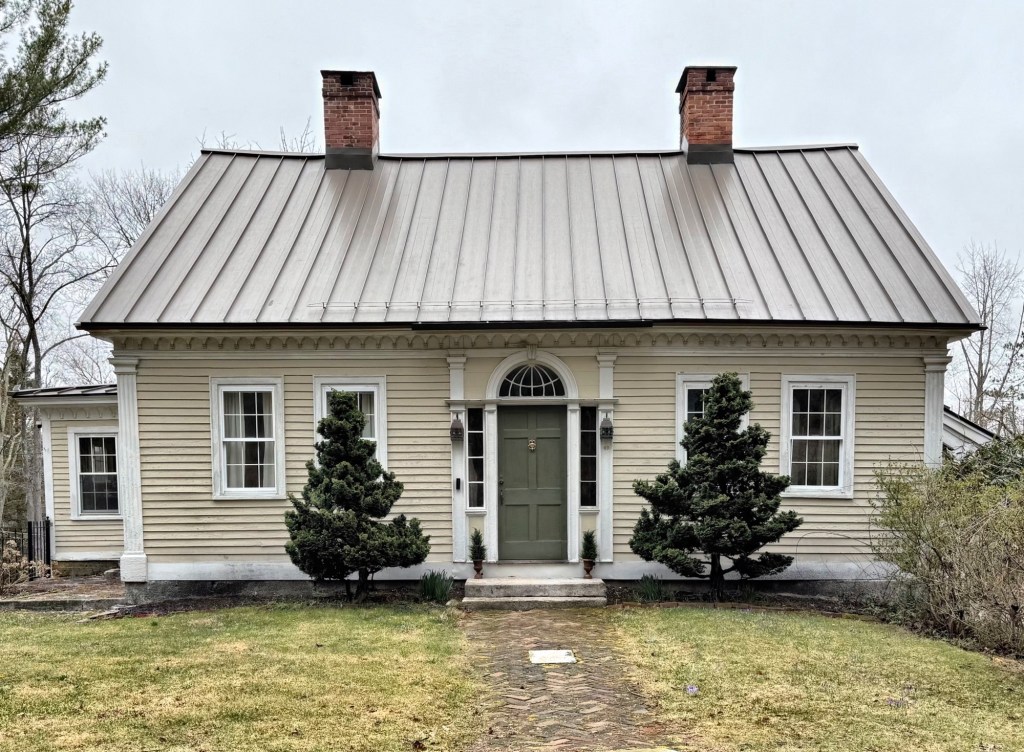
Levally-Crandall House // c.1820

This attractive Federal-style Cape house is located in Canterbury, Connecticut, and is one of the very finest such houses of its type in the state. The house was built by William Levally, a successful millowner in town who married Patience Horton just prior. William died unexpectedly in 1841, and the property was inherited by Patience, who then married Hezekiah Crandall, also a millowner, who was also the brother of Prudence Crandall, the teacher who operated the famous African American girls boarding school in Canterbury Center in the 1830s. Hezekiah and his sister later migrated to Kansas, after essentially being pushed out of town. The Levally-Crandall House stands out for its proportions, exterior moldings, and ornate entry with pilasters, sidelights, and a molded, keyed arched transom. The house has been lovingly preserved by the successive owners, who clearly take pride in owning such a piece of history.

Dillingham House // c.1845

This perfect Greek Revival cape house sits on Pascal Avenue, the main street that cuts through the center of Rockport, Maine. The house dates to the 1840s or early 1850s and was owned by the Dillingham Family for a few generations. The original owner may have been Josiah Dillingham (1796-1861), a mariner and sea captain. Josiah died in 1861, and the property was inherited by his eldest son, Josiah Winslow Dillingham (1829-1895) who went by Winslow, seemingly to differentiate himself from his father of the same name and same profession. The Dillingham family home is a quintessential Greek Revival cape with central portico with Ionic columns and corner pilasters with full length entablature at the facade. In true Maine fashion, the side elevations are covered in weathered shingle siding.

Harkness House // c.1730

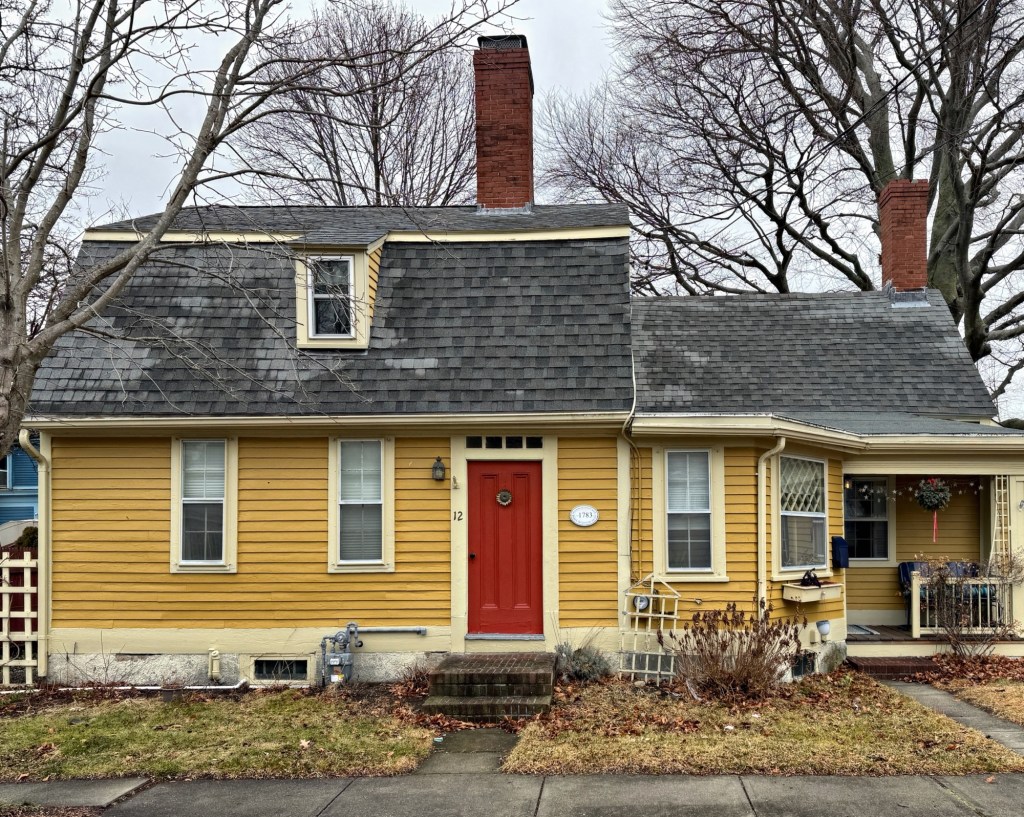
The award for the cutest house in Newport goes to this c.1730 beauty on Green Street! This charming Georgian cape house sits just one-and-a-half stories tall under a squat gambrel roof. The house was originally located at the corner of Thames Street and was moved at least twice until it was placed on its present site by the Newport Restoration Foundation, after they acquired it in 1983, restoring it soon after. The center-hall house has just two rooms on each floor with a central staircase and chimney. The small dormers add some light to the second floor without compromising the historic and architectural integrity of the cottage.

Adin Wheeler House // 1790

The Adin Wheeler House is significant as a rare house form found in this part of New England. Located in Southbury, Connecticut, the property includes the main house, a barn, and the wheelwright shop, a barn-like structure. The house is a 1-1/2-story Cape style wood-frame structure, with a front porch across the front that is sheltered by a bell-cast extension of the main roof. This type of porch roof is uncommon in Connecticut, being reminiscent of Dutch rather than English construction methods. The dwelling was built for Adin Wheeler, who owned the millworks on the nearby falls with business partner Enos Candee, a business partner (and brother-in-law) whose house also stands nearby. Theodore Wheeler, Adin’s great-grandson, built the wheelwright shop in the late 19th century, as well as the major addition to the house, which served as a tap room and public meeting space. The property is a well-preserved collection of 18th and 19th century structures.

Benjamin Osborn House // c.1808

This charming cottage shows that you do not need a stately or elaborate house to have some serious curb appeal and house envy. This is the Benjamin Osborn House, located in Southbury Connecticut. The house was built in the early 20th century for newlyweds Benjamin B. Osborn and Sarah Stiles, who married in 1808. As a gift to the couple, Sarah’s father Ephraim Stiles, who lived in a house across the street, seemingly deeded a portion of his property for his daughter and son-in-law to build their family. Tragically, Sarah died one year later, possibly during childbirth. Benjamin would marry another of Ephraim’s daughters soon after… messy. The home is a four-bay Cape, with its off-center entrance sheltered by a Colonial Revival hip-roofed portico supported by Tuscan columns.

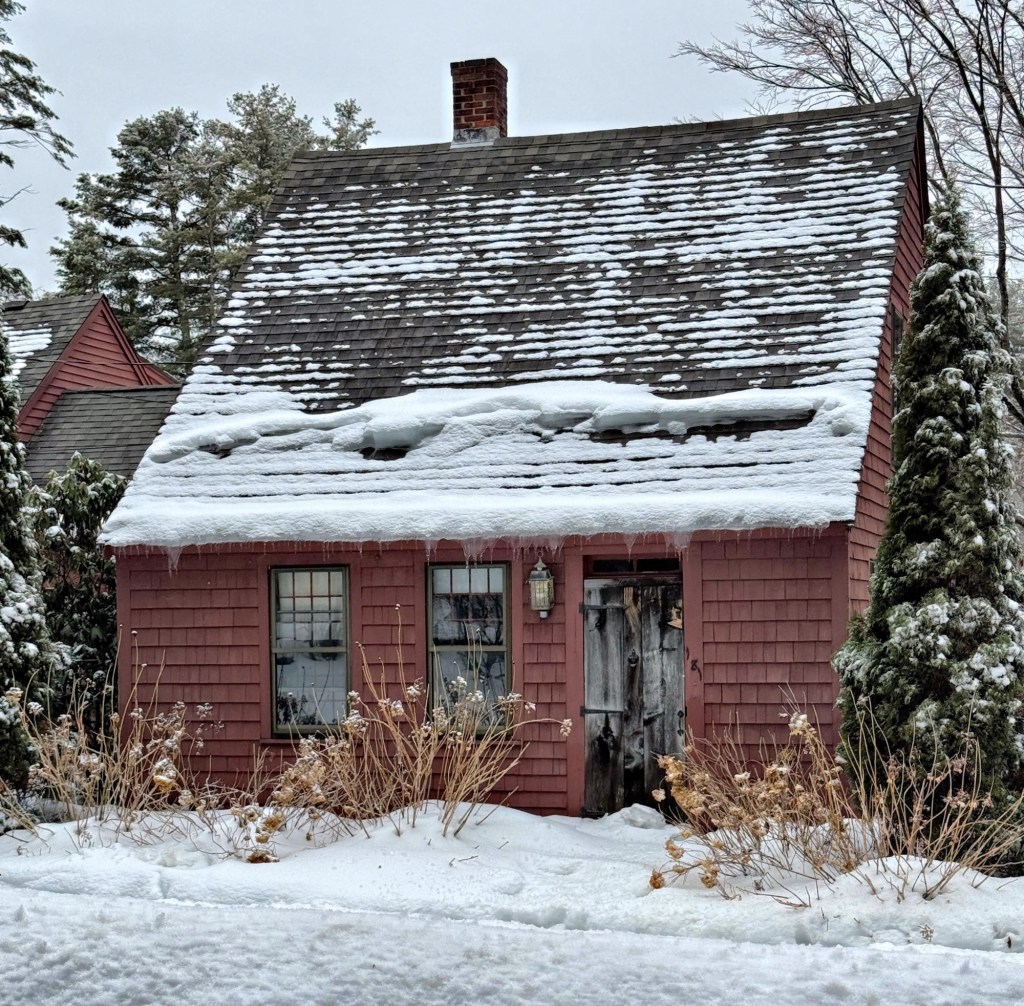
Killicut House // c.1740

Thought to be the oldest extant residential building in Nashua, New Hampshire, the Killicut House is an important piece of local history of the early settlement days of the city. The exact date of construction of the Killicut House is not known, with local legend stating that the house was built between 1680 and 1700 with other estimates dating the house slightly later, to 1740. It was known for years as the “1700 House”. Regardless, this is one of only two 18th century houses remaining in Nashua. The first known owner of the house was Thomas Killicut (1723-1784) who resided in present-day Nashua by 1746 when he was chosen to hold the position of field driver for the newly established town of Dunstable, New Hampshire (an extension from Dunstable, Massachusetts). Killicut served as one of “Rogers Rangers” in the French and Indian War. During the early to mid 19th century, the Killicut House apparently passed onto members of the Blodgett family who were apparently related to the Killicuts as up until the 1960s, the house was still reportedly owned by descendants of Thomas Killicut. Later in the 20th century, much of the land was subdivided and single-family homes were built nearby, with the Killicut House now located on the end of an unassuming cul-de-sac. It is a great example of a Georgian-era Cape style house with central chimney.

West Acton Citizens Library // c.1845

Old houses adapted for other uses always deserves a highlight! The West Acton Citizens Library was originally constructed in 1840 as a small, one-story Greek Revival style cape house either for or purchased by Phineas Wetherbee, a farmer and early landowner in the village. The modest house features little detailing besides the recessed entrance composed of wide, flat pilasters and a lintel decorated with square corner blocks and a central keystone. In 1883, Phineas Wetherbee met with thirty-nine others to form the Citizens Library in West Acton. The organization accessioned the collection of the former Farmers Club Library. When Mr. Wetherbee died in 1895, he bequeathed his house to the library, who later moved into the house by 1900. Today, the house remains a library space for the West Acton village.