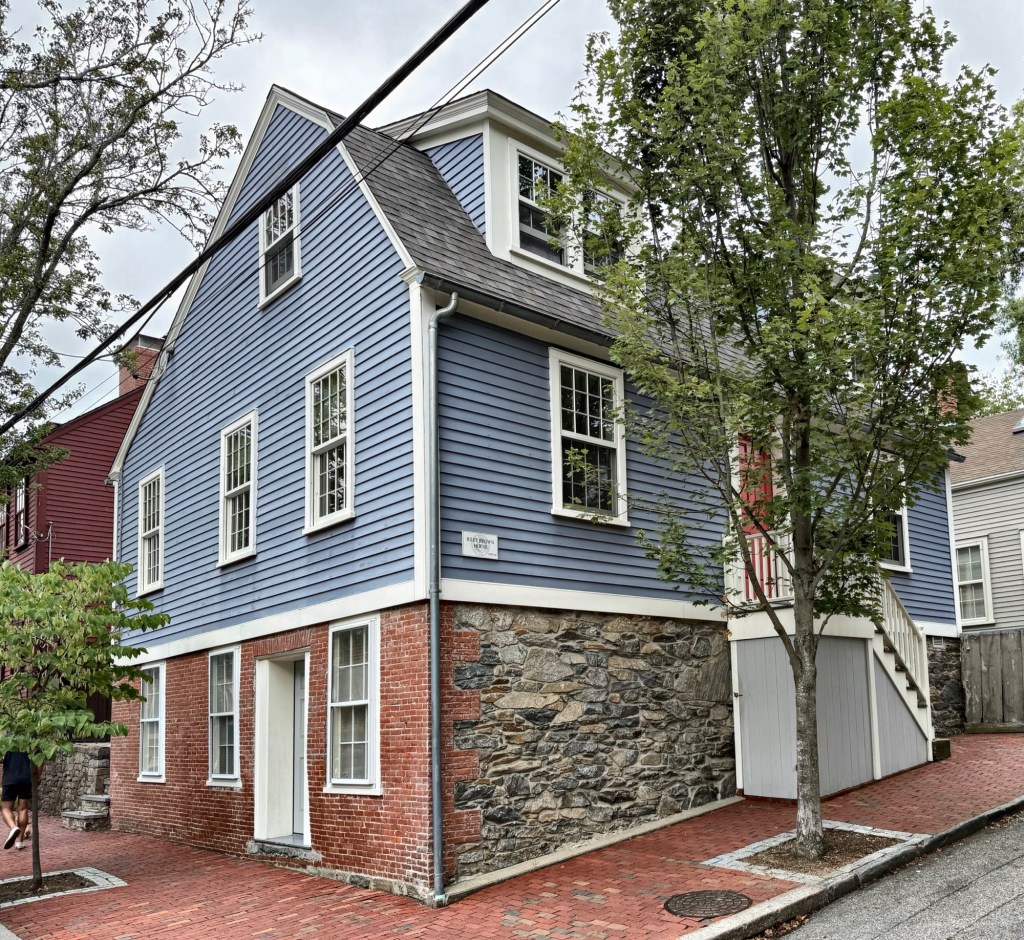
Brown-Crocker House // c.1836

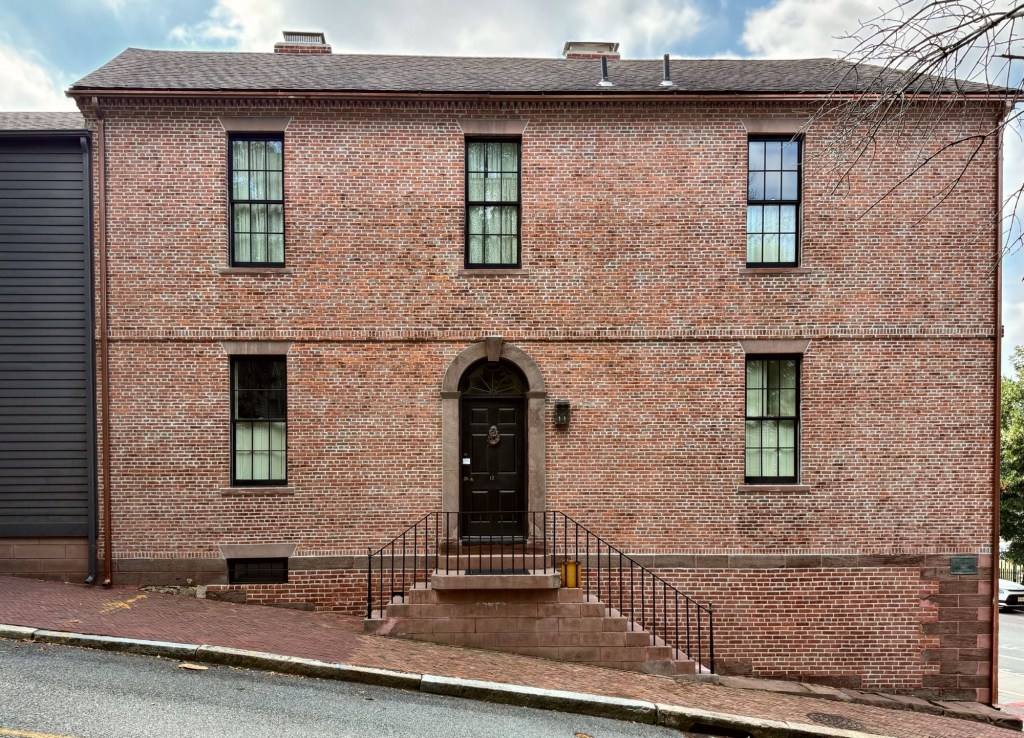
In 1829, Riley Brown, a housewright, purchased a house lot at the corner of Thayer and Transit streets in Providence, and by 1836, built this charming gambrel-roofed cottage, which is one of the most charming in the city. Riley Brown lived in the house next-door at 6 Thayer Street (1829) and on available land, built this 1-1/2-story dwelling on a full-height raised basement on speculation. It is possible that the house could have dated to the 18th century, and was possibly moved to the site from a nearby location, given the distinct gambrel roof and Georgian qualities. The residence here was sold in 1836 to John Crocker, who resided here with his family until his death in 1865. The Brown-Crocker House stands out for its unusually high basement of brick and stone, with a stair ascending up to the central entry and the gentle saltbox roof off the rear. Two shed dormers were likely added in the 20th century to make the house’s second floor more liveable.
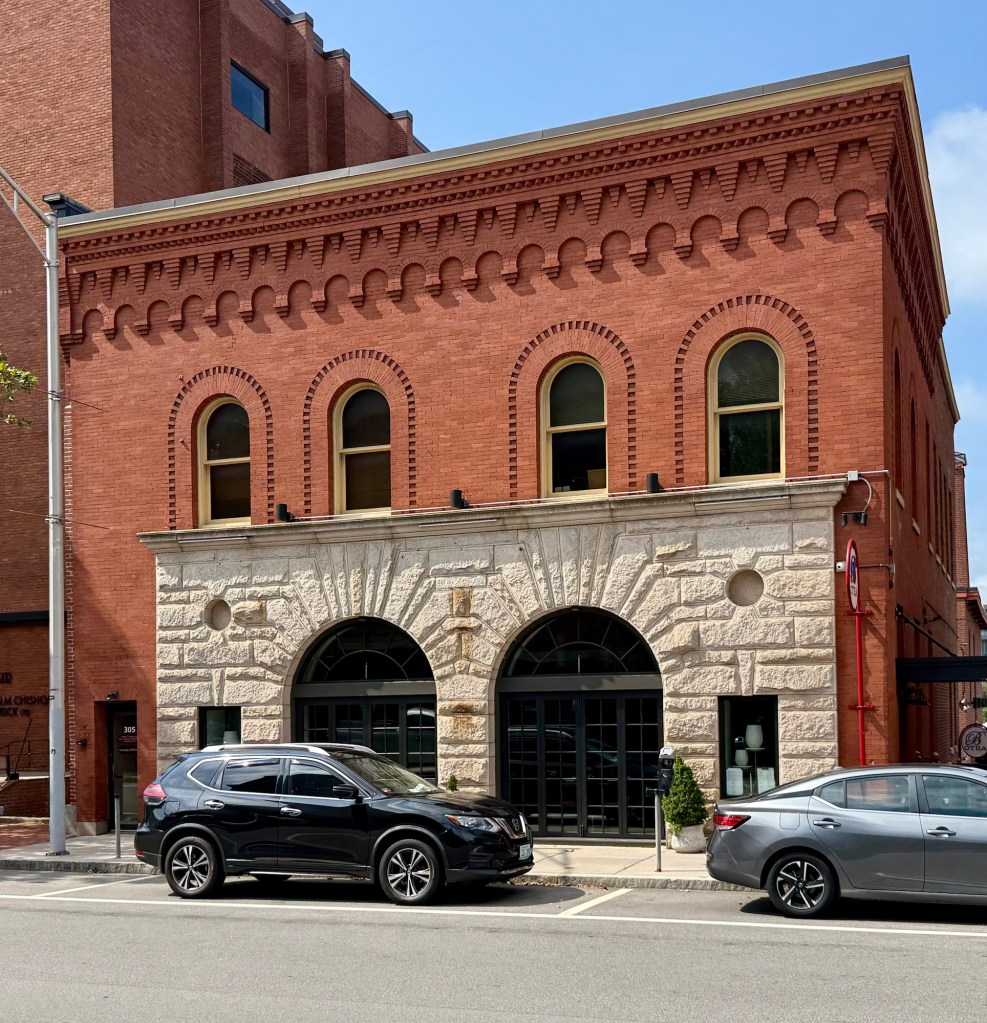
South Main Street Engine House, Providence // 1892

Built as a neighborhood fire station by the City of Providence in 1892, this handsome brick structure on South Main Street showcases how infrastructure and civic buildings can (and should) still contribute to the streetscape. Constructed along a streetscape of early 19th century brick buildings, the local architectural firm of Stone, Carpenter & Willson, sought to take cues of the materiality and massing of nearby structures, but employ new detailing and vocabulary for the fire station here. The result is a Romanesque style fire station with a pair of round-arched engine portals surrounded by stone facing, with the showstopping second floor and roofline with ornate brickwork around the arched windows and multi-staged corbeled cornice. The building with its smaller engine doors became obsolete with newer, larger fire trucks, and the building has since held a variety of commercial uses, today as a up-scale Italian restaurant.

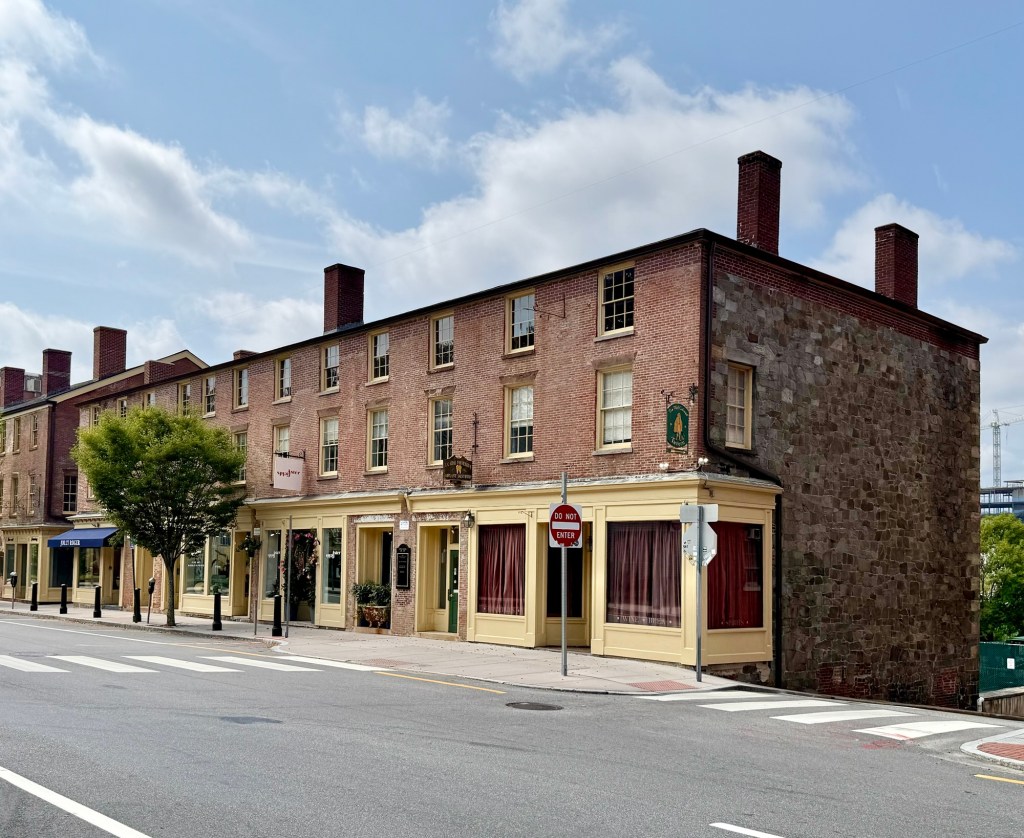
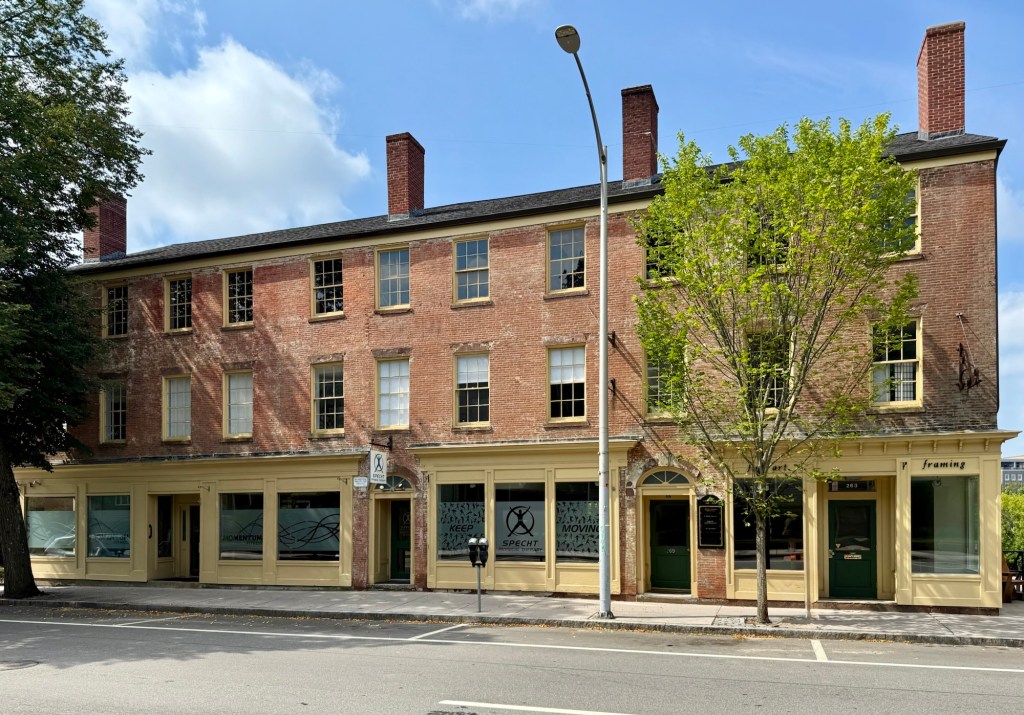
Comstock Block // 1824

Located next to the Clark-Nightingale Block on South Main Street in Providence’s East Side, the Comstock Block echoes the form, materials and rhythm of the older building, but employs some additional architectural detailing courtesy of a local architect. The Comstock Block at 263-273 South Main Street was built in 1824 from plans by architect, John Holden Greene, who designed many stately buildings in Providence during the early 19th century. The typical fanlights over two of the entrances are common in nearly all of Greene’s Providence buildings. Joseph and William Comstock owned the block which seems to have operated as residential rowhouses, possibly with storefronts at the ground floor. This block, like much of the street, was acquired, gutted and rehabilitated as part of the East Side Urban Renewal project of Providence in the 1970s, luckily for us, this handsome block was not demolished like so many other great buildings of the time.

Clark & Nightingale Block // c.1815

In the early 19th century of Providence, wealthy merchants dabbled in real estate and urbanism, not only as an income-producing investment, but also to serve as a buffer to obscure unsightly industrial and wharf uses from their mansions on College Hill. This is the Clarke & Nightingale Block, a c.1815 vernacular Federal style row of residences above commercial storefronts on South Main Street. The block was developed by the heirs of wealthy merchants, Joseph Innes Clark (1745-1808) and Joseph Nightingale (1747-1797), and constructed of brick and stone, providing a handsome structure facing the wealthy residences to their east, and obscuring the view of industrial buildings closer to the river. The block was gutted and rehabilitated as part of the East Side Renewal project in the early 1970s. Arguably the only thing Urban Renewal did right was select restoration of significant buildings within seas of the destruction and scars on the landscape the program left behind.

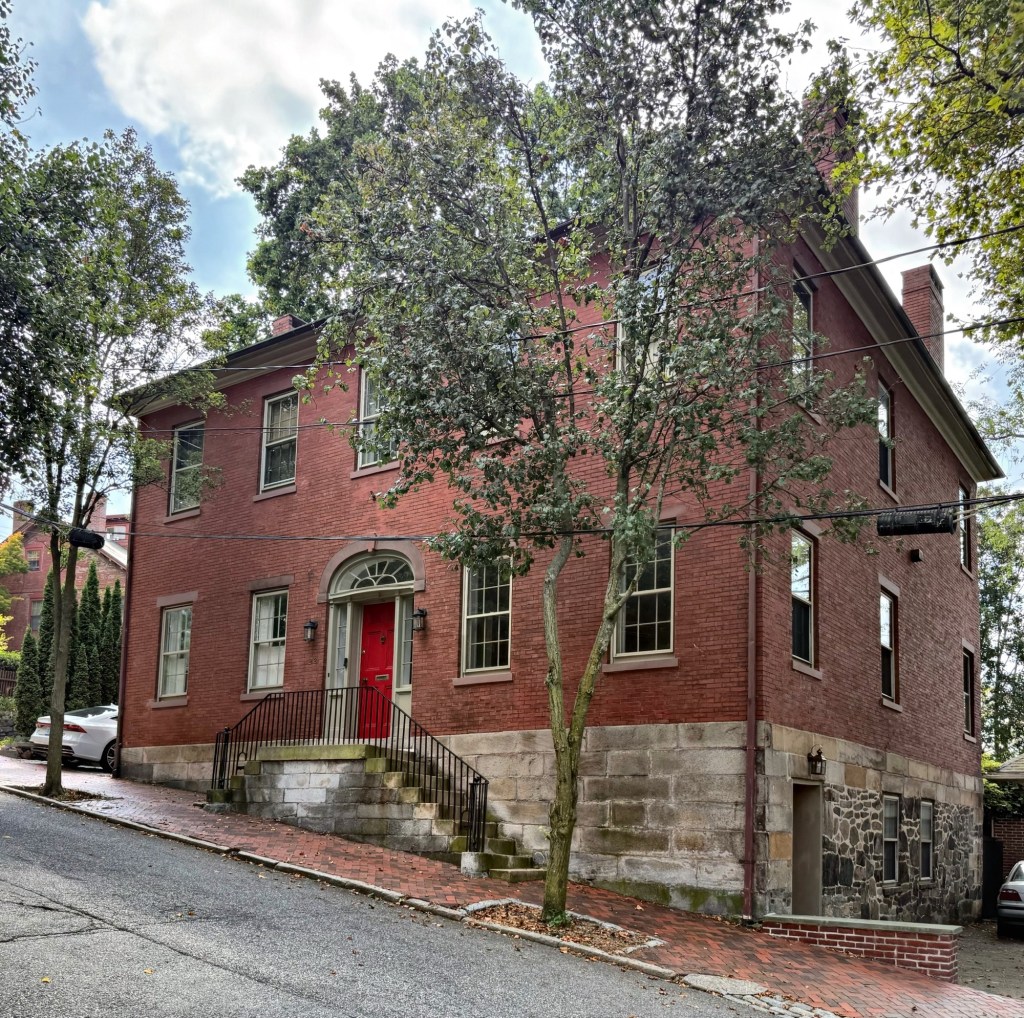
Tillinghast House // c.1800

The Tillinghast House at 10 James Street in Providence, Rhode Island, was built around 1800 by Captain Joseph Tillinghast (1734-1816), and it was occupied by a number of his children in the early 19th century. By 1818, with Joseph already deceased, the Federal style home was owned by two of his daughters, Mary, and Amey Tillinghast, who operated a small store from the basement. The two-and-a-half-story, brick Federal house is set on a high basement all with brownstone trim at the stringcourse (between first and second stories) and at the entrance. The house was restored in the late 1970s, along with a new clapboard addition by designers, Luigi Bianco and Georgia Patterson Boomer, of Bianco/Boomer. Without nearly as much ornate detail as many other Federal style homes in the East Side area of Providence, this residence proves that high-quality materials and strong proportions can make a home truly stand out!

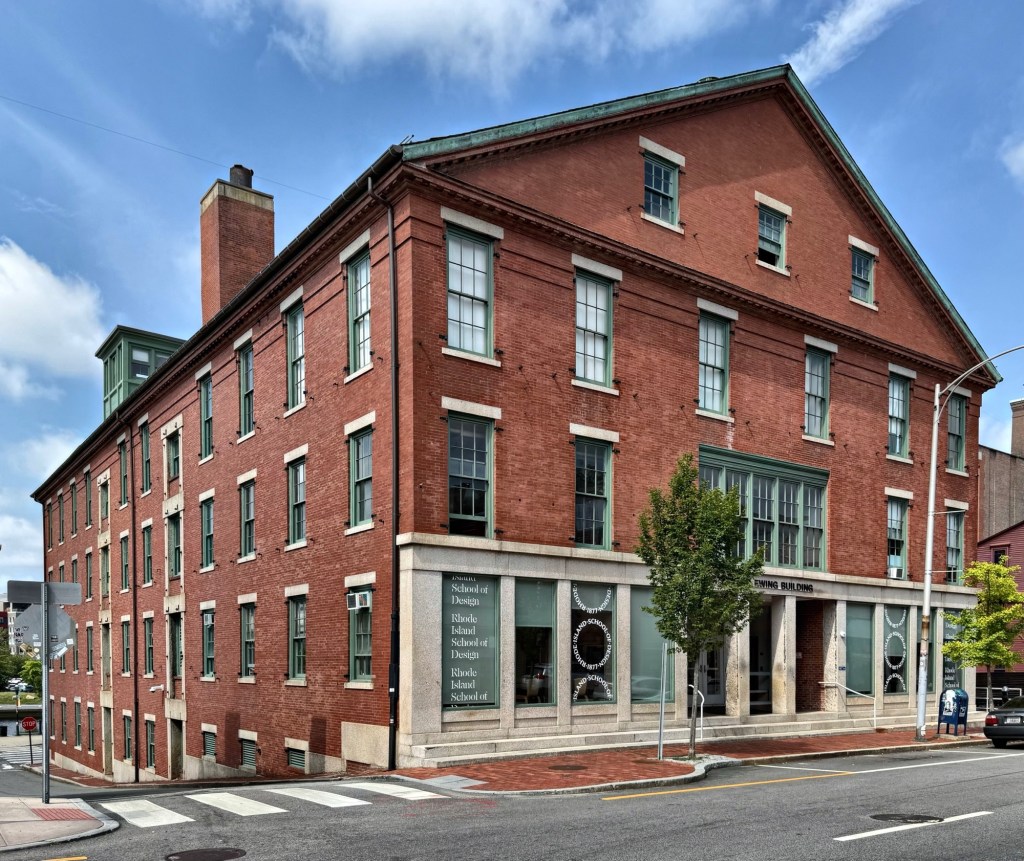
Bayard Ewing Building // 1848

Located on South Main Street in Providence, this large Greek Revival style commercial building, with its gable pediment facing the street was built in 1848 by the Fall River Ironworks Company.The company was founded in Fall River, Massachusetts (then partly located within Rhode Island) in 1822 to manufacture nails. The company owned and occupied this building from its construction until 1881, when it was occupied by the Rumford Chemical Works, founded by Eben Horsford as a manufacturer of baking powder, with this building serving as its main office. In 1927, the Phillips Lead Company, a plumbing supply house, purchased the property and continued to use it until 1973, when it was acquired via taking as part of an Urban Renewal plan for the area. Luckily, the building was deemed significant, and preserved following its purchase by the Rhode Island School of Design (RISD) and converted to classroom and studio spaces in 1978 for several of the school’s departments. The restoration and adaptive reuse was overseen by local architect Irving B. Haynes. The building, now known as the Bayard Ewing Building, is one of the earliest such examples of adaptive reuse in Providence and showcases that old buildings can be repurposed for new ideas and uses. 

William Woodward House // c.1826

Providence has some of the finest 19th century housing in New England; from the early Colonial and Federal residences to Victorian mansions, you can find hundreds of architect-designed showpieces that tell the full story of American architecture, sometimes on the same street! This is the William Woodward House at 22 James Street in the Fox Point/East Side area of Providence, built sometime between 1826-1828. The Woodward House is a landmark example of the Federal style, likely designed or inspired by local architect, John Holden Greene, which characteristic features including the hip roof with monitor, fanlight transom, and center hall plan. William Woodward Jr. (1791-1861) worked as a grocer, with a market nearby, and clearly did well for himself to afford such a home. 

Hope Block // 1869

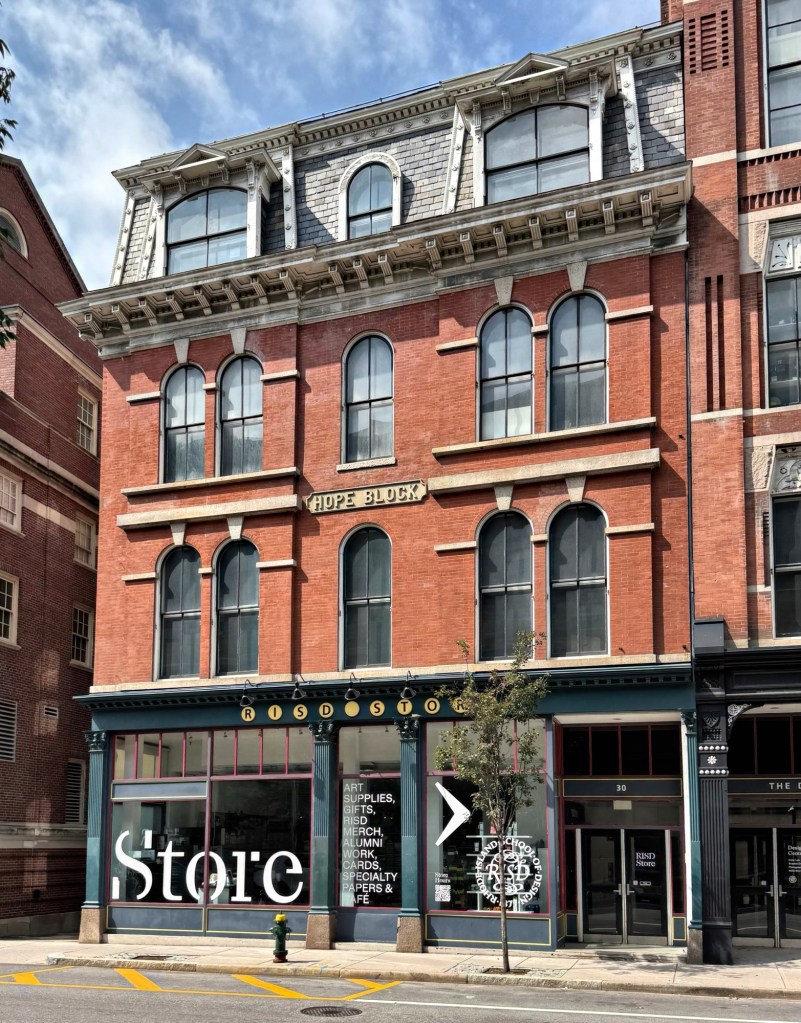
The Hope Block on North Main Street in Providence’s East Side neighborhood is an architecturally significant commercial block in the Second Empire style. The masonry building was constructed in 1869 and is probably designed by architect, Clifton A. Hall, who designed similar buildings in the city around that time. The block was developed by Edward M. Young and Ezra P. Lyon of the firm, Young & Lyon to house their fruit and grocery store, which they operated here from 1870 until 1889. By the latter half of the 20th century, the building was owned by the Rhode Island School of Design, and rehabilitated for classrooms in 1984, even retaining the cast iron storefronts, unique arched windows, and slate mansard roof. Today, the Hope Block houses the RISD Store.

People’s Savings Bank // 1913

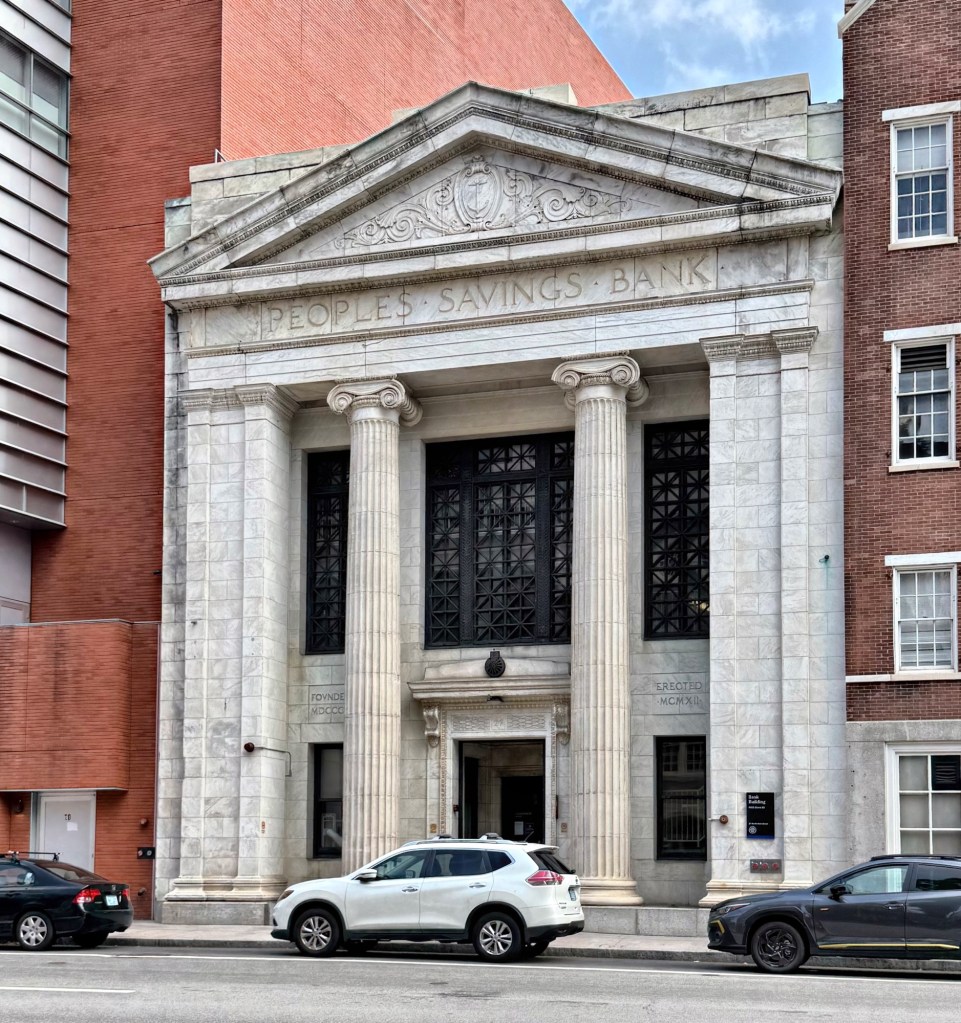
Built in the mode of a Greek temple, the former People’s Savings Bank was built in 1913 on a prominent site overlooking Market Square in the East Side neighborhood of Providence. Designed by the Providence-based architectural firm of Clarke & Howe, the handsome marble-faced two-story bank showcases the bold, yet clean proportions found in many Classical Revival style institutional buildings of the early 20th century. The People’s Savings Bank was established in 1851 and after decades of growth, built this structure to show customers the prosperity and stability of their institution. After a series of bank acquisitions and mergers in the 20th century, the building was eventually acquired by the Rhode Island School of Design, who had the building converted into studio space and later into the college’s hardware store. Yes, you heard that right… Talk about adaptive reuse!

First Baptist Church, Providence // 1774

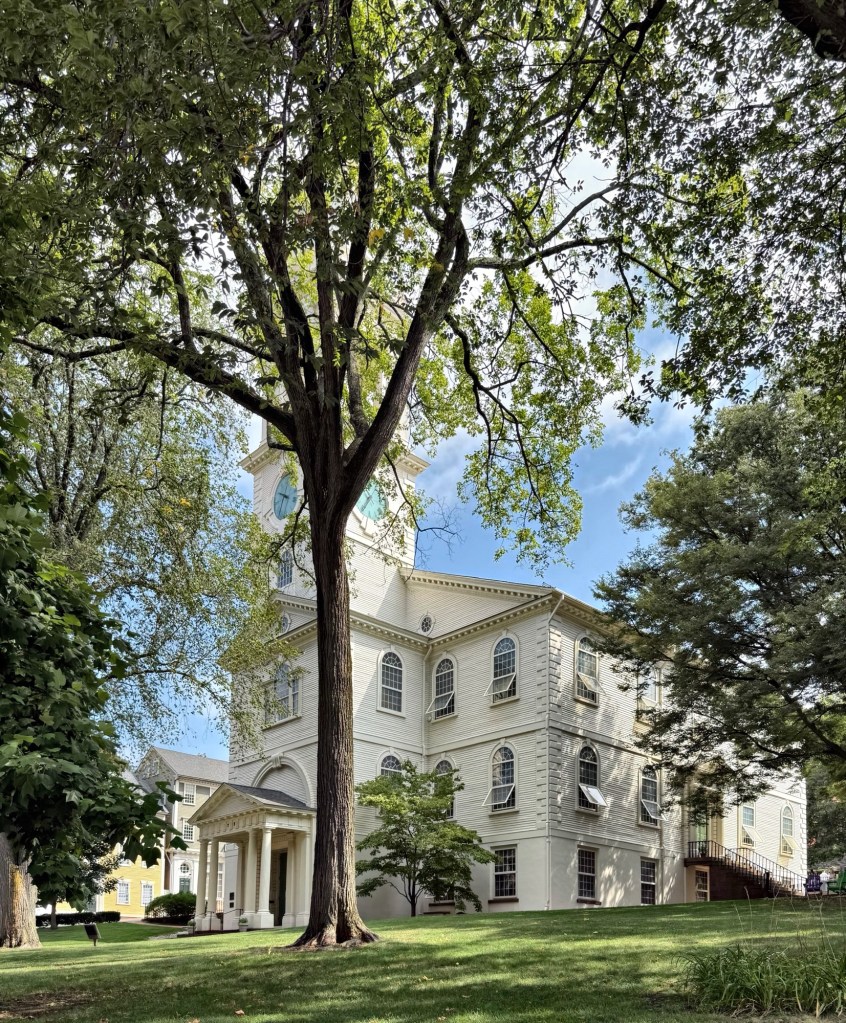
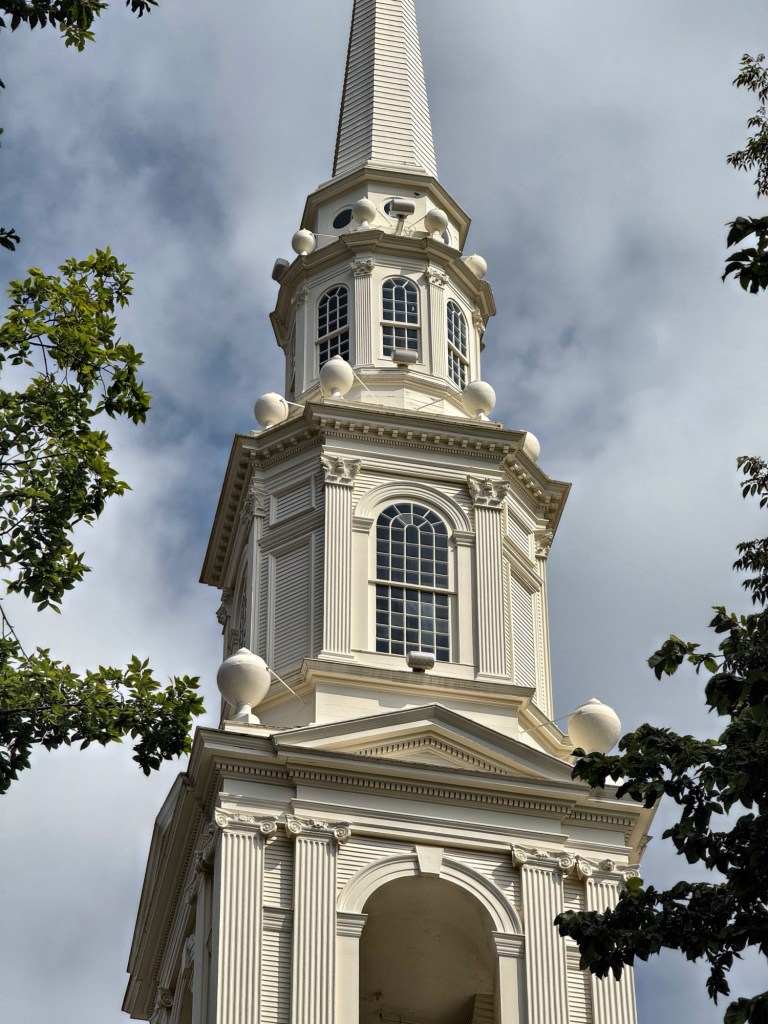
The First Baptist Church of Providence, also known as the First Baptist Church in America is the oldest Baptist church in the United States. The Church was founded in 1638 by Roger Williams, who before building this church in 1774, often met in private residences or in more plain meetinghouses to not show vanity. By the early 1770s, a new building for Providence Baptists was needed, and it was conceived in a very large (and ornate) way. Built to accommodate over 1,200 people (just under a third of the entire population of Providence at that time), this church was built “for the publick Worship of Almighty God; and also for holding Commencement”, referring to the commencement ceremonies of Rhode Island College (later Brown University), also founded under Baptist auspices. The church was designed by local amateur architect, Joseph Brown, who was likely inspired by Sir Christopher Wren’s London churches in James Gibbs’s Book of Architecture (1728). The construction was greatly aided by the fact that the British had closed the port of Boston as punishment for the Boston Tea Party. Many shipwrights and carpenters were thrown out of work and came to Providence to build the meetinghouse there. The structure was dedicated in May 1775, and the 185-foot steeple was added shortly thereafter. This was the first Baptist meetinghouse in New England to have a steeple, and it has survived dozens of hurricanes and hundreds of years of change since. The church is a National Historic Landmark and remains as one of the most significant buildings in New England.