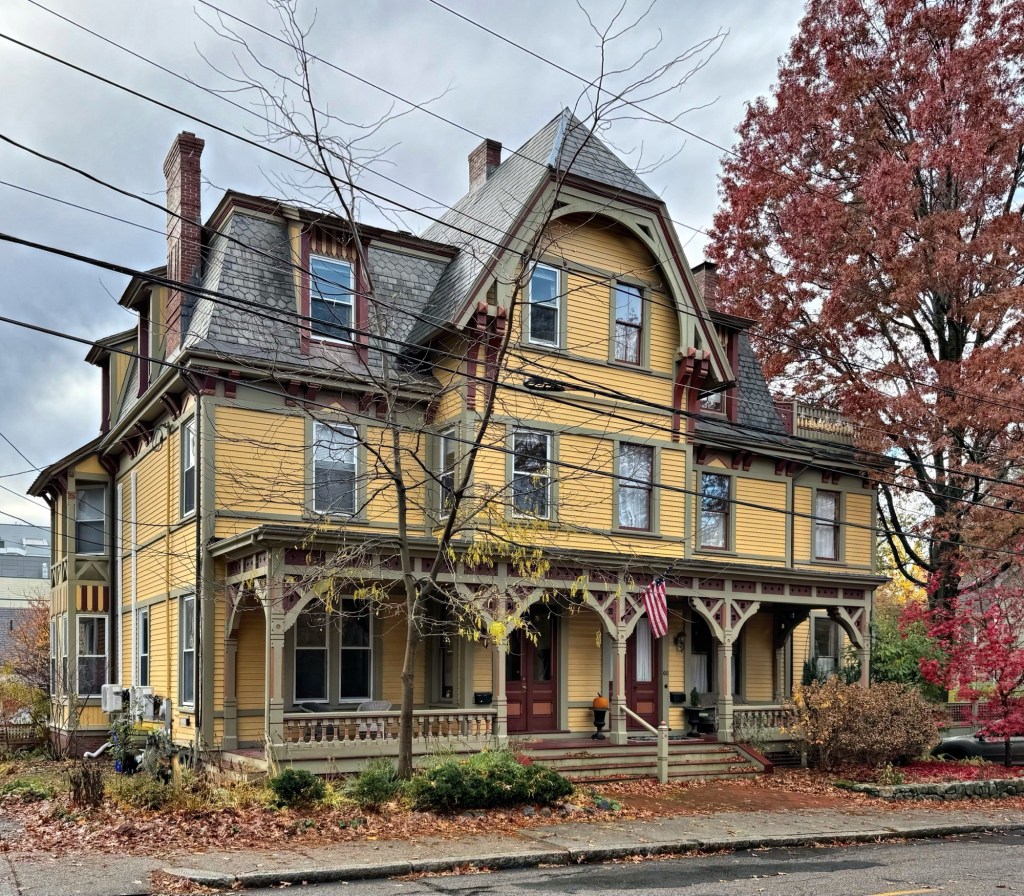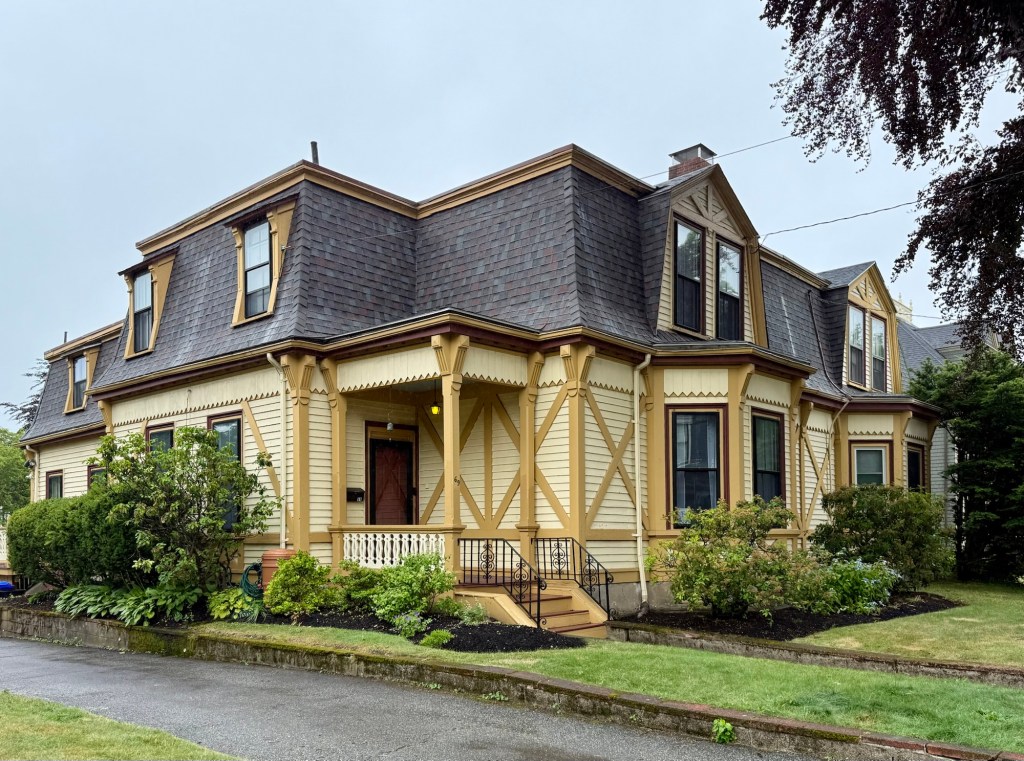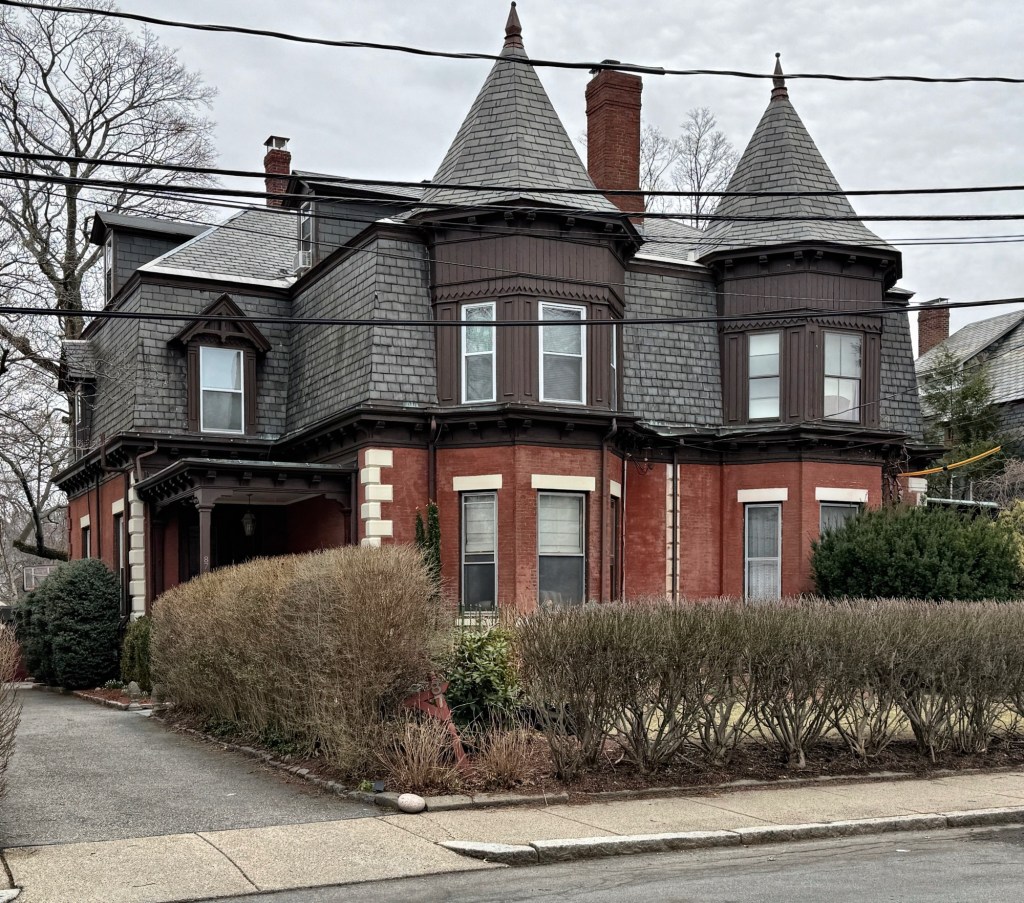
Emerson-Arnold Double-House // c.1875

Elijah Carleton Emerson (1807-1888) was a wealthy Boston merchant, making his fortune as Director of the Second National Bank and President of the Middlesex Horse Railroad. In his late 30s, he purchased land in Brookline Village and established his estate on the land that is now Emerson Park in 1846. The bucolic setting of his estate included a pond, boathouse and adjacent cottage, but as the surrounding area continued to develop with easy access to Downtown Boston, Elijah Emerson began to develop his estate. Emerson began to build residences on his land for supplemental income. This handsome Stick style double-house was built around 1880 and rented by Mr. Emerson and was eventually occupied by his granddaughter, Tirzah and her husband, George Francis Arnold. The residence features a mansard roof, decorative brackets and applied stickwork, and a handsome porch with turned posts.

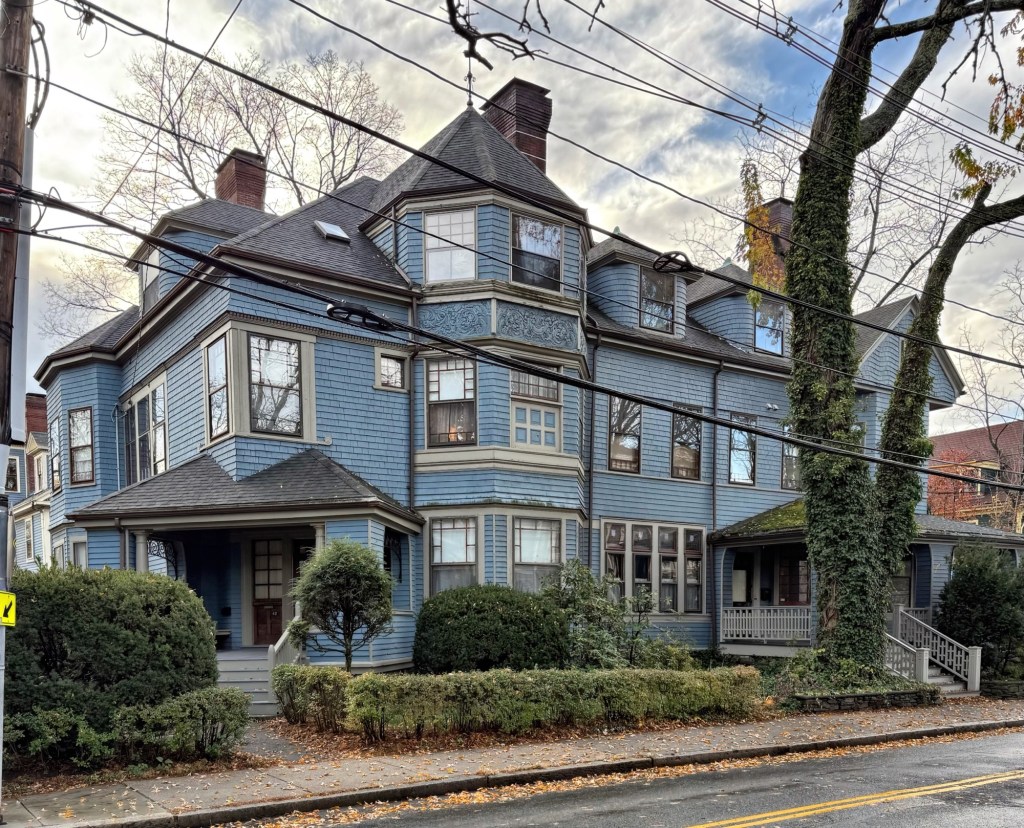
John D. Sturtevant Double-House // 1892

John Dean Sturtevant (1816-1889) was born in New Hampshire and became engaged there in local woolen mills, quickly growing into advanced management positions. He operated woolen mills in New Hampshire, Maine, Connecticut, and Massachusetts, and settled in Brookline where he had access to other states via excellent rail service. When he died in 1889, John’s heirs inherited their late-father’s properties, and began to develop them as Brookline filled out in the last decades of the 19th century. This handsome double-house at the corner of Cypress and Waverly streets was built in 1892 by the Sturtevant Estate, who rented the property to two families of wealthy residents. The Sturtevant Double-House is a landmark and exceptionally preserved example of the Queen Anne style, with varied siding, asymmetrical forms, complex roofline with dormers, and applied ornament in the form of carved panels.

George Derby Welles Rental House // c.1872

From the 1780s until 1870, almost all of Ashmont Hill (west of the present train station) was a farm, with the large farmhouse dating to about 1720, located at the corner of Washington and Welles streets, now the home to the Codman Square Branch of the Boston Public Library system. The farm was owned for a time by General Henry Knox. Sometime before 1850, the estate and mansion came into the possession of the Honorable John Welles, who died in 1855. The property would eventually be deeded to John Welles’ grandson, George Derby Welles, who was then just 26 years old and living in Paris with his wife, Armandine V. Derby. Welles wasted no time in developing the property through his agent, Boston Attorney Edward Ingersoll Browne. Streets were laid out and house lots were platted and sold, with some early properties built with much of the neighborhood developing by the turn of the century. The old Knox-Welles farmhouse would be razed by 1889, but the remainder of the neighborhood has since become a landmark neighborhood of Victorian-era homes. This mansard double-house at 67-69 Ocean Street dates to around 1872 and is one of the earliest properties in the area. Blending the Second Empire and Stick architectural styles, the handsome double house is said to have been designed by architect Luther Briggs for George D. Welles and rented to tenants.

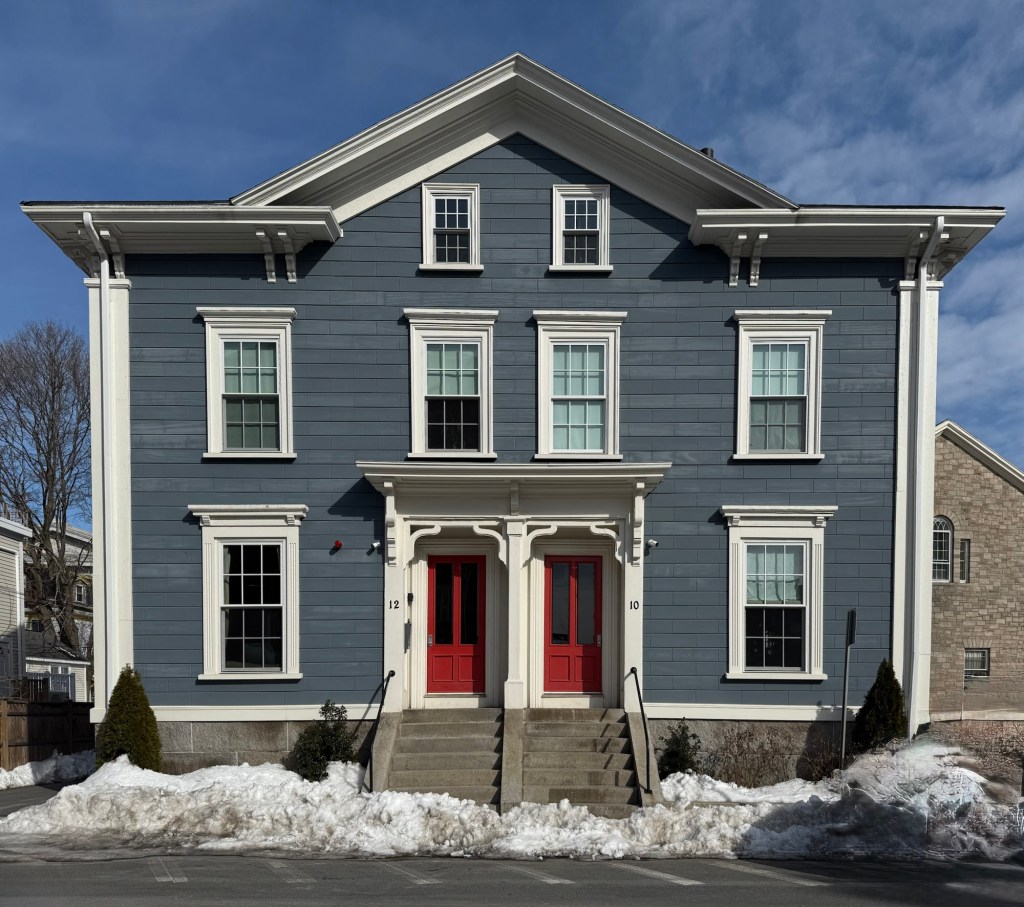
William Hunt Double-House // c.1858

The William Hunt Double House, located at 10-12 Lynde Street in Salem, is a 2 ½ story wood-frame Italianate building that showcases the emerging presence of the Victorian style on residential buildings in the mid-19th century, even in cities with strong support for Colonial and Federal period styles. The two-family house was built by William Hunt, a prominent Salem merchant, as a rental property with occupants of the building in 1859 including: John W. Lefavour, a cashier, and Benjamin F. Faber, a merchant. The property remained in the Hunt Family for three generations, and was converted to a boarding house in the 1930s. In November 2018, a fire gutted much of the building, displacing the residents, and concerned neighbors as to the future of this great property. Luckily for us, the owners hired  Seger Architects, Epsilon Associates and Groom Construction to fully restore the building to its former glory. The resulting project won a Salem Preservation Award and received Federal and State Tax Credits to offset restoration costs. What a great success story!

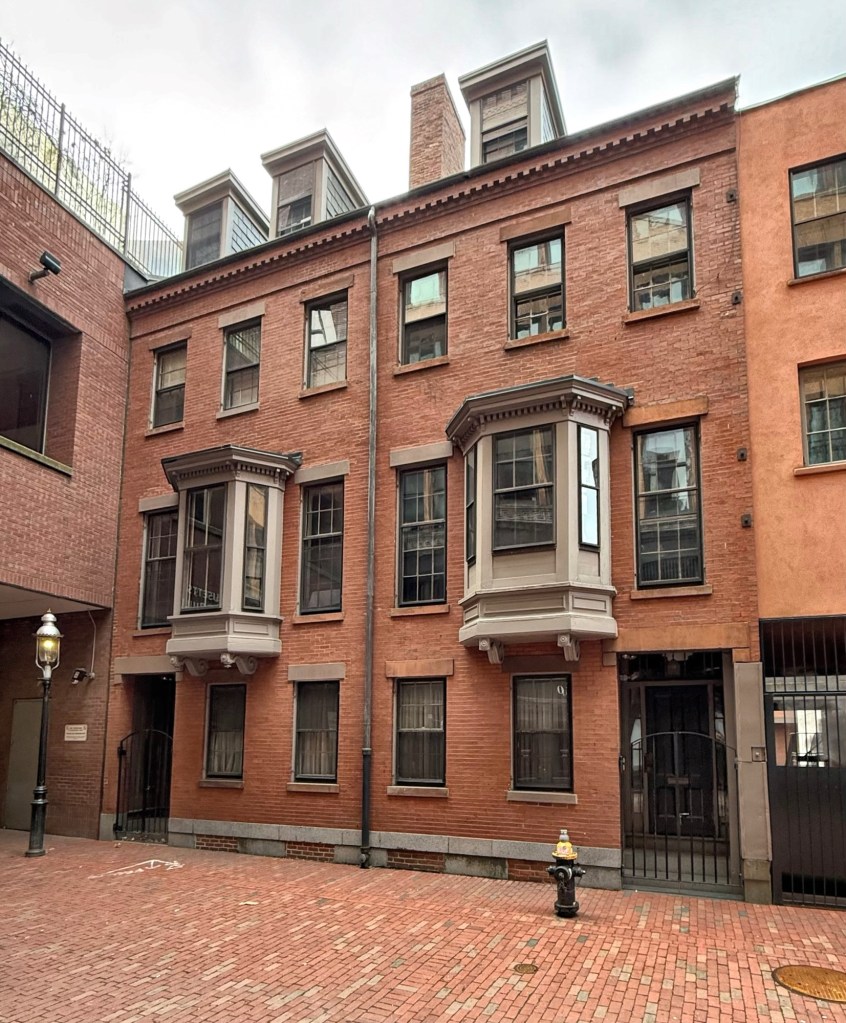
Hilt-Rayner Houses // 1844

This is your reminder to get lost and explore your city or town. Tucked off Boylston Street sits Boylston Place, a short, dead-end way that is passed by thousands every day, many not knowing about the little enclave of surviving 19th century buildings there. At the end of the street, the Hilt-Rayner Double House remains in great condition and a reminder as to the residential character of the area in the first half of the 19th century. The houses were built by Henry Hilt, a housewright who owned one unit after completion. The other unit was owned by Thomas L. Rayner, who appears to have rented the unit out. The late example of the Greek Revival style in the rowhouse form is well preserved through nearly 200 years of use. Beginning in the 1920s, the two homes were acquired by the Tavern Club, a private social club established in 1884 in the house next door. It remains owned by the Tavern Club today.

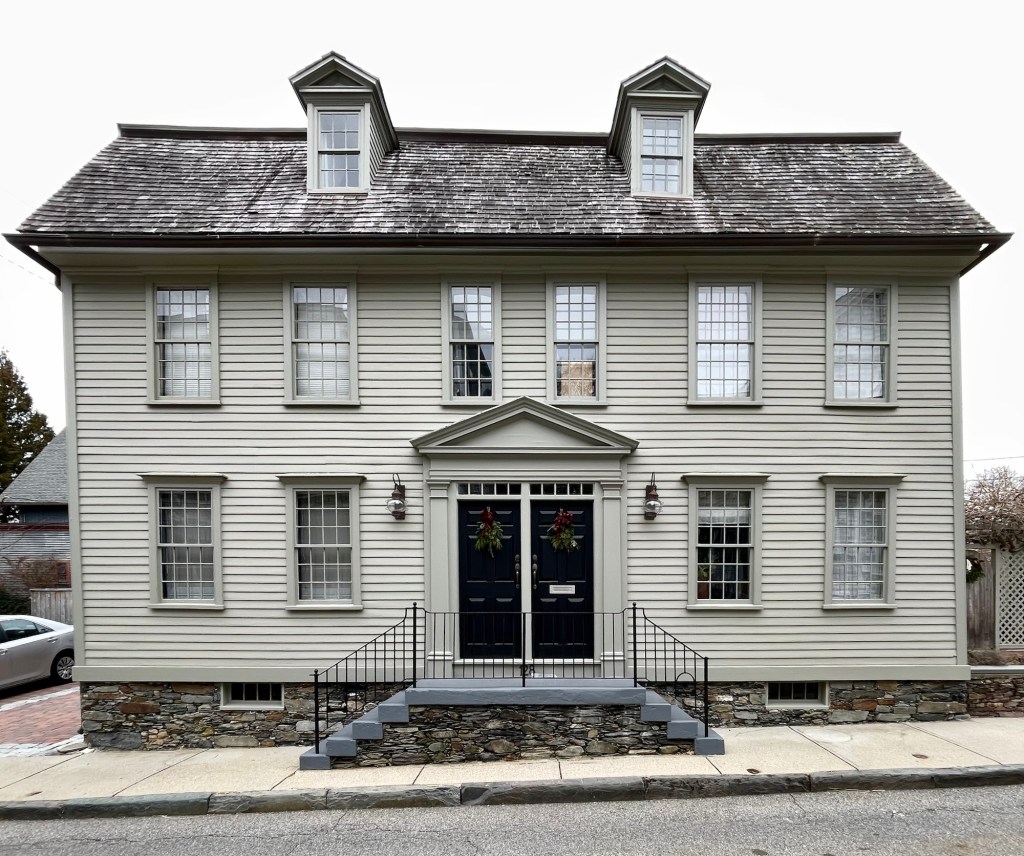
Shaw-Thurston Double House // c.1760

This pre-Revolutionary double-house is located at 128-130 Prospect Hill Street in the architectural historian paradise that is Newport, Rhode Island. This property was originally platted and purchased in 1752 by Anthony Shaw. By 1760, local papers advertised the property for sale, giving a built-by date. In 1777, the house was owned by Anthony Shaw Jr. and John Thurston. The property was purchased before the Civil War and went into single-ownership, which has remained to this day. The house, while seemingly a single-family, is preserved lovingly by the owners, who even retained the second front door!

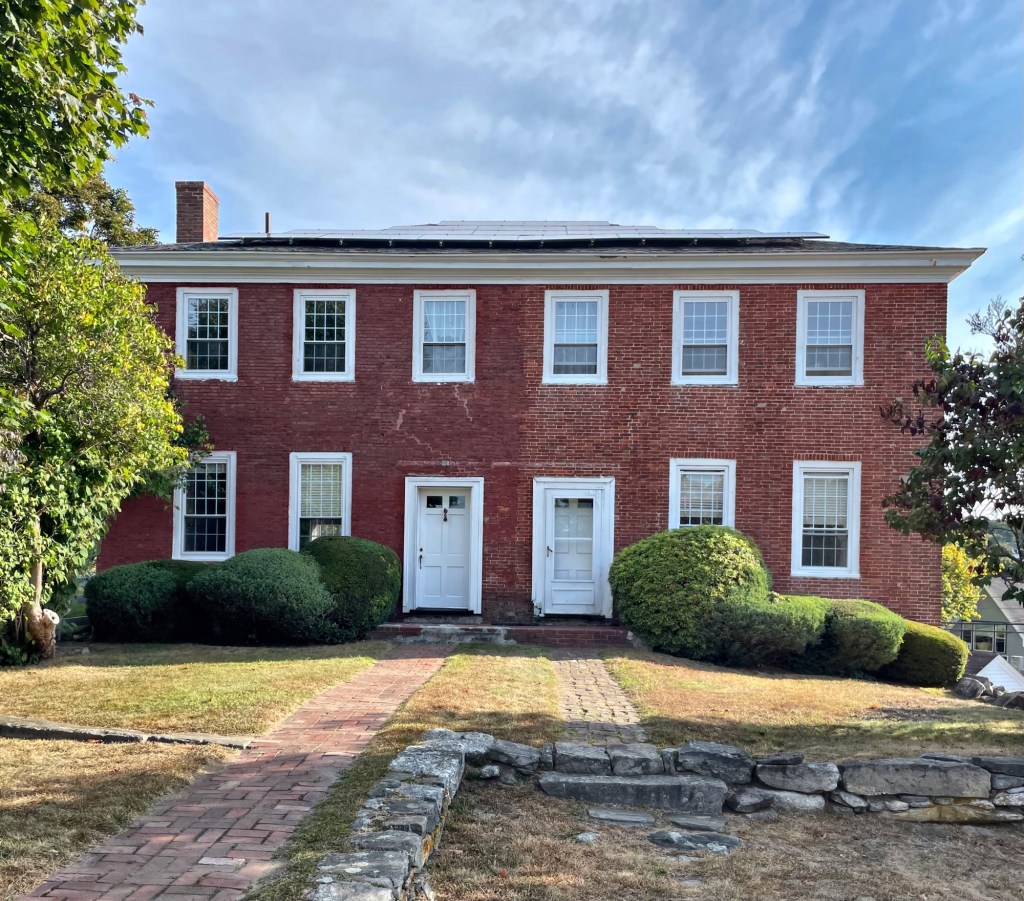
Auld-McCobb House // 1807

The Auld-McCobb House is set on a rocky ledge overlooking the absolutely charming downtown Boothbay Harbor, Maine. The brick, Federal-period double-house was built in 1807 for Jacob Auld and Joseph McCobb, two prominent local merchants. The two were engaged in a business partnership that included fishing, shipbuilding, and general mercantile pursuits, and were a dominant force in the local economy in the first quarter of the 19th century. The duo owned a good bit of land in town, eventually selling the five-acre Burnt Island to the Federal Government for a new lighthouse. McCobb married Auld’s sister in 1807, and it is thought that this is what necessitated the house’s construction at the time. The house is interesting, not only as a rare example of a double-house of the period, but also as one of the first (and only) brick homes in Boothbay Harbor.

Winthrop-Eckley Double House // c.1855

Newport has no shortage of amazing architecture. From the grand Gilded Age mansions along the coast to the pre-Revolutionary Colonial houses, there are always new buildings to stumble upon and learn about. This charming stone double-house on Corne Street was built in the mid-19th century and had two owners by the 1870s, John Winthrop (1809-1886) and Julia Ann Eckley (1800-1874), a widow, who owned the smaller side. The stone cottage sits atop a raised basement with bold stone quoins at the corners. Dormers with delicate wood trim are at the roofline with the detail reflected in the porch on the Winthrop half. This double-house is one of the many “hidden” treasures in Newport’s warren of narrow streets.

Cahoone-Yates Double House // c.1763

James Cahoone (1727-1814) and Stephen Yates built this stunning double-house on Green Street in Newport around 1763. Both James and Stephen worked as painters in town, and built this house together, each living in one half (Cahoone must have paid a little more because his “half” was a little larger). The Georgian style double-house eventually suffered from neglect and like several other Colonial-era buildings in Newport, its future was uncertain. Luckily, the Newport Restoration Foundation stepped in and purchased the property in 1968, restoring the houses in 1974, complete with a paint color even Cahoone and Yates would love!

Billings Coggeshall Double House // c.1784

This unique double-house on Mill Street is stopped me in my tracks when strolling around Newport. The two-family house was built around 1784 by Billings Coggeshall (1733-1810) and is unique architecturally as it is comprised of two houses, each with its own separate pedimented entry, into a single lengthy block. Both houses have interior chimneys and are just one-room deep! When urban renewal hit Newport in the second half of the 20th century, traffic patterns and revitalization of the waterfront were top of mind (not necessarily slum clearance and wholesale redevelopment of neighborhoods like in Boston). To bring traffic into the downtown shopping area, Memorial Boulevard was laid out by 1969, and the Newport Restoration Foundation was integral to saving this building from the wrecking ball, as it was in the path of the new road. As luck would have it, an area around Trinity Church was cleared to establish Queen Anne Square, a town common-like park in the center of town. To provide the quintessential “New England charm”, many historic buildings were relocated to line the square, including this house. When the Billings Coggeshall House was moved here, it replaced a gas station, and it was given an even longer side addition with breezeway, providing screened parking and a rear addition for offices. Here’s to preservation!