Blenheim Apartments // 1898

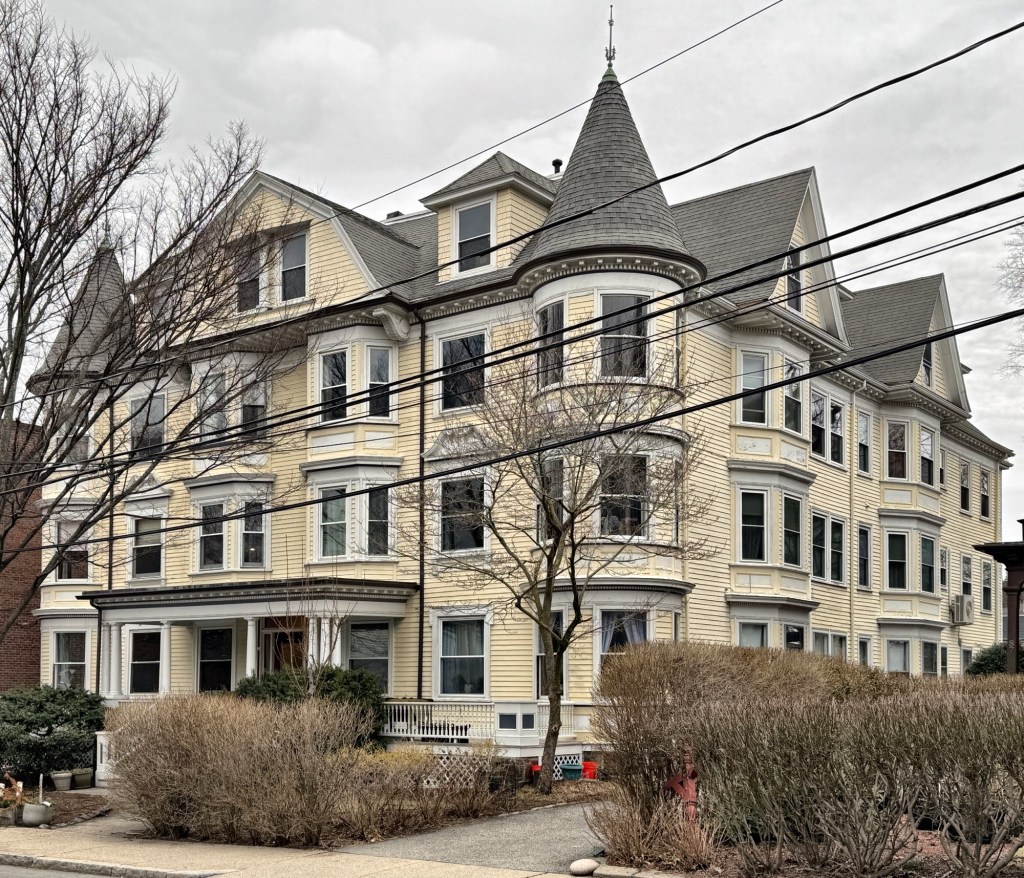
As Brookline, Massachusetts, saw rapid development in the late 19th and early 20th centuries, developers redeveloped lots formerly occupied by single-family residences and built large, multi-family triple-deckers and apartments, specifically in neighborhoods in close proximity to train stations into Boston. This building, constructed in 1898 by local builder, John H. Pineo, for owner, Walter H. Whittemore as an investment property. The building contained six apartments as a double triple-decker with two units on each floors accessed by a central entry and stairwell. The building has been known as the Blenheim Apartments and blends Queen Anne and Colonial Revival styles into a single, eclectic composition. The large massing is broken up by both the undulating facades and roof with projecting bays, dormers and corner towers, along with the applied ornament of panels, dentils, corbels and broken pediment motifs. If all multi-family housing looked like this, people would not complain about density as much!
James H. F. Standish House // 1874

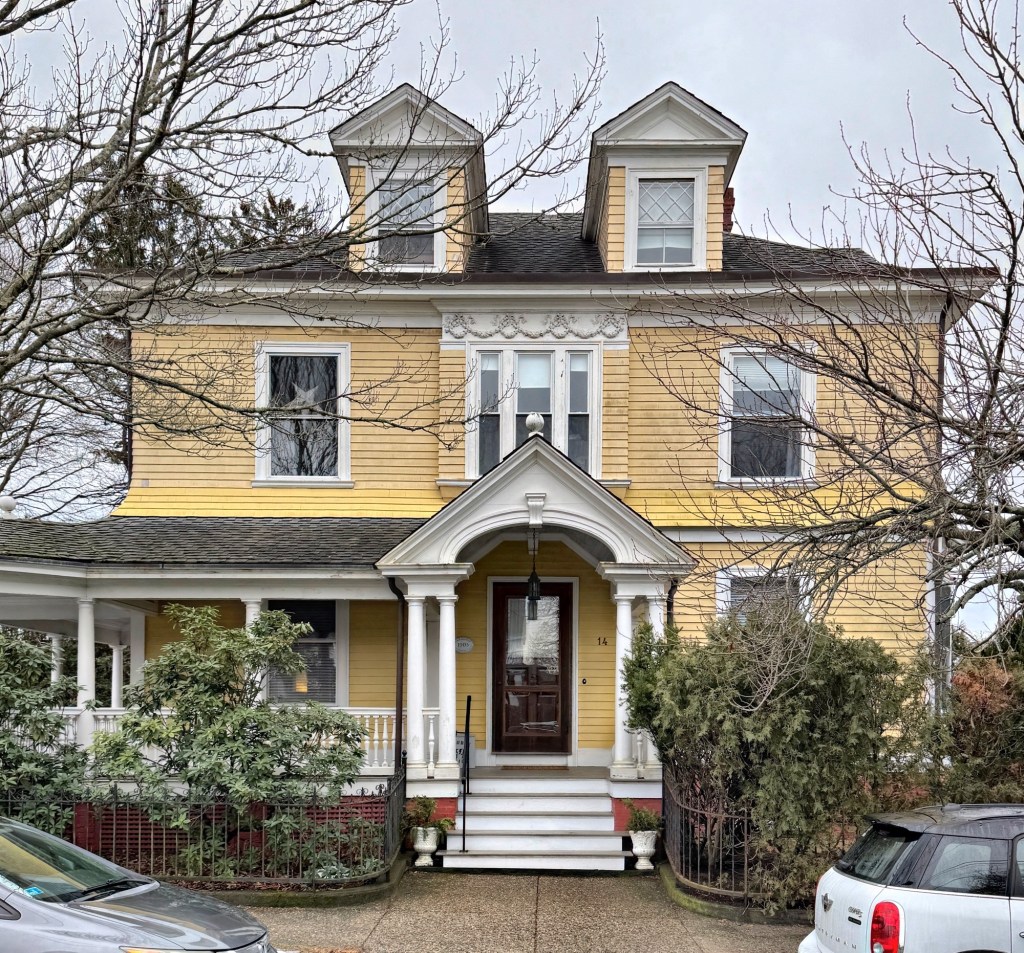
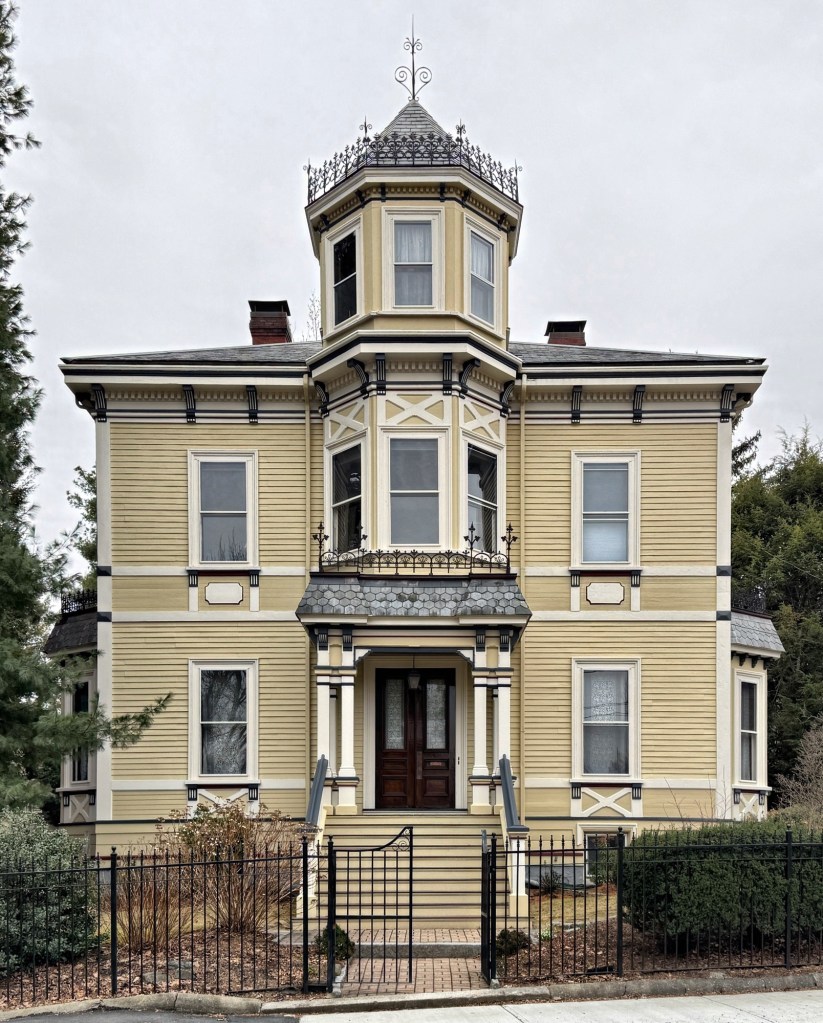
In 1873, James H. F. Standish (1811-1887) purchased a house lot on the corner of Francis and Toxteth streets in Brookline and set out building his forever home for his wife, Sarah. James and Sarah originally lived in Bath, Maine, where he worked as a builder and mason, constructing many large homes there before relocating to Brookline where he likely remained busy as Boston and its surrounding communities experienced a period of rapid development and suburbanization. James surely built this house and rear stable himself in the interpretation of the Stick and Italianate styles for his family, who moved in by 1874. Sadly, Sarah died unexpectedly in 1876 of heart disease, and James would sell their Brookline home. The Standish Home has been preserved by subsequent owners, including the central cupola, bracketed and dentilled cornice, stickwork and iron cresting. The Standish House was individually listed in the National Register of Historic Places in 1985 as a well-preserved, evocative example of Victorian period styles in a residence.

Charles P. Flagg House // 1899

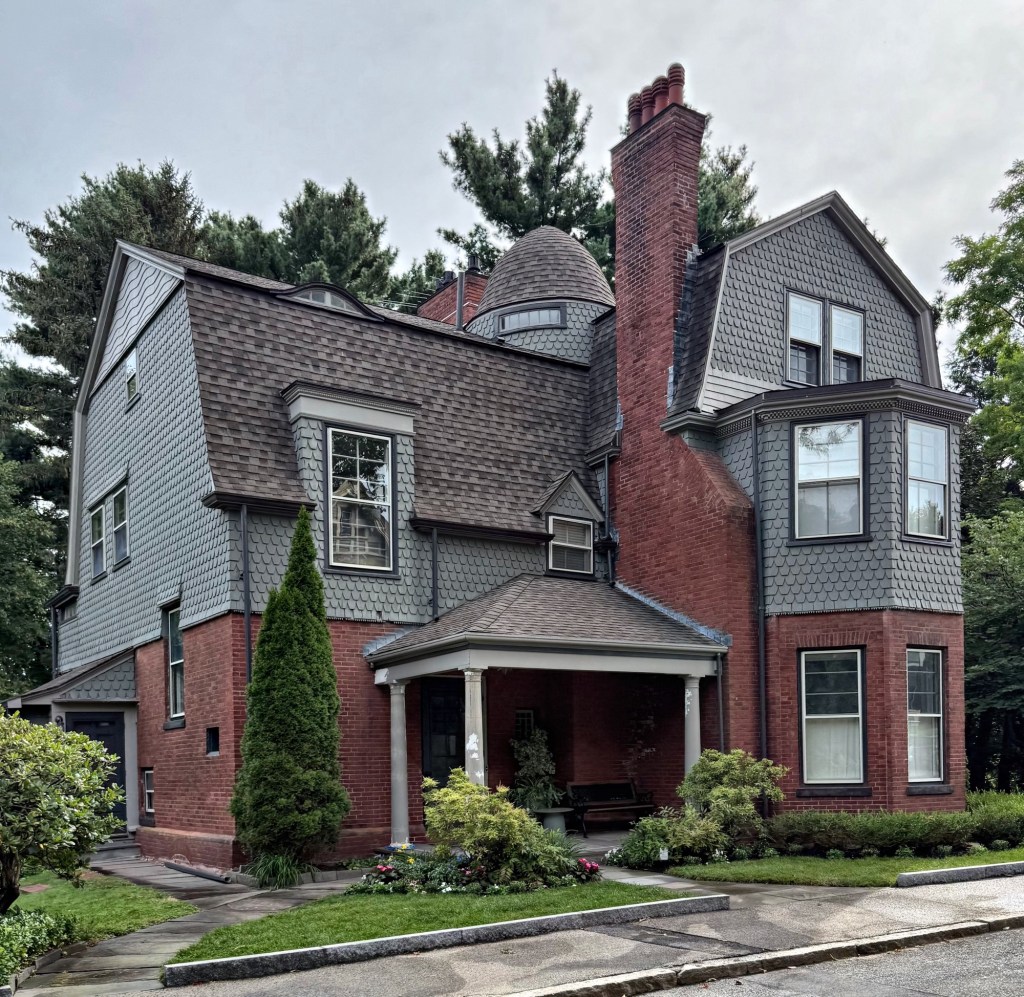
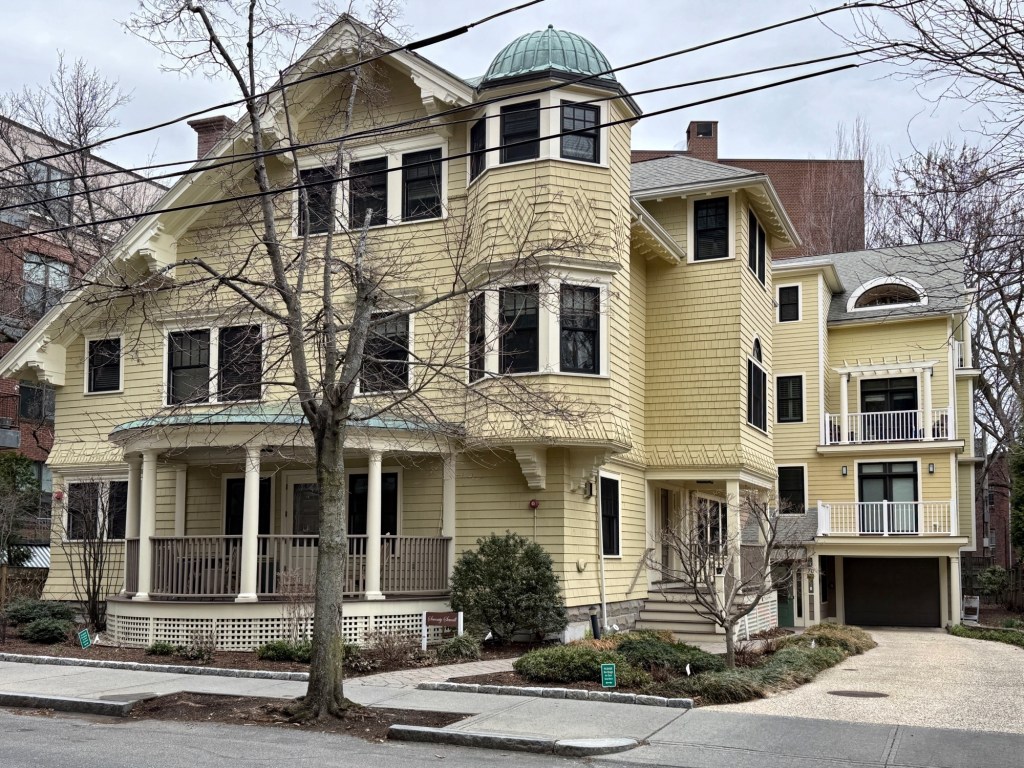
Located on Sewall Avenue in Brookline, Massachusetts, the Charles P. Flagg House exemplifies upper-class single-family housing built in the late 19th century that has been added onto and converted into multi-family housing to serve a growing city. Charles Partridge Flagg (1851-1911) was a real estate developer and head of the D. F. Flagg & Co., a wholesale liquor company his father started in Boston. He purchased the former Dexter property, subdivided the estate, and hired architect Julius A. Schweinfurth to design a home for his family. “Jule” Schweinfurth was long-associated with the firm of Peabody & Stearns of Boston, which in the late 19th century, was one of the premier architectural offices in the United States, but when he was not offered a partnership offer by his bosses, he established a new firm under his name. For the Flagg House, Schweinfurth blended the Shingle, Queen Anne, and Arts and Crafts architectural styles with a unique asymmetrical roofline, wide overhanging eaves with cross brackets and exposed rafter tails, consistent shingle siding, and a two-story polygonal oriel with domed roof at the corner. The Flagg House was moved forward on the lot to facilitate a rear addition and completely renovated in 2011, transforming it into a seven-unit condominium building with garage and elevator. This example of “gentle density” is exactly what communities should allow for, to preserve the character at the streetscape but provide additional housing.

John G. Phillips House // 1901

The John G. Phillips House on Pleasant Street in Sharon, Massachusetts, is a playful and eclectic example of early 20th century residential architecture showcasing the blending of many styles into a single composition. The house was built in 1901 for John Goddard Phillips, who moved to Sharon from Boston to retire in this large home, and serve as President of the Sharon Historical Society. The house blends typical Queen Anne and Shingle style forms but with interesting brackets common in styles popular a half-century earlier.

Phebe Wallace House // 1854

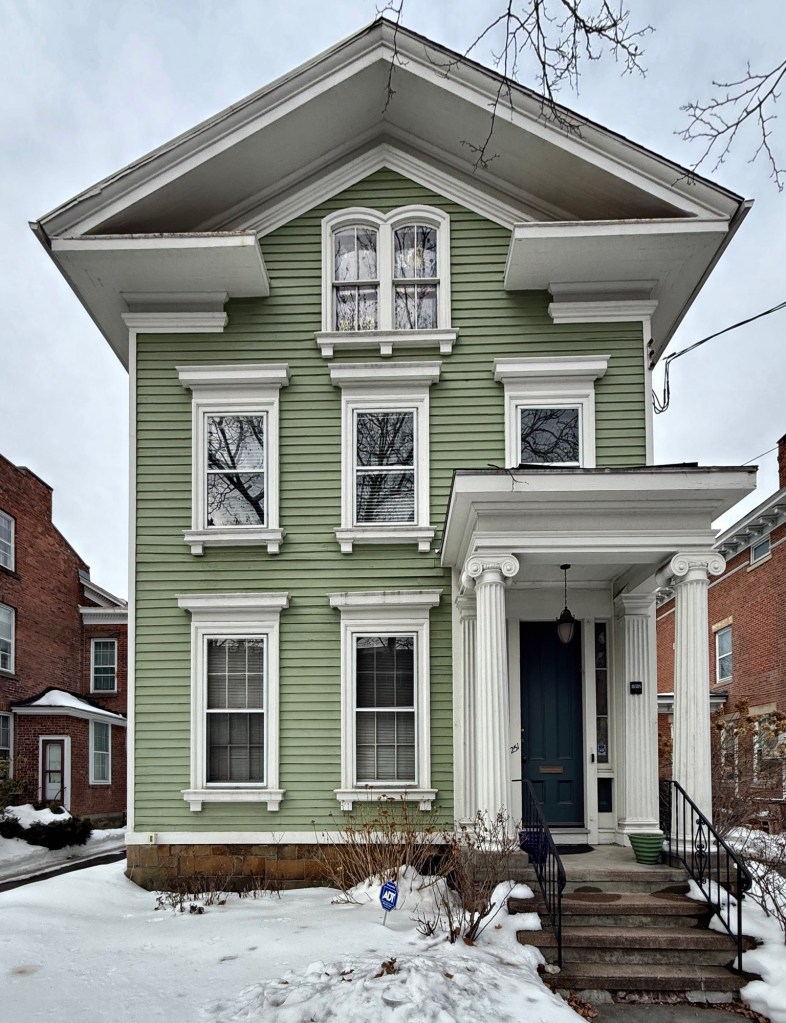
The Phebe Wallace House on Greene Street in New Haven, Connecticut, at first glance, may appear as a typical mid-19th century house, but some of the architectural features and details make it stand out! The residence was built in 1854 for Phebe Barney Wallace (1792-1872), a widow of William B. Wallace who died decades earlier. Phebe lived here with her daughter, also named Phebe, and a servant. The house exhibits a traditional Greek Revival form with gable roof oriented towards the street, with an off-center entry with Ionic portico, but the massive overhanging eaves without brackets with paired arched windows in the gable and balcony off the side of the house showcase the emerging Victorian influence in American residential architecture.

Bromley-Bradley House // c.1850

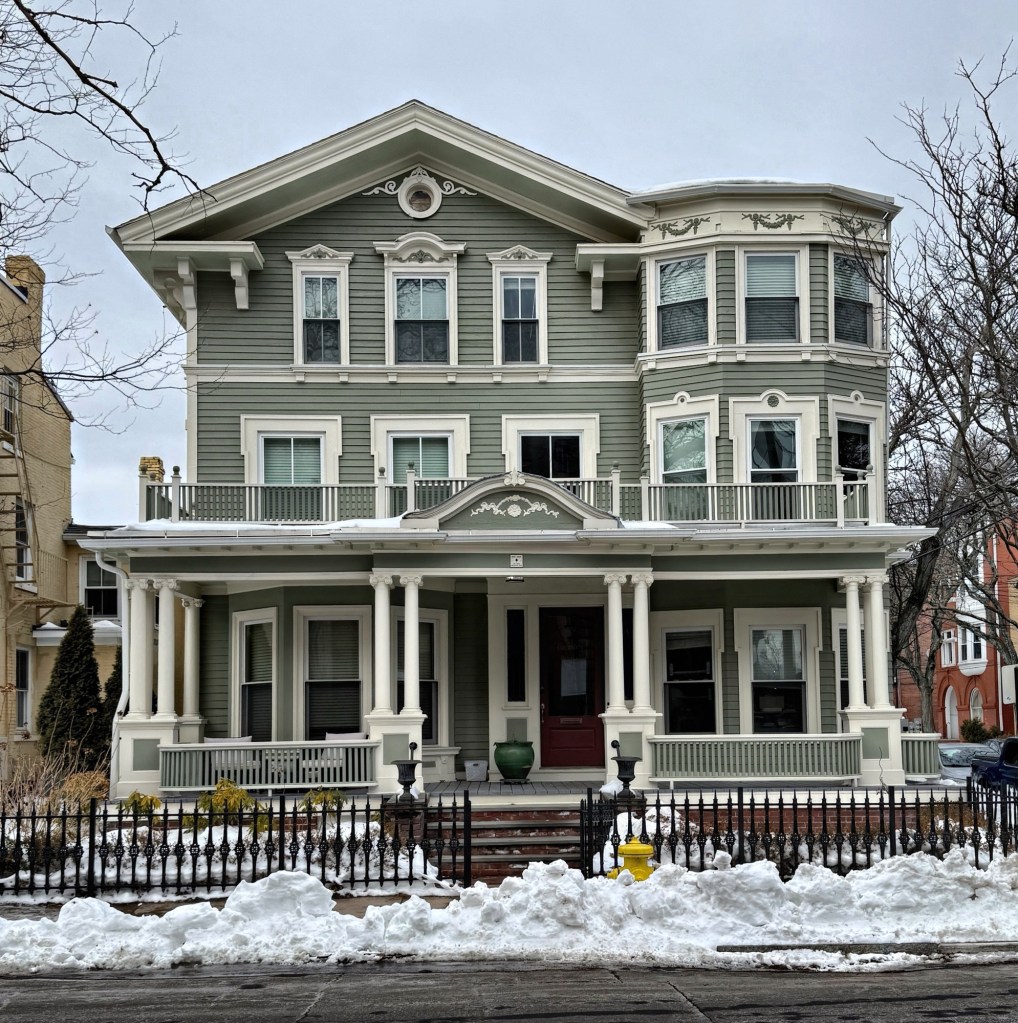
One of the eclectic mid-19th century residences in New Haven’s Wooster Square neighborhood is the Bromley House, an exuberant blending of architectural styles that have been lovingly preserved. The history is a little murky on this residence but from research, the home was built around 1850 and was possibly a two-story flat-roofed Italianate style design with three-bay facade and off-center entrance. The home was acquired by Joseph Bromley, who appears to have added a third-story with gable roof. After the Civil War, the property was purchased by Lyman Erving Bradley, a veteran of the war who was employed as a police officer and later as private security for an area factory. It appears that Mr. Bradley, before his death in 1901, had the property expanded with a whimsical front porch, three-story side addition, and applied ornament in the Queen Anne style. The home is today a three-unit condominium, similar to the three-deckers found in cities all over New England.

Max Adler House // 1879

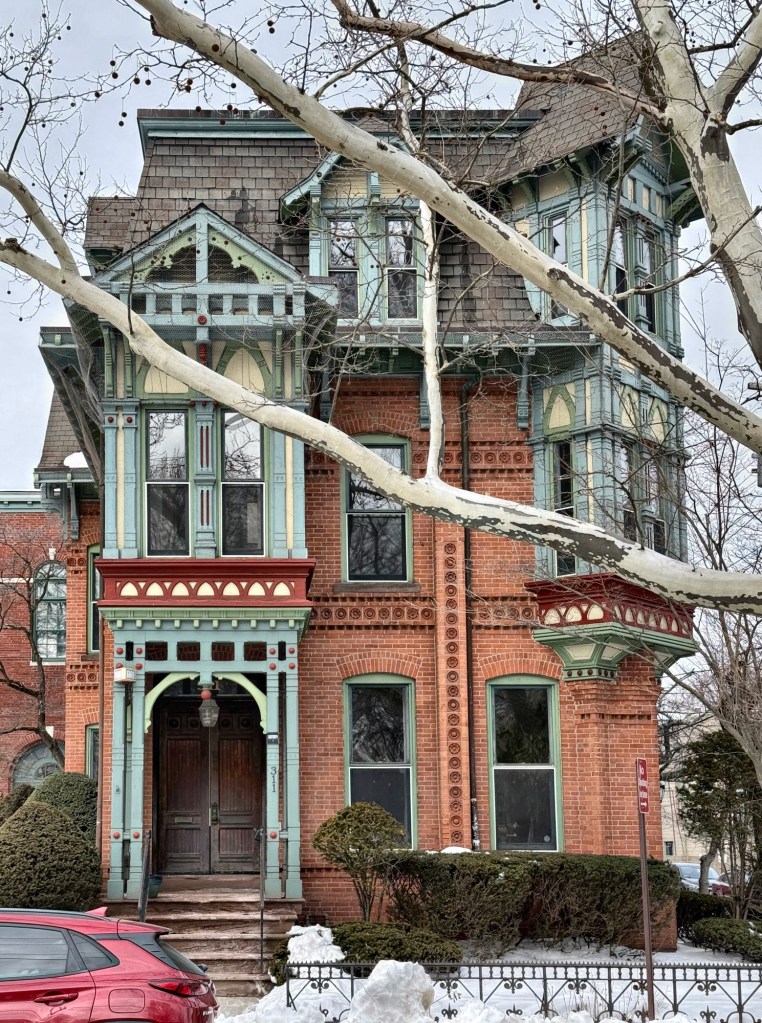
The Max Adler House on Greene Street in New Haven’s Wooster Square neighborhood is a flamboyant example of Victorian-era residential architecture that is hard to classify as an architectural style. The residence was constructed in 1879 for Max Adler (1841-1916) a German-born Jewish immigrant who grew up in New Haven and became a leader in industry at a young age. Max founded the Strouse & Adler Corset Company, which is said to be the first corset factory in the United States. The company did very well and he was able to erect this residence overlooking Wooster Square park for his family. Architecturally, the house has a mansard style roof, a feature of the Second Empire style; applied stickwork in the wooden bays, porch and dormers, a feature of the Stick style; and embroidered panel brickwork and terra cotta, elements of the emerging Queen Anne style. The Adler House has been lovingly preserved and is one of New Haven’s finest Victorian-era residences.

Frank J. Dutcher House // 1904

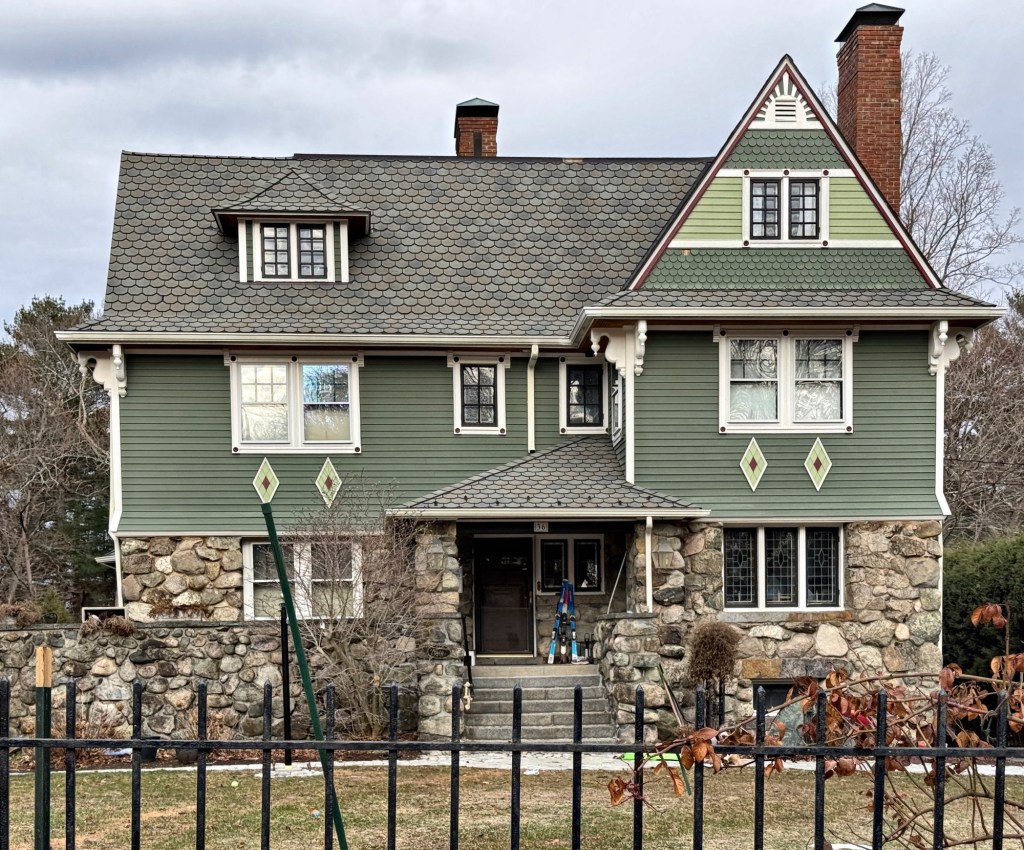
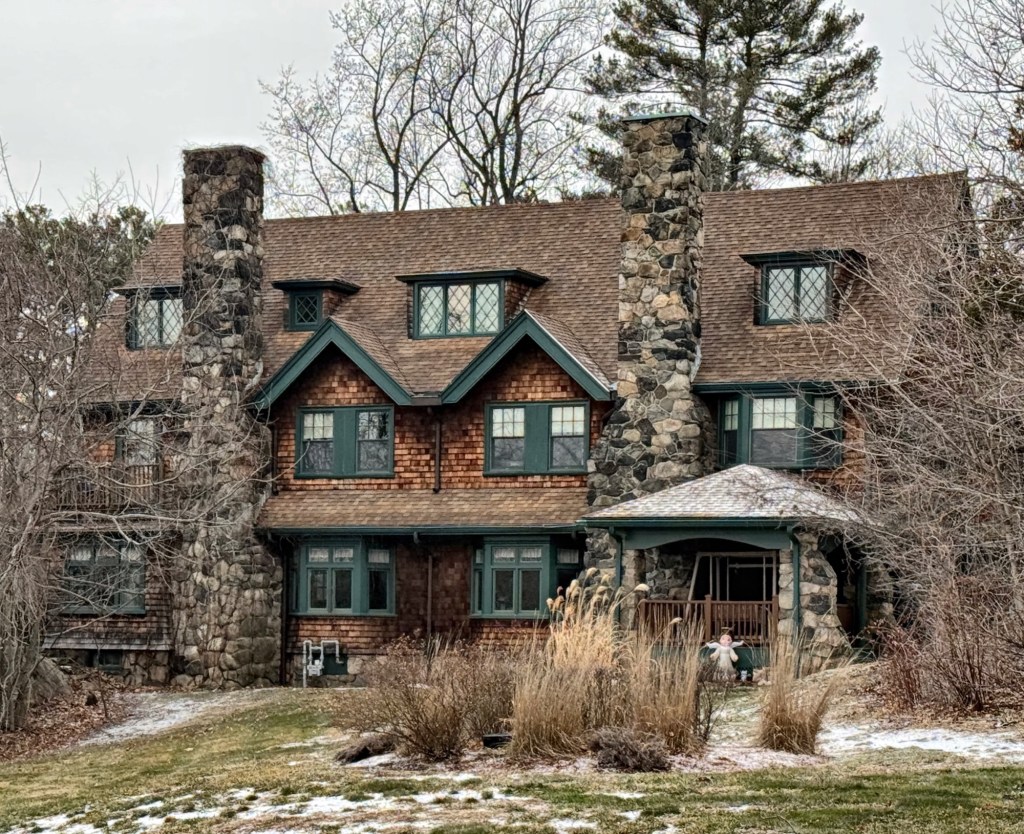
Located on Adin Street in Hopedale, this excellent turn-of-the-century mansion was built for Frank Jerome Dutcher, a manufacturer who worked for his father’s company before selling it to the Draper Corporation, later becoming a wealthy salesman. Blending Shingle, Queen Anne, and Arts and Crafts styles, the Frank J. Dutcher home sits atop a rock ledge and was designed by architect, Robert Allen Cook, who designed other buildings in town for the Draper Corporation and community, behind his original home that burned in 1903. The home features two massive fieldstone chimneys, shingled siding, and a series of dormers and bays that provide a rich dialogue along the long street-facing facade. In the mid-20th century, the property became a nursing home, known as Oakledge Manor. The building was recently bank-owned and it is unclear if the building was converted back to a single-family home, or remains a housing facility.

Nora M. Swift House // c.1902

One of the few high-style, early 20th century homes in Warren, Rhode Island’s Downtown/Waterfront neighborhood, can be found on Washington Streetjust steps from the community’s vibrant Main Street. The handsome residence was built around 1902 for Dora Martin Swift, a widow of Edward A. Swift (1812-1895) a sea captain and whaler in the mid-19th century. Dora’s home exhibits a blending of Victorian-era and Colonial Revival styles with the varied shingle and clapboard siding, asymmetrical porch, and flared shingles between floors showcasing Queen Anne style influence and the portico, swag and wreath motifs, and symmetrical center-hall plan showcasing the emerging Colonial Revival style influence. The property has been well preserved and appears to have been the work of a successful builder or architect. 

Charles Storrow Rental House // c.1884

This charming and quirky Queen Anne style house on Edgehill Road in Brookline was built as a rental property on the estate of Charles Storrow (1841-1927), a wealthy businessman who lived in his home next door (see last post). Like his own home, the residence was designed by Edward Clarke Cabot, his wife, Martha’s father, who utilized varied materials, forms, and roof shapes to create a unique composition unlike anything else in the neighborhood. The bulbous central tower and eyebrow and wall dormers also add intrigue to the design.