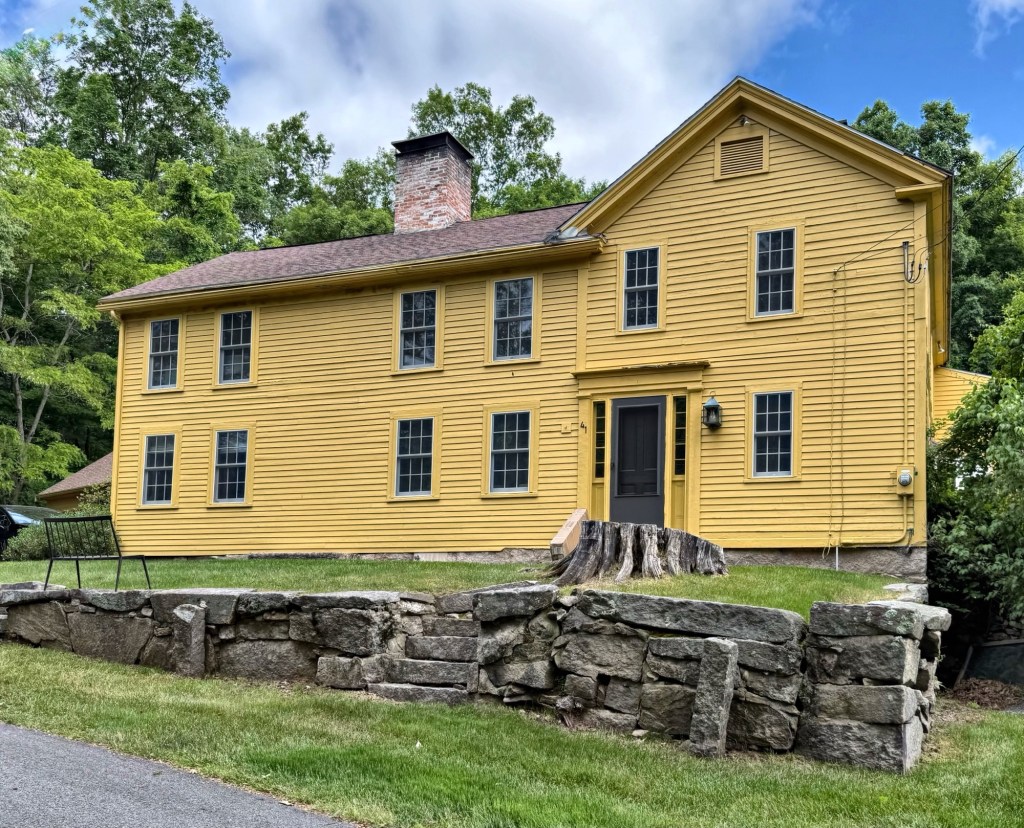
Ludo Poole House // 1829

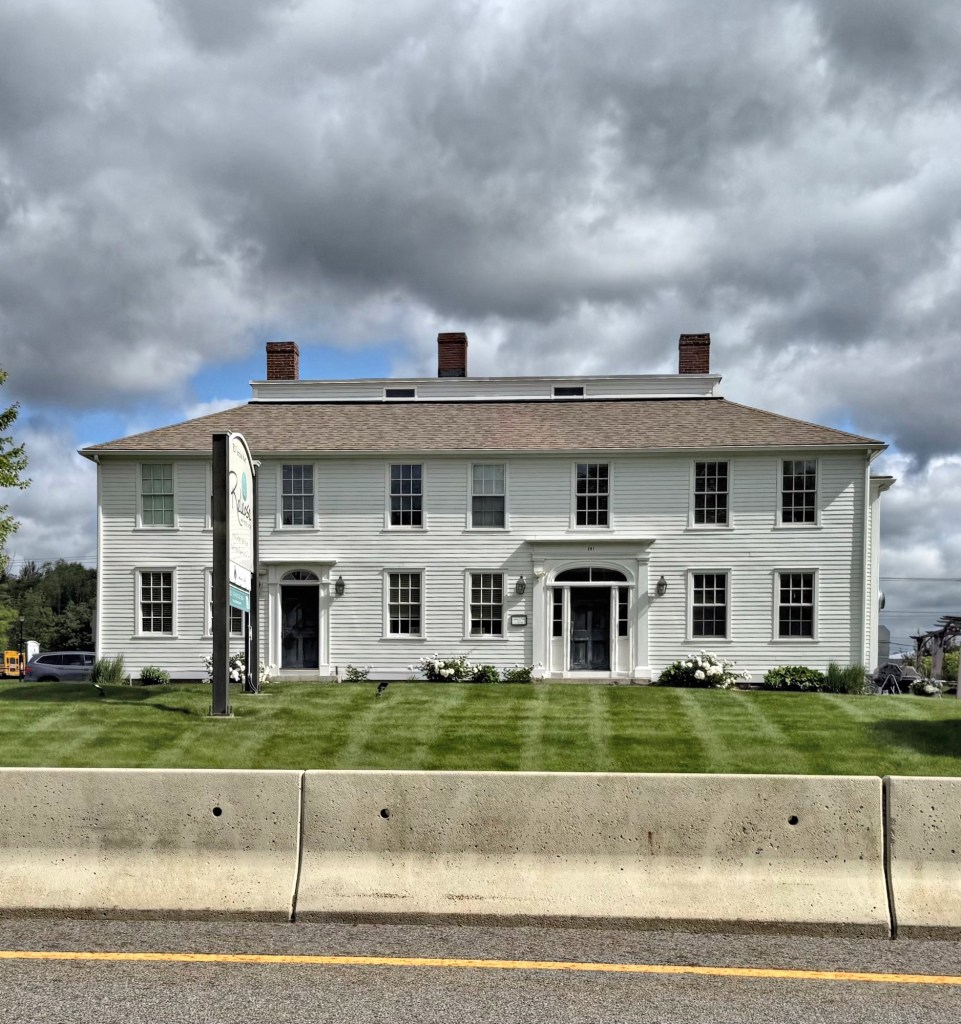
Rockland, Massachusetts, was first populated by European settlers in 1673 as the northeastern region of the town of Abington. The town separated and incorporated as Rockland in 1874, due, in part, to issues on how the town spent its tax dollars on schools. The town name was likely selected due to the rocky soil found there, which was better-suited for mulls and industry than for farming. The Ludo Poole House, seen here, was built in 1829 at the corner of Union and Exchange streets, at an intersection which became known as ‘Poole’s Corner’. The house was built for Mr. Ludo Poole (1803-1870) and his new wife, Mary Josselyn Poole, who would raise eight children here. The property was inherited by the couple’s eldest son, Ludo Augustus Poole, who worked at a local shoe manufacturer and served in the American Civil War. The property remained in the Poole family until 1951. The property was owned in the late 20th century by John Burrows, who renovated the interior thoughtfully to blend original Federal-period elements with English Arts and Crafts style.

Highfields Estate // 1821

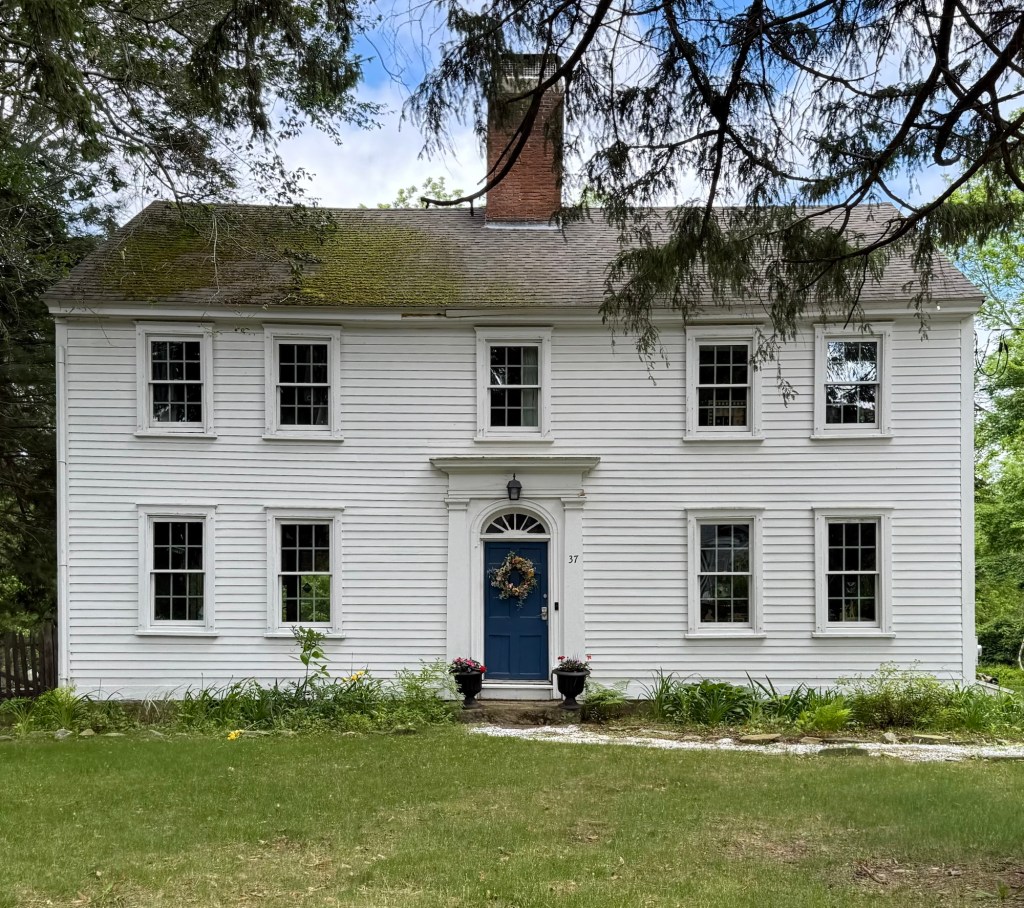
Constructed in 1821 for Joshua King (1783-1849), this Federal style mansion is one of the last country estates in Abington, Massachusetts. Joshua King was a Deacon of a local church and a well-to-do citizen in town, living nearby until a hurricane blew the roof off of his former house. Seeking to rebuilt a new, more substantial family home, it is said that Joshua required that this house would be built to last centuries, with some residents stating that the roof structure itself had enough timber to build a second home. The Federal style mansion has three chimneys with 12 fireplaces inside, and is set amongst rolling fields bounded by old stone walls, likely giving the property its name, “Highfields”. The property was later converted to a duplex, but retains much of its original design at the exterior. 

Joseph Cleverly House and Shop // 1832

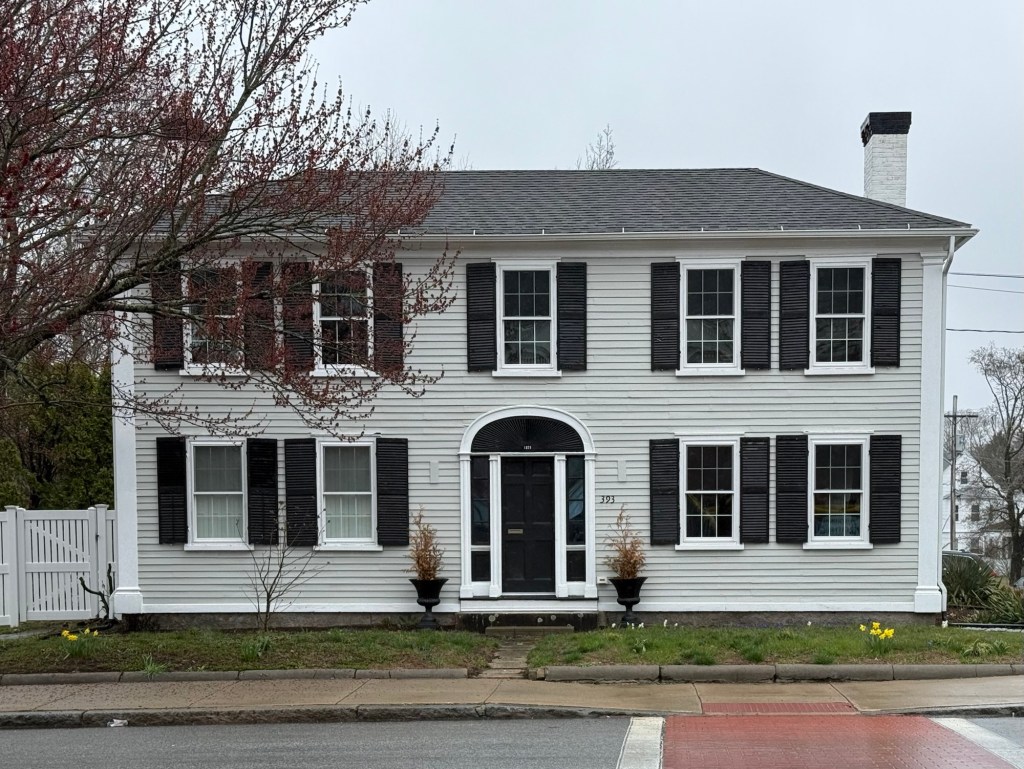
This late example of a Federal style five-bay house is located at 78 Adams Street in Abington, Massachusetts. The house was constructed in 1832 for Joseph Cleverly (1797-1888), a shoe manufacturer who married Sally Gloyd, the daughter of a wealthy shoe manufacturer in town. Mr. Cleverly built the adjacent stable and shop where he held his horses and manufactured his products. The vernacular barn/shop is a rare survivor of the type and is a visual representation as to the importance of shoe manufacturing for the town of Abington.

Captain John Clark House // 1802

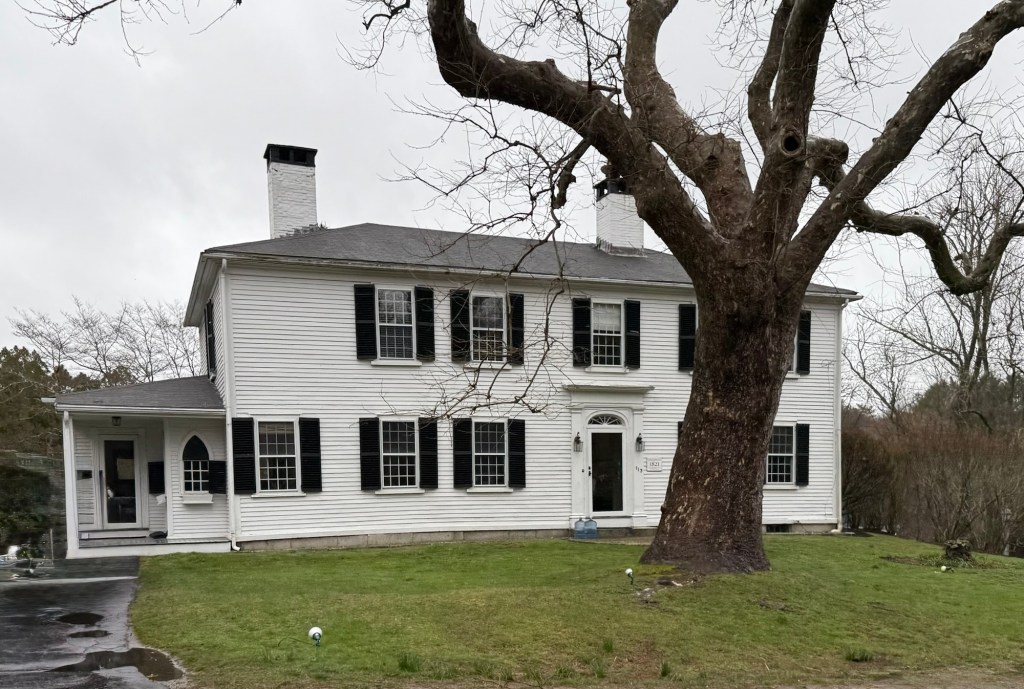
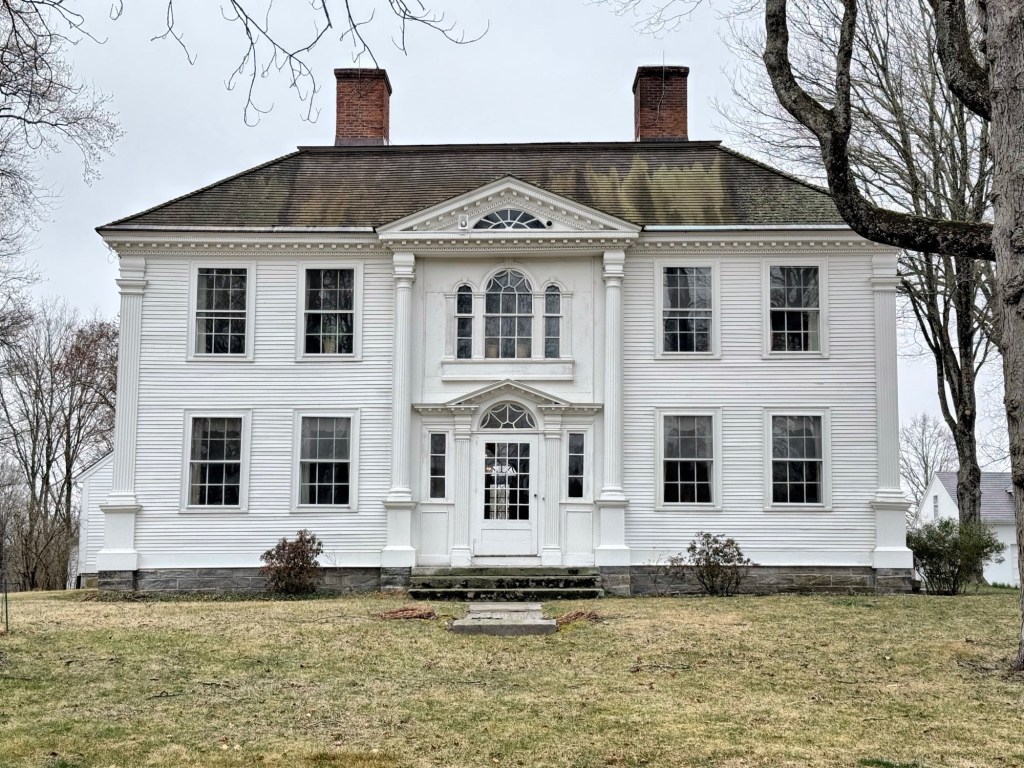
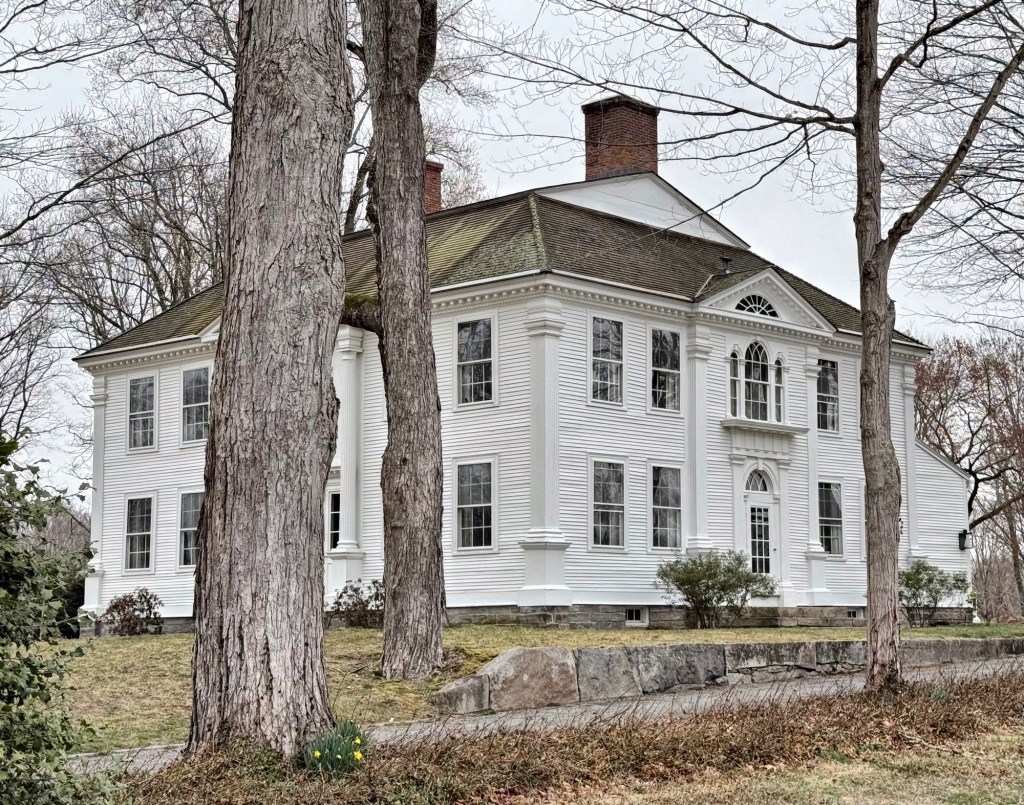
The Captain John Clark House in Canterbury, Connecticut, is one of the finest examples of the Federal style of architecture in New England, and has remained in a fine state of preservation since its construction in the early 19th century. The house was built by 1802 for John Clark (1731-1834), who purchased an earlier home on the site from and had it either taken down or enlarged to its present appearance. The mansion is symmetrical with five bays, central entry and twin chimneys projecting through the hipped roof. The central bay is a showstopper with its triangular pediment at the roofline containing a fanlight, Palladian window at the second floor, and main entrance with its own pediment, sidelights, fanlight transom, all framed by two-story columns. The house’s south facade is equally beautiful with its own Palladian window and entrance.

Dr. Andrew Harris House // c.1820

This house is located across from the iconic Prudence Crandall House in Canterbury, Connecticut, and is another excellent example of a high-style Federal home in the town’s main village. Built in circa 1820, this residence was the home of Dr. Andrew Harris (1787-1840), one of two physicians in Canterbury in the early 19th century. After Dr. Harris’ death, the property was owned by Hiram and Nancy Waldo, who altered the house with the addition of a Victorian observatory at the rear, two-over-two sash windows, and an entry porch with paired door entrance.

Turnpike House // c.1810

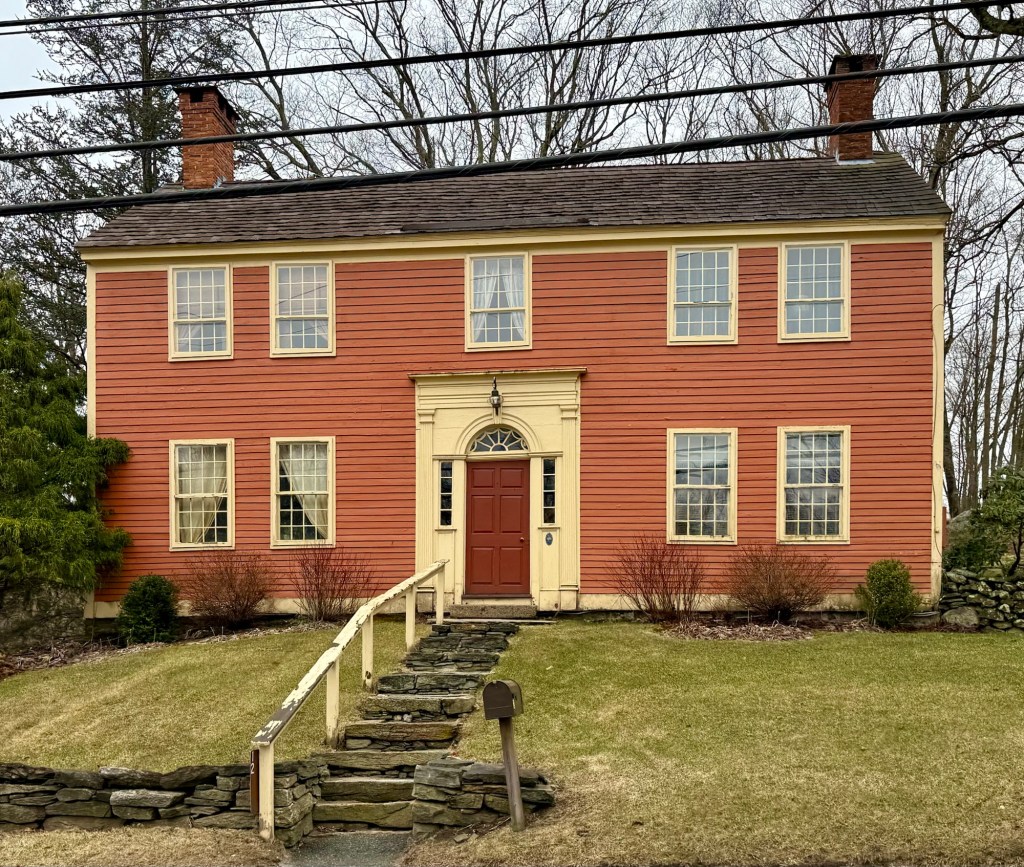
This house in Canterbury, Connecticut, is known as the Turnpike House and dates to the early 19th century. A great example of a Federal style residence, the symmetrical, five-bay home exhibits pair chimneys, multi-light double-hung windows, and an elaborate center entry with sidelights and fanlight transom. The house was built along the Windham Turnpike (now Connecticut Route 14), which was an early toll road established in 1795. Behind the main block of the house is a squat gambrel-roofed ell, that is believed to be made from an older house that previously stood on this site, perhaps dating as early as 1745. According to tradition, this early house, which was also at one time supposedly used as a jail, was the home of Rev. Dr. James Coggswell when he ran a school for boys in Canterbury. One of his pupils at that school was Benedict Arnold, the infamous turncoat.

Perkins-Monroe House // 1811

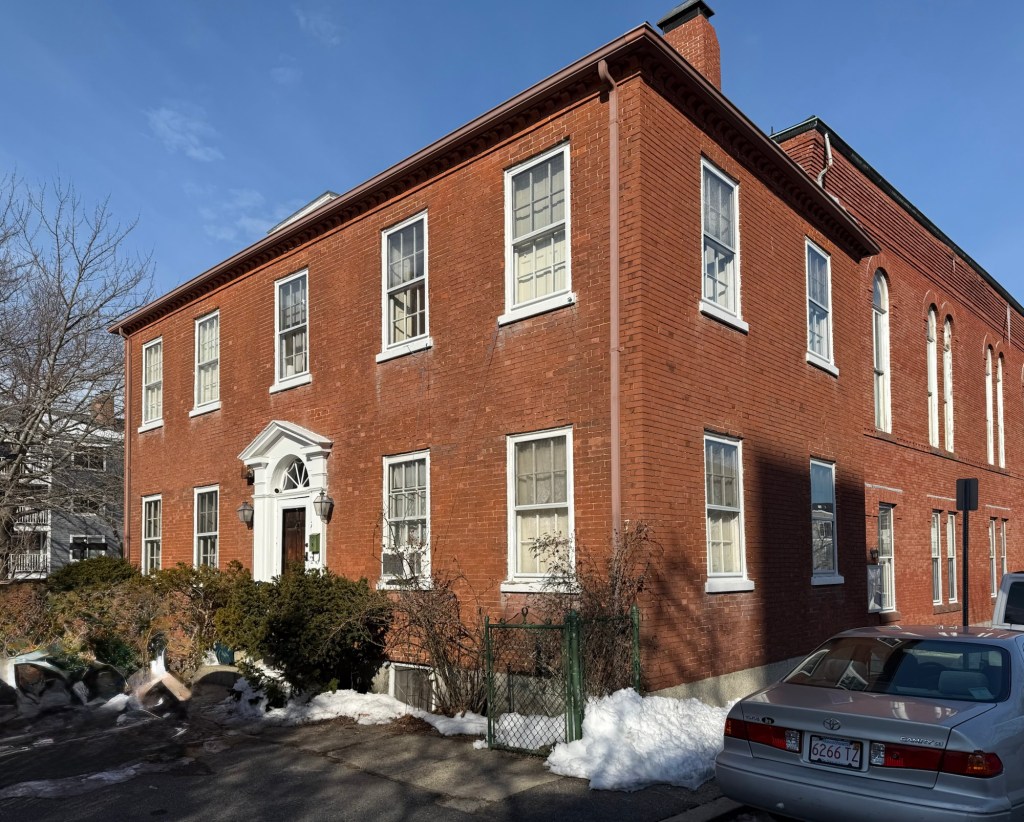
This brick, Federal style house, is located adjacent to the First Universalist Church of Salem amongst a sea of urban renewal-period housing, and is a reminder for Planners to think about the long-term implications in their work. This house was built in 1811 for Thomas Perkins, a local merchant whose brother was its first occupant. After successive ownership throughout the 19th and early 20th centuries, in 1950, Bessie E. Monroe purchased the premises and moved into the home. When the city began urban renewal planning for the area in the 1960s, the building was occupied by Bessie Monroe, who at the time was an elderly woman. The Salem Redevelopment Authority acquired the house through eminent domain and the house was targeted for demolition. The Redevelopment Authority, concerned with how relocation would affect Bessie Monroe’s health, decided to take the property but allow Mrs. Monroe to live there until her death. This decision delayed the planned demolition of the building, even though all other targeted properties were demolished. Luckily, the renewal plan changed its focus from new construction to restoration of existing buildings between the time of the taking and Bessie Monroe’s death. The building was then sold to an owner interested in restoring the structure, now the building is listed on the National Register of Historic Places and is a testament to the benefits of preservation over short-sighted planning policy. 

Tavern Club // c.1819

This is your reminder to get lost and explore your city or town. Tucked off Boylston Street sits Boylston Place, a short, dead-end way that is passed by thousands every day, many not knowing about the little enclave of surviving 19th century buildings there. This Federal period house was built in the 1810s for Beza Tucker (1771-1820), who rented the home to boarders until his death in 1820. Tucker bequeathed the house to the American Society for Educating Pious Youth for Gospel Ministry, a nationwide association formed in 1815 with the goal of providing financial support to men seeking a theological education. The Society sold the house in 1834 to Reverend Nehemiah Adams, when he became pastor of the Essex Street Church in Boston. Since 1887, the building has been the home to the Tavern Club, a venerable Boston social and dining club that was invite-only. Presidents in the early years included William Dean Howells, Charles Elliot Norton, Henry Lee Higginson. Inside, the eclectic English pub/Colonial interior with its cozy atmosphere included dining rooms, sleeping accommodations for guests, and a small theatre for annual club productions. The Tavern Club is still in operation and maintains the building today. I can only imagine how great the interior is!

Barnes-Kellogg House // 1809

The main village in Cornwall, Connecticut, looks like a postcard. Mature trees and beautiful, historic homes line the bucolic streets with sweeping views of the Litchfield Hills in the distance; it is what many envision when they think of “New England charm”. This stately Federal style mansion is sited deep on its lot beyond a field and dates to the first decades of the 19th century, it is the village’s grandest early home. The house was built for Amos Barnes, but supposedly remained unfinished when he died suddenly. Barnes’ widow sold the property to the local Foreign Mission School as a dormitory for students. The school’s (in my opinion, problematic) mission was to educate students of non-Christian cultures, including Native Americans, East Asian, and Hawaiian pupils, for them to become missionaries, preachers, translators, teachers, and health workers in their native communities in the Christian faith. These types of programs furthered the erasure of other cultures and promoted Christianity in all corners of the world, but I digress. In 1826, this home was acquired by Frederick Kellogg, the long-time town clerk and Judge of Probate, who owned the property
until his death in 1891.

John Northrop House // c.1814

Cornwall’s Foreign Mission School, which began operations in 1817, was virtually unique in the United States, educating both Native Americans and young men from around the globe, including Hawaiian, Bengali, and Japanese. The school was created for the purpose of educating youths of “heathen” nations, to convert them to Christianity, educate them, and train them to become preachers, translators, and teachers back in their native lands. The problematic nature of the school’s seemingly forced assimilation, causing the erasure of cultures, paired with the disdain for foreign students in town lead to much animosity towards the school in Cornwall. The tension reached a head when in 1824, John Ridge, a student at the Foreign Mission School and the son of a Cherokee leader, began a courtship with Sarah Northrop, the white daughter of the school’s steward. A year later they married. Additionally, in 1826, another Foreign Mission School student, Elias Boudinot (John Ridge’s cousin), fell in love with a young Cornwall girl named Harriet Gold, they married in 1826. These marriages were generally opposed to and racism caused support for the school to dissolve, closing by 1827. This c.1814 house was the home of John Northrop, the father of Sarah Northrop, and steward to the Foreign Mission School. The family home, seen here, was also used to house some students while they attended the school. The Northrop House remains one of the few extant buildings with direct ties to this school. The house is one of 65 National Historic Landmarks in Connecticut.