Warren Baptist Church // 1844

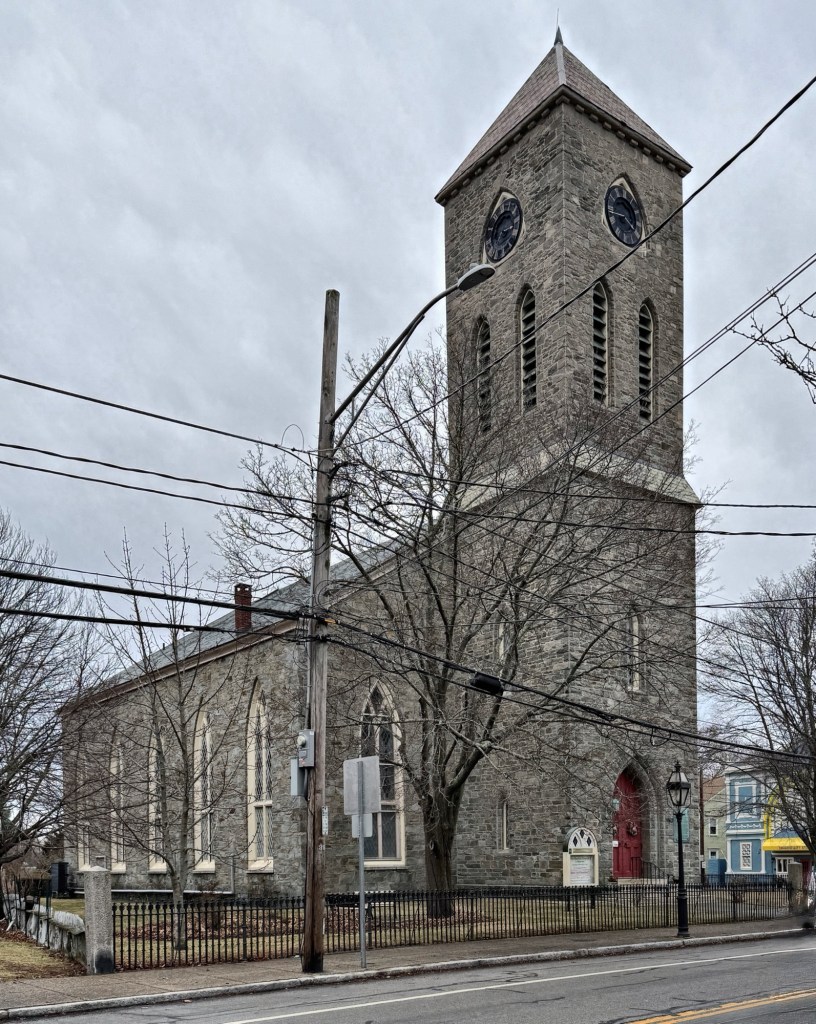
The Warren Baptist Church on Main Street in Warren, Rhode Island, is a landmark example of an ecclesiastical building in the Gothic Revival style completed in stone. Like many communities in Rhode Island, Baptists in Warren, were the first and largest denomination in the community, dating back to the 18th century. The congregation’s first purpose-built church was constructed in 1764 and was burned by the British in 1778 as they left Warren. Its replacement (1784) was demolished for the present building sixty years later. Interestingly, this site is significant additionally as the site of the founding of Brown University. as when Reverend James Manning was called in 1764 to take over the congregation and its new church building, he did so with the proviso that he could open a school for the training of Baptist ministers because all existing colonial colleges at the time provided for training only in the Congregational and Episcopal ministries. The school was located behind the present location of the church and it spent its first four years here in Warren, holding its first commencement in that church until the new school (and Reverend Manning as president) were lured to Providence, where Brown University has remained ever since. The present Warren Baptist Church was built in 1844 and was designed by famed Rhode Island architect, Russell Warren, who is best-known for his work in the Federal and Greek Revival styles, but here shows his expertise and skill in the Gothic mode. The building is notable for its lancet-arched windows and belfry with narrow lancet arched louvered windows set below the clock faces set in triangular trefoil tracery. The congregation also maintains Tiffany windows donated by members of the church.

Clara Hall Elliott Memorial Church // 1909

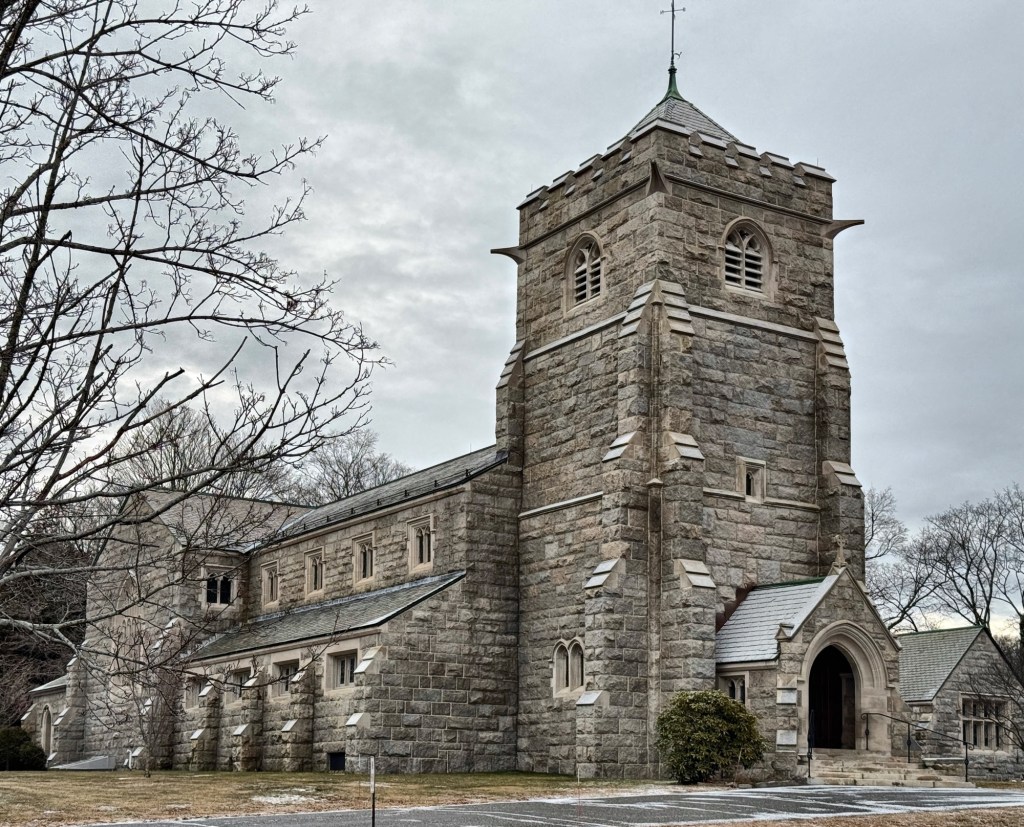
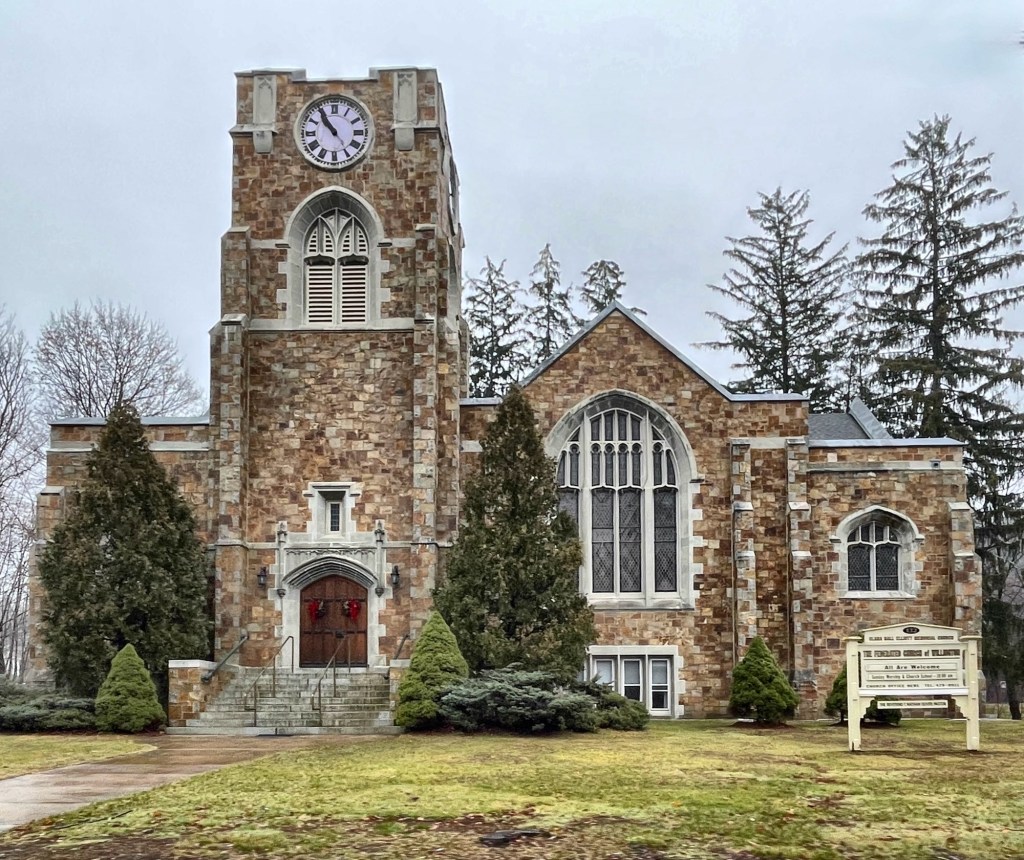
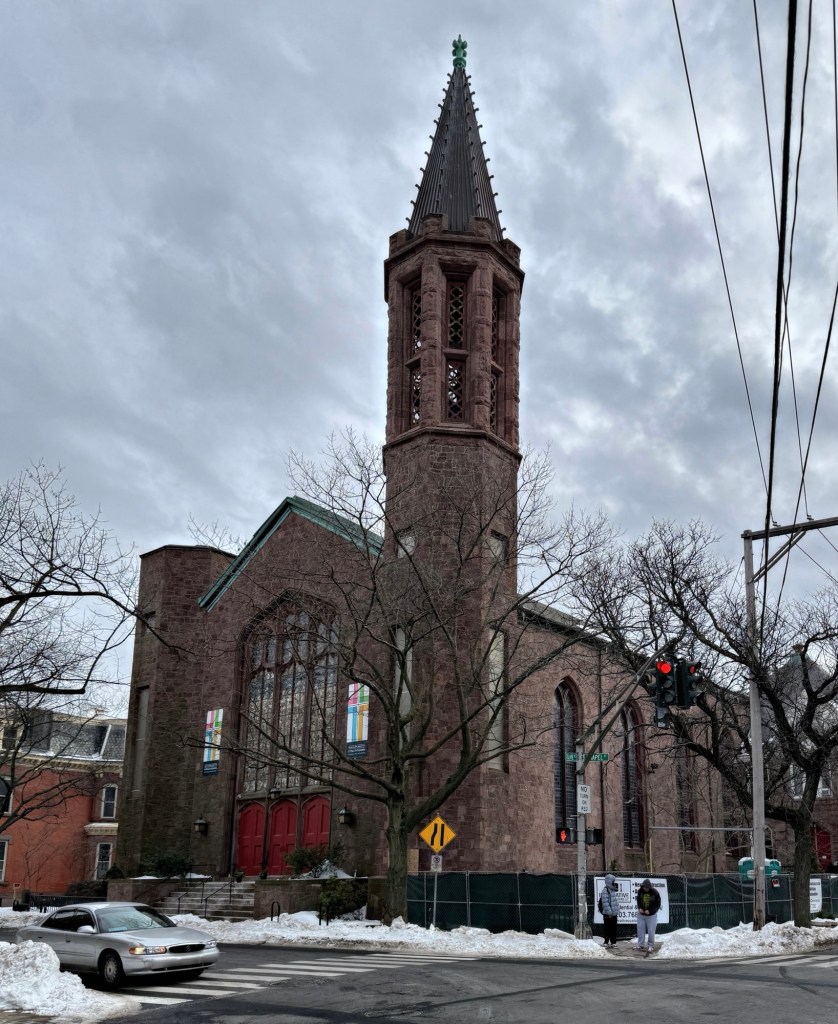
This handsome stone church in South Willington, Connecticut, was commissioned in 1909 by Gardiner Hall Jr., a terminally ill industrialist, in memory of his late daughter Clara, who tragically died in 1899 at the age of 30. The church was used by area residents, many of which included mill workers hired to work at Mr. Hall’s factory nearby and lived in mill housing just behind this church. Following the construction of this Memorial Church in South Willington, Baptist and Congregational Churches of Willington merged to form the Federated Church of Willington, which has worshiped at this location ever since. Neo-Gothic Revival in style, the church is constructed of multicolored random ashlar sandstone with limestone trim and features a corner clock tower with belfry, buttresses, stained glass windows, and limestone tracery. The church was designed by Boston architect, Thomas Marriott James and was completed by 1911.

Church of the Advent // 1878

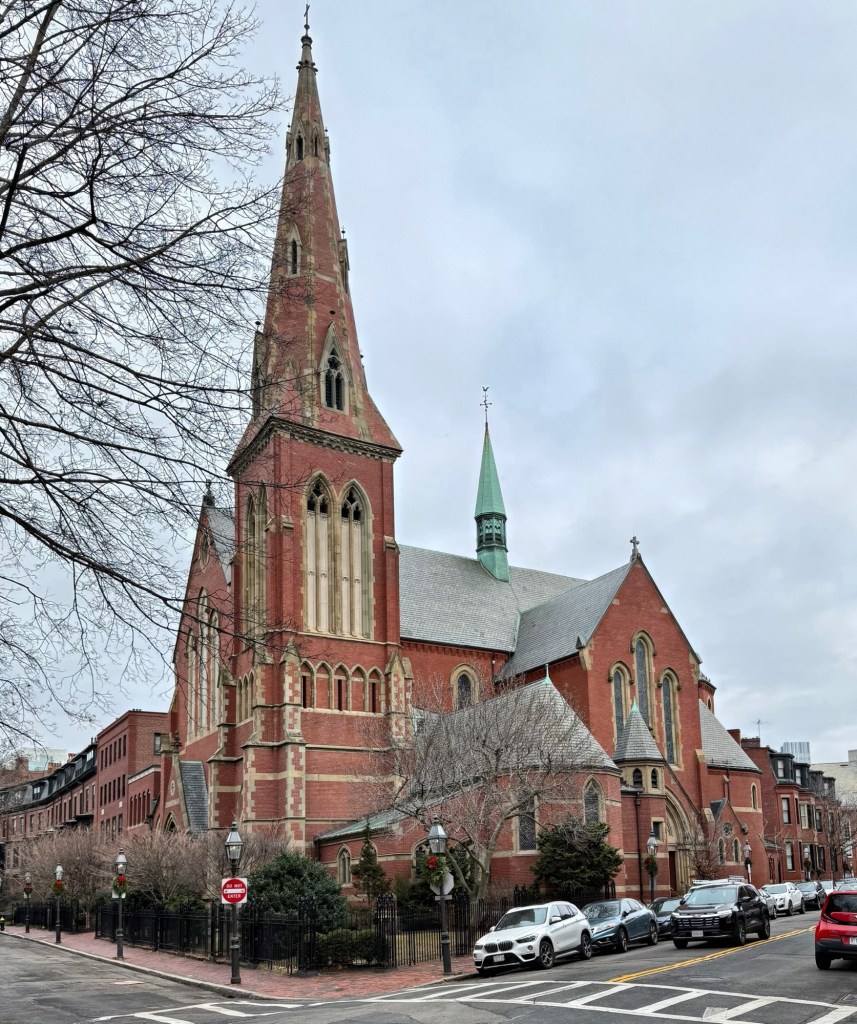
The Church of the Advent in Beacon Hill, Boston, is a landmark example of a church designed in the Victorian Gothic style with strong English influence. The congregation, established in 1844, purchased a large corner lot at Brimmer and Mount Vernon streets on the newly made filled land west of Charles Street in Beacon Hill Flat, to construct their new church. In 1875, John Hubbard Sturgis, a Boston architect and parishioner, began designing the red brick with sandstone-trimmed church set on a corner lot with dominant corner tower and octagonal steeple. Construction began in phases beginning in 1878 and took years until the steeple was completed in 1888. Before its completion, John H. Sturgis died and his nephew, Richard Clipston Sturgis, oversaw the completion of the church, which became somewhat of a memorial to his late uncle. Following the completion of the Church of the Advent, Sturgis’ widow, extended family and clients donated a major portion of the interior art, stained glass windows, and furnishings. The polychromatic exterior in red and charred brick mixed with sandstone trim appears to have been inspired by his designs for the original Boston Museum of Fine Arts (1876, demolished in 1911.) The Church of the Advent in Boston is one of the finest ecclesiastical buildings in New England and is the master-work of one of America’s great architects.

St. Mary of the Assumption Catholic Church, Brookline Village // 1880

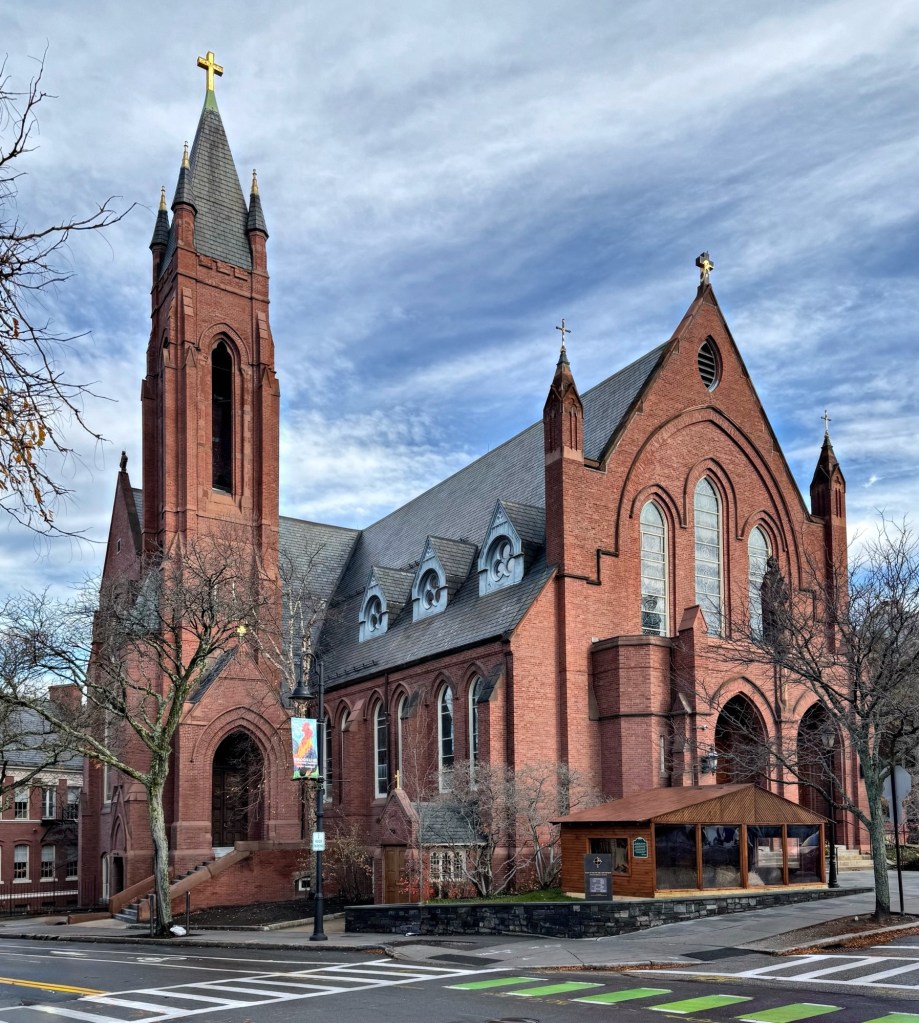
St. Mary of the Assumption church was the first Catholic Church established in Brookline, Massachusetts, in 1852 when a congregation of Catholics began to congregate to worship together at the old Lyceum Hall. The congregation primarily consisted of Irish immigrants who settled in Brookline, where they often found work at the many large estates and building the new branch railroad in town, but desired a true house of worship close to their homes. By 1853, a modest wood-frame Gothic Revival style church was built in the Village, but was quickly outgrown. In 1873, the pastor of the congregation, Irish-born Rev. Lawrence Morris (1845-1900) began purchasing land at the corner of Harvard Street and Linden Place to establish a new church, large enough to comfortably fit the congregation and various church-related buildings. In 1880, the firm of Peabody & Stearns was hired to furnish plans for the Victorian Gothic edifice in brick and brownstone. Although the church was designed in 1880, it was not dedicated until 1886, and at this time, Pope Leo XIII sent a chalice to the Parish in honor of the completion of this church, the first in America to be named Saint Mary of the Assumption.

Immanuel St. James Episcopal Church // 1843

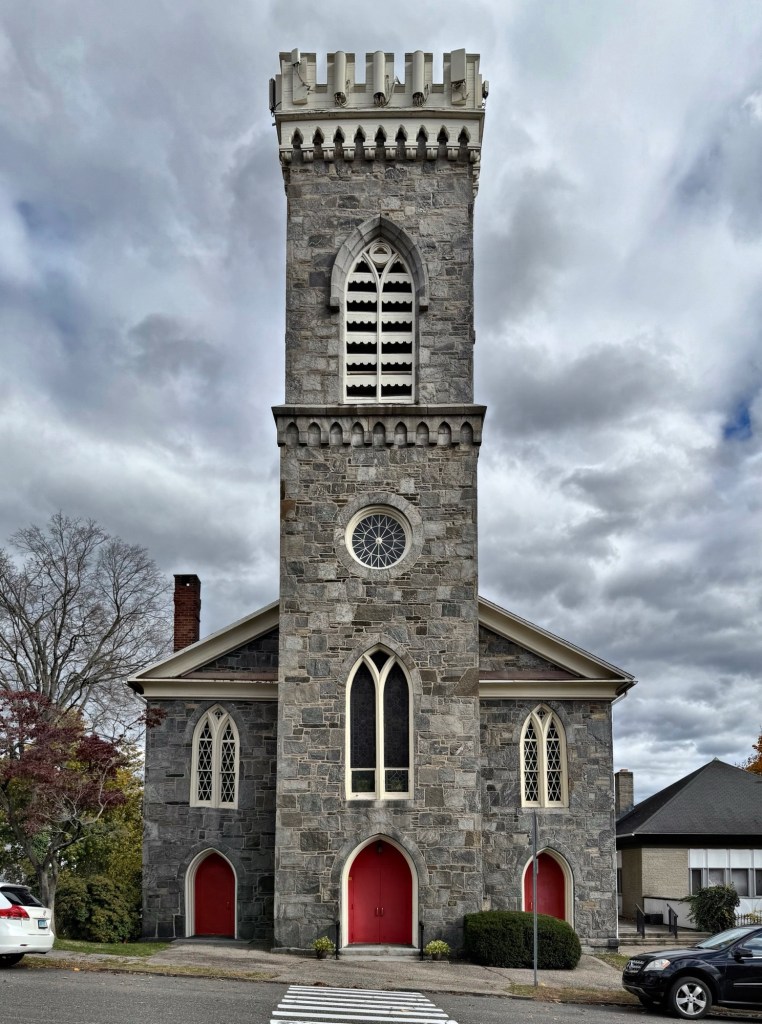
The Gothic Revival style Immanuel St. James Episcopal Church of Derby is a landmark example of the style in this part of Connecticut and serves as the eastern anchor to the Birmingham Green in town. The church dates to 1843 and was built by The stone church was was built by stonemason, Harvey Johnson and Nelson Hinman, a carpenter. The land for the church was donated by Sheldon Smith and Anson G. Phelps, wealthy industrialists in town. The building originally had a wooden steeple, which was replaced by the present stone belfry in 1853. The church merged with another area congregation, which together, have preserved this significant structure, though the communications antennae on the battlements on the belfry is unfortunate.

Bow Bog Meetinghouse // 1835

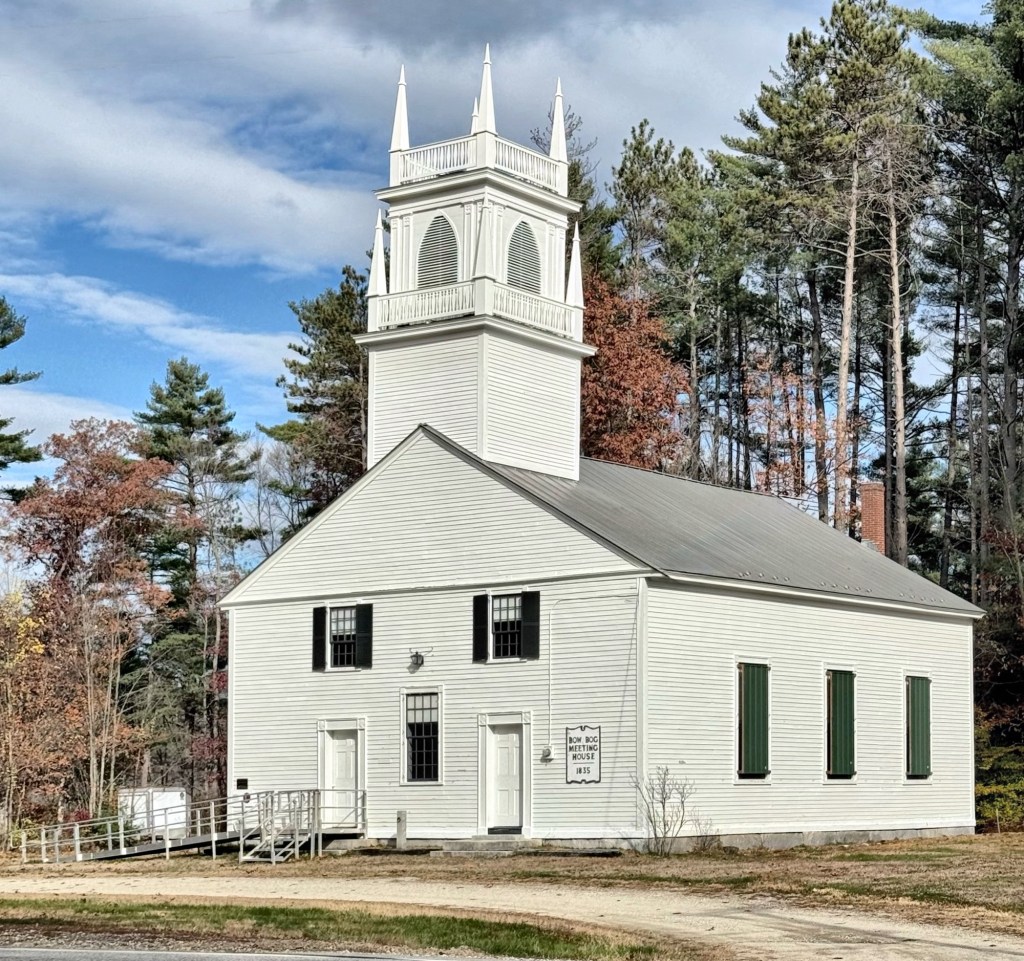
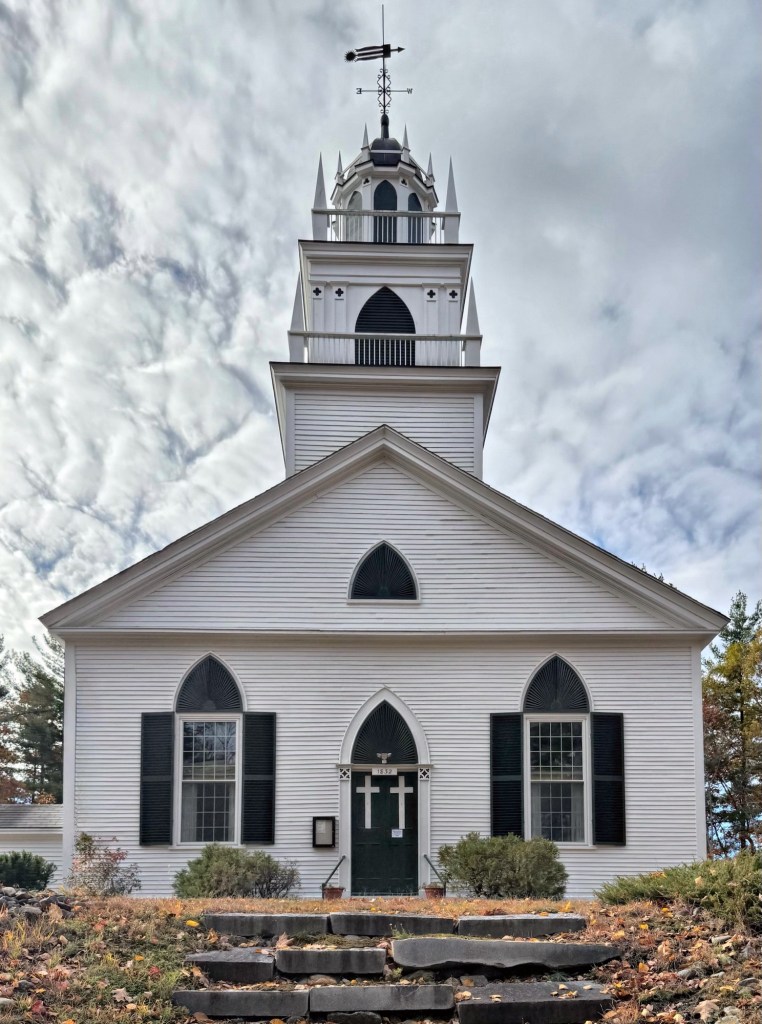
The Bow Bog Meetinghouse in Bow, New Hampshire, was built in 1835 for the First Methodist Episcopal Church and Society in town. Designed in the Greek and Gothic revival styles, the traditional form and paired entries with two stage belfry is adorned by finials and pilasters, showcasing an elegant blending of these two styles. built by George Washington Wheeler for the First Methodist Episcopal Church and Society of Bow in 1835. Mary Baker Eddy, founder of the Christian Science Church, mentioned Reverend Orlando Hinds as a contributor to her early religious teachings. She maintained close ties with this Church, donating funds for the bell in 1903. The Church provided religious instruction and social activities for 116 years and in 1951, the Church was closed and the Bow Bog Meeting House Society acquired the building. In 1970, they restored it to nearly its original condition, and it was acquired by the town in 1985.

Bow Baptist Church // 1832

The Bow Baptist Church congregation was established in 1795 and reorganized in 1816. Prior to erecting its beautiful church building in 1832, meetings were held in member homes and the old Townhouse. Designed in the Gothic Revival style with some Greek Revival pilasters in the steeple, the church stands as an important early building for the community. Since its establishment, the congregation has advocated for causes of abolition and temperance and is presently known as the Crossroads Community Church, a non-denominational house of worship. Tragedy struck in 2018, when a lightning-strike hit the steeple, sparking an intense blaze that fire crews managed to prevent from spreading to the rest of the nearly 200-year-old structure. The steeple was completely destroyed, and the interior below sustained heavy water damage. Undeterred, the congregation worked to rebuild the steeple, bringing this nearly 200-year-old church back to her former glory.

Chester Baptist Church // 1835

The Baptists of Chester, Vermont, first built a wood-frame meetinghouse in 1788 for meetings and worship. The congregation here was established a year prior by Aaron Leland (1761-1832), a successful pastor and preacher, who settled in town with the task of building up a church there. Active in politics, Leland served in local offices including Town Clerk and Selectman, and was Windsor County Assistant Judge for eighteen years, he was later elected into the Vermont House of Representatives and served as Lt. Governor. After his death, the Federal style building was outgrown and sold by the 1830s. The original meetinghouse was moved to its current location across from the town’s Congregational Church and planning began for a new house of worship. The current Baptist Church, an impressive brick edifice in the Gothic Revival style, features a high slated spire that was likely added in the early 1870s, replacing a more traditional wooden crenelated tower. The 1870s spire was destroyed in 1953 and reproduced in 1999. The congregation here remains active and maintains the church well.

St. Stephen’s Episcopal Church // 1860

St. Stephen’s Episcopal Church is a landmark Gothic Revival church in Providence, Rhode Island, built in 1860 from plans by famed architect, Richard Upjohn. Constructed of gray stone with brownstone trim, the church is unique for its siting with the nave/long-side parallel to the street. The church was built for the local congregation, who two decades earlier, constructed the original St. Stephen’s Church on Benefit Street (now home to the Barker Playhouse), but sought to relocate to a more central location and in a more substantial building. With its entrance at one end and tower at the other, the nave is lined with a row of four gabled bays with lancet windows connecting the two. The church was modified over time, with Upjohn’s original intention for a 180-foot stone tower never undertaken, it would be capped by a copper-clad conical spire in 1900 from architects, Hoppin and Ely. The chancel was remodeled in 1882 by Henry Vaughan, and the Tudor Revival style Guild House immediately west of the church was built in the late 1890s Martin & Hall, architects. The congregation continues to this day, and preserves this significant building fitting of an English estate.

Holy Family Parish Church // 1882

In 1872, due to industrialization and increased numbers of immigrants settling in the area for work, it was decided that a new Catholic parish should be established in East Abington. Two years later, the village of East Abington incorporated as Rockland. It would be a decade later, in 1882, until the Holy Family Parish would be established, beginning planning of a true house of worship for the growing number of Catholics here. When the Holy Family Church was constructed in 1882, only a quarter of the Rockland’s approximately 4000 residents were Catholic at that time. Most of the original congregation consisted of Irish immigrants who worked in the town’s boot and shoe manufacturing industry. As the industry continued to flourish in the 1890s and 1900s, new shoe factories were built, bringing more workers to Rockland, including: Canadians, Italians, and British to the area. The town’s Catholic community grew as a result. The Victorian Gothic style Catholic church was built in 1882, with no known architect at this time. A complex of other buildings, including a school, rectory, and community center.