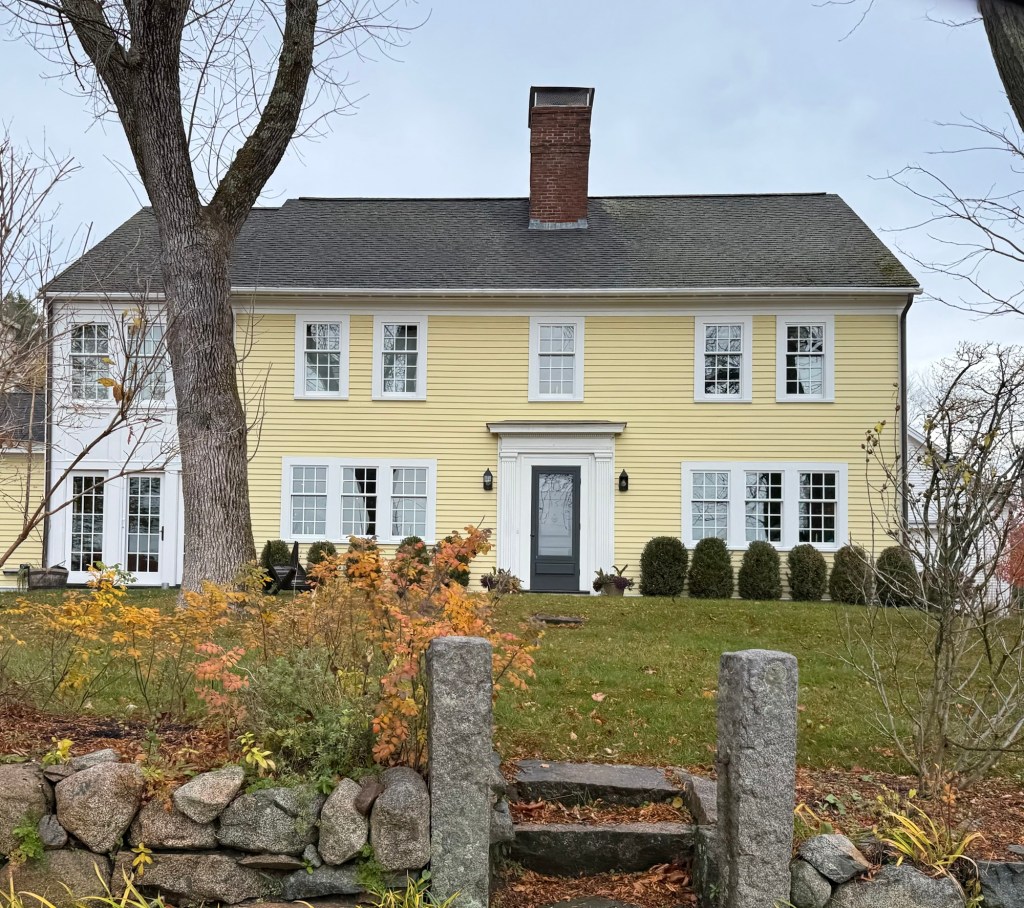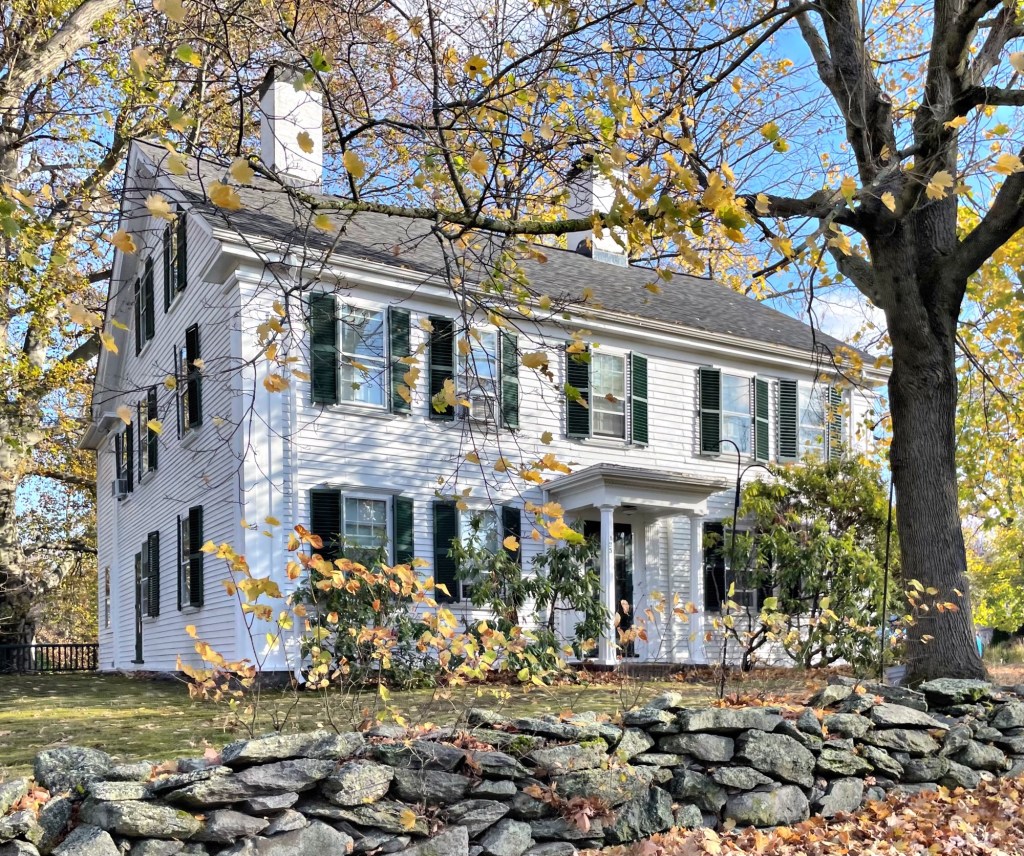
Benjamin Adams Farmhouse // 1775

Benjamin Adams (1750-1843) was born in Milton, but relocated to East Sudbury (later renamed Wayland) and purchased property here from a Bezaleel Moore, a tanner and farmer. Soon after moving to town, in 1775, he mustered with the minutemen under the command of Capt. Nathaniel Cudworth. After the conclusion of the war, Benjamin married Elizabeth “Betsy” Adams and they expanded the old farmhouse (today at 34 Lincoln Road) and raised their children here. The property remained in the family until 1873 when it was purchased and operated as a dairy farm. In the 1920s, the farmhouse was expanded with Colonial Revival additions and a renovation for use as a summer residence and gentleman’s farm. It is believed that some of the interior wood paneling inside the house was added at this time and was salvaged from the Pequod Inn, which was razed around that time.

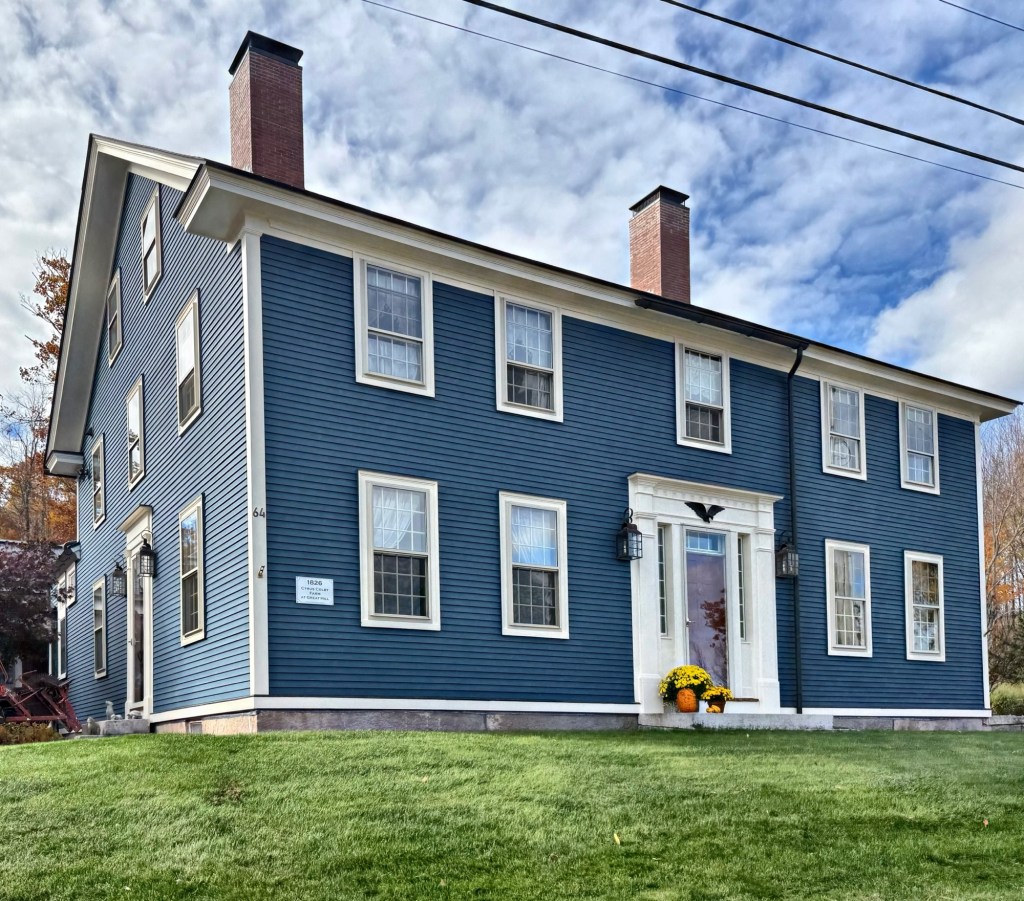
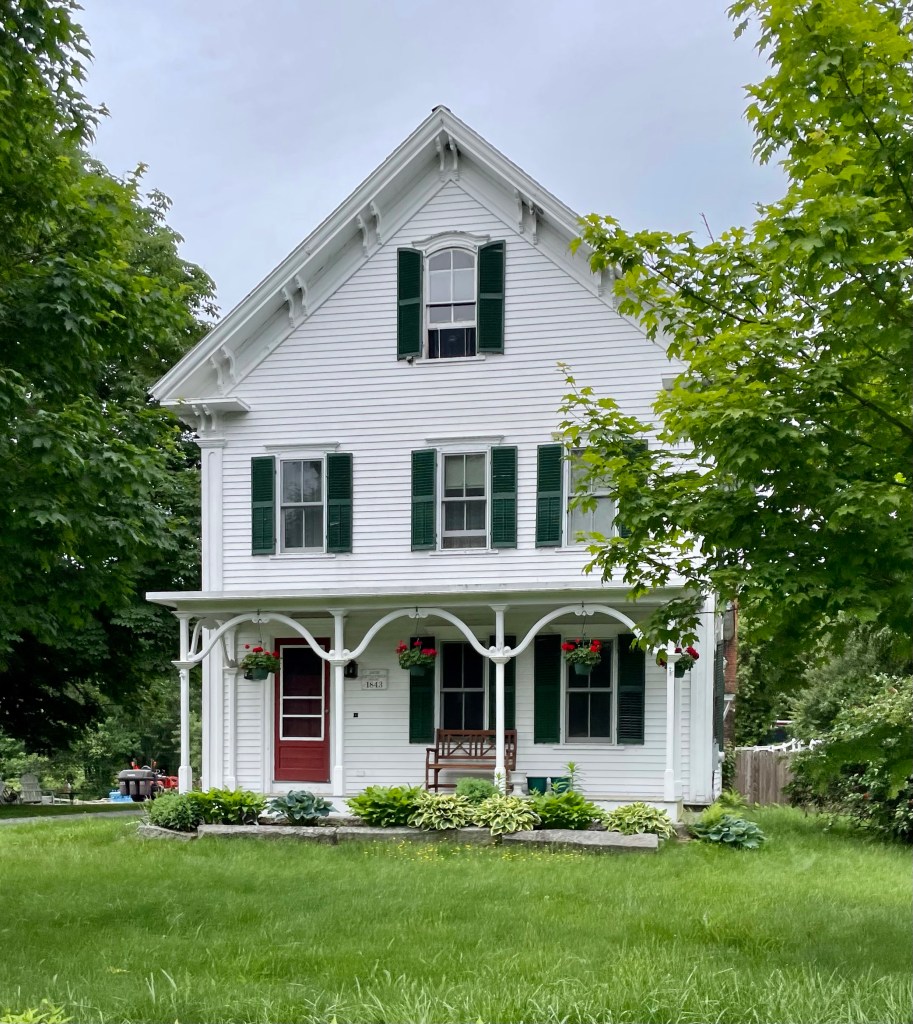
Cyrus Colby Farmhouse // c.1826

This historic farmhouse, tucked away on a quiet dead-end street in Bow, New Hampshire, is known as the Cyrus Colby Farmhouse. The residence dates to about 1826, and was likely built by Cyrus’ father, John Colby (1772-1836) and later inherited and occupied by his son, Cyrus. Cyrus Colby (1822-1900) lived at this house and farmed the land along the hillside and operated a successful family farm which included cornfields and grazing fields for their livestock with various barns on the property, notable for a post-and-beam dairy barn across the road that was built in 1878. The historic farm was purchased and restored, bringing the 200-year-old property a new life, suitable for modern living, while preserving the unique assemblage of farm buildings.

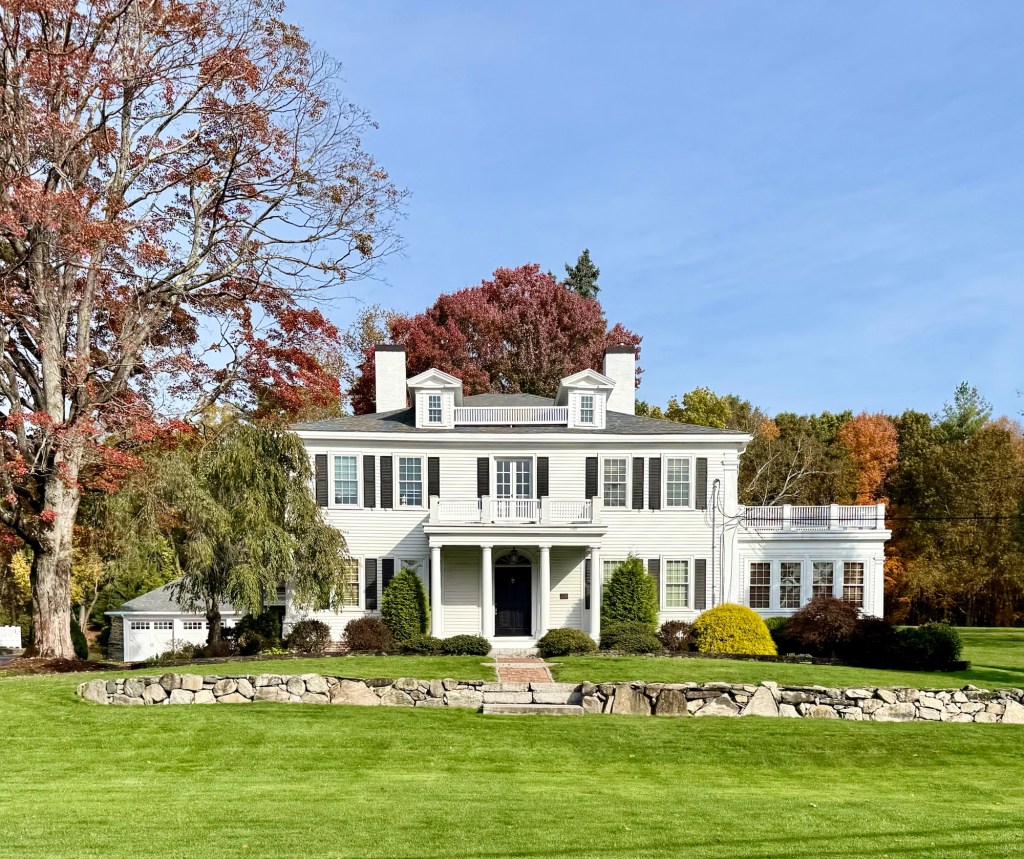
Captain Samuel Blood House // c.1793

This grand federal-period house was built around 1793 by Capt. Samuel Blood (1749-1834), who had served in the American Revolution. He came to Bolton from Lancaster by 1788, and purchased a farm here, where he began working as a hat manufacturer, building a large shop where he made beaver and silk hats. The land As his business grew, his original house was demolished to make way for this more stately, Federal-period home which dates to around 1793. Samuel Blood and his wife, Lucretia (Heywood) had twelve children. Their eldest son, Thomas (1774-1848) became a doctor and settled in Peterborough, New Hampshire, but returned to Bolton to take charge of the factory as his father got older. The family sold the home and the property, then about 120-acres, operated as a farm by subsequent owners. In 1916, the property was sold to Howard Atwood, who had been a successful Boston wool merchant, and he raised pedigreed cattle, thoroughbred horses, and sheep on this property, possibly as a gentleman’s farm. He and his wife, Rose, built a large new barn near the main house where they held many parties and barn dances over the years. The couple also renovated the old house, adding the dormers, porticos and side additions, creating the current composition we see today. The property has been owned by a corporation and appears to be offices today.


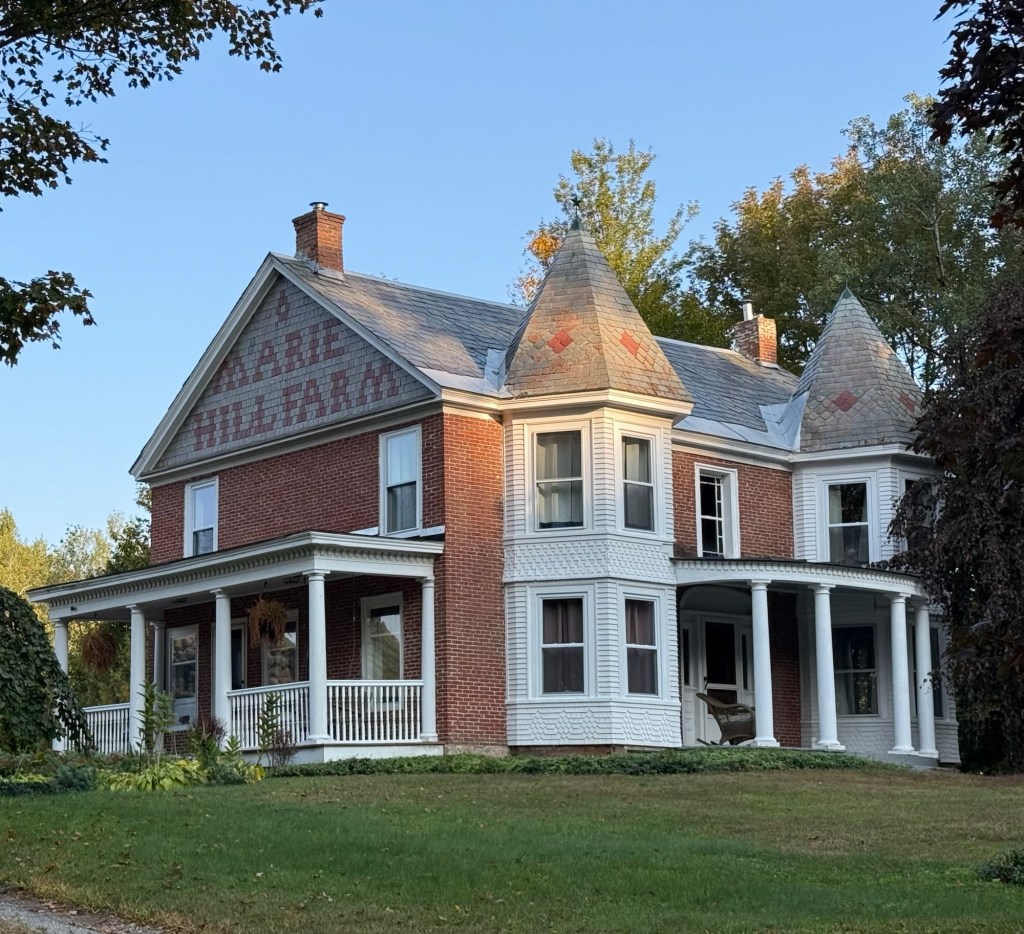
Marie Hill Farmhouse // c.1810

Located in the charming rural town of Andover, Vermont, the Marie Hill Farmhouse is one of the most interesting and charming residences in the area. Built around 1810, the brick farmhouse was designed in the Federal style, with a symmetrical five-bay facade, brick end chimneys, and a fanlight over the front door. The property was purchased by New Yorkers, Laurence Pfluger and his wife Mary “Marie” Pfluger, who operated the farm, raising dairy cows. Laurence would ship eggs, dairy and meat to his market in New York from this farm, which did quite well financially. The farmhouse was “modernized” by the turn of the 20th century with the addition of the two-story octagonal towers on the facade, front and side porches, along with the decorative slate spelling out “Marie Hill Farm” after his Marie Pflueger. The residence was later converted into a guesthouse, a use that remains to this day, still retaining the iconic name and branding in the southern gable.

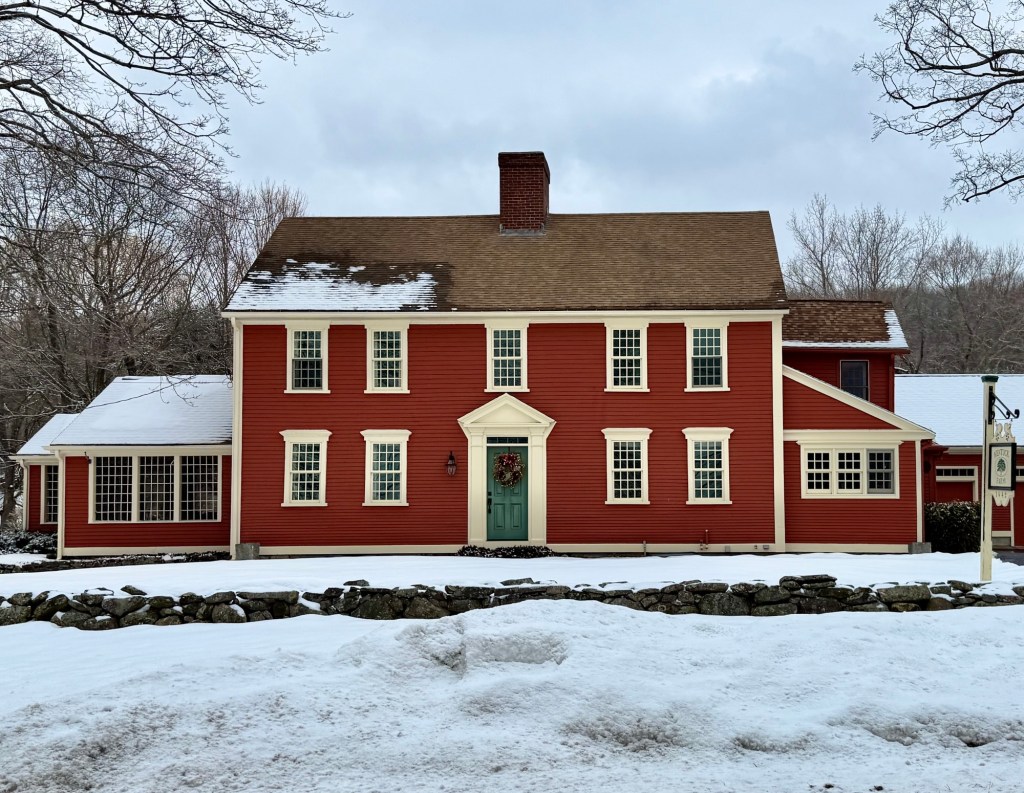
Jackson-Richards Farmhouse // c.1768

This historic home at the edge of Newton Centre is believed to have been built by 1768 by Abraham Jackson, a descendant of one of the earliest settlers in what would become Newton. Abraham took out a mortgage on three acres of land and woodlands, a dwelling house and barn. In 1782, the property was acquired by Aaron Richards (1750-1823), a Revolutionary War veteran and carpenter, who likely modified the residence into the Federal style form and design we see today. Aaron Richards would farm the land here until his death. The farmhouse would be bought and sold and the property subdivided in the 19th and 20th centuries, diminishing the farm and woodland which once surrounded the residence. For a period after the Civil War, the property was owned by the Boston Children’s Aid Society as a Girl’s Home, used as a boarding house to raise orphaned girls from the Boston area, teaching them skills to increase their hopes of adoption or moving out on their own. The property was reverted to a residence by the 20th century and is significant as one of Newton’s few extant 18th-century farmhouses.

Littlefield Farm // c.1843

One thing I really love about small towns in New England is the prevalence of amazing old homes on the winding back roads. Located in Boxborough, MA, the Jacob Littlefield Farmhouse showcases the agricultural character and charm seen in the town. The farmhouse and outbuildings were built by Jacob Littlefield, who likely hired a housewright from town as the home is a near match to a home built on a nearby street. Mr. Littlefield was a farmer from Wells, Maine with seven children and a wife named Anna. After his death, his wife Anna owned the farm, until her death in 1896. Their son Albert ran the farm from about 1896-1922, after which time Jacob’s grandson Earl was the owner. Earl was taxed in 1928 for ownership of two horses, 17 cows, a bull, the house, barn and shed, tool house, ice house, root house, hen house, garage, and a second house on 101 acres. He resided here until 1929 when it was sold out of the family. Since then, subsequent owners have restored the home and the various outbuildings to maintain the architectural and historic integrity of the property. We need more stewards of old homes like this!

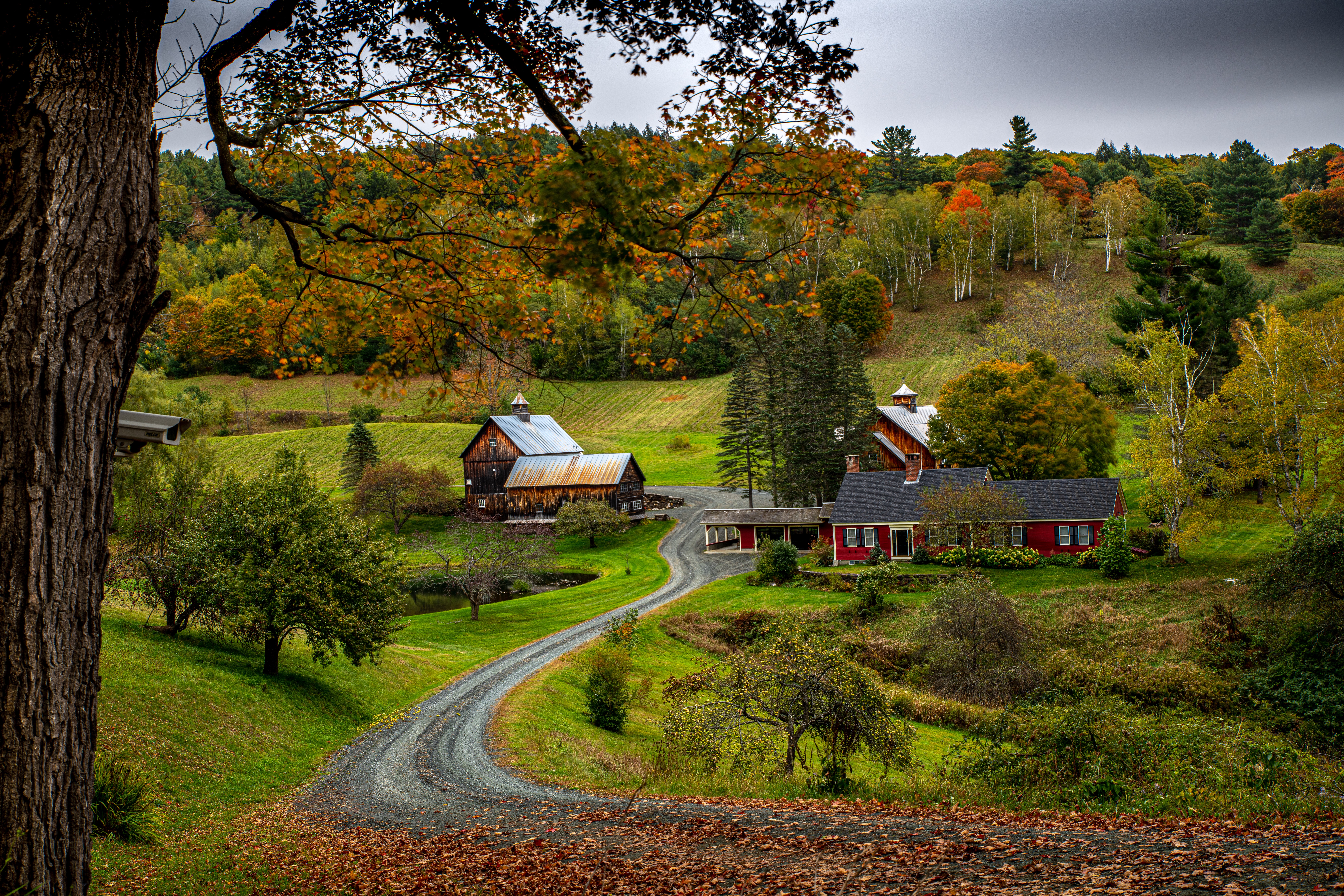
Sleepy Hollow Farm // c.1780

Without question, this property is the most photographed site in the tiny town of Pomfret, Vermont, if not the state. The property dates to the late 18th century when John and Samuel Doten moved to the newly settled town of Pomfret Vermont, overlooking the growing town of Woodstock in the valley below. The two brothers acquired vast farmland on the hills of Pomfret and each built farmhouses adjacent to eachother, with Samuel getting elevated land and John developing the land sunken off what is now known as Cloudland Road into this stunning property. Sleepy Hollow Farm remained in the Doten family for centuries until the 1950s, when the owners sold the property to move to Woodstock and work for Laurance Rockefeller, the famous philanthropist and conservationist, who later donated his Summer home in Woodstock to the National Park Service. The property sold numerous times in the late 20th century, and is presently owned by Aerosmith guitarist Joe Perry and his wife, Billie. They are clearly great stewards to the property’s rich history and various outbuildings, and must not care too much to have swarms of photographers at the end of their driveway year-round!

Lewis-Zukowski Farm // 1781

On the rural back roads of Suffield, CT, it is amazing how many historic farmhouses you can stumble upon. This is the Lewis-Zukowski Farmhouse, built in 1781, as one of the earliest brick homes built in this part of the state. When Hezekiah Lewis (?-1805) built his house in 1781, he was a farmer of modest prosperity. By the time of his death in 1805, he was somewhat wealthier, perhaps because of his second marriage in 1794 to widow Ruth Phelps, as his 91-acre farm. His estate indicates he was a traditional farmer of the period: he had a yoke of oxen, 2 horses, 2 cows, and 2 pigs, suggesting that he was primarily raising sustenance for his family, not products for market. Michael Zukowski arrived in Suffield in 1888 with his family as an immigrant from Poland. Zukowski worked on a farm in town for $8.00 a month plus board for local tobacco farmer Calvin Spencer. He had saved enough by 1905 to pay Hiram Knox (then the owner of the former Lewis Farm) $2,800 in cash, purchasing the property. Zukowski worked the farm until the 1920s, when his son took it over and he moved to another farm nearby. The house remained in the family one more generation until it was sold out of the family. It remains as an architecturally and culturally significant farm in Suffield.