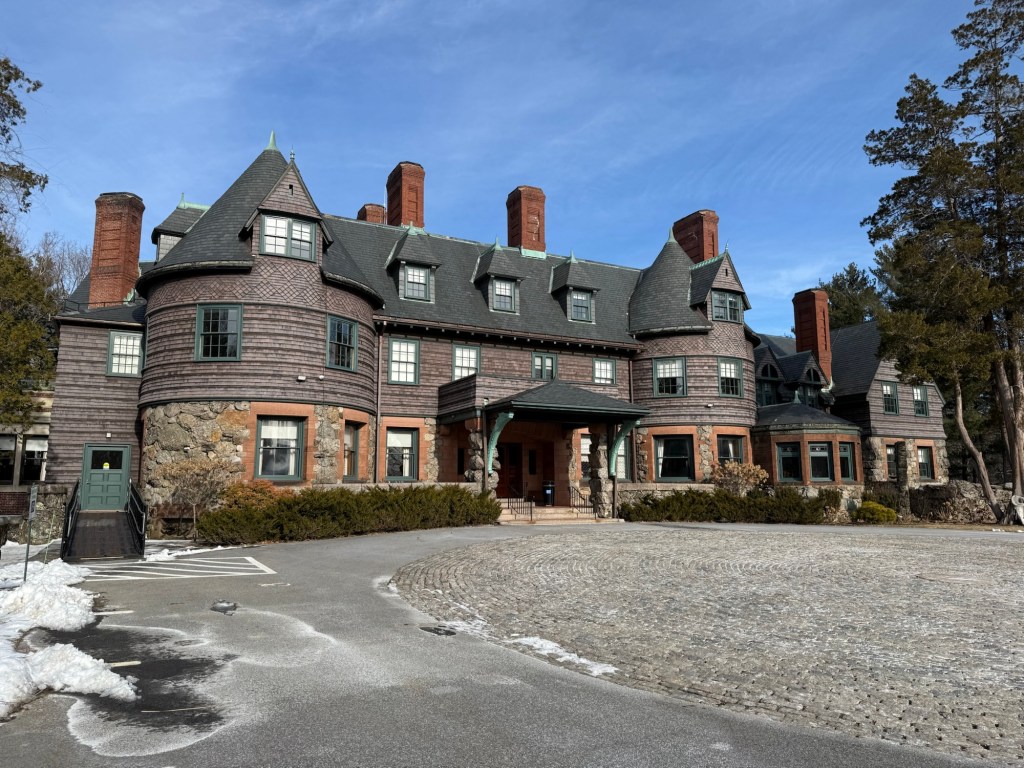
Roughwood // 1891

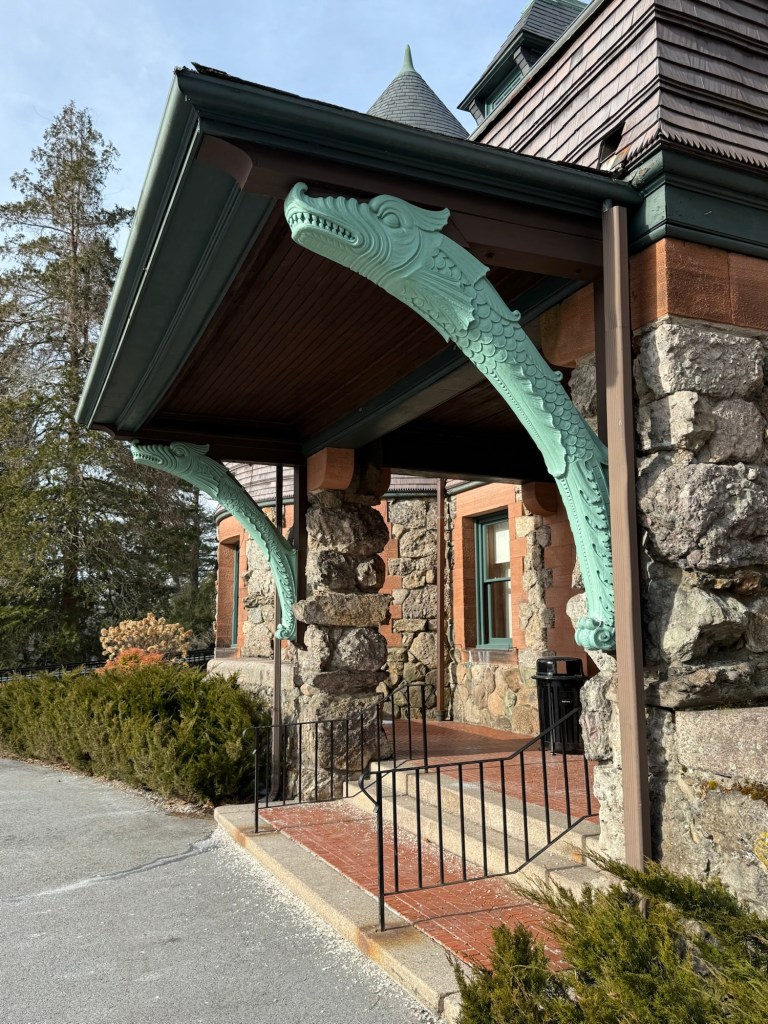
Roughwood is a historic estate house on Heath Street in Brookline, Massachusetts. The main residence and the various outbuildings on the grounds were designed by the Boston architectural firm of Andrews, Jaques and Rantoul, and built in 1891 as the summer estate of William Cox, a wholesale dealer in the footwear industry. Mr. Cox died in 1902 and the property was sold to Ernest Dane, the year before he married Helen Pratt, the daughter of Charles Pratt, a wealthy New York businessman and philanthropist. Mr. Dane was a banker who served as President of the Brookline Trust Company. The Dane’s owned the property for decades until the property was eventually purchased by Pine Manor Junior College in 1961. The estate house remained a centerpiece of the campus. In the early 21st century, Pine Manor College saw financial distress, and was saved by Boston College, who acquired the campus and its existing students as Messina College, which opened in July 2024 for over 100 first-generation college students. Architecturally, Roughwood is a high-style example of the Queen Anne/Shingle style of architecture. The mansion is built with a puddingstone and brownstone first floor and a second floor of varied patterns of wood shingles, all capped by a slate roof. The facade is dominated by towers and dormers and the great rustic entrance portico with dragon’s head brackets. To its side, a 1909 Tudor Revival addition served as a music room for the Dane’s family and while stylistically unique, is designed with impeccable proportions.
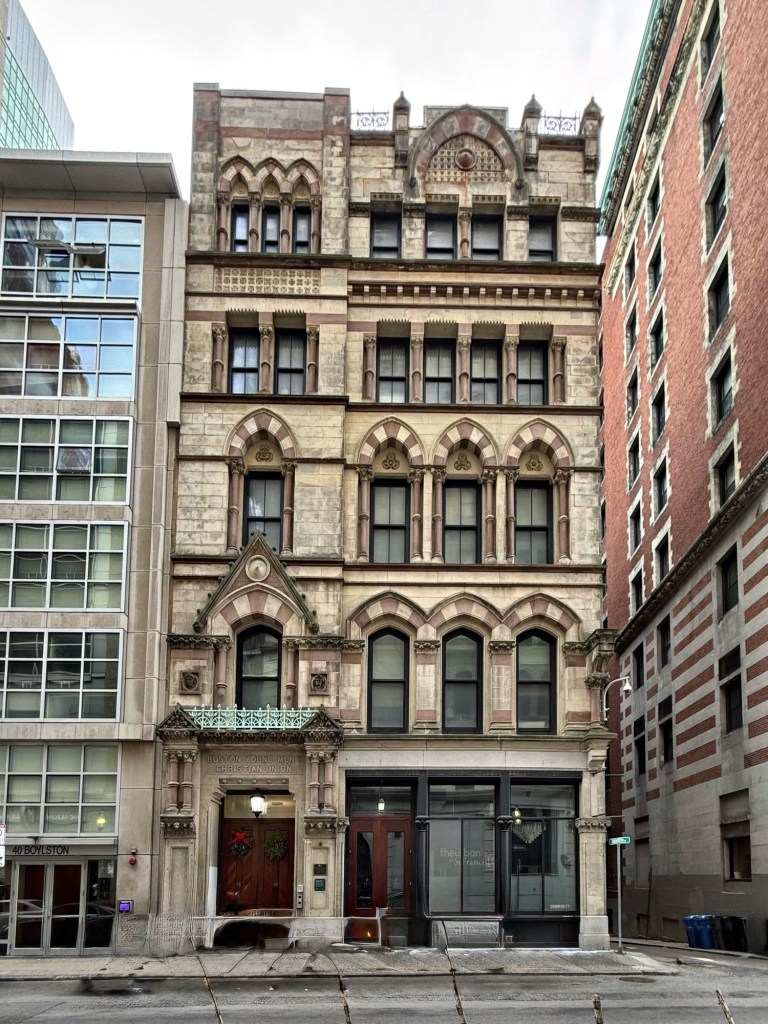
Boston Young Men’s Christian Union Building // 1875

The Boston Young Men’s Christian Union was founded in 1851 by a group of Harvard students as a biblical and christian literature discussion group, which incorporated the following year. First located on School Street, the organization’s activities were to provide a focal point for the intellectual, religious, and social life of primarily middle-class, well-educated Christians. The organization grew to the point that a new building was needed, and in 1873, a site on Boylston Street was acquired as a perfect central location for the group. Architect Nathaniel J. Bradlee of Bradlee and Winslow was hired to design the structure, principally because Mr. Bradlee by then a prominent architect and public figure, was also a life member of the Union and the brother of one of its founders. The building was completed in 1875 and included ground floor retail with an auditorium, gymnasium, library, social and game rooms, and offices for the Union above and behind. Designed in the High Victorian/Ruskinian Gothic style, derived from a mixture of English, Italian, French, and some German Gothic precedents, the style emphasized complicated, asymmetrical massing, polychromy, ornate details, and lancet or Gothic arched openings, in this building a sandstone facade was used. The building became a City of Boston Landmark in 1977. In 2016, the building was converted to an affordable housing development by The Architectural Team Inc., and called “The Union”. The development provides 46 units of affordable housing, including 25 targeted to those who have experienced homelessness. What a great rebirth of the building. Historic Preservation and Affordable Housing can work together and create great projects.

Little Building // 1917

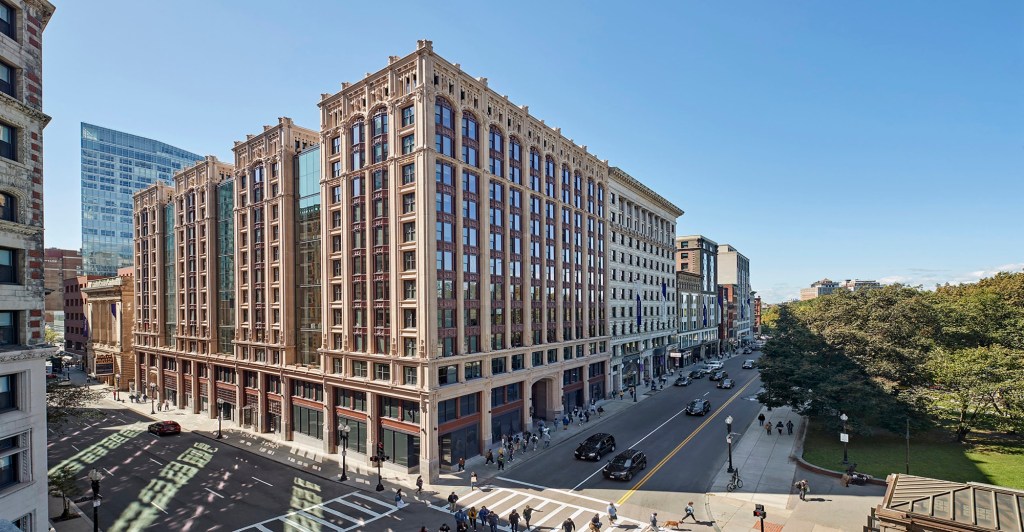
The Little Building sits prominently at the busy corner of Boylston and Tremont streets overlooking the Boston Common. Like the Colonial Theater next door, the Little Building was designed by architect Clarence Blackall and named after its developer and owner, John Mason Little. Blackall designed the Little Building in the Neo-Gothic style with a steel frame and a two-story Tudor-arched entrance on Boylston Street. The original facade was granite and cast stone, and the floors were made from reinforced concrete. The building replaced the Hotel Pelham which occupied the site since the 1850s. After being completed in 1917, the Little Building was considered significant enough that it was featured in American Architect and Building News, highlighting many architectural details inside and out. The Little Building was advertised as a “City Under One Roof” with 600 offices, dozens of shops, a post office, restaurants, and connections to the nearby subway and theaters. Emerson College purchased the Little Building in March 1994 for $5 million and converted the building to dormitories. After years of deteriorating masonry, Emerson College hired Elkus Manfredi Architects to oversee a full renovation of the building, including a sweeping facade restoration and the insertion of three glazed elevations between street-facing light wells. The “new” Little Building is a splendid re-imagining of a historic building, showing how old buildings can be renovated to meet contemporary uses through well intentioned design and care.

Colonial Theater Building // 1899

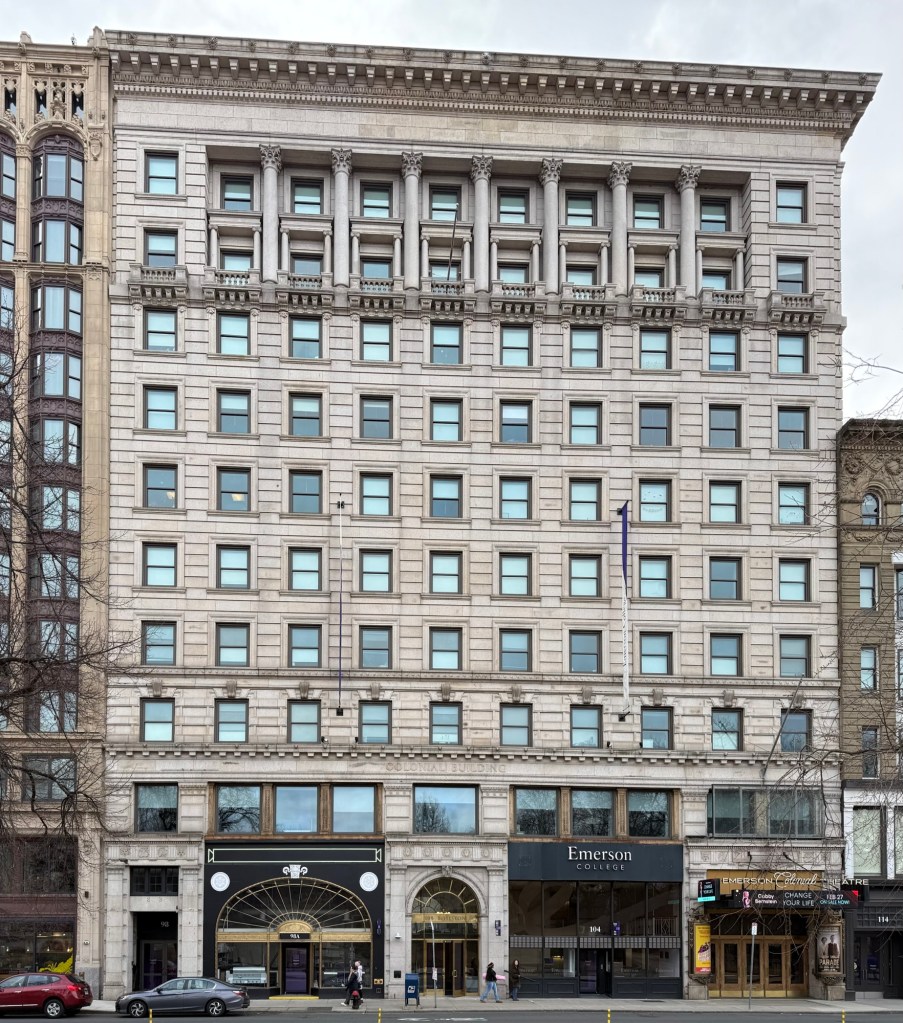
One of my favorite buildings on Boylston Street in Boston is the ten-story Colonial Theater Building, a landmark Classical Revival style structure of stone. Built in 1899, the Colonial Theater replaced the original Boston Public Library building (1855) which was demolished by 1898, and relocated to Copley Square. The Colonial Theater was designed by famed theater architect, Clarence Blackall and is said to be the oldest, intact theater in Boston. The theatre first opened its doors for a performance of Ben-Hur on December 20, 1900 with a sold out show. Ben-Hur operated with a cast and crew of 350 people and featured eight live horses on stage in full gallop during the chariot race scene, with the play being so mechanically and technically extraordinary it was featured on the cover of Scientific American. While cheekily named the Colonial Theater, the interior theater spaces were anything but. The spaces originally contained murals and Baroque style finishes, many of which remain today. Beyond the 1,700-seat theater, the building contained between 250-300 professional offices. The building is owned by Emerson College, who underwent a massive restoration project of the building with Elkus Manfredi architects. Allowing the oldest Boston theater to shine again!

Hotel Essex – Plymouth Rock Building // 1900

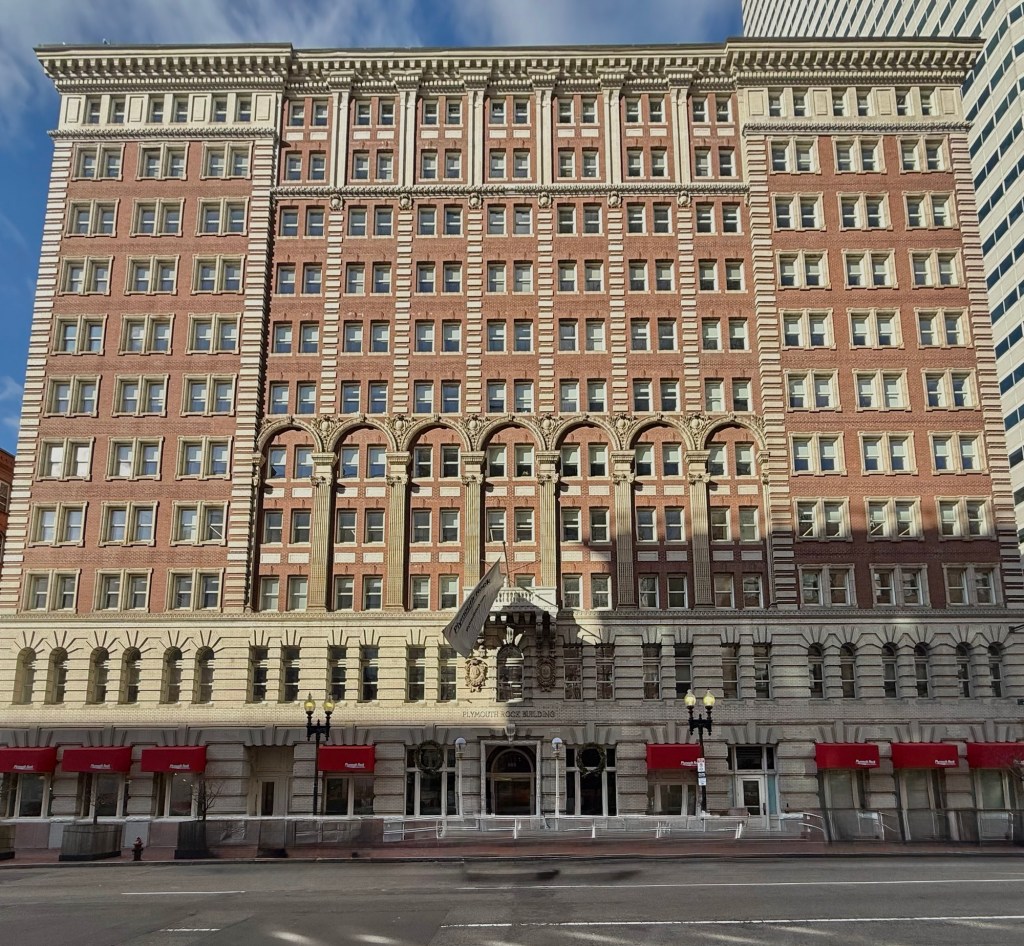
The construction of a new South Station Terminal in 1899, prompted a development boom for the nearby area, which had for the previous decades been almost entirely mercantile and centered around the leather and woolen industries. Due to increased land values and an influx of travelers to the area, developers saw an opportunity to erect this building to serve as a hotel for visitors to Boston via South Station. Boston architect, Arthur H. Bowditch, furnished plans for this building in the Beaux Arts/Renaissance Revival style, with use of brick and limestone construction, ornate finishes at the façade including the fluted pilasters, arches and cartouches in the spandrels. The building was completed in 1900 and known as Hotel Essex and featured a long, storied history as a hotel until it closed in the second half of the 20th century. After years of deteriorating conditions, the building was adapted as the corporate offices for Plymouth Rock Assurance Corporation in 1982. The building was restored and has been known as the Plymouth Rock Building ever since.

United States Leather Company Warehouse // 1901

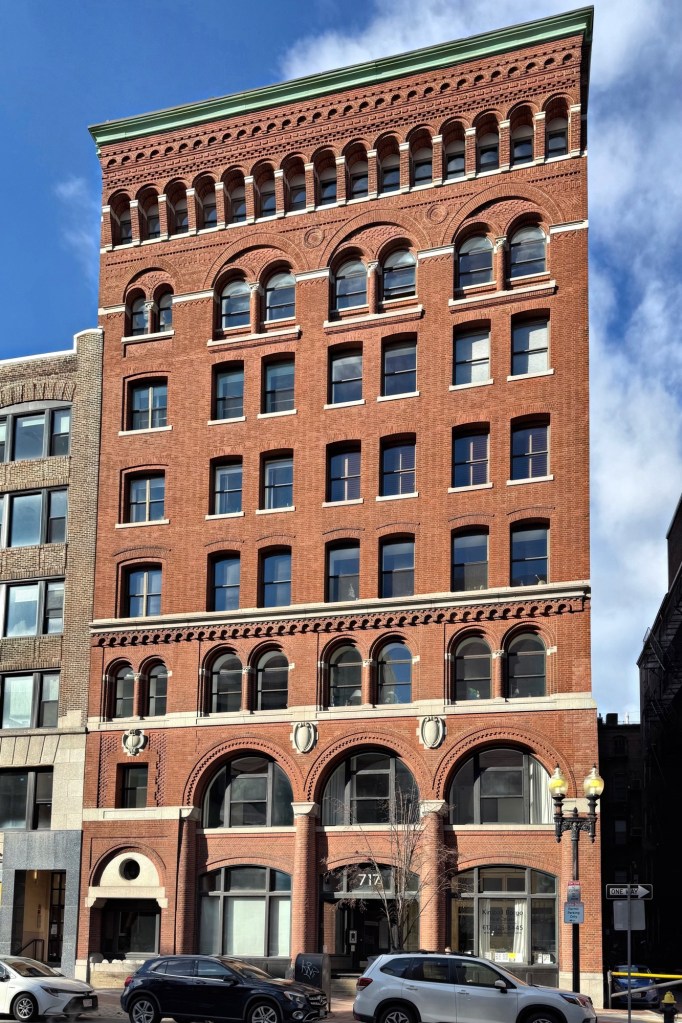
As far back as Colonial days, the boot and shoe industry was one of the State’s leading industries. Buyers came suburban towns to purchase supplies, and in the early 1800s, the larger manufacturers began to open offices and stores in Boston. Soon, most of the leading merchants had established places of business in Boston, by the late 19th century, many were located in the South Cove area, which became known as the Leather District. The Leather District is characterized today by large, brick structures with flat roofs and feature continuous floor levels, band courses, and cornice lines. This handsome brick building on Atlantic Avenue was built in 1901 for Charles G. Rice and the Heirs of Nehemiah W. Rice as a warehouse for the U.S. Leather Company. The building was designed by William Gibbons Rantoul, who studied architecture at Harvard, and apprenticed with Henry Hobson Richardson as a draftsman in the 1880’s before opening his own practice. In 1946, the subject property was purchased by Frank Einis, and the new tenants, Fur Merchants Cold Storage, Inc., used the building for the storage of skins and furs for manufacturing into soft goods. Architecturally, the building showcases the lasting influence of Richardson on architects and industrial buildings in Boston from the late 19th century into the early 20th century. The building can be classified as Romanesque Revival in style with its use of arches in the façade both structural and decorative, the Venetian arches at the 7th floor, as well as its arcaded corbelling over the 3rd level and at the cornice. I especially love the tall, engaged brick columns at the storefront, they are very unique!

Former Weeks Junior High School – Weeks House // 1931

Adaptive reuse projects will ALWAYS get love on here!

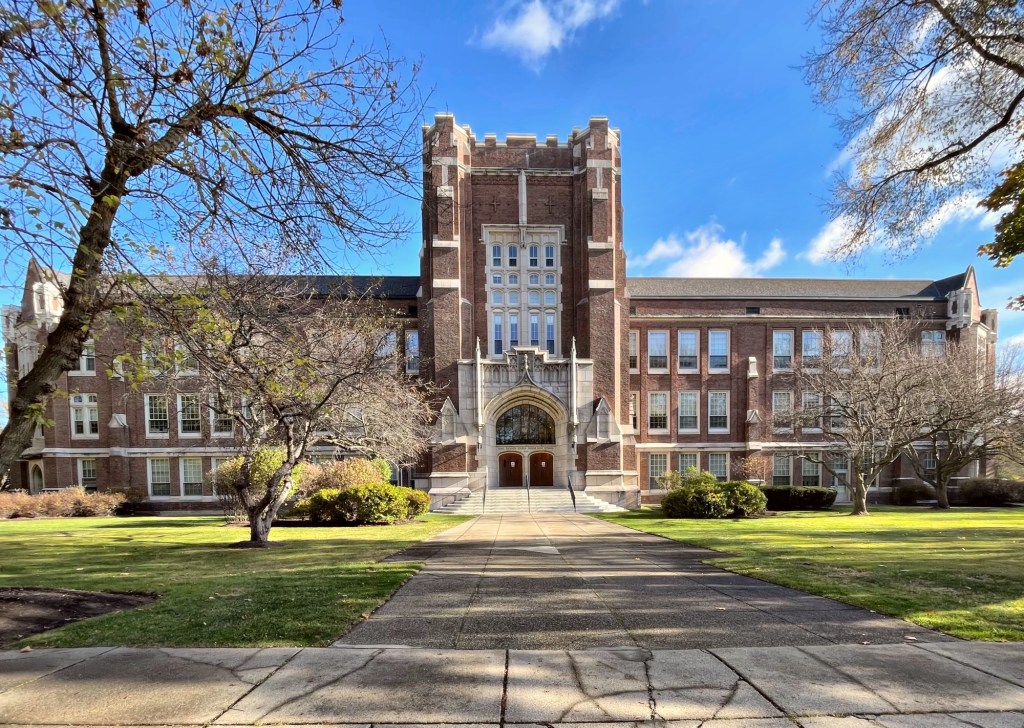
Originally constructed in 1931 as the Weeks Junior High School in Newton Centre, Newton, this architecturally significant school building is the finest local example of the Tudor Revival style in that use. The Weeks School was designed by Ralph Coolidge Henry and Henry Parsons Richmond, architects who were draftsmen for Guy Lowell, one of the greats, and the successors to his practice upon his death in 1927. The design for the Weeks School is of traditional brick and cast stone, with its main entrance through a large Gothic arch at the center of the building. Two wings extend parallel to the tower and then bend back at 45-degree angles, creating the distinctive U-shaped form, which provided ample natural light in all classrooms. After a consolidation of local schools in the mid-20th century, the Weeks School closed, but was beautifully rehabbed in 1984 into housing as the Weeks House. Today, the building is comprised of mixed income housing of about 75, one-, two- and three-bedroom units.

Austin Biscuit Company Building // 1906

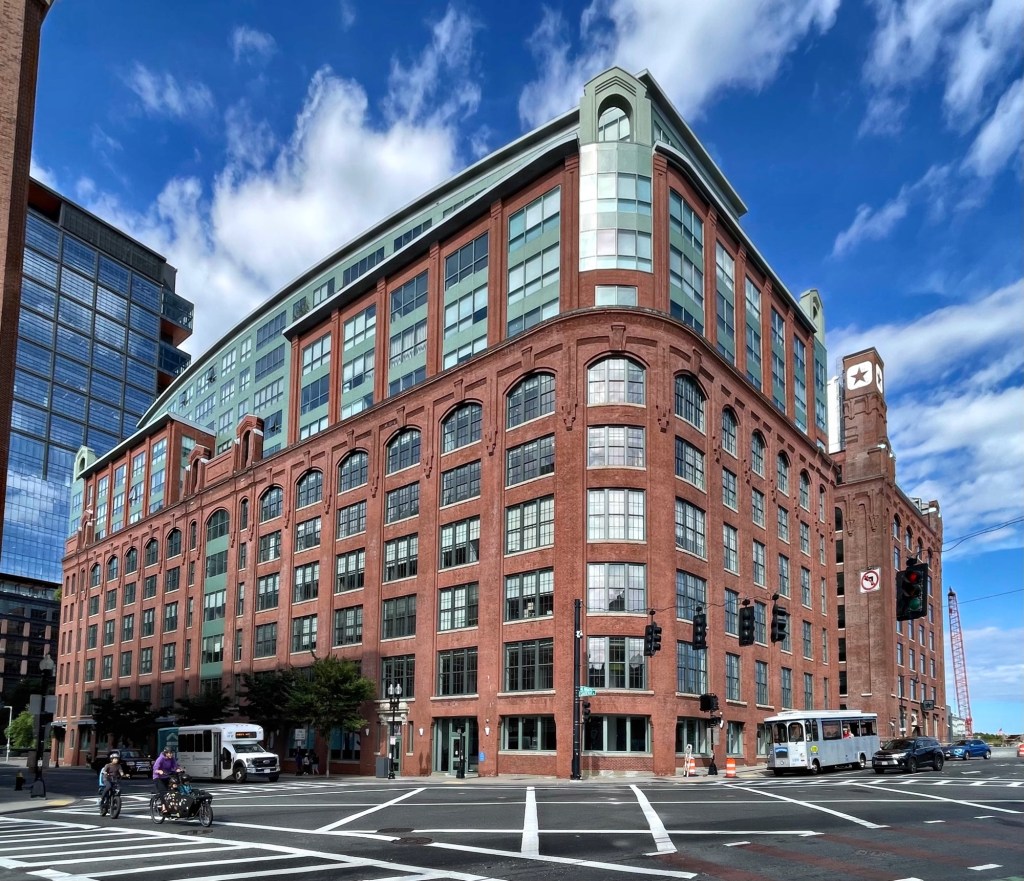
Originally constructed in 1906 for the Austin Biscuit Company, this building on Causeway Street serves as both a gateway into Boston from the north and as an excellent example of adaptive reuse with thoughtful additions. The massive structure, which was originally two separate but connected buildings are a significant example of the panel brick construction with Romanesque detailing. Part-owner of the site, Edmund Dwight Codman hired  his brother, architect Stephen Russell Hurd Codman (1867-1944) and business partner Constant-Desire Despradelle (1862-1912) to design the building which was immediately rented out to the Austin Biscuit Company and the American Glue Company. When opened, the Boston Daily Globe wrote that it was “…a large new building of a thousand windows, a building which on fine days is flooded with sunshine and good air”. By the late 1900s, the building was altered and suffering from deferred maintenance, with an unknown fate. Luckily by 2001, the local architectural firm of Finegold Alexander, was hired to re-envision the building. They converted the two connected buildings into a unified mixed-use residential condominium and retail/office complex. The adaptive reuse of this building provided for 108 dwelling units in the top six floors (in the addition), offices on floors two through six, retail space on the first floor and garage parking in the basement. This is one of my favorite success stories in Boston architecture and historic preservation!

Boston Flatiron – The Boxer Hotel // 1900

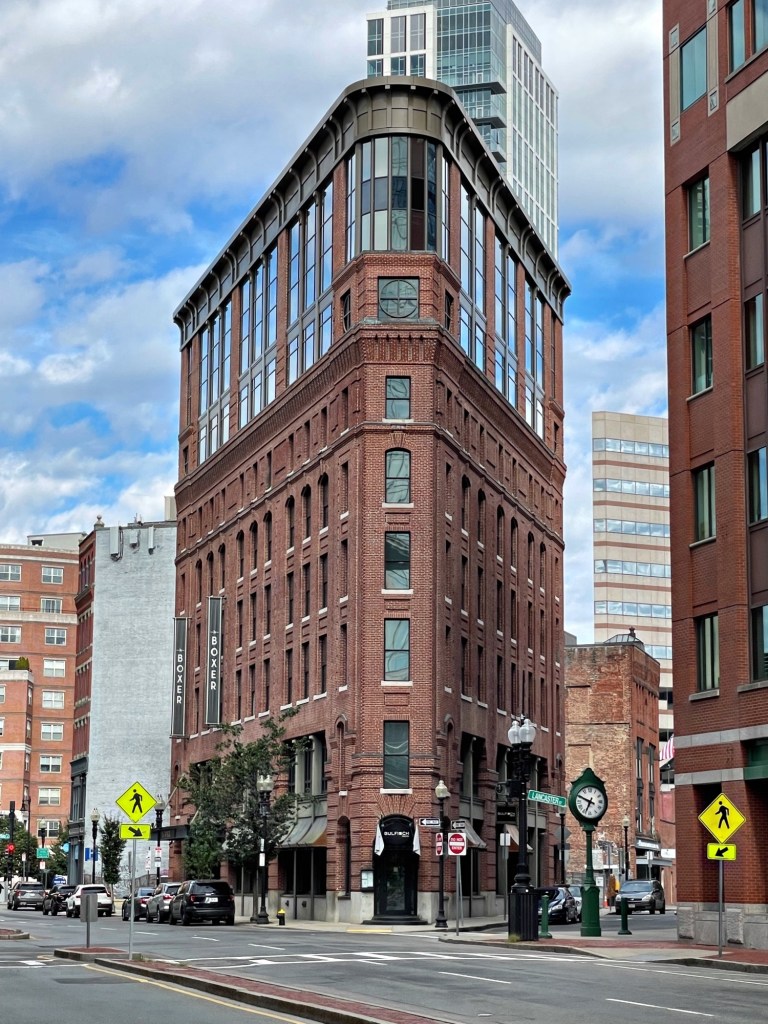
The interesting street-layout of the Bulfinch Triangle area of Boston created some oddly shaped triangular building lots which for decades, saw only small, modest wood-frame structures built upon them. By 1900, Boston’s own Flatiron Building (built two years before New York’s more iconic example) was constructed on this site and it has been an icon ever since. The structure was built by ownerCharles Pelham Curtis III (1860-1948), who was born in Boston and graduated from Harvard Law School and became a police commissioner and attorney in the city before moving into real estate development. He hired architect Stephen Codman to design this commercial block, which was rented out to local businesses and professional offices. The building has been home to a hotel for a number of decades, with a major renovation undertaken beginning in 2000, 100 years after the building was constructed. Three floors were added to the top of the original six-story, which are Modernistic in design with large expanses of windows within three center bays that align with the bays of the original building and which are defined by brick piers. The hotel today, The Boxer Hotel, perfectly blends the history of the building with modernity and style. What a gem of a building!

Heywood Brothers & Wakefield Co. Building // 1897

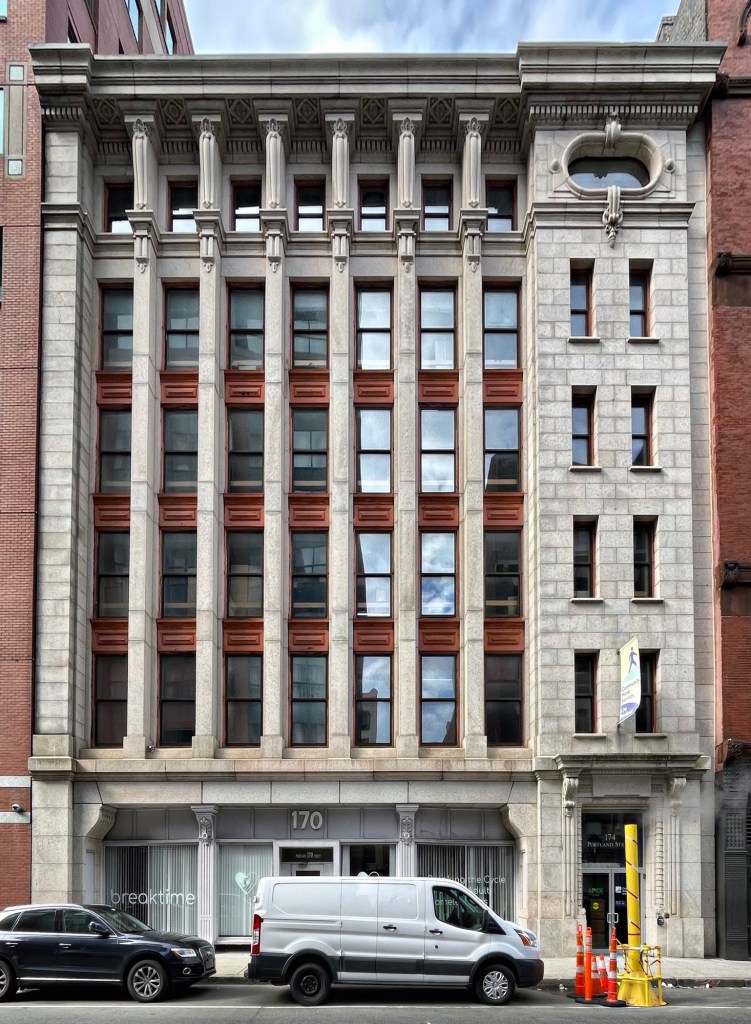
Nearly a decade after the heirs of Peter Bent Brigham and his wealthy estate erected the Peter B. Brigham building in the Bulfinch Triangle Historic District of Boston, they would again develop more of the block the trust owned, building this stately commercial building. Much of the Peter Bent Brigham Building was rented to the Heywood Brothers & Company and Wakefield Company, both furniture makers. Heywood Brothers was established in 1826, Wakefield Company in 1855, with both firms producing wicker and rattan furniture. The companies merged in 1897 and moved into this building constructed by the Brigham estate that same year. The building was designed in a unique version of the Beaux Arts and Classical Revival styles by relatively unknown architect Stephen Russell Hurd Codman (1867-1944), a first cousin of more famous architect and interior designer, Ogden Codman. Stephen Codman opened a firm with the French-born architect, Constant Desire Despradelle, designing some landmark buildings in Boston together. The Heywood Brothers & Wakefield Company Building on Portland Street is a distinctive granite-faced building standing six-stories tall with engaged box columns spanning four floors and dividing the bays of the facade.