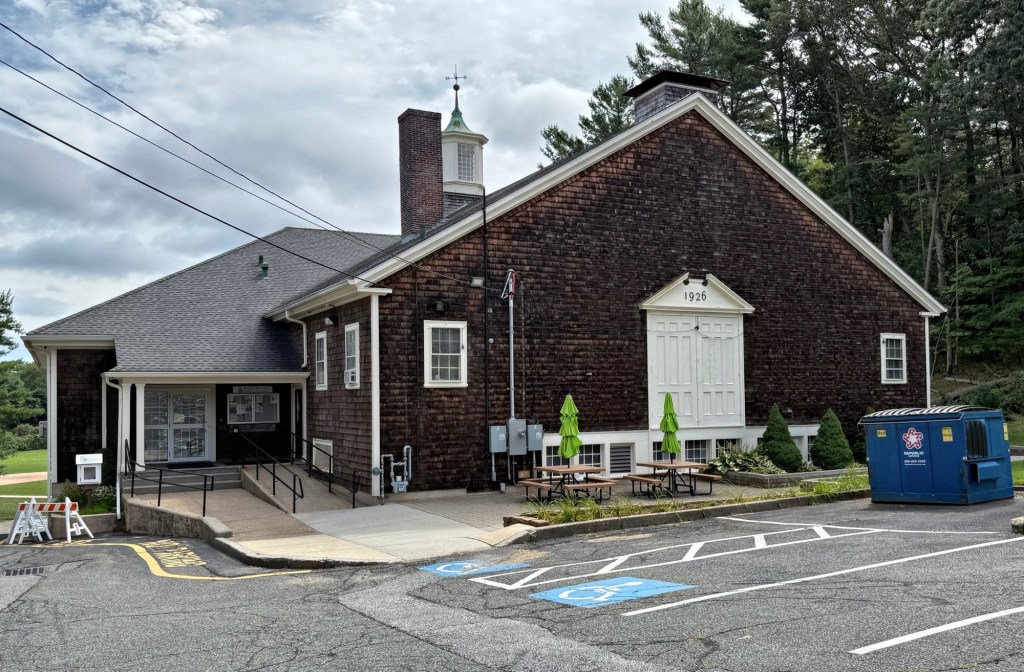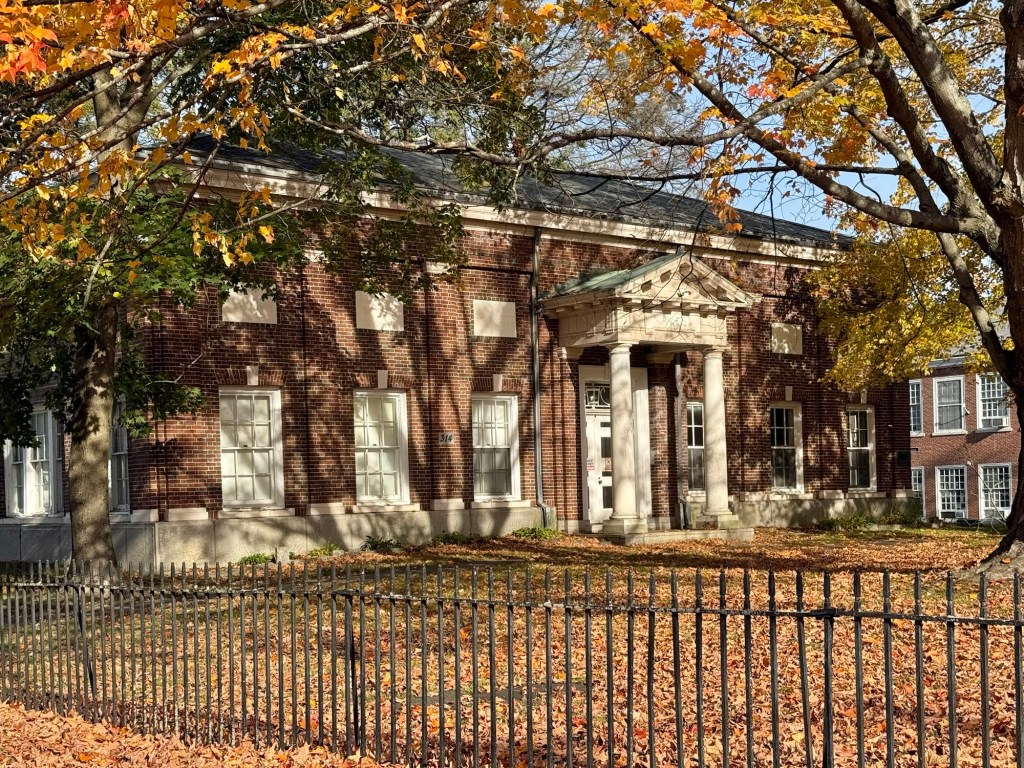
Reed Community Center // 1926

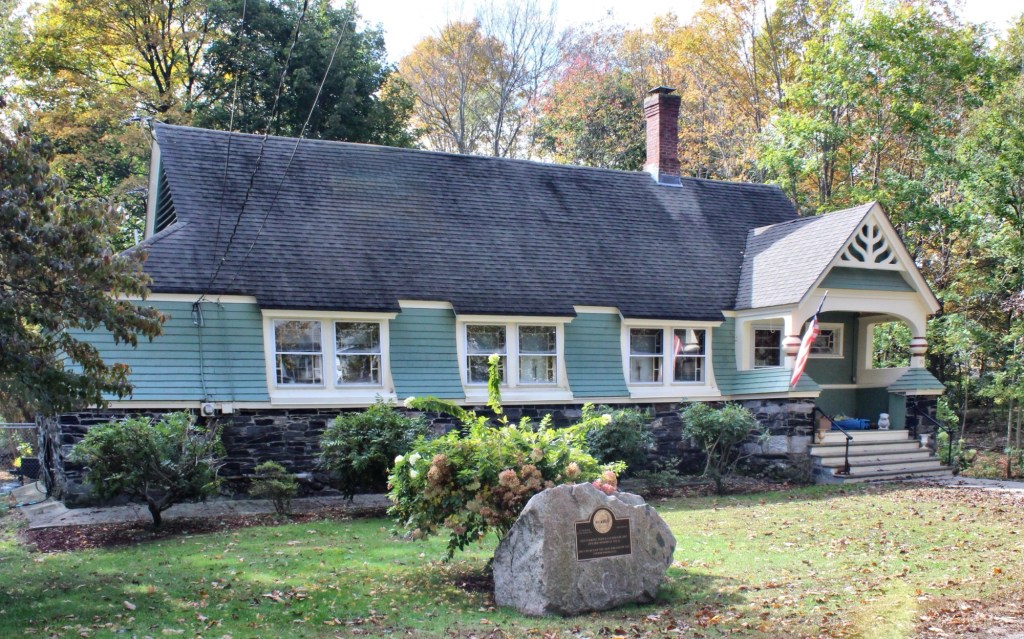
Tucked away behind the 1898 Adams Library in Kingston, Massachusetts, this shingled building has important significance to the community and is about to celebrate its 100th birthday. The Reed Community House began in 1926, when Edgar Reed (1852-1930), donated funds to the town for the construction of a community house to be built adjacent to a public playground site behind the town’s library. Edgar was a descendant of Jesse Reed, a successful Kingston inventor and tack-maker. Jesse Reed had worked in Maiden prior to coming to Kingston where he invented a ship-steering device, a luggage winch, freeze-proof water pumps, and other improvements for looms and weaving methods. The Reed family was one of several Kingston families that had relocated to Worcester, but kept close ties to their hometown. The Reed Community House was designed by Sidney Lincoln Rhodes of Worcester in the Colonial Revival style. The best part of the building is the north elevation, facing the playgrounds as the two-story portico looks over the fields. During the 1930s, the community house was used for a nursery school holding between 48 to 60 preschoolers. The Red Cross also used the building during World War II for some of its programs including first aid classes. The building continues to be an important community facility to the present day and is the home to the Kingston Recreation Department

Frederic C. Adams Library // 1898

Built in 1898 in the heart of Kingston’s village center, the Frederic C. Adams Library was designed by renowned architect Joseph Everett Chandler and is one of the finest Colonial Revival style libraries in New England. Chandler, famed for his dedication to historic forms, created a one-and-a-half-story masonry gem, complete with a gabled roof, dentilled cornice, and a grand four-column Corinthian portico at the entry. The building’s story began with a bequest from Frederic  C. Adams, a Kingston native whose $5,000 gift in 1874 helped break ground on a dedicated library. Its elegant Colonial Revival look recessed panel windows, stone keystones, and symbolic half-round arches, echoes America’s early architectural traditions with a refined late‑19th‑century flourish. The library was eventually outgrown, and relocated across the street, to a contemporary building. After an award‑winning restoration, the building reopened in 2012 as the Adams Center, now housing Kingston’s Local History Collections in a climate‑controlled room and hosting community events upstairs. The Contemporary addition, paired with the restoration work all by Spencer Preservation Group, blends old with new in a pleasing way. 

Surprise Hose Company Fire Station // 1888

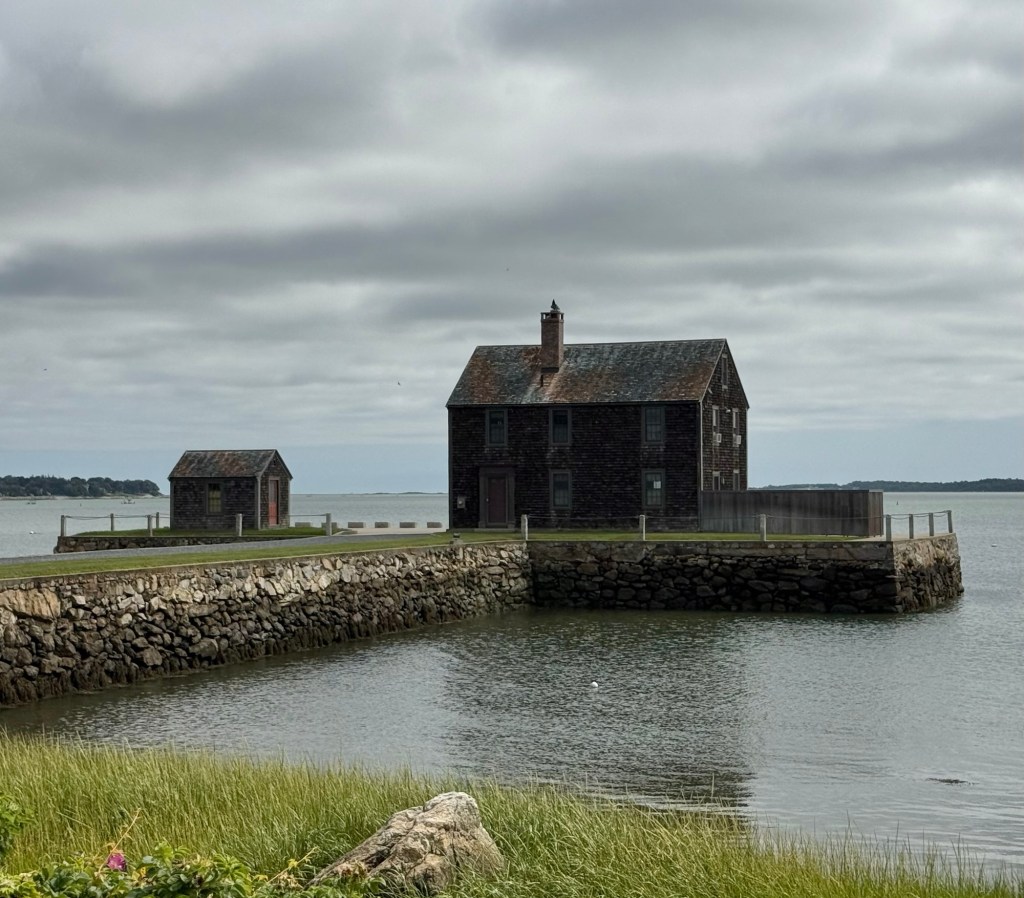
The Kingston Fire Department was officially established in 1887, and previous to this, the town had generally relied on individual action and volunteers to provide fire protection for the Town and its many buildings. In 1888, the town of Kingston purchased this building, a storage facility constructed in 1860 on Main Street, with the aim to convert the building into a hose hose. Soon after purchasing the structure, funding was set aside to renovate the building, adding a hose tower at the rear of the building, shingle siding, and double doors to make the Hose House more equipped for the fire department. The local fire department, known as the Surprise Hose Company operated here until 1940, when a new, modern facility was built, leaving this structure for storage and hose drying. The building was restored in recent decades and is now a landmark on the town’s Main Street.

First Parish Church, Kingston // 1851

The original Congregational Church of Kingston was part of the established, tax-supported church of the Commonwealth of Massachusetts, and was built in 1718, after present-day Kingston established itself as Plymouth’s North Parish. The church was replaced in 1798 with a more substantial building with two steeples. In 1833, when the separation of church and state was finalized in the Commonwealth, two new religious societies formed in Kingston and established churches. The 1798 church, which had been built as the only church in town, was now too large for its diminished population and suffering from structural difficulties. In the spring of 1851, the 1798 church was taken down, and the present church, the third on the site, was constructed. The church blends Greek Revival and Italianate styles, both popular for ecclesiastical buildings of its time, and the structure looks much like it did when built 175 years ago. The congregation here is Universal Unitarian.

Old Kingston Town House // 1841

Overlooking the town green in Kingston, Massachusetts, this stately Greek Revival home was once the original town house for the community, containing meeting hall, town offices and even a jail cell! Before we go into that further, it is helpful to learn about history first. Present-day Kingston was within the tribal homeland of the Wampanoag people, who in the decades prior to the arrival of the Mayflower, saw their populations decimated from a rapidly spreading pandemics due to earlier contacts with Europeans. Originally part of Plymouth, Kingston was first settled by Europeans shortly after the landing of the Pilgrims at Plymouth Rock in 1620. In 1717, residents in the northern part of Plymouth petitioned the General Court to be set off from Plymouth as a separate township or a precinct. They were allowed to become the north precinct of Plymouth on the condition that they maintain a suitable minister. The northern precinct was wealthier and led to present-day Kingston incorporating as its own town in 1726, following a tax dispute. Early town meetings were held in the parish church until the separation of church and state necessitated a new town hall. The town hall here was built in 1841. As the town grew the building was re-oriented southward and enlarged in 1871 from plans by architect Luther Briggs. Further alterations were made to the building in 1935 under the guidance of the architectural firm of J. Williams Beal & Sons. In the early 2000s, space, parking, and accessibility concerns led the Town of Kingston to sell the 1841 Town House, which was purchased by private owners and converted to a residence. Inside, remnants of the old town house include old signs, office doors for city departments, former vaults converted to closets, and even a jail cell in the basement. Talk about a unique adaptive reuse!

Captain John Stacey House // 1731

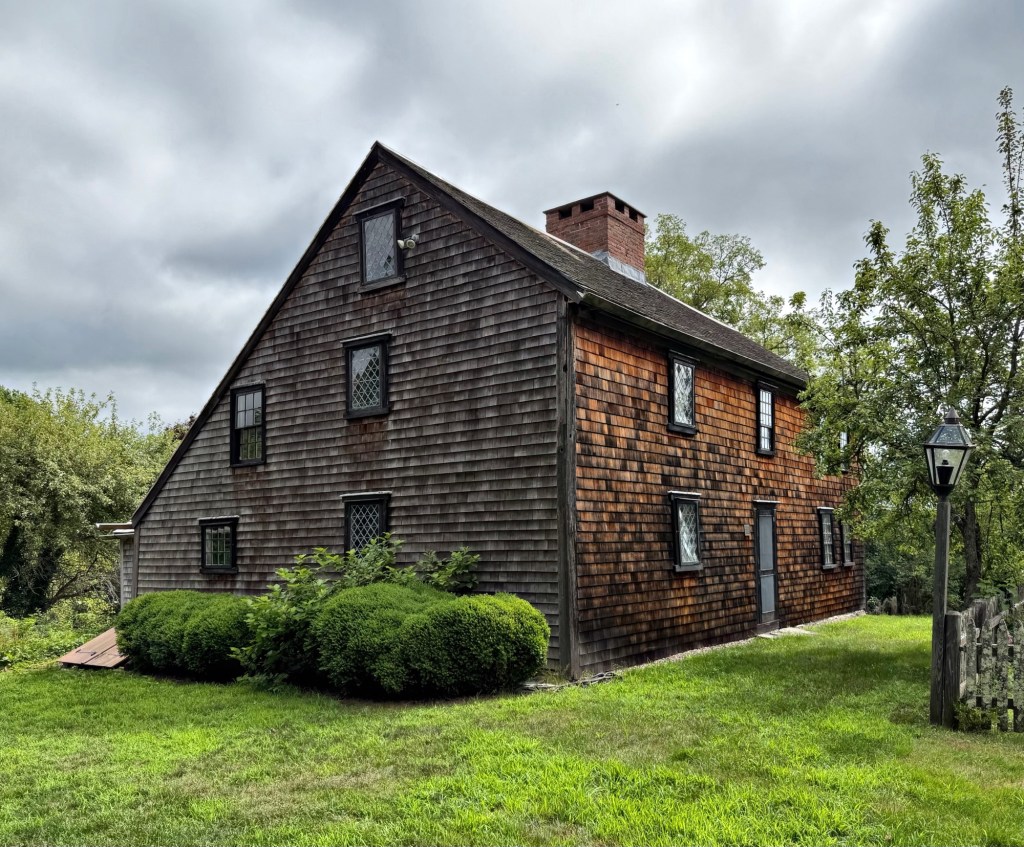
In 1731, Captain John Stacey, a merchant and shipowner in Marblehead, had this gambrel-roofed house built on family land. Due to its orientation from the main street, a passageway allowed access to the rear of the property where other buildings were constructed by the family. By 1850, the house was jointly owned by Hawkes and Brown, with Mr. Hawkes operating a store in the first floor corner room. Eventually, by 1912, Brown had bought the whole building and moved his meat market into the store in this building. The property was later purchased and restored by Donald Mackenze Stacey (1916-1998), a contractor and descendant of the home’s original owner, John Stacey. Donald was a veteran of the U.S. Navy and served in World War II, before moving back to Marblehead and worked in the building trade. In town, he restored antique clocks, furniture, and buildings, including the Old Town House and Abbott Hall, the current town hall

Rev. Samuel Dana House // c.1809

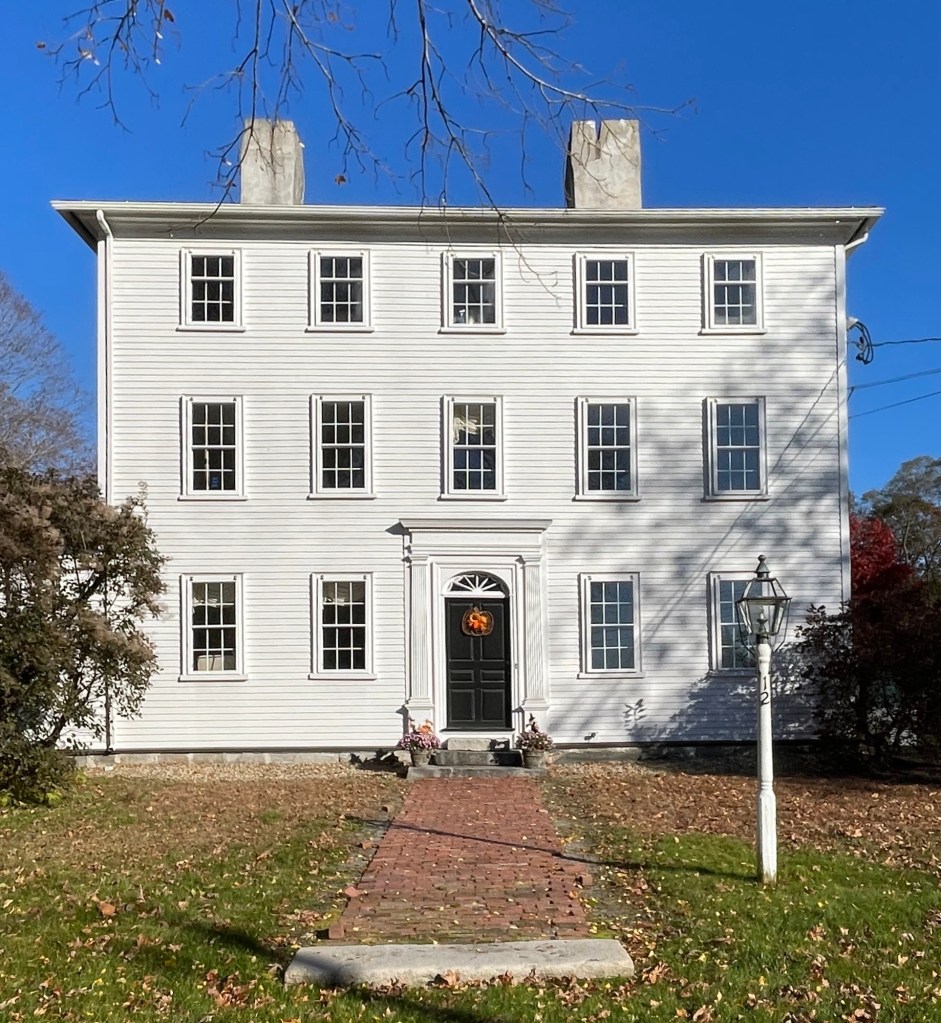
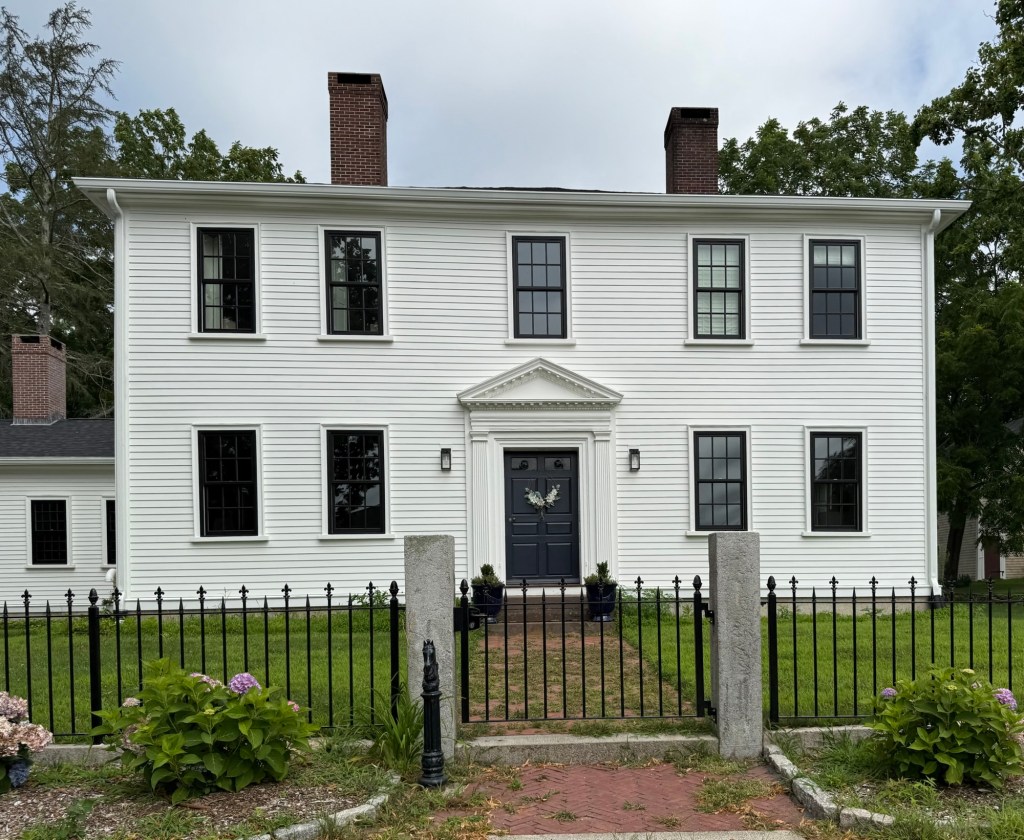
The Reverend Samuel Dana (1778-1864) was appointed the minister of the Old North Congregational Church in Marblehead in 1801, and remained in his position for 36 years. During his rectorship, he started a Sunday School, the congregation built chapel on Pearl Street in 1819 and the Old North Church stone church in 1825. Before all of these accomplishments, he had this stately Federal style mansion built on Washington Street, a short walk to his place of worship. The house appears to have been built shortly after his marriage to Henrietta Bridge in 1808. The house and its design rivals many of the Salem Federal period houses, and stands three stories with five bays and a center entry. A Doric portico shelters the door which is surmounted by a fanlight transom and sidelights. 

Elbridge Gerry House // c.1734

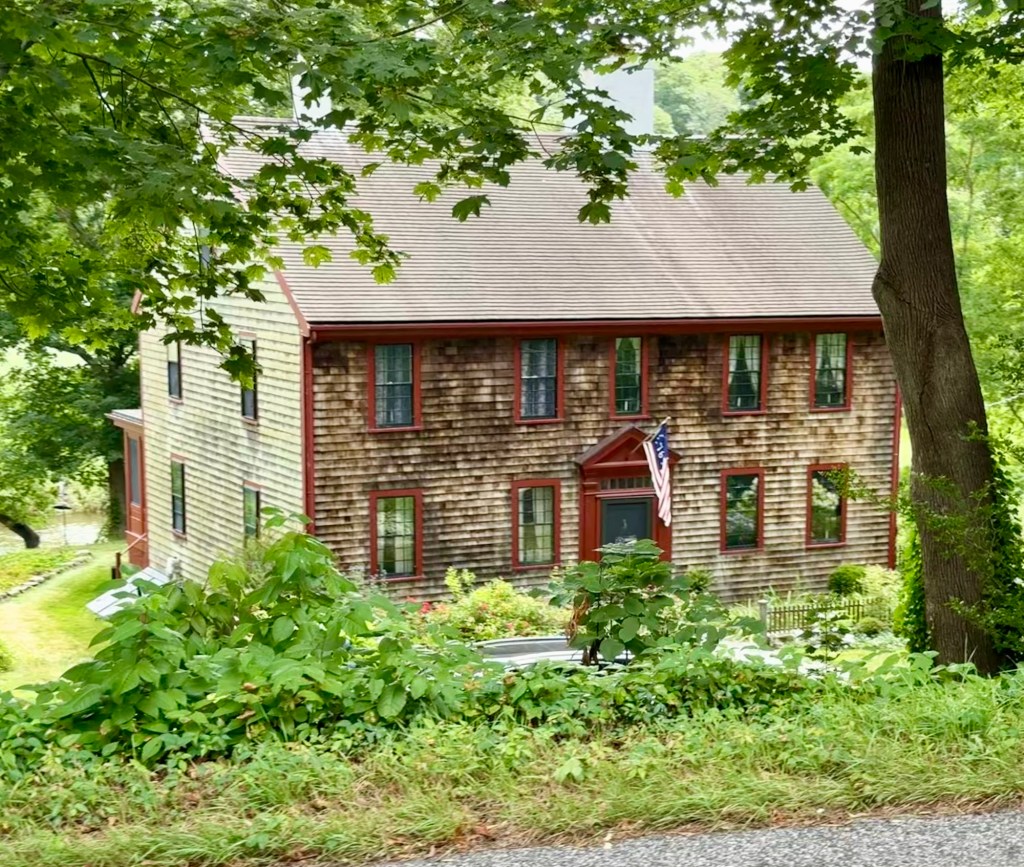
The Elbridge Gerry House is a historic house on Washington Street in Marblehead, Massachusetts that was built by local merchant, Thomas Gerry around the time of his marriage to Elizabeth Greenleaf. Architectural evidence suggests that the house was a two-story L-shaped Georgian frame structure, that in about 1820, was raised to its present three-story form in the Federal style. It was in this house that Founding Father, Elbridge Gerry (1744-1814) was born, and spent many formative years in. Gerry was a wealthy merchant, politician, and diplomat who served as the fifth vice president of the United States  under President James Madison from 1813 until his death in 1814, and is arguably best-known for Gerrymandering. The term, originally written as “Gerry-mander,” first was used on March 26, 1812, in the Boston Gazette — a reaction to the redrawing of Massachusetts state senate election districts under then-Gov. Elbridge Gerry. One of the remapped, contorted districts in Essex County (where Marblehead is located) was said to resemble the shape of a mythological salamander, hence the name “Gerry-mander”. The newly drawn state senate district in Essex County was lampooned in cartoons as a strange winged dragon, clutching at the region. Elbridge Gerry would live mostly in Cambridge and the family home was sold by around 1820 and modernized about that time.

Old Town House, Marblehead // 1727

By the early 18th century, Marblehead had grown from a small fishing village to one of the most affluent and influential seaports in the colonies. This new wealth and the increasing secularization of government led town officials in 1727 to fund and build a Town House, to replace the Old Meeting House from 1696. The upper level of the building served as a town hall, while the lower level was originally used as a market. The Town House was later the gathering place to protest the Stamp Act and the Boston Port Act, and was a primary location for Sons of Liberty to meet and discuss Revolution. After Independence, the Town House was host to such dignitaries as presidents George Washington, Adams, Jackson and Munroe, Samuel Adams, John Hancock and the Marquis de Lafayette. The building would eventually be replaced as the town hall when the new Abbot Hall was built in 1876. The top floor became the GAR Museum, established after the Civil War as The Grand Army of the Republic veterans organization. The main floor houses meeting and exhibition space. The iconic Revolutionary-era Georgian building has been lovingly maintained and restored for nearly 300 years, a testament to the historic and architectural significance of this handsome structure.

M. A. Pickett Building // 1902

The M. A. Pickett Building on Washington Street in Marblehead is a spectacular example of a commercial building of the early 20th century designed in the Colonial Revival style. The building was designed in 1902 by the firm of Peare & Quiner, who worked mostly in the North Shore of Massachusetts and funded by members of the M.A. Pickett Association, a fraternal organization founded in the late 19th century and named after Moses A. Pickett (1780-1853), who left his entire will to: “comfort the widow and the fatherless, the aged, the sick, and the unhappy”, also donating his home to the use and funding for its preservation. In 1866, a hand-drawn fire engine named after M. A. Pickett, was used by a group of volunteer firefighters, who later would create the club named after Mr. Pickett. The building originally held a barber shop and a creamery on the ground floor with a meeting hall and billiards room above for members of the Pickett Association. Today, the building is lovingly maintained, including the three stunning Palladian windows at the third floor.