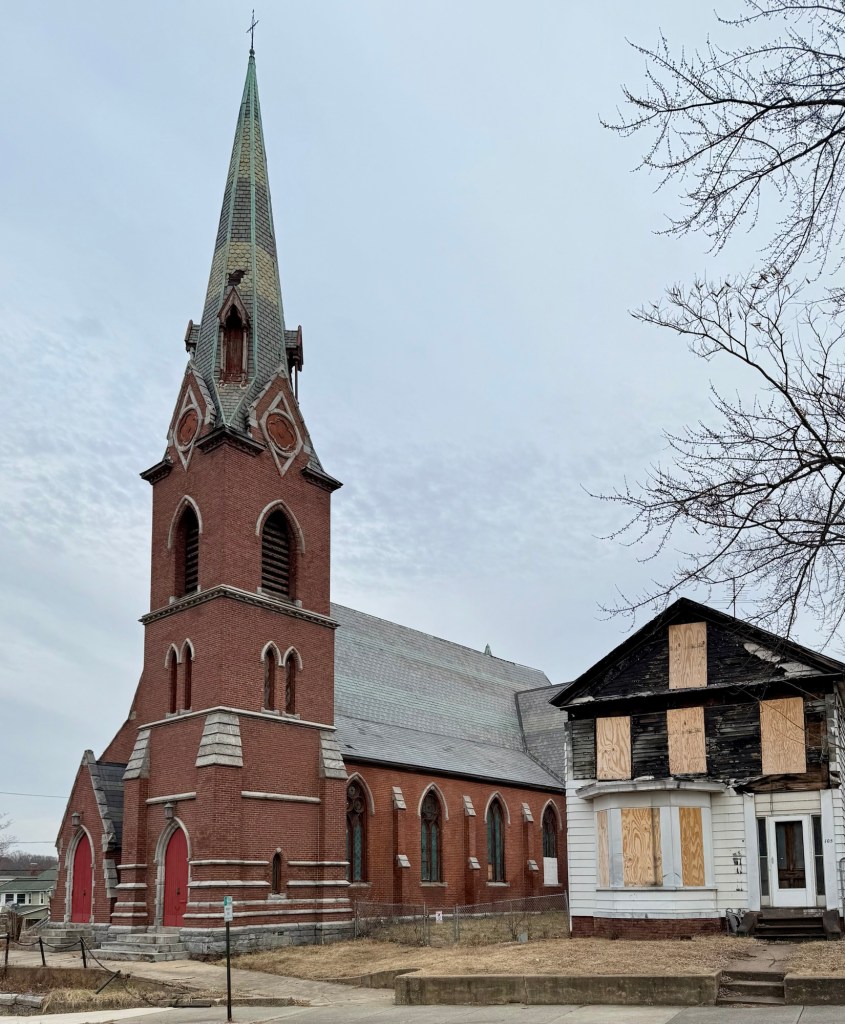
Third Congregational Church of Chicopee // 1868

The Third Congregational Church of Chicopee was built on a prominent lot on Springfield Street in 1868, replacing the congregation’s first church there, which was outgrown. The present building was designed by Charles Edward Parker, a Boston-based architect, who was an expert in Gothic architecture. He would design the Chicopee City Hall just years later. The building is constructed of brick and atop a granite base and features lancet (pointed arch) doors and windows, a corner steeple, and steep gable end with large rose stained glass window. The interior is preserved as well. Due to shifting demographics in Chicopee in the early 20th century, the church merged in 1925 with the Central Methodist Episcopal Church, forming the Federated Church of Chicopee. The congregation eventually closed and the church has sat vacant in recent years, and was briefly listed for sale in 2024, 9,339 square feet for just $200,000.
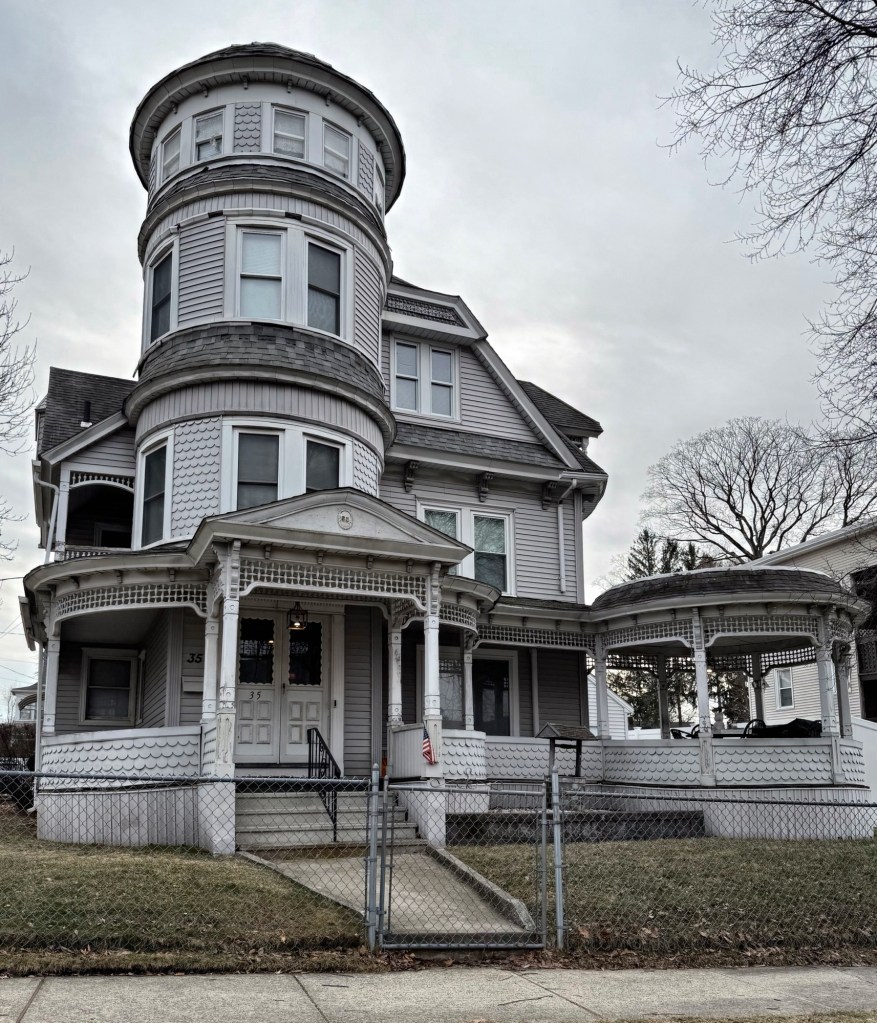
Griggs House // 1891

This fancy Queen Anne Victorian residence can be found in Chicopee Falls, Massachusetts, and is one of the most unique houses in the industrial city. This property was built and occupied by David B. Griggs, a builder in Chicopee under the firm D. B. Griggs & Sons. The firm was very busy in the late 19th and early 20th centuries, as Chicopee saw rapid industrial prosperity followed by a population boom, growing in population from over 9,000 residents in 1870 to 36,000 in 1920. Builders like David Griggs were able to grow to upper-middle class and buy property on desirable house lots and build large homes for their family, as was the case here. David Griggs died in 1896, five years after his home was built, and the property was inherited by his son, Millard Griggs. While the residence is covered in vinyl siding (original siding and trim is likely underneath the present siding), the house retains much of its original fabric including the brackets, delicate open friezes at the porches, and four-story tower.

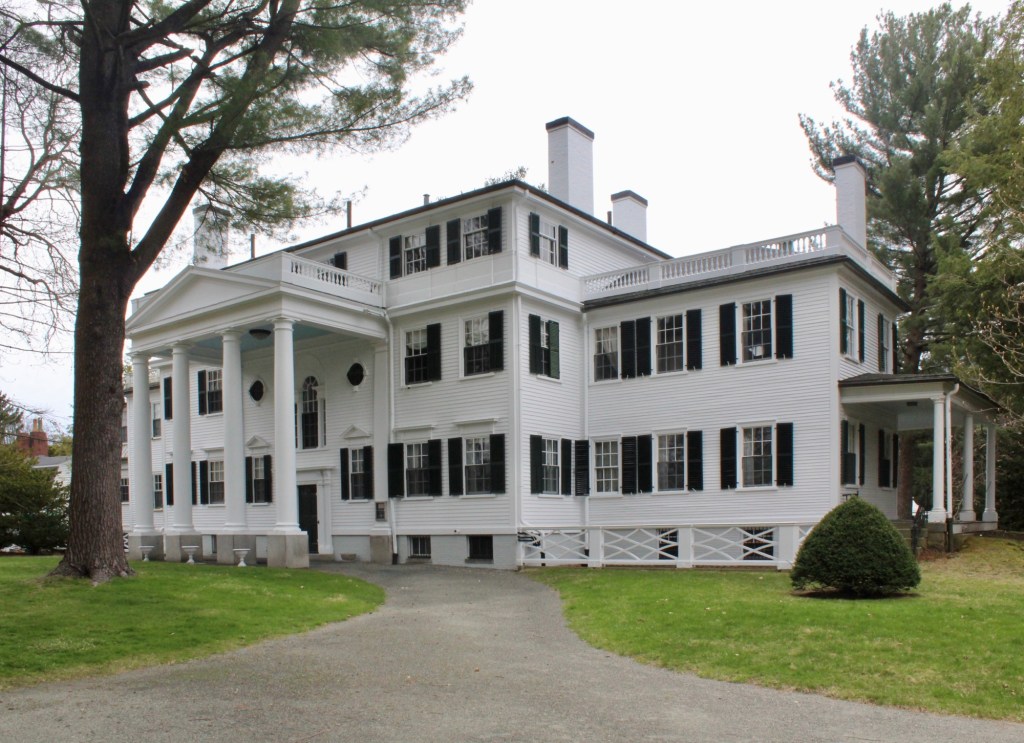
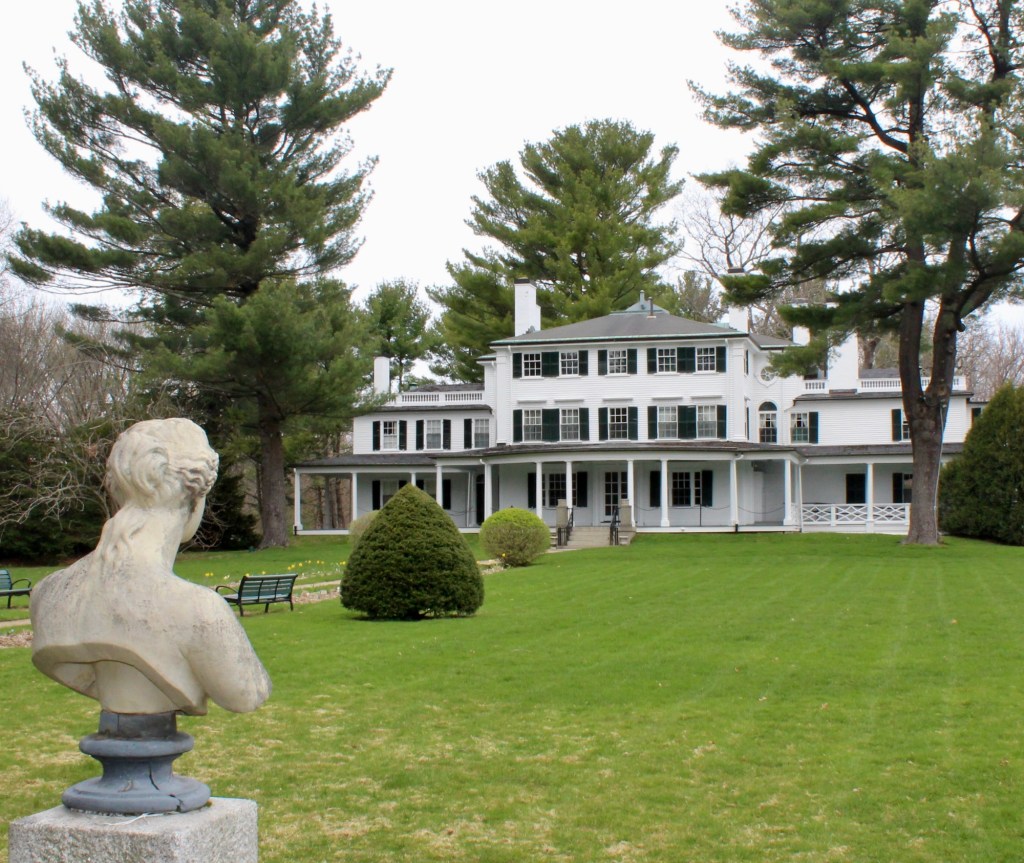
Glen Magna Farms // c.1790

Glen Magna Farms is a historic estate located in Danvers, Massachusetts, and it is one of the lesser-known historic properties of this stature. During the War of 1812, Joseph Peabody, the wealthiest Salem shipping merchant of his day, bought a 20-acre Danvers farm with a dwelling house. The c.1790 house was likely updated at this time in a higher example of the Federal style, and used as a summer residence the family would escape to during the warmer months. Peabody purchased additional property and Glen Magna grew to over 130-acres. William Crowninshield Endicott, who served as Secretary of War during the Grover Cleveland administration, married Ellen Peabody, granddaughter of Joseph Peabody in 1859. The couple would inherit Glen Magna and later hire the firm of Little, Browne, and Moore in the 1890s to renovate the mansion and update the gardens. Ellen Peabody Endicott would also have the Derby Summer House added to the grounds by 1901. In 1963, the Danvers Historical Society purchased the house and eleven acres of surrounding gardens which they painstakingly restored to their early 20th century condition. Glen Magna can now be rented out for weddings and other events!

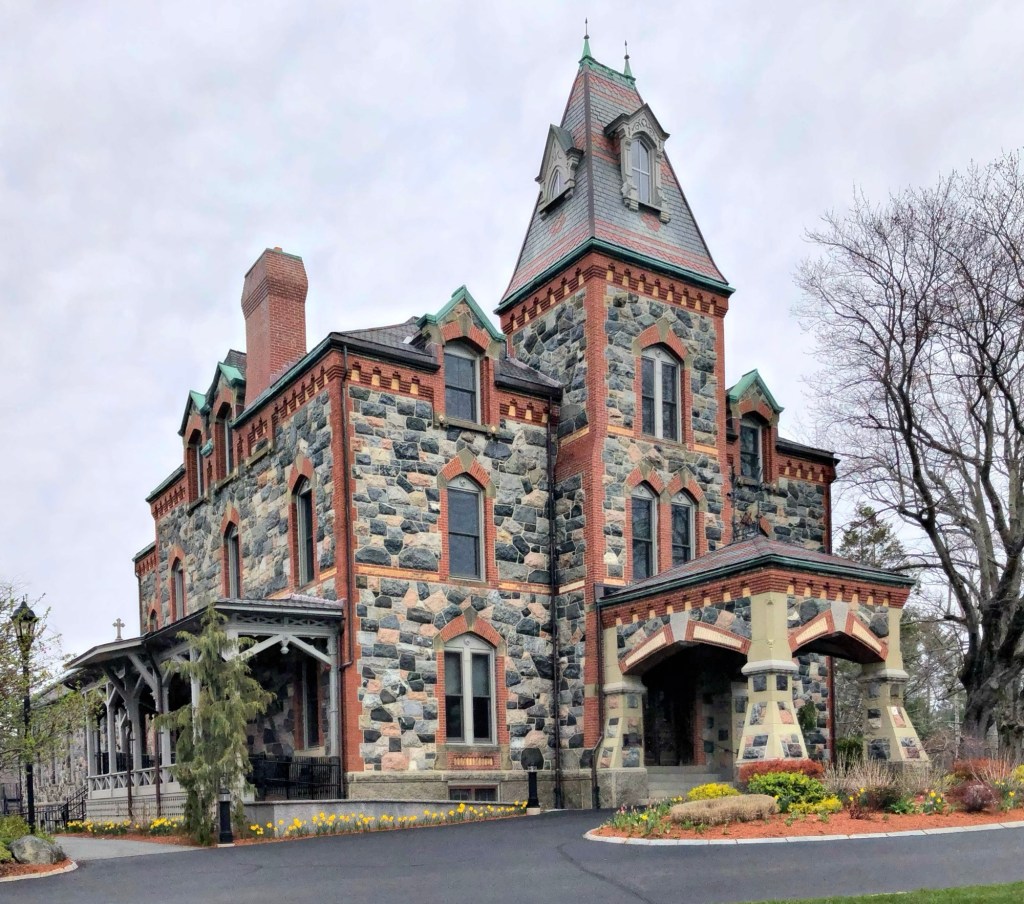
Porphyry Hall // 1880

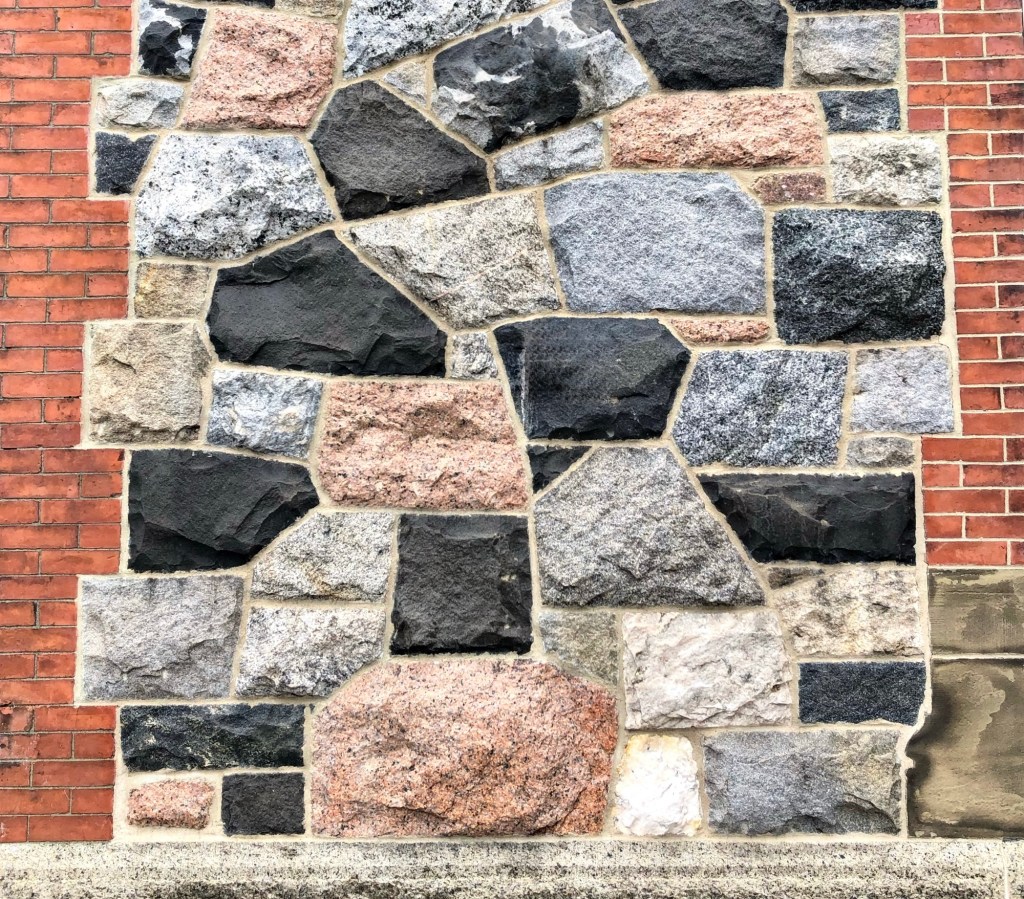
The Jacob E. Spring Mansion, also known as Porphyry Hall, is a high-style estate house located in Danvers, Massachusetts, that is one of the finest and most unique in the state! The house was built in 1880 for Jacob Evans Spring (1825-1905), who was born in Brownfield, Maine, and at the age of twenty, he went to Argentina and amassed a fortune in the wool business in Buenos Aires between 1845 and 1865, when he returned to the United States. Jacob and his wife, Sara Duffy, would purchase a large farm in Danvers and began planning for their family country home. Their residence was built on a high hill over two years and constructed of over 40 types of stones of irregular size and color with door and window sills of Nova Scotia freestone with arches of the doors and windows and corners of brick. The mansion was designed by architect George M. Harding of Boston, and built by several skilled masons over many months. Mr. Spring named his estate, “Porphyry Hall” with Porphyry meaning an igneous rock with large crystals in a fine-grained matrix; suitable for the walls of their mansion. The Spring’s lived lavishly at this home and spent nearly all of their fortune, selling the property after just ten years to the Xaverian Brothers, who opened it as Saint John’s Normal College. In 1907, the compound was re-organized as a Catholic boys prep school. In 1915, a chapel was added to the rear of the building, constructed from gray fieldstone to blend with the main house. Have you ever seen a building like this?

Joshua Silvester House // 1857

This large house sits on Peabody Avenue in Danvers, Massachusetts, and is thought to be the oldest house built of cement in the United States! Joshua Sylvester Silvester (1803-1888), the house’s original owner, was born in Wiscasset, Maine, and began working in the shoemaking business, expanding his products in England, taking many business trips there. While in England, he is said to have particularly admired Charles Dickens’s estate, Gad’s Hill, and modeled his Danvers home after it. Joshua Silvester not only designed this house, but directly supervised its construction which is of hand-poured cement/stucco by two masons imported to town to work on the house. The fifteen-room residence with octagon-shaped barn was complete by 1858. In 1880, the property was purchased by Isaac B. Howe of Clinton, Iowa. Howe was a civil engineer who had helped to lay out the Transcontinental Railroad and had been superintendent of the Iowa division of the Chicago and Northwestern Railroad. Howe died within a year of moving to Danvers,
but his family continued to live in the house for many years.


Thomas Haines House // 1681

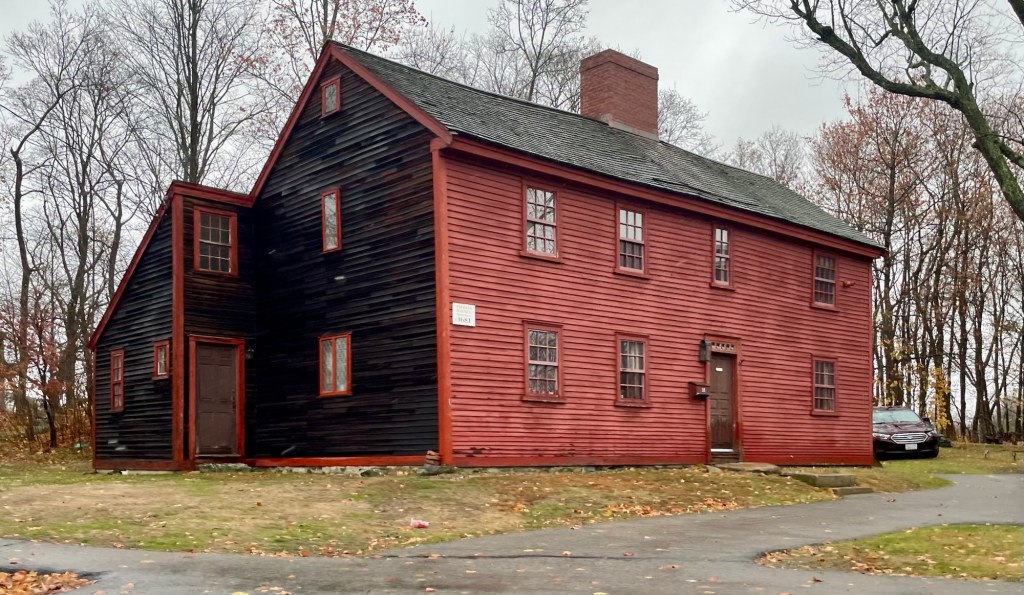
There aren’t many extant buildings with direct ties to the Salem witch trials of the 1690s, but this First Period house on Centre Street in Danvers is one of them! This is the Thomas Haines House, built in 1681 for Thomas Haines. During the witchcraft hysteria of 1692, Thomas testified in the trials of Elizabeth Howe and John Willard, who were accused of witchcraft. Elizabeth would be executed by hanging on July 19, 1692 and John was hanged on August 19, 1692. Less than a year following the frenzy of the trials, Thomas received a license to keep a public house of entertainment & sell strong drink as an innholder. He remained here until 1703, when he sold his home and land to John Allen, a gunsmith, and removed to Salem, New Jersey. The First Period home with saltbox roof is in great condition and was restored to its historic appearance in the 20th century. The property is privately owned.

Chester-Rowley House // 1897

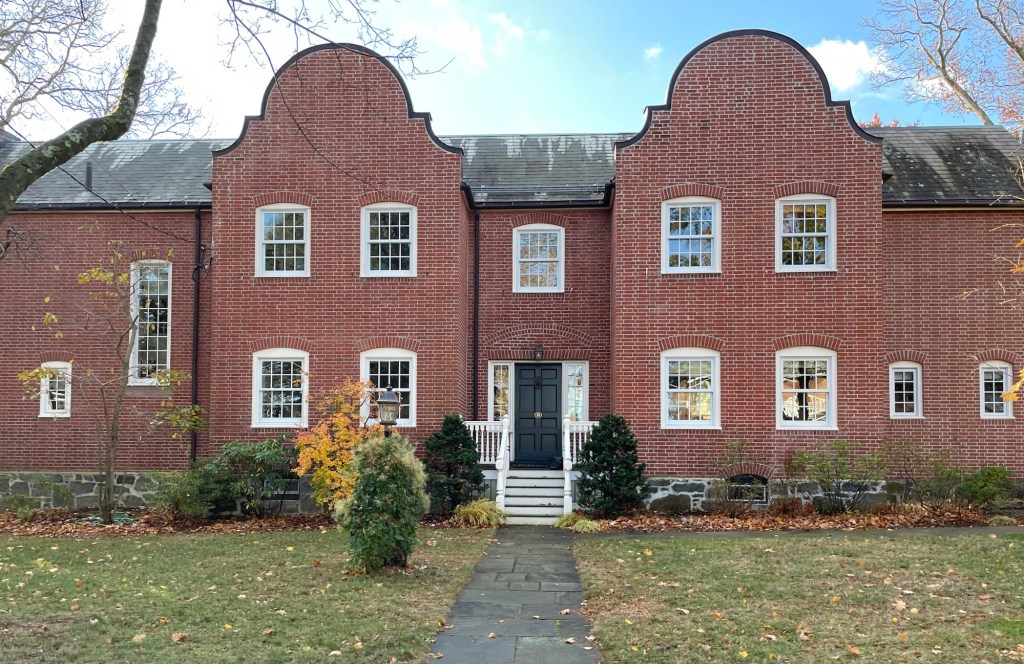
This unique brick house is located on Devon Road in Newton Centre, and was built in 1897 for Arthur Herbert Chester and Elizabeth S. (Rich) ChesterArthur H. Chester (1868-1898) worked in real estate, largely in the office of J. Montgomery Sears. He acquired a large house lot in Newton Centre, and had this unique Jacobean Revival residence built for his young family. Sadly, within a year of its completion, Arthur died of Malarial Fever at the age of just 30 years old in 1898. Elizabeth, his widow, would retain the house for a decade longer before it sold to Henry Esmond Rowley and his wife, Josephine. While it looks like a brick house, this residence is actually wood-frame with a brick veneer, a cost-saving measure to still give a stately appearance. The house is notable for its twin rounded gable parapets at the façade and lack of ornate trimmings. The house was covered in white paint for years, but the owners recently removed all the paint from the brick.

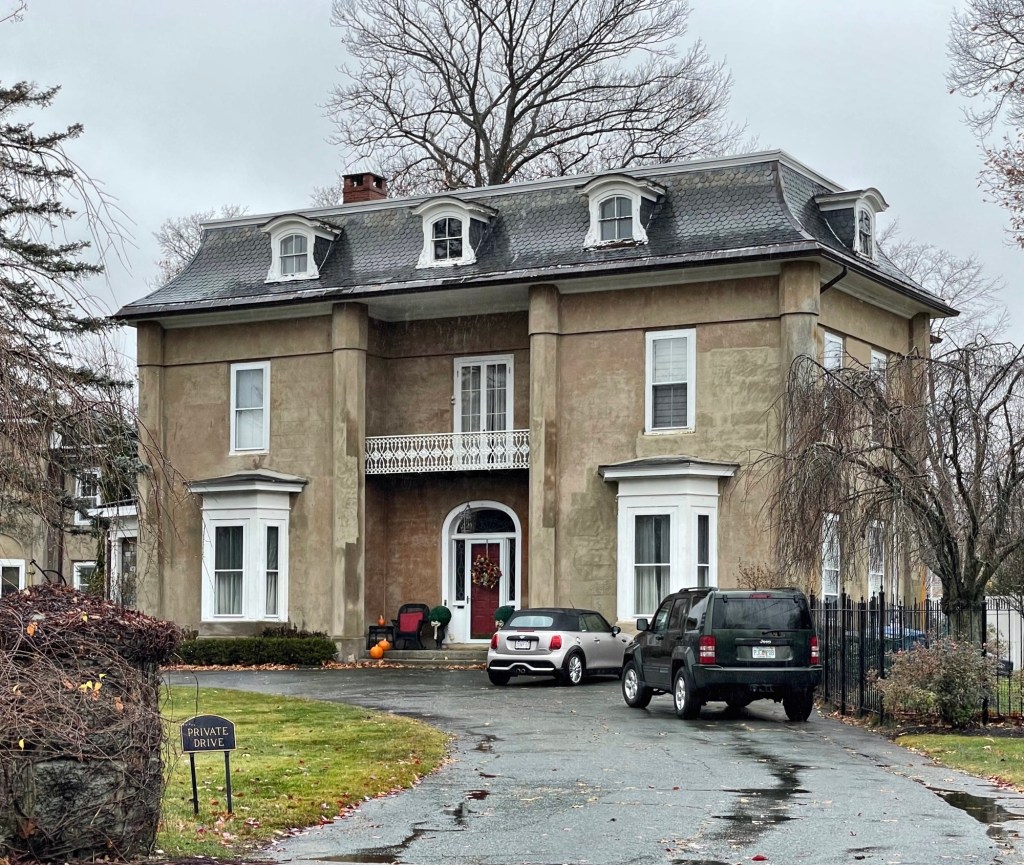
Tenney-Root House // c.1865

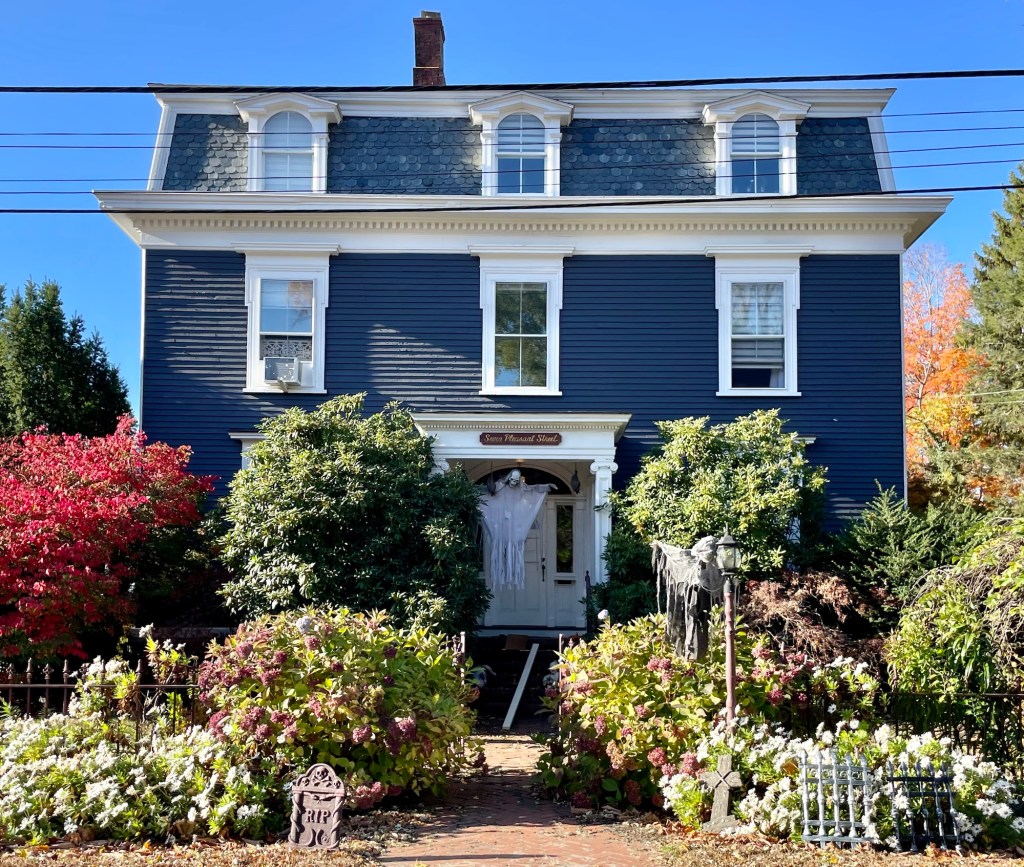
This house in Georgetown Center, Massachusetts dates to the 1860s and appears to have been built for Milton G. Tenney, a shoe manufacturer. By the early 20th century, the home was owned by the third member of the Root family to practice medicine in Georgetown. The first, Dr. Martin Root, established a practice in 1827, serving the community for more than 50 years. His son, Dr. Richmond B. Root, owner of 24 North Street (featured previously), was in turn the father of Dr. Raymond Root (1882-1958), owner of this fancy Second Empire style dwelling. In addition to his private practice, Dr. Raymond Root was a school physician for many years, and served as Town Clerk from 1937 to 1944. The house is Second Empire in style with a mansard roof, window mouldings and two-over-two windows, but features a Colonial Revival portico with what may possibly be a Federal-period entry of fanlight with sidelights, salvaged from his father’s home when that house was renovated.

Adams Hall // c.1828

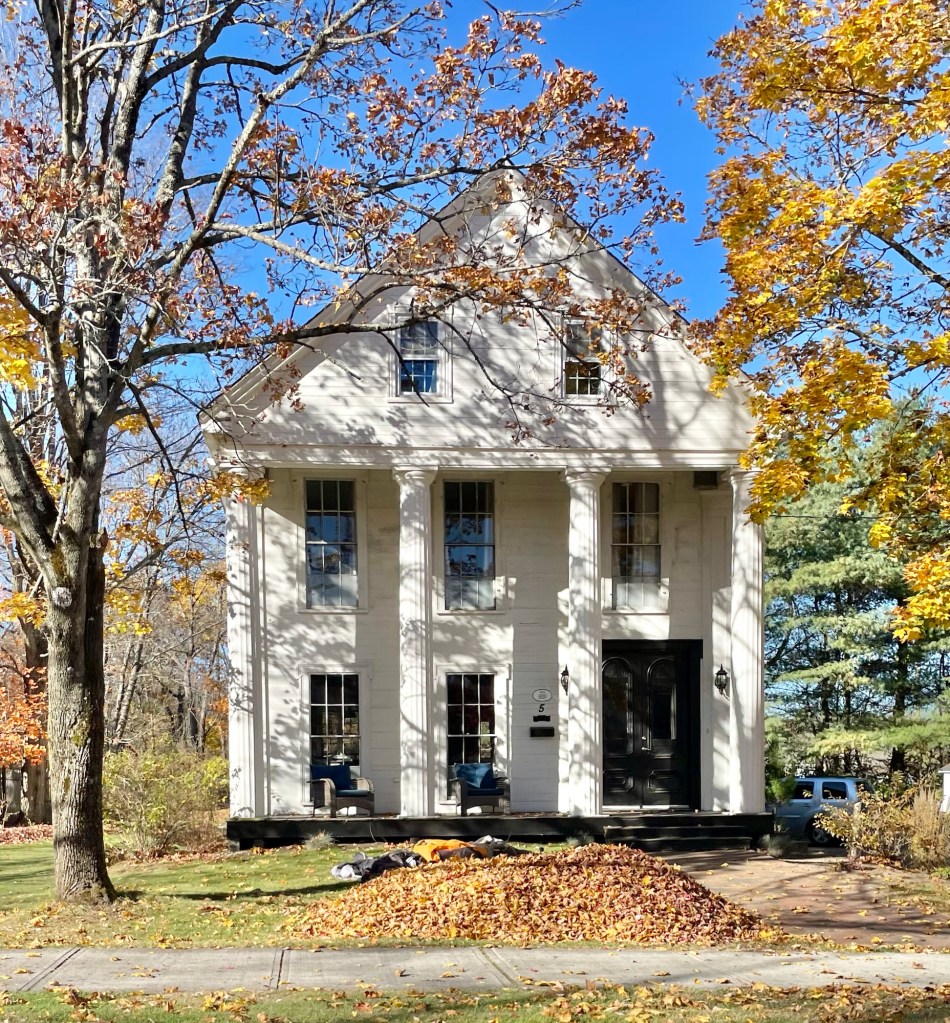
According to local histories, this significant Greek Revival style property on Elm Street in Georgetown, Massachusetts, was owned by Josiah Adams (1757-1852), a farmer, a Revolutionary War veteran, and a fourth-generation descendant of the immigrant Robert Adams, who arrived here from Devonshire, England by about 1629. In March 1849, the town’s Congregational Society purchased Adams Hall for eight hundred dollars to house the church vestry, which remained in the building for forty-one months until a new building was built for that purpose next door. Later, Adams Hall was owned by Moses Tenney (1808-1903), operator of a prosperous saw mill in Georgetown, and served at one time in the state senate. The structure retains its significant temple-front with four, two-story Doric columns supporting the portico. Also special on this residence is the use of flush-board siding and the oversized first floor windows.

Asa Kendall House // c.1790

The Asa Kendall House is a significant Federal period house from the late 18th century on Richardson Road in Ashby, Massachusetts. The house here is actually believed to be the second built on this location, the first being the John Fitch House and Garrison. John Fitch was one of the earliest settlers in present-day Ashby, which in the mid-1700s, was sparsely developed and threats of attack by Native peoples limited development for decades. Due to raising tensions in the years leading up to the French and Indian War, Fitch petitioned the government for a garrison manned by three soldiers, which was approved. In 1745, the garrison was attacked and Fitch with his family, were kidnapped by Native Americans, held hostage for six months and brought up to Canada. The homestead and garrison were burned. He and his family were ransomed and would later return settling elsewhere in town. The former location of the garrison was purchased by Asa Kendall and this house was built around 1790 for him. The brick house with sloping wings was extensively documented as part of the Historic American Building Survey in 1936 and has been preserved by later owners ever-since!