Whitcomb Inn and Farm // c.1708

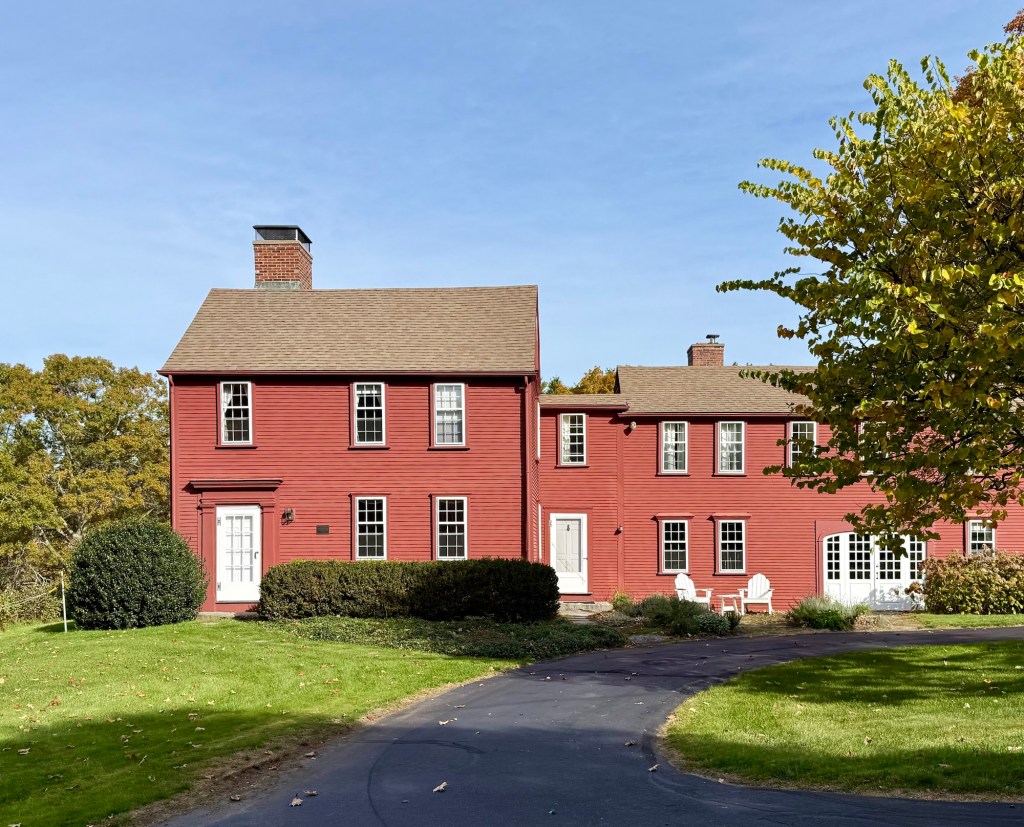
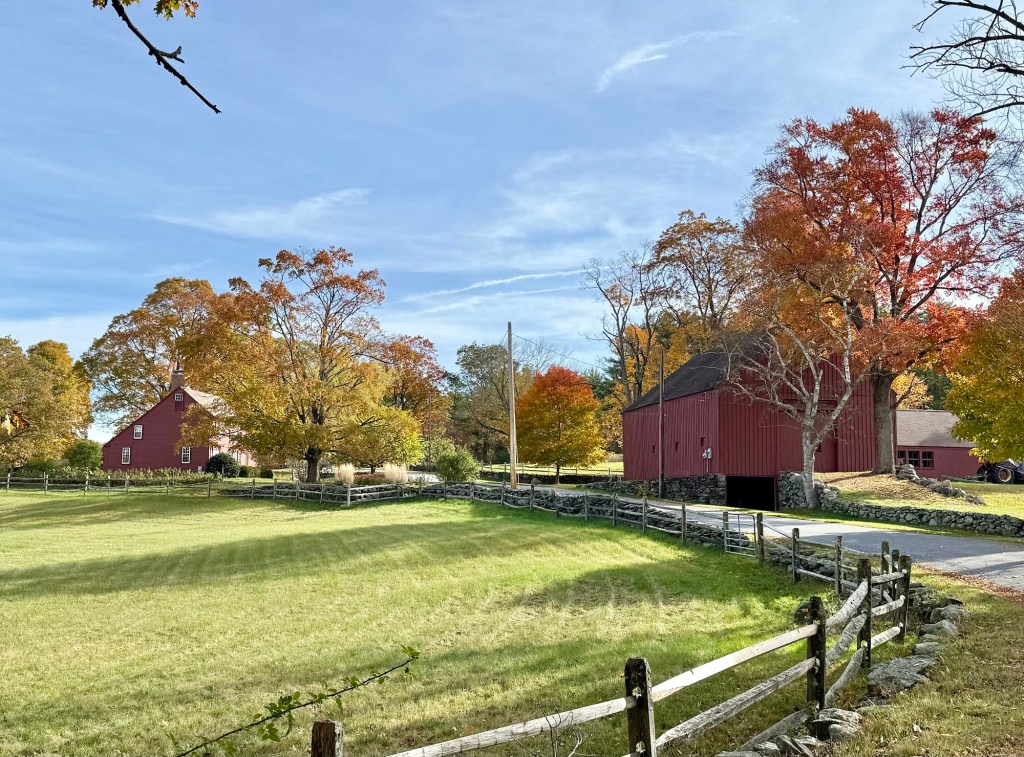
The Whitcomb Inn and Farm in Bolton, Massachusetts, is believed to be the oldest extant building in the rural community and is believed to have been built around 1708. The oldest portion of the farmhouse, the three-bay, two-story, side-hall house, was likely built when David Whitcomb (1668-1730) acquired the land from his father. David married Mary Hayward in 1700 and the couple had many children, necessitating additions to the old farmhouse, including the rear saltbox with a “Beverly jog” (a section of the rear addition projecting beyond the side of the original structure) that was built in the 1710s. The building underwent stylistic changes in the 19th century, most of which were removed during a major restoration in 1937–38 by Philip Phillips, a Harvard professor in Archaeology, who drew the plans for the restoration of the old house and 1850s barn. Professor Phillips was also a conservationist, and donated some of his land, which directly abuts the highway (built in 1962) was donated to the town and is now known as Split-Rock Trail. The Old Whitcomb Inn and Farm was listed on the National Register of Historic Places in 2002, ensuring that any future highway expansion or re-routing would require preservation of this significant home.

Captain John Clark House // 1802

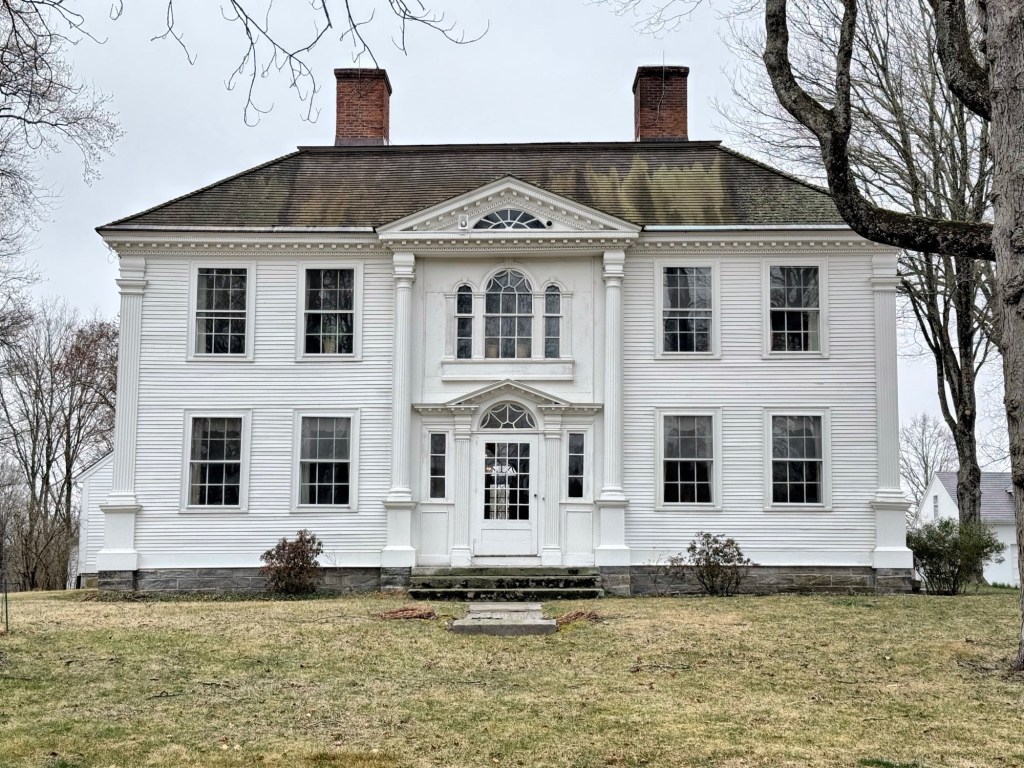
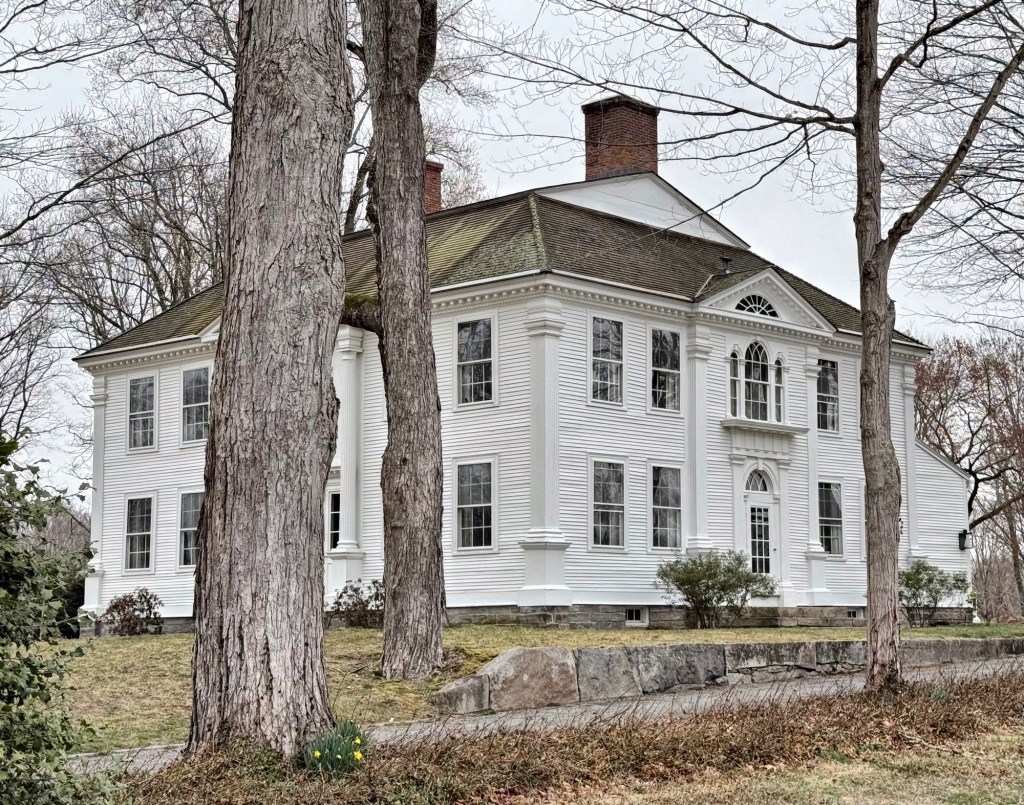
The Captain John Clark House in Canterbury, Connecticut, is one of the finest examples of the Federal style of architecture in New England, and has remained in a fine state of preservation since its construction in the early 19th century. The house was built by 1802 for John Clark (1731-1834), who purchased an earlier home on the site from and had it either taken down or enlarged to its present appearance. The mansion is symmetrical with five bays, central entry and twin chimneys projecting through the hipped roof. The central bay is a showstopper with its triangular pediment at the roofline containing a fanlight, Palladian window at the second floor, and main entrance with its own pediment, sidelights, fanlight transom, all framed by two-story columns. The house’s south facade is equally beautiful with its own Palladian window and entrance.

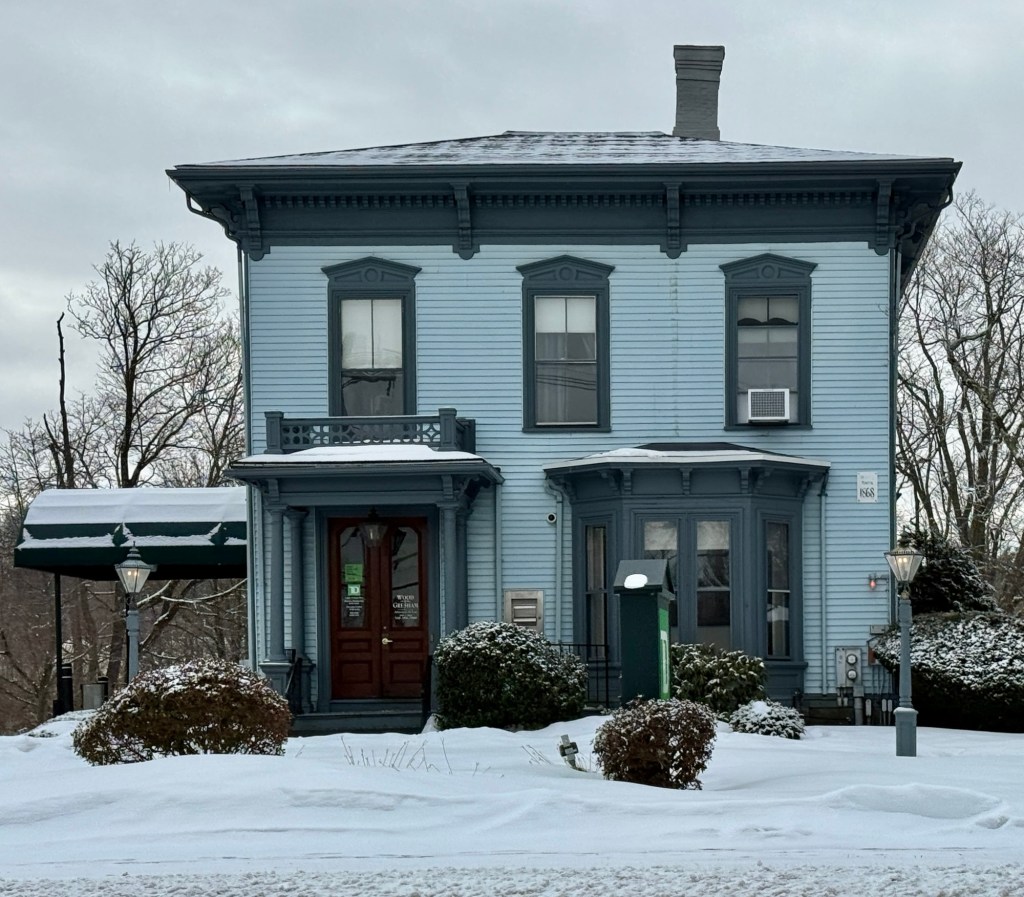
Benjamin F. Greene House // 1868

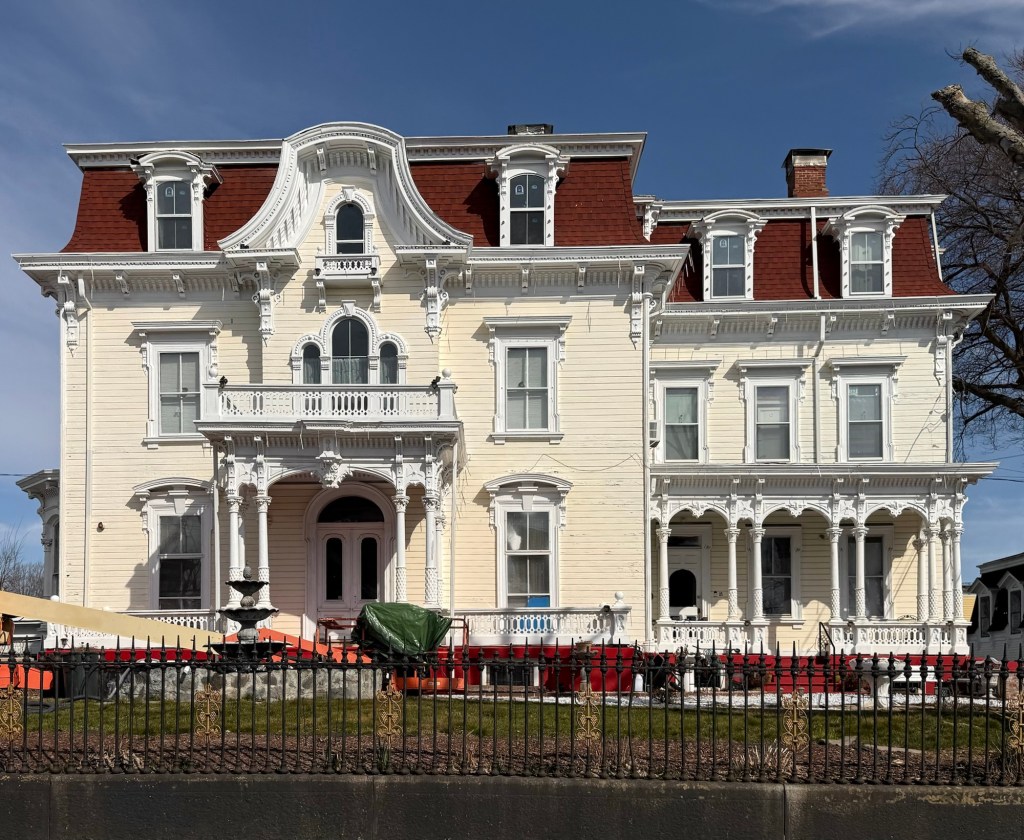
Built for Benjamin Franklin Greene, a second-generation mill owner of the Greene and Daniels Thread Company in Central Falls, Rhode Island, this large, Second Empire style house is one of the finest of its style in the entire state. The house is one of only a few high-style residences left from the mid-nineteenth century in Central Falls, when industrialization’s full expansion provided manufacturers such as Greene with fortunes to be expended on their houses. Designed by Providence architect Clifton A. Hall, the ornamentation of the Greene House is extraordinary for its elaboration, relieving the severity of the simple, block-like shape of the house. The central door is set under a flat-roofed porch which is supported by trios of Corinthian columns. Above the porch a trio of round-head windows is set under a “sunbonnet” gabled dormer which caps the central pavilion, is supported by brackets, and encloses a round-head window with a small balcony. What a spectacular home!

Forrester-Peabody House – Salem Home for Aged Men // 1818

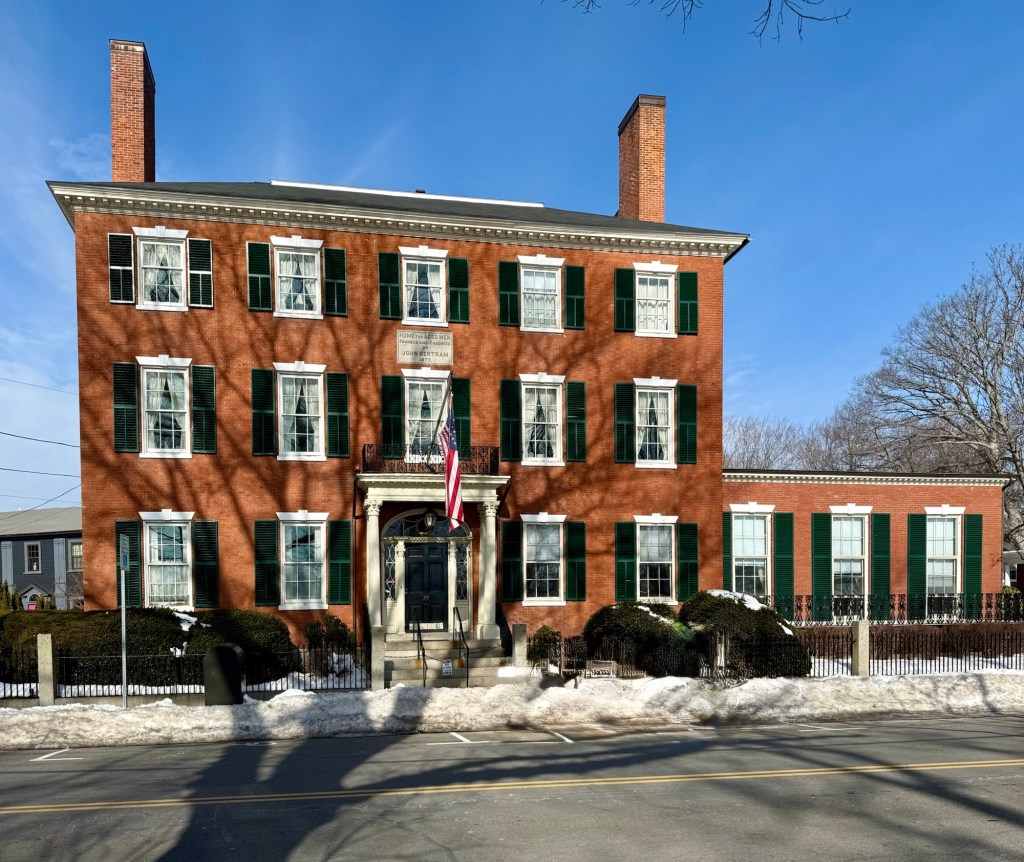
Overlooking the Salem Common, this 1818 Federal style dwelling has served as everything from a single-family home to a boarding house and ultimately an assisted living facility, showcasing that old buildings can always be repurposed into new uses. The home was built for Captain John Forrester, son of Simon Forrester, one of Salem’s most successful merchants. The Forrester House was purchased in the 1830s by George Peabody, who added the one-story ballroom wing. Peabody lived in the house until 1892 and the building later housed the Salem Club, a men’s social organization with over two-hundred well-connected members. In the 1920s, it became the Bertram Home for Aged Men, named after Captain John Bertram, who founded the organization in 1877 as a charitable residence providing housing and socialization space for aged men in Salem. The home had fallen into disrepair when it was closed in 1988, to reopen two years later as the first free-standing assisted living community for men and women in Massachusetts, today known as the Bertram House.

Wadsworth Hall // 1800

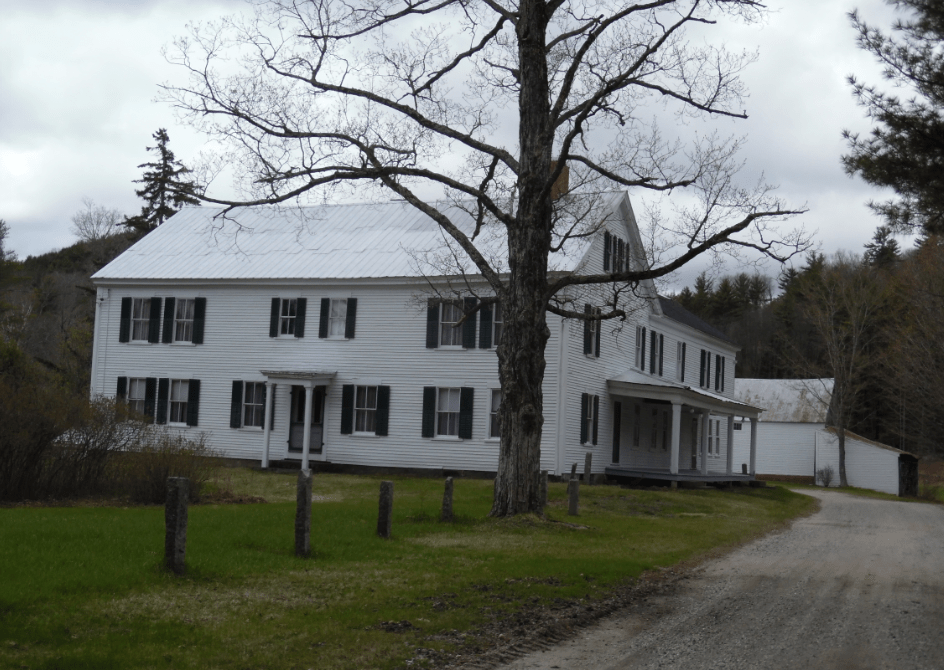
Wadsworth Hall is a significant and hidden estate house located in rural Hiram, Maine. The house was built in 1800 for Peleg Wadsworth (1748-1829), an officer during the American Revolutionary War and a Congressman from Massachusetts representing the District of Maine. He was also grandfather of noted American poet Henry Wadsworth Longfellow. General Wadsworth’s primary residence, now known as the Wadsworth-Longfellow House in Portland, Maine, was built in 1785–86. Following the war, Wadsworth was granted 7,800 acres of land by the state in 1790 for his war service, the land was located here in Hiram. General Wadsworth would build this large Federal period home. After, he gave his Portland home to his daughter Zilpah and her husband Stephen Longfellow, parents of the poet Henry W. Longfellow. Wadsworth, in his role as a leading citizen in Hiram, opened his house for meetings and town functions, and even used the large hall for militia drills during bad weather.

Branchville Railroad Tenement // c.1853

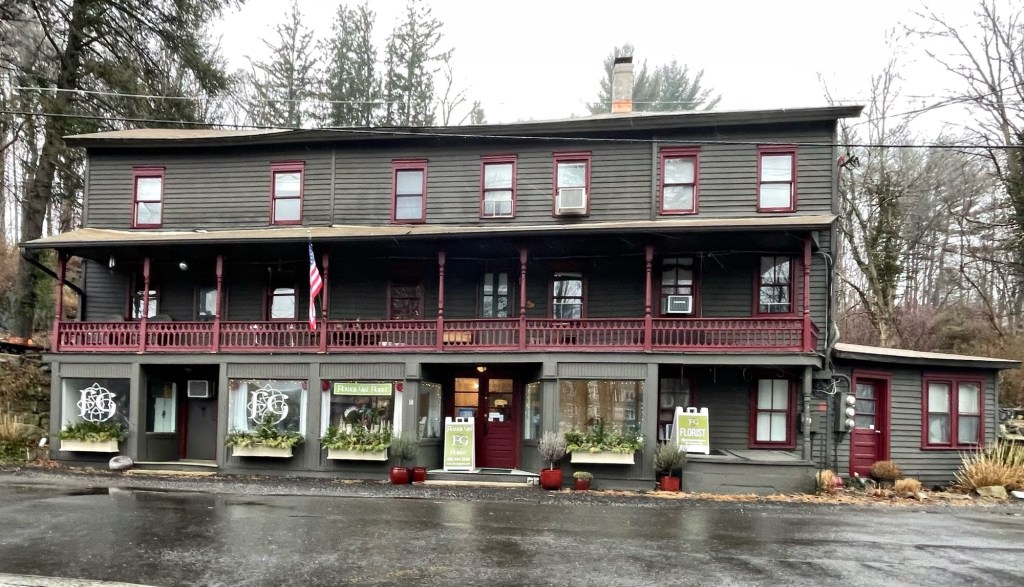
The Branchville Railroad Tenement in Ridgefield, Connecticut was built in three phases between around 1853 and 1905 and is one of the towns significant vernacular landmarks. Its earliest incarnation was as a storage facility for the railroad station, to which two stories of residences were added to houses workers on the railroad. Following completion of the railroad, the building was converted into a hotel in 1880, at which time the two-story porch was built and the interior was redecorated. This was apparently an unsuccessful venture, and in 1905 it was converted to a saloon and multifamily residence. Today, the old railroad tenement is home to a small business with housing above.