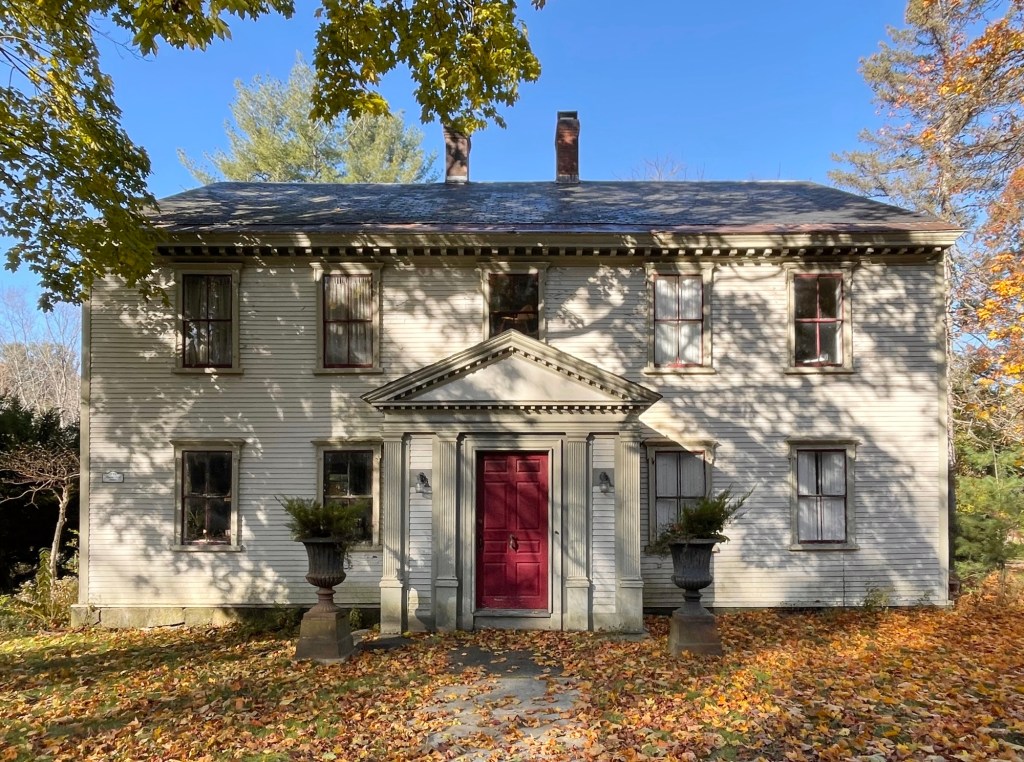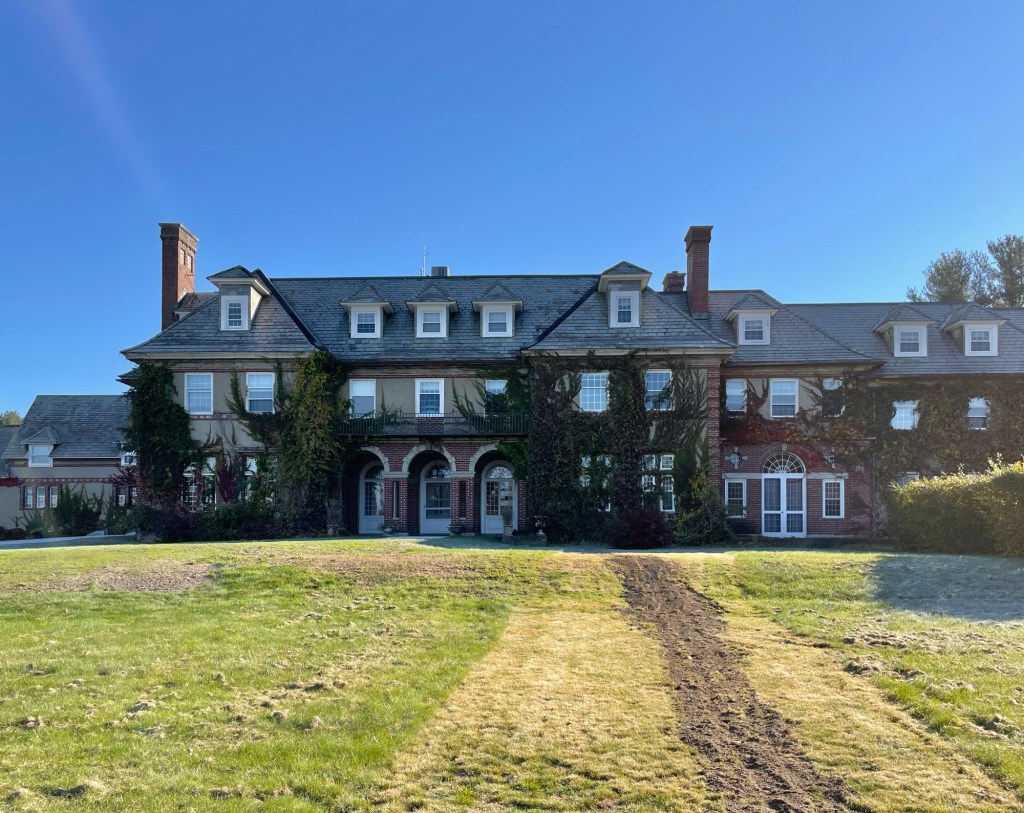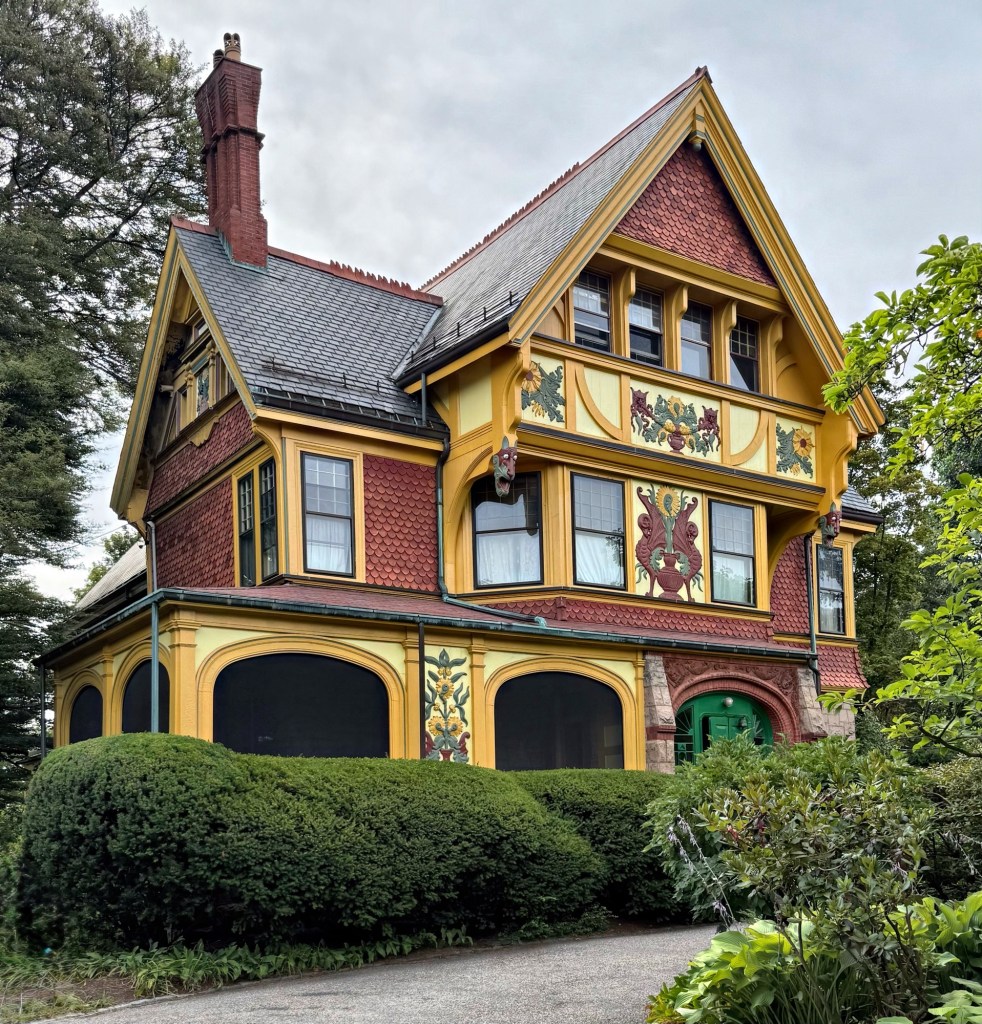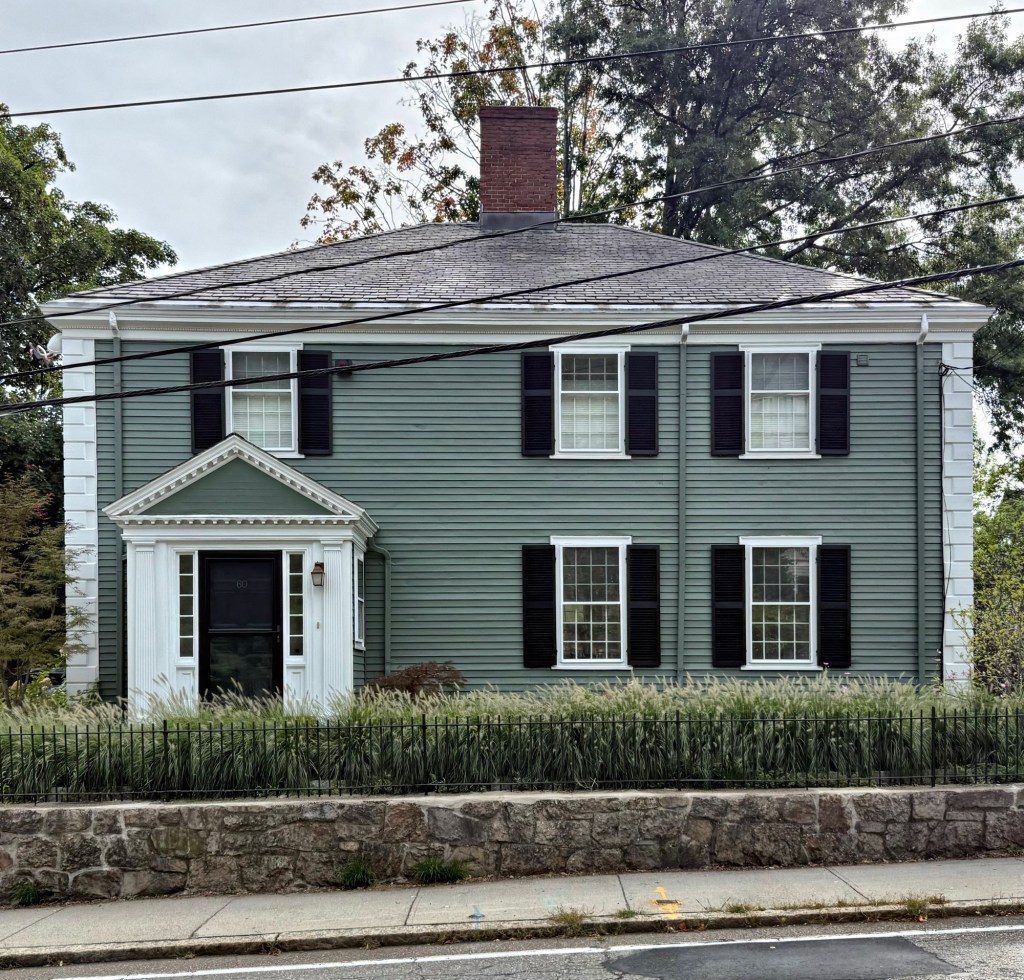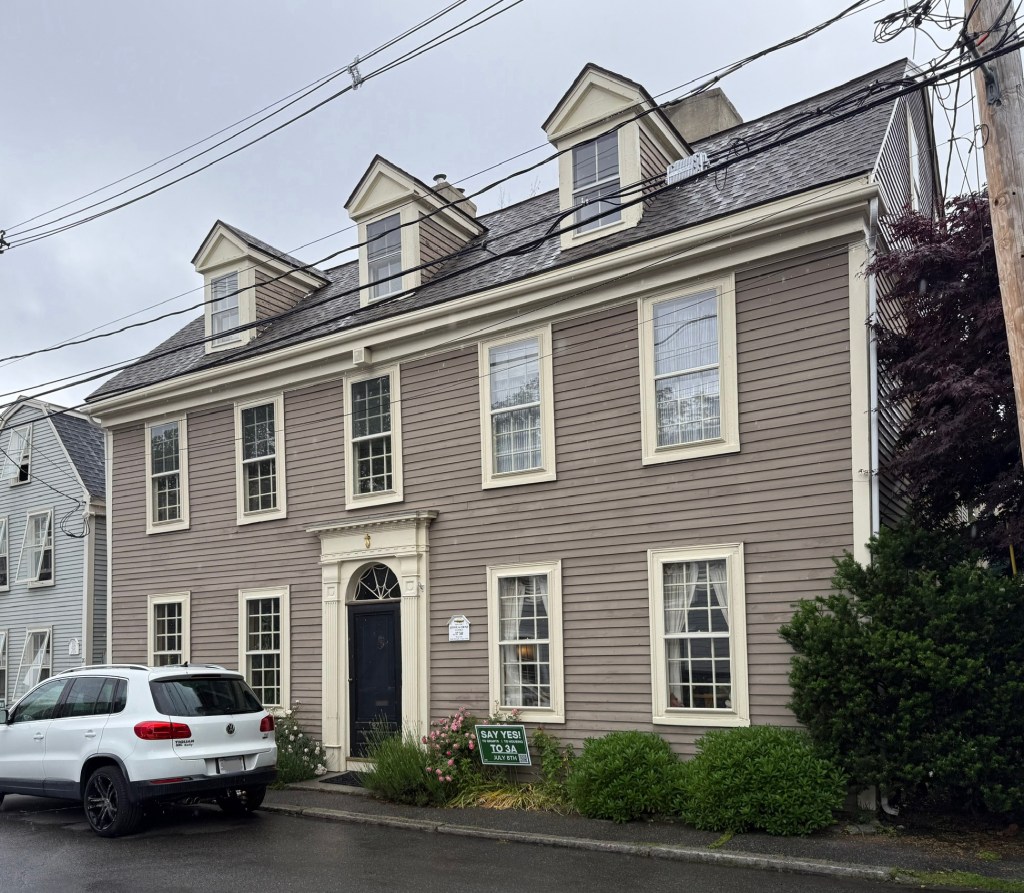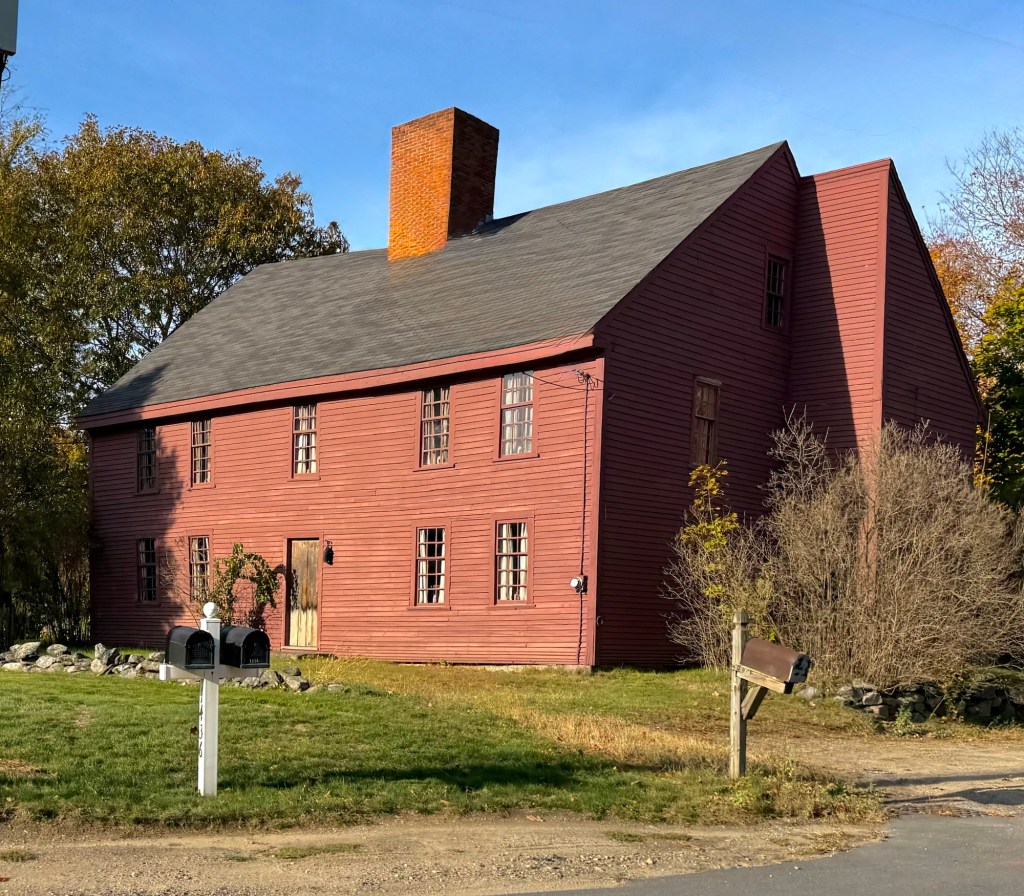
Codman-Gillet House // 1928

Built in 1928 as an accurate reproduction of an 18th-century residence the Codman-Gillet House at 60 High Street in Brookline is significant architecturally in the Colonial Revival style but also as a preserved house by the architectural firm of Howe, Manny and Almy. Lois Lilley Howe and Eleanor Manning were among the first women graduates of the M.I.T. School of Architecture, and the firm was joined in 1926 by Mary Almy. Their firm was the first all-woman architecture practice in Boston and the second in the U.S. Howe was the first woman elected a Fellow of the American Institute of Architects. The house was built for William Coombs Codman, a trustee of various real estate trusts, and was likely rented or sold for investment. The first long-time owner/occupants of the residence were Mr. and Mrs. Fernand Gillet and who both taught at the New England Conservatory of Music. Fernand was the principal oboist of the Boston Symphony Orchestra from 1925 to 1946. The Codman-Gillet House features many traditional Colonial Revival elements including: the corner quoining, window trim, a pedimented projecting entrance, and hipped roof with large central chimney.

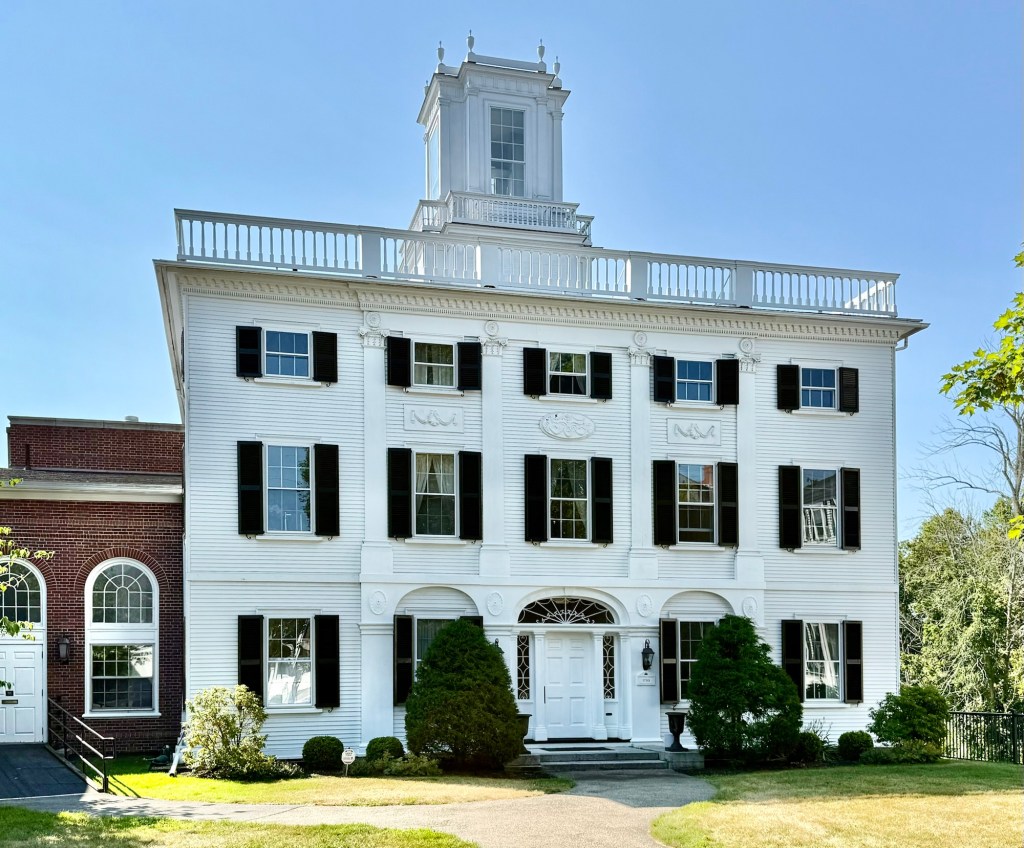
Peirce Mansion // 1799

The Peirce Mansion on Court Street in Portsmouth, New Hampshire, is one of the finest, high-style Federal period homes in the United States. Built in 1799 for John Peirce (1746-1814), the residence is said to have been designed by Bradbury Johnson, a local carpenter and builder who was inspired by the designs of Charles Bulfinch. John Peirce began his career in the counting room of Daniel Rindge and worked in business and banking in Portsmouth. Peirce opposed the American rebellion against England but did not serve either side during the war. After the Revolution, in 1789, John Peirce was one of the leading citizens appointed to escort President George Washington around Portsmouth. The Peirce Mansion remained in the family over 150 years until it was sold by his descendants to the Middle Street Baptist Church in 1955, who extensively modified the residence to serve as a vestry and meeting space for church activities. The building was moved back from the road with the four tall chimneys were removed. Architecturally, the Peirce Mansion stands out for its massing, hip-roof with cupola adorned by a balustrade and urns, and the facade with elliptical arches, molded medallions, pilasters, and the Federal style entry treatment with fanlight transom and sidelights.

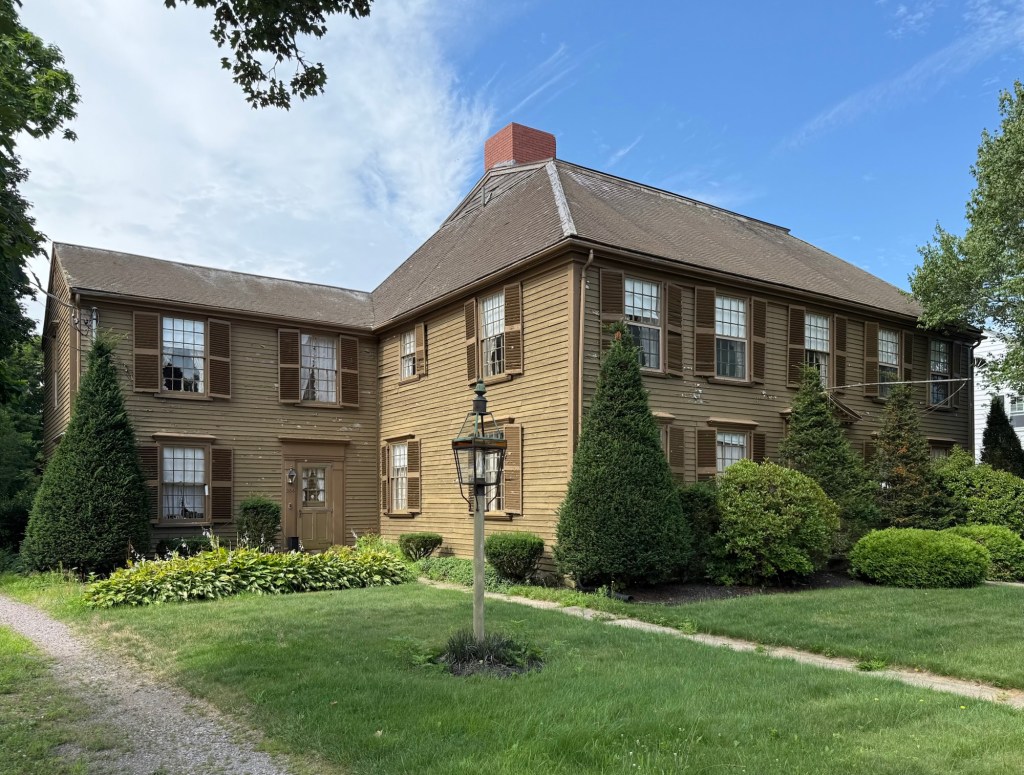
Bildad Washburn Tavern // c.1774

This stately Georgian style house on Main Street in Kingston, Massachusetts, was originally built in nearby Marshfield and later moved to its current location just decades later. The house was built on the Winslow estate in Marshfield in about 1774 by either Dr. Isaac Winslow or his brother, Maj Pelham Winslow. In 1796, the property was purchased by Bildad Washburn, a noted gravestone carver, and the house was moved to its present site. Reports state that the house was moved by boat and oxcart to its current location, where it became a tavern and residence of Mr. Washburn. In 1804, the house was sold to Major George Russell, a merchant and town clerk, who later served in the War of 1812, who converted the ell into a store where he sold, East and West India goods from his ships. After his death, his daughter ran a dame’s school from the house. The Washburn Tavern is significant as a large Georgian-era house that remains in a great state of preservation.

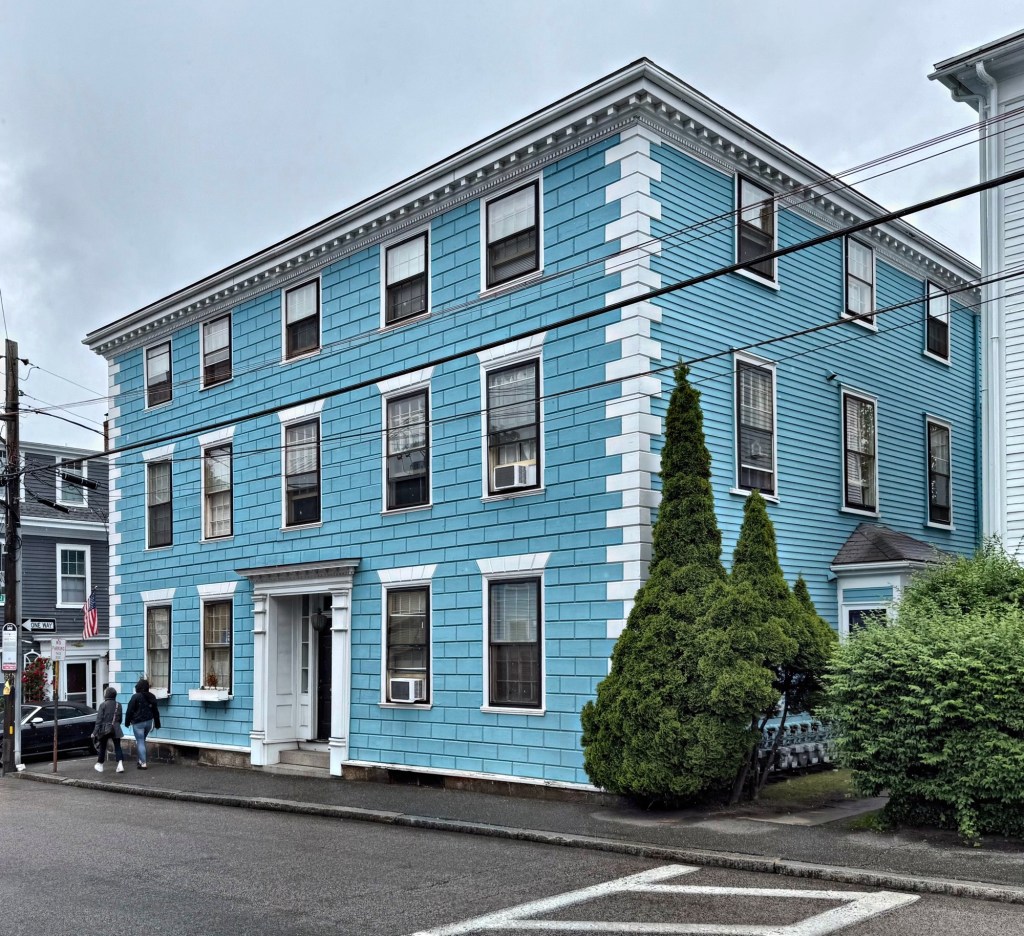
Pedrick Mansion // c.1756

One of the great Colonial-era houses of Marblehead is this stately residence, the John Pedrick Mansion on Washington Street. The house dates to about 1756 and was built for John Pedrick (1733-1780), a wealthy shipping merchant. According to ‘The History and Traditions of Marblehead’, Pedrick’s “ships sailed to nearly every port in England, Spain, and the West Indies, and his transactions were with some of the largest mercantile houses of Europe. At one time, it is said, he owned twenty-five vessels engaged in the foreign trade.” The Revolutionary War, which proved so disastrous to the merchants of Marblehead, bore with especial severity upon Major Pedrick, as several of his vessels were destroyed by British cruisers in Massachusetts Bay, and many others rotted in port from blocades and engagements. The property was likely modernized after John Pedrick’s death in 1780 with a more Federal form, possibly adding the third floor and shallow hipped roof. The building’s facade is scored to resemble ashlar masonry, giving it a more stately appearance, but the bright blue really diminishes the feature, which should typically be colored a natural stone.

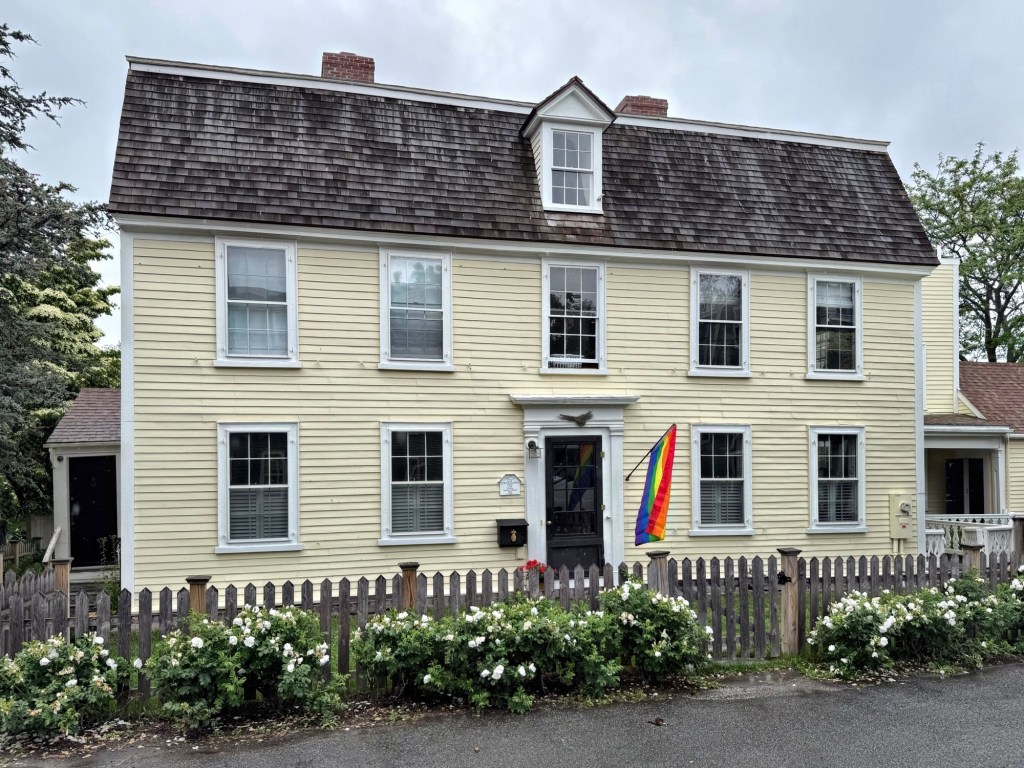
Thomas Gerry House – Hearth and Eagle House // 1717

This house has a lot of history! Originally built around 1717 by Ephraim Sanders, this house on Franklin Street in Marblehead was later purchased by Thomas Gerry (1702-1774), a merchant who operated ships out of Marblehead, and father to Elbridge Gerry, the fifth Vice President of the United States. The home was likely a three-bay, side hall Georgian house and expanded to the current five-bay configuration by Thomas Gerry around 1750. Thomas Gerry was born in Derbyshire, England, but came to Marblehead by around 1730 and was active in local politics and had a leading role in the local militia, later speaking out against the Crown and sought independence. Thomas Gerry died in 1774, and did not get to see the Revolution nor his son become a Founding Father. The property was later the home of one of his granddaughters, Sarah Gerry Conklin, and her husband, Frederick Conklin, an infantry captain, who housed officers in command of nearby Fort Sewall during the War of 1812. In the 1940s, historical novelist Anya Seton after researching her genealogy, led her to base her 1948 novel, The Hearth and Eagle, on the history of the seaside town. She set the novel in the Hearth and Eagle Inn, based on the Gerry House here.

Joshua Orne House // c.1750

Joshua Orne (1708-1772) was born in Marblehead and attended local schools there. He would marry Sarah Gale, and they had one son together, Azor Orne, who would become a merchant, politician and patriot, fighting in the American Revolution. Sarah Gale died in 1743 and Joshua would remarry to Annis Stacey, having one child together, Joshua Orne Jr., who was a Patriot and fought in the Revolution, fighting alongside his half-brother, Azor. Joshua Orne and Annis owned a c.1663 house on this site and appear to have completely rebuilt the house or greatly modernized it around 1750. Joshua was a cordwainer and shipowner and later got involved with discussions of revolution and liberation from England. He likely inspired his sons to follow-suit and shared the same beliefs and values, though Joshua Sr. would die in 1772, not seeing the beginning of the War, nor freedom from tyranny. The house would be inherited by Joshua Jr. and later deeded to his son-in-law, John Bubier Prentiss, a shipmaster, who likely added the Federal period doorway and pedimented dormers.

Sibley House – Westborough Historical Society Building // 1844

The Sibley House is a historic house museum as well as the headquarters of the Westborough Historical Society. Located on Parkman Street in the center of Westborough, Massachusetts, the transitional Greek Revival/Italianate style house was built in 1844, by William Sibley, who was a blacksmith and wheelwright. Soon after the house was built, William married Jane Caroline Gibson, and the couple raised five children here. William joined Westborough’s Company K, 13th Massachusetts Regiment during the Civil War and was wounded at Antietam. After the war, William returned home and he and his brother Frank began to manufacture sleighs.  At one point, they produced as many as 300 a year! The Sibley House was purchased by the Westborough Historical Society in 1990, nearly 100 years after the society was established in 1889. The house is open to visitors and provides a glimpse into daily life for Westborough citizens at the time. 

Frederick Sears Cottage // 1851

The Frederick Sears Cottage in the Cottage Farm neighborhood of Brookline, Massachusetts, is significant as one of the major surviving examples of Gothic Revival domestic architecture in the Boston area. In 1849, wealthy Bostonian, David Sears (1787-1871) laid out parks and squares in the Cottage Farm neighborhood, and built houses for himself and his children. His own house, erected in 1843, was the oldest, soon followed by houses for his four daughters, Ellen d’Hautville, Harriet Crowninshield, Anna Amory, Grace Rives, and son, Frederick. The Frederick Sears Cottage is the only surviving Sears residence in the Cottage Farm neighborhood. Frederick Sears‘ cottage was built in 1851, though he did not occupy the house long, as just three years after he and his wife married in 1852 to move into this home, Marian died. The house was inherited by Frederick Sears Jr. , and was acquired by Boston University in 1960, who began to expand into this neighborhood. They maintain the significant property very well. The Sears Cottage is an excellent example of the Gothic Revival style in stone with scalloped vergeboards, quatrefoil motifs, corner quoins, and projecting entry. The house is constructed of Roxbury Puddingstone and is said to have been designed by George Minot Dexter.

John L. Sullivan House // c.1812

This modified Federal style cottage in Abington, Massachusetts, is known locally as the last home of World Heavyweight Champion bare knuckle boxer, John L. Sullivan. John Sullivan (1858-1918) died in this house on February 2, 1918, of heart disease, but left behind a legacy that will last forever. The house was originally constructed around 1812 for Jacob Cobb, a Deacon of a local church and after successive ownership, the house was purchased by boxer John Sullivan, to celebrate his retirement. As a professional fighter Sullivan was nicknamed The Boston Strongboy, and was one of the first great American boxers and was the last world champion bare-knuckle boxer. He had a record of 47 wins, 1 loss and 2 draws, with 38 wins by knockout in his career. Sullivan’s blustering personality and fabled strength gained him a great following, and he would be inducted into the International Boxing Hall of Fame as part of its original class. As champion he earned more than $1 million but squandered it. A hard drinker during his ring career, he later became an advocate of prohibition and delivered many lectures on the subject. His brick Federal house in Abington was modernized by him, adding the dormer and full-length front porch supported by rubblestone columns.

Paul and Caroline Hunt House // 1905

Paul Hunt, the son of famous painter, William Morris Hunt, and the nephew of famed architect Richard Morris Hunt, built this house in Brookline, Massachusetts for $15,000 for him and his wife, Caroline. Paul had been involved in real estate development in Bar Harbor, Maine, where his mother had a summer cottage, and while not an architect himself, he was very interested in design and took a keen interest in developing estates with the family funds. While developing property in the summer enclave of Bar Harbor, Maine, Paul met the Bar Harbor architect, Milton W. Stratton, and the two collaborated in the construction of houses there and two adjacent homes in Brookline. The two-story house is wood frame construction with a stucco finish on the exterior. Spanish Colonial Revival in style, the roof is hipped with terra cotta tile, as is the roof of the verandah which extends across the facade. In 1911, Paul Hunt worked with architect William Ewing Harding to add the two-story wing on the side of the house, which is built over the driveway, creating a really unique (though not as functional) design element.