Providence County Courthouse // 1926

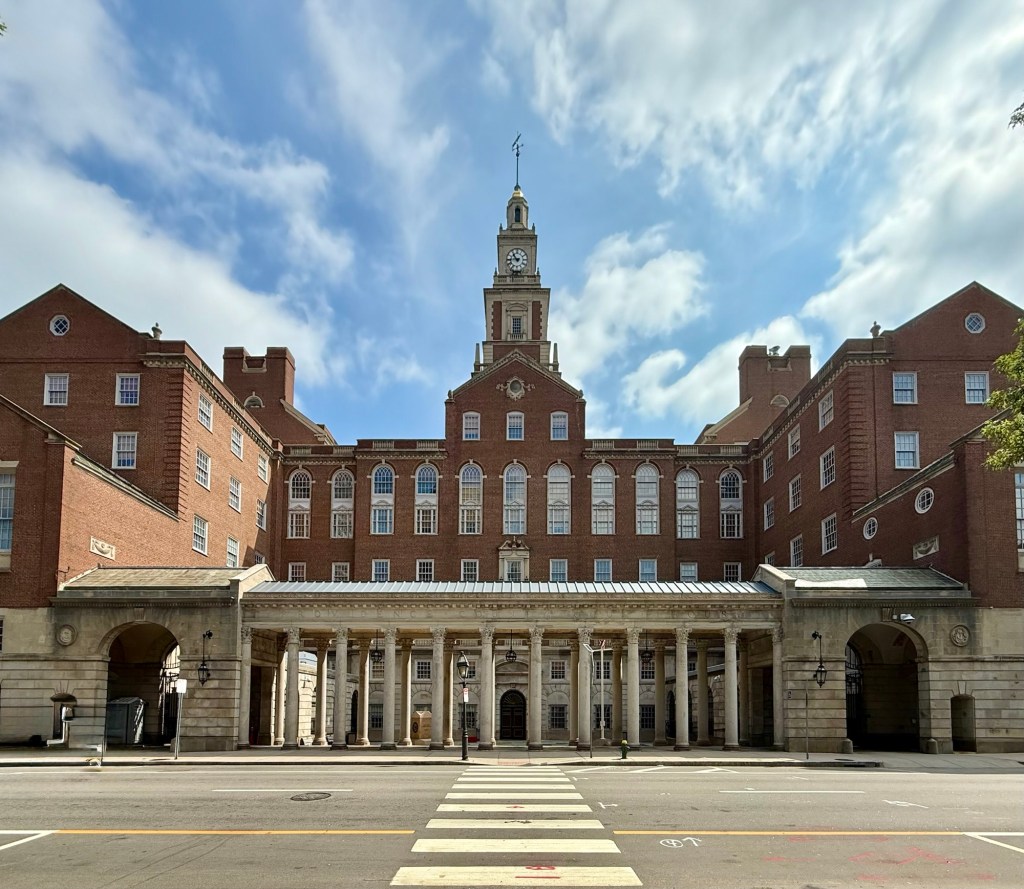
S. Main Street Elevation

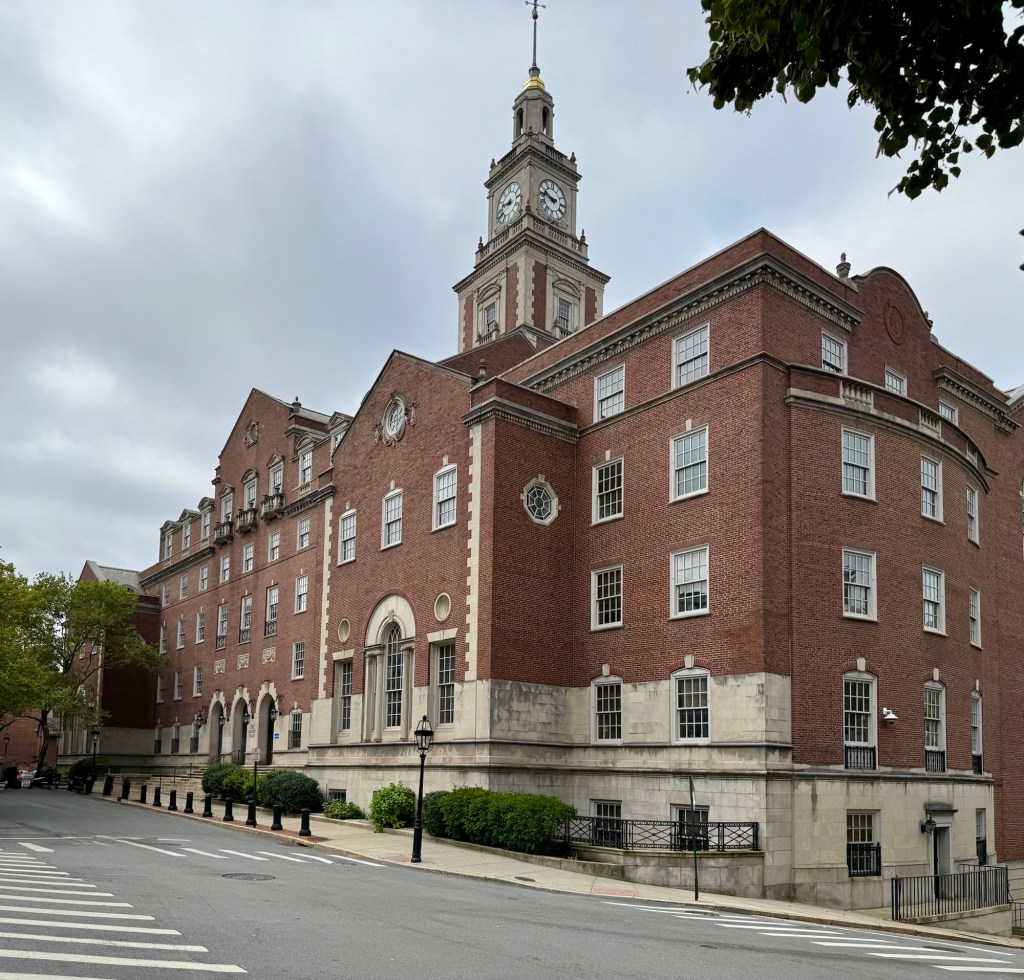
The Providence County Courthouse complex occupies an entire city block running between Benefit Street and South Main Street and while of immense scale, is broken up into more human-scaled wings and masses that make the building one of the finest and contextual designs in a city full of amazing architecture. The courthouse here replaced the first courthouse, a stunning palace of justice designed by Stone & Carpenter in the High Victorian Gothic style, that was completed in 1877. The old courthouse was soon outgrown and a larger building was planned following WWI. The present courthouse was built between 1926 and 1930 following a design by Jackson, Robertson & Adams in the Georgian Revival style, fitting of its context amongst some of the finest Colonial-era houses and buildings in New England. The building today contains the Rhode Island Supreme Court, Providence County Superior Court, and the local trial court. The South Main Street facade is my favorite with the Guastavino tile roof entry and stunning colonnade at the street level. A multi-stage clocktower emerges from the center of the building, at a height of 216-feet, making the courthouse the 11th tallest building in Providence.

Benefit Street Elevation

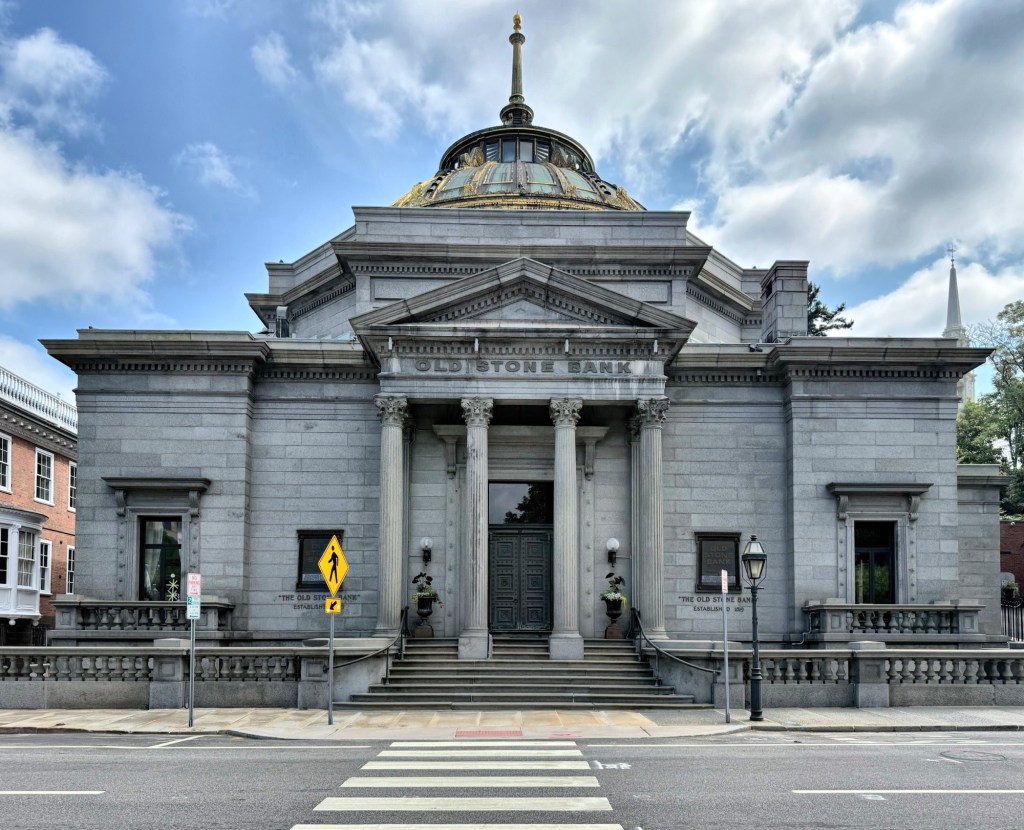
Old Stone Bank // 1896

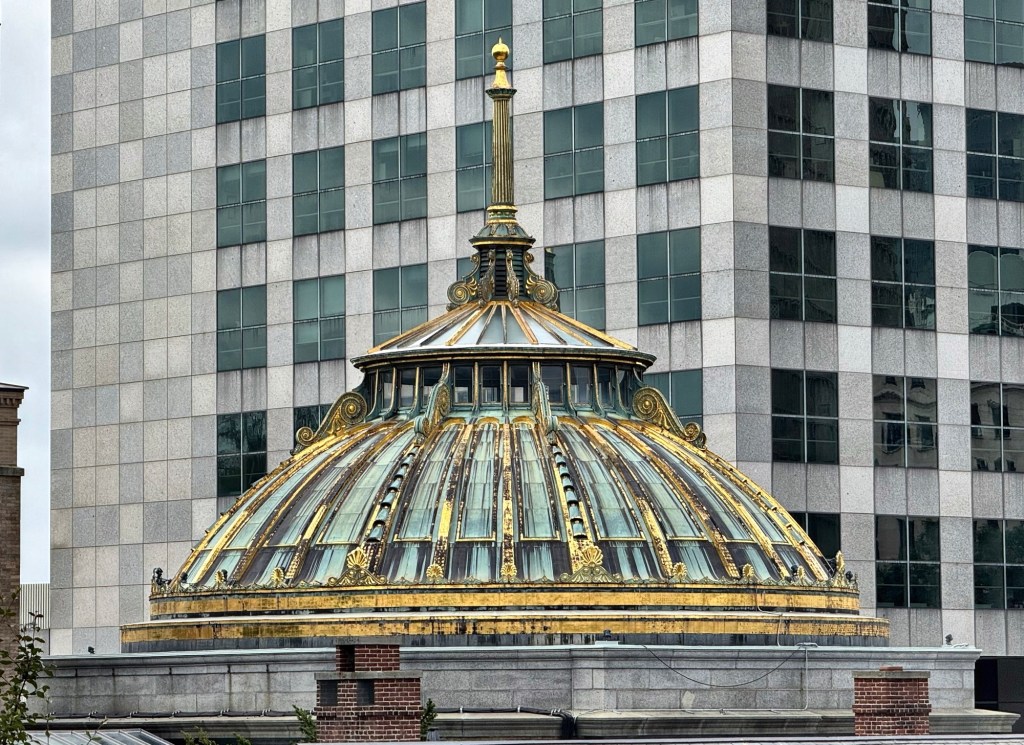
The Old Stone Bank was founded in 1819 as the first savings bank in Providence, Rhode Island, but originally under the name, Providence Institution for Savings. A constantly growing volume of business influenced the erection, in 1854, of a building for the exclusive purposes of the bank at 86 South Main Street, near College Hill. Designed by C.J. and R.J. Hall, the original stone bank stood one-story tall with a gable roof. Success and further expansion of the institution led to the erection, in 1896, of the present building, which served as the main office. Designed by the local architectural firm of Stone, Carpenter & Willson, the present domed banking structure is said to have incorporated parts of the 1854 building, and expanded the rest to the landmark we see today. The Beaux Arts/Neo-Classical banking structure is constructed of granite, with a Classical pedimented entry of monumental Corinthian columns atop the staircase, but the highlight of the building has to be the gold-leaf-and-copper domed roof which partially served as a skylight for the banking hall inside. Offices relocated to a new building in the late 1960s. The banking institution closed in the 1980s and following acquisitions and insolvency, the main bank was sold in 1995 to Brown University for $1.15 million to house the Haffenreffer Museum of Anthropology‘s collection of Native American artifacts. Years later, Brown decided it was unfeasible to house the collection in the building as the necessary alterations would have altered the historic character of the building, they then sold the building to an LLC in 2009. The Old Stone Bank is now a single-family home. Yes, you heard that right. The new owners have lovingly preserved this architectural marvel for all to enjoy as they stroll the city.

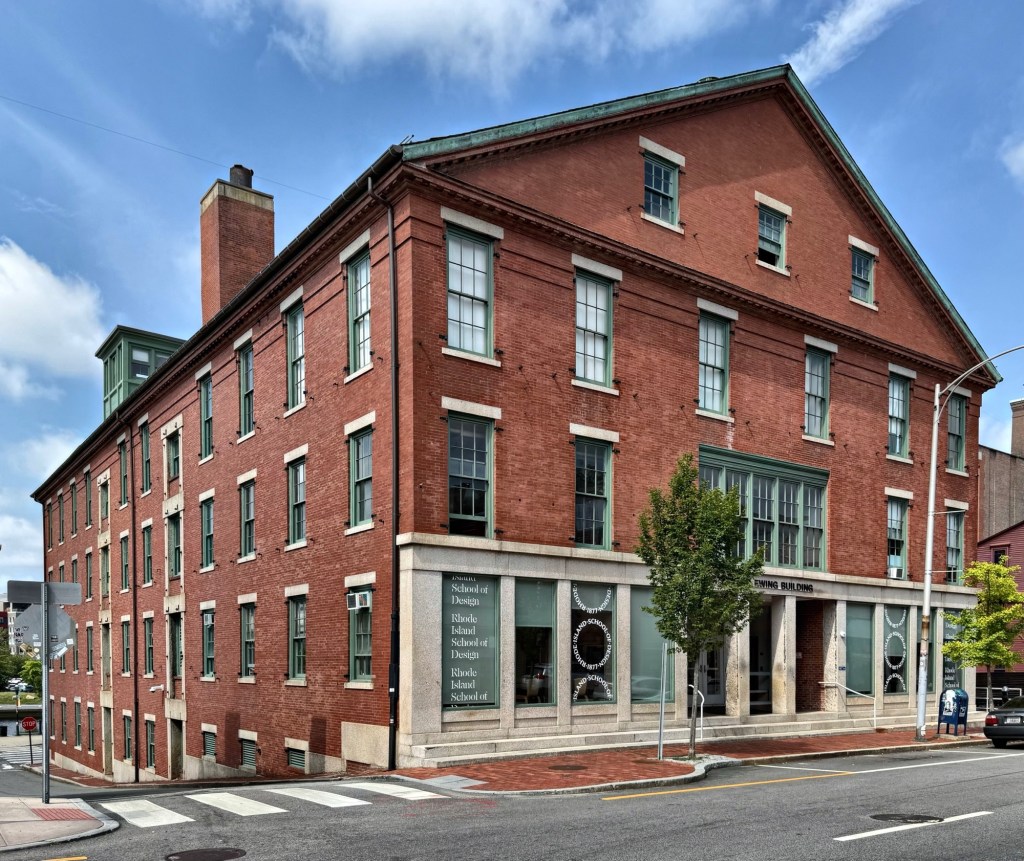
Bayard Ewing Building // 1848

Located on South Main Street in Providence, this large Greek Revival style commercial building, with its gable pediment facing the street was built in 1848 by the Fall River Ironworks Company.The company was founded in Fall River, Massachusetts (then partly located within Rhode Island) in 1822 to manufacture nails. The company owned and occupied this building from its construction until 1881, when it was occupied by the Rumford Chemical Works, founded by Eben Horsford as a manufacturer of baking powder, with this building serving as its main office. In 1927, the Phillips Lead Company, a plumbing supply house, purchased the property and continued to use it until 1973, when it was acquired via taking as part of an Urban Renewal plan for the area. Luckily, the building was deemed significant, and preserved following its purchase by the Rhode Island School of Design (RISD) and converted to classroom and studio spaces in 1978 for several of the school’s departments. The restoration and adaptive reuse was overseen by local architect Irving B. Haynes. The building, now known as the Bayard Ewing Building, is one of the earliest such examples of adaptive reuse in Providence and showcases that old buildings can be repurposed for new ideas and uses. 

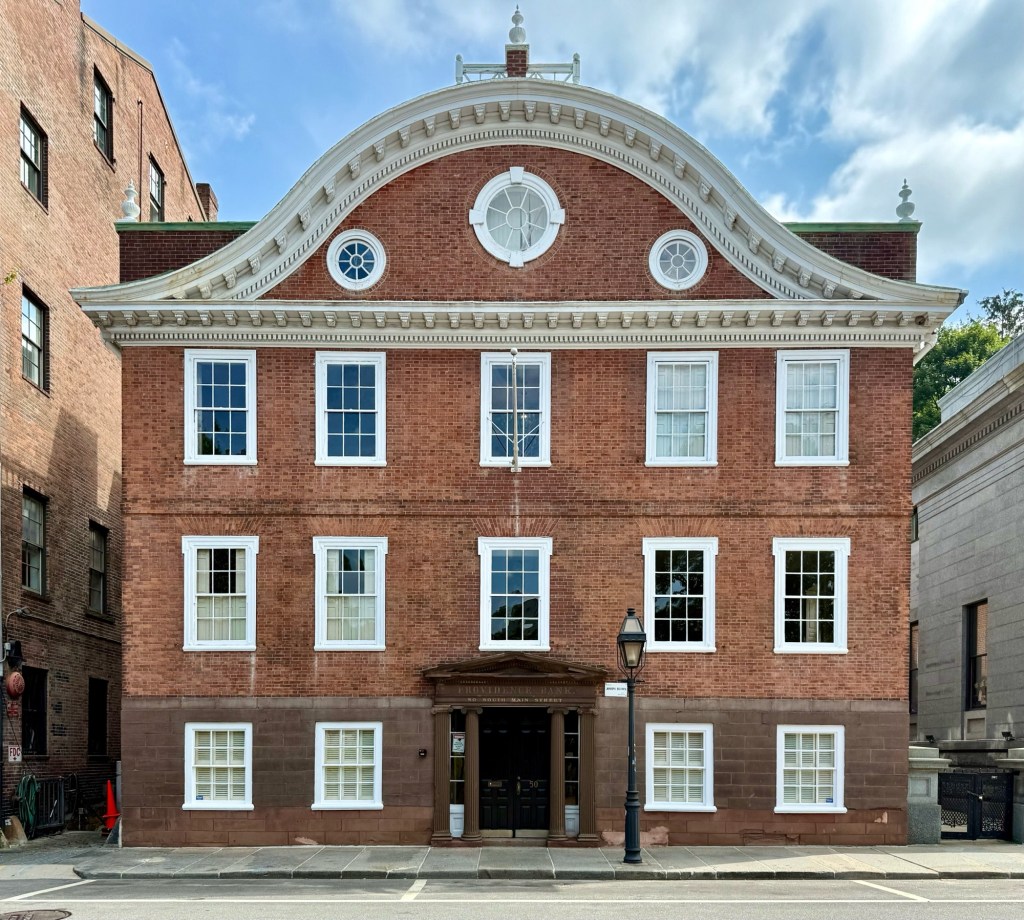
Joseph Brown House // 1774

Constructed in 1774 by architect Joseph Brown (1733-1785) of the Brown family of Rhode Island as his personal residence, the John Brown House of Providence, stands as one of the oldest (if not the oldest) house built by an American architect for his own use. Joseph Brown, while a member of the Brown Family, was not as much in the shipping business as others in his family, instead turning his attention to scientific matters, becoming an expert in astronomy, electrification, and architecture. He was an architect in the Thomas Jefferson-gentleman mode, owning English architectural books from which he selected motifs for inclusion in his designs. It is believed that the eccentric curved ogee gable that caps the façade was adapted from the roof design of a garden house published in William Salman’s Palladio Londinensis, owned by Joseph Brown’s builder, Martin Seamans. The same ogee gable was later replicated in the Colonial Revival period in Providence. The residence’s entrance was originally raised above ground and accessed via symmetrical flights of stairs; in the late 18th century, the entrance was moved to street level in the brownstone basement level. Over a decade after Joseph’s death in 1785, the structure was acquired by the Providence Bank, an enterprise founded by Brown’s brothers John and Moses, and used as an office. The bank occupied the structure until 1929, and the Joseph Brown House was subsequently owned by the Counting House Corporation, and still appears to be owned by descendants of the Brown Family.

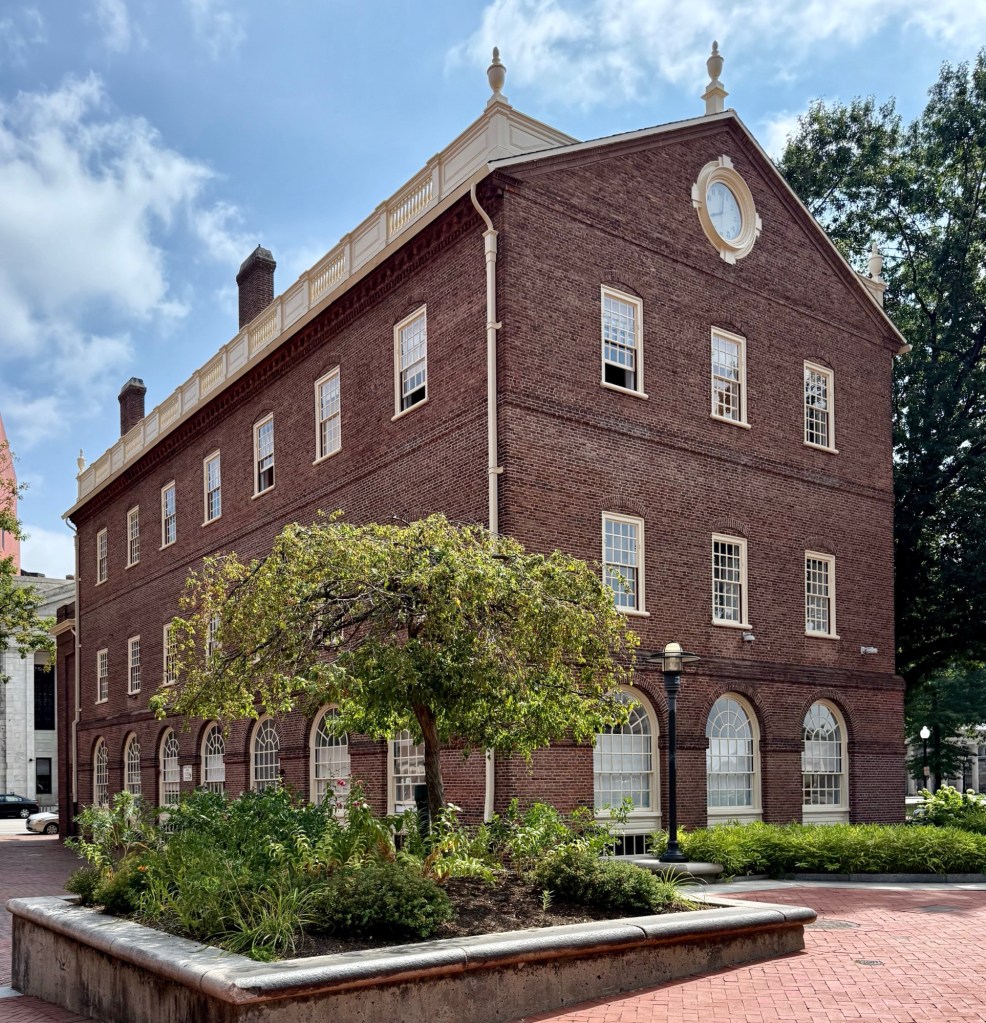
Providence Market Hall // 1773

Located in Market Square between Downtown and College Hill in Providence, Rhode Island, the old Colonial Market House stands as one of the city’s oldest and most architecturally significant buildings. Constructed between 1773-1775, this Georgian-style structure originally served as a public market and meeting space. The building was originally two stories in height with an open arcade on the first story, it was used by vendors below and town officials above. The building was expanded in 1797 with a third floor, which housed the first Masonic Lodge in Rhode Island. The Market Hall was designed by local businessman, astronomer, and architect, Joseph Brown, who was also a brother of the founders and namesake of Brown University. Over the centuries, the Market House has played many civic roles. During the Revolutionary War, it was used for military purposes, and later became a hub of commercial and political activity in the growing city. It housed Providence’s first post office, and housed the Providence City Council in the decades before the completion of City Hall. In 1948, Mayor Dennis J. Roberts signed a deed to give the building to the Rhode Island School of Design, with the provision that the exterior of the building be maintained, an early preservation win! Architect John Hutchins Cady was hired to remodel the interior with classrooms and studios, and the Market House remains as a significant piece of the RISD campus. Its enduring presence on Market Square connects modern Providence to its colonial roots, embodying a rich legacy of adaptive reuse and historic preservation.

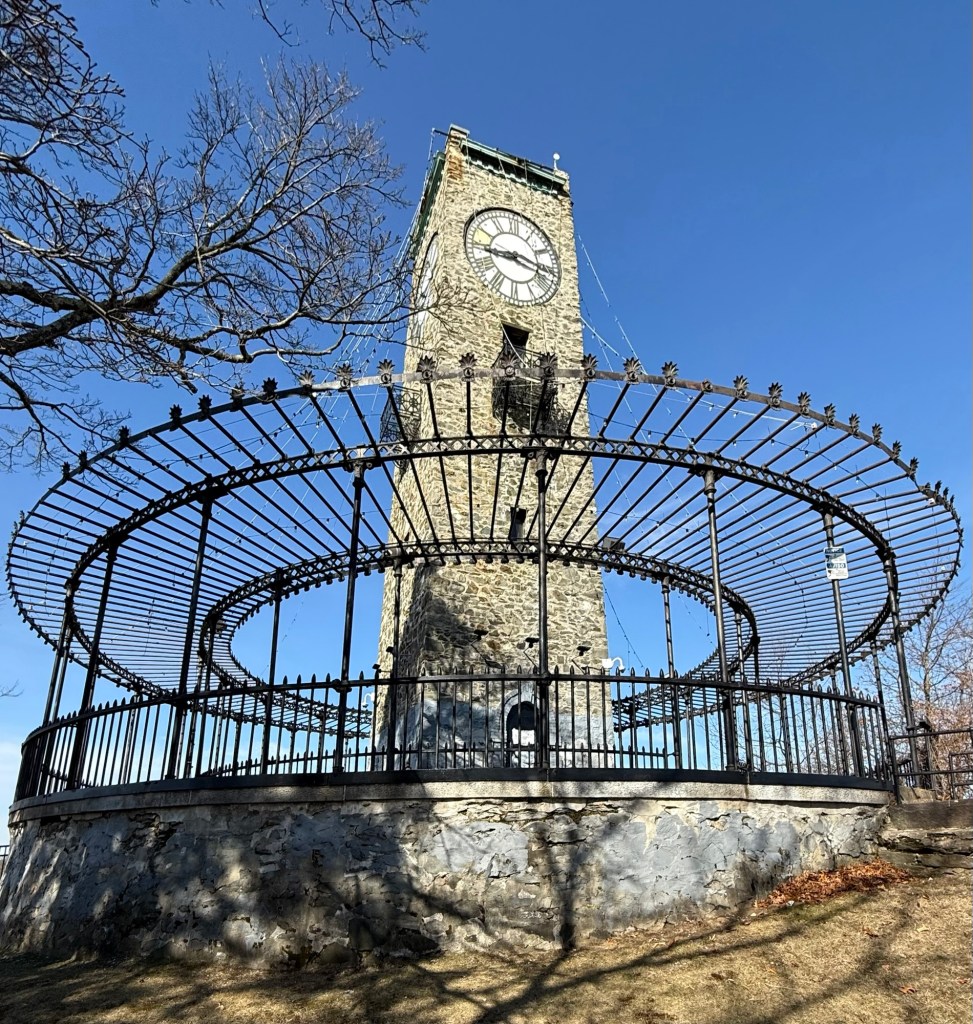
Cogswell Tower // 1904

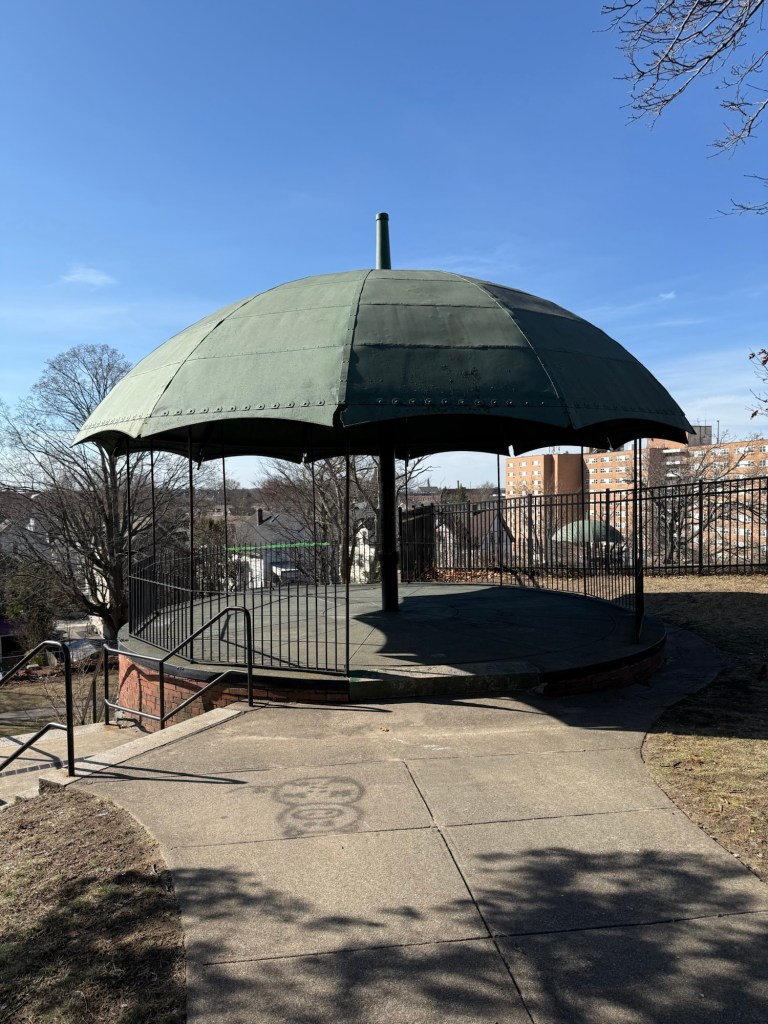
The crown jewel of the nearly one square mile city of Central Falls, Rhode Island, is Jenks Park, the only large park in one of the densest cities in America. The land was a gift of Alvin Jenks, a descendant of the family which had been among the town’s earliest settlers and one of its leading industrial families, and provided a much-needed recreational/open space for the dense industrial city. In 1890, planning began on the park with consists of hilly terrain cut through by paved paths, rocky outcroppings, and large metal gazebos which were fabricated at the nearby Fales and Jenks machinery works. At the crest of the park’s hill is Cogswell Tower, a clock and observation tower given by a former resident, Caroline E. Richards Cogswell. The stone tower was designed by architect Albert Humes, who ironically, was serving as mayor of Central Falls at the time, which may represent somewhat of a conflict of interest to gain the commission… The Cogswell Tower stands 70-feet-tall and is constructed of rough stone with a pyramidal roof that was once surmounted by an eagle. Its most remarkable aspect, a circular, iron structure which surrounds the base appearing from below as a sort of Hula-Hoop to the tower. Jenks Park and the iconic Cogswell Tower remain as a source of pride for the City of Central Falls.

Fales & Jenks Mill // 1863

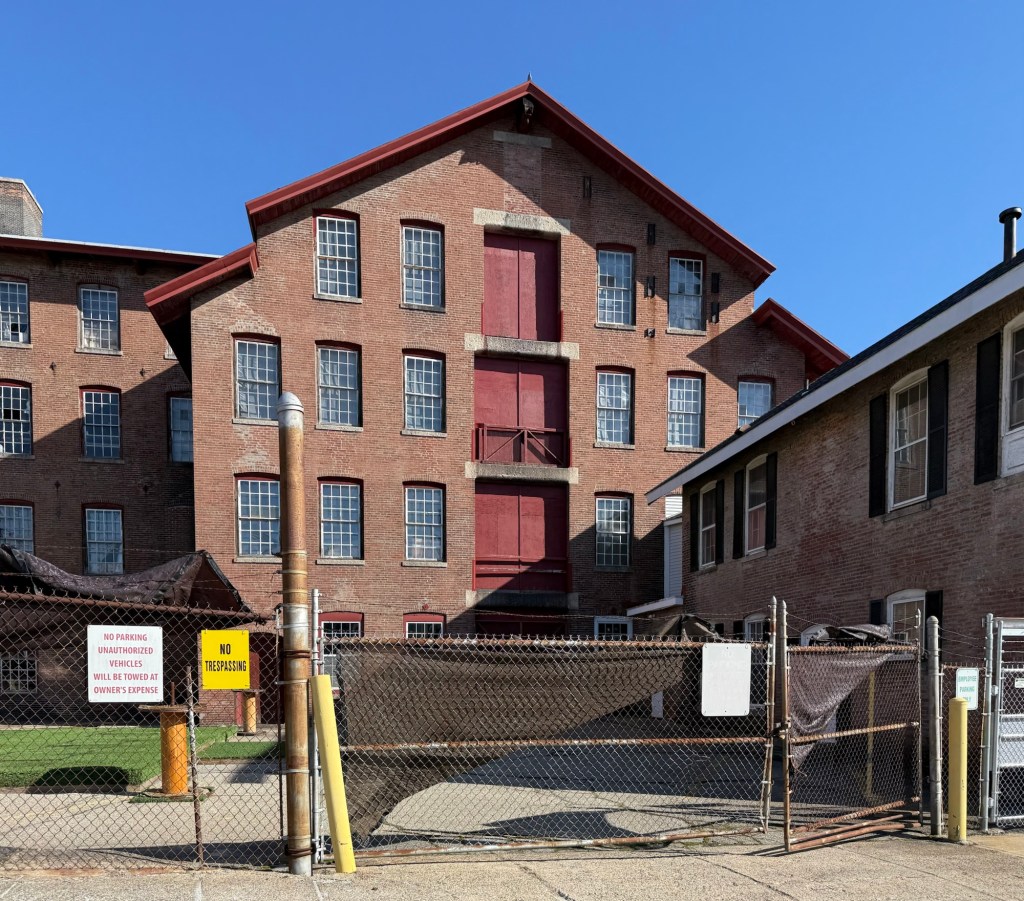
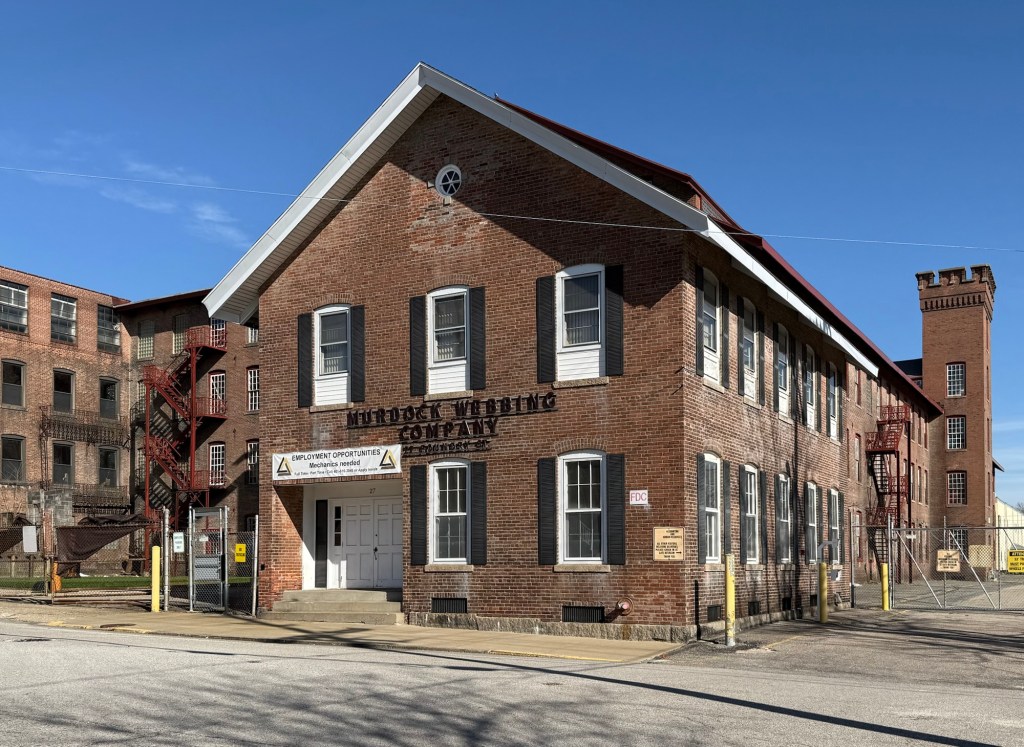
One of the largest mills in Central Falls, Rhode Island, is this complex tucked away on Foundry Street. Constructed in phases beginning in 1863, the site was originally owned by the firm of Fales & Jenks, manufacturers, and it was the first major factory in the town to not be built on a river, but on the railroad, showcasing a shift in the transportation of goods along with the increasing availability of steam power, relieving mill owners from having to build on the rivers. Fales & Jenks manufactured textile machinery here for just a few years until they moved to Pawtucket, and the complex was purchased by A. & W. Sprague in 1865 and after slight enlargement, was used as a flax mill until the Spragues’ failure in 1873. In the late 19th century, the mill was occupied by the U.S. Cotton Company. The oldest buildings are brick with granite lintels under a monitor roof. Later additions include a massive brick factory with a tower with castellated parapet. The small, two-story gable-roofed building at the corner was the mill office. The complex is today owned and maintained by the Murdock Webbing Company.

Edward Johnson House // c.1886

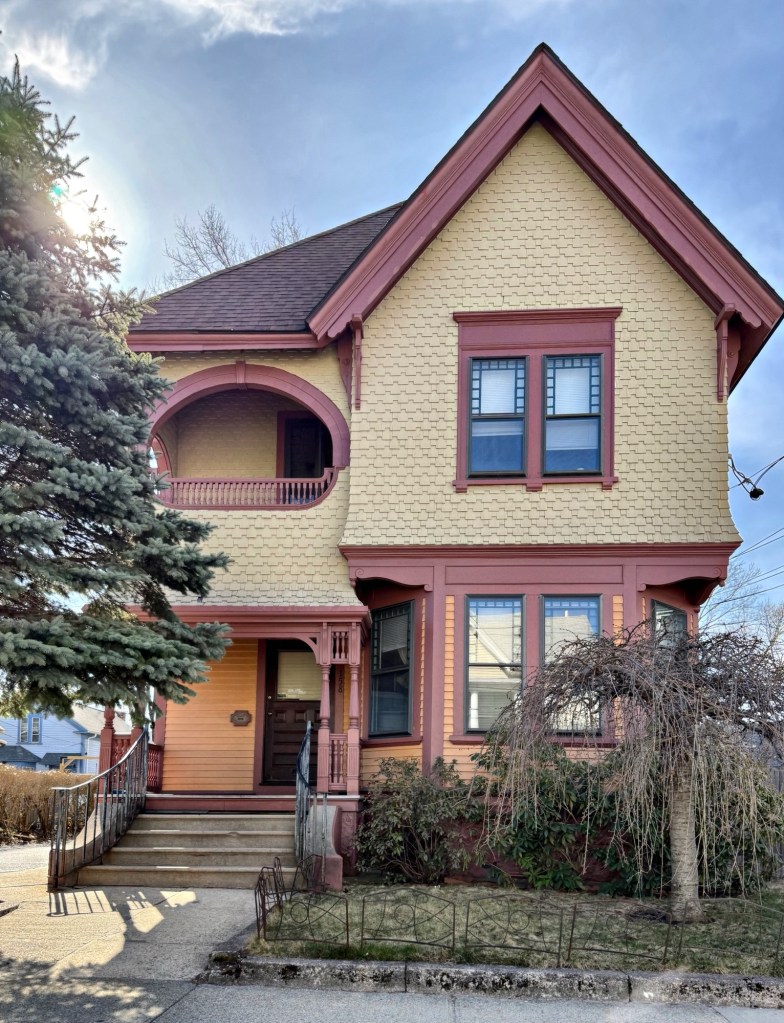
Central Falls, Rhode Island, is not necessarily known for its residential architecture, but like any good industrial city, there are some excellent examples of Victorian houses from the mid-late 19th century to be discovered! This is the Edward L. Johnson House on Cross Street in Central Falls. The house was built around 1886 for Mr. Johnson, a manufacturer, who resided here for some years with his wife, who founded the Pawtucket Women’s Club in 1899 and was an active member of the Daughters of the American Revolution. The house is an excellent example of the Queen Anne architecture style, from the various siding types including clapboard and patterned shingling; its steep cross-gable roof; and its variety of windows, including a shallow bay on the first floor and oval and half-round windows in the 2nd-floor porch. 

Central Falls City Hall // 1888

Welcome to Central Falls, an industrial city in Providence County, Rhode Island. With an area of only 1.29 square miles it is the smallest and most densely populated city in the smallest state, and the 23rd most densely populated incorporated place in the United States. Originally, Central Falls was one of the many villages within the town of Smithfield, but in 1871, the town split into three smaller towns: Smithfield, North Smithfield and Lincoln. Central Falls village then became part of the town of Lincoln until Central Falls’ industrial character and differing needs had it split off to form the small city of Central Falls in 1895. Before it was its own city, Lincoln officials had this building constructed in 1888-9 on Broad Street, the commercial and civic center of the city. This red brick, Queen Anne building with its four-stage tower was built as Lincoln High School, the first school in the town built exclusively for secondary education. Designed by William R. Walker & Son, architects, the building features shingles in the gable, asymmetrical plan, and carved terracotta panels. The building continued as Central Falls High School until 1927, when the city offices were moved there, and it has remained as the City Hall ever-since.

Stephen O. Metcalf House // 1892

I am on a Colonial Revival style kick lately, so bear with me on this recent span of posts on houses in the style! This estate house is an earlier example in Providence, built in 1892 for Stephen Olney Metcalf (1857-1950) a multi-millionaire who was in business in woolen textiles and insurance before diversifying his portfolio further serving as President of the Providence Journal and Evening Bulletin. To make an architectural statement, Mr. Metcalf called the renowned Boston firm of Andrews, Jacques and Rantoul to design his new residence. The oversized Colonial Revival house is an excellent example of how Revival architecture tend to be a more free interpretation of their prototypes, being larger and having exaggerated features and proportions. In his will, Stephen O. Metcalf bequeathed this residence to the Rhode Island School of Design (RISD), an institution his mother helped found, and his daughter served as President. The mansion remains the RISD President’s House to this day.