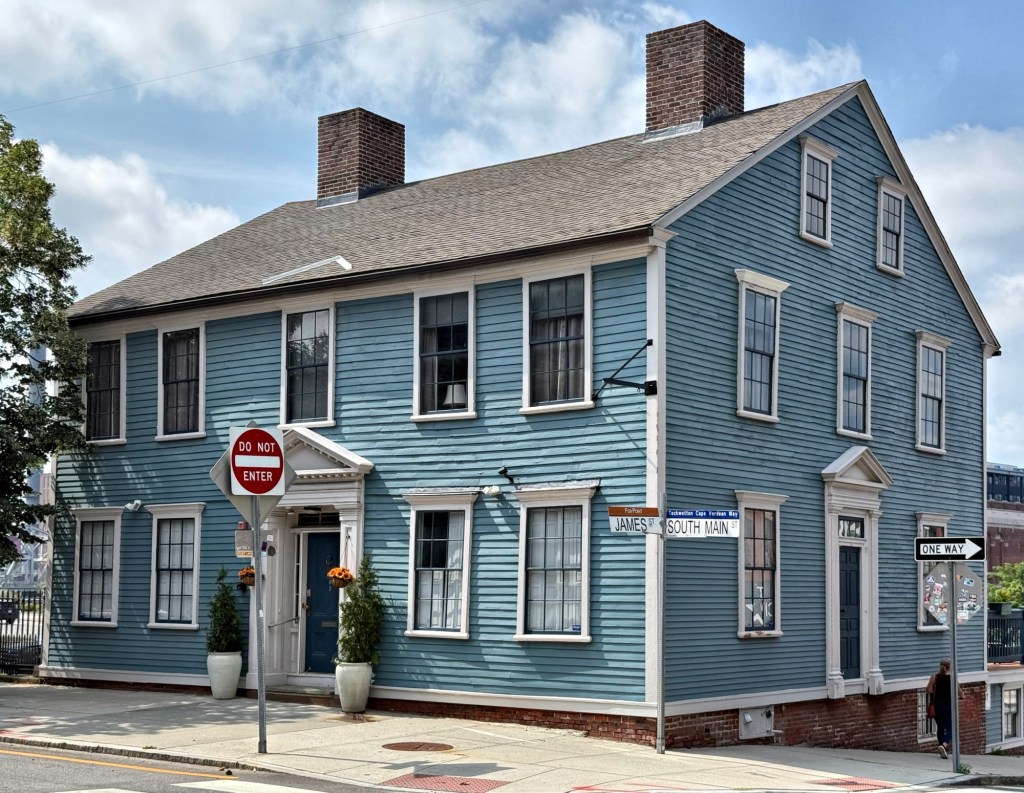
Captain Joseph Tillinghast House // c.1770

This Georgian house at 403 South Main Street in Providence’s East Side was built by Captain Joseph Tillinghast (1734-1816) a wealthy merchant and participant in the Gaspee Affair, a significant event in the lead-up to the American Revolution. The Gaspee Affair occured in 1772, when a group of men from Providence attacked and burned the British customs schooner, HMS Gaspee. The incident was fueled by colonial resentment towards British customs enforcement, and took place not too long after the Boston Massacre. Joseph built this house for his family on land he inherited from his family, who claimed the land in 1645. Tillinghast was also the owner of a line of packet boats (light shipping of domestic freight and mail) operating between Providence and Newport. After Joseph died in 1816, the property was occupied by members of the Tillinghast family until 1847. By the mid-20th century, urban renewal and the proximity to the new highways caused the surrounding area to suffer, with this historic home threatened. Throughout 2008, the building’s condition continued to rapidly deteriorate, and local preservationists advocated for the home’s future. After attention was brought to the residence and its significance, the house was restored with the assistance of the Providence Revolving Fund, including the stabilization of the foundation, roof and chimneys rebuilt, with clapboards and windows repaired.
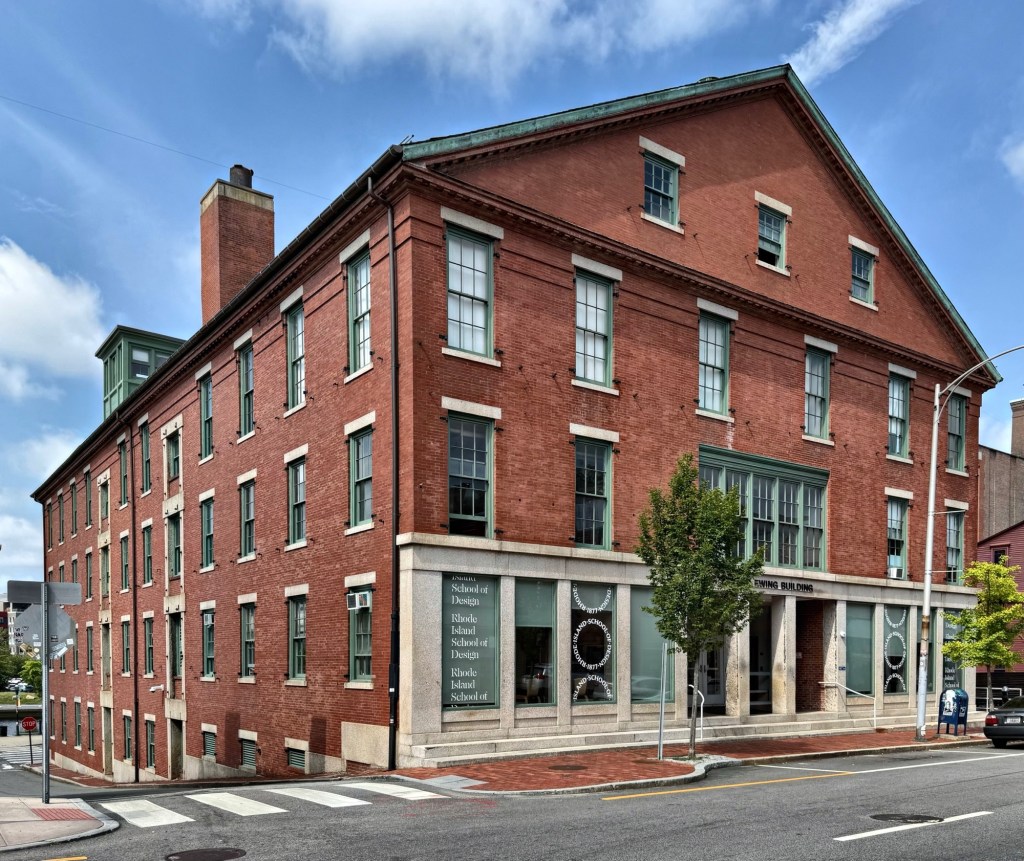
Bayard Ewing Building // 1848

Located on South Main Street in Providence, this large Greek Revival style commercial building, with its gable pediment facing the street was built in 1848 by the Fall River Ironworks Company.The company was founded in Fall River, Massachusetts (then partly located within Rhode Island) in 1822 to manufacture nails. The company owned and occupied this building from its construction until 1881, when it was occupied by the Rumford Chemical Works, founded by Eben Horsford as a manufacturer of baking powder, with this building serving as its main office. In 1927, the Phillips Lead Company, a plumbing supply house, purchased the property and continued to use it until 1973, when it was acquired via taking as part of an Urban Renewal plan for the area. Luckily, the building was deemed significant, and preserved following its purchase by the Rhode Island School of Design (RISD) and converted to classroom and studio spaces in 1978 for several of the school’s departments. The restoration and adaptive reuse was overseen by local architect Irving B. Haynes. The building, now known as the Bayard Ewing Building, is one of the earliest such examples of adaptive reuse in Providence and showcases that old buildings can be repurposed for new ideas and uses. 

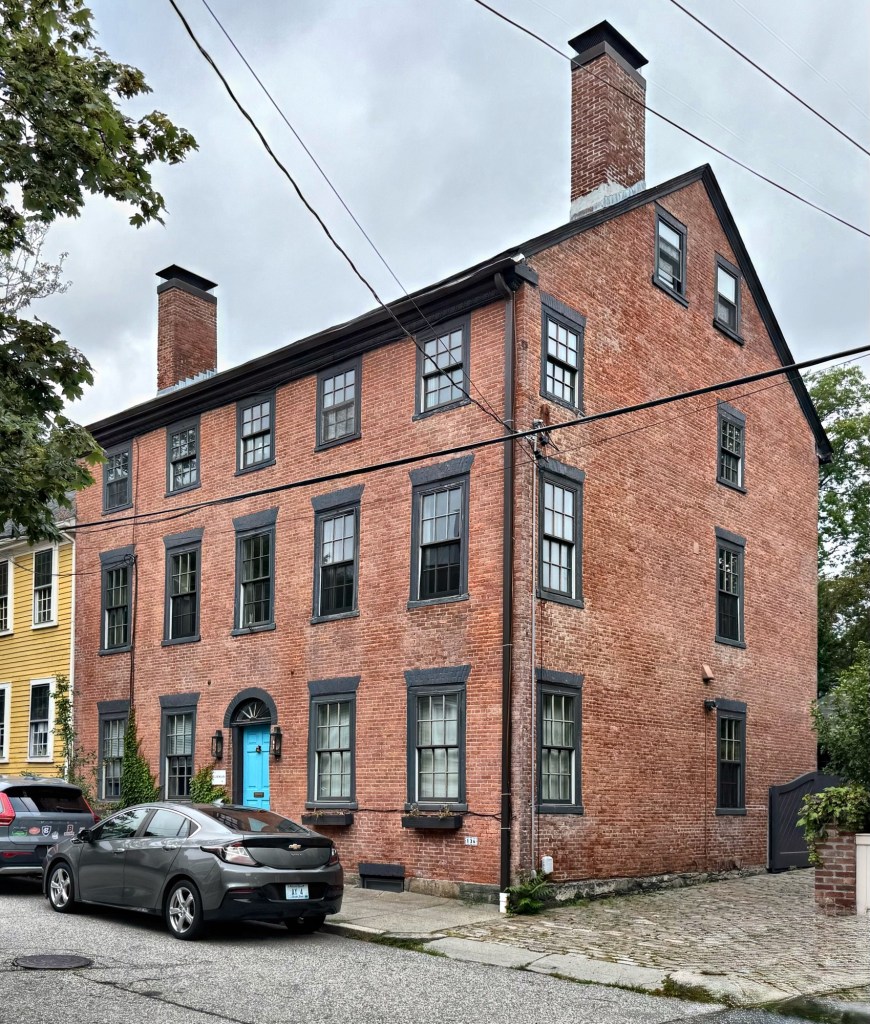
William Mason House // c.1812

This oversized brick Federal style house in Providence looks like it belongs more on the iconic Benefit Street rather than a quieter side street like Transit Street, but its history informs us as to why. Located at 136 Transit Street, the Benjamin Mason House stands as one of the finest (and largest) brick houses in the Fox Point neighborhood of Providence. The residence was built around 1812 by William Mason, who appropriately worked as a bricklayer and builder in 19th century that put his talents to work to build his own home seen here. The large brick residence was not only a family home, but marketed his abilities as a mason to area residents who were in need of his services. Benjamin Mason lived here until he moved to a new house down the street with his wife, Ann. Benjamin died by 1828 and the brick residence was purchased at auction and later sold to Reverend William Phillips. The house retains much of its original fabric, and even includes a stunning courtyard garden bounded by – you guessed it – a brick wall. 

Simeon Ingraham House // 1795

Simeon Ingraham (1749-1840), a housewright (house builder) purchased a corner lot on Wickenden Street in the Fox Point area of Providence in 1795, and constructed this absolutely stunning late-Georgian home that has survived centuries of commercialization and Urban Renewal of the surrounding area. In the early decades, Simeon purchased lots nearby and built houses, selling them for profit, and repeating this until his death in 1840. Simeon left no will, and the property was eventually purchased by his eldest son, Solomon, who bought out all of his other heirs for their shares of the property. Solomon allowed his widowed stepmother to reside in the home until her death in 1851. Solomon operated a store nearby, and it was likely he who jacked up the house, adding the brick ground floor for commercial purposes in the 1850s, coinciding with the increased commercialization of Wickenden Street. When the house was raised, the former center entry (now on the second floor) was turned into a window, with the doorway placed in the new brick level. Changes like these showcase how buildings are vessels of history, informing later generations of the layers of history that our cities and towns experience over time.

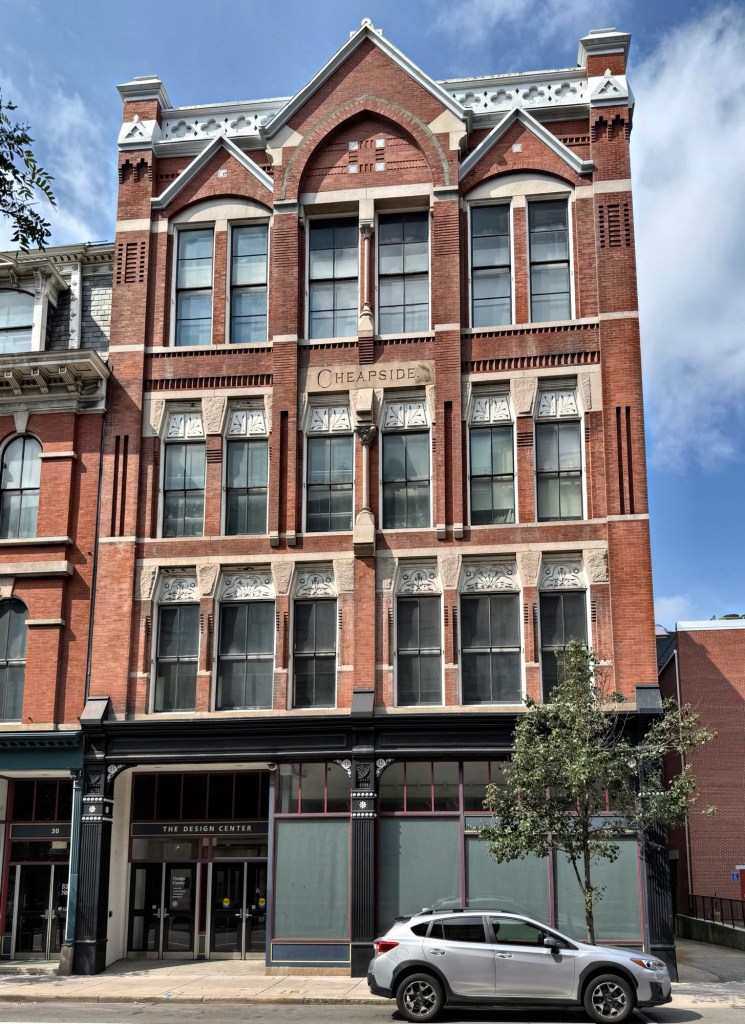
Cheapside Block // 1880

The Cheapside Block on N. Main Street in the East Side district of Providence, Rhode Island, is significant as a remaining Victorian-era commercial block that retains much of its original architectural detailing. Built in 1880 and designed by local architects Stone & Carpenter, the Cheapside Block was named after the early nineteenth century name given to the commercial district running along the west side of Main Street, north from the eighteenth century Market House, after the London commercial district of the same name. The word “cheapside” is derived from the Anglo-Saxon word “to barter.” The block here is an excellent example of the High Victorian Gothic architecture style, with intricate brick and stonework, pointed gables with inlaid tile, quatrefoil motif in the parapet, and the original cast iron storefronts. The building was acquired by the Rhode Island School of Design and renovated in the 1980s. Today, the Cheapside Block is home to the RISD Design Center

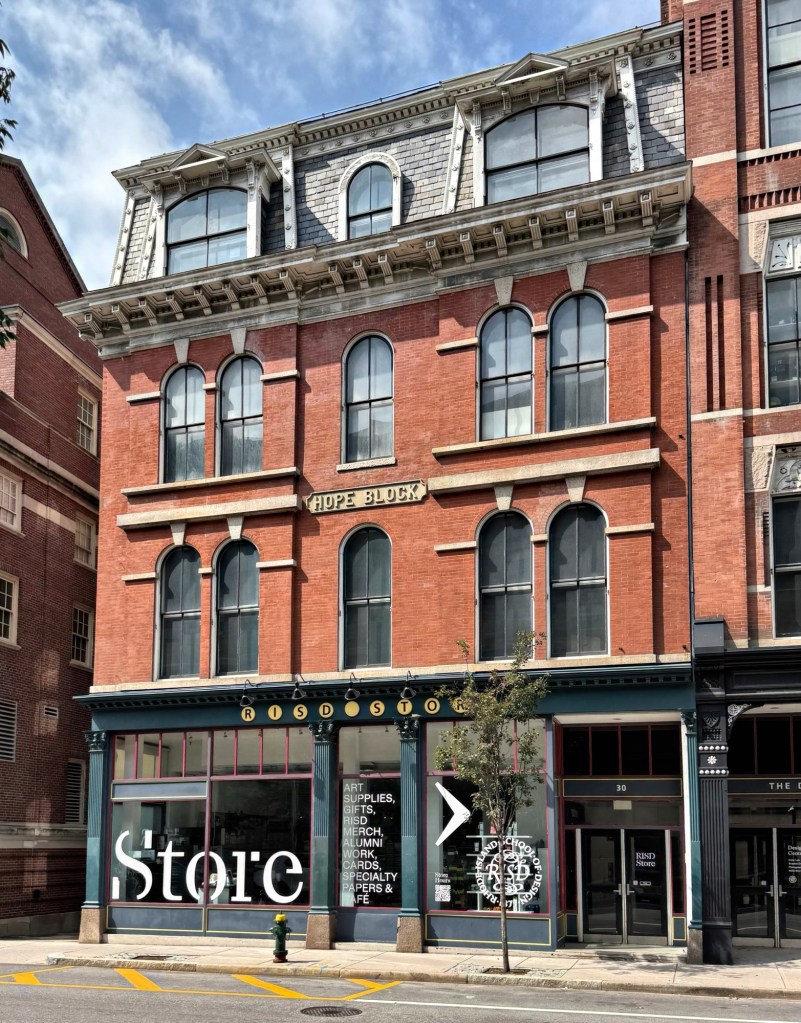
Hope Block // 1869

The Hope Block on North Main Street in Providence’s East Side neighborhood is an architecturally significant commercial block in the Second Empire style. The masonry building was constructed in 1869 and is probably designed by architect, Clifton A. Hall, who designed similar buildings in the city around that time. The block was developed by Edward M. Young and Ezra P. Lyon of the firm, Young & Lyon to house their fruit and grocery store, which they operated here from 1870 until 1889. By the latter half of the 20th century, the building was owned by the Rhode Island School of Design, and rehabilitated for classrooms in 1984, even retaining the cast iron storefronts, unique arched windows, and slate mansard roof. Today, the Hope Block houses the RISD Store.

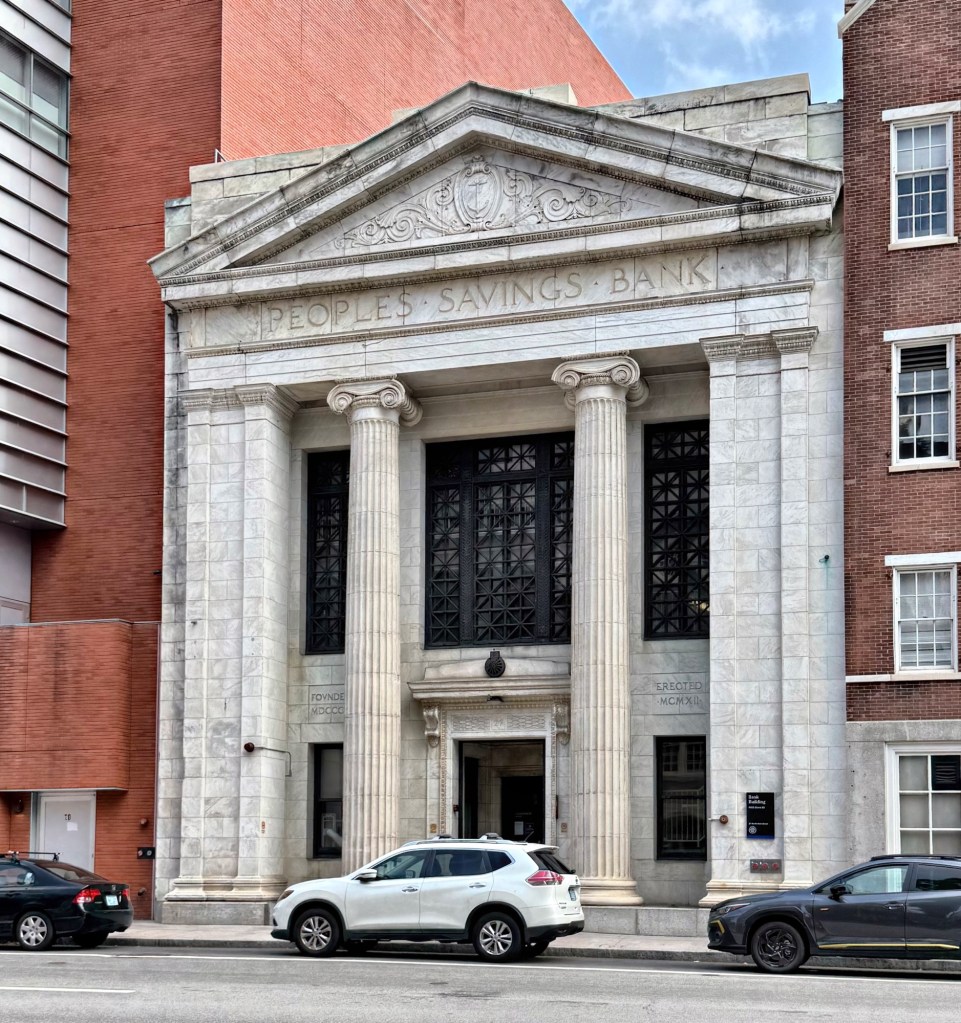
People’s Savings Bank // 1913

Built in the mode of a Greek temple, the former People’s Savings Bank was built in 1913 on a prominent site overlooking Market Square in the East Side neighborhood of Providence. Designed by the Providence-based architectural firm of Clarke & Howe, the handsome marble-faced two-story bank showcases the bold, yet clean proportions found in many Classical Revival style institutional buildings of the early 20th century. The People’s Savings Bank was established in 1851 and after decades of growth, built this structure to show customers the prosperity and stability of their institution. After a series of bank acquisitions and mergers in the 20th century, the building was eventually acquired by the Rhode Island School of Design, who had the building converted into studio space and later into the college’s hardware store. Yes, you heard that right… Talk about adaptive reuse!

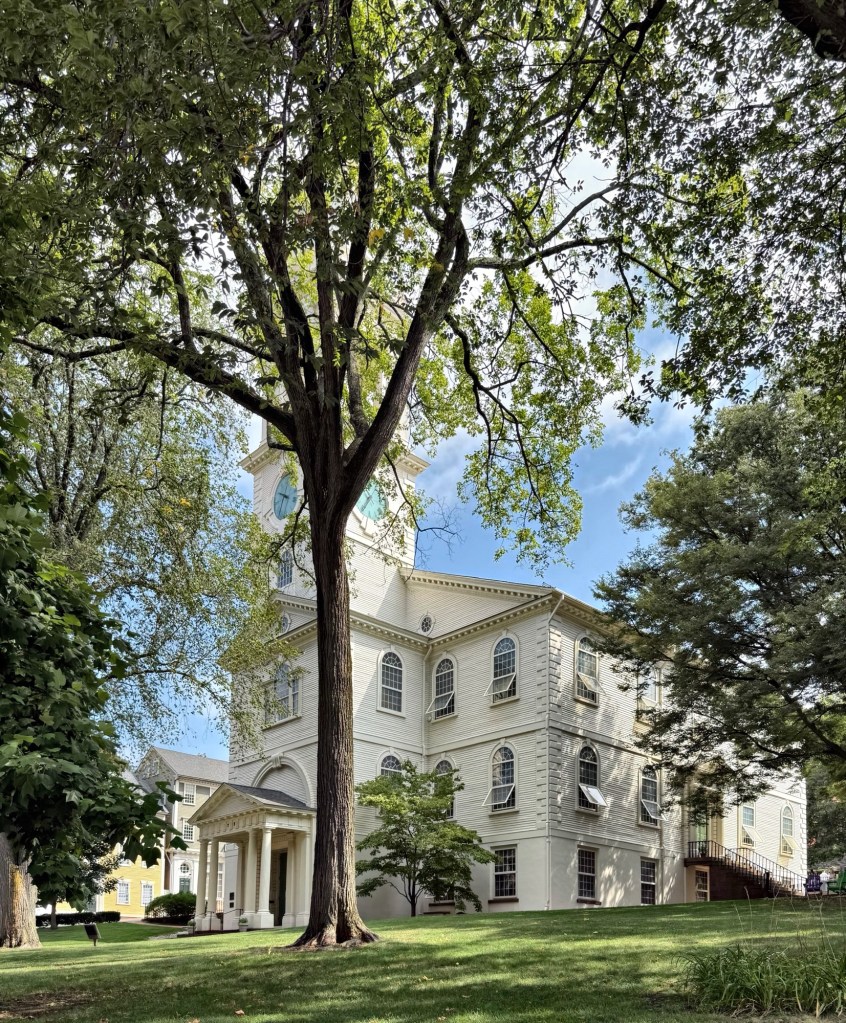
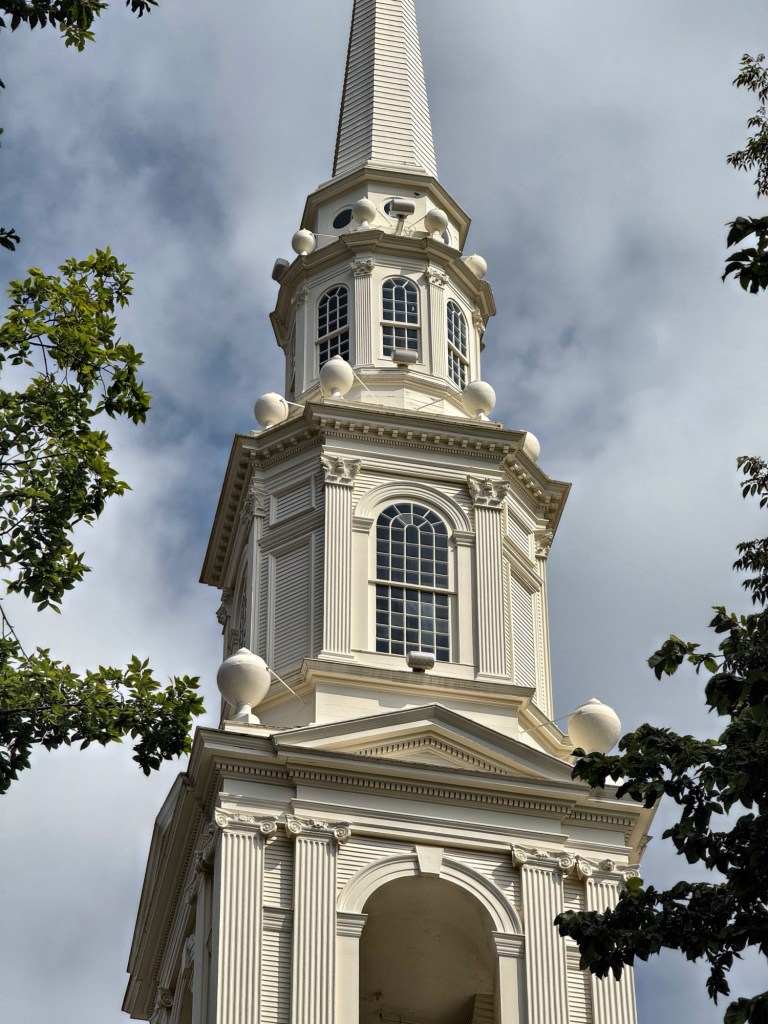
First Baptist Church, Providence // 1774

The First Baptist Church of Providence, also known as the First Baptist Church in America is the oldest Baptist church in the United States. The Church was founded in 1638 by Roger Williams, who before building this church in 1774, often met in private residences or in more plain meetinghouses to not show vanity. By the early 1770s, a new building for Providence Baptists was needed, and it was conceived in a very large (and ornate) way. Built to accommodate over 1,200 people (just under a third of the entire population of Providence at that time), this church was built “for the publick Worship of Almighty God; and also for holding Commencement”, referring to the commencement ceremonies of Rhode Island College (later Brown University), also founded under Baptist auspices. The church was designed by local amateur architect, Joseph Brown, who was likely inspired by Sir Christopher Wren’s London churches in James Gibbs’s Book of Architecture (1728). The construction was greatly aided by the fact that the British had closed the port of Boston as punishment for the Boston Tea Party. Many shipwrights and carpenters were thrown out of work and came to Providence to build the meetinghouse there. The structure was dedicated in May 1775, and the 185-foot steeple was added shortly thereafter. This was the first Baptist meetinghouse in New England to have a steeple, and it has survived dozens of hurricanes and hundreds of years of change since. The church is a National Historic Landmark and remains as one of the most significant buildings in New England.

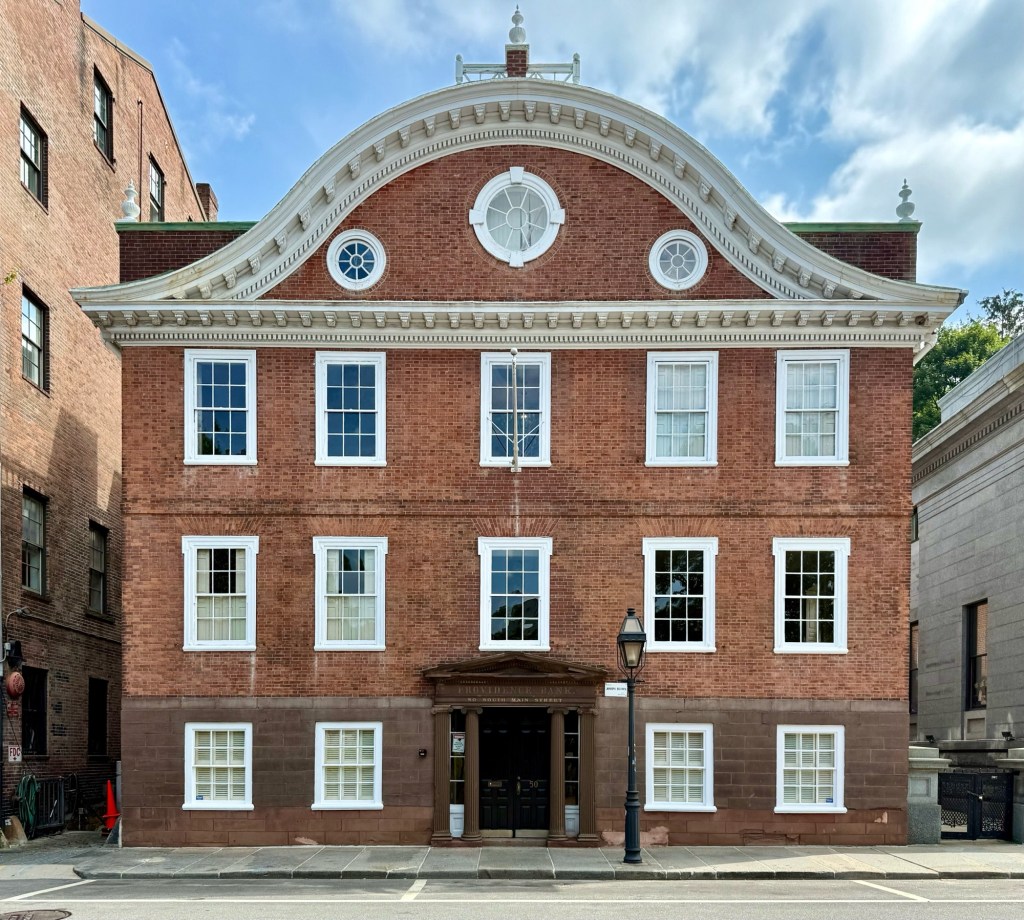
Joseph Brown House // 1774

Constructed in 1774 by architect Joseph Brown (1733-1785) of the Brown family of Rhode Island as his personal residence, the John Brown House of Providence, stands as one of the oldest (if not the oldest) house built by an American architect for his own use. Joseph Brown, while a member of the Brown Family, was not as much in the shipping business as others in his family, instead turning his attention to scientific matters, becoming an expert in astronomy, electrification, and architecture. He was an architect in the Thomas Jefferson-gentleman mode, owning English architectural books from which he selected motifs for inclusion in his designs. It is believed that the eccentric curved ogee gable that caps the façade was adapted from the roof design of a garden house published in William Salman’s Palladio Londinensis, owned by Joseph Brown’s builder, Martin Seamans. The same ogee gable was later replicated in the Colonial Revival period in Providence. The residence’s entrance was originally raised above ground and accessed via symmetrical flights of stairs; in the late 18th century, the entrance was moved to street level in the brownstone basement level. Over a decade after Joseph’s death in 1785, the structure was acquired by the Providence Bank, an enterprise founded by Brown’s brothers John and Moses, and used as an office. The bank occupied the structure until 1929, and the Joseph Brown House was subsequently owned by the Counting House Corporation, and still appears to be owned by descendants of the Brown Family.

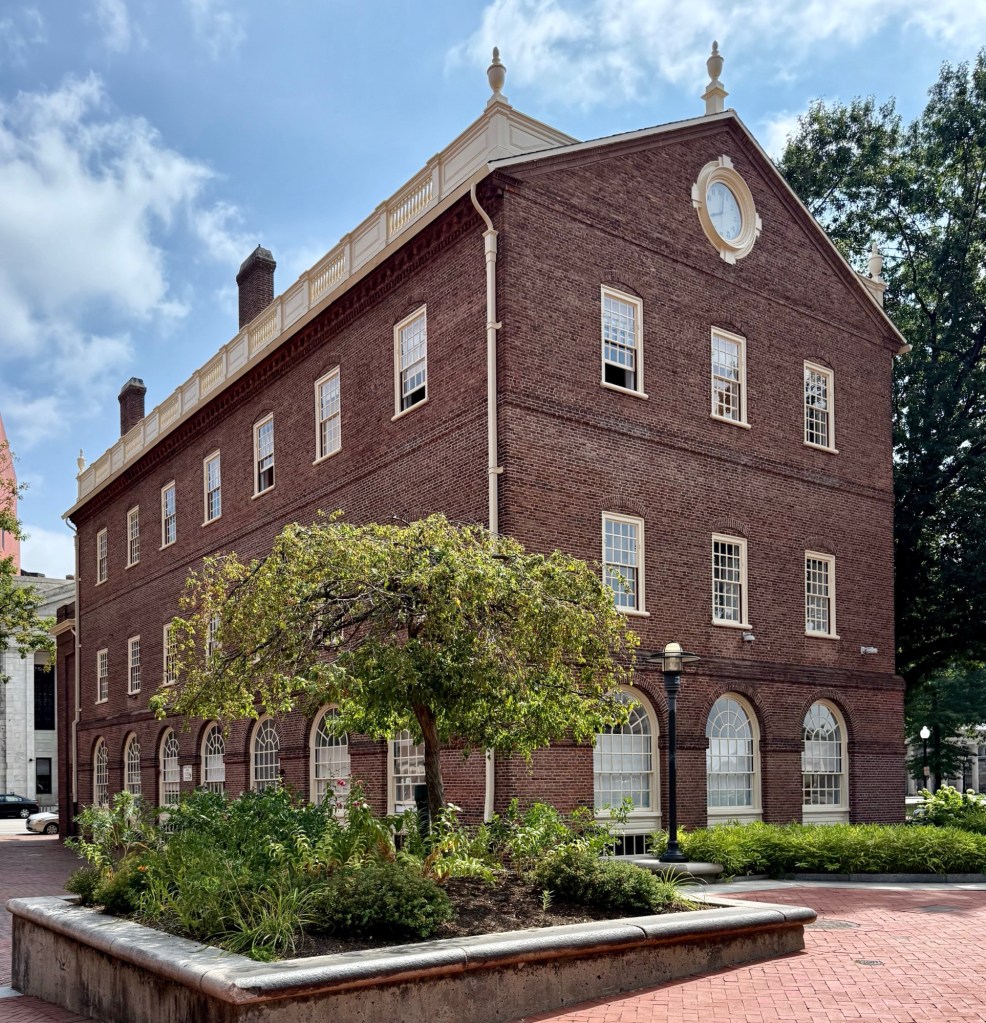
Providence Market Hall // 1773

Located in Market Square between Downtown and College Hill in Providence, Rhode Island, the old Colonial Market House stands as one of the city’s oldest and most architecturally significant buildings. Constructed between 1773-1775, this Georgian-style structure originally served as a public market and meeting space. The building was originally two stories in height with an open arcade on the first story, it was used by vendors below and town officials above. The building was expanded in 1797 with a third floor, which housed the first Masonic Lodge in Rhode Island. The Market Hall was designed by local businessman, astronomer, and architect, Joseph Brown, who was also a brother of the founders and namesake of Brown University. Over the centuries, the Market House has played many civic roles. During the Revolutionary War, it was used for military purposes, and later became a hub of commercial and political activity in the growing city. It housed Providence’s first post office, and housed the Providence City Council in the decades before the completion of City Hall. In 1948, Mayor Dennis J. Roberts signed a deed to give the building to the Rhode Island School of Design, with the provision that the exterior of the building be maintained, an early preservation win! Architect John Hutchins Cady was hired to remodel the interior with classrooms and studios, and the Market House remains as a significant piece of the RISD campus. Its enduring presence on Market Square connects modern Providence to its colonial roots, embodying a rich legacy of adaptive reuse and historic preservation.