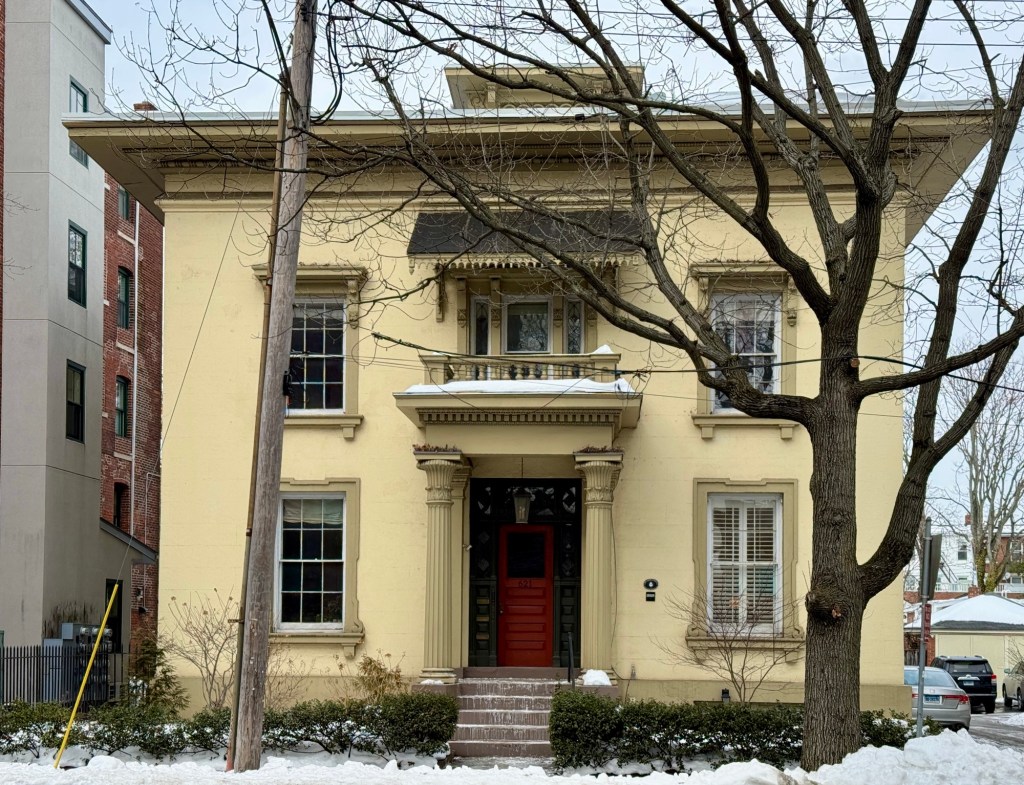
Nelson Hotchkiss was a New Haven lumber dealer and developer in the Wooster Square district and had this stately home on Chapel Street built for his family. While the architect is not confirmed, it is probable that the residence (along with neighboring homes also developed by Hotchkiss) was the work of Henry Austin, who partnered with Hotchkiss on developments in New Haven and Trenton, New Jersey. The Nelson Hotchkiss House was built in 1850 and is an excellent example of Italianate style with boxy form, broad overhanging eaves, brick walls covered with stucco and Austin’s signature Greek Doric columns with fluted shafts and foliate capitals. The house maintains a window hood over the upper floor window with delicate carved wood bargeboard.
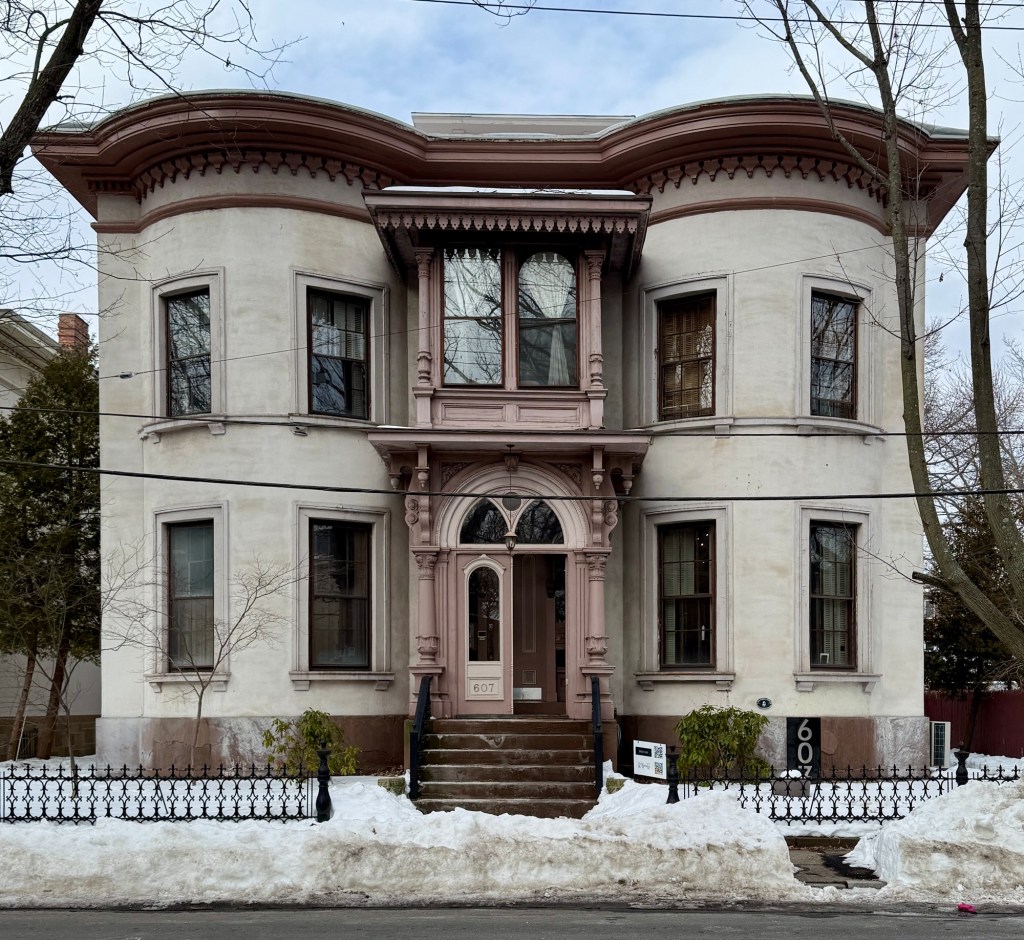
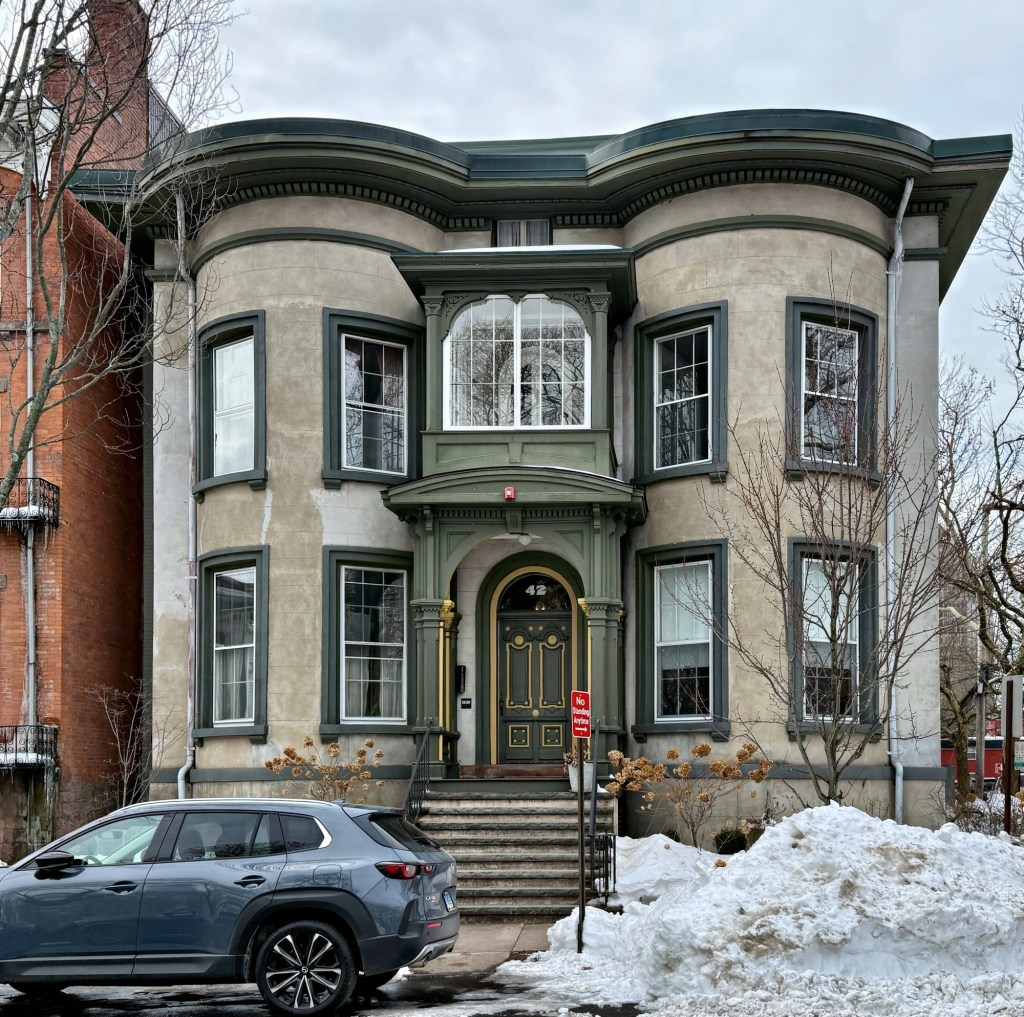
The Edward Rowland House on Academy Street in New Haven’s Wooster Square neighborhood is among the many great mid-19th century residences in the city and a rare example of a bowfront form. The residence was built for Edward Sherman Rowland (1812-1882), a prominent grocer, real estate developer, and Assistant U.S. Assessor and his family. The home is an example of the Italianate style with double-bow facade and is built of brick covered in stucco. The property was converted to condominium units and now houses six families.
Villa Bella Vista in Chester, Connecticut, stands as a striking and deeply personal interpretation of an Italian Villa, designed not by a professional architect, but by its remarkable owner, Eila Pierre. Known even among friends as Madame Pierre, she was a turn-of-the-century feminist of independent means who defied convention at nearly every turn. Drawing inspiration from the indigenous farmhouse architecture of northern Italy, Pierre personally designed the well-preserved stuccoed stone house, which was later constructed by local Italian immigrant masons who settled in Chester. Born Ila Rowland Stone (1870–1931), she was newly married to Reverend Dwight Stone, a Yale-educated minister of the town’s Congregational Church. Within just two years of marriage, it unraveled. Reverend Stone resigned his post, and by 1906, the couple’s uncontested divorce, scandalous for the time, was finalized. Casting off both marriage and social expectations, Ila reinvented herself as Eila Pierre. Despite the scandalous divorce and cheating rumors, she chose to remain in Chester and build a summer home that reflected her independence and worldview. Plans for Bella Vista were underway as early as 1904, when she purchased land on Old Depot Road. To prepare for the design, Pierre embarked on an extended tour of northern Italy, studying villas firsthand and bringing along a young local stone mason, Martin Lanzi, who later built his home across from Madame Pierre’s mansion. Villa Bella Vista, completed in 1908, includes common architectural details in the Italian Villa style with the campanile, or tower, the colonnaded piazza, and stone masonry that define the Latin prototype, all unique to Connecticut, which makes this home so special.
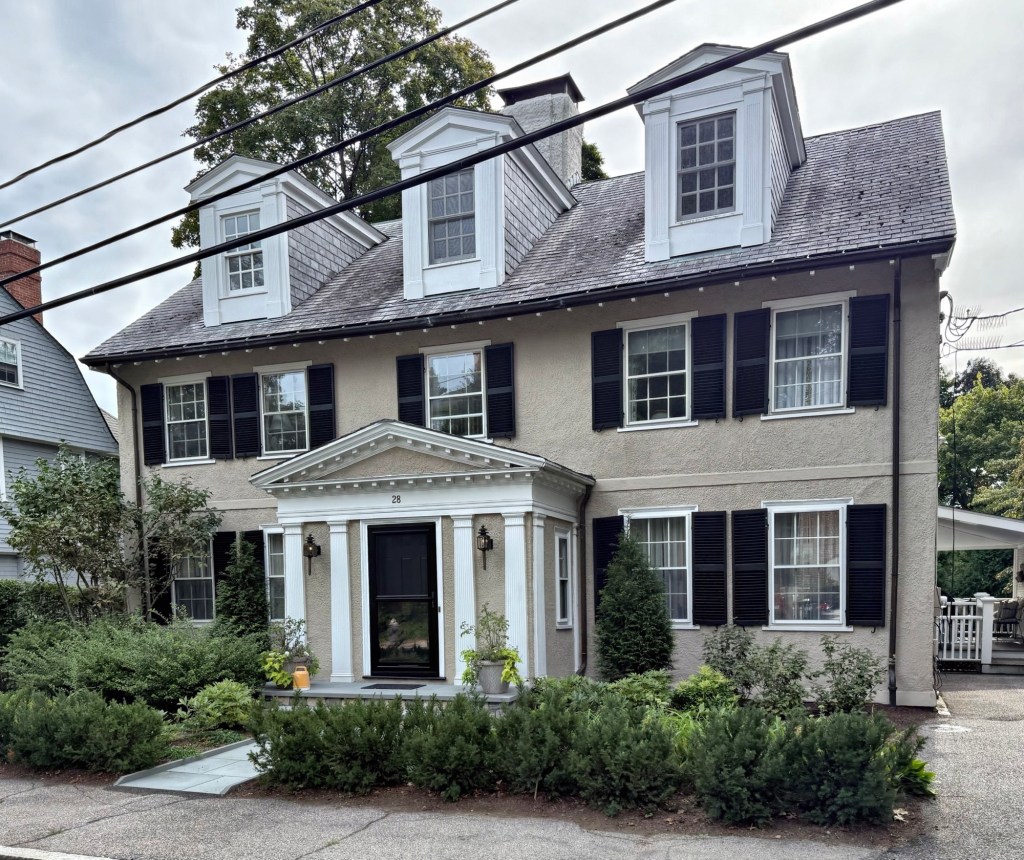
Built in 1911, this Colonial Revival style house rendered in stucco, is located at 28 Hawthorn Road in the Pill Hill neighborhood of Brookline, Massachusetts. The residence was built for William Marshall Warren (1865-1953) and his wife, Sara Shields Warren (1874-1964) from plans by the firm of Gay & Proctor. William M. Warren served on the faculty at Boston University as Professor of Philosophy and later as Dean of the College of Arts and Sciences, promoted by his father, William Fairfield Warren, who was President of the University. The Warren House features a symmetrical five-bay facade with central entrance within a projecting pedimented vestibule framed by four pilasters. The pilasters are replicated in the three dormers at the roof, set below the central chimney.
One of the finest Arts and Crafts style “cottages” in the Cottage Farm neighborhood of Brookline, Massachusetts, can be found on Ivy Street as the Whidden House. The property here was developed by Renton Whidden (1859-1942), a real estate developer and politician elected into the Massachusetts House of Representatives, who purchased a house lot from Thomas B. Hall, who owned a house next door. Renton Whidden hired architect, Arthur Hunnewell Bowditch, to furnish plans for the large home, which was completed in 1912. The stucco house features a brick entrance with projecting roof off the front, a unique twin gabled facade, segmental arched dormers, and a Palladianesque window and balconette above the front door.
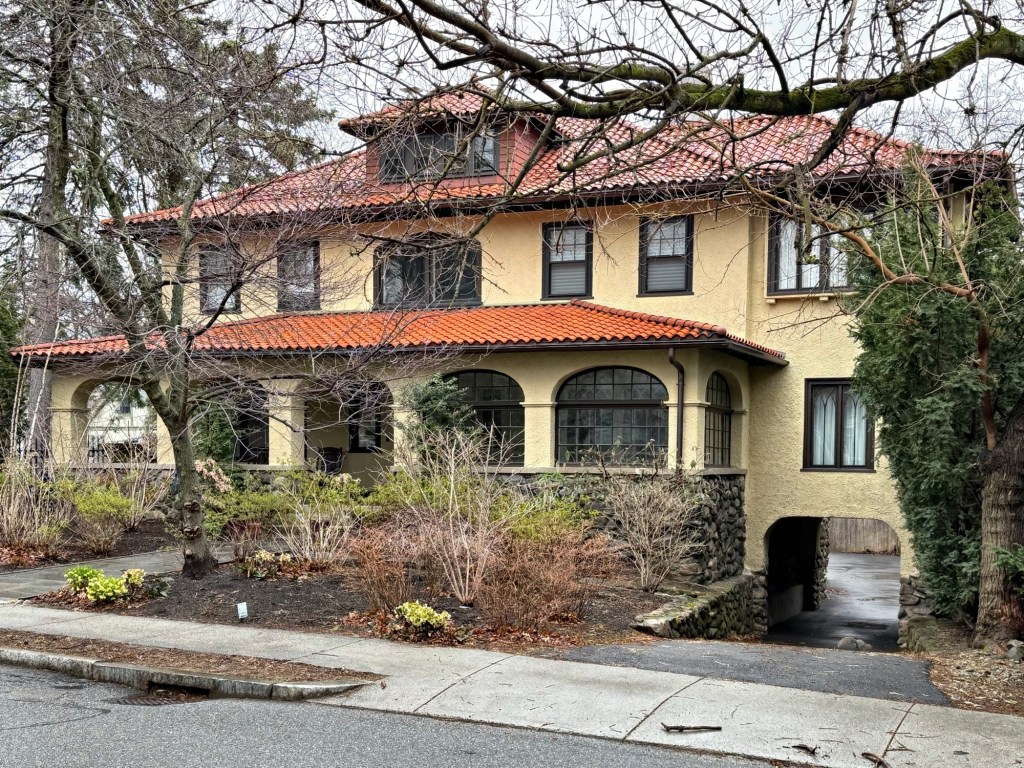
Paul Hunt, the son of famous painter, William Morris Hunt, and the nephew of famed architect Richard Morris Hunt, built this house in Brookline, Massachusetts for $15,000 for him and his wife, Caroline. Paul had been involved in real estate development in Bar Harbor, Maine, where his mother had a summer cottage, and while not an architect himself, he was very interested in design and took a keen interest in developing estates with the family funds. While developing property in the summer enclave of Bar Harbor, Maine, Paul met the Bar Harbor architect, Milton W. Stratton, and the two collaborated in the construction of houses there and two adjacent homes in Brookline. The two-story house is wood frame construction with a stucco finish on the exterior. Spanish Colonial Revival in style, the roof is hipped with terra cotta tile, as is the roof of the verandah which extends across the facade. In 1911, Paul Hunt worked with architect William Ewing Harding to add the two-story wing on the side of the house, which is built over the driveway, creating a really unique (though not as functional) design element.
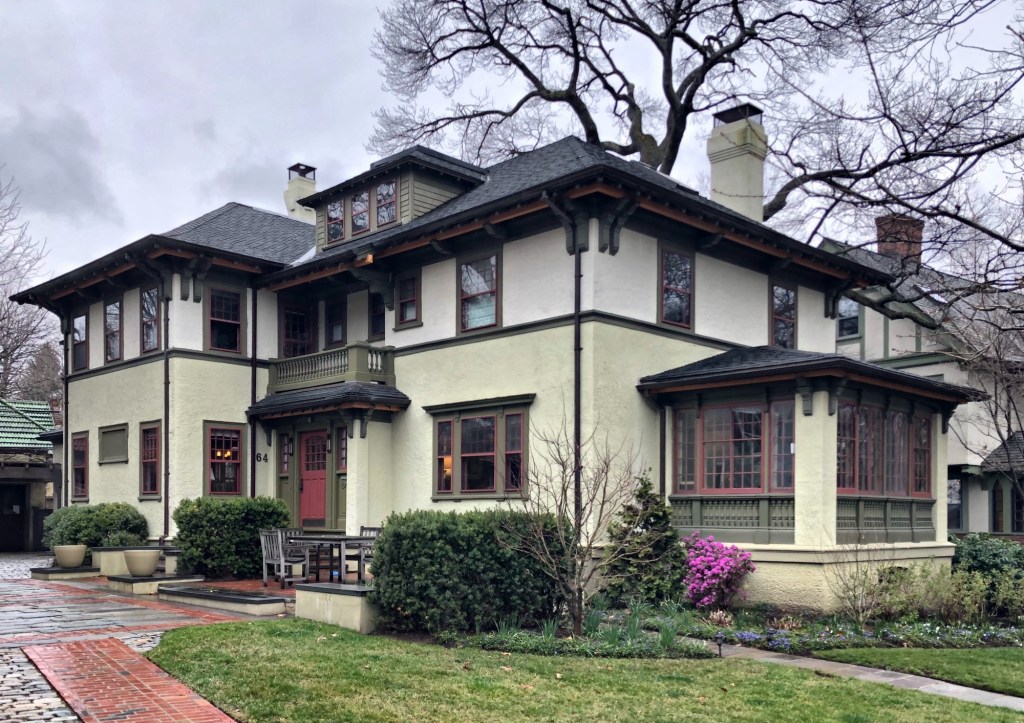
Located on Amory Street in Brookline, this handsome Arts and Crafts style residence dates to about 1908 and while clearly Craftsman in style, does appear to follow the horizontality and form of the Prairie School of architecture, popularized by famed architect, Frank Lloyd Wright. While the architect of this house is unclear, we do know that the first owners were Mr. Frank T. Partridge and his wife, Edith Stevens Partridge. The stucco house features a horizontal belt course, shallow hip roof with broad eaves supported by brackets, and elaborate entry and porches. The colors enhance the architecture of the home perfectly.
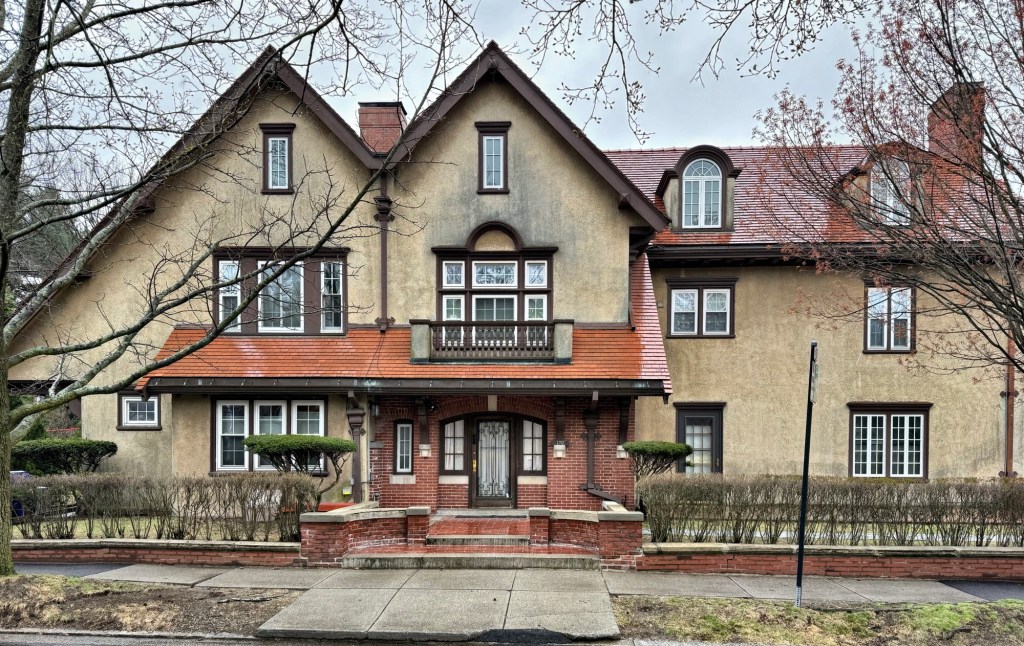
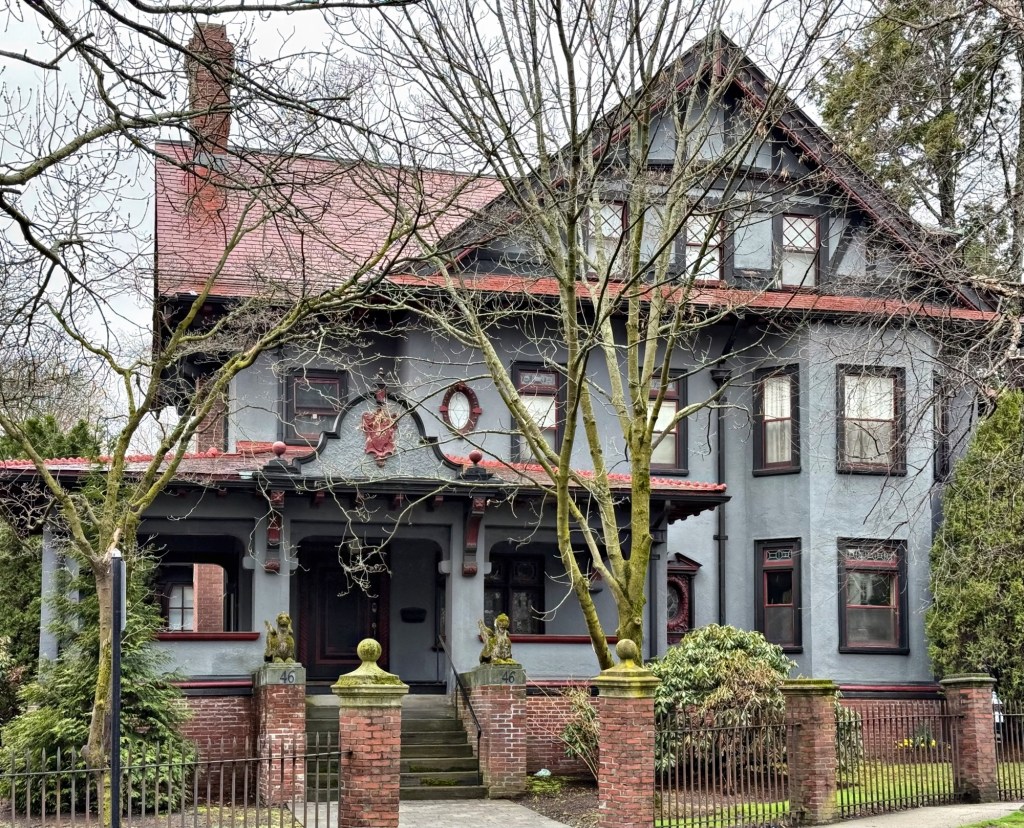
Eclectic houses of the late 19th and early 20th centuries are my favorite as they showcase how architects of the time blend features and break the strict mold of academic styles. This example is found in the Cottage Farm neighborhood of Brookline and dates to 1905. Designed by relatively unknown architect, Alfred Lyman Darrow, who studied at MIT, before opening his own practice. The house was first owned by Hugh G. Brown, who founded the Brown’s News Company and the Hotel & Railroad News Company. The house exhibits half-timbering in the gable ends and decorative corbelled chimneys that derive from the Tudor Revival; the front porch parapet appears to derive from the Spanish Mission style; along with stucco siding and unique windows typical of the Arts and Crafts movement.

 Buildings of New England
