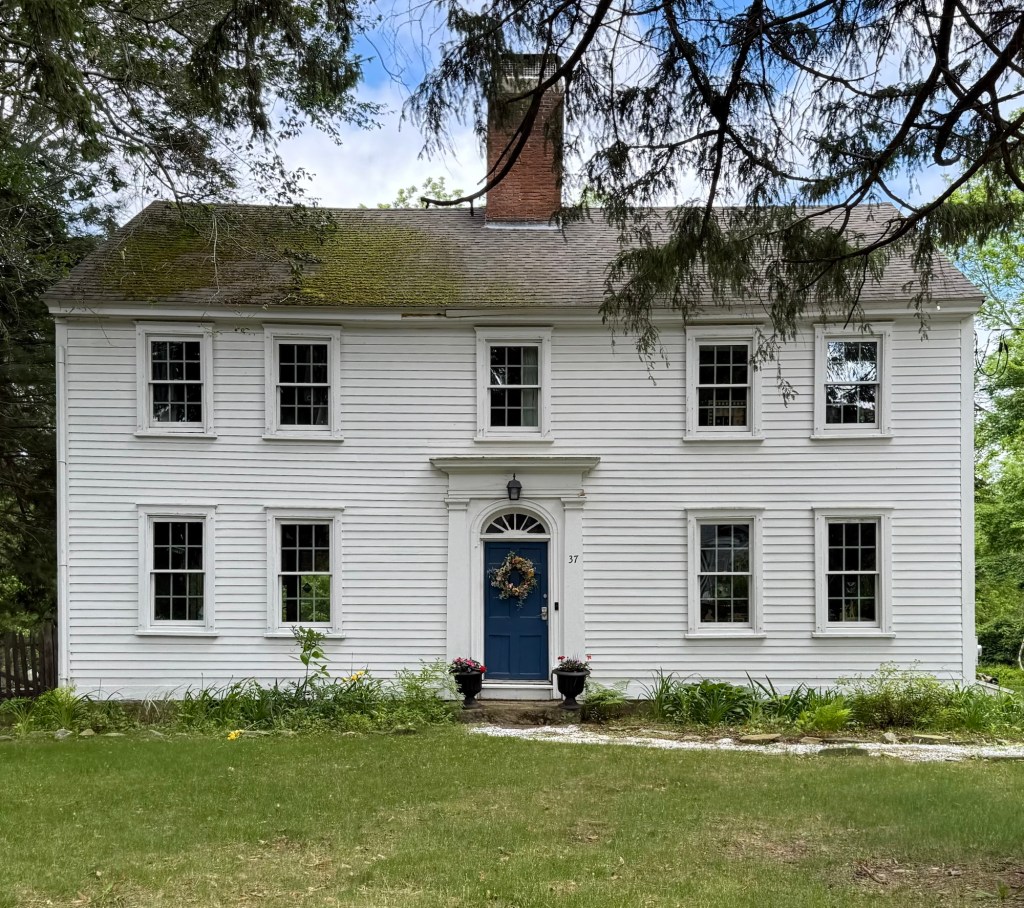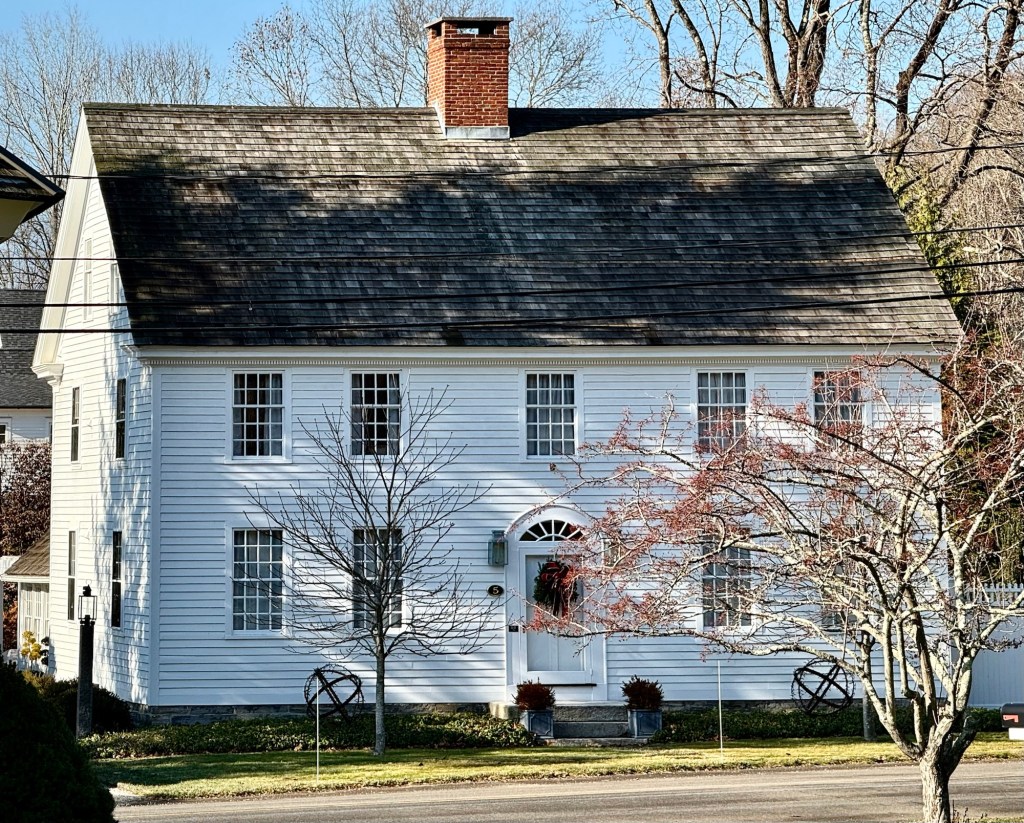
James Baldwin House // c.1785

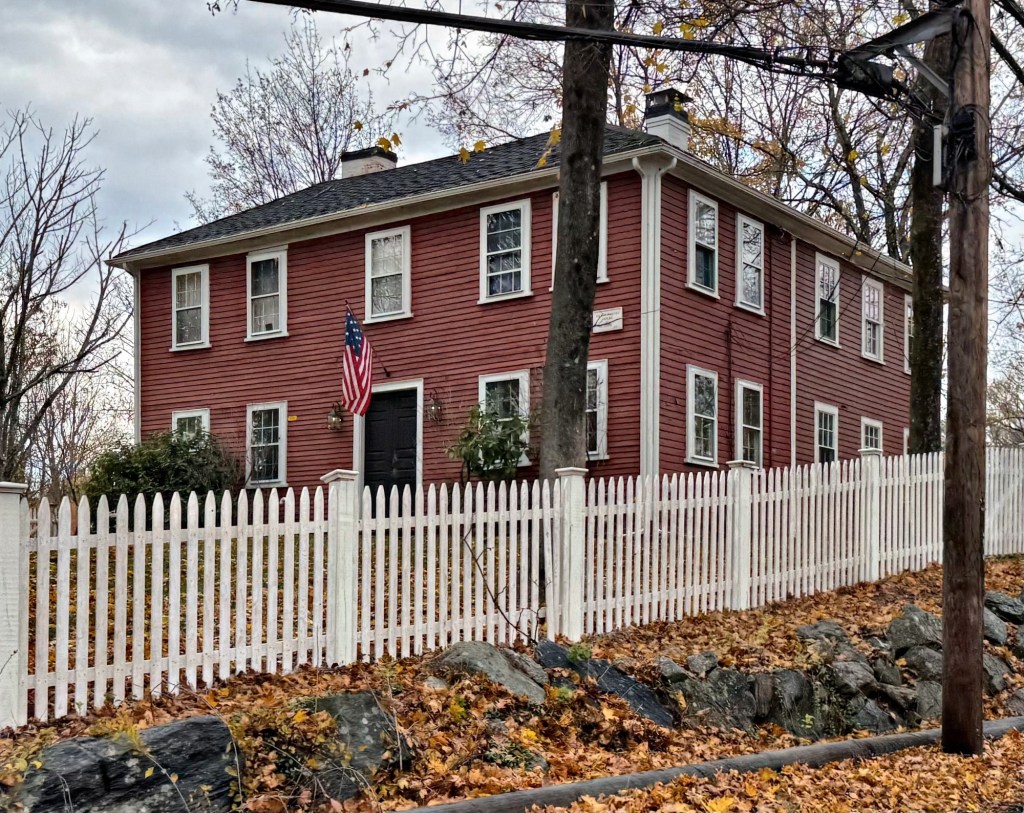
James Baldwin (1742-1818) lived in present-day Chester, Connecticut, and upon the outbreak of the Revolution, joined the forces of Capt. Richard Douglass’ company as a private and fought for liberty. Upon the conclusion of the war, Baldwin returned to Chester and had this house built facing the village green. The transitional late-Georgian and Federal style house has a center chimney and very simple trim with an elliptical fanlight transom over the central door. The house has a wood shingle roof, typical of the early houses of the time. Pvt. Baldwin died in 1818 and his property was inherited by his daughter, Lydia Baldwin Sawyer and her husband, David Sawyer, and later in the 19th century by their eldest daughter, Lucina Morgan, and her husband, Jonathan. The home has been meticulously preserved by the later owners, important as one of the early surviving homes near the village green.
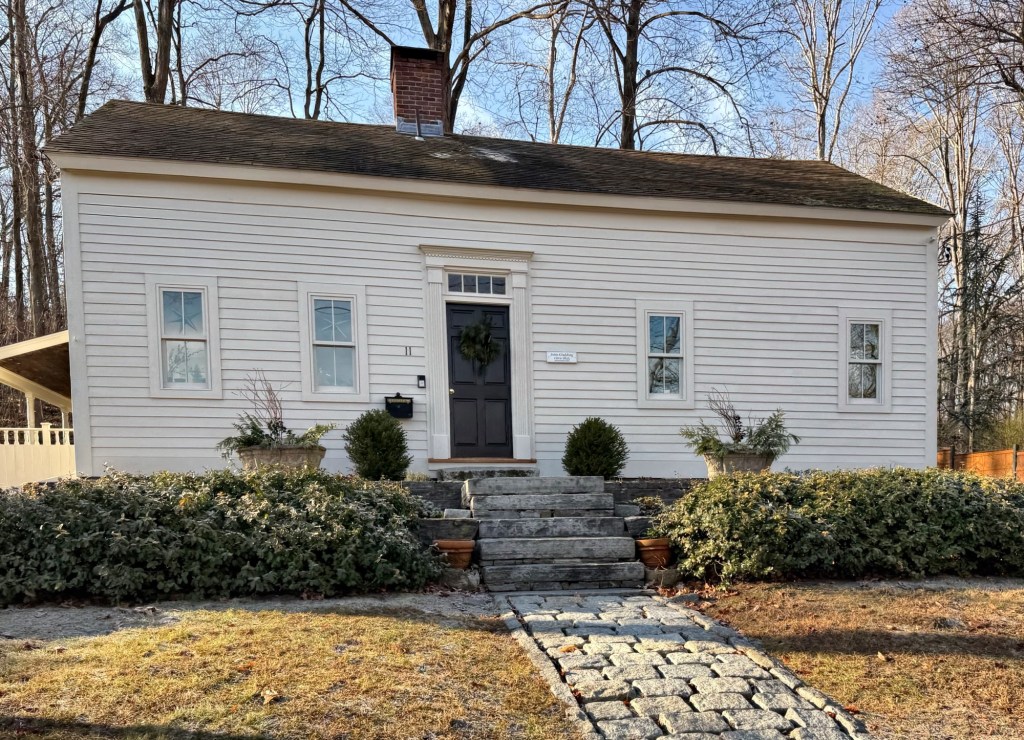
John Gladding House // c.1825

This vernacular, Federal period house on Union Street in Deep River, Connecticut, was built around 1825 for (and likely by) John Gladding. John worked in town as a joiner, a historic carpenter/woodworker, who either built houses or ships in the nearby Connecticut River. The Gladding House was likely originally built as a half cape, with a side hall entry and the two window bays to its left. As the family grew, the house was probably added onto to the right of the entry with the irregularly spaced bays. Houses like these that modestly grow and adapt to modernizations over time are what makes many New England villages great.

Reeves-Goodell House // c.1816

Built on a hill on Concord Road in Wayland, Massachusetts, the Reeves-Goodell House is a beautiful vernacular Federal period residence owned and occupied by a local builder and architect. The house was constructed by Henry Reeves (1789-1878), a local carpenter and descendant of Jacob Reeves (1720-1794) a tavern-keeper in town. In the 1920s, this property became the home of Edwin B. Goodell, Jr. (1893-1971), a prominent local architect who designed area houses before becoming a partner in the firm Andrews, Jones, Biscoe and Goodell of Boston. It was Goodell who added on the rear, three-bay addition to the residence, which blends in with the 1810s aesthetic. Interestingly, Edwin Goodell lived in this historic, vernacular house but designed some of the earliest International style modernist homes in New England.

Abraham Wilder House // 1827

This exceptional vernacular example of a brick, Federal period house in Bolton, Massachusetts, sits on the town’s Main Street in the East Bolton village. Built in 1827, this house with attached wooden ell was the home to Abraham Wilder, a local blacksmith who followed his father’s footsteps in his professional pursuits. The house is two-stories with historic six-over-nine sash windows. The main center entry, rather than displaying a common elliptical fanlight for the period, is surrounded by trim boards, four-pane sidelights and a vertical-board door. Abraham’s blacksmith shop was once located next-door but was moved and reassembled in Old Sturbridge Village in 1957.

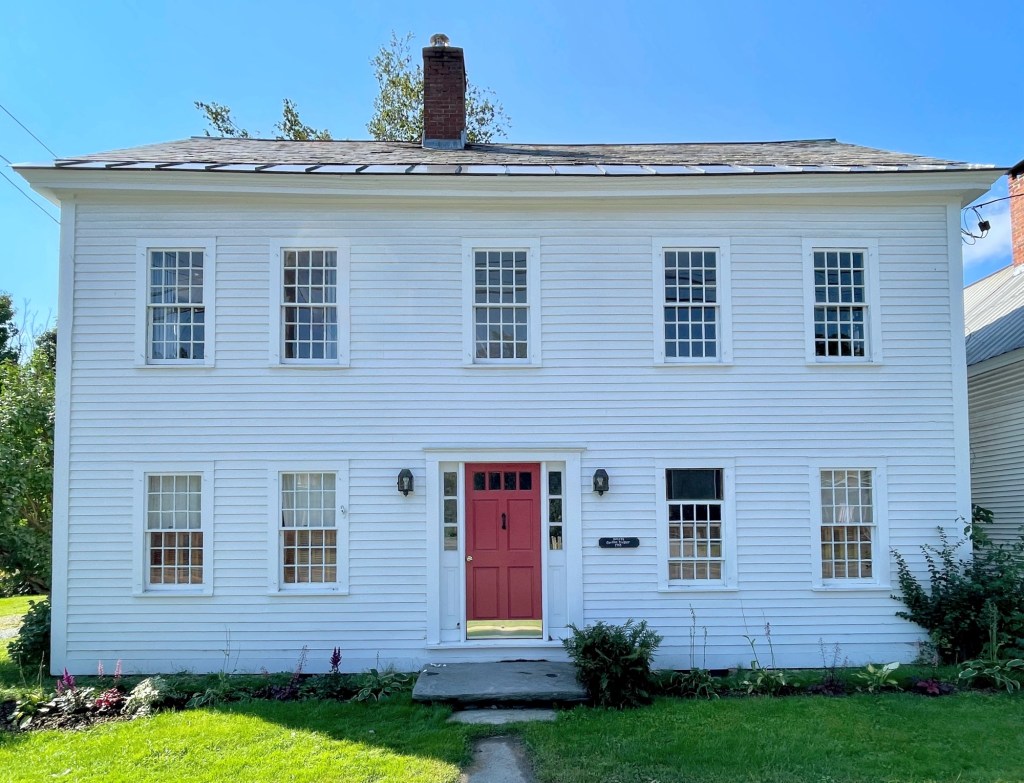
Comfort C. Dresser House // 1799

Built just before the turn of the 19th century, this handsome five-bay vernacular Federal period house is located on the charming Main Street of Chester, Vermont, and is one of the oldest extant houses in the village. The residence was built in 1799 by Comfort Carpenter Dresser (1777-1856), who with his family, moved from Bridgewater, Massachusetts, to the town of Chester, where he found work as a carpenter and housewright, a fitting profession due to his middle name. The family resided here for nearly 30 years until they moved to New Hampshire. The beautiful home, painted a bright white sometime in the 20th century, features a front door with sidelights, 12-over-12 sash windows, and a symmetrical facade, common for the style. 

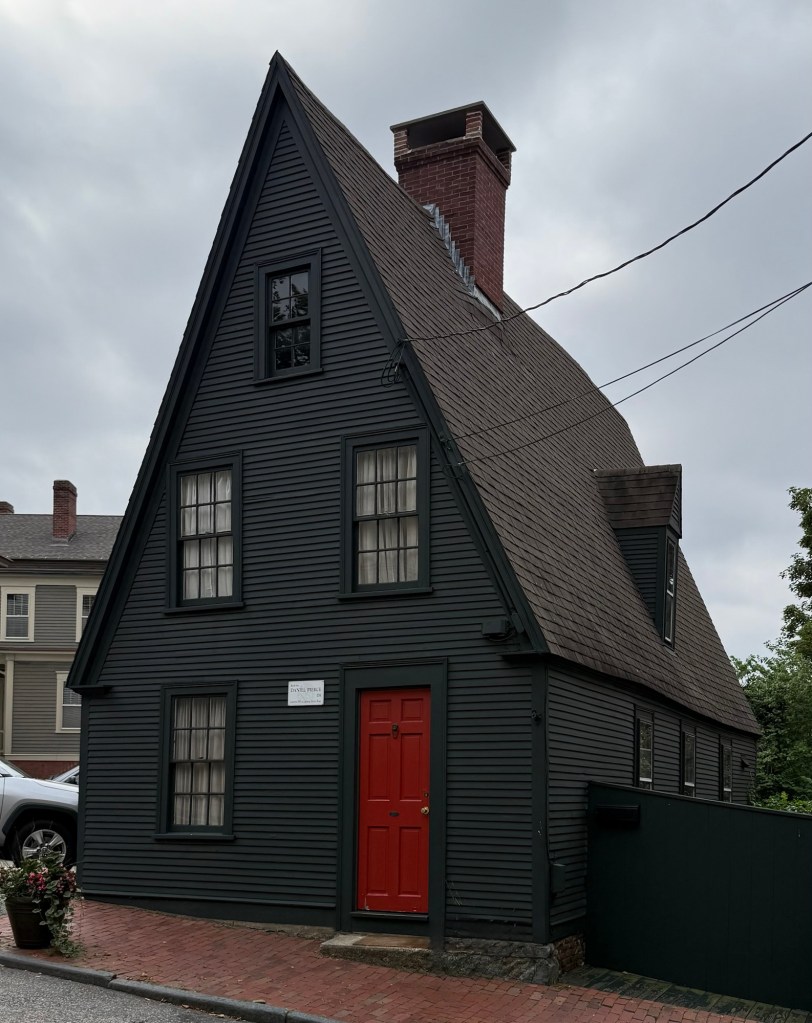
Pierce-Guild Lightning Splitter House // 1781

The Pierce-Guild House at 53 Transit Street in the Fox Point neighborhood of Providence, Rhode Island, is one of the most iconic and photographed residences in the state. Known as a “lightning splitter”, the unique name is taken from local folklore that the sharp angle of the gable roof will deflect or split lightning if struck. Whether or not this superstition is true, the unique house form numbers to less than a dozen in Rhode Island. This house, arguably the most well-known for its location off Benefit Street, was originally built in 1781 as a modest 1-1/2-story cottage with a gambrel roof for Daniel Pierce (Pearce), a tailor. In 1844, the property was sold to George Guild, a grocer, who modernized the house by creating the massive gable roof to provide a narrow third floor, which was illuminated by the end windows and a diminutive dormer at the roof. The house retains much of its character, after a restoration by owners in the mid-late 20th century.

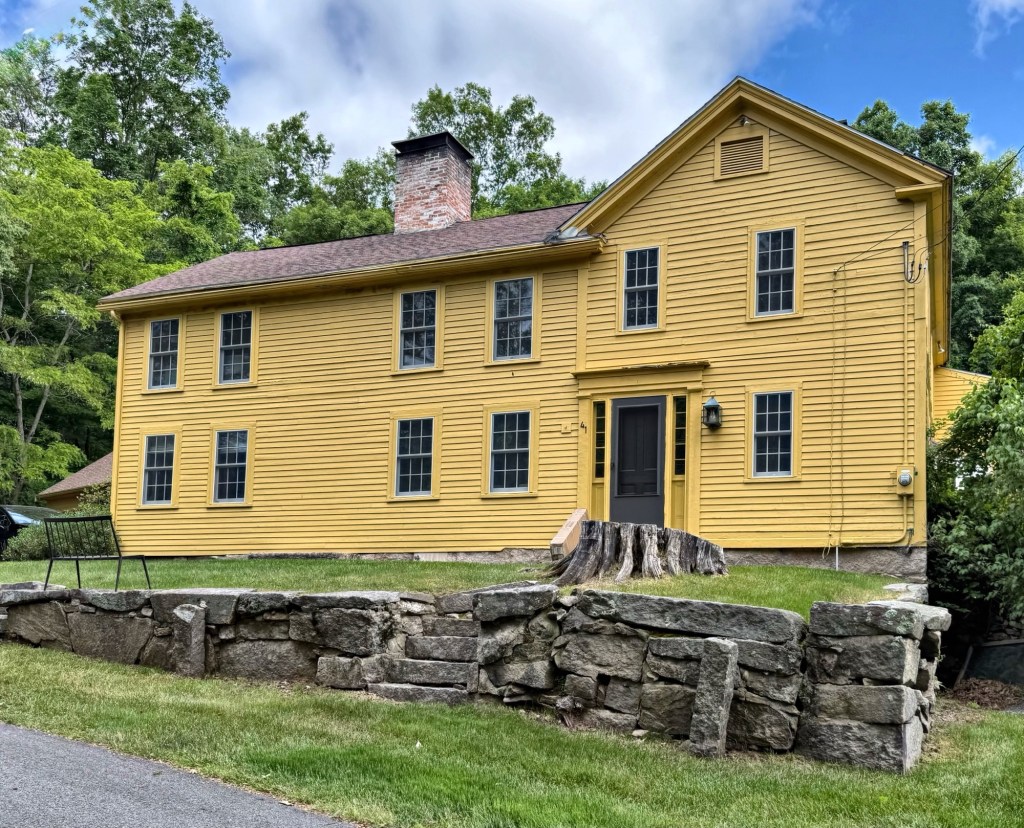
Corbett House // c.1789

The Corbett House is a charming Federal-period house in Westborough, Massachusetts, and was the birthplace of Henry W. Corbett, an important figure who helped develop Portland, Oregon in the 19th century. This house was built around 1789, the year that Henry’s parents, Elijah and Malinda Corbett, married. The property was farmed for years until Elijah Corbett began an axe manufacturing company here, becoming the first edge-tool manufacturer in Westborough. The rear ell was likely added in 1815 for this purpose. Elijah retired and the family sold the property in 1831 to Lawson Harrington, who continued the business until around the time of the Civil War. The Corbett family settled in New York, where Henry would engage in business. By the mid-19th century, westward expansion and opportunity took hold, and the Oregon Territory became a U.S. territory, leading Henry to establish business there, followed by many of his siblings. Corbett set sail from New York on the long voyage through the Straits of Magellan around Cape Horn up the Pacific Coast to Portland with $25,000 worth of goods to establish business in this new territory. Henry would become City Treasurer of Portland, member of the city council and chairman of the Republican Oregon State central committee. In 1867, he was elected as a Republican to the United States Senate, serving until 1873. Who would have guessed that this house in Westborough would have connections to the growth of Portland, Oregon!?

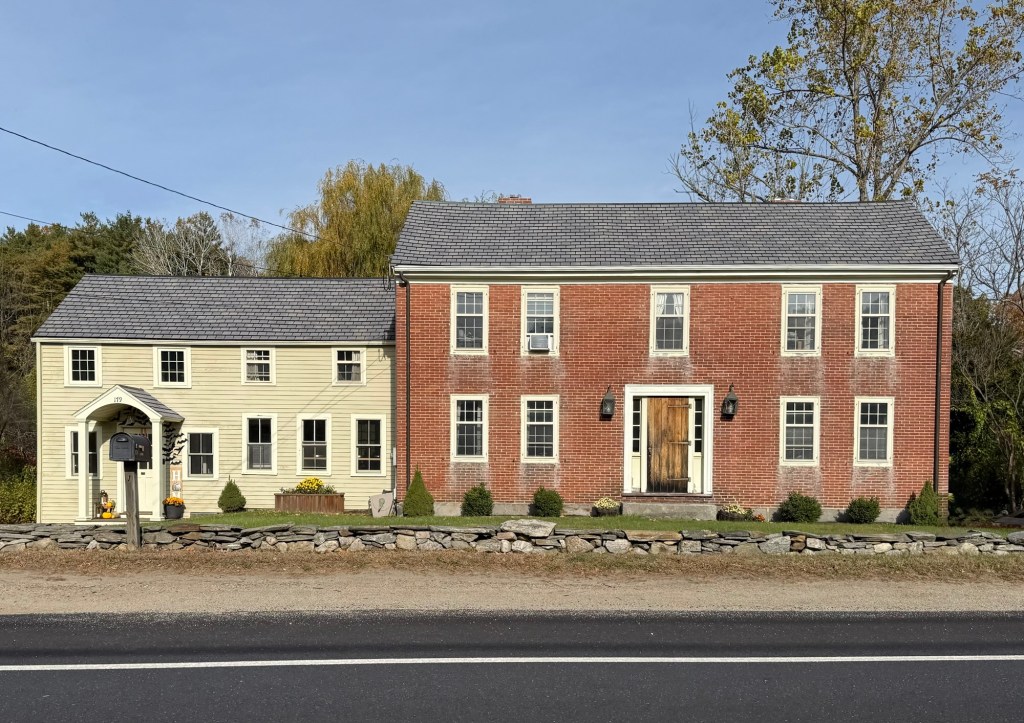
Rice-Harrington House // c.1731

This charming Federal style house sits on Maynard Street in Westborough, Massachusetts, and according to local records, dates to the early-mid 1700s. The property was originally owned by Eliezer Rice (1703-1767), a farmer and town constable, and likely built around the time of his marriage to Persis Newton, who died in 1746 during childbirth. After Eliezer’s death, the property was owned by an E. Harrington, who likely rotated the earlier structure 90 degrees and built the Federal style residence facing the street, utilizing the 100-year old house as a rear kitchen ell, or completely modernized the old residence, retaining the central chimney. The Federal house features a symmetrical facade, pilastered entry with fanlight transom window, and a large central chimney.

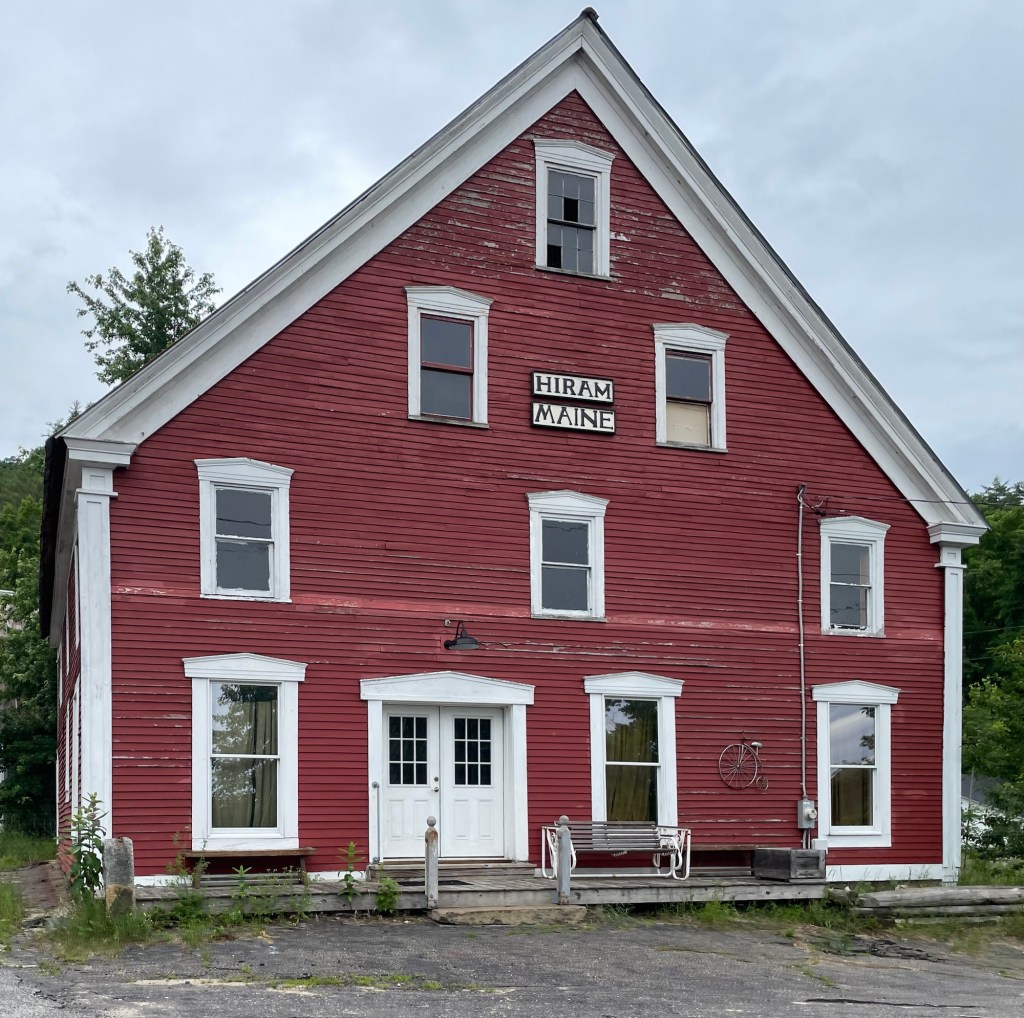
Hiram Village Store // c. 1850

Hiram is a small, rural town in Oxford County, Maine, and has a handful of notable old buildings. The town was incorporated in 1814 and was occupied by white settlers as early as 1774. The land here has long been heavily wooded and the town’s name was inspired by the biblical King Hiram of Tyre whose kingdom was set among “timber of cedar and timber of fir.” The town’s two villages, Hiram Village and South Hiram, grew along the Saco River, and are typical rural villages built around industry and modest frame dwellings. This commercial building is one of the larger structures in Hiram Village and it dates to the mid 19th century. The structure was owned by Thomas B. Seavey, who purchased a store built on the site as early as 1816, from a Simeon Chadbourne. The store was enlarged and became a major hub of the sleepy town in the 19th and 20th centuries, but like many such structures, struggled due to changing of shopping habits and rural decline. The building, with its vernacular and Greek Revival lintels, appears vacant today.

Belding Homestead // c.1820

David Belding (1785-1860) was born in Swanzey, NH and at 25 years old, moved to Moretown, Vermont in 1810, marrying an eighteen-year-old Florinda Freeman a year later. The couple built a farmhouse on the outskirts of town near a brook. David worked as a farmer and would later officiate as a justice of the peace, the town lister, selectman, and represented the town in the State Legislature for two terms. From his enhanced wealth, David appears to have expanded his farmhouse in the 1820s or 30s with this vernacular Federal and Greek Revival style residence. The Belding Homestead would remain in the family for decades and eventually became the Belding House Bed & Breakfast.