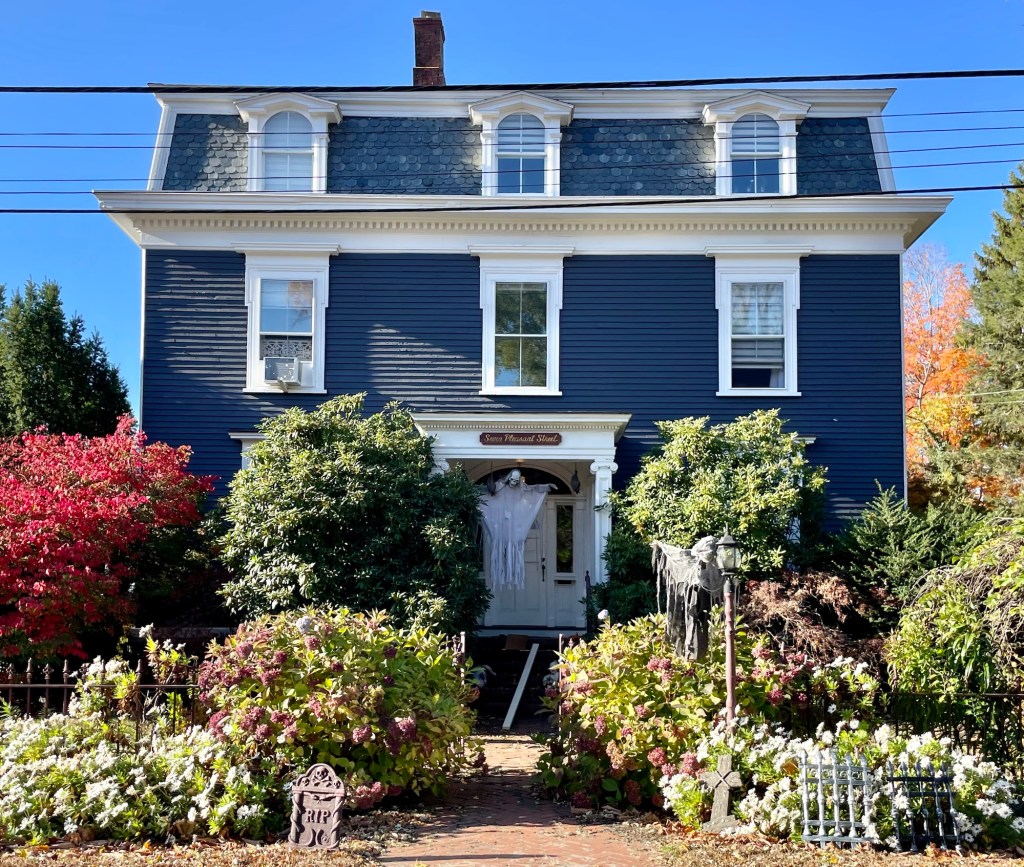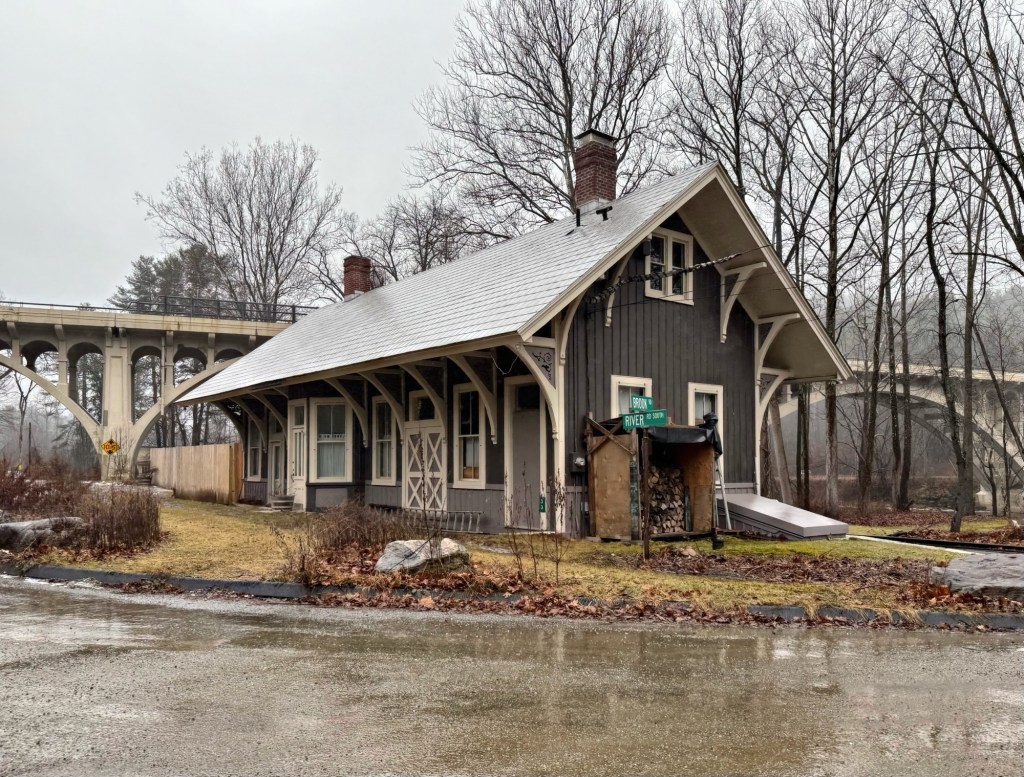
Goodwin House // 1886

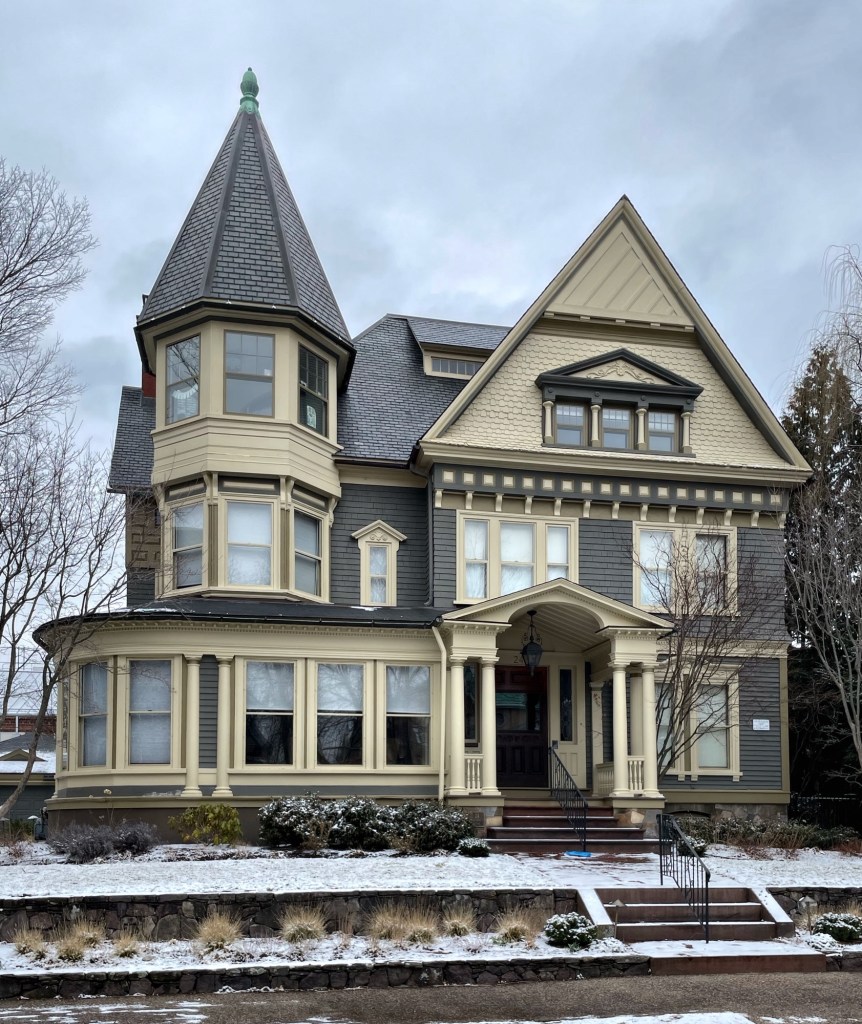
Queen Anne style buildings are a favorite as they are all so different and interesting to look at with all the ornate details, asymmetrical forms, varied siding, and rooflines. This example on Stimson Avenue in Providence is a great example of the style. The house was built in 1886 for William P. Goodwin (1852-1921), a banker, insurance executive, and author, who never married and lived in the house with his sister, Sarah Jane Goodwin. Keeping it in the family, William hired his brother, architect, John Bray Goodwin, to design his residence, with little expense spared. Interestingly, the house is built right at the street with its front door accessed up a stair and a brick base adjacent to enclose the property from the sidewalk, creating a high garden wall with gate. There is so much to look at here, it is spectacular.

Joseph Fletcher House and Stable // 1889

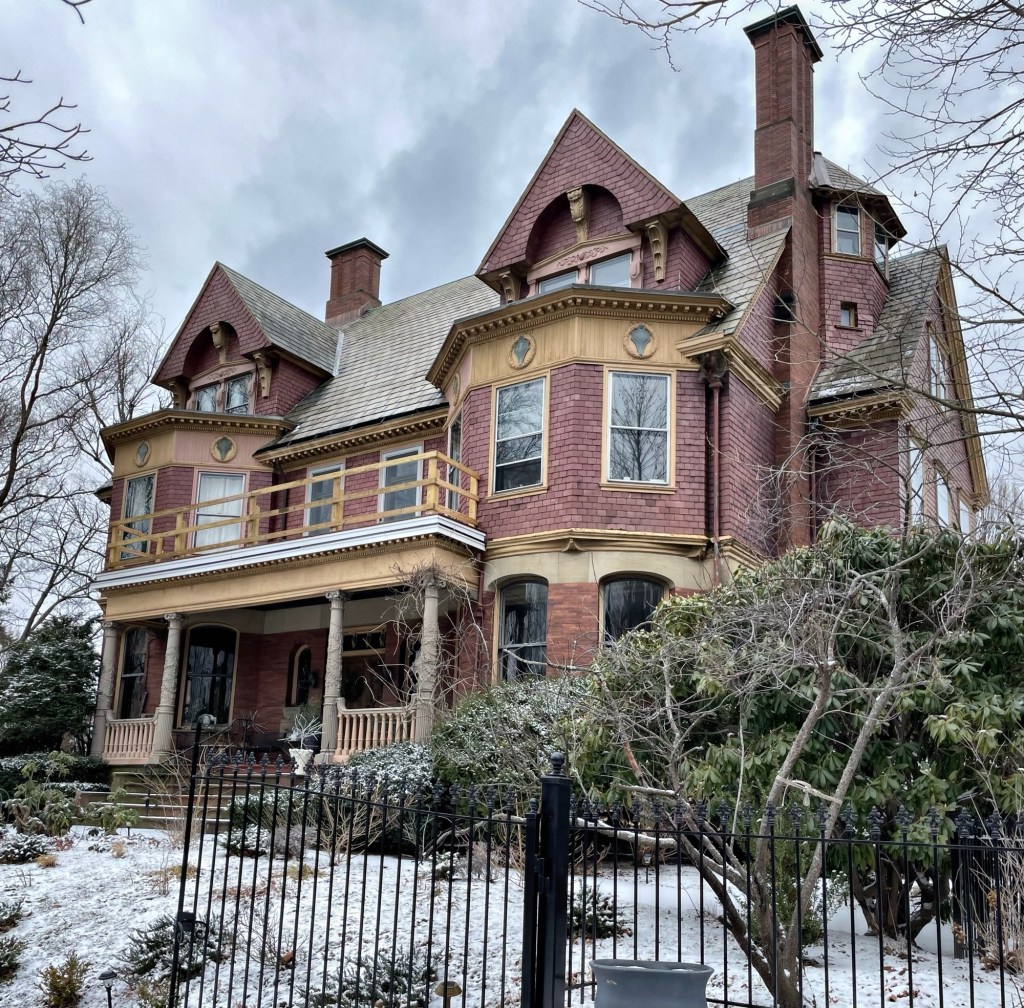
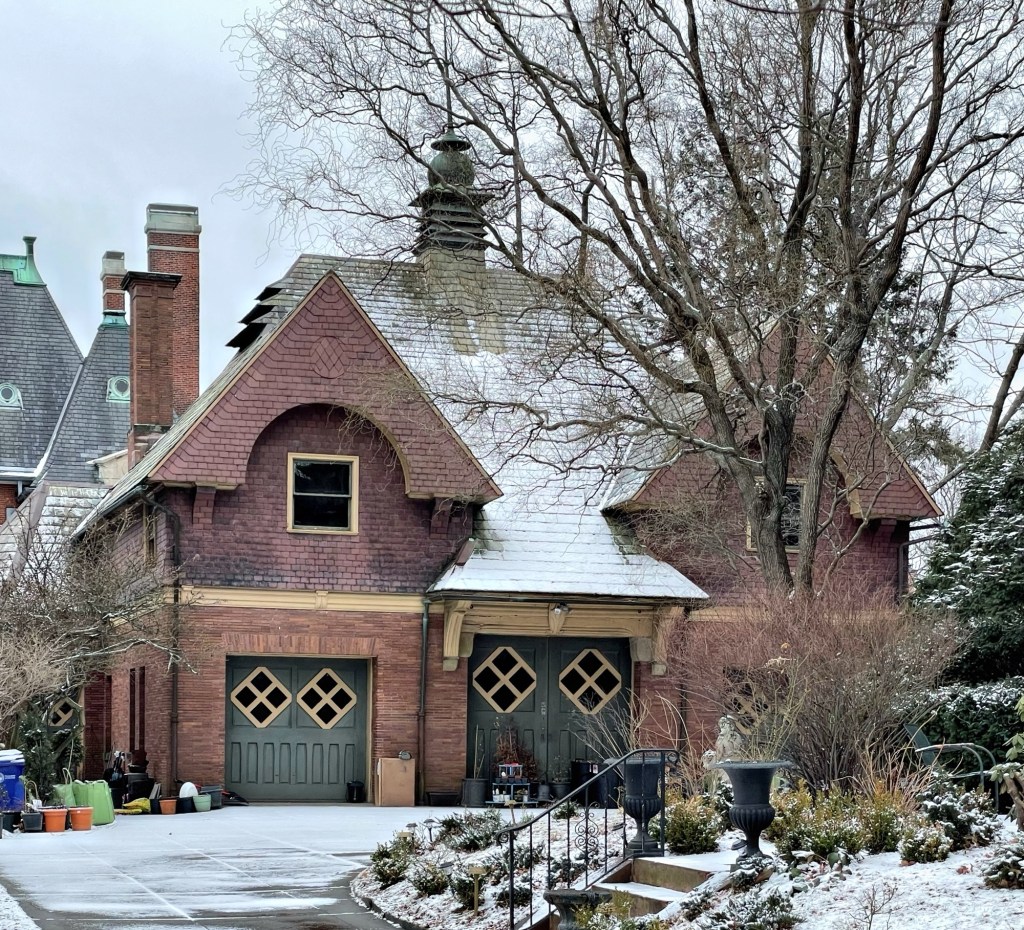
With red brick and slate siding and all the finest trimmings, this house looks like a present wrapped under the Christmas tree! The Joseph Fletcher House is located at 19 Stimson Avenue in Providence, Rhode Island, and is an excellent example of a Queen Anne residence with the innovative use of siding types often found in the style. The residence was built in 1889 for textile manufacturer, Joseph Edward Fletcher (1866-1924), the son of wealthy, English-born manufacturer, Charles Fletcher. The Fletcher house and adjacent stable were designed by Stone, Carpenter & Willson, one of the most prestigious architectural firms in New England at this period. It is believed that the site was developed by Charles Fletcher, as a wedding gift to his 23-year-old son and daughter-in-law following their marriage. The home was recently sold, and the interiors are as stunning as the exterior!

Porphyry Hall // 1880

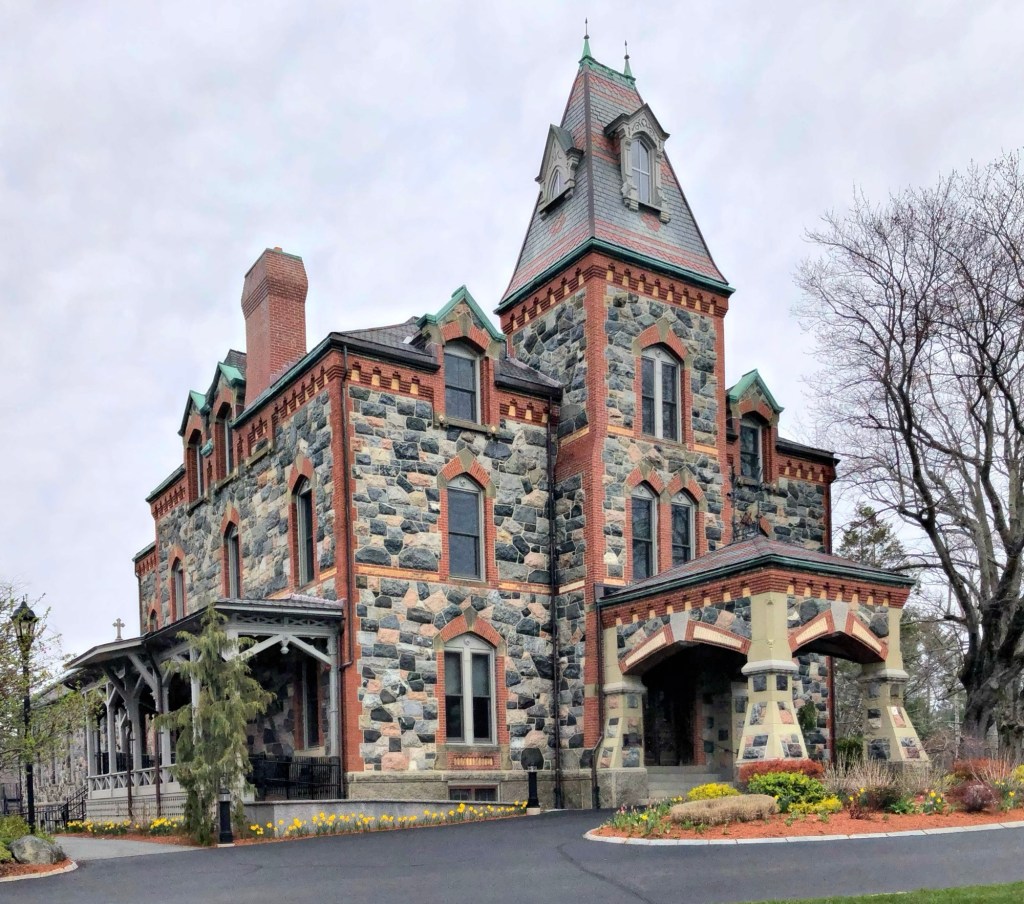
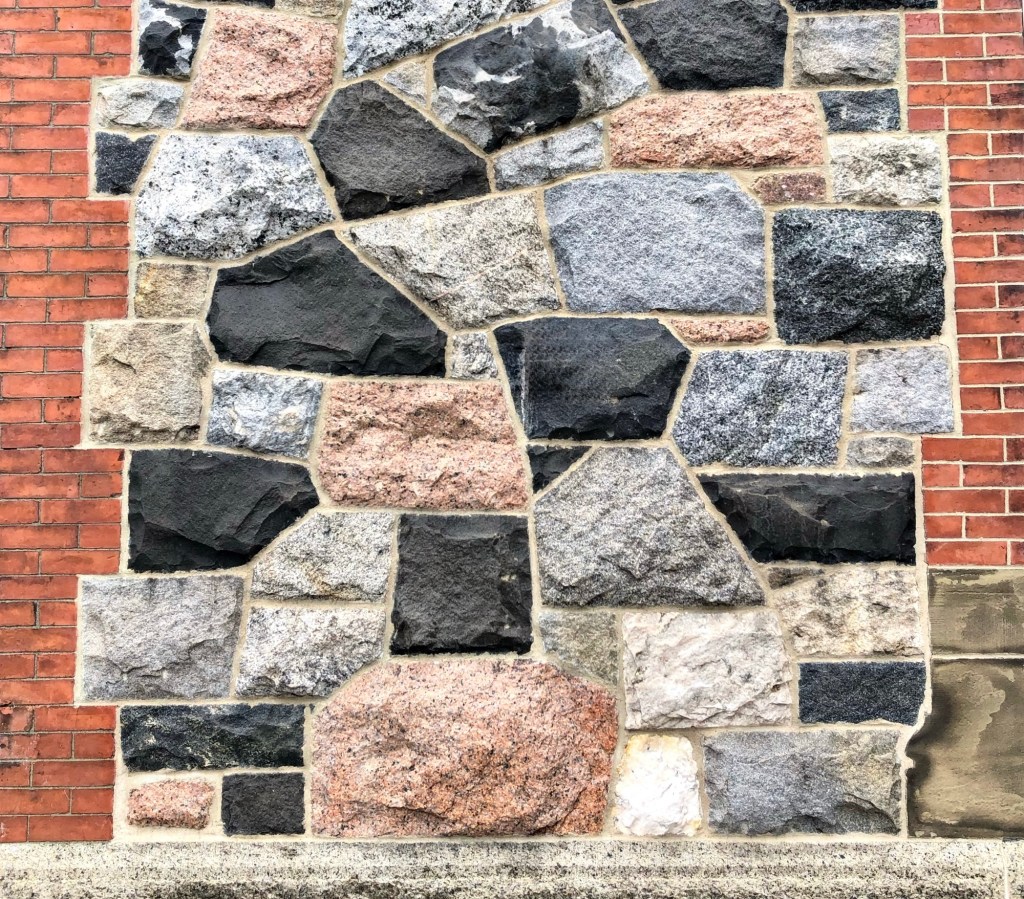
The Jacob E. Spring Mansion, also known as Porphyry Hall, is a high-style estate house located in Danvers, Massachusetts, that is one of the finest and most unique in the state! The house was built in 1880 for Jacob Evans Spring (1825-1905), who was born in Brownfield, Maine, and at the age of twenty, he went to Argentina and amassed a fortune in the wool business in Buenos Aires between 1845 and 1865, when he returned to the United States. Jacob and his wife, Sara Duffy, would purchase a large farm in Danvers and began planning for their family country home. Their residence was built on a high hill over two years and constructed of over 40 types of stones of irregular size and color with door and window sills of Nova Scotia freestone with arches of the doors and windows and corners of brick. The mansion was designed by architect George M. Harding of Boston, and built by several skilled masons over many months. Mr. Spring named his estate, “Porphyry Hall” with Porphyry meaning an igneous rock with large crystals in a fine-grained matrix; suitable for the walls of their mansion. The Spring’s lived lavishly at this home and spent nearly all of their fortune, selling the property after just ten years to the Xaverian Brothers, who opened it as Saint John’s Normal College. In 1907, the compound was re-organized as a Catholic boys prep school. In 1915, a chapel was added to the rear of the building, constructed from gray fieldstone to blend with the main house. Have you ever seen a building like this?

Frank and Elizabeth Ratcliffe House // 1890

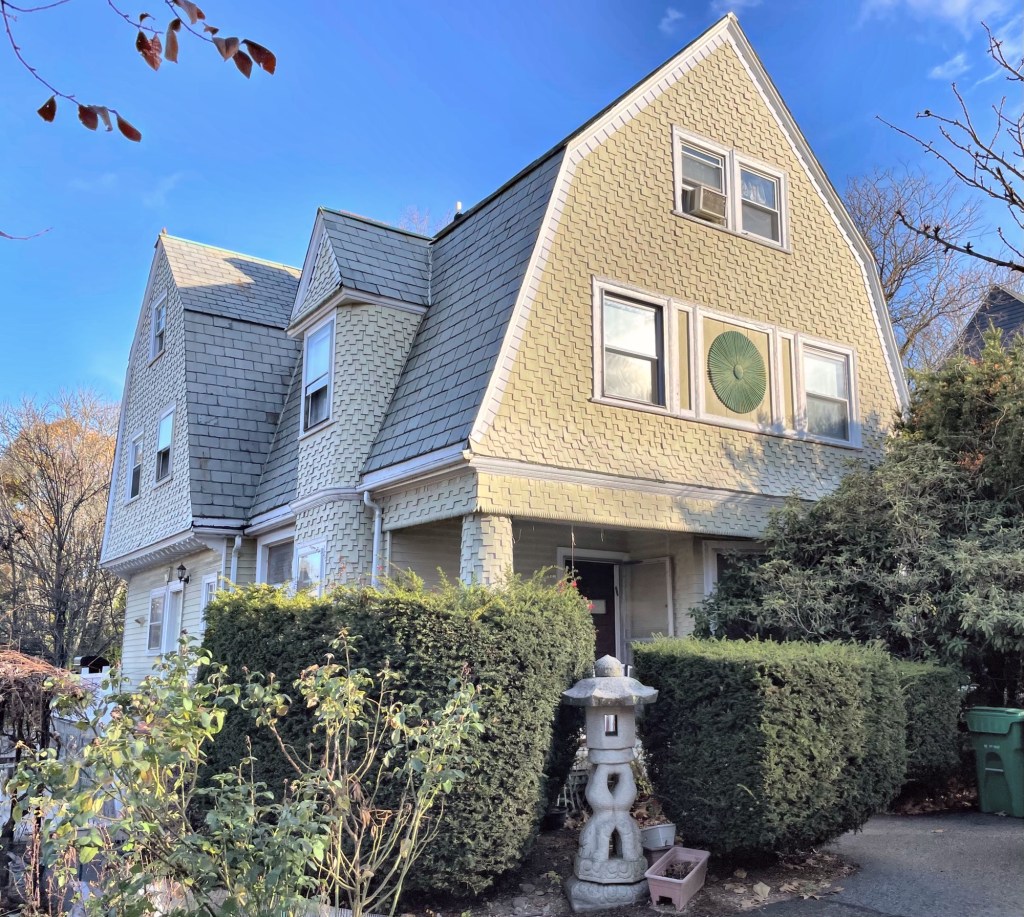
I do not think that I have ever seen rounded shingled columns like this before… What a treat! This house is located on Rice Street in Newton Centre, and was built in 1890 by Henry H. Read, a leather dealer who developed the entire street. This house was built on speculation and initially rented out to tenants before it was sold to Frank Ratcliffe and his wife, Elizabeth Ratcliffe. Frank Ratcliffe was born in England and would become treasurer of the Boston & Albany Railroad, which had a stop in Newton Centre. Frank and Elizabeth would sell or gift this property to their daughter, Mary Elizabeth Ratcliffe Holt and her husband, Warner R. Holt. Besides the unique shingled columns, the house features a broad gambrel roof and sunburst panels and a two-story rounded shingled bay. I could not locate the architect for this one, sadly.

John H. Sanborn Mansion // c.1868

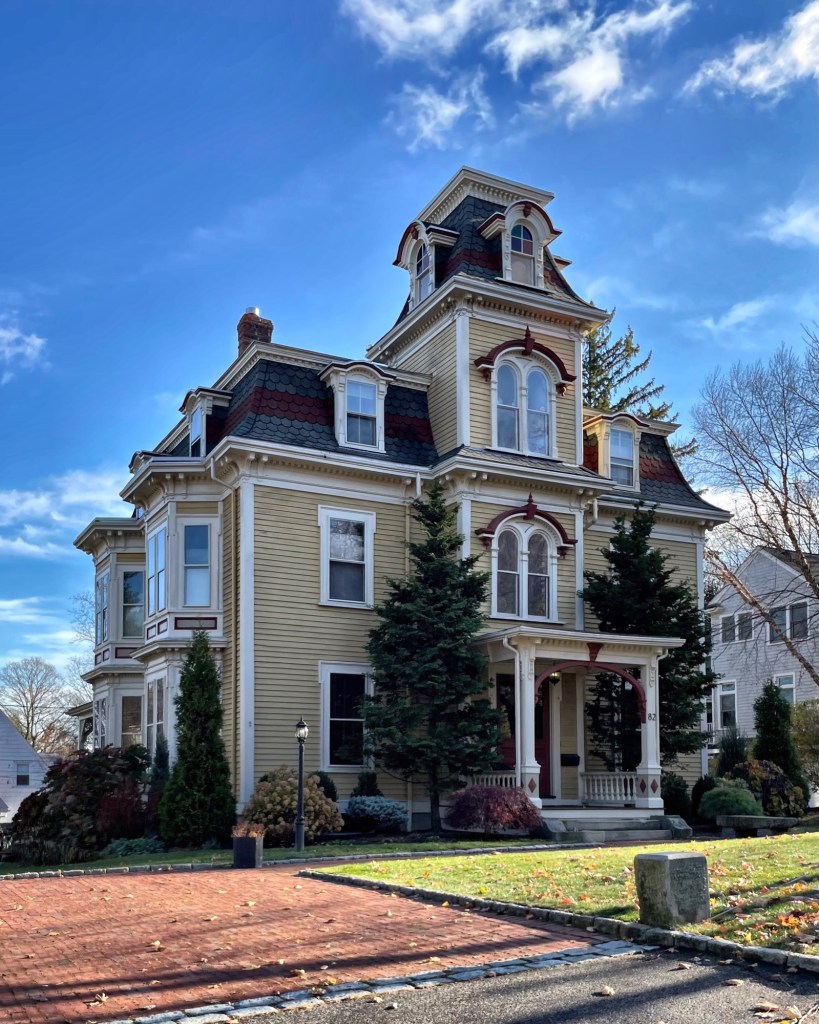
One of the finest Second Empire style residences in Newton, Massachusetts, can be found on Herrick Road in Newton Centre. This is the John H. Sanborn house, built before 1870 for John H. Sanborn, a Boston broker and commission merchant who also served as a Representative to the Massachusetts General Court. The imposing residence is a two-story house based on a rectangular plan, and capped with a bellcast Mansard roof of gray, fish-scale patterned slates. The focal point of the design is the four-story, towered entrance pavilion which dominates the facade.

Hiram Ricker House // 1893

The Hiram Ricker House sits in the Poland Springs Historic District of Poland, Maine, and was built as the personal residence of its namesake, who developed this formerly sleepy town into a destination in the 19th and 20th centuries. Hiram Ricker (1809-1893), the son of Wentworth Ricker and Mary Pottle, helped turn his father’s country inn in Poland into a popular late 19th century resort, bringing in droves of tourists to take in fresh air and the healing natural spring water. He and his wife, Janette (Bolster) Ricker had six children, all but one of which helped run the resort. This Queen Anne style residence was designed by Lewiston architect, George M. Coombs, and is set back down a long drive overlooking the resort grounds. Sadly, Hiram Ricker died the same year his residence was built, but the home was occupied by the Ricker Family for years after, notably by Hiram’s son, Hiram Weston Ricker. It is covered in later siding, but the trim details are preserved and typical of high-end Victorian homes of this period in Maine.

Tenney-Root House // c.1865

This house in Georgetown Center, Massachusetts dates to the 1860s and appears to have been built for Milton G. Tenney, a shoe manufacturer. By the early 20th century, the home was owned by the third member of the Root family to practice medicine in Georgetown. The first, Dr. Martin Root, established a practice in 1827, serving the community for more than 50 years. His son, Dr. Richmond B. Root, owner of 24 North Street (featured previously), was in turn the father of Dr. Raymond Root (1882-1958), owner of this fancy Second Empire style dwelling. In addition to his private practice, Dr. Raymond Root was a school physician for many years, and served as Town Clerk from 1937 to 1944. The house is Second Empire in style with a mansard roof, window mouldings and two-over-two windows, but features a Colonial Revival portico with what may possibly be a Federal-period entry of fanlight with sidelights, salvaged from his father’s home when that house was renovated.

First Congregational Church of Georgetown // 1874

The First Congregational Church of Georgetown, Massachusetts, is significant both architecturally as a Victorian Gothic/Stick style church designed by a prominent architectural firm, and historically as an important gathering place for the town’s members for 150 years. The congregation however is much older than 1874, as when Georgetown was then a part of Rowley, Massachusetts, members here in 1731 petitioned to create their own parish in Rowley to travel a shorter distance to services. The church, then known as the Second Church of Christ in Rowley, was organized in 1732 with services held in a rustic Meeting House. A second meetinghouse was built in 1769, which was both outgrown and in much need of repairs by the time the congregation decided to build a new building on a new site in the new commercial center of town. The congregation hired the esteemed firm of Peabody & Stearns to design the church which today, is the most high-style and architecturally grand building in the suburban town.

Old New Gloucester Public Library – New Gloucester Meetinghouse // 1895

The original New Gloucester Public Library is located in the central village of New Gloucester, Maine, and is one of the finest architectural buildings in the town. The library was established in 1888 when voters passed a resolution to establish a public town library as before this, a private, social library existed here. A committee was chosen to purchase books and make decisions for expenditures and staff. The library was originally located in the town hall building, and was supported by an annual poll tax of 50 cents. The first librarian was Helen A. Moseley, with a salary of $50 a year, she remained the town’s librarian until 1920. By 1895, the library had grown to more than 2,100 volumes and it was decided a new, purpose-built library was needed. That next year, a lot was purchased and this Victorian style building was constructed adjacent to the Town Hall. The wood-frame building has a decorative central section with recessed, arched entry and gable with decorative Stick style ornament. Additionally, a tower protrudes from the roof, giving the building additional whimsy. The library was eventually outgrown and relocated in the former High School, two buildings down the street. The old library has ever-since been the town’s meetinghouse.

New Ipswich Public Library // 1895

The New Ipswich Public Library is a one-story Shingle style building on Main Street in the charming village of New Ipswich, New Hampshire. The library building was likely designed by Ernest M. A. Machado, one of the best, and relatively unknown architects of the late 19th and early 20th century in Salem. The entrance which faces the side, is flanked by two diamond-pane windows, which can also be found on the primary facade. A special ten-light vertical window is recessed within a shingled depression in the gable, which adds some complexity to the design.