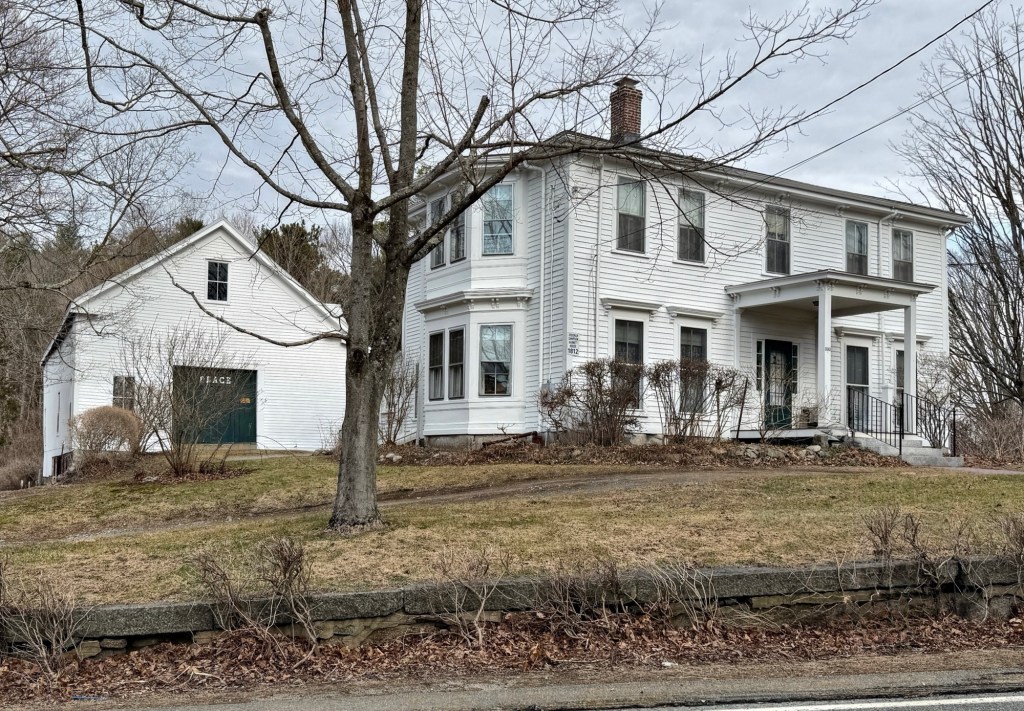
Mumford House // 1877

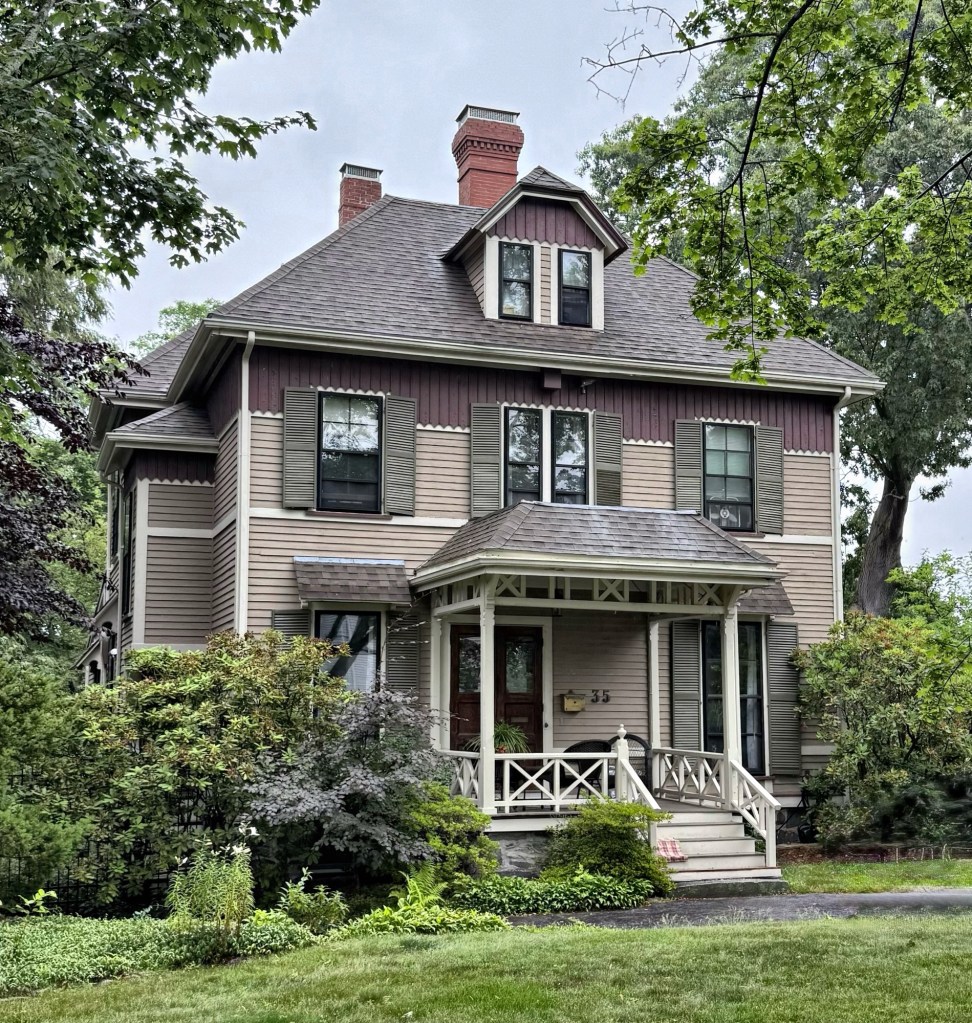
Set back behind a manicured lawn on the charming Alban Street in the Ashmont Hill neighborhood of Dorchester, this Victorian era residence was both a family home as well as a finishing school for young ladies. The house at 35 Alban Street was completed in 1877 for the Reverend Thomas James Mumford, pastor of the Third Church of Dorchester and anti-slavery advocate, who died the year his home was completed. His widow, Elizabeth Goodrich Warren Mumford (1834-1897) would inherit the home from her husband and for supplemental income to maintain the home, she opened the Mrs. Mumford’s Finishing School for Young Ladies, a school to educate and teach young girls manners and religion. Elizabeth Mumford would also publish books on how to conduct classes for Sunday School, Kindergarten, and the home. The Mumford House is a great example of a Stick style residence with less exuberance than some other examples. The picket frieze, applied stickwork on the siding, and more ornate porch are all typical of the style. 

Chansonetta Stanley Emmons House // 1893

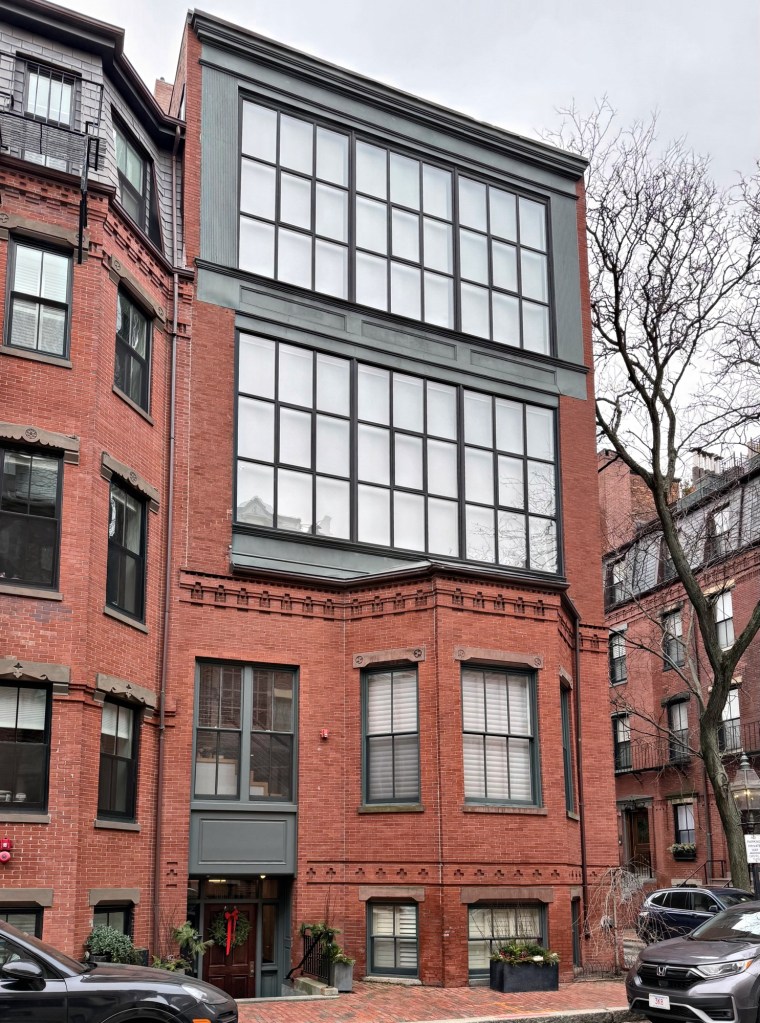
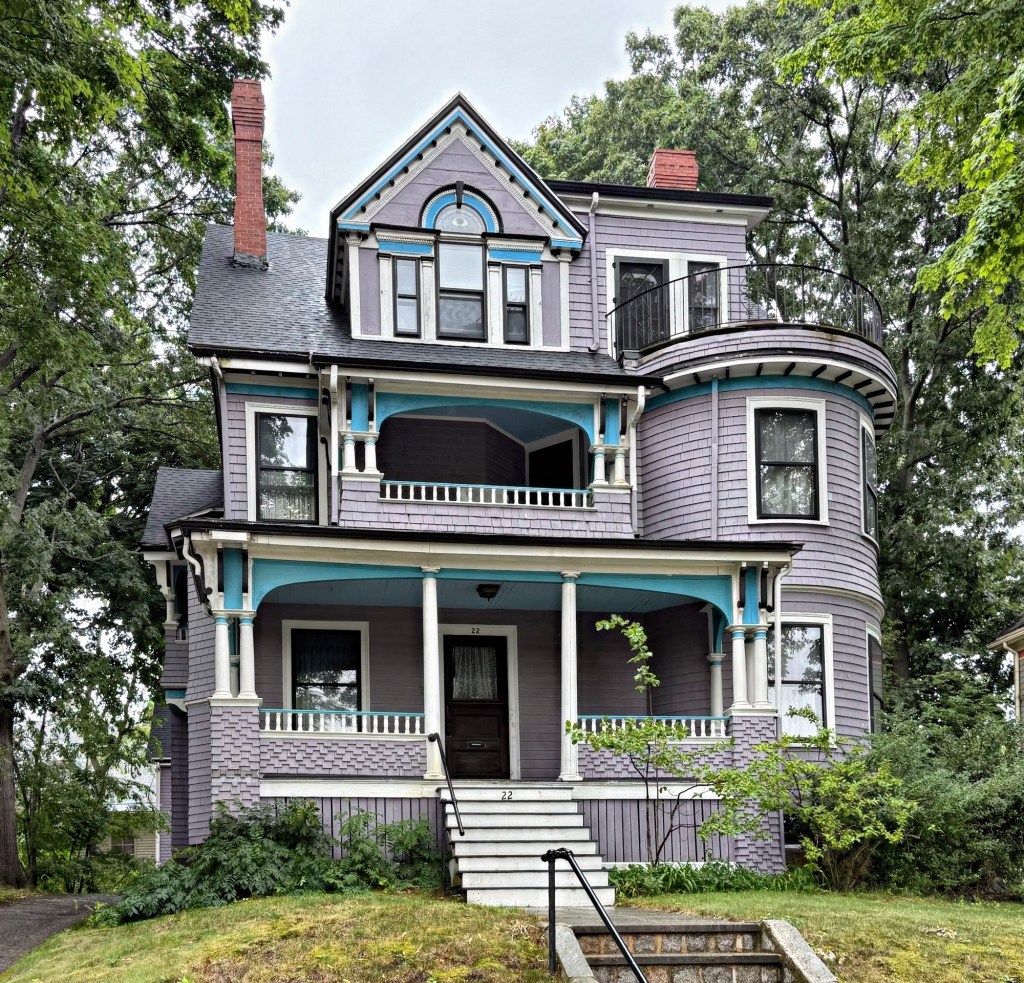
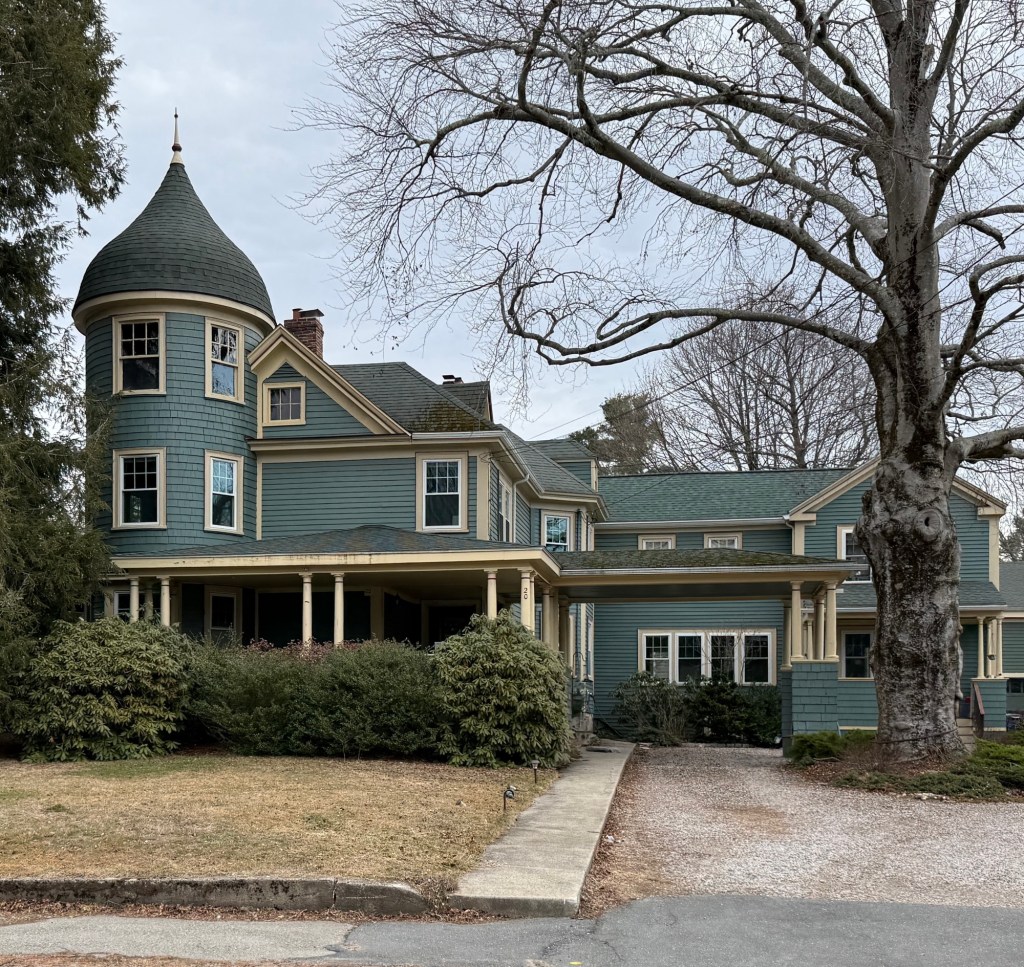
Chansonetta Stanley Emmons (1858-1937) was born in Kingfield, Maine, and was one of the great women photographers in the 19th and early 20th century, often depicting domestic life and New England scenes. The young Chansonetta Stanley grew interested in photography after her brothers’ (Francis E. and Freelan O. Stanley) dry-plate printing invention, they also invented the steam-powered automobile known as the Stanley Steamer. She married James Nathaniel Whitman Emmons in 1887 and in 1894, James hired architect Henry McLean, to design a residence for him and Chansonetta, this lovely home on Harley Street on Ashmont Hill. The couple occupied the house until 1898, when James died of blood poisoning at the age of 41. Chansonetta sold the home and moved to Newton, where her two brothers lived and operated their business. The house blends Queen Anne and Colonial Revival styles and originally had a conical roof over the corner rounded bay. The roof was replaced with a flat roof at about the time of the large balcony and extended dormer.

Harriet Bennett House // c.1912

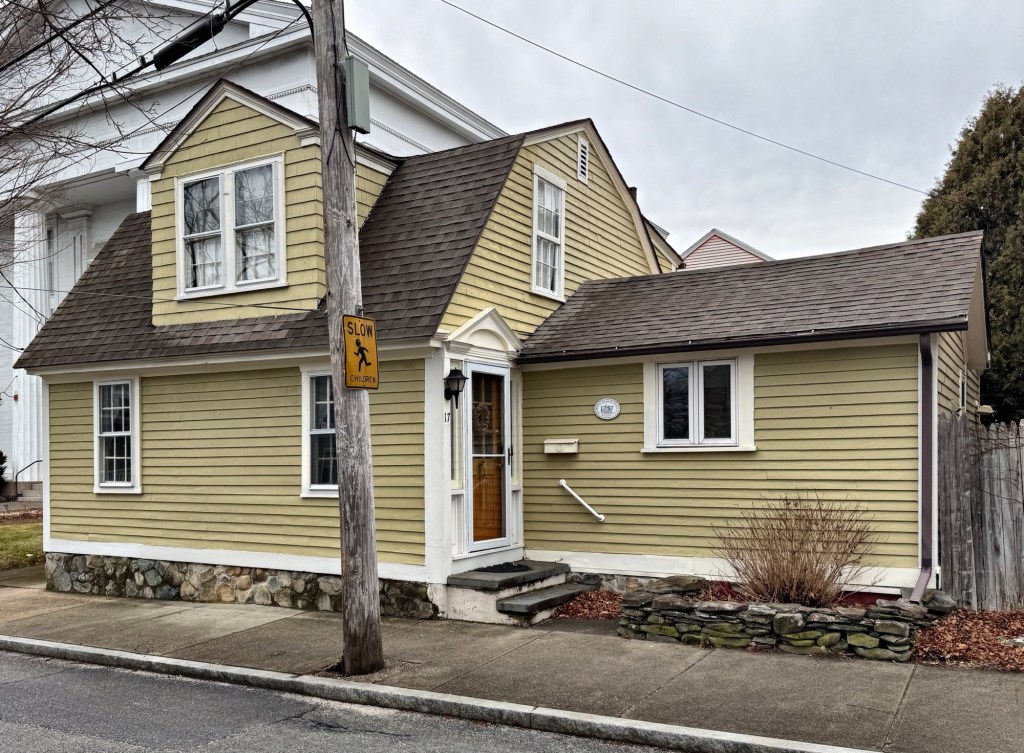
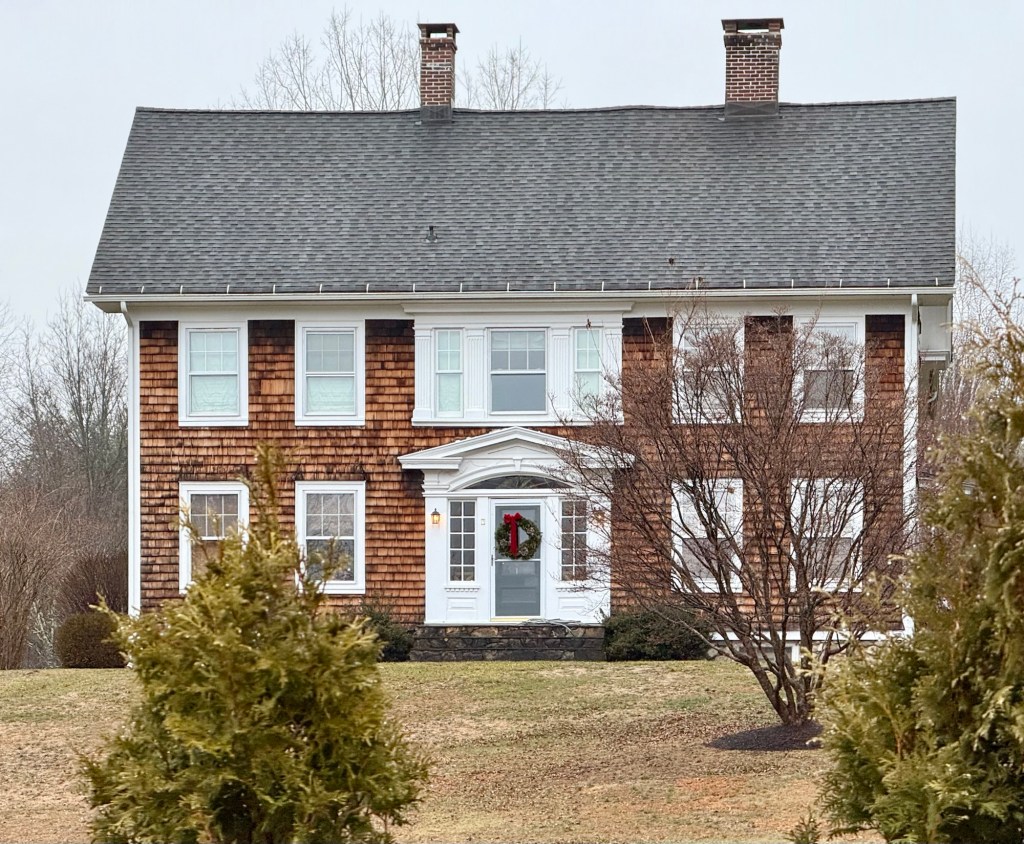
While most houses I have featured in Cornwall date to the early-mid 19th century, there are some great examples of early 20th century Colonial Revival dwellings, built at the time the town became eyed as a wealthy retreat for city-folk. This Colonial Revival residence was built for Ms. Harriet Bennett (1841-1928), an ardent suffragist and an active member of the Connecticut Woman Suffrage Association. Harriet was married to William C. Bennett and after his death in 1898, she devoted the rest of her life to charitable causes and giving back to others. As a widow and in her seventies, Harriet oversaw construction of this house, which was completed by 1912, in that same year, established the Cornwall Equal Suffrage League, hosting many of its events and meetings from this house. The League’s activities mirrored the efforts of suffragists throughout the nation. The house remains a well-preserved example of a house in the Colonial Revival style in town.

Dimock Center – Cheney Surgical Building // 1899

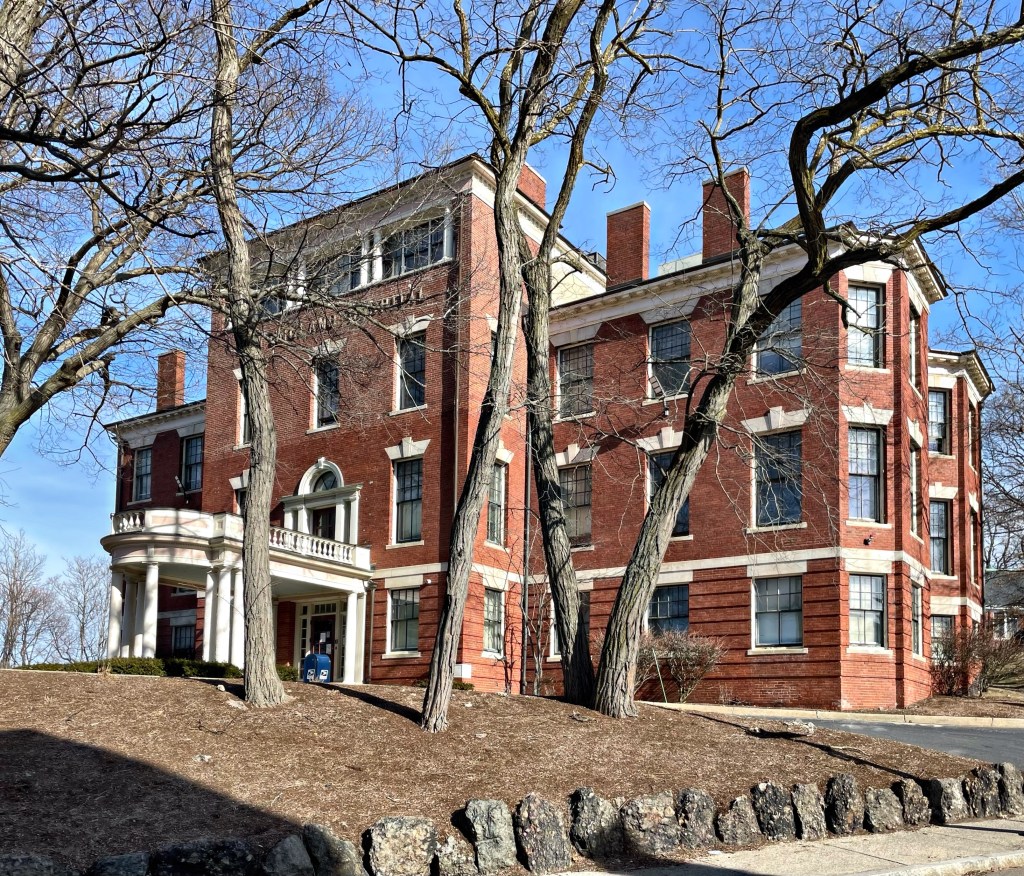
With funds for expansion at the New England Hospital for Women and Children in Roxbury, the hospital’s board commissioned architect Willard T. Sears (also the architect of the earlier Cary Cottage and Zakrzewska Building) to design a new surgical building at the hospital’s growing campus. Construction began on the new Cheney Surgical building in 1899 on the birthday of its namesake, Edna Dow Cheney an original incorporator of the hospital and then President. The Cheney Surgical Building was designed in the Colonial Revival style in brick, with a four-story central block with three-story wings. The central entranceway is accentuated by a classical porte-cochere topped by a Palladian window, in keeping with the Georgian Revival tradition of symmetry and classical vocabulary. The building is one of the first you see when climbing the hill into the campus.


Dimock Center – Zakrzewska Building // 1873

Following the construction of Cary Cottage at the New England Hospital for Women and Children in Roxbury (last post), architects Cummings and Sears turned their attention to designing the most important facility in the complex, the large two-story Zakrzewska Building built in 1873. It is a fine example of polychromatic High Victorian Gothic style with Stick detailing. The building is characterized by its decorative stone and brick string courses, arched window heads, polychrome slate roof, end towers, and a gambrel dormer. The building was named after Dr. Maria Zakrzewska (1829-1902), a Polish-American doctor who moved to the United States in 1853, eventually settling in Boston in 1859, working as a professor of obstetrics at the New England Female Medical College. There, she realized that women in medicine did not have the same opportunity to advance in their field and left, launching her own hospital, the New England Hospital for Women and Children. It was the first in Boston, and the second hospital in America, to be run by women physicians and surgeons. Dr. Zakrzewska knew that the opportunity to work with large numbers of patients was vital if women physicians were to achieve the same levels of training and standards of practice as male physicians. The hospital became a primary training hospital for several generations of women physicians, and also trained nurses. The hospital was extremely successful and remains a medical institution to this day, as the Dimock Health Center.

Laura Richards House // 1810

This stunning Federal style house in Gardiner, Maine, was built about 1810 by Ebenezer Byram, who had purchased the land from Robert Hallowell Gardiner, a descendant of Dr. Sylvester Gardiner, the “founder” of the town. Dr. Gardiner was a resourceful Boston druggist, who was one of the principal owners of the Kennebec Purchase, known as the Plymouth Company, who purchased land on the west side of the Kennebec River in Maine. Dr. Sylvester Gardiner had been attracted to the Gardiner area for a number of reasons, primarily because of the depth of the water of the river to the point of Gardiner as the head of navigation for ships here. This house overlooking that river was purchased in 1878, by Henry and Laura E. Richards. Laura Richards (1850-1943) was the daughter of Samuel Gridley Howe, an abolitionist and the founder of the Perkins Institution and Massachusetts School for the Blind. Her mother, Julia Ward Howe wrote the words to The Battle Hymn of the Republic, a tune that I am sure most of you have heard of, but never knew the name. Henry and Laura moved to Gardiner in 1876 after suffering financial reverses in Boston, where Henry worked at his family’s paper mill, and it was about that time that Laura Richards began her writing career. At this house in Gardiner, Laura wrote more than 90 books including biographies (including one on her mother), poetry, and several children’s books. Even more impressive, Laura was awarded one of the first four ever Pulitzer Prize in 1917 for her biography on her mother, years before women were even afforded the right to vote!

Dr. Gertrude Heath House // c.1850

Constructed c. 1850, this Gothic Revival house in Farmingdale, Maine, has many identifying features common in the style: a symmetrical facade, steeply pitched gable, and lancet windows in the front gable. Besides its architectural significance, the home is also historically significant as the home of Dr. Gertrude Heath. Gertrude Emma Heath (1859-1935) was born in Gardiner, Maine in January 1859. When Gertrude was just three years old, after the American Civil War began, her father died in battle at Fredericksburg, leaving his widow Sarah to run the family affairs. She excelled in school and received her early education in the public schools of Gardiner, afterward attending Hahnemann Medical College at Chicago, Illinois, taking special courses. She graduated from this institution in 1883 with the degree of Doctor of Medicine, and began medical practice in Chicago in 1884, moving back home within that year. Soon after returning to Maine, she accepted a position at the Maine State Hospital, at Augusta, where she specialized in eye and ear conditions. It is amazing learning stories about such strong women, when at the time, women medical practitioners were almost unheard of and women were decades away from earning the right to vote.