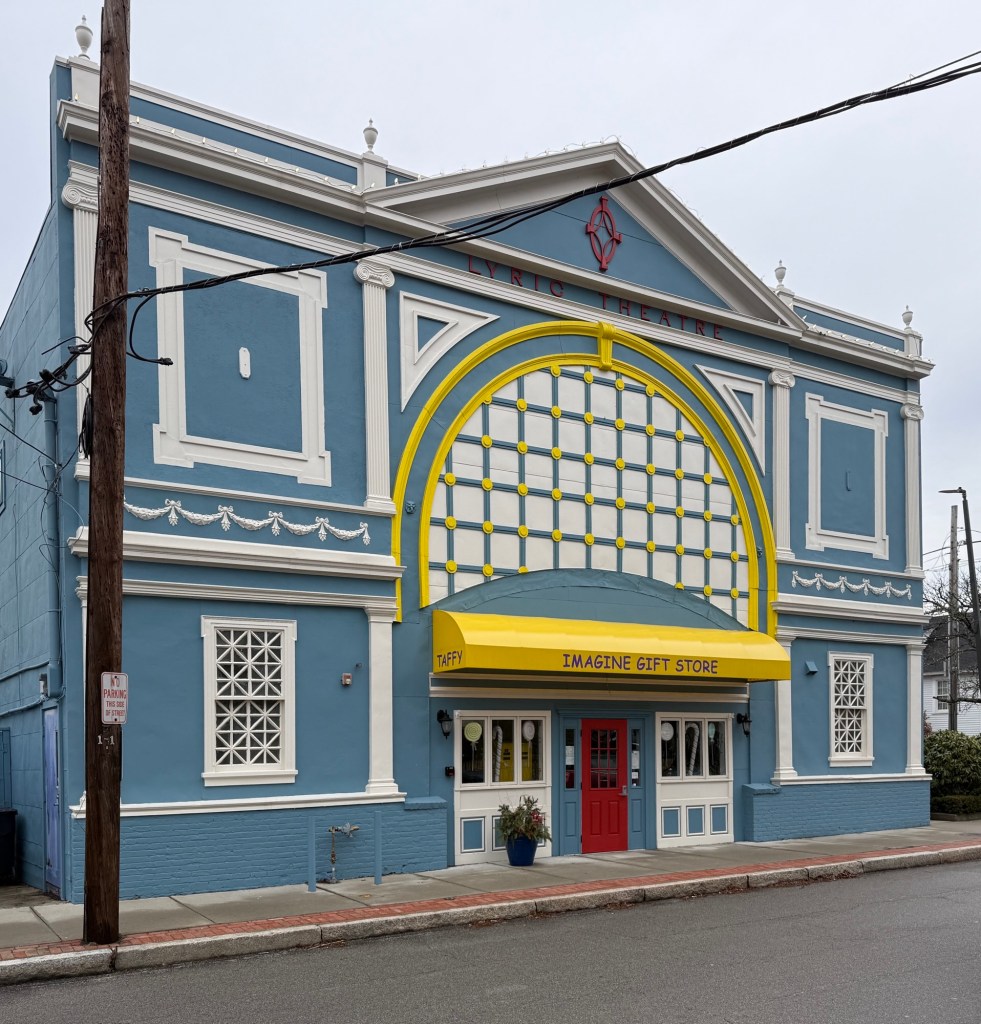
The most whimsical and unique building in Warren, Rhode Island, is this architectural landmark, the former Lyric Theater on Miller Street. Built in 1914, the building historically had a large projecting marquee, and today retains the large blind arch with applied ornament in the form of Ionic pilasters, panels, frets, and swags to decorate the facade. The Lyric remained active as a motion-picture theatre until 1967 and was converted to retail use in the 1980s, becoming an antique store in 1992.
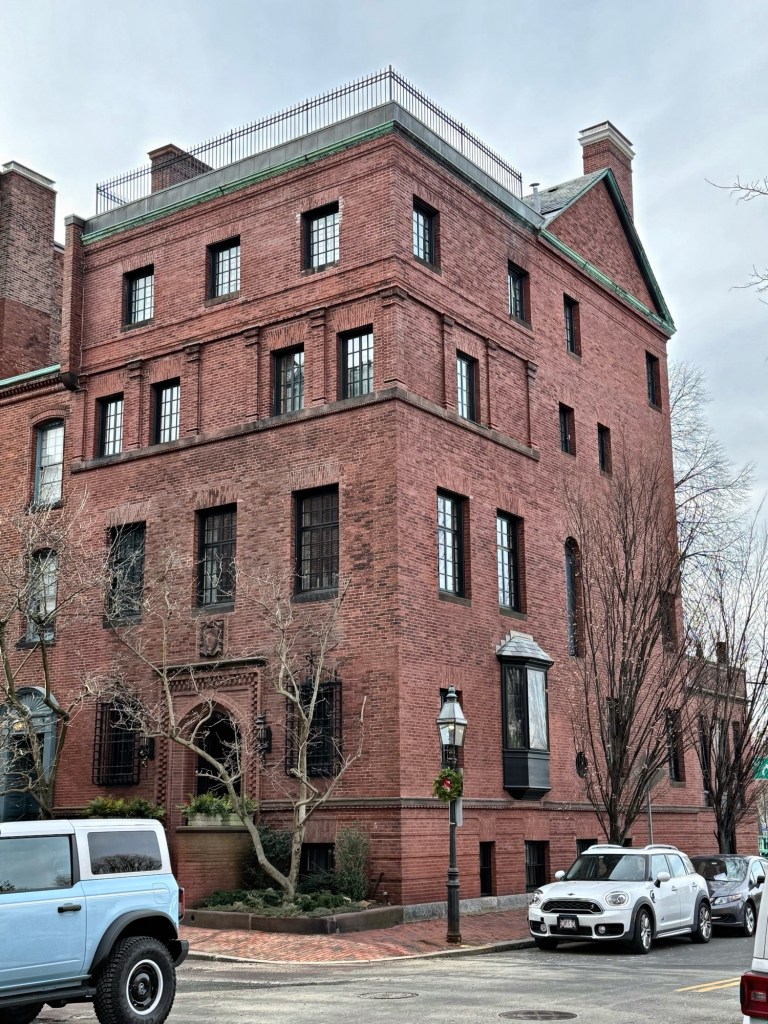
This unique four-story brick townhouse on Otis Place in Beacon Hill, Boston, was built in 1885 by the architectural firm of Rotch & Tilden for Mrs. Octavia L. Apthorp and her husband, William F. Apthorp. Elevated on a tall brick basement, the exterior of the house is richly detailed with masonry decoration in what has become known as the “panel brick” style; with an elaborate brick entrance archway, paneled pilasters at the third floor, and vertical brick lintels above the windows. Over the ground floor windows near the entrance, iron grates with spear-like finials give the design a Medieval/English Queen Anne presence. William F. Apthorp was the only son of Robert Apthorp, a prominent Boston attorney and abolitionist who lived across the street at 2 Otis Place. William was a pianist and teacher at the New England Conservatory of Music and writer who married Octavia (sometimes spelled Octavie) Loir Iasigi in 1876, she was also from a well-connected Beacon Hill family.
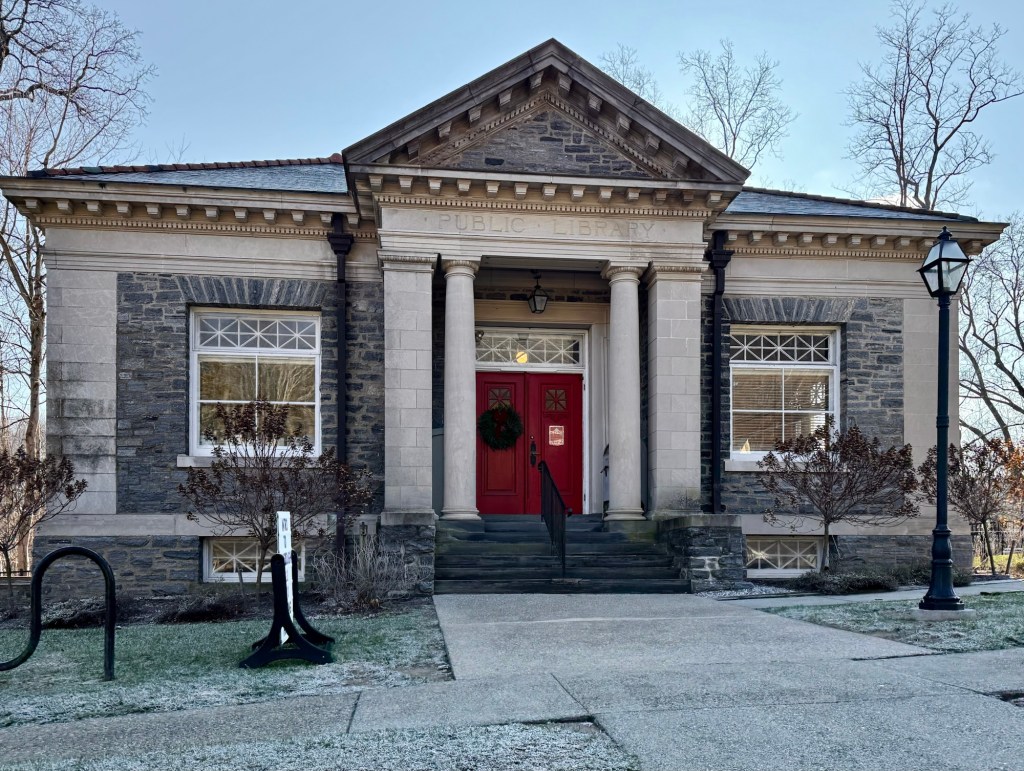
The Chester Public Library in Chester, Connecticut, was formed from a private library when in 1875, a Library Association was formed with members paying fees to take out books. The library grew throughout the 19th century and was housed in rented spaces, including in the Old Stone Store, until the early 20th century, when the collection grew to a point a purpose-built library was needed. A generous donor stepped forward, Mr. Samuel Mills Ely (1837-1909), who grew up in Chester, but made his fortunes in Binghamton, New York. Samuel Ely donated funds to his hometown as a memorial to his parents, Richard and Mary Caroline Ely. The library opened in 1907 and is built of native granite and trimmed with Indiana limestone and resembles many of the Carnegie libraries built at the time with a central, pedimented entry pavilion and recessed side wings, but no Carnegie funds were allocated for this project. The architect is also not known at this time.
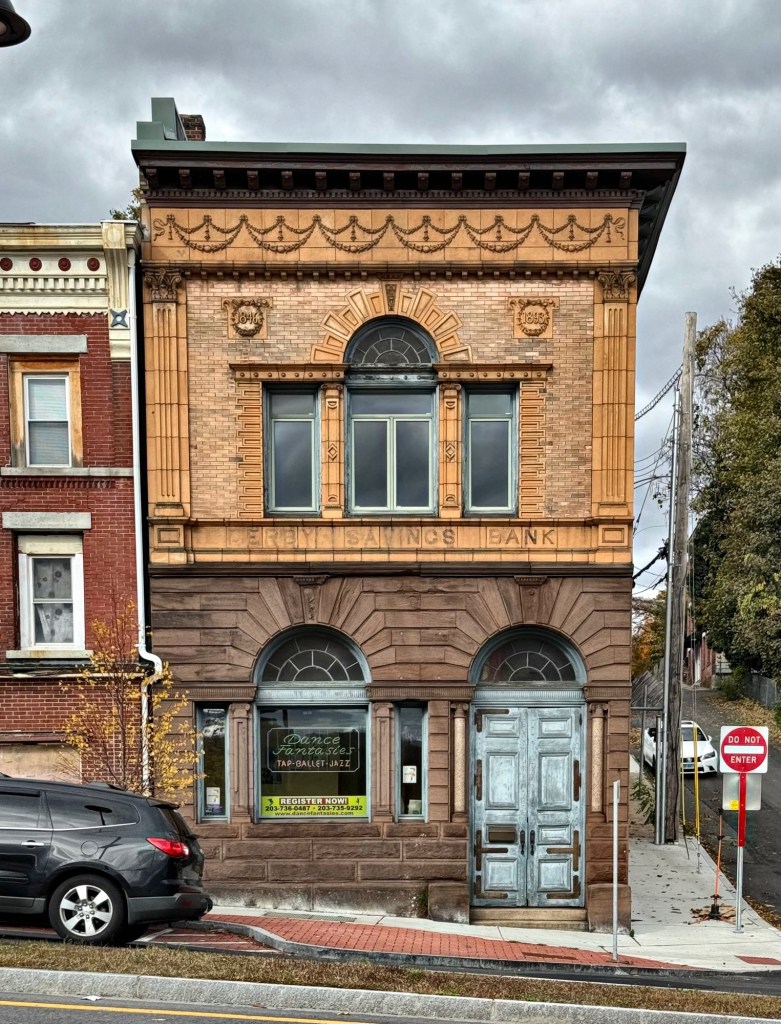
The former Derby Savings Bank stands at the corner of Main and Caroline streets and is one of the many handsome commercial buildings in Derby, Connecticut, which have been preserved. Designed in the Romanesque and Classical Revival styles, the building is adorned by terracotta, brick, and brownstone, with medallions depicting the date of incorporation (1843) and the date of this building (1893) which flank the Palladian window at the second floor. The bank occupied this structure from the date of its completion in 1893 until it built a new banking facility farther down Main Street in 1923. The bank again built a new building during the period of urban renewal in Derby’s downtown in 1976 when the modern structure at Main and Elizabeth streets was completed. The Modern bank is presently used as the City Hall.
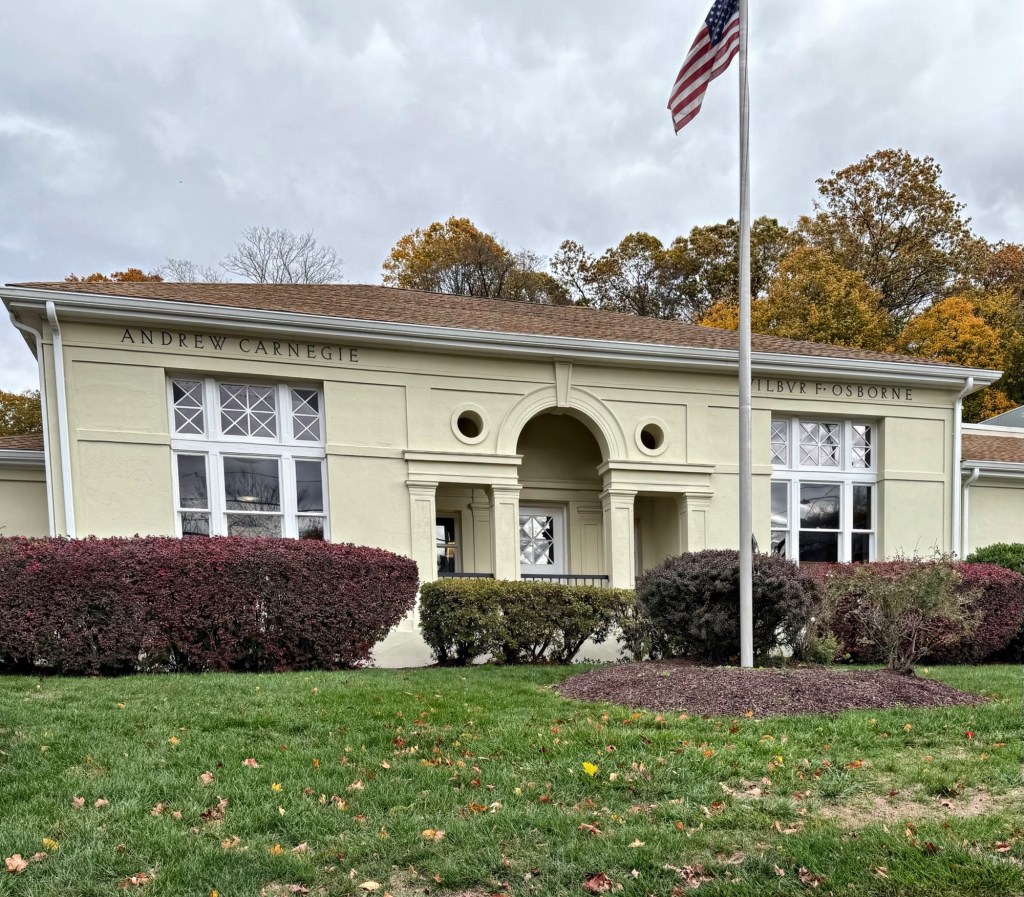
The Derby Neck Library in Derby, Connecticut, is a beautiful example of an early 20th century library and one of a few Carnegie libraries in the state. The beginnings of the library began in 1897, when Wilbur F. Osborne and his wife, Ellen Davis Osborne, who lived at the nearby Osborne Farm, donated $50 to the nearby school to begin a small library in the building. After years of growth, Wilbur Fisk Osborne, requested funds from Andrew Carnegie, who was donating money to communities all across the country for such purposes, to build a new library for Derby Neck. In 1906, Carnegie donated $3,400 to the community, and planning began on the building. Sadly, Osborne died around the time the library opened in 1907. The building was designed in the Classical Revival style by architect, Henry Killam Murphy of Connecticut. Osborne’s daughter, Frances Osborne Kellogg, who inherited her father’s farmhouse nearby, directed the library until her death in 1956. The building was expanded in 1972 and again in 1999.
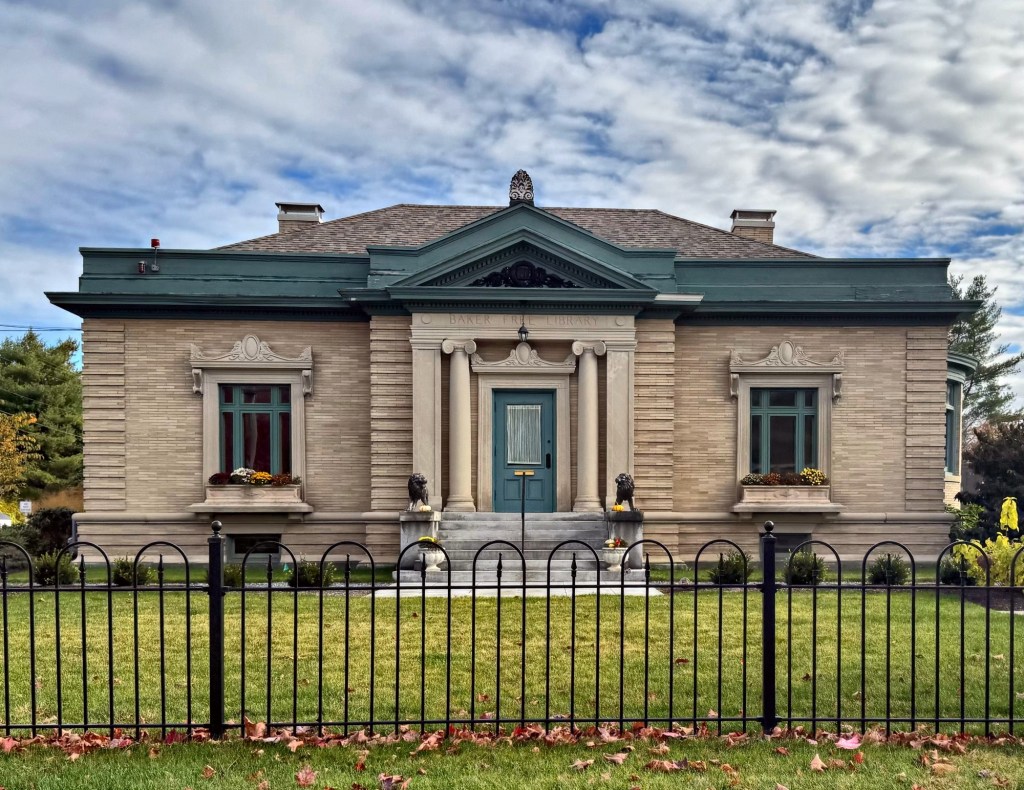
In 1912, Congressman Henry M. Baker, cousin of Mary Baker Eddy, the founder of the Church of Christ, Scientist, left in his will, $10,000 and the land next to his family home to the Town of Bow for the creation of a public library for his hometown. Architect, William McLean formerly of the firm, McLean and Wright, who specialized in library designs of the early 20th century, was selected to furnish plans for Bow’s new library, which employs a sort of Classical Revival/Beaux Arts design, similar to many Carnegie libraries of the time. As the town grew, the library has been expanded.
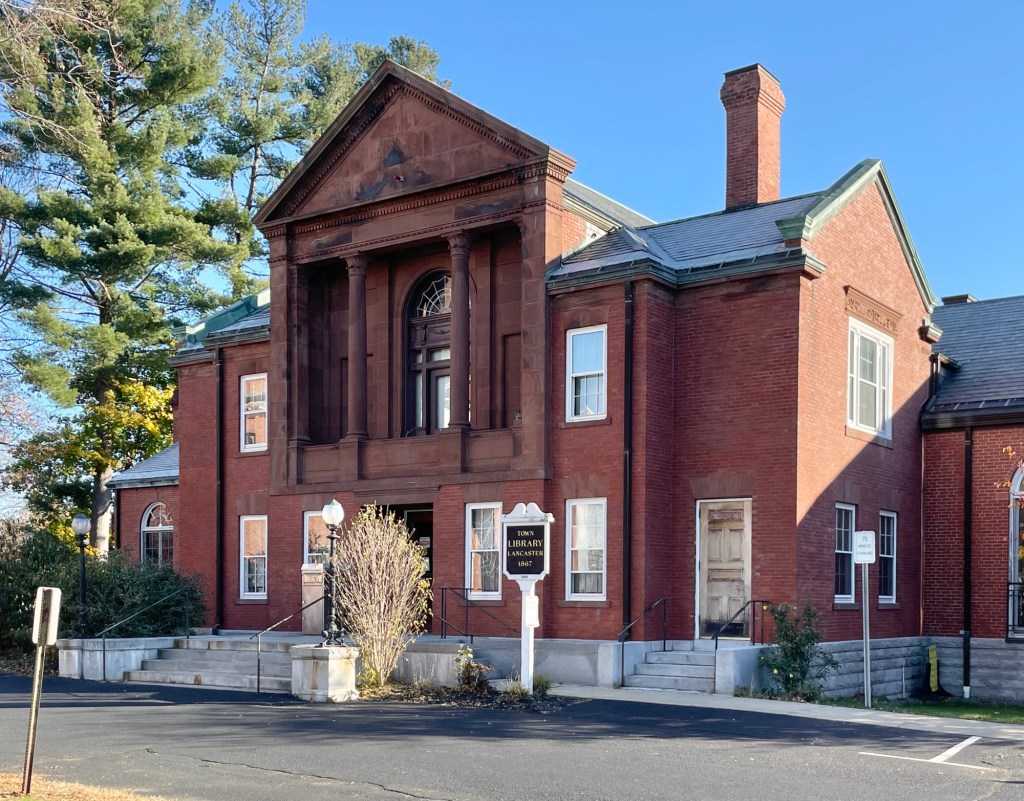
One of the four stately brick buildings framing the Lancaster Town Common in Lancaster, Massachusetts, is this brick and brownstone building, the historic town library. The story of the town’s first purpose-built library building began in 1866, when wealthy resident, Nathaniel Thayer offered $5,000 to the town for the erection of a new library in his hometown. Quickly, a committee of residents, led by Mr. Thayer, worked to acquire land from the First Church of Christ in Lancaster and hire architects Ryder & Harris of Boston to furnish plans for the new building, which was set to be a library and Memorial Hall dedicated to the 39 Lancaster men who died fighting in the Civil War. Nathaniel Thayer ultimately donated two-thirds of the final cost of the building, believed to be nearly $30,000, in addition to his already established $5,000 for books. The building was updated later with the addition of a children’s room in 1929, a gift of Mrs. Bayard Thayer in memory of her son, another Nathaniel Thayer. The Classical/Renaissance Revival style building stands out for its unique central brownstone pedimented bay with engaged columns and balcony over the main entrance.
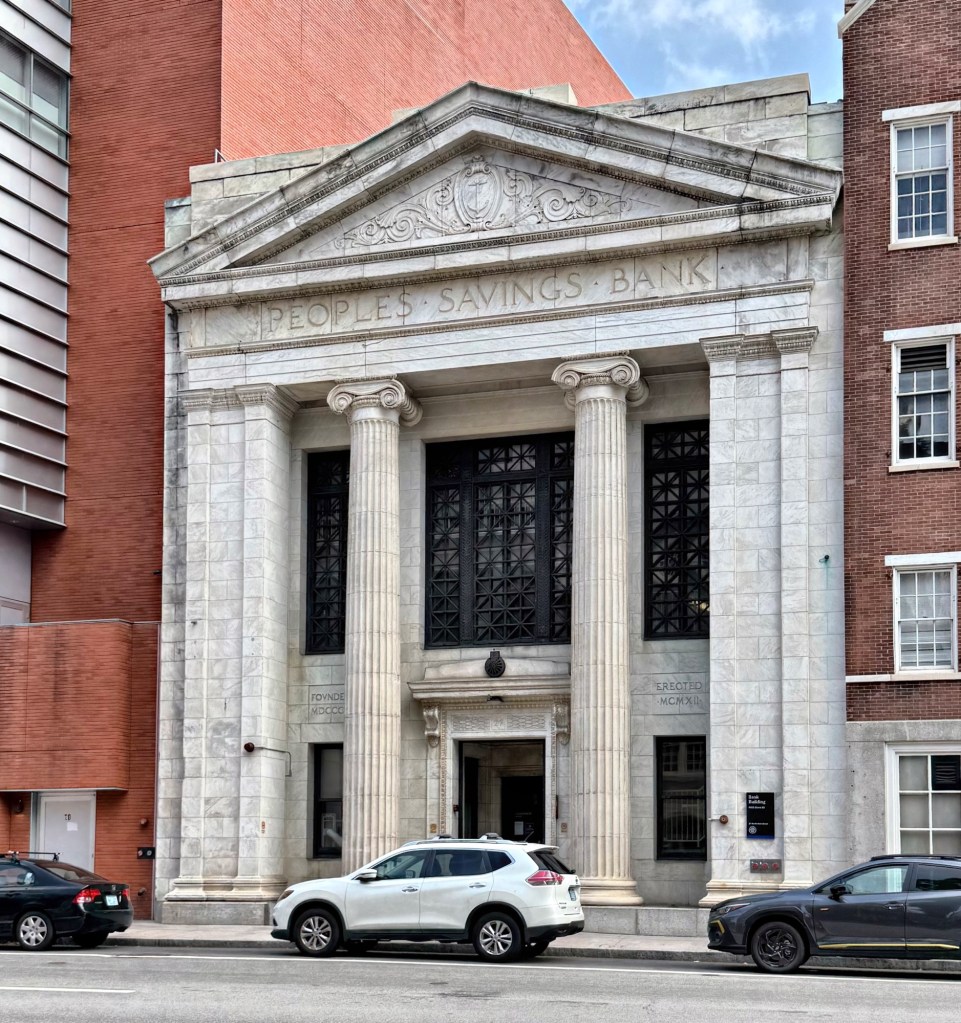
Built in the mode of a Greek temple, the former People’s Savings Bank was built in 1913 on a prominent site overlooking Market Square in the East Side neighborhood of Providence. Designed by the Providence-based architectural firm of Clarke & Howe, the handsome marble-faced two-story bank showcases the bold, yet clean proportions found in many Classical Revival style institutional buildings of the early 20th century. The People’s Savings Bank was established in 1851 and after decades of growth, built this structure to show customers the prosperity and stability of their institution. After a series of bank acquisitions and mergers in the 20th century, the building was eventually acquired by the Rhode Island School of Design, who had the building converted into studio space and later into the college’s hardware store. Yes, you heard that right… Talk about adaptive reuse!
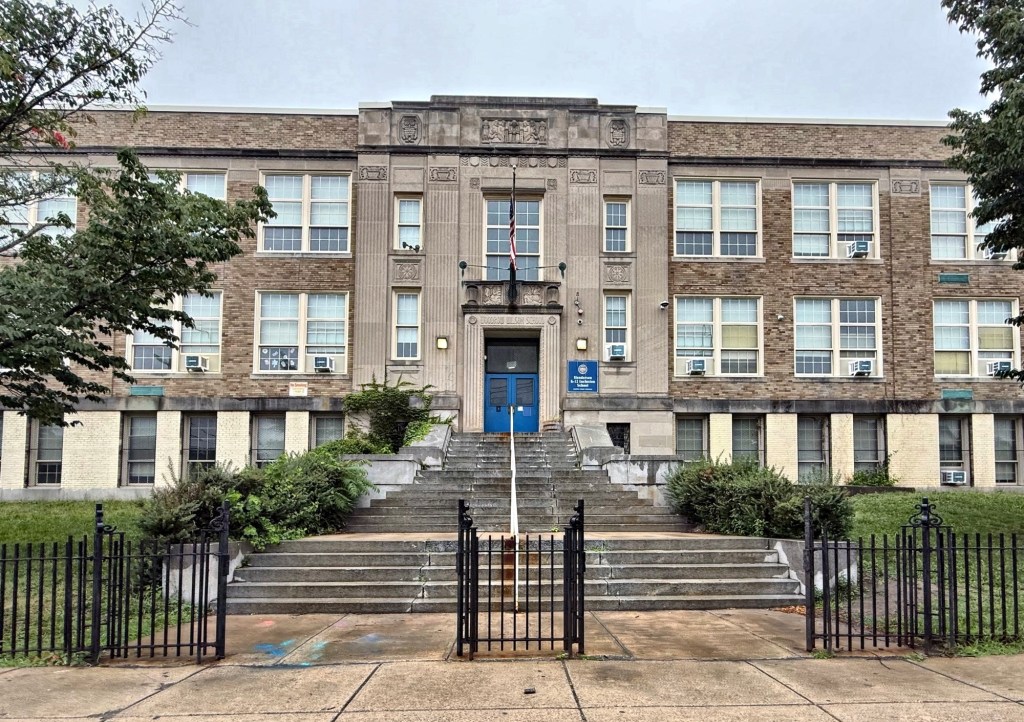
The Woodrow Wilson School, now Dr. William W. Henderson K-12 Inclusion School, is located at 18 Croftland Avenue in the Ashmont neighborhood of Dorchester. The school was built in 1932 to accommodate increased development and population growth in the immediate area in the interwar period and was designed in a blending of Classical Revival and Art Deco styles, both popular at the time for such academic buildings. The building was named for Woodrow Wilson (1856–1924), the 28th President of the United States and was designed to comfortably accommodate 1,600 students. Architect, John Matthew Gray designed the building to conform to a plan drafted by the City of Boston in 1923 to standardize all new school construction down to the precise dimensions of windows and hallways. The permitted flexibility for hired architects was strictly on the exterior, where architects were free to create individual character in the designs of entryways, auditoriums, and exterior architectural styles and decoration. The entry of the Woodrow Wilson School depicts Art Deco motifs including lettering and inlaid carved panels over the door of a child reading and a child holding a globe. The school was renamed the Dr. William W. Henderson K-12 Inclusion School after the innovative educator of the same name.
 Buildings of New England