Rhode Island Hospital Trust Building // 1917

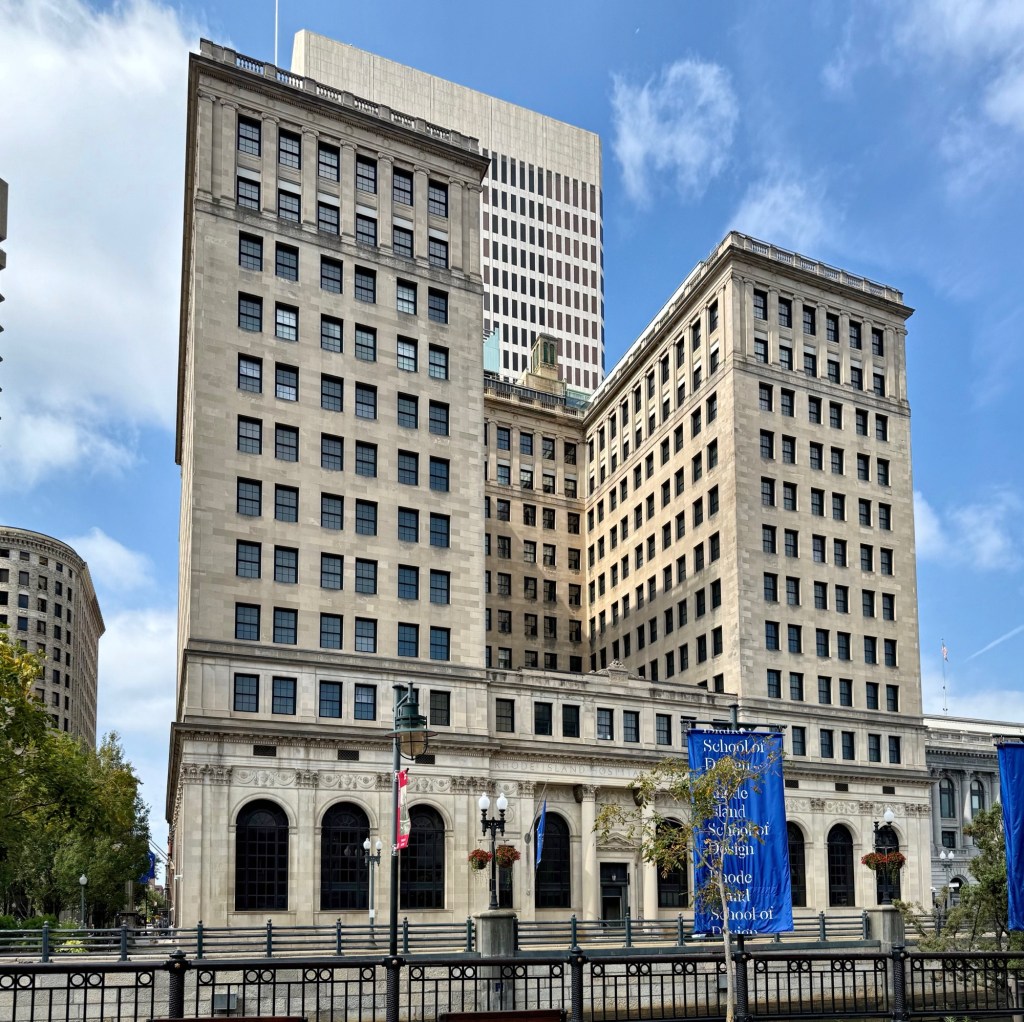
Located at the eastern edge of Downtown Providence, the Rhode Island Hospital Trust Building is significant as one of the city’s finest examples of the Beaux Arts style of architecture and as the headquarters of what was once the largest banking institution in the state of Rhode Island. The Rhode Island Hospital Trust incorporated in 1867 as the first trust company in New England. It owes its unique name to the fact that it was chartered by the board of trustees of Rhode Island Hospital, founded four years earlier, with the trust company established to help finance operations of the hospital. The original, purpose-built bank was constructed in 1891, and quickly outgrown as the institution grew exponentially into the early 20th century. In 1916, the trust hired the New York architectural firm of York & Sawyer to furnish plans for the present structure. Construction began in 1917, and after delays caused by WWI, the building finally opened in 1919. The 11-story U-shaped building was designed in an exaggerated form of Renaissance palazzo, with steel-framed construction that is faced with marble on the two lower levels and limestone elsewhere. After a series of mergers throughout the 20th century, the building was owned by FleetBoston, who donated this pristine building to the Rhode Island School of Design (RISD), which was renovated into a dormitory by RISD-alumni and architect Nader Tehrani of NADAAA Architects. It is today known as the Mandle Building.
Old Kingston Town House // 1841

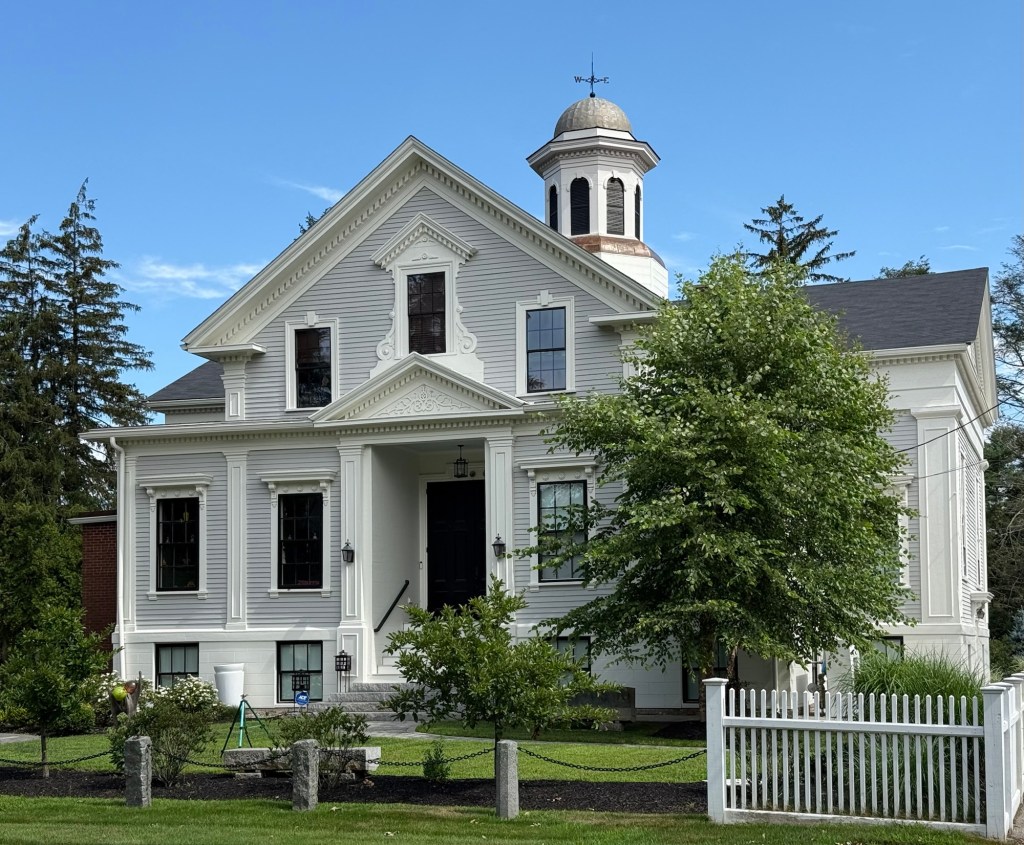
Overlooking the town green in Kingston, Massachusetts, this stately Greek Revival home was once the original town house for the community, containing meeting hall, town offices and even a jail cell! Before we go into that further, it is helpful to learn about history first. Present-day Kingston was within the tribal homeland of the Wampanoag people, who in the decades prior to the arrival of the Mayflower, saw their populations decimated from a rapidly spreading pandemics due to earlier contacts with Europeans. Originally part of Plymouth, Kingston was first settled by Europeans shortly after the landing of the Pilgrims at Plymouth Rock in 1620. In 1717, residents in the northern part of Plymouth petitioned the General Court to be set off from Plymouth as a separate township or a precinct. They were allowed to become the north precinct of Plymouth on the condition that they maintain a suitable minister. The northern precinct was wealthier and led to present-day Kingston incorporating as its own town in 1726, following a tax dispute. Early town meetings were held in the parish church until the separation of church and state necessitated a new town hall. The town hall here was built in 1841. As the town grew the building was re-oriented southward and enlarged in 1871 from plans by architect Luther Briggs. Further alterations were made to the building in 1935 under the guidance of the architectural firm of J. Williams Beal & Sons. In the early 2000s, space, parking, and accessibility concerns led the Town of Kingston to sell the 1841 Town House, which was purchased by private owners and converted to a residence. Inside, remnants of the old town house include old signs, office doors for city departments, former vaults converted to closets, and even a jail cell in the basement. Talk about a unique adaptive reuse!

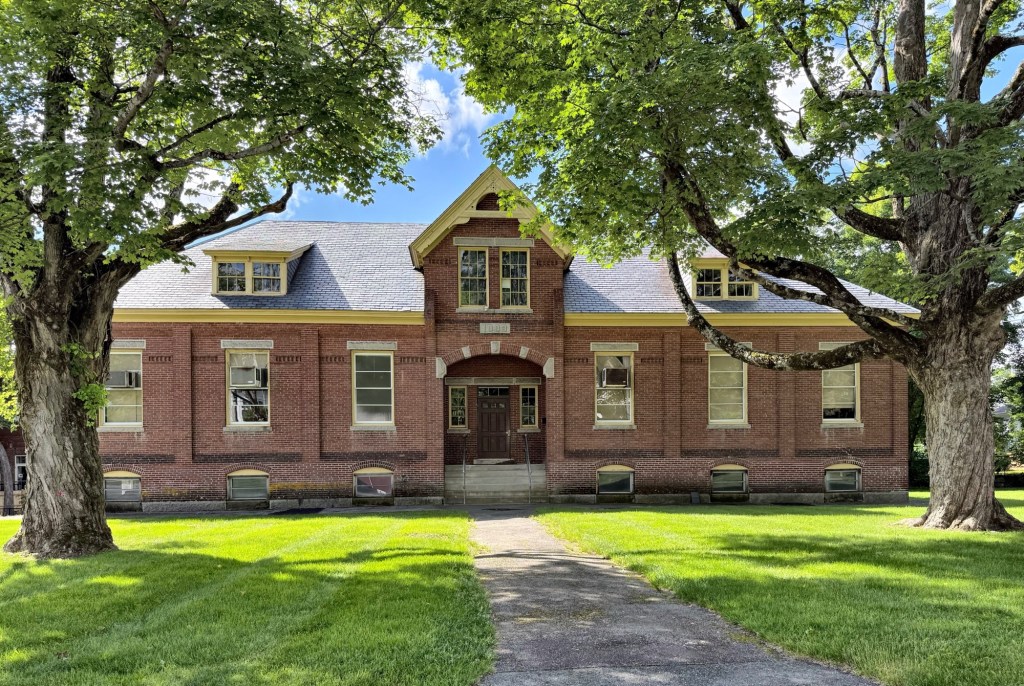
Lyman School for Boys – Elms Cottage // 1906

The former Lyman School for Boys was established in Westborough as the Massachusetts State Reform School in 1847, the first state-operated reform school in the country. Initially located on the eastern shore of Lake Chauncy and dominated by a single massive building, but its early history was plagued by conflict between inmates and administration. In 1885, legislative action authorized the Trustees to purchase and prepare a new site, the first in the state system to be developed on the dispersed cottage plan, the school thrived throughout the 19th century and into the 20th century until its eventual closure in about 1974. This cottage, known as Elms Cottage, provided rooms for the young men at the school, providing sanitary and well-appointed lodging as they were “reformed” to graduate and enter society. Each cottage was ruled by a cottage master and usually a cottage matron. This husband-and-wife team lived in a cottage apartment and was on duty 24 hours a day, often overseeing the young boys and strictly disciplining them, without much oversight. Many of the cottages and other buildings on the campus were demolished after the school closed, but the Elms Cottage, designed in the Arts and Crafts style, was restored.

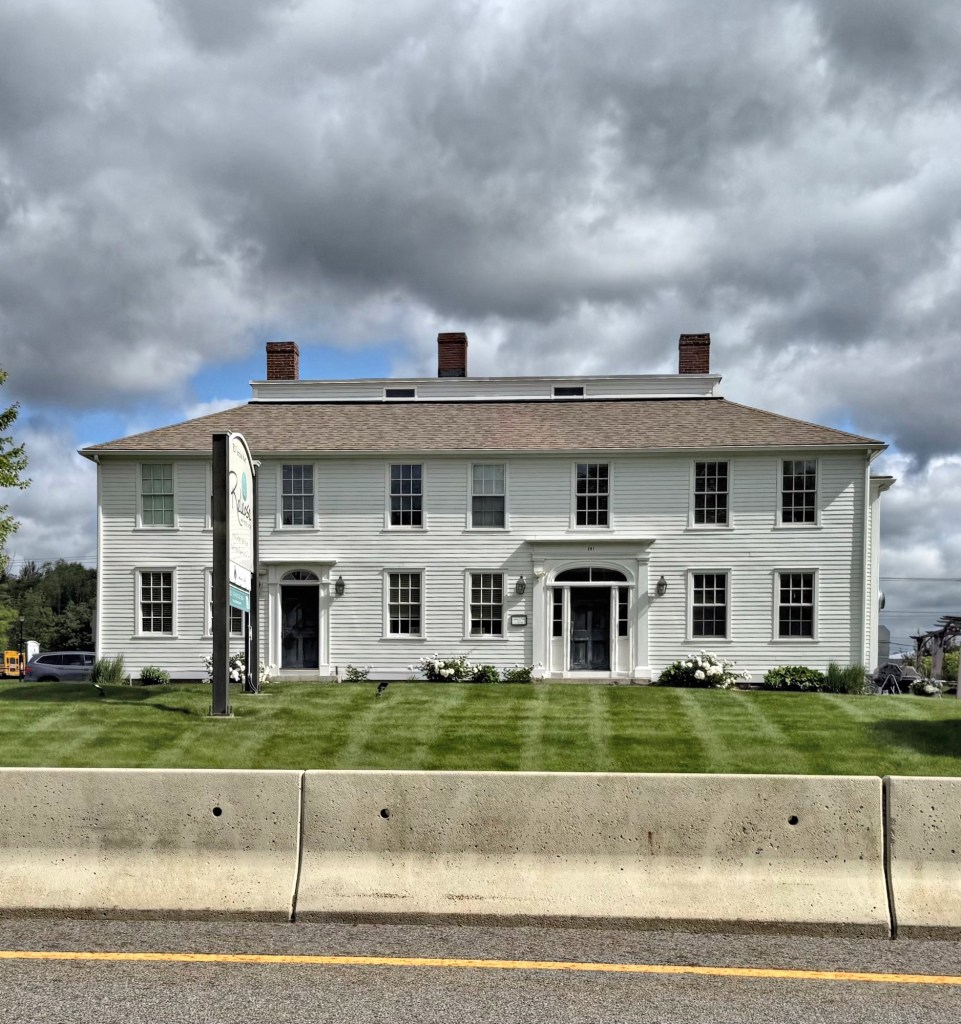
Nathan Fisher House // 1822

In 1820, Nathan Austin Fisher (1796-1851) purchased land along the Boston-Worcester Turnpike in Westborough, Massachusetts with the aim to build a home for his new wife, Susan T. Lothrop. By 1822, he had built a five-bay, center-hall Federal style estate house on the property and the couple began to raise their family. By 1826, Nathan and his brother-in-law, Joseph Lothrop, had opened a store in a section of Fisher’s house, which had been added for that purpose, presumably the western (left) three bays of the structure. Joseph Lothrop would build a Federal style residence on the opposite side of the turnpike that same year. When the railroad came to Westborough, turnpike traffic slowed, and the new rail line went through the center of town, bypassing the Fisher House and store, causing it to fail. Fisher and Nothrop would eventually leave Worcester County, and the property was sold numerous times until 1919, when this property was purchased by the Lyman School. The Fisher House became a residence for younger, special-needs boys to insulate them from the main population of Lyman, a reform school for the education and vocational training of wayward boys. In 1938, the house was converted back to a two-family home and used by families of Lyman School employees until the Lyman School closed in 1972, leaving the iconic Nathan Fisher House vacant for decades. After a failed attempt to convert the property into a house museum, the property was purchased by a local business, Release Well Being Center, and has been lovingly restored and maintained ever-since!

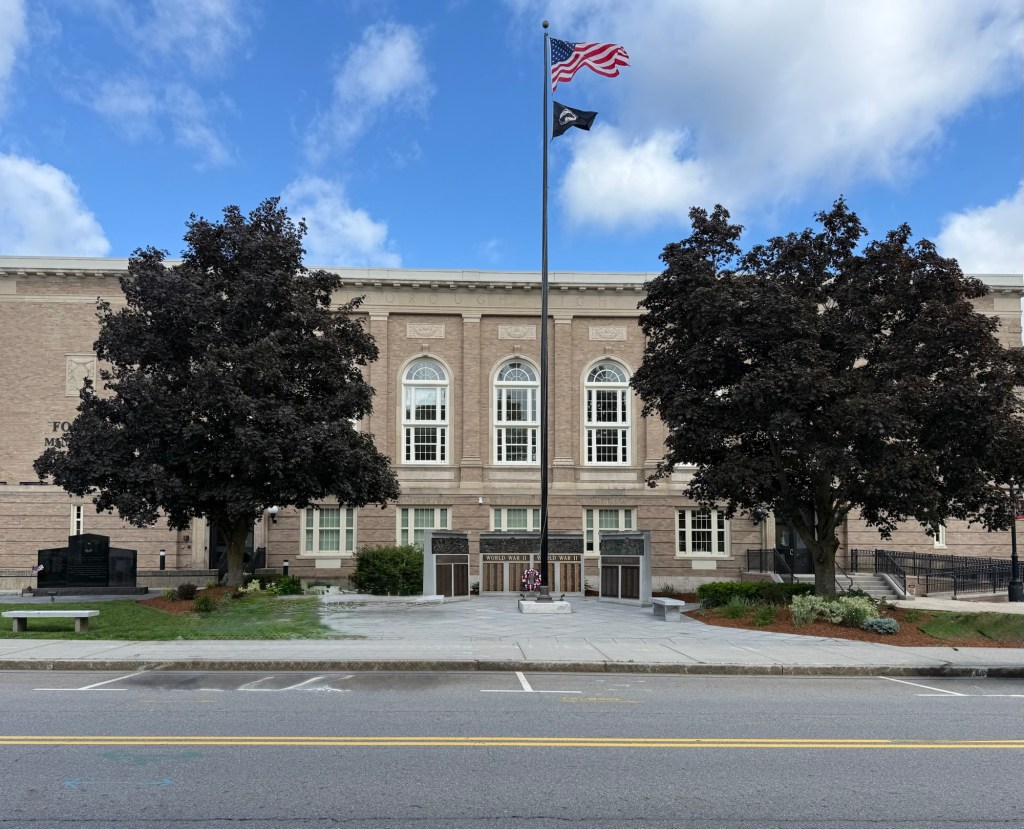
Forbes Public High School // 1924

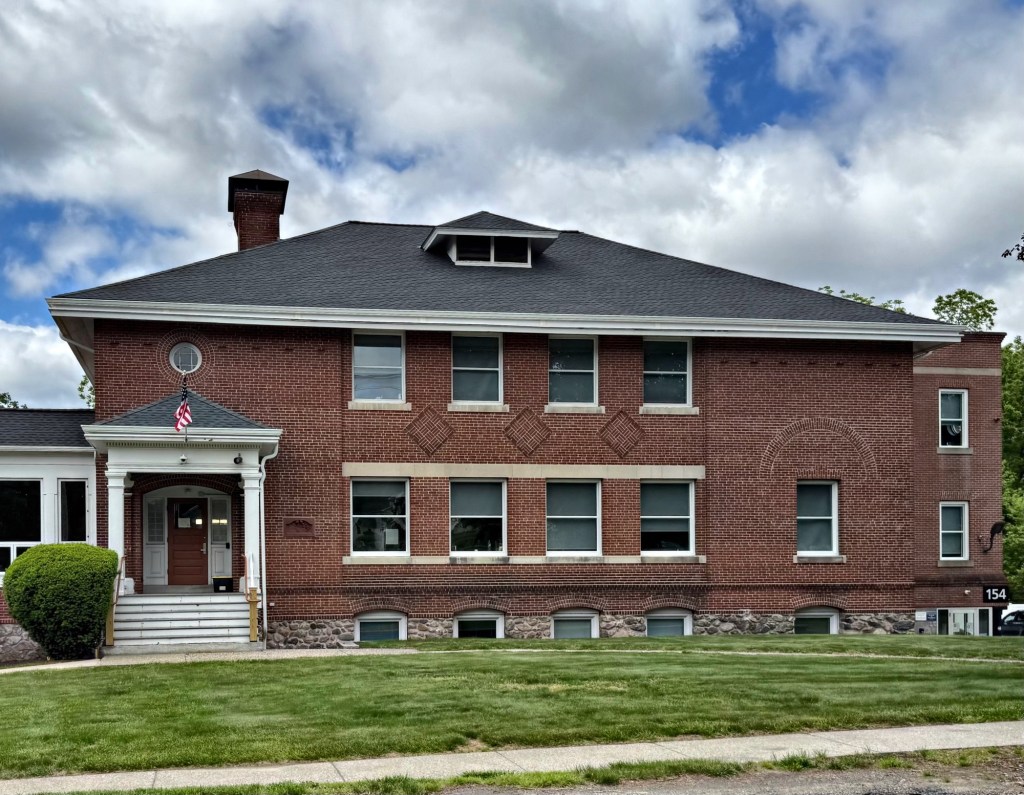
The former Forbes Public High School in Westborough, Massachusetts, is an excellent example of a civic building in the Classical Revival style. Built in 1924 for a growing suburban community, the building was constructed as the town’s high school with the grounds and substantial funding donated by Francis and Fannie Forbes, life-long residents of town with Francis having roots going back to the earliest settlers here. The building was permitted in late 1924 and plans were drawn by the firm of Ritchie, Parsons & Taylor. who designed the large school with stone and brick construction, large arched windows, and pilasters breaking up the bays. Inside, the new building had 14 classrooms, a gymnasium, a shop room, and cooking rooms, all with fine carved woodwork. After WWII, Westborough further consolidated its schools, and built a new High School nearby. This building was repurposed as the Forbes Municipal Building, containing city offices and the Police Department headquarters.

Harvey School // 1883

Built to meet the needs of an expanding and prosperous community, the Harvey School in Westborough, Massachusetts, was built as a neighborhood school and is both historically and architecturally significant. Located on Phillips Street, a residential, tree-lined street just north of the commercial center of town, the Harvey School was built in 1883 under the supervision of Dr. Edwin Bayard Harvey, a local doctor who served on the town’s School Committee and as superintendent of schools from 1887-1890. As a State Senator he introduced a bill in 1884, which became law, to provide free textbooks for schoolchildren of Massachusetts. The Queen Anne style school building was in plan, designed by Dr. Harvey, who hired the Worcester-based architectural firm of Barker & Nourse, to furnish plans and design the building itself. The school would eventually close in 1980 as many local schools were consolidated, and the building was rented to the Boy Scouts and the Westborough Community Chorus. Recent attention on the under-utilized building has initiated more discussion on the future of the building, which may eventually house a regional emergency communications center.

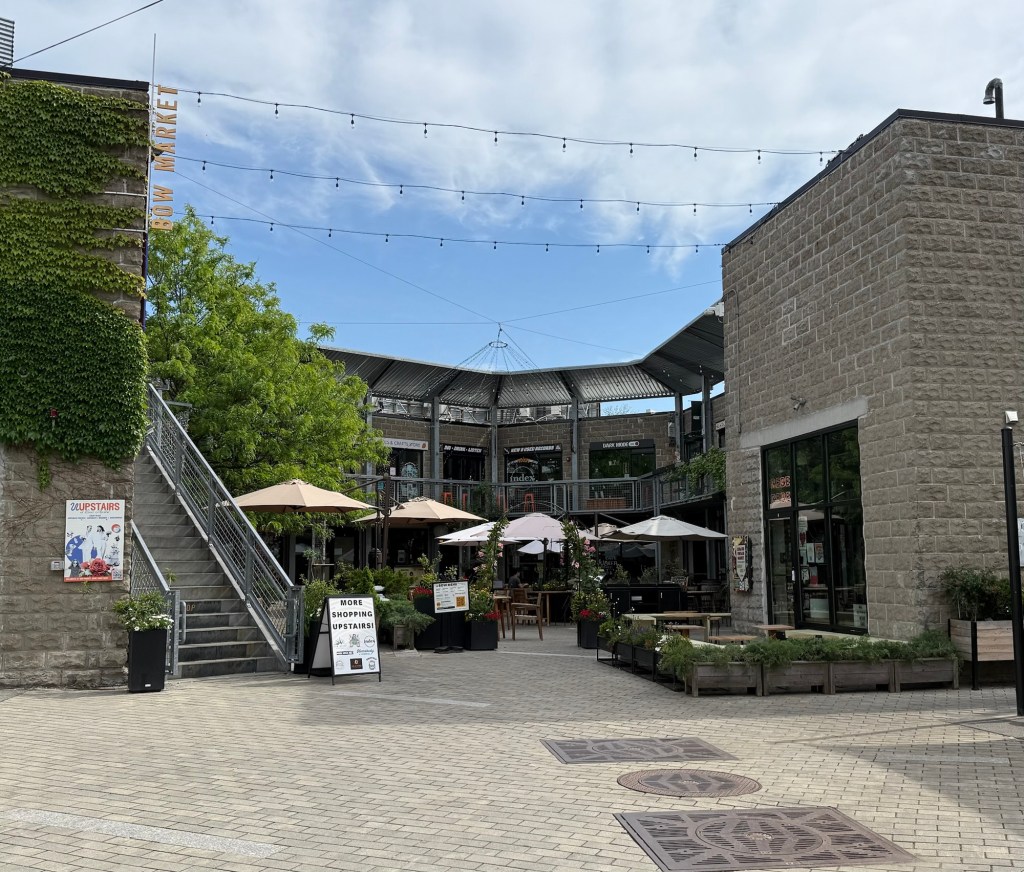
Bow Market // 2018

One of the best and most successful examples of adaptive reuse in the Boston area has to be Bow Market in Somerville’s Union Square commercial district. Tucked away behind buildings on the busy streets, a former concrete block storage facility was reimagined as a vibrant, European style marketplace of local vendors and businesses. The project was envisioned by business partners Matthew Boyes-Watson and Zach Baum, who worked with Matthew’s father, architect Mark Boyes-Watson, to renovate the storage building to create storefronts. The team worked with landscape architects, Merritt Chase, to make the public courtyard more enticing, which each micro-commercial space opening onto the landscaped communal courtyard. Design elements include seat walls constructed from recycled granite from the renovation of the Longfellow Bridge and reclaimed wooden beams from a ship building facility in Hingham. If you haven’t been to Bow Market yet, you must. This project is exactly what good urban planning and design is all about!

Former Somerville District Courthouse // 1925

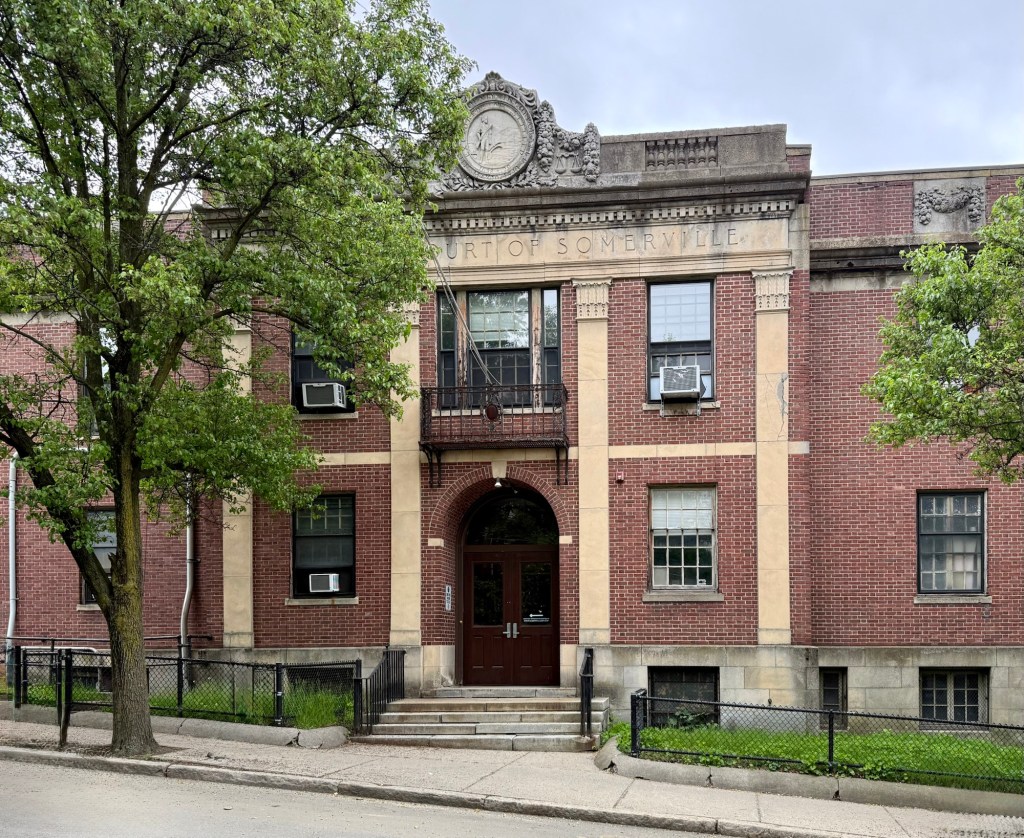
The former Somerville District Courthouse at 19 Walnut Street in Union Square, is a two-story masonry building constructed in 1925. While much smaller and less ornate than other courthouses, the small building is significant as the first courthouse built in the young city and an architecturally significant example of a Classical Revival style civic building designed by architect Charles R. Greco. The building served as the Somerville District Courthouse until the late 1960s, when the legislature authorized a new district courthouse. The City of Somerville purchased the old courthouse in 1969, and the building has housed offices for the City’s Recreation Commission since that time. Interestingly, the building was used for the filming of a courthouse scene in the 1980’s “Spencer for Hire” TV detective show.

Somerville Journal Building // 1894

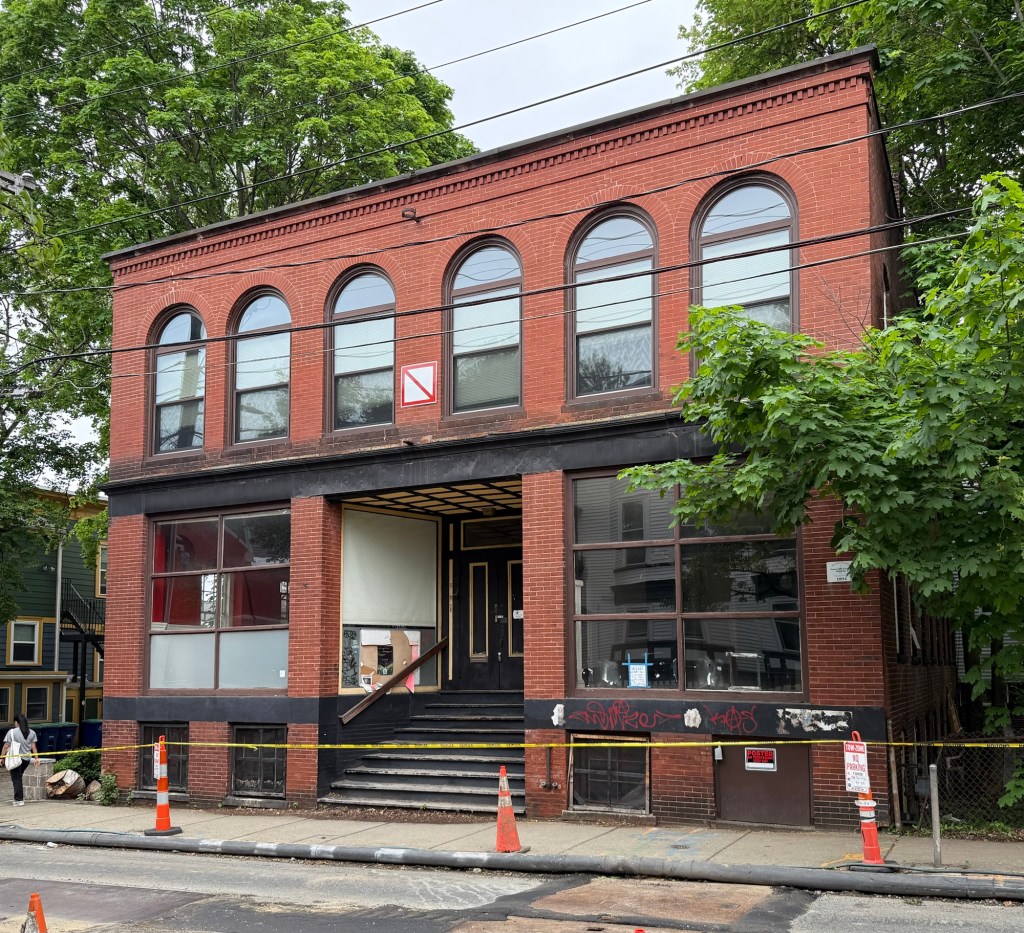
The Somerville Journal was a local paper founded in 1870. The paper was originally published and printed in an office in Boston, but moved to Somerville by the late 1870s. After about 15 years of renting space in a commercial building in Somerville’s Union Square, the paper purchased a lot nearby and began planning for its first purpose-built building for their company. This structure on Walnut Street was built in 1894 to house a new generation of printing equipment and increased production for its growing market, along with the estimated 50 employees at the time. The building was designed by William H. Gerrish (1865-1915), an engineer. Romanesque Revival in style with the arched second-story windows, the building along with its plate glass storefronts, have been an important landmark in the Union Square area for over 130 years. The Somerville Journal vacated the building in the 1950s and the building was used as a photo developing and printing studio. During the 1970s the building was used as a youth recreation center for the city of Somerville. It has been used as artist studios since the 1970s and today, appears to be vacant. Does anyone know what the plans are for this building?

Cities Service Station, Union Square // 1925

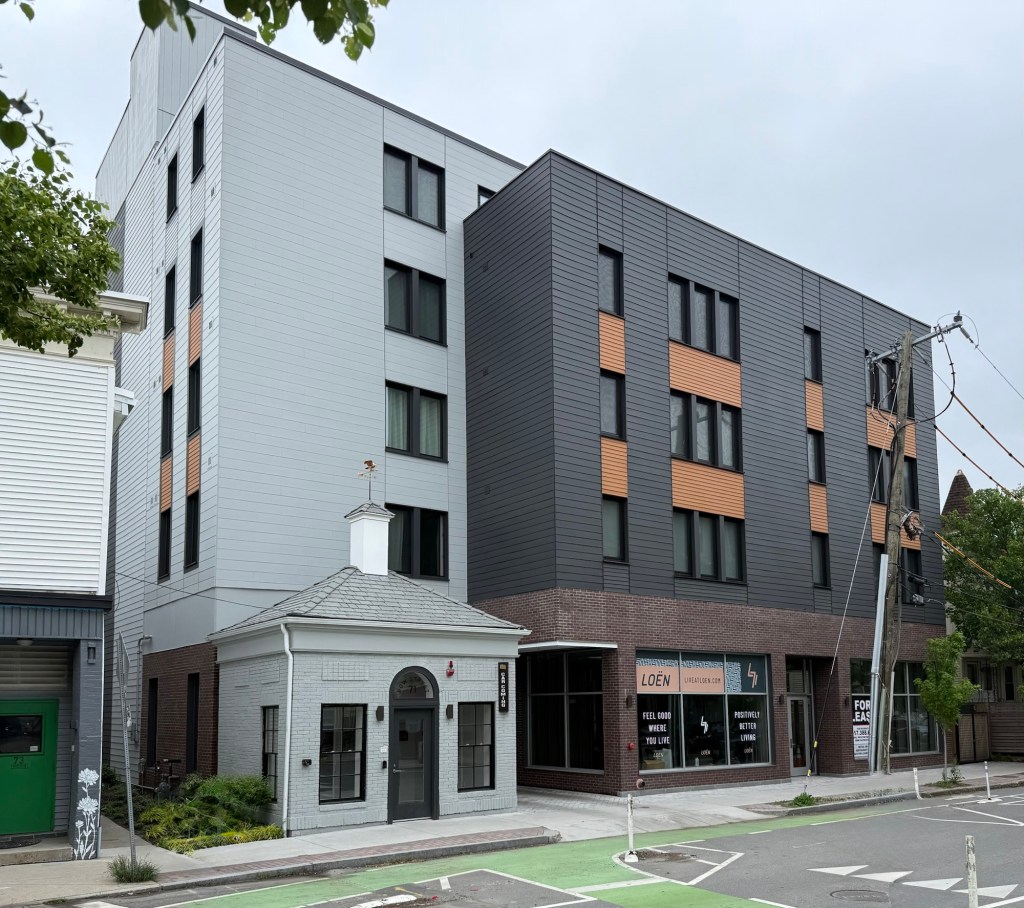
Union Square is the oldest and largest commercial district in Somerville, and its growth is tied to the residential and commercial growth of the City. The three main streets that form Union Square—Somerville Avenue, Bow Street, and Washington Street—were originally 17th- and 18th-century trade routes used by farmers in Somerville  to transport products, mostly dairy and produce, to larger markets in Charlestown and Boston. As the region grew, so did Union Square, with later hotels, civic buildings, churches and later, more car-centric uses like automobile garages and gas stations. By the 1920s, prosperity stagnated and one-story commercial blocks replaced larger, more ornate structures. This small building, the Cities Service Refining Co. Fuel Station at 69-71 Bow Street, was built in the mid-1920s and is an example of the wave of automobile-oriented development that occured here at the time. Before WWII, many service station companies created brand-identities by designing the appearance of their service stations like the Cities Service Stations and Beacon Oil Company, who regionally, developed distinctive Colonial Revival cottage prototypes for their chains to fit better within local context. This small service station, now 100 years old, is Colonial Revival in style with a hipped roof with cupola, symmetrical facade, and fanlight transom over the center entrance. When a developer proposed to demolish the station, the local preservation commission found the building preferrably preserved, initiating a delay on the demolition, forcing the developer to either wait out the delay or incorporate the structure into the new building. They chose the latter, and now we can visually see the layering of history on this site in Union Square, incorporating preservation with a 24-unit passive house development with the old station used as a mailroom. What do you think of this story?