George P. Davis House // 1893

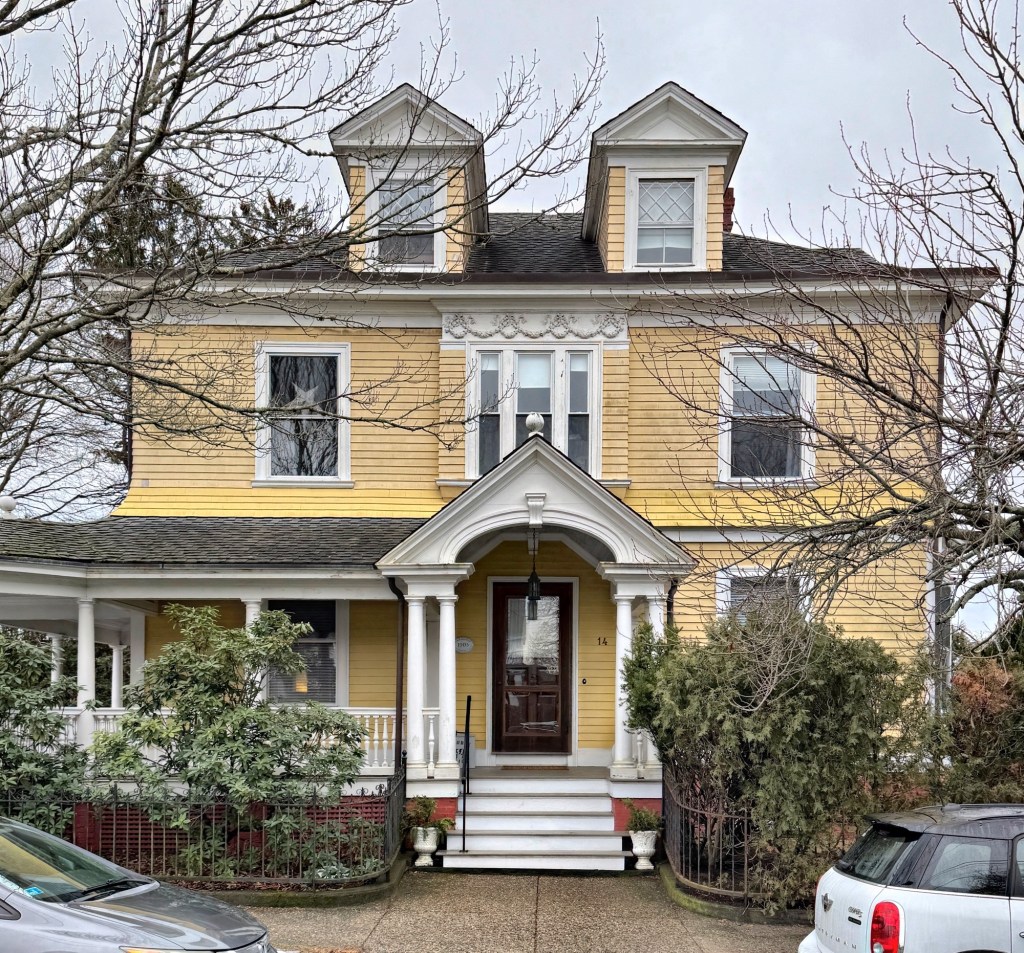
This Colonial Revival style single-family house on Emerson Street in Brookline Village, was built in 1893 on the former Emerson Estate, that was subdivided by the heirs of Elijah Emerson as Brookline Village filled in during the late 19th century. This house was seemingly built for Elijah’s daughter, Sarah C. Emerson Davis, and her husband, George Peabody Davis from plans by Boston architect, Olin Wesley Cutter. Of particular note, the Davis House features a symmetrical facade with round entry portico, Palladian stairhall window with leaded glass, and pedimented dormers, with the center dormer in a swan’s neck pediment. The oddly proportioned pilasters with tiny Ionic capital on the corners of the house were great to see as well!

Isaac Gleason House // 1805

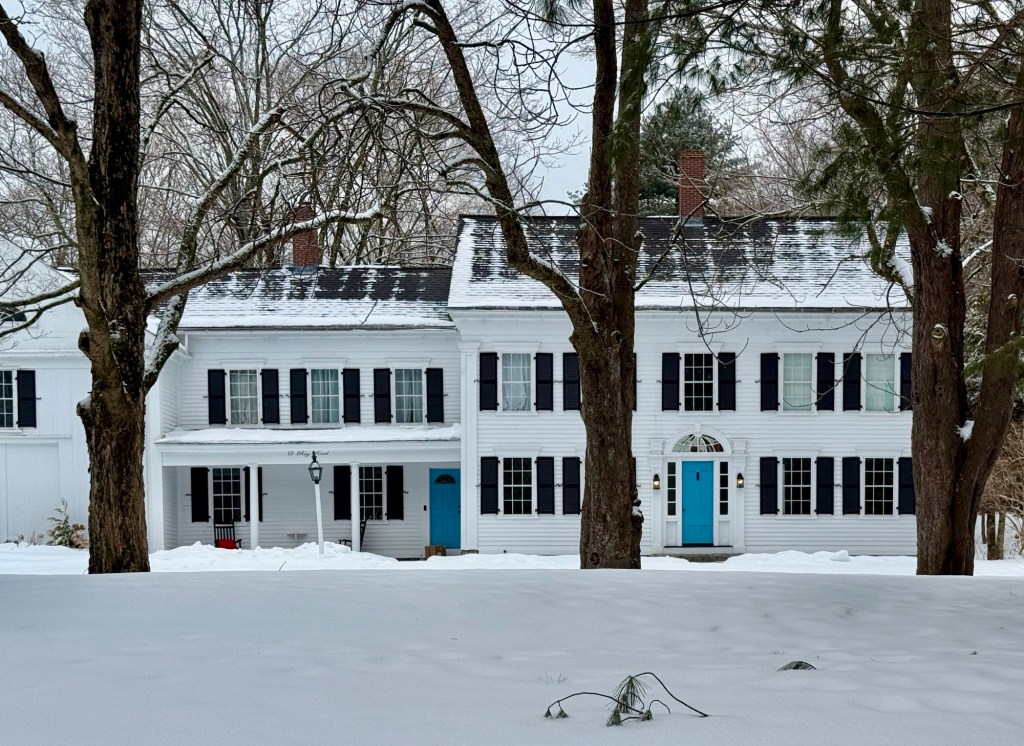
Built in 1805 by Isaac Gleason (Glezen), this Federal style mansion was later expanded in the early 20th century in the Colonial Revival style as Wayland became more of a wealthy Boston suburb. Located on the appropriately named Glezen Lane, this house was constructed for Isaac Glezen (1769-1843), who farmed the land here. Other family members built homes nearby. As Wayland shifted from rural community to a wealthy Boston suburb in the early 20th century, the property was purchased by Charles Ashley Hardy and his wife, Alice. The couple would sell the property in 1918, which comprised of 89-acres of land and a chauffeur’s residence, was purchased by Albert H. Beck, a New York banker. The property was later subdivided and consists of many other large, single-family homes.

Warren Gould Roby House // 1888

The Warren Gould Roby House at 11 Concord Road in Wayland is located just north of the town’s public library building and is one of the community’s finest examples of the Colonial Revival style. The Roby family occupied this land going back to 1725, when Ebenezer Roby (1701-1772) came to Wayland and built a house on this site. His son, Dr. Ebenezer Roby, Jr. (1732-1786), inherited the large Georgian house which also had an office for his medical practice. The old homestead passed to Dr. Roby’s son, William Roby, and eventually to his grandson Warren Gould Roby who lived in Cambridge and worked as a metal merchant and would spend summers at the family homestead. The old colonial Roby House burned in 1886 which is when Warren Gould Roby (1834-1897) rebuilt a Queen Anne residence on the site. Before his death in 1897, Warren Roby donated a half-acre of his land to the south and $25,000 to the town for the purpose of constructing a library that would be as fireproof as possible, the result is the Wayland Public Library. After his death, the Roby heirs, who lived in Cambridge, sold the family estate to Daniel Brackett, a lawyer who also served as the Wayland Town Clerk and Assessor. It was likely Mr. Brackett who expanded the home in the early 20th century in the Colonial Revival style and form we see today.

Wilder Mansion // c.1738

The Wilder Mansion at 101 Wilder Road in Bolton, Massachusetts, was built in about 1738 as an early Georgian farmhouse by Josiah Richardson, a Revolutionary War veteran who died in the home in 1799. By 1814, Sampson Vryling Stoddard Wilder purchased the property and “modernized” the old farmhouse which due to its location along the Bay Path, a major east-west route from Lancaster to Boston, operated it as an inn and tavern. Mr. Wilder expanded the property, purchasing additional nearby farmland to create a country seat worthy of a wealthy agent for some of the most influential merchants in the shipping trade in Boston. During his tour of the United States in 1824, Marquis de Lafayette spent the night here on September 2nd between visits to Boston and Lancaster. Sampson V. S. Wilder lost the property following economic crises, and the property changed hands many times until the early 20th century. Stockbroker John L . Saltonstall (1878-1929), first cousin to Massachusetts Governor Leverett Saltonstall, hired Boston architects Bigelow & Wadsworth in 1910, to return the house to a more Colonial appearance. He and his family were apparently only summer residents here, and he was probably absent for a long period during the First World War, when he worked with the Navy and the War Trade Board in Washington, D.C. In about 1915, he sold the property, and in the early 1920’s he relocated to Topsfield, Mass. After WWI, the house had a series of short-term owners, one of which was Henry Forbes Bigelow, who designed the renovation of the house just years prior. Bigelow would later relocate to a new summer house nearby in Lancaster.

Lancaster Town Hall // 1908

The Town Hall of Lancaster, Massachusetts, was built in 1908 and is one of four religious and civic buildings framing the village’s bucolic town green. The Town Hall was built opposite the Charles Bulfinch-designed First Church of Lancaster and replaced an earlier town hall building that was constructed in 1848. The building was largely funded as a gift from wealthy Lancaster-native, Nathaniel Thayer’s sons, following their late-father’s death. Boston architect, Alexander Wadsworth Longfellow, the nephew of poet Henry Wadsworth Longfellow, was hired to furnish plans for the building, which is Colonial Revival in style, a perfect compliment to the historic New England town.

Thayer Bird Museum // 1903

John Eliot Thayer (1862–1933) was an amateur ornithologist and member of the wealthy Thayer Family in Lancaster, Massachusetts. Due to his family’s business dealings, John Thayer was able to turn his passion, studying birds, into one of the largest collections of stuffed birds, eggs and nests for professionals all over the country to study. John began collecting and housed his collections were in several wooden buildings close to his home in Lancaster, but when these became unsafe and crowded he built this beautiful brick building in 1903 in South Lancaster opening it to the public as a museum a year later. The Boston architectural firm of Winslow & Bigelow designed the Colonial Revival style building, with the Guastavino Fireproof Construction Company providing plans for interior spaces and likely engineering inside. Many of the leading ornithologists of the time visited the Thayer Museum and it was estimated that more than ten thousand visitors came to the museum in the first six years.  In 1974, the building was sold to the now defunct Atlantic Union College and reopened as the Mabel Bartlett Art Gallery. Much of the Thayer collection was donated to the Museum of Comparative Zoology at Mr. Thayer’s alma mater, Harvard University. Since the Atlantic Union College closed in 2018, this important building has been closed, hopefully to see reuse in the eventual redevelopment of the campus.

Bessie & Murray Potter House // 1909

Murray A. Potter (1871-1915) and his wife, Bessie Lincoln Potter lived in Cambridge, Massachusetts, where Murray worked as a Professor of Romance Languages at Harvard College. The couple spent summers in Lancaster, Massachusetts, where they would purchase a house in 1909 that was built just a decade or so earlier. The couple were said to be big fans of history and decided to make their house resemble the 1782 Pierce-Nichols House in Salem, having the brown shingle Victorian house “modernized” in the current three-story near-symmetrical form.

Lancaster Central School // 1904

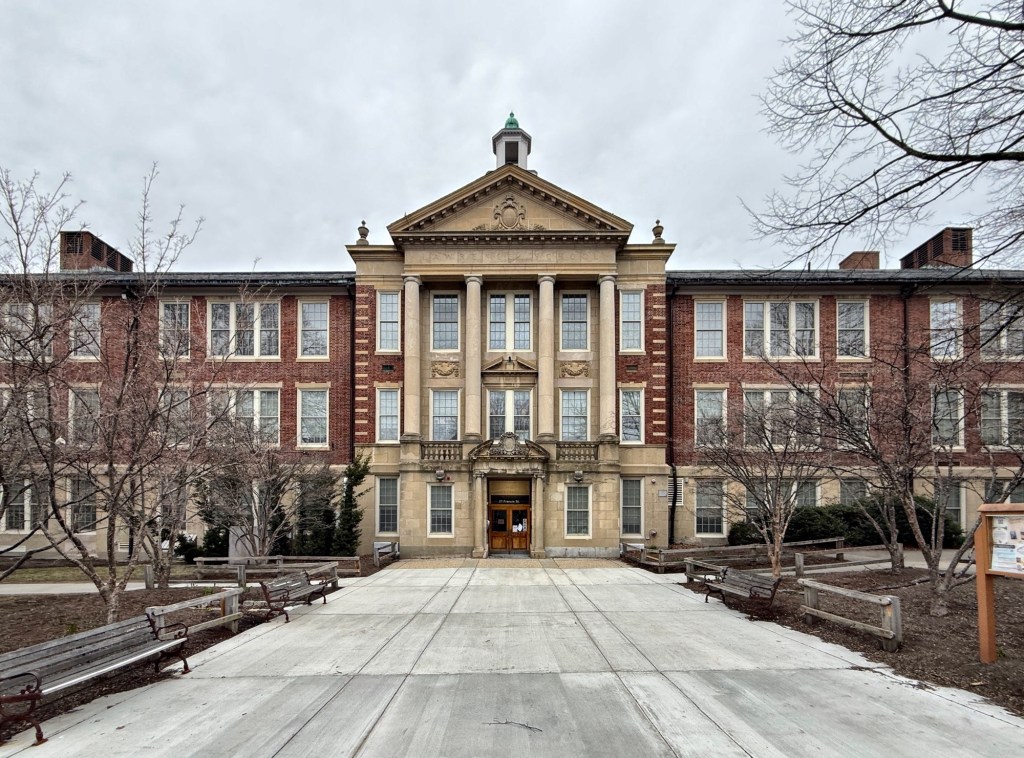
Located across the Town Common from the iconic Bulfinch Church in Lancaster, Massachusetts, this handsome 1904 Colonial/Classical Revival style school building was designed in response to its neighbors and Colonial context of the town of Lancaster. At a Town Meeting in 1903, a local building committee determined that “Bulfinch Colonial” would be the best style for the architecture for a new high school that would be built in the town center, with Herbert Dudley Hale, selected as the architect for the planned two-story brick building. The Center School had been used continuously as a public school until 2001, when it outlived its utility as school facility in town, which was vacated for years until grant funding and a restoration of the building, now known as the Prescott Building, for Town Offices, including the Lancaster Historical Commission. The facade is dominated by its seven-bay symmetrical façade featuring brick
corner quoins, double-door entrance, and two-story white-painted brick pilasters framing the entrance and “supporting” the pediment that contains the town crest in high-relief.

Chester Masonic Temple // 1907

Built in 1907, this handsome building on Main Street in Chester, Vermont, has long been the home to the Olive Branch Lodge 64 of the Freemasons, an international fraternal organization. Colonial Revival in style, the building features corner pilasters that support a denticulated entablature along the eaves of the slate hip roof. A projecting portico over the front entrance is supported by classical Ionic columns. The 1920s marked a heyday for Freemasonry, especially in the United States. By 1930, over 12% of the adult male population of the United States were members of the fraternity. Following the Great Depression and WWII, membership sharply declined in fraternal organizations, like the Masonic Temple. A number of years ago, the Lodge here moved to a new building in a nearby town, and a local law firm purchased the building and spent 18 months renovating the building for use. Today, the historic character and even symbology remain on the building, while it houses a local business. 

Thomas Aspinwall House // 1896

The Thomas Aspinwall House at 14 Hawthorn Road in Brookline was constructed in 1896 by architects, Ball & Dabney. The stately home was built for Thomas Aspinwall as a near copy of his great-grandfather’s 1803 Federal style house on Aspinwall Hill, the William Aspinwall House. Both residences feature a four-tier central bay with Palladian and lunette windows with a columned portico at the entrance. His grandfather, Dr. William Aspinwall graduated from Harvard in 1764 and studied medicine in Connecticut and in Philadelphia before beginning his medical practice in his hometown. He was one of the Brookline men who marched west and fought British troops as they retreated from Lexington and Concord in April 1775. He was put in charge of a hospital in Jamaica Plain during the Revolutionary War and later ran a hospital for smallpox victims in Brookline. His 1803 Federal style home was demolished in 1900 as the Aspinwall Hill area of Brookline was developed, but luckily, a replica remains on the other side of town, here on Hawthorn Road!