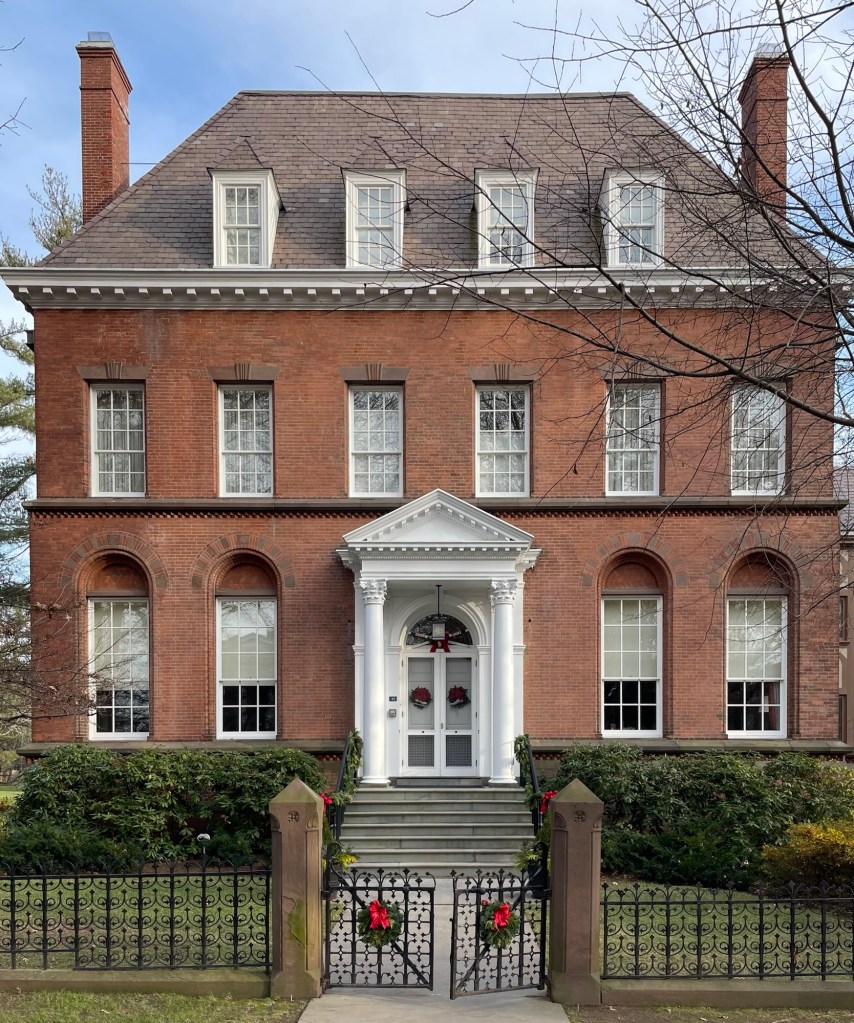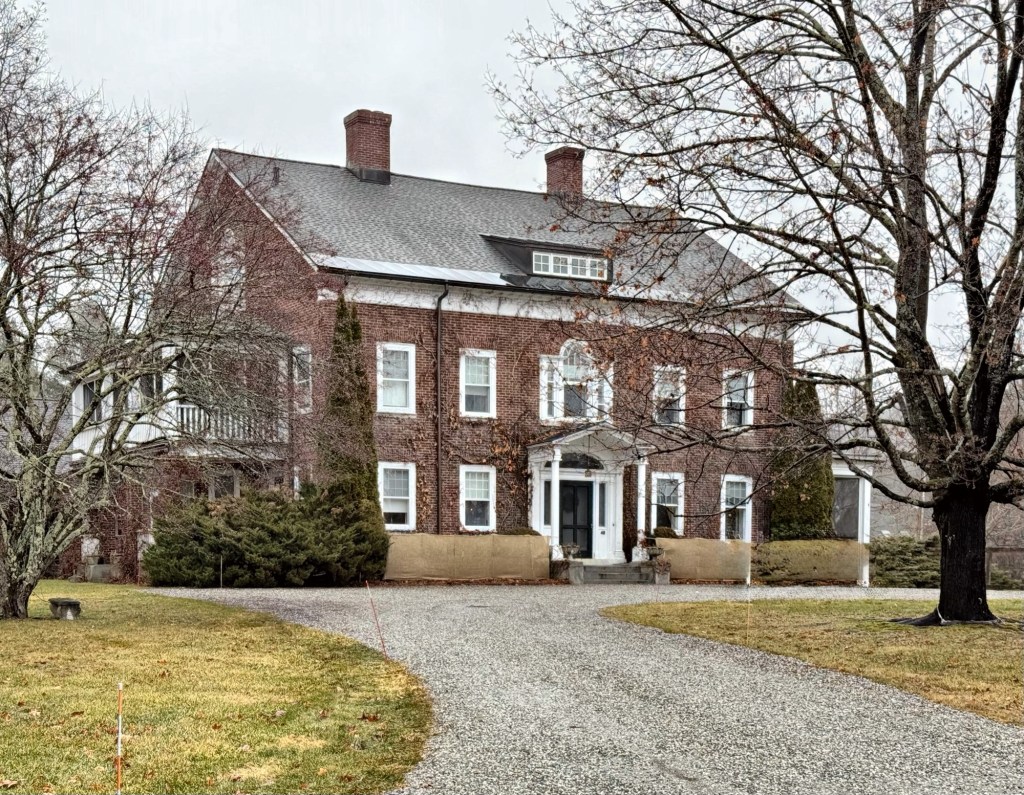
Birdsey Hall // c.1804

Built circa 1804 in the form of an English country estate house, Birdsey Hall stands as the finest property in the town of Goshen, Connecticut. The residence was built for Birdsey Norton (1763-1812), a wealthy cheese merchant who was said to have been inspired to build a country estate after travelling the American south on business. The high-style Federal/Adamesque mansion features expansive grounds bounded by brick walls and Victorian gardens. The property was later owned by Fred Favorite and Robert Devoe, friends of Liberace, who operated an antique store. Birdsey Hall remains one of the finest Federal estates in Connecticut.

Myron Norton House // 1840

The Myron Norton House, built in 1840, is located in the central village in Goshen, Connecticut. Built of stone, the house is unique as the only example of a stone house in the village, and the only Greek Revival house that departs from the usual gable-roofed form, having a square plan and hipped roof with monitor. The home was built for Myron Norton (1788-1853) and his wife, Caroline (Marsh) Norton, who outlived her husband by 23 years, living here until her death in 1876. Myron Norton made his fortune patenting and selling pineapple cheese molds, where he pressed the curds from local cows in wooden pineapple-shaped molds to give them the desired shape. It is the house that cheese built!

Old Goshen Academy Building // 1824

The former Goshen Academy building is located in the central village of the rural town of Goshen, Connecticut, and it is an important vestige of early education in the small town. The Goshen Academy building was built in 1824 from funds by shareholders of the institution. The academy featured a lecture room on the second floor with smaller classrooms downstairs. The academy would eventually close, and it has been occupied by the Goshen Historical Society.

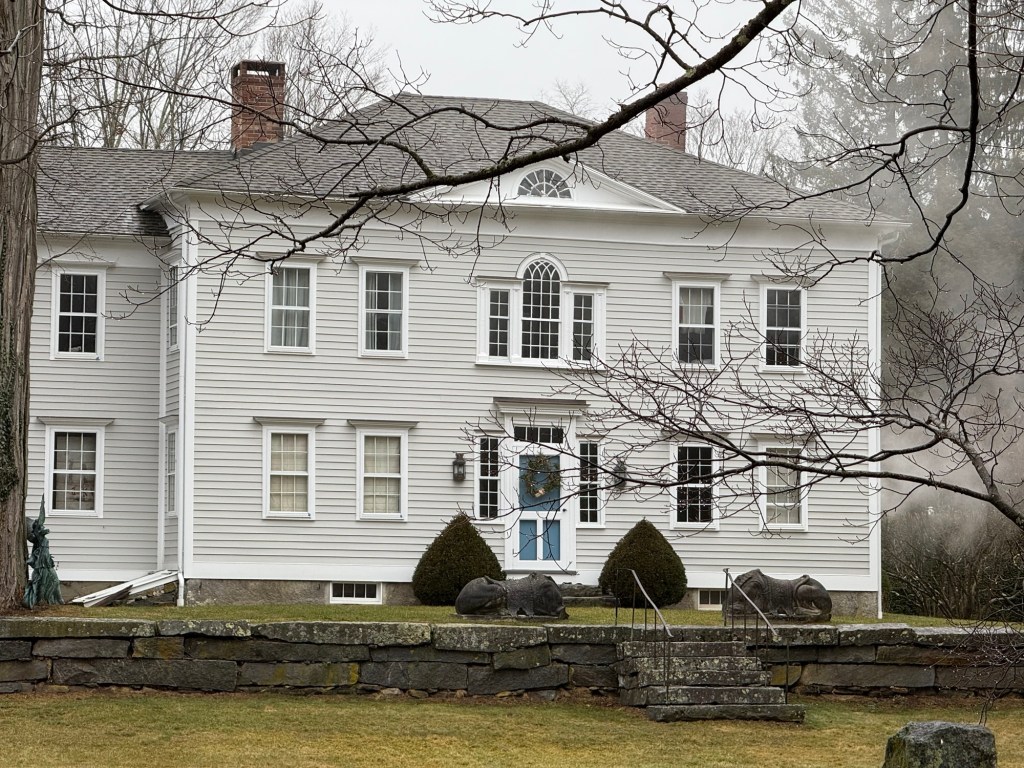
Thompson-Sperry House // 1803

In 1803, General David Thompson (1766-1827) and his wife, Sybil (Norton) Thompson, moved into this recently completed Federal style residence on North Street, the main road through Goshen Village, Connecticut. David Thompson was a merchant and partner in the firm Wadhams & Thompson, occupying a store nearby the Congregational Church. Business partners David Thompson and David Wadhams built near-identical houses across the street from each other, though the Wadhams house has since been gut renovated and lost much of its original fabric. The Thompson House stands out for its Palladian second-story window, glazed with interlacing arcs. The property was owned at the end of the 19th century by Albert Sperry, a Civil War veteran.

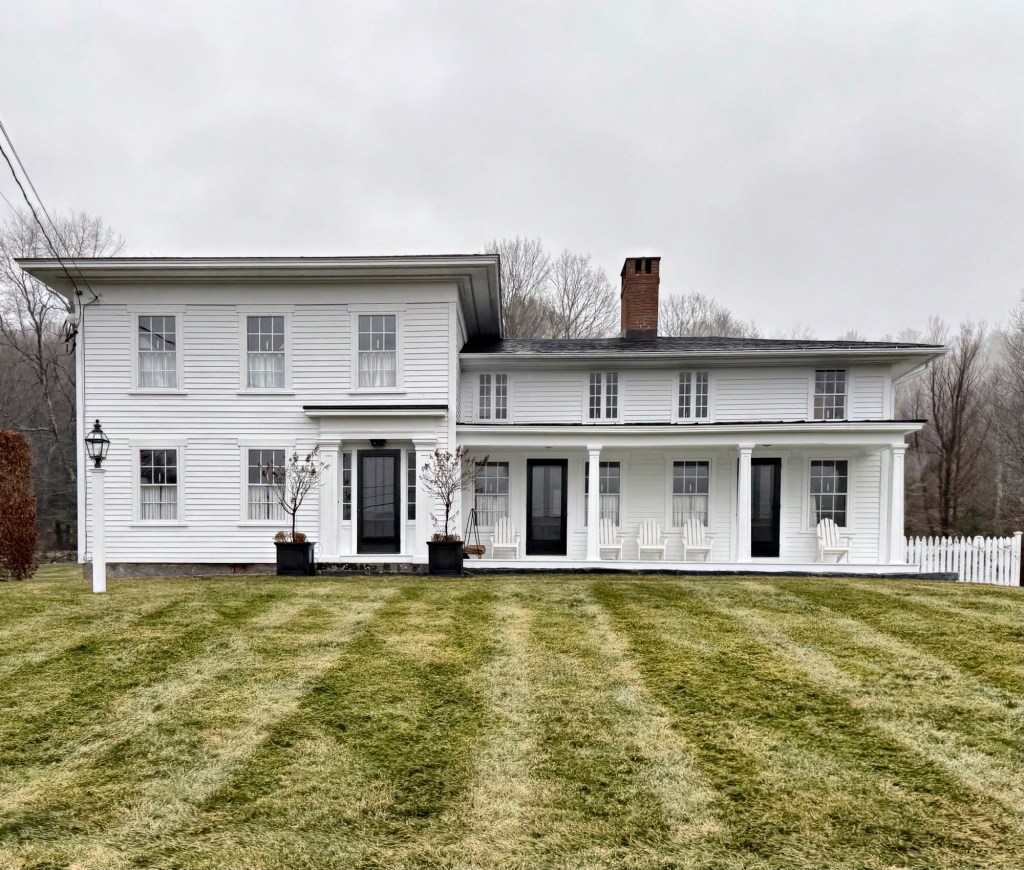
Lavalette Perrin House // c.1844

The perfect whimsical blending of the Classical Greek Revival and the intricate details of the Carpenter Gothic styles can be found under one roof in Goshen, Connecticut; this is the Lavalette Perrin House. Built c.1844 for Lavalette Perrin (1816-1889), who graduated from Yale in 1840, and became licensed to preach in 1843. Reverend Perrin was in his late 20s when he accepted the call to become the pastor of Goshen’s Congregational Church in 1843. Upon arriving to town, he had this residence built soon after, blending two differing styles in a blissful composition. Perrin remained in Goshen until he was called to New Britain in 1858, where he remained until his death. Unique architectural features of the home include the flushboard siding, pilaster-and-lintel framed doors and windows (very rare in this form), and wave-like bargeboards. What a special home!

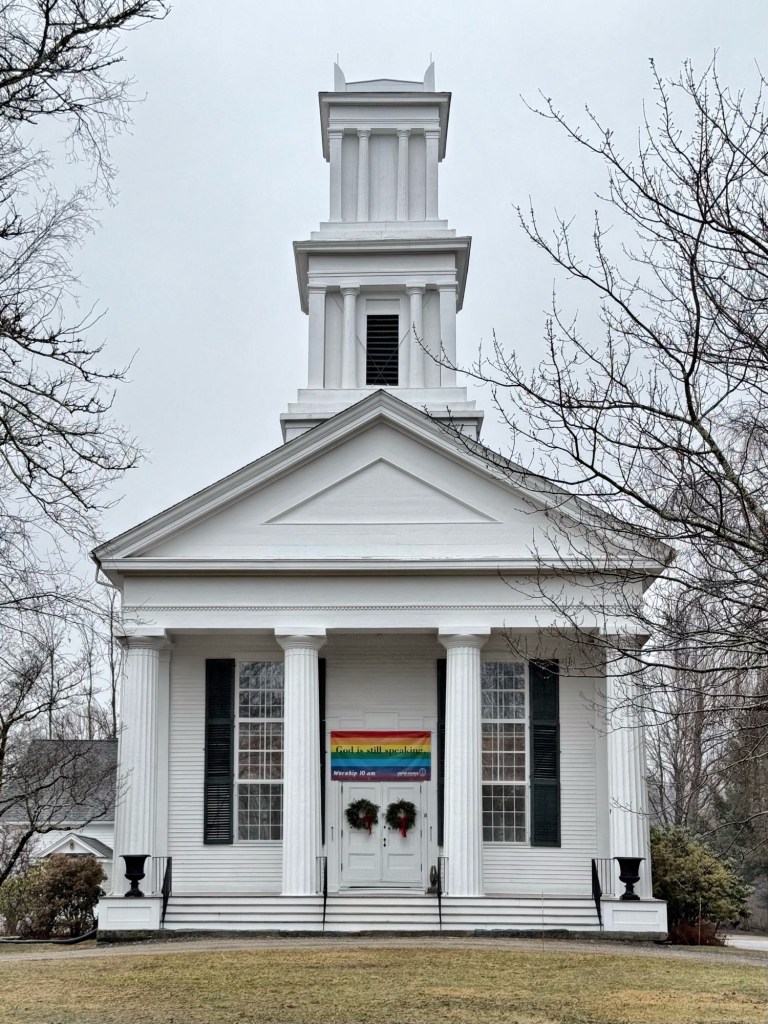
Goshen Congregational Church // 1832

The town of Goshen, located in Litchfield County, is located in the northwestern part of Connecticut was first settled by European colonizers in 1738, with the town incorporating a year later. The community was named after the Land of Goshen, a part of ancient Egypt in the Bible. Goshen primarily grew as rural and agricultural in character, with limited industry and commercialization compared to other nearby towns. The town center village was home to the Congregational Church as far back as 1750. In 1832, the present Congregational Church was built from plans by Benjamin E. Palmer, a carpenter-builder who also built the Windham County Courthouse in Brooklyn, Connecticut. The church blends both Federal and Greek Revival styles, and Palmer likely took inspiration from Asher Benjamin’s design guidebooks. The church retains much of its original character even with the altered steeple, porte-cochere, and conversion of three-door facade to a single-entrance in 1894.

Peep Toad Mill // c.1850

The Peep Toad Mill (also known as the Elliottville Lower Mill) was built in Killingly, Connecticut, around 1850 by the Elliottville Manufacturing Company, whose larger main mill was upstream from this complex. The Elliottville Manufacturing Company was formed in the 1830s and later acquired by Albert Elliott and Nelson Eddy, who expanded operations here. This structure, the lower Mill was used for spinning and preparing the warps for cotton sheetings, the firm’s principal product. In 1870, the two mills employed 18 women, 18 children and 13 men. The business closed in the 1880s, and the building was vacant for some time before being converted to a residence and artist studio. The old mill is a rare surviving example of a wood-frame textile mill, many of which were built but few of which survive, due to fires and/or later expansion of the premises. The present owners have done an amazing job restoring and maintaining this rare treasure!

Killingly Town Hall // 1876

The economic center of the town of Killingly, Connecticut is the village of Danielson, which is located at the confluence of the Quinebaug and Five Mile rivers. The area developed as an industrial village and prospered as the town’s center through the late 19th and early 20th centuries. The present-day town hall building was originally constructed in 1876, not as a civic building, but as a multi-purpose music hall and G.A.R. Hall. The Victorian/Ruskinian Gothic style building was constructed of brick with stone trim. The building was later acquired by the town in 1906 and has served as the town offices ever since. Besides the unfortunate replacement windows, the building is well-preserved by the town.

Harris Sayles House // c.1860

This handsome Italianate style house is located on Dog Hill Road in Killingly Center, Connecticut. The house appears to date to the years just before the Civil War and historic maps show that the property was owned by Harris Sayles, a co-owner of the large woolen mill in nearby Dayville. The home was built for Harris and his wife, Phebe. The house stands out for its two-tiered gallery of porches with large chamfered posts and paired brackets and has some Classical corner pilasters and door surrounds noting the transitional period from Classical Greek Revival style to the romantic Italianate style.

Warren Potter Mansion // 1865

In 1865, Warren Potter, a Rhode Island-based manufacturer, built this Italianate style mansion in the Dayville section of Killingly, Connecticut for his family. Potter was employed at the Sayles Woolen Mill in a manager role and clearly did well for himself to afford such a home. Characteristic of the style, the Potter mansion features bracketed eaves and window lintels and round-arched tripartite windows over the center entrance. At the entry, the original round-arched doorway with glazed surround has survived in good condition and is a showstopper!