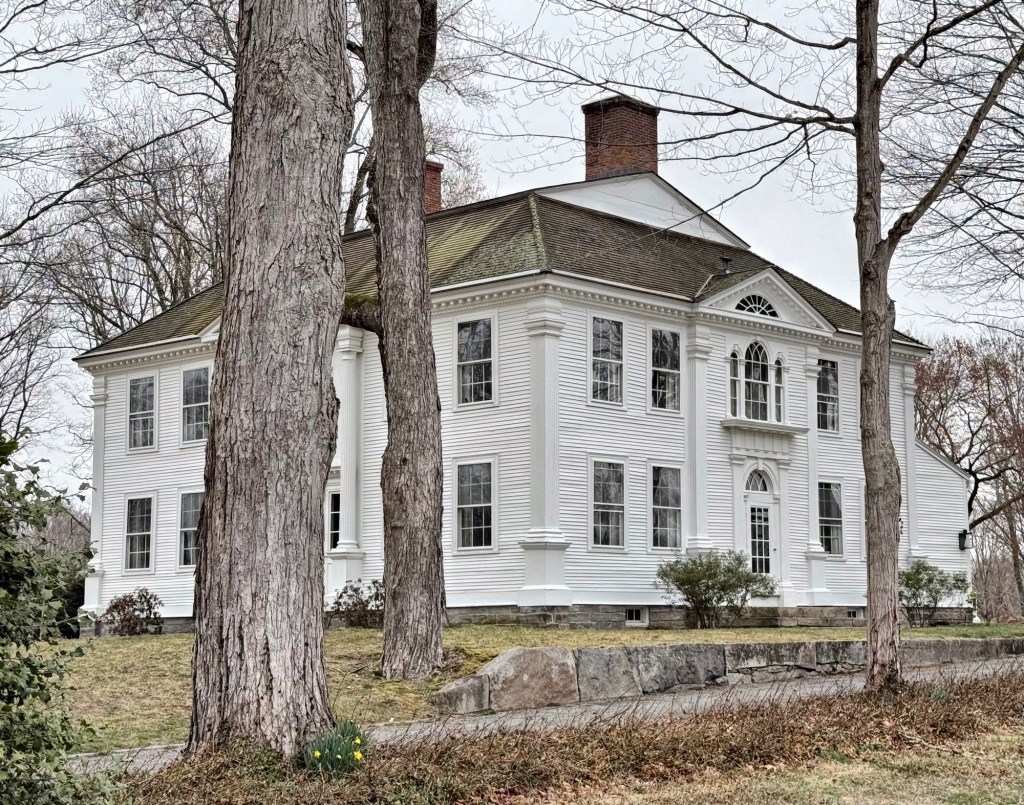
Gould-Goodnough-Lyman House // 1816

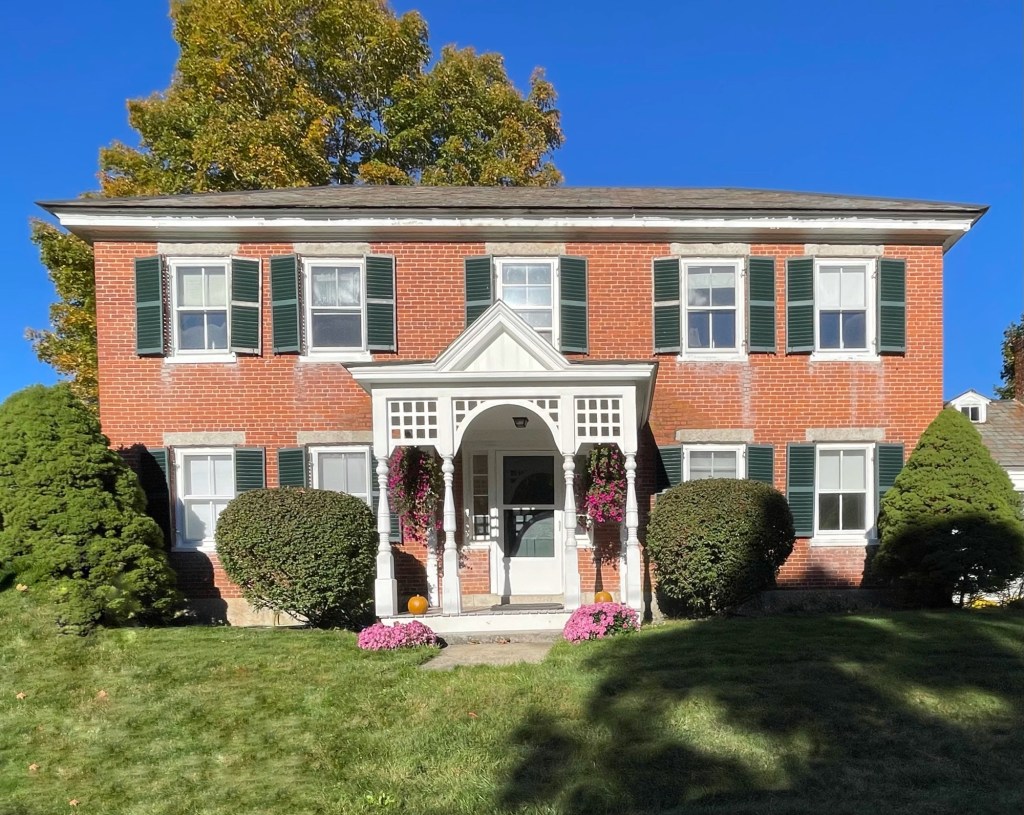
The largest house in the smallest town (in Middlesex County) of Ashby, Massachusetts, is this towering, three-story Federal period home on South Road. Local history states that the home was originally a two-story Federal style home with shallow hipped roof. The Goodnough’s “modernized” the home by the 1870s, adding a mansard roof and built a stable on the property. Lastly, the third major owner, Jesse P. Lyman, and his wife, Mary Chapman Lyman, had the home “modernized” again, in 1898, but in the Colonial Revival style, harkening back to the house’s original Colonial-inspired roots. Fitchburg-based architect Henry M. Francis converted the old mansard roof to a full third-floor, updated the carriage house, and added side wings to flank the main block of the house (similar to his design at the old Lyman School in town). The house recently sold for over $600,000 in 2020, which may be the best steal ever! This house is a stunner!

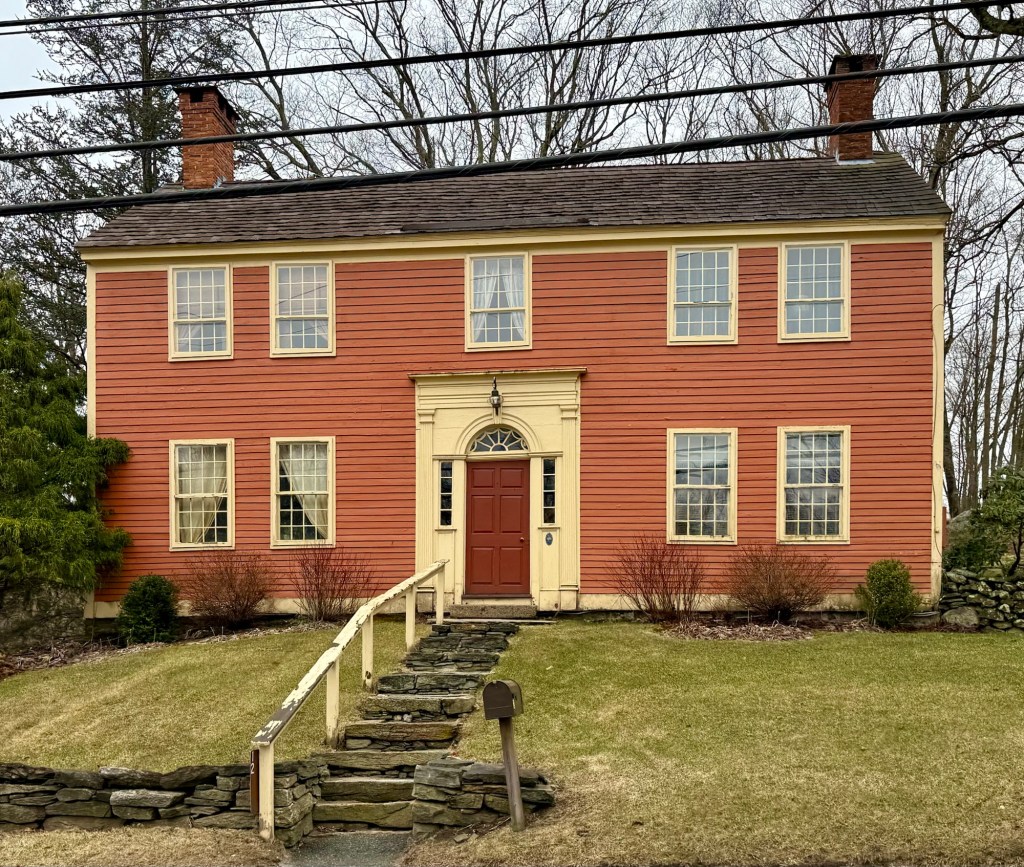
Asa C. Everett House // c.1824

The Asa C. Everett House on Allen Road in Ashby, Massachusetts, was built around the time of the wedding of Asa Cutter Everett, a saddle- and harness-maker, and Rowena Spaulding in 1824. The house was built of brick and in the Federal style with a shallow hipped roof and symmetrical facade, and was “modernized” in the late 19th century. Victorian-era alterations include the entrance porch with turned posts and spindle frieze and two-over-two sash windows. Blending of vastly different architectural styles can be tough to pull off, but this example really looks great! What do you think?

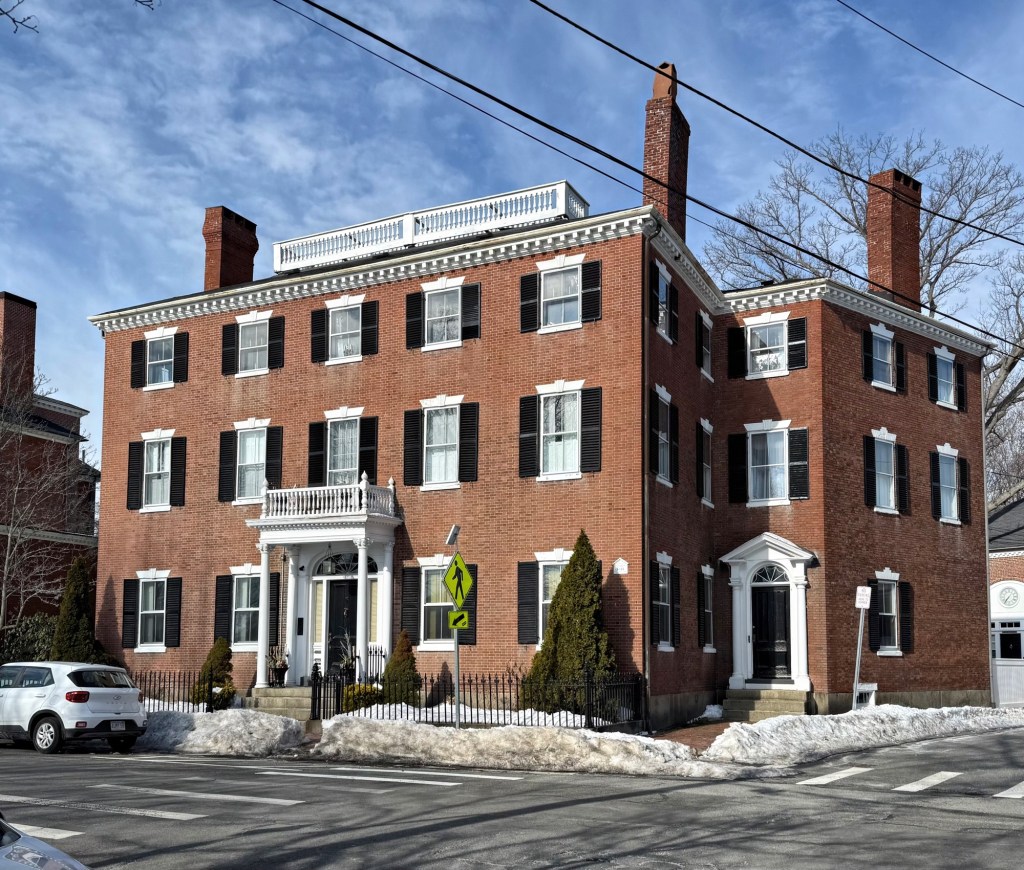
Asa Kendall House // c.1790

The Asa Kendall House is a significant Federal period house from the late 18th century on Richardson Road in Ashby, Massachusetts. The house here is actually believed to be the second built on this location, the first being the John Fitch House and Garrison. John Fitch was one of the earliest settlers in present-day Ashby, which in the mid-1700s, was sparsely developed and threats of attack by Native peoples limited development for decades. Due to raising tensions in the years leading up to the French and Indian War, Fitch petitioned the government for a garrison manned by three soldiers, which was approved. In 1745, the garrison was attacked and Fitch with his family, were kidnapped by Native Americans, held hostage for six months and brought up to Canada. The homestead and garrison were burned. He and his family were ransomed and would later return settling elsewhere in town. The former location of the garrison was purchased by Asa Kendall and this house was built around 1790 for him. The brick house with sloping wings was extensively documented as part of the Historic American Building Survey in 1936 and has been preserved by later owners ever-since!

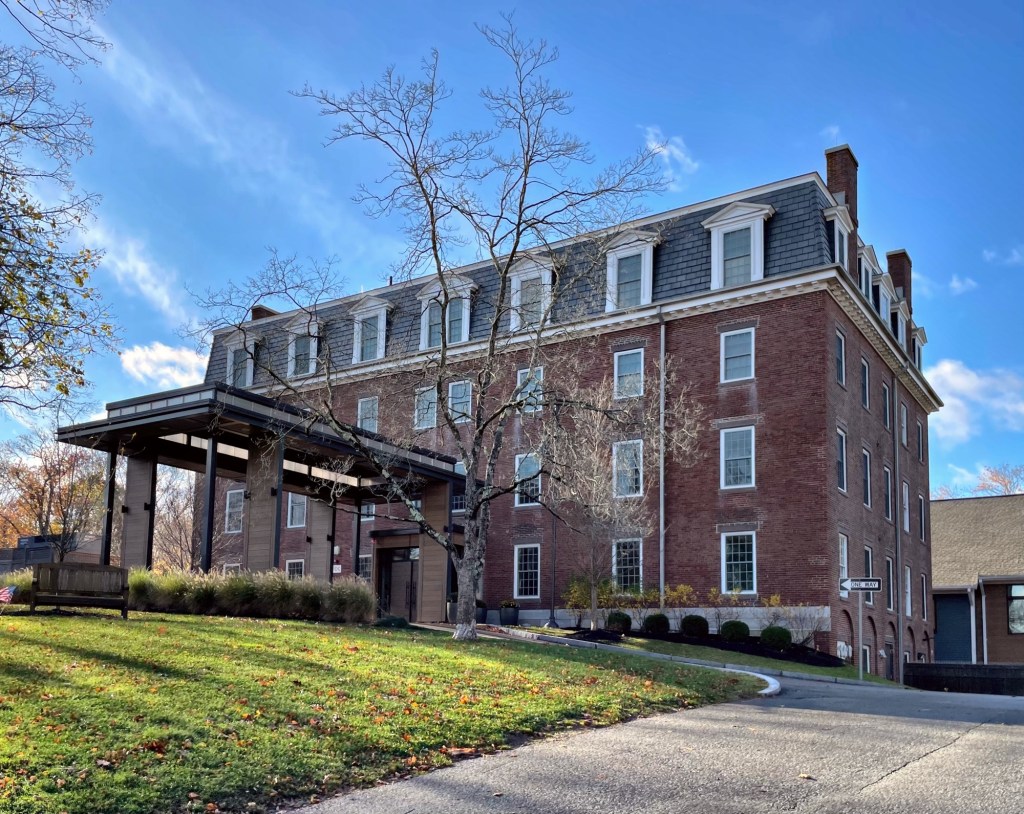
First Parish Church of Ashby // 1809

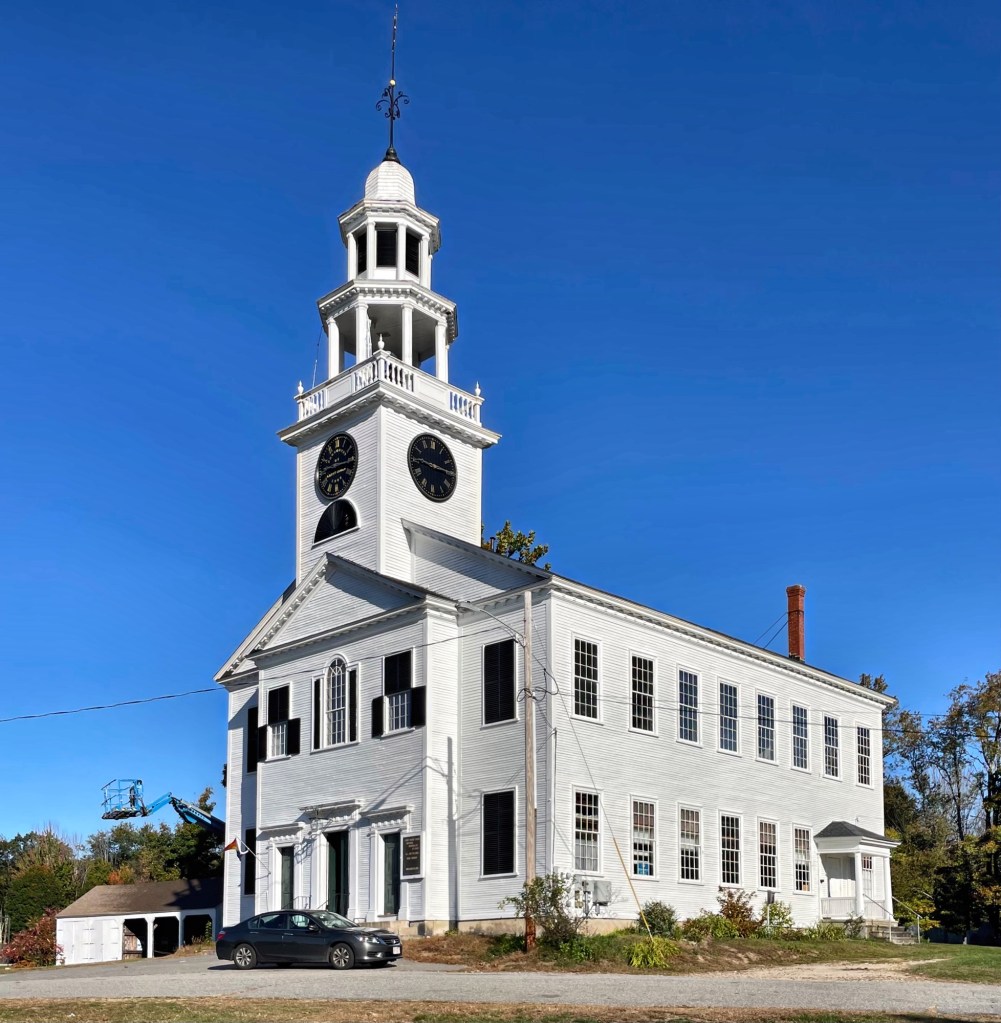
Welcome to Ashby, Massachusetts; a rural and historic town that was first settled in 1676 but due to the continued threat of native hostilities, permanent European settlement in the town did not occur until about 1750. The town incorporated in 1767 and was reputedly named for the abundance and quality of white ash trees found in the area by early settlers. Today, the town has just over 3,000 residents. At the center of the town village, the First Parish Church of Ashby stands as a significant Federal-period meetinghouse, and an integral piece of the town’s history. The present building was constructed in 1809, replacing an earlier structure from 1771. Carpenters for the building were Joseph Kendall and Darius Wellington of Ashby, who utilized plans from Asher Benjamin’s American architectural pattern book of 1797. Facing the town common, the church is a two-story gable front building with a three-stage tower including an octagonal open belfry rising from the pedimented front pavilion.

Auld-McCobb House // 1807

The Auld-McCobb House is set on a rocky ledge overlooking the absolutely charming downtown Boothbay Harbor, Maine. The brick, Federal-period double-house was built in 1807 for Jacob Auld and Joseph McCobb, two prominent local merchants. The two were engaged in a business partnership that included fishing, shipbuilding, and general mercantile pursuits, and were a dominant force in the local economy in the first quarter of the 19th century. The duo owned a good bit of land in town, eventually selling the five-acre Burnt Island to the Federal Government for a new lighthouse. McCobb married Auld’s sister in 1807, and it is thought that this is what necessitated the house’s construction at the time. The house is interesting, not only as a rare example of a double-house of the period, but also as one of the first (and only) brick homes in Boothbay Harbor.

Orin Witter House // 1821

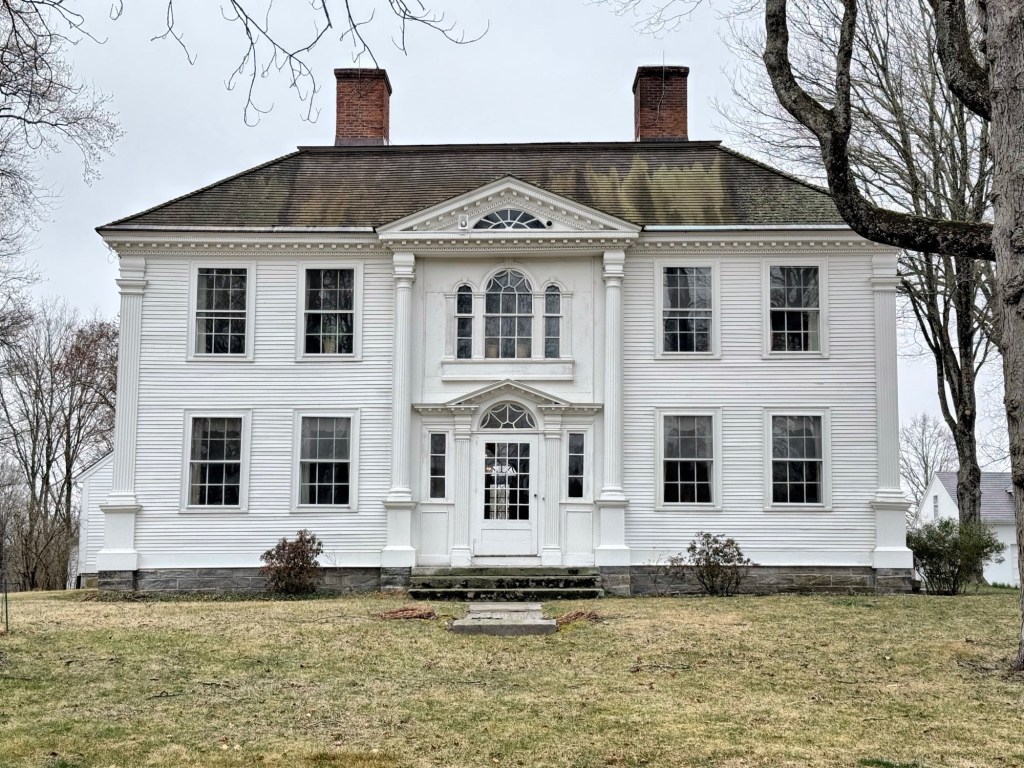
The Witter House of Chaplin, Connecticut was built in 1821 and owned by three generations of medical doctors all named Orin Witter. The Witter House stands on Chaplin Street and is among the finest Federal style residences in this part of the state. Orin Witter had the house built just before the town was incorporated in 1822 and would also serve as the town’s first Clerk. The Witter House is five bays wide, with paired chimneys at the ends of the hip roof. The centered entrance is flanked by arched sidelight windows and has a fanlight above. The fanlight detail is echoed by semi-elliptical fan louvers above each window. The roof has a monitor section at its center. Due to its architectural merit and state of preservation, the house was individually listed in the National Register of Historic Places.

Old Highgate Post Office and General Store // c.1830

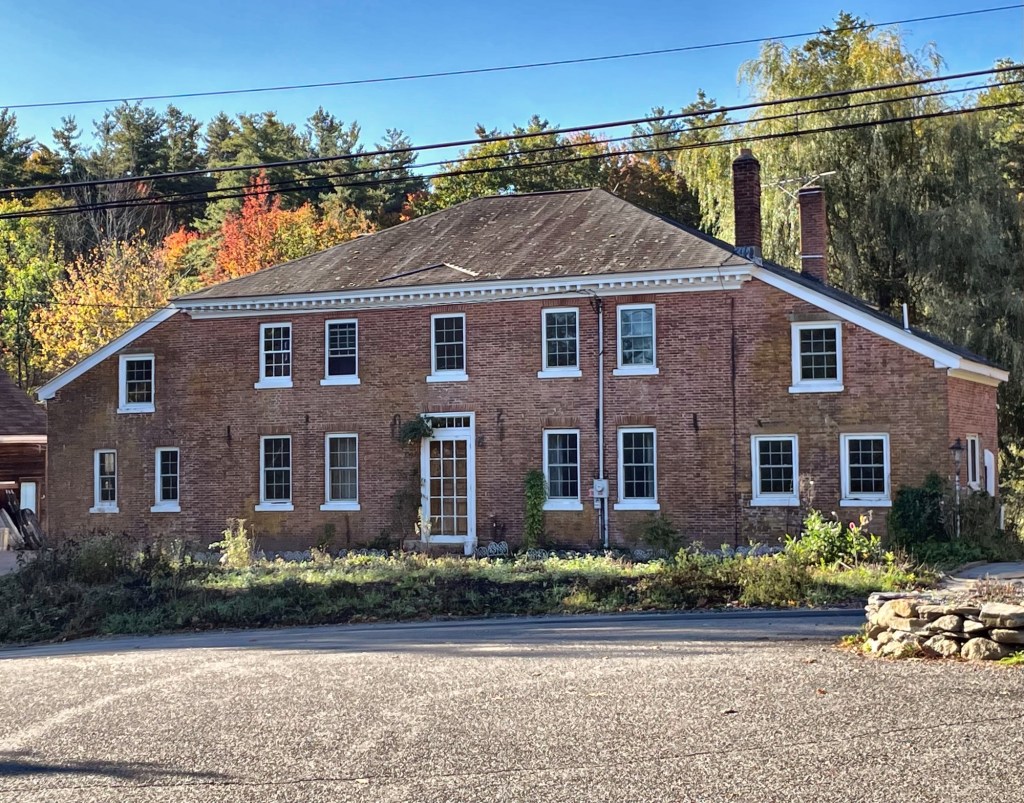
In the small village of Highgate Falls, Vermont you will find this unique Federal period commercial building, and if you are like me, want to know more about it! According to historians, the building was constructed around 1830 and had multiple uses: a U.S. Customs House, a Post Office, and later as a general store for owners Stockwell & Steele. The brick structure suffers from some deferred maintenance, but is a significant piece of vernacular architecture in this sparsely visited part of the state!

Pacific National Bank // 1818

Whaling captains and crew upon returning to the island of Nantucket, would be flush with cash and goods and needed a safe and secure institution to hold their earnings. By the late 18th century, the depletion of the whale population in the Atlantic required whaling vessels to travel further and further in search of oil to fill the barrels in their holds. Ships began sailing to the Pacific and due to the distance, would be out at sea for years rather than months. Money from the Pacific voyages flowed back to the island, which soon required real banking facilities, and the Pacific Bank was established in 1804 and immediately prospered. The bank erected this stately brick building at the end of Main Street Square. Details such as the blind arches filled with sandstone panels that surround the building’s windows, the semi-circular Ionic entry portico and the high brown sandstone stoop with wrought-iron railings are unique on Nantucket and among the finest examples of their type in the region. Also interesting about the building is the fact that it contained living quarters for the cashier whose presence was intended to provide security. The building is now (of course) home to a Bank of America.

South Britain Congregational Church // 1825

The South Britain Congregational Church in Southbury, Connecticut was built in 1825 and was originally known as the Meeting House of the South Britain Ecclesiastical Society. The congregation dates back to 1766 and its first pastor, Jehu Minor, a Yale educated minister from Woodbury, was chosen in 1768. Members met at the Moses Downs House before its first meetinghouse was built in 1770. When the pre-Revolution church building was deemed inadequate, funds were raised to erect a new house of worship. In 1825, boards and other usable parts from the old building were used to construct the present Federal style church that stands in the middle of the village today. History states that pulleys were attached to an ox cart to hoist the bell up the steeple which is by far the tallest structure in the neighborhood. It is an exceptional example of the Federal style, with beautifully balanced proportions, a front pavilion, fine detailing and an elegant three-story steeple. The church made more history when in on September 25, 1937, 178 acres of land in Southbury, Connecticut was purchased for the German-American Bund, intent on building a Nazi camp. Similar camps were popping up around the nation, in an effort to promote an anti-semitic and pro-Nazi agenda. Led by Reverend Lindsay, the pastor of the church, the townspeople quickly established a zoning commission whose first ordinance forbade land usage in the town for “military training or drilling with or without arms except by the legally constituted armed forces of the United States of America.” Stunting the proliferation of nazism in Connecticut before WWII. This is why Southbury is sometimes known as “The town that said no to the Nazis”.

Oldfield – John Moseley House // 1818

Federal style houses are among my favorite styles! From the classical design details to the symmetrical facades, there are so many great examples of Federal style houses in New England. This house in Southbury, Connecticut dates to 1818 and was built by John Moseley (1775-1876), who lived to be 100 years old, and married twice, outliving both of his wives. According to a family history, Moseley personally went to Maine to pick out the wood used to build his house as there were no large trees left in the area when house construction began in 1818. In the early 1900s, the house was updated with a rear addition, built from a structure moved from across the street and attached to Oldfield, and with the addition of the large Colonial Revival style portico at the front entry. The house has been a bed & breakfast since the 1990s, originally called Cornucopia at Oldfield, it is now known as the Evergreen Inn.