Old Stone Store, Chester // 1809

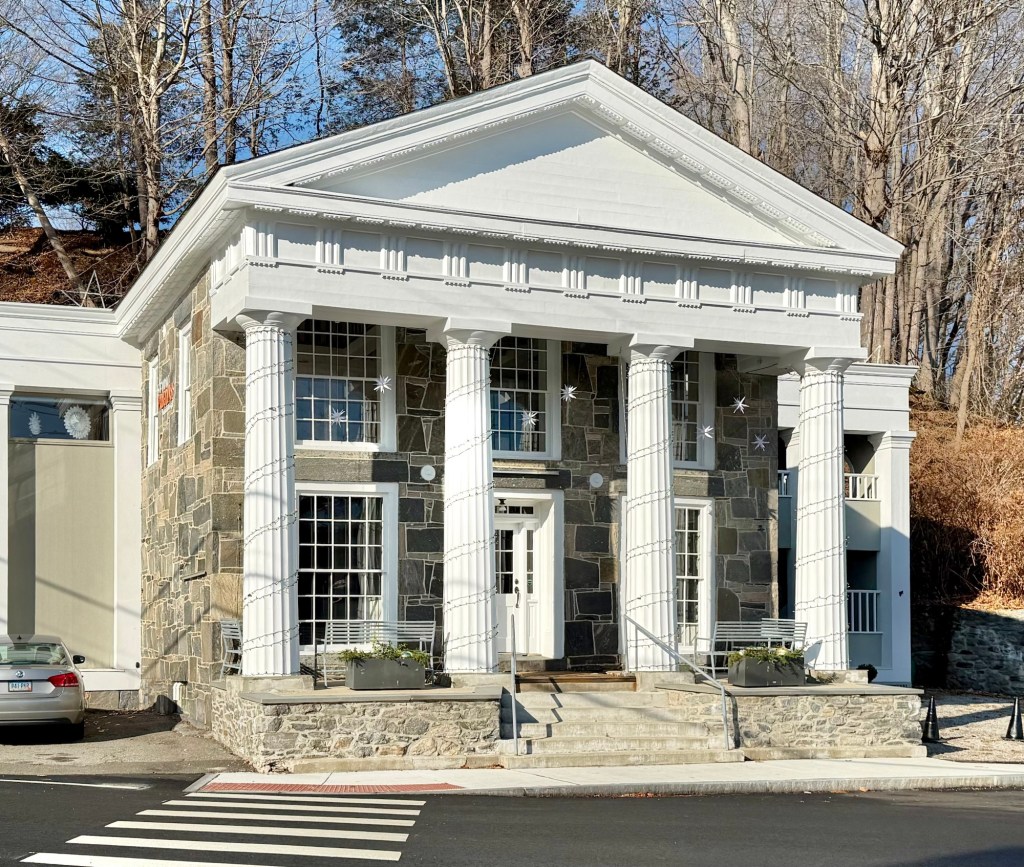
Colloquially known as the “Stone Store,” this handsome stone structure in Chester Village, Connecticut, was built by William Buck in 1809, a merchant involved in the West Indies trade. The stone for the building is believed to have come from the Chester quarry in town and was likely more vernacular without the columned portico. The four-columned Doric portico was likely added in the 1830s or 1840s as the Greek Revival style surged in popularity. The two side wings were added in the 20th century. The Old Stone Store has held various uses from a store, tavern, post office and liquor store, while the upper floor has served as a private school, the town’s library and an apartment. The Old Stone Store today acts as the western terminus of the town’s Main Street commercial district.

Chester Meetinghouse // 1793

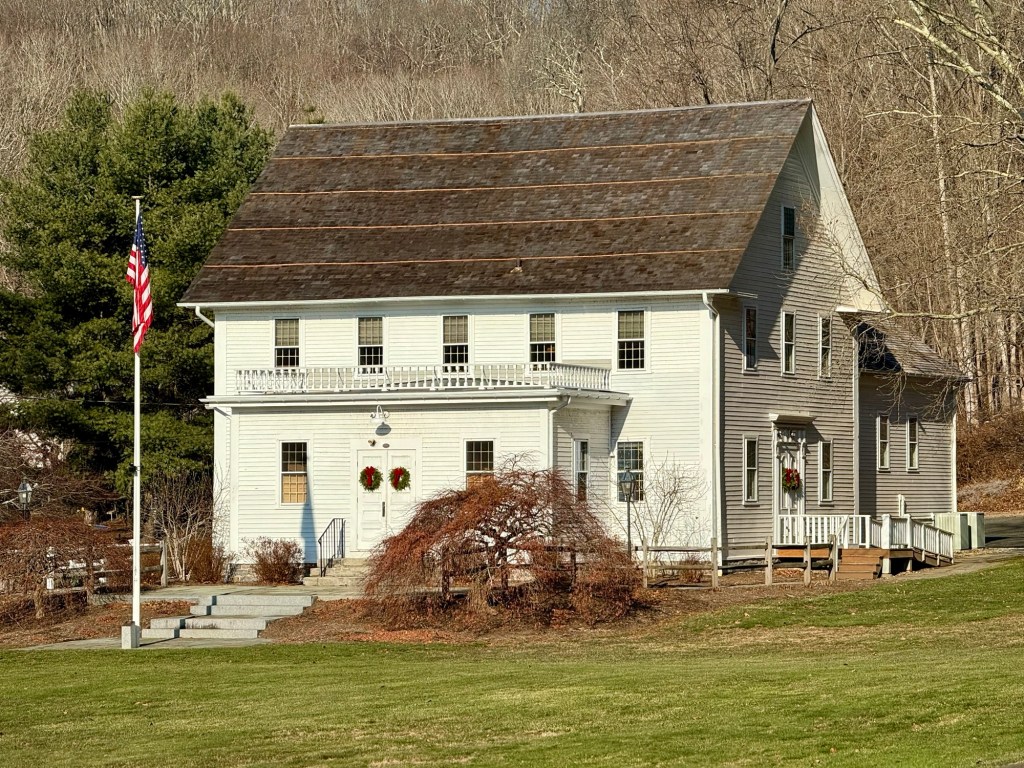
The Saybrook Colony was established in 1635 and covered a large geographic area near the mouth of the Connecticut River in Connecticut.  This area was later subdivided into different towns after colonial era villages were established, each with their own church congregations. As was common in the colonial era, these divisions were centered on the establishment of separate church congregations. The Fourth Ecclesiastical Society of Saybrook in what is now the town of Chester, Connecticut, was established in 1742. As the town grew, this building was constructed in 1793 as Chester’s second meeting house and served as a church until 1846, when the third Meeting House was built. In 1847, the Town of Chester acquired this old meetinghouse and from that date until 1960, it was used as the Town Hall. In 1876, the old meetinghouse was renovated with a new, projecting main entrance added to the south side of the building when the Old Town Hall enjoyed its heyday as a theater and concert hall. The Old Town Hall witnessed many events under its roof, including hosting P.T. Barnum’s Tom Thumb, who performed here, as did musical events, high school proms, and school graduations. The building had become threatened following the construction of the new Chester Elementary School, which better-hosted events, in the 1960s. Luckily, in 1970, the newly formed Chester Historical Society acquired the building and restored it as a significant piece of the town’s rich history.

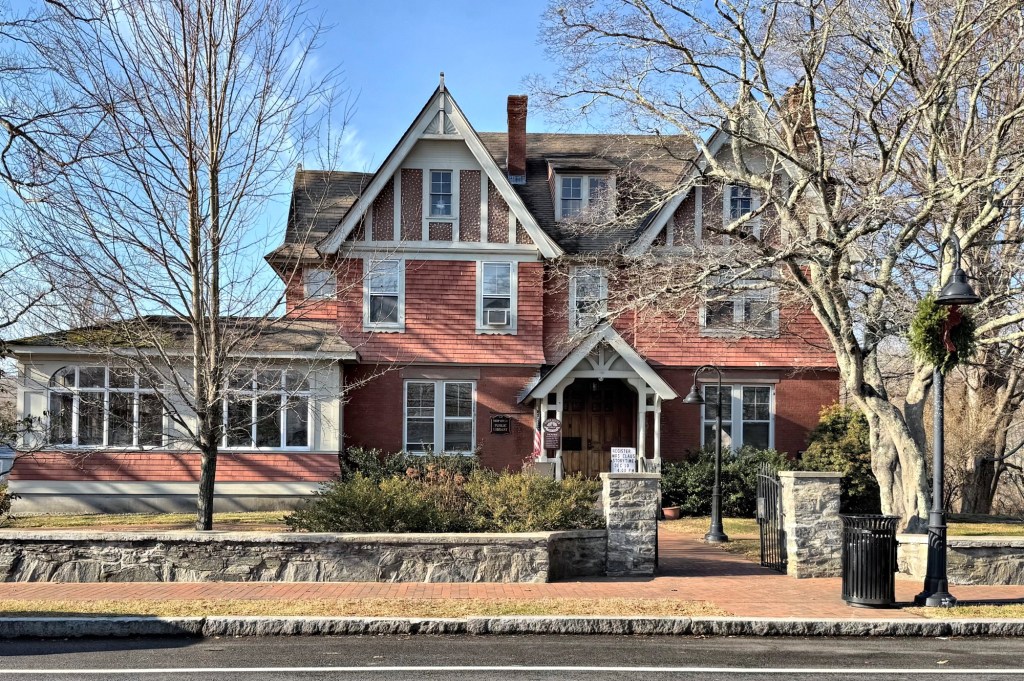
Richard P. Spencer House – Deep River Public Library // 1881

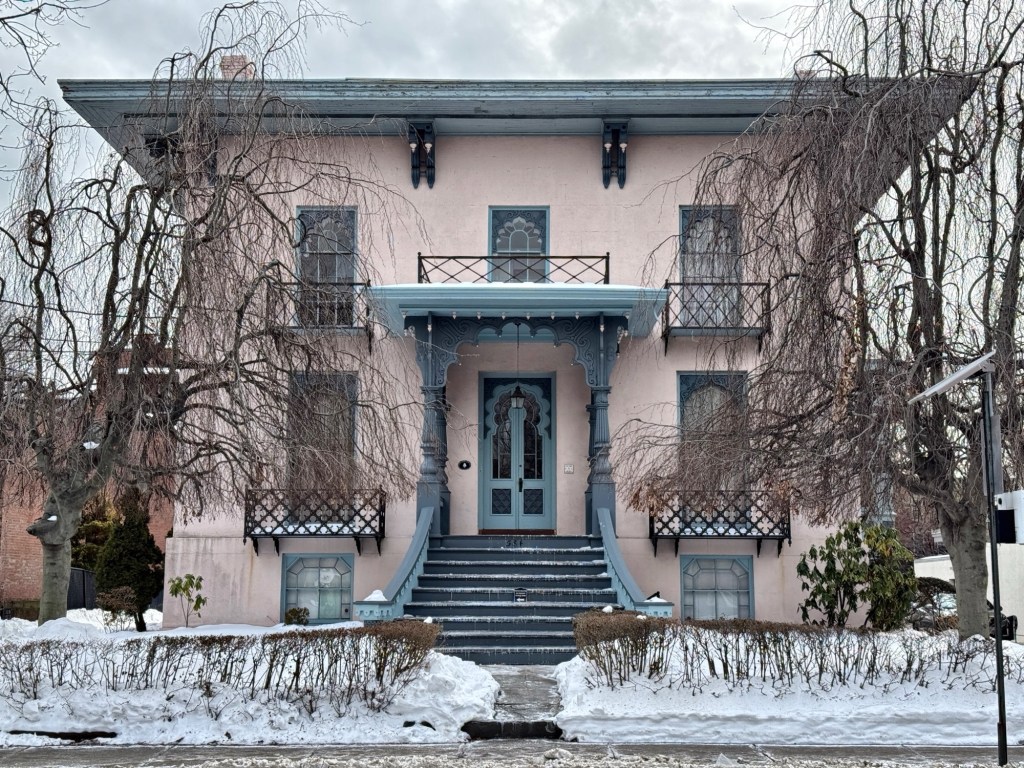
The finest extant Queen Anne Victorian-era house in the town of Deep River, Connecticut, is located on Main Street and since the 1930s, has been home to the town’s public library! How’s that for adaptive reuse?! This residence was built in 1881 for Richard Pratt Spencer (1820-1910), a local prominent businessman who lived to be 90 years old. Spencer lived here with his second wife, Juliana Selden, who was 32 years his junior, and three children until his death in 1910. When Spencer’s widow died in 1932, the heirs sold the property to the Saybrook Library Association (before the town renamed Deep River in 1947), which then, in turn, sold the building to the town for a small price in order to convert it into a library. Opened to the public in 1931, the Deep River Public Library has been preserved inside and out with historic fireplaces, woodwork, and features. The only notable change occured in 1995 when a children’s room addition was built to resemble an old porch. The library even retains the original pebbledash finish in the gables, a rare detail not commonly found in typical old houses of the period.


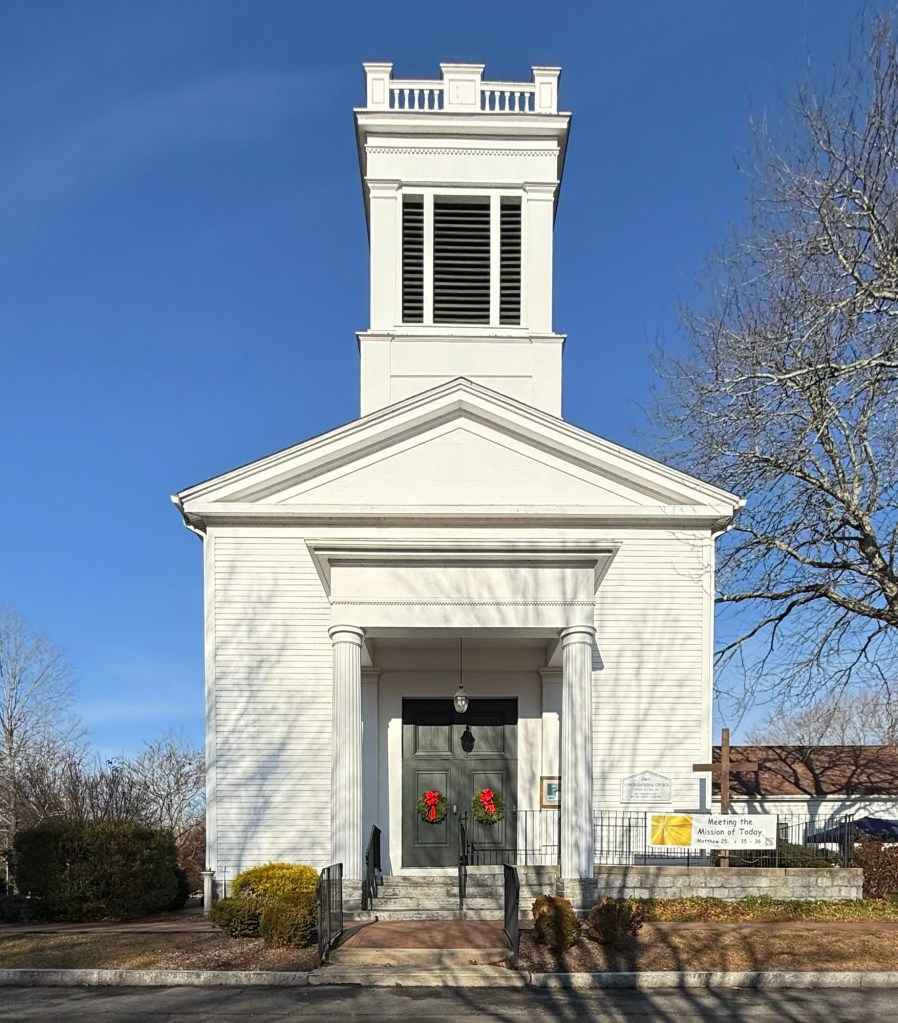
Congregational Church of Deep River // 1833

The town of Deep River, Connecticut, was originally a part of the Saybrook Colony, a large area at the mouth of the Connecticut River that was settled by English colonists. As what has become Old Saybrook grew, settlers moved further and further away from the original settlement and, eventually they received permission to form their own parishes so that they would not have to travel so far on Sundays to attend church services. As these outlying parishes grew, they separated from Saybrook and became the present day towns of Lyme, Old Lyme, Westbrook, Chester, Essex, and Deep River. Residents of present-day Deep River traveled to church services in Centerbrook, a village in Essex until this church was built in 1833. First services were held here the following December. The Greek Revival style church is ecovative of many similar 1830s village churches in New England, employing elements of the Greek Revival architecture style, with large doric columns, corner pilasters, and square belfry also with pilasters. The congregation here has been active for nearly 200 years.

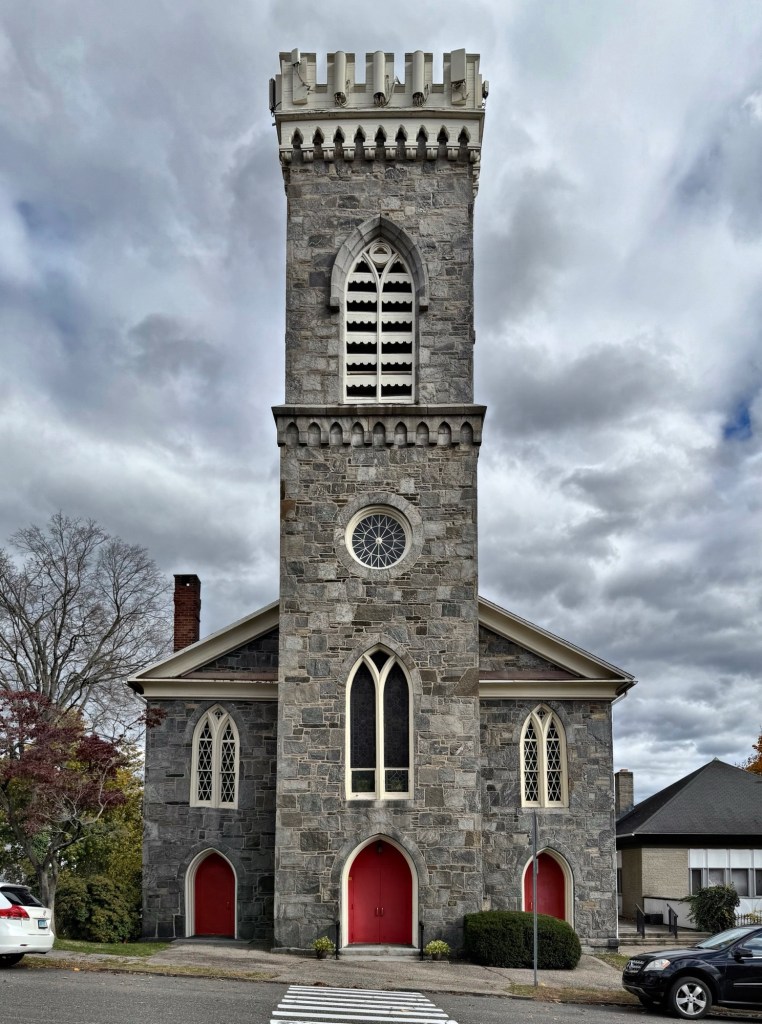
Immanuel St. James Episcopal Church // 1843

The Gothic Revival style Immanuel St. James Episcopal Church of Derby is a landmark example of the style in this part of Connecticut and serves as the eastern anchor to the Birmingham Green in town. The church dates to 1843 and was built by The stone church was was built by stonemason, Harvey Johnson and Nelson Hinman, a carpenter. The land for the church was donated by Sheldon Smith and Anson G. Phelps, wealthy industrialists in town. The building originally had a wooden steeple, which was replaced by the present stone belfry in 1853. The church merged with another area congregation, which together, have preserved this significant structure, though the communications antennae on the battlements on the belfry is unfortunate.

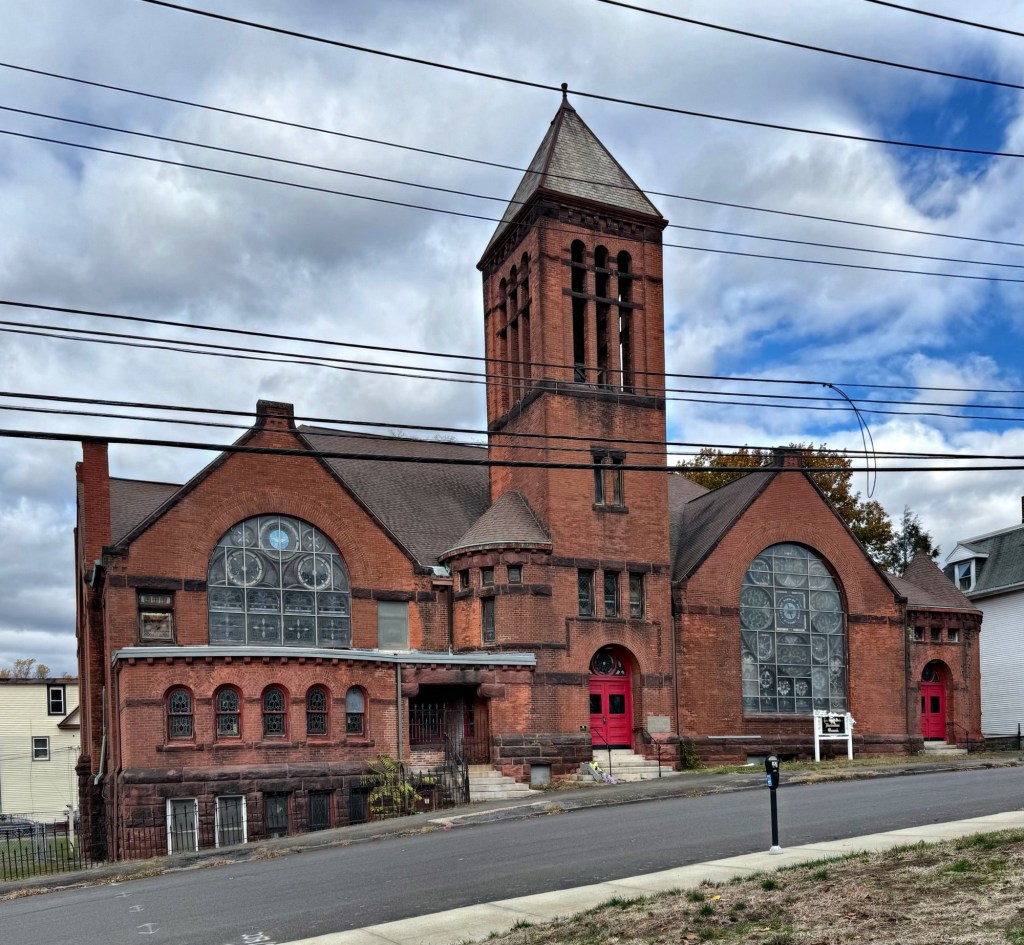
Derby United Methodist Church // 1894

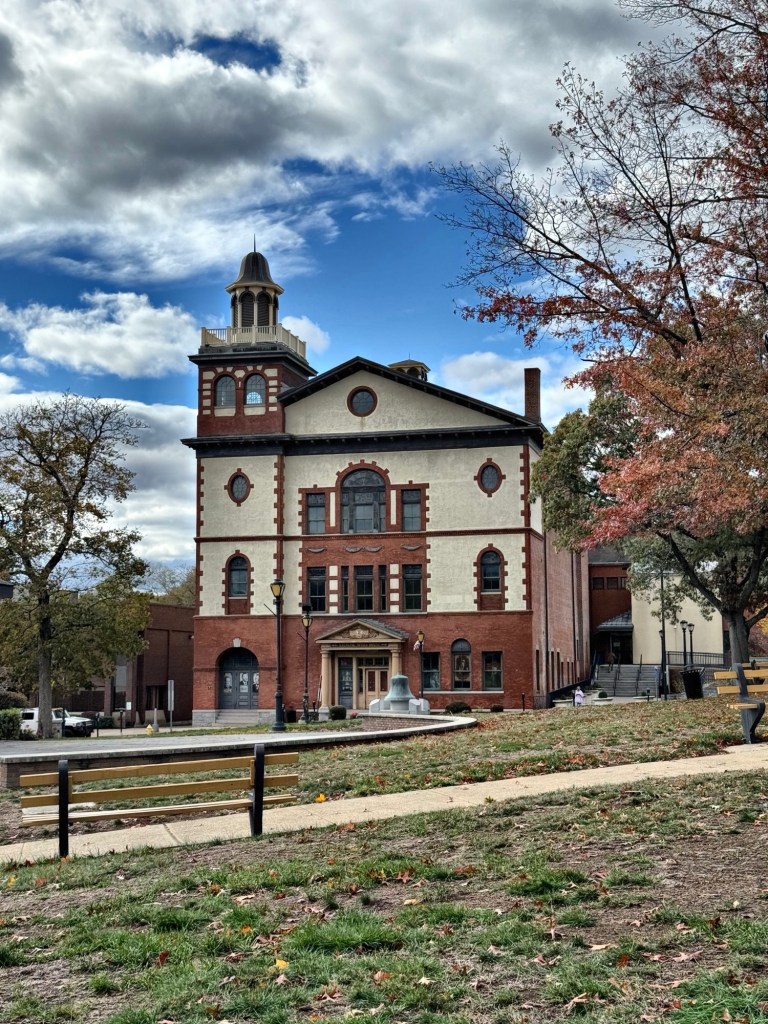
The former Derby United Methodist Church (now the Ghana United Methodist Church) is located at the northern edge of the Town Green in Derby, Connecticut, and is a great example of a ecclesiastical building constructed in the Romanesque Revival style. Its large round arches, tall square tower, and heavy detailing in brick and brownstone place it in the Romanesque Revival mode, all with stained glass throughout. The church was built in 1894 and dedicated in early 1895. The stately church building was designed by George Washington Kramer (1847-1938), an architect who designed many Methodist churches in the midwest and east coast.

Sterling Opera House // 1889

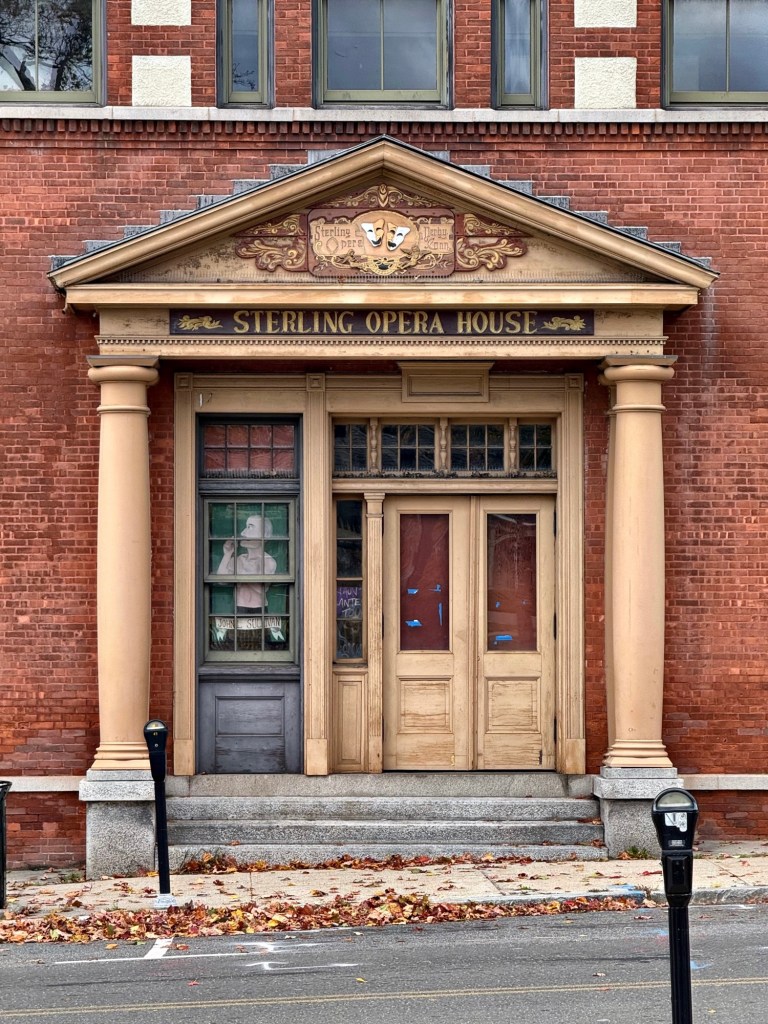
The Sterling Opera House in Derby, Connecticut, is a landmark performing arts venue and civic center in the state and significant as a rare and well-preserved building constructed in the Italian Renaissance Revival style. Built in 1889, the building is named for Charles A. Sterling, founder the former Derby-based Sterling Piano Company, who paid for much of the costs of construction and design for the building. For his namesake building, Charles Sterling hired architect H. Edwards Ficken, who also  assisted with the designs for the famous Carnegie Hall in Manhattan, New York, to furnish plans for the unique building. The Opera House was built to serve both political and entertainment needs for the community, with the lower two levels and the basement serving as City Hall offices and the police station from when it opened up until 1965. The auditorium was used for hundreds of shows and live musical performances in its day, with many world-famous performers such as Harry Houdini and Red Skelton taking the stage at the Sterling. Shows were held up until 1945 when the curtain closed for the last time. In the past decades the building has been largely vacant and kept alive by grants and a dream by the city to preserve this significant landmark, possibly for reincorporation as the City Hall. 

Levally-Crandall House // c.1820

This attractive Federal-style Cape house is located in Canterbury, Connecticut, and is one of the very finest such houses of its type in the state. The house was built by William Levally, a successful millowner in town who married Patience Horton just prior. William died unexpectedly in 1841, and the property was inherited by Patience, who then married Hezekiah Crandall, also a millowner, who was also the brother of Prudence Crandall, the teacher who operated the famous African American girls boarding school in Canterbury Center in the 1830s. Hezekiah and his sister later migrated to Kansas, after essentially being pushed out of town. The Levally-Crandall House stands out for its proportions, exterior moldings, and ornate entry with pilasters, sidelights, and a molded, keyed arched transom. The house has been lovingly preserved by the successive owners, who clearly take pride in owning such a piece of history.

David Nevins House // c.1746

This house across from the Town Green in Canterbury, Connecticut, is believed to have been built by David Nevins, Sr. (1729-1758), a merchant who settled in Canterbury from Nova Scotia, Canada. Nevins tragically died in 1758 when overseeing the reconstruction of a bridge spanning the nearby Quinebaug River. It is said that while standing on a cross-beam, giving directions to the workmen, David Nevins lost his balance and fell into the river and was swept away and drowned. The property remained in the Nevins Family until 1842, upon which, it served as a parsonage for the Congregational Church, just across the street. The clapboard exterior, small-pane sash, center-chimney plan, and five-bay facade of this house give it architectural significance as a representative example of 18th-century Connecticut architecture. The stately Georgian doorway with swan’s neck pediment was installed by a local house restorer based upon physical evidence uncovered during the house’s restoration (and removal of Victorian-era porch) and while may be conjectural, it enhances the already beautiful old home.

Gallup Farm Carriage House // 1906

This handsome Shingle style building was constructed in 1906 as a carriage house of a larger farm property in Scotland, Connecticut. The barn is said to have been built for Archie Gallup, who purchased the old Manning farm just west of the town green in Scotland. The 1 1/2-story carriage-house with a gambrel-roof stands out for its principal entry of paneled wooden doors and above, a large, flared hood featuring two pedimented gable-dormers. The entire building is clad with varied shingles to add complexity to the design, catching the attention of all who drive by.