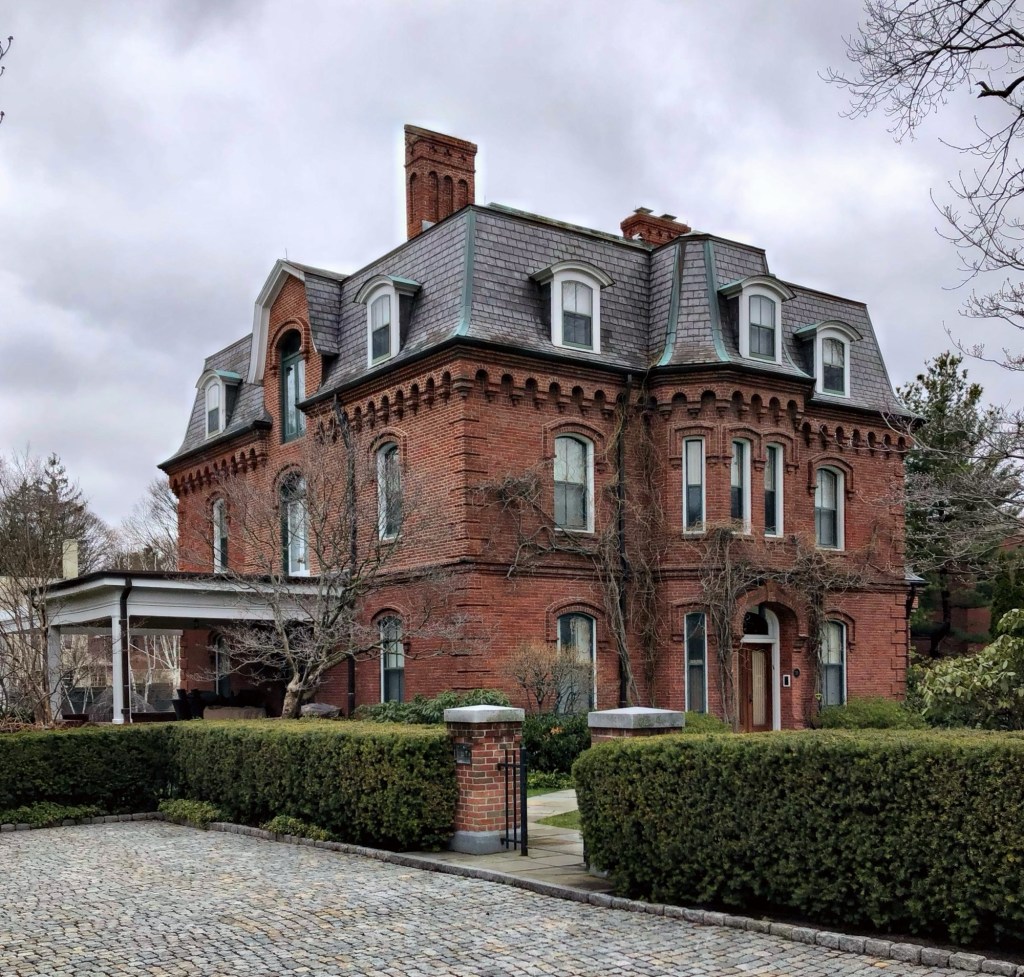
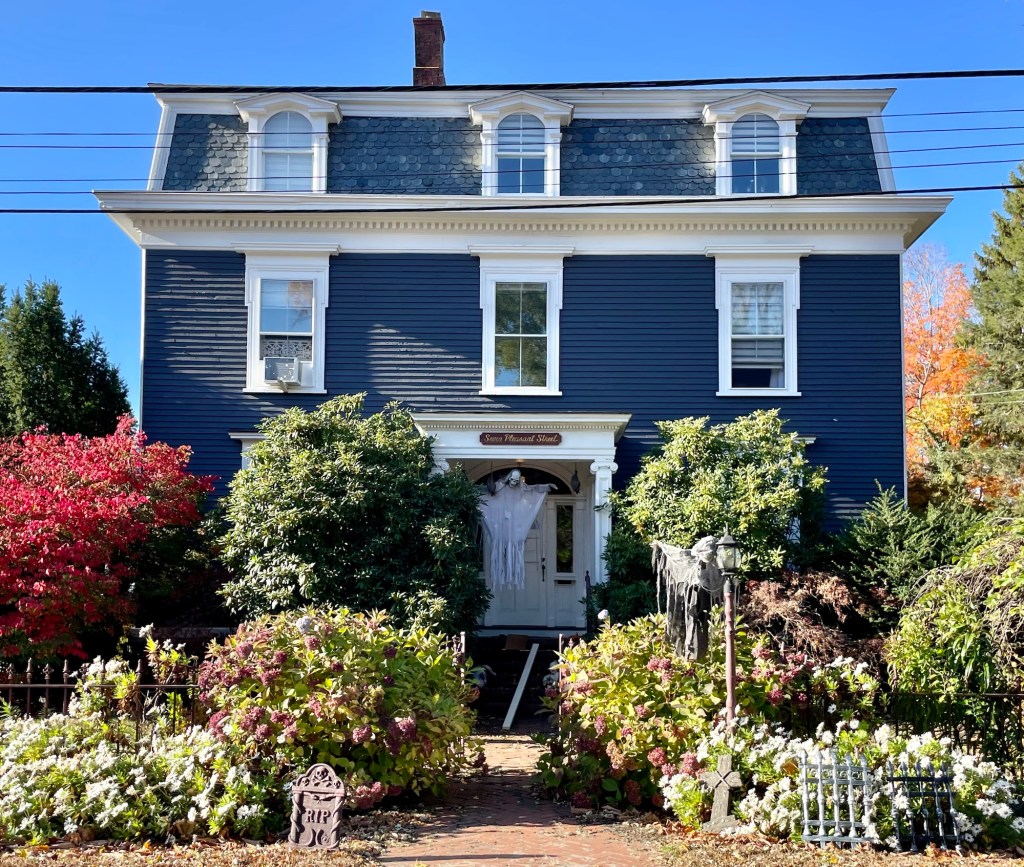
One of the finest Second Empire style houses in Brookline can be found on Prescott Street in the fashionable Cottage Farm neighborhood of the city. Built around 1868 by Amos A. Lawrence, who lived in a house nearby, this “cottage” was rented out to John Wells (1819-1875), a Judge on the Massachusetts State Supreme Court until his death. The property remained in the Lawrence family into the 20th century and was later rented to George E. Bullard, a banker. The brick house is notable for its siting at the center of the lot, corner quoins, brick corbelled cornice, arched door and windows, and slate mansard roof.
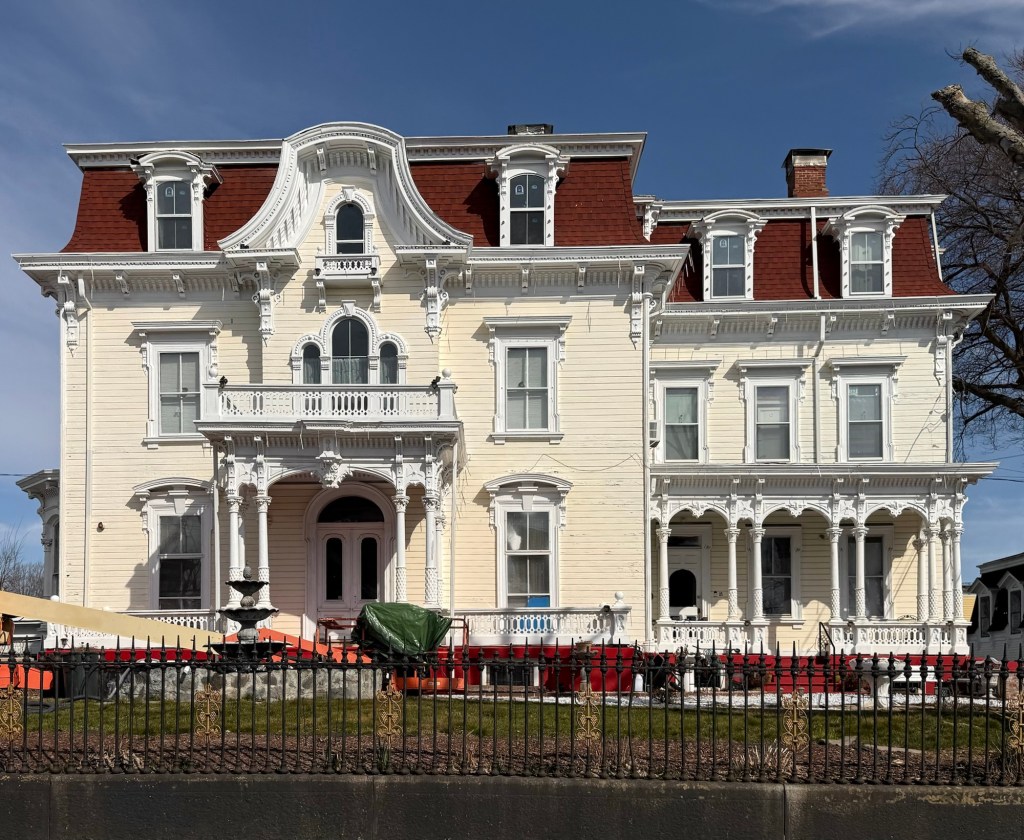
Built for Benjamin Franklin Greene, a second-generation mill owner of the Greene and Daniels Thread Company in Central Falls, Rhode Island, this large, Second Empire style house is one of the finest of its style in the entire state. The house is one of only a few high-style residences left from the mid-nineteenth century in Central Falls, when industrialization’s full expansion provided manufacturers such as Greene with fortunes to be expended on their houses. Designed by Providence architect Clifton A. Hall, the ornamentation of the Greene House is extraordinary for its elaboration, relieving the severity of the simple, block-like shape of the house. The central door is set under a flat-roofed porch which is supported by trios of Corinthian columns. Above the porch a trio of round-head windows is set under a “sunbonnet” gabled dormer which caps the central pavilion, is supported by brackets, and encloses a round-head window with a small balcony. What a spectacular home!
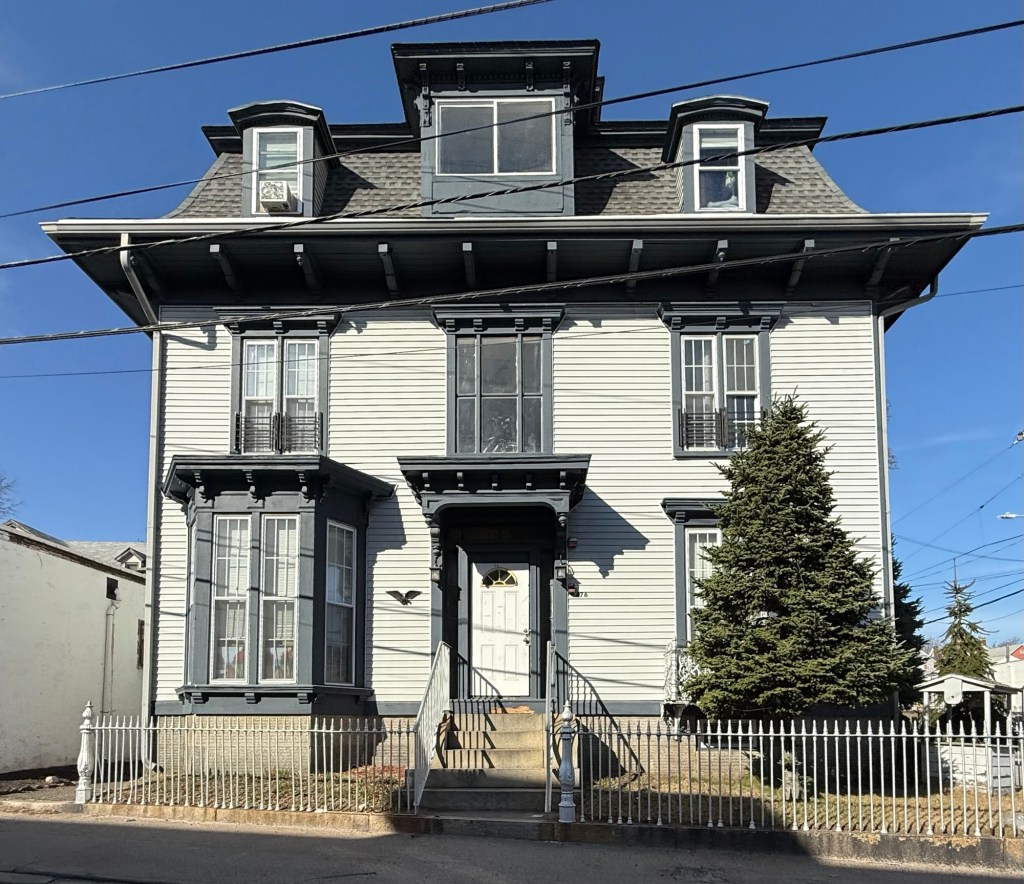
The David G. Fales House of Central Falls, Rhode Island, is an excellent example of the Second Empire architecture style in a high-end residence. The home was built around 1858 and belonged to David Gilmore Fales (1806-1875), one of the partners of the nearby Fales and Jenks machine works. Mr. Fales either built or purchased the home which was then a flat-roofed Italianate style home, and hired architect Clifton A. Hall, to modernize the residence, adding trim and the mansard roof. Its broad eaves are supported by brackets with pendants; segmental-head dormers are set in the mansard and a square belvedere with round-head windows tops the roof. A major fire gutted much of the house in the 1960s, and its future was uncertain. It was preserved and is now a multi-family apartment building.
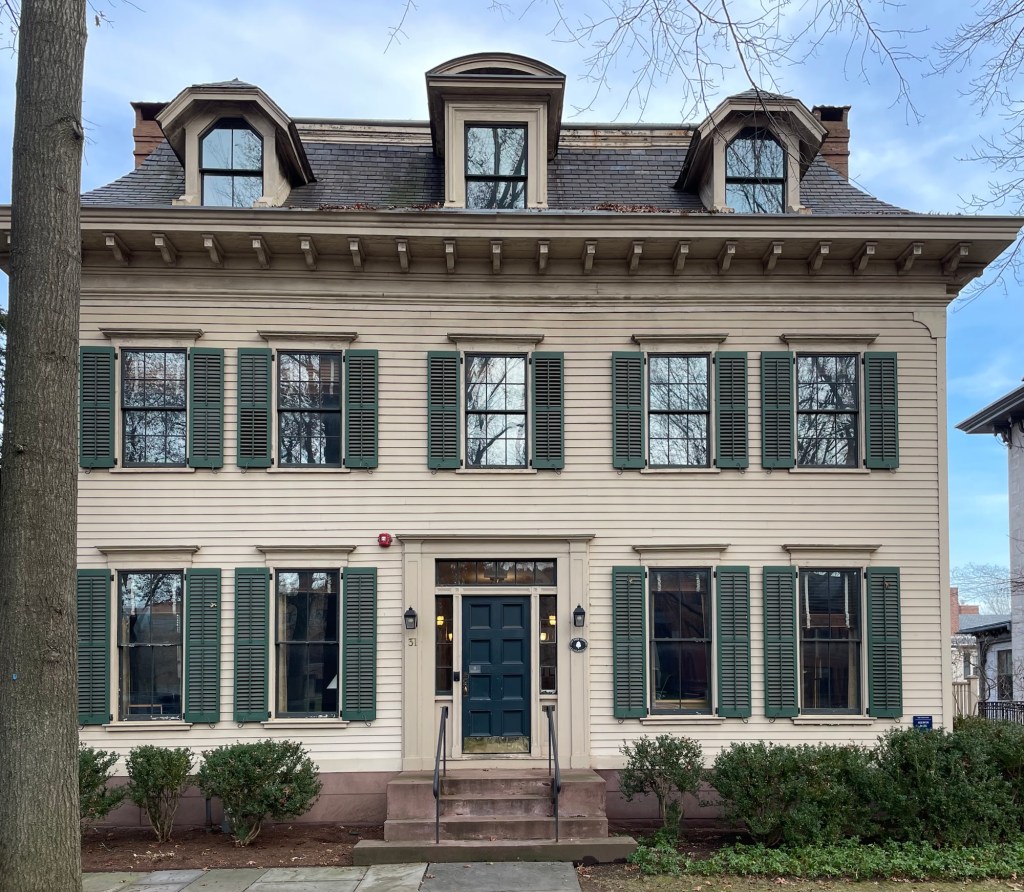
The oldest extant building on Hillhouse Avenue in New Haven is this Federal-period house with later Victorian-era modifications. The Abigail Whelpley House was built by 1826 (with some estimates as early as 1800 and moved to the site) and was a traditional, five-bay, two-story Federal style residence. It is said that the house was built by James Abraham Hillhouse (1789-1841) for his widowed family member, Ms. Whelpley, and her two sons. As of 1849, the property was owned by Noah Porter, later President of Yale, who would alter the house in the 1860s with the addition of a mansard roof and trim, all designed by architect, Henry Austin. The house, now known as Allwin Hall, is maintained by Yale University and contains offices for the program on Ethics, Politics & Economics.
Located next to the Assumption Roman Catholic Church of Chicopee, this handsome Second Empire style residence is significant not only architecturally, but as the residence of a Massachusetts Governor. This house was built around 1870 for a Frank D. Hale, who resided here until 1878, when the property was purchased by George Dexter Robinson (1834-1896), who moved to Chicopee and eventually got engaged in politics, in 1873 winning election to the Massachusetts House of Representatives, and was elected to the Massachusetts Senate in 1875. In 1876, Robinson was elected to the United States House of Representatives, where he served most of four terms, buying this home about half-way through his time as a Representative in Washington. While serving in Congress, Robinson was nominated to run for Governor of Massachusetts in 1883, he won and served three, one-year terms. After his time as Governor, he went back to his law practice, and in 1892, Robinson took on his most famous client, Lizzie Borden. During the infamous trial, Robinson was also able to cast significant doubt on the reliability of several witnesses to the events surrounding the murders. Lizzie Borden was ultimately acquitted of the criminal charges, and Robinson was a highly visible presence in the media circus that attended the trial. In the 20th century, this handsome property was acquired by the Assumption R.C. Church of Chicopee, who used the house as a rectory for its new church next door. It remains a well-preserved example of the Second Empire architectural style with slate mansard roof crowned by iron cresting.
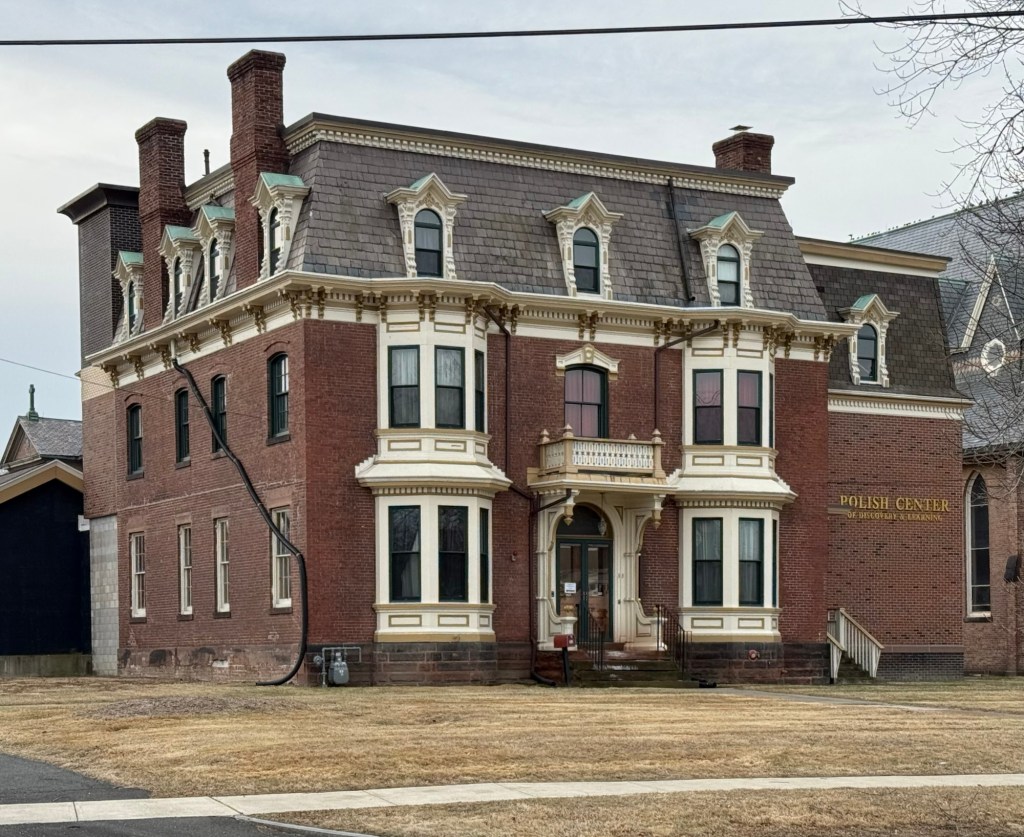
In 1857, the same year that the Diocese of Springfield built the Church of the Holy Name of Jesus in Chicopee, they also broke ground on an adjacent rectory, a residence for its priest. Like the church, the brick rectory was possibly designed by Irish-born architect, Patrick Keely. The Italianate style building originally was capped by a shallow hipped roof, but a renovation in 1871 added the mansard roof, two-story bays, and the portico at the entrance. The building served as the church rectory for over a century but eventually closed by 2011, and the future of the site was uncertain. Luckily, the Polish Center of Discovery and Learning have rented and occupied the rectory, serving as an important cultural institution educating and collecting to tell the story of Polish history in Chicopee and beyond. Fitting that many early-arriving Poles in the late 19th century to Chicopee attended this church before establishing their own.
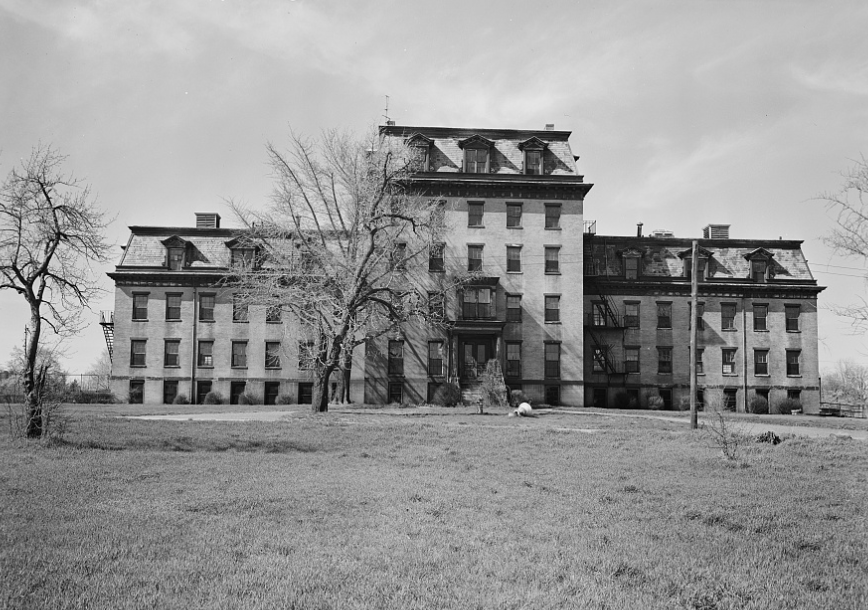
C.1958 photo before demolition. Courtesy of Library of Congress.
Built in 1828, Dexter Asylum was a “poor farm,” an institution housing the indigent, elderly, and chronically unemployed, located in the East Side of Providence, Rhode Island. Poor farms were common before the introduction of Social Security and welfare benefits in the United States, considered a progressive method for dealing with poverty. Ebenezer Knight Dexter (1773-1824) was a wealthy mercantile trader in Providence, who in 1800, built Rose Farm, a gentleman’s farmhouse on what was then, the outskirts of Providence. Upon his death in 1824, he bequeathed to the town 40-acres of the farmland to the north for use as a poor farm or almshouse site. The building was completed by 1828 and was originally three stories, and later expanded with a mansard roof and dormers sometime later in the 19th century. Dexter also stipulated that a stone wall would surround the site, and parts of it remain to this day. As with many poor farms and almshouses of the period, residents worked farmland and cared for pigs and a herd of dairy cows; they lived in this large building, strictly segregated by sex. Residents were essentially inmates, indentured for periods of six to twelve months, and could not leave the property without a ticket of permission. In the interwar period, “inmate” population there declined and changing views on how to assist the poor caused the City to abandon the facility. After decades of legal troubles and stipulations of the Dexter will, in 1956, the plot was auctioned off, and Brown University purchased the site. The grounds are now used by some of the Brown University athletic facilities. The city set aside the money from the sale to create the Dexter Donation, which gives annual grants to assist the city’s poor, providing an enduring legacy of Dexter’s Asylum.
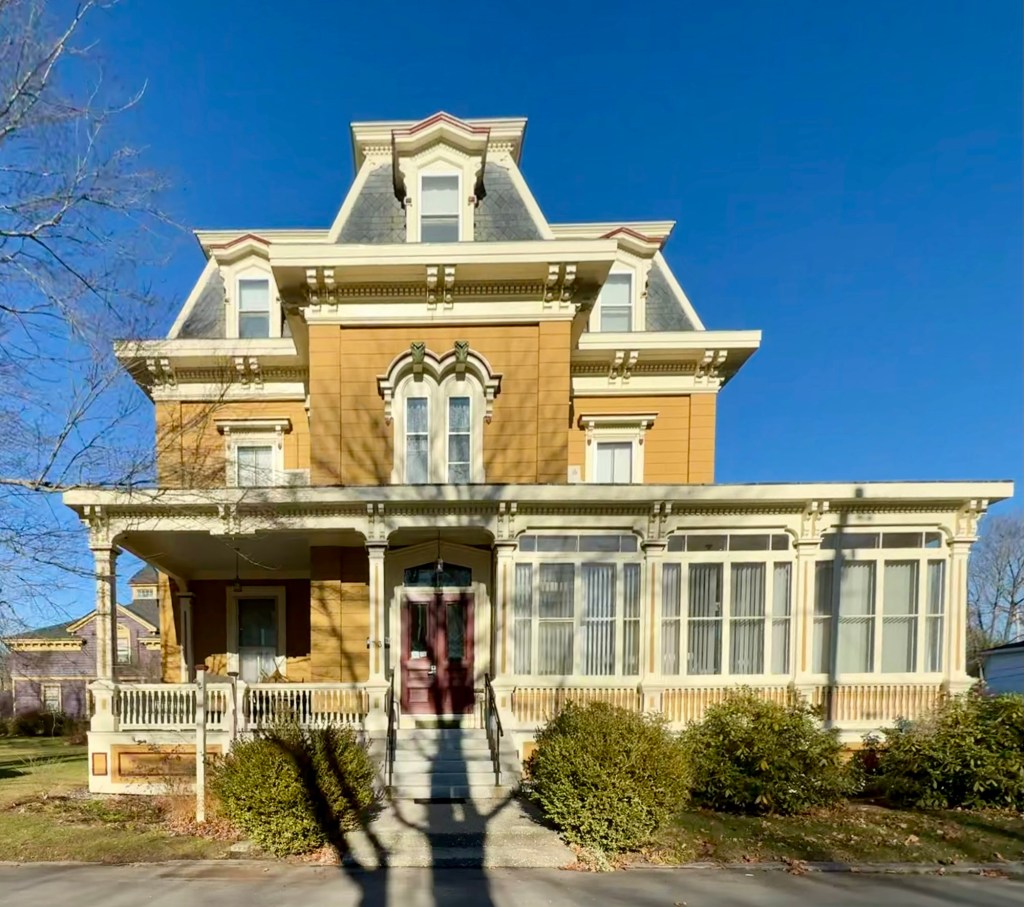
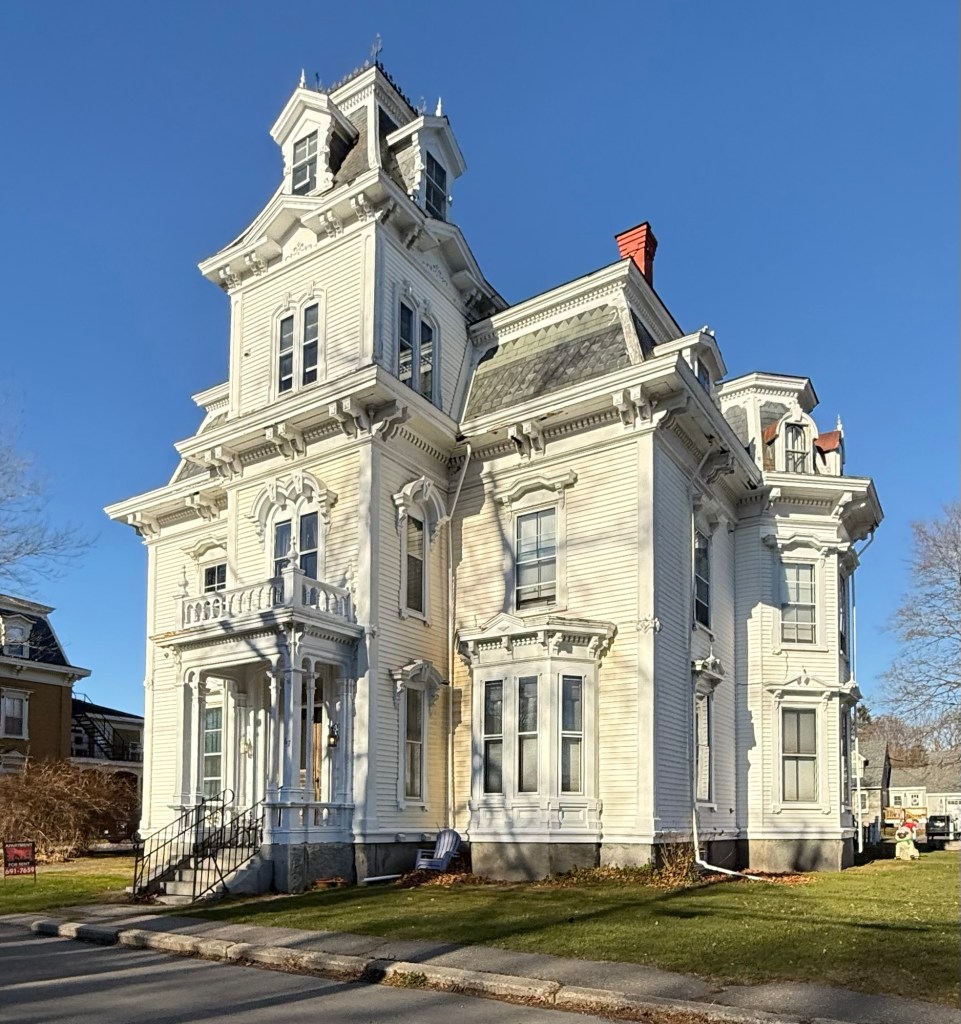
William Hurd Glover (1834-1910) was a prominent lumber dealer and builder in Rockland, Maine, and would built this house as his residence on Talbot Avenue. Mr. Glover hired architect Charles F. Douglas, to furnish the plans for the Second Empire style mansion. While covered in vinyl siding, the handsome residence features a slate mansard roof, central tower, delicate projecting portico over the entrance, and decorative window hoods and brackets. The house is one of the best examples of the style in Maine, even with the later siding.
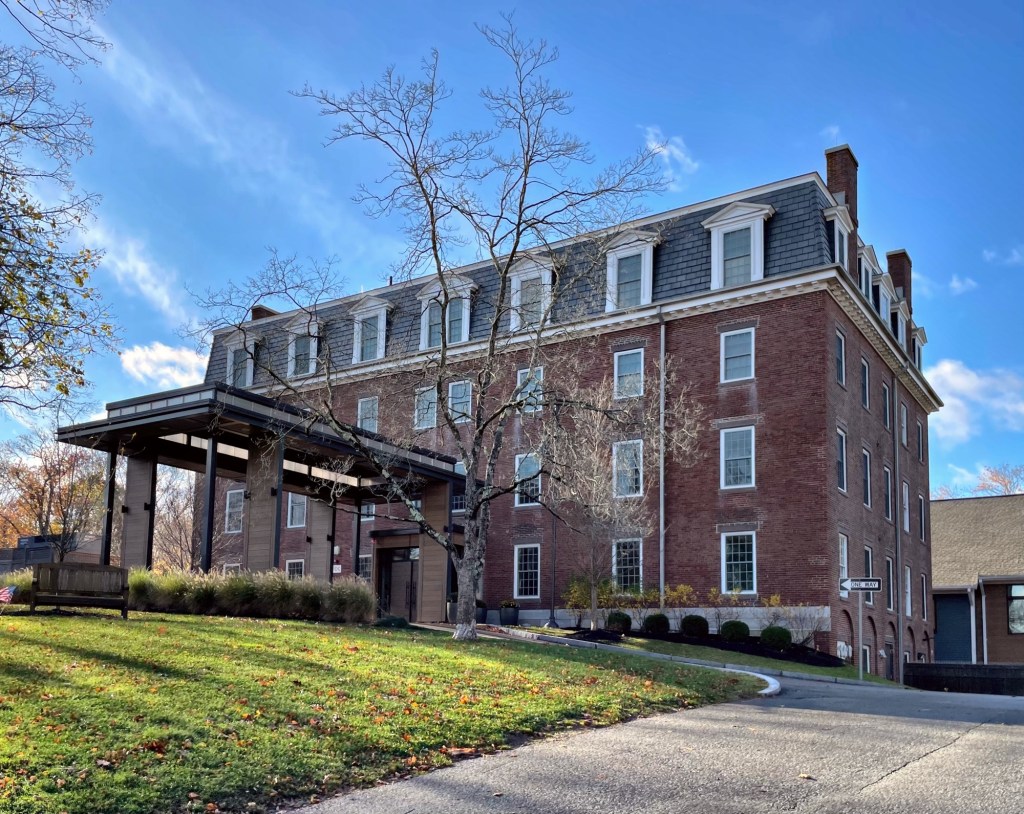
The Newton Theological Institution, a school originally founded for the Baptist ministry, opened on Institution Hill in Newton Center in 1825. The 40-acre campus started with six buildings, including this one, Farwell Hall, built in 1829. Farwell Hall is the oldest extant building on the campus today and is named after benefactor and early founder of the school, Levi Farwell. The brick building began as a late-Federal-designed building with a classic Federal Style window fenestration and Adamesque brick arches on the first story side elevations, but the formerly Federal style building was modernized in 1871 with the addition of a fourth floor via a mansard roof, and a more recent, unfortunate altered entry with projecting roof. After the Andover Newton Theological School sold their campus, the building has since been home to an assisted care facility.
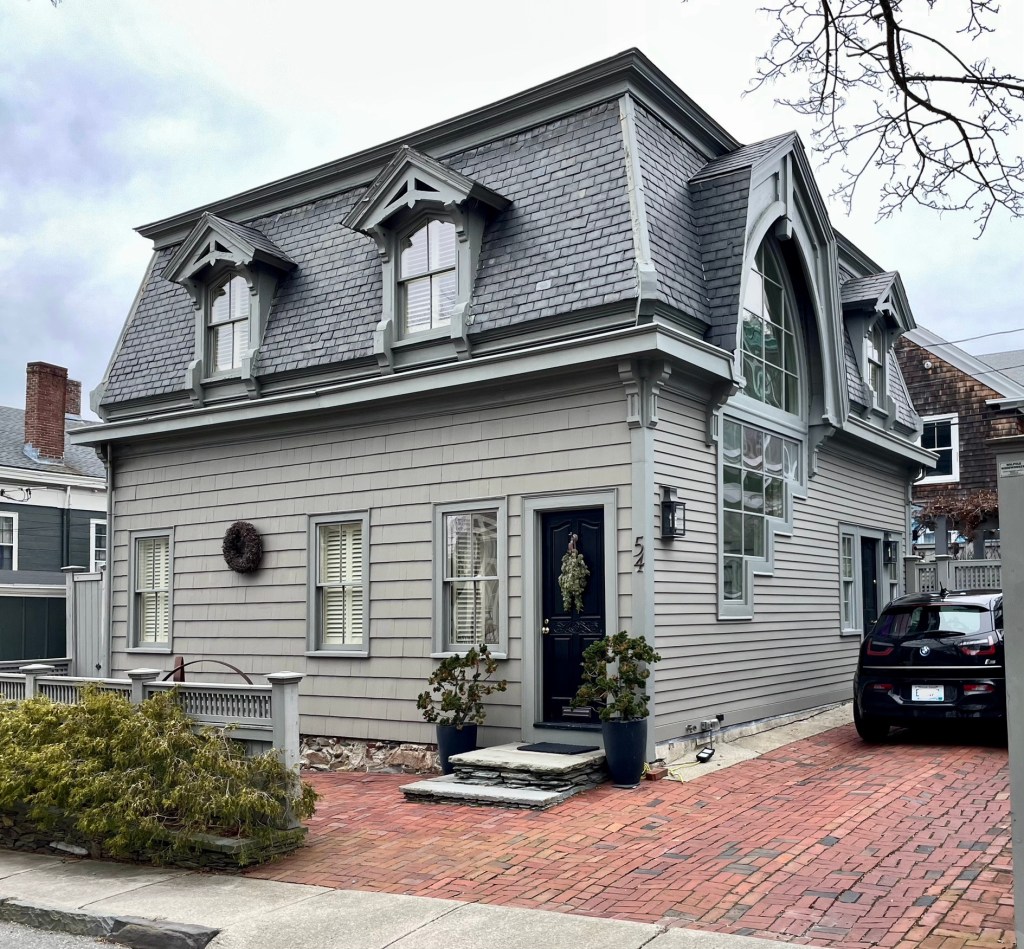
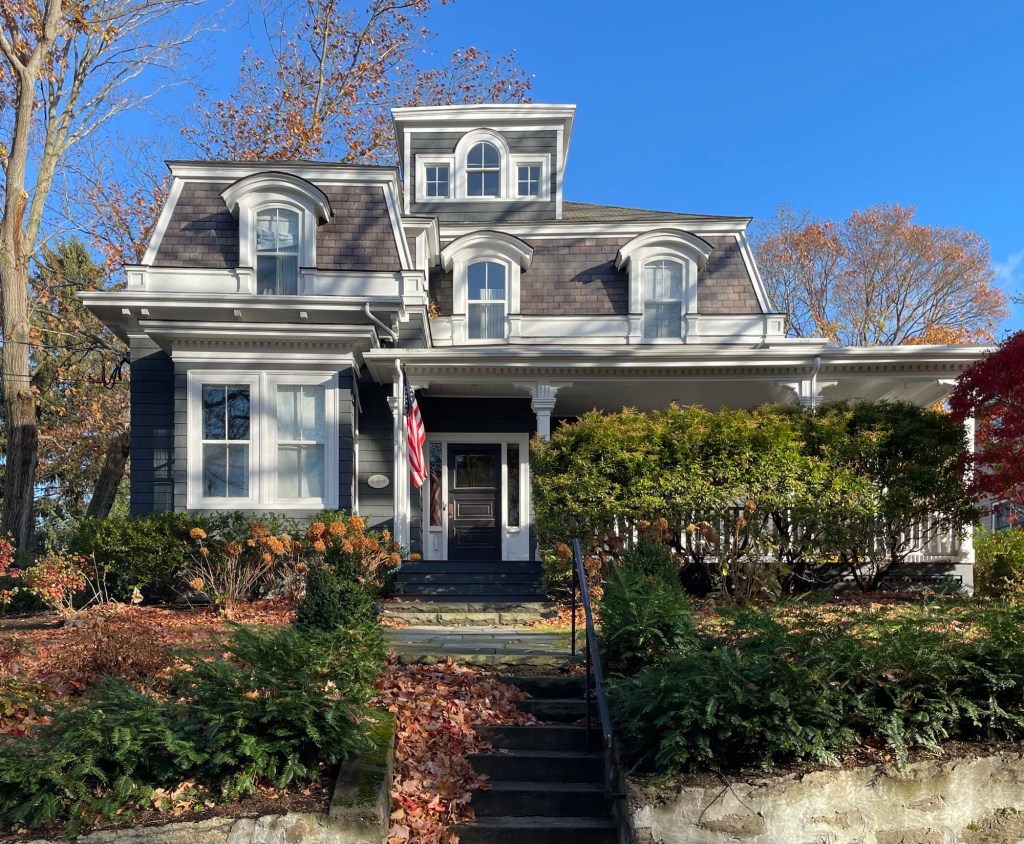
Samuel D. Garey (1825-1891) was born in Auburn, Maine, and worked as a carriage manufacturer there before moving to Newton, Massachusetts to use his carpentry skills building houses in the rapidly developing Boston suburb. He became a prominent builder and developer in Newton Centre, residing there and building this mini-mansard house on Gibbs Street before 1870. Garey likely rented the house out to tenants for supplemental income, with the family maintaining the charming cottage into the 20th century.
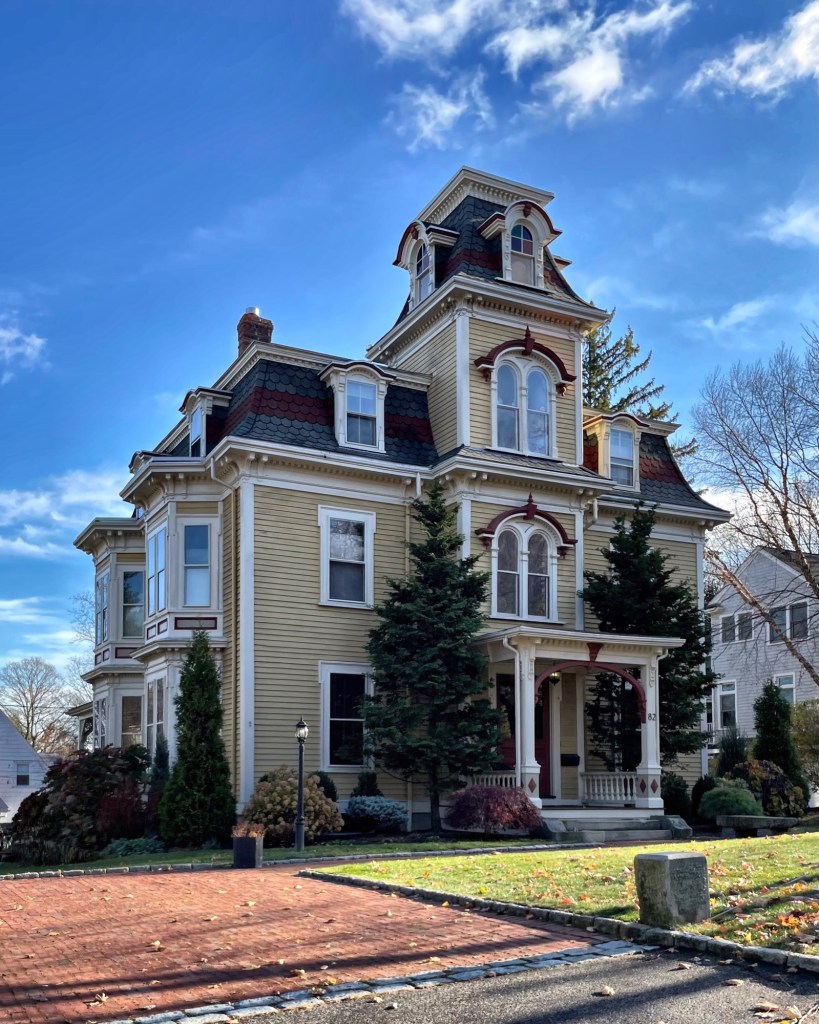
One of the finest Second Empire style residences in Newton, Massachusetts, can be found on Herrick Road in Newton Centre. This is the John H. Sanborn house, built before 1870 for John H. Sanborn, a Boston broker and commission merchant who also served as a Representative to the Massachusetts General Court. The imposing residence is a two-story house based on a rectangular plan, and capped with a bellcast Mansard roof of gray, fish-scale patterned slates. The focal point of the design is the four-story, towered entrance pavilion which dominates the facade.
This house in Georgetown Center, Massachusetts dates to the 1860s and appears to have been built for Milton G. Tenney, a shoe manufacturer. By the early 20th century, the home was owned by the third member of the Root family to practice medicine in Georgetown. The first, Dr. Martin Root, established a practice in 1827, serving the community for more than 50 years. His son, Dr. Richmond B. Root, owner of 24 North Street (featured previously), was in turn the father of Dr. Raymond Root (1882-1958), owner of this fancy Second Empire style dwelling. In addition to his private practice, Dr. Raymond Root was a school physician for many years, and served as Town Clerk from 1937 to 1944. The house is Second Empire in style with a mansard roof, window mouldings and two-over-two windows, but features a Colonial Revival portico with what may possibly be a Federal-period entry of fanlight with sidelights, salvaged from his father’s home when that house was renovated.
Who doesn’t love a good flatiron building?! This charming three-story with Mansard roof building is located in the Bulfinch Triangle district of Boston. The triangular-shaped building was built around 1860 as an apothecary shop for Dr. Thomas Leighton Jenks (1829-1899), a doctor who was born in Conway, New Hampshire, but left for Boston while still a teenager. When the Mexican-American War broke out in 1846 he enlisted in the Navy, where he served for three years in the hospital ward of the frigate U.S.S. United States. Upon returning from the war, Jenks attended Harvard Medical School, and wrote his thesis on Syphilis. Dr. Jenks apprenticed in a building on this site under Dr. Samuel Trull. He likely redeveloped or modernized the 1850s building, adding the mansard roof by the 1860s. During the Civil War, Dr. Jenks served as a front line surgeon. After returning home, he grew tired of the medical profession, and got involved with local politics. He was elected as an alderman, Massachusetts state representative, and in later years he earned appointments as Chairman of the Boston Board of Police, and Chairman of the Board of Commissioners of Public Institutions. He tragically collapsed and died in 1899 at a Boston courthouse. As a tribute to his birthplace, Dr. Jenks made a provision in his will for the funds necessary to build a public library in Conway, New Hampshire, which is still in use today. Somehow, the old Dr. Jenks Apothecary Shop has survived all this time as the city grows and changes all around it. The building saw life later as a restaurant and offices.