Lane-Smith-Bailey House // 1848

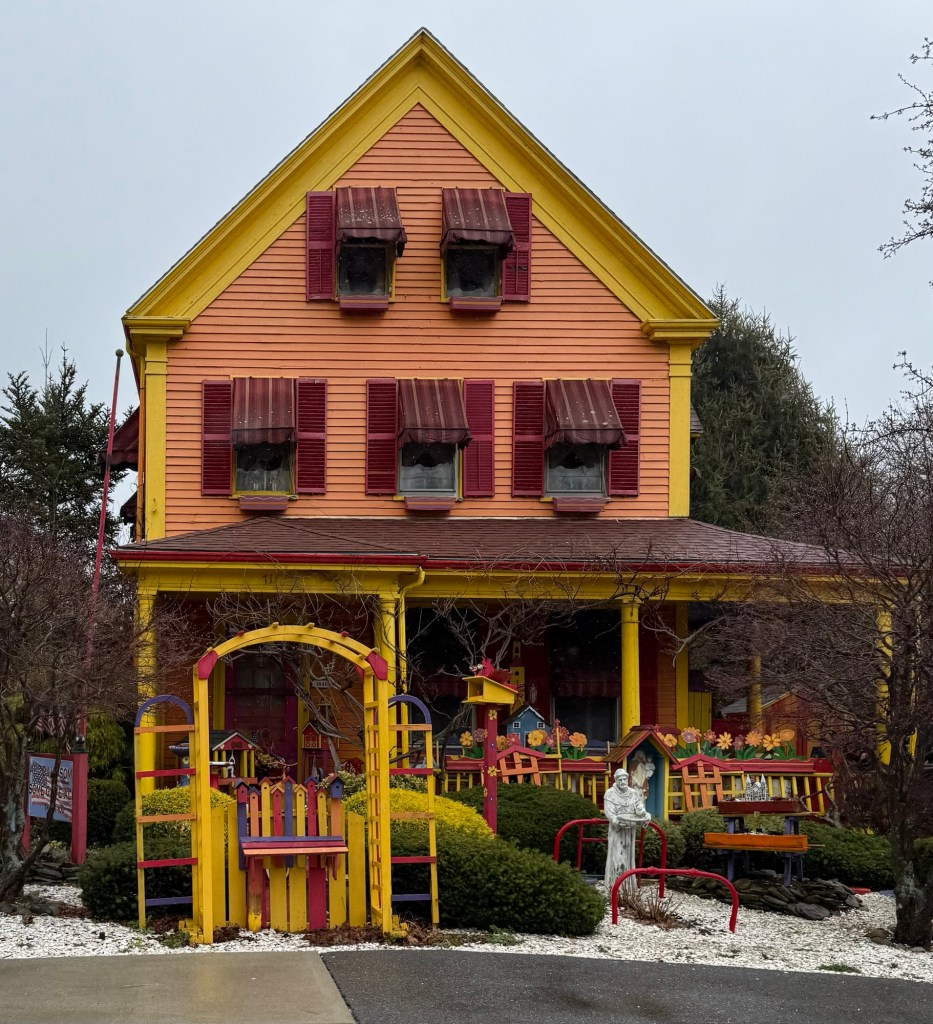
The most colorful house in Rockland, Massachusetts can be found on Union Street, the town’s busiest corridor, lined with houses and buildings of all ages and styles. The Lane-Bailey House was built in 1848 for Marshall Lane, a shoe manufacturer in town. The Greek Revival style residence features a gable roof oriented towards the street, which reads as a pediment and a full-length columned porch that wraps around the side of the home. The property was purchased in the early 20th century by William Andrew Grant Smith (1863-1908), a wealthy jeweler, who apparently added a second floor to the house, up from a 1-1/2 story cottage, and likely added the wrap-around porch at this time. Jumping ahead to the turn of the 21st century, the prominent house was owned by Brad and Sam Bailey, who painted the residence bold colors, added a wishing well and birdhouses to the front yard, and replaced the traditional grass lawn with crushed seashells. In an article talking about the house, Brad Bailey stated, “We do it because lots of things in life [that] are dull. Our house shouldn’t have to be.” Despite the polarizing thoughts and opinions from those who walk or drive by, the house is loved and certainly causes people to stop and smile!
Peerless-Capitol Theater // 1894

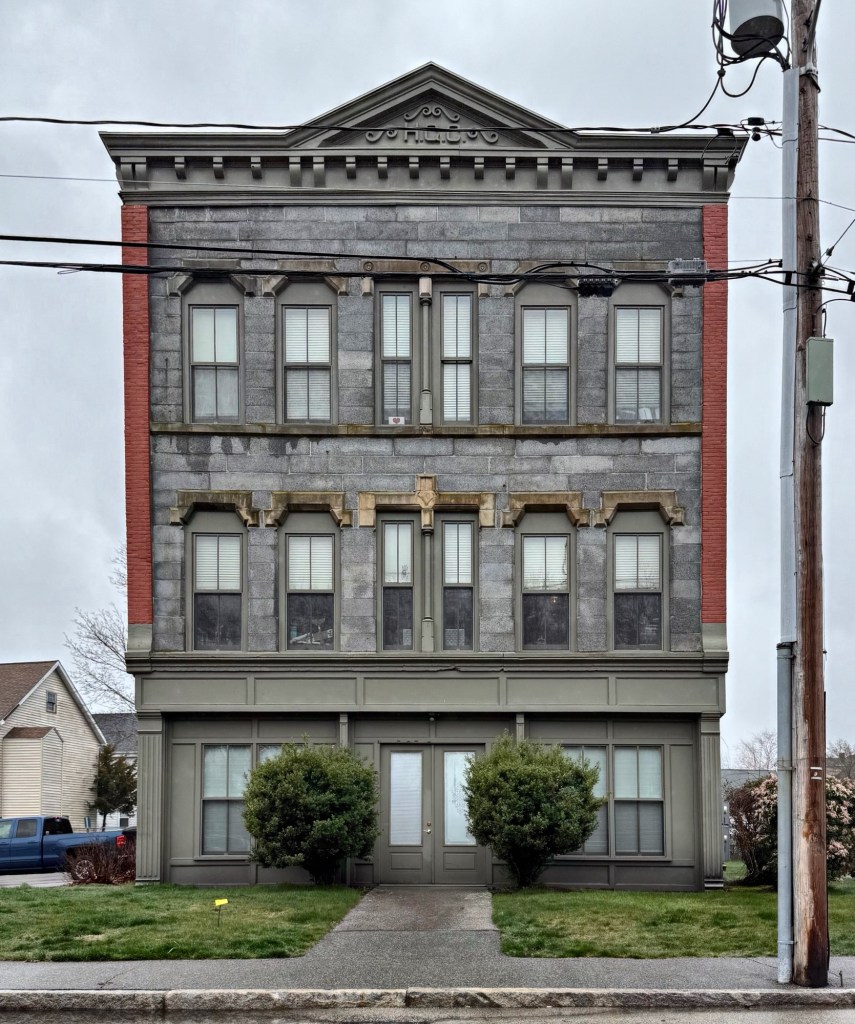
Located across from the North Abington Depot, this structure was constructed in 1894 as a leather harness and saddle shop by local businessman, Henry Crossley. The expensive building of cut granite and brick seemed to have overextended Mr. Crossley’s means, as he would soon-after file for bankruptcy. The building would remain as commercial use until 1915, when the property was purchased by the Peerless Amusement Company for use as a 300-seat theater. By the 1930s, the building became known as the Capitol Theater, and was listed to seat 230 customers on the main floor and 70 in the balcony. Due to the more rural nature of the cinema, it closed in the mid-20th century, and suffered from neglect for decades until it was restored and is currently housing apartments. 

Dr. Gridley Thaxter House // 1798

The Dr. Gridley Thaxter House on Washington Street in Abington, Massachusetts, is one of the most significant properties in the South Shore town, not only for its architecture, but also its owners. The house was built in 1798 for Dr. Gridley Thaxter (1756-1845), a ship’s surgeon in the Navy during the American Revolution. He married Sarah Lincoln (1761-1810), the daughter of Benjamin Lincoln of Hingham, a Major General in the Revolution and served from 1781 to 1783 as the first United States Secretary of War. Dr. Thaxter and his new bride acquired land in Abington, and moved there where he would serve as the town’s doctor. After his death, the property was inherited by Elizabeth Thaxter Hunt, the couple’s daughter, and her husband, Joseph Hunt. It was Elizabeth, who added the Italianate window hoods and a cupola (since removed) at the roof, “modernizing” the family homestead.

Orcutt-Ford Homestead // c.1751

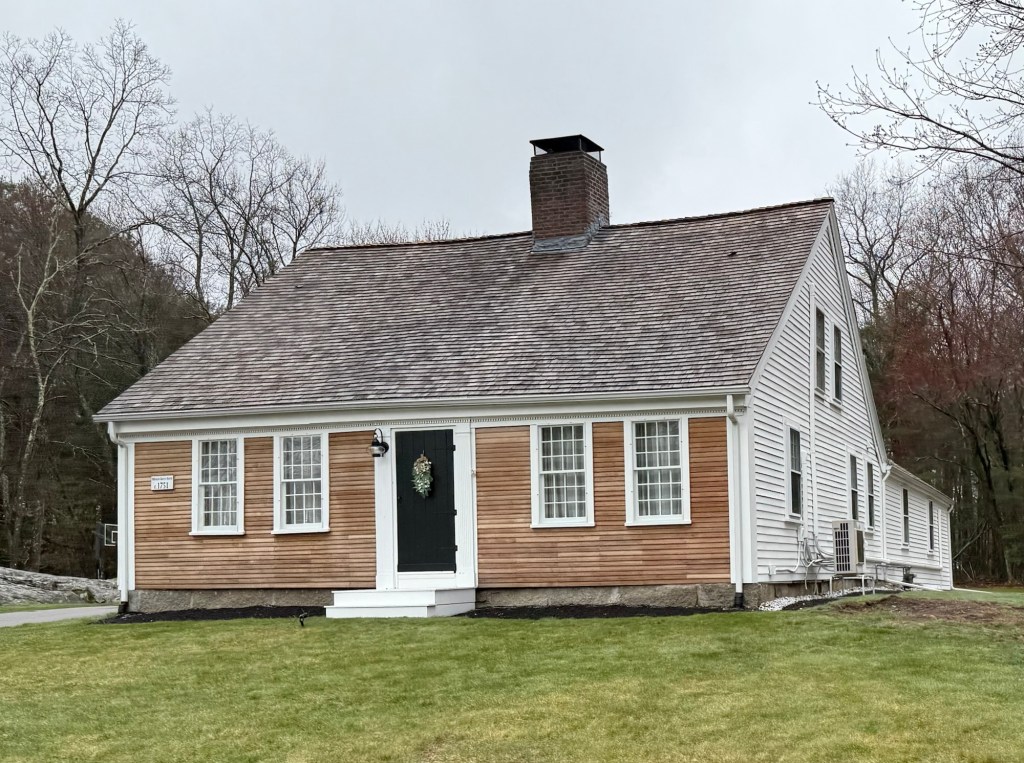
In about 1751, Emerson Orcutt (1713-1777) purchased land in North Abington, Massachusetts, and built a half cape for his family. In 1762, Orcutt sold some of the land to John Ford, who was later a Lieutenant in the Continental Army, and according to local tradition, Ford added the other half of this current Georgian Cape house, giving it the current configuration. Character defining architectural details include an entry surround with fluted pilasters, and dentil cornice band on the main facade, 12-over-12 sash windows, and the central chimney, which would have heated both sides of the house. The property remained in the Ford family for over 100 years, and has since been converted back to a single family residence. Today, the charming pre-Revolutionary cottage is one of the oldest extant houses in Abington.

George and Annie Andrews House // 1899

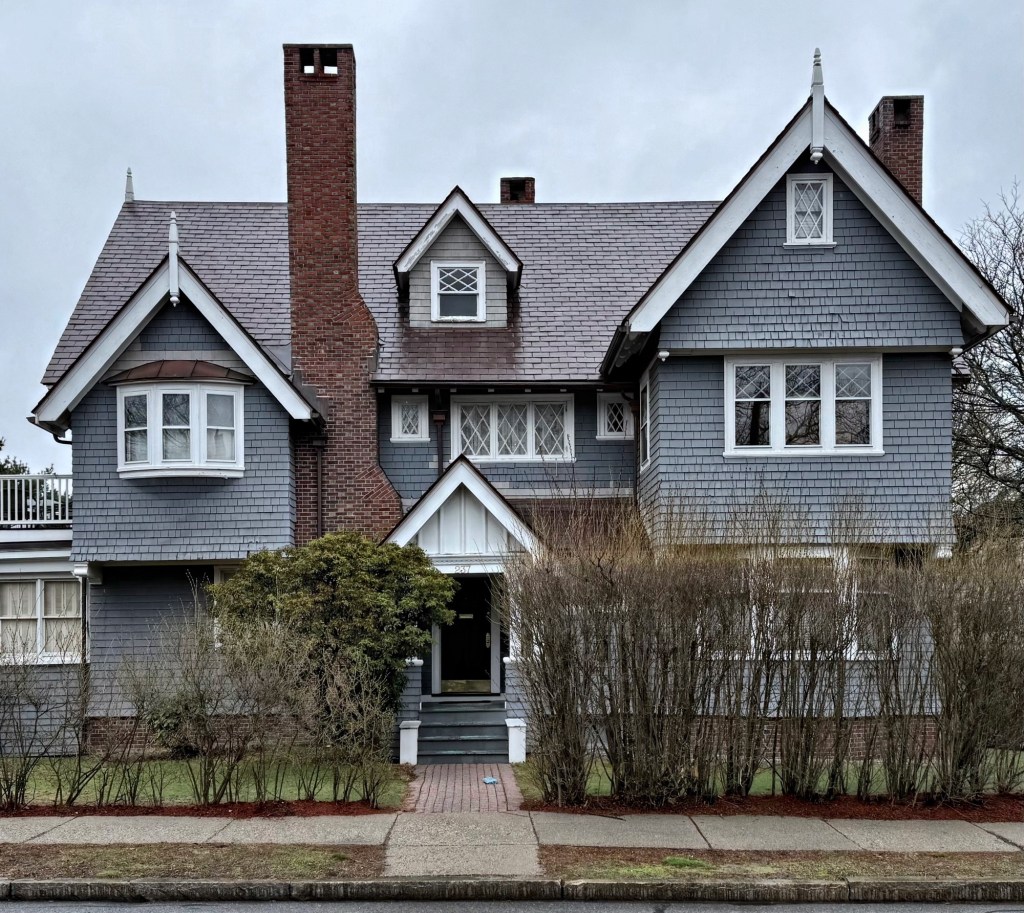
By the end of the 19th century, Brookline’s connection to Boston via the streetcars opened the town up to suburban development unlike anything seen before. From this, Boston businessmen could move to the suburbs for more land and live in larger single-family homes while commuting to the city for work. This large house in the Cottage Farm neighborhood was built in 1899 on speculation and purchased by George and Annie Andrews, who two years later, built a stable on the adjacent lot. Architect Robert Coit, specialized in large suburban houses, primarily in the Boston-area suburbs, and showcased his design talents for this Tudor Revival home. Tudor Revival style ornament include the second story over-hangs supported on brackets, the diamond pane sash and casement windows, vergeboard with finials, and portico with steep gable.

Brown-Battis House // 1851

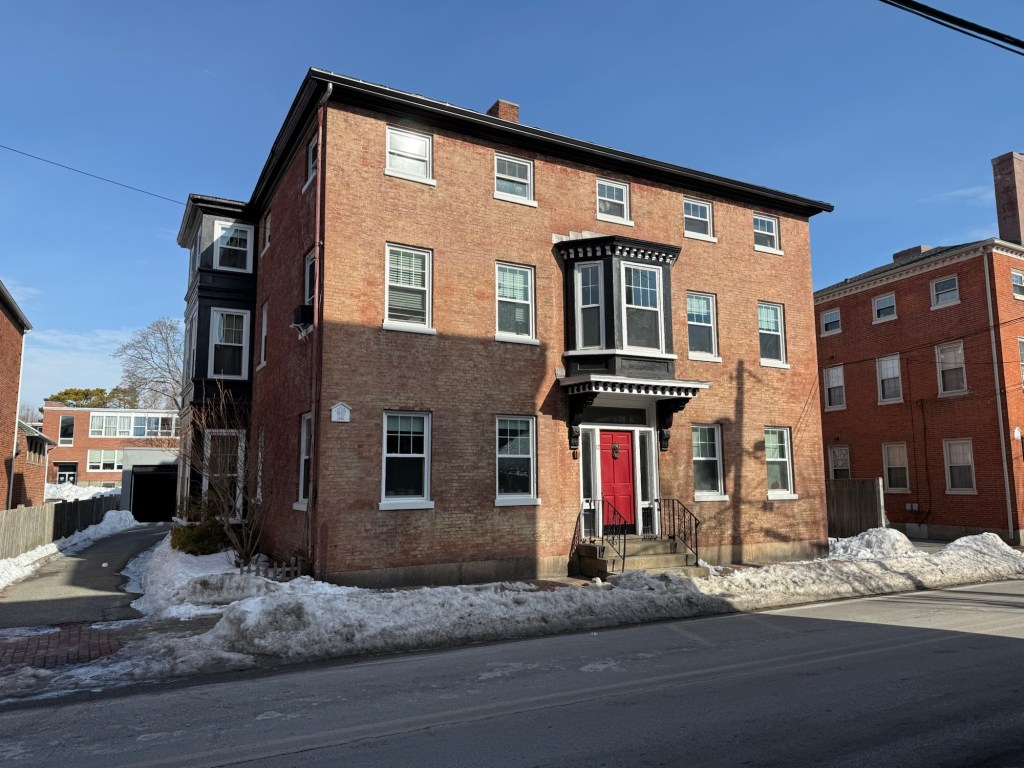
Captain Nathaniel Brown (1800-1866), a master mariner in Salem, built this fine brick house on Brown Street in 1851. Captain Brown bought the lot from the heirs of Nathaniel Kinsman in 1850, with an older house already occupying the site. The existing house was razed and construction began on this house, with it completed by 1851. The building is unique as it resembles the Federal period form of the five-bay and three-story residence with shortened third-floor windows under a low hipped roof. Although the Federal period waned in popularity by the 1830s, this house clearly took cues from the earlier homes nearby. Following Nathaniel Brown’s death in 1866, James Herrick Battis, a tobacconist and cigar manufacturer, purchased the home. City records state that Battis was issued a building permit in 1878 for an addition to the dwelling. It is probable that the bay windows and front door hood were also added at this time, giving the residence more of an Italianate style. Battis continued to own the property until his death in 1891. By 1930, the residence was converted into apartments and was known as the Conant Apartments. It remains a six-unit apartment building today.


Kenneally House // 1913

While Salem, Massachusetts, is best-known for its Colonial and 19th century architecture, there are some great 20th century buildings that deserve attention. This is the Kenneally House at 3 Williams Street, just north of the Salem Common, a c.1913 Colonial Revival home with great curb appeal. The house was built for Maurice D. Kenneally, a teamster, who lived here with his wife, Mary, and son, Patrick. Symmetrically arranged, the house has a center entry , with sidelights and an elliptical fanlight. The front facade is dominated by a full-width first story porch on paired Doric columns and a gable roof with Palladian window.

George Clark Cottage // 1847

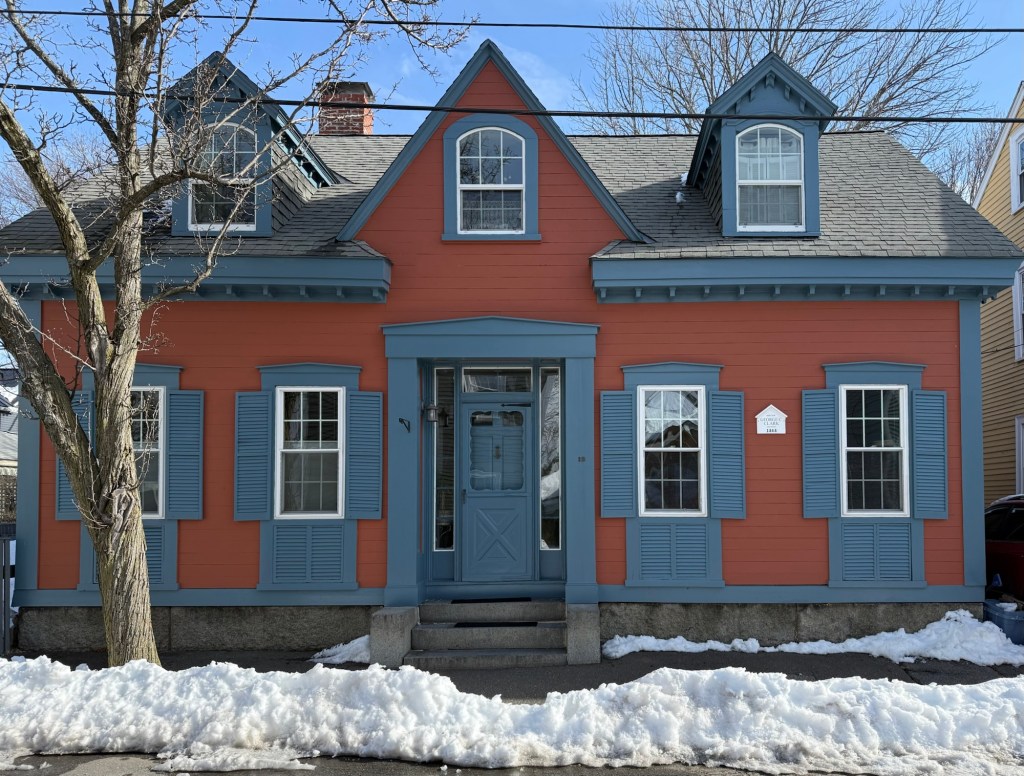
In 1847, George Clark (1815-1890), a Salem carpenter, purchased a house lot on Oliver Street, a block away from the Salem Common. That year he began constructing this cottage for his family. The Clark Family resided here for just a year until 1849, when George got caught up in the California Gold Rush, selling the property and moving west to make his fortune. Since Mr. Clark was back in Salem by 1850 (according to the federal census), he was likely one of the thousands of forty-niners who did not strike it rich. The Greek Revival style house is unique for its more Gothic style gable, brackets, and segmental arched windows.

Temple Court Apartments // 1912

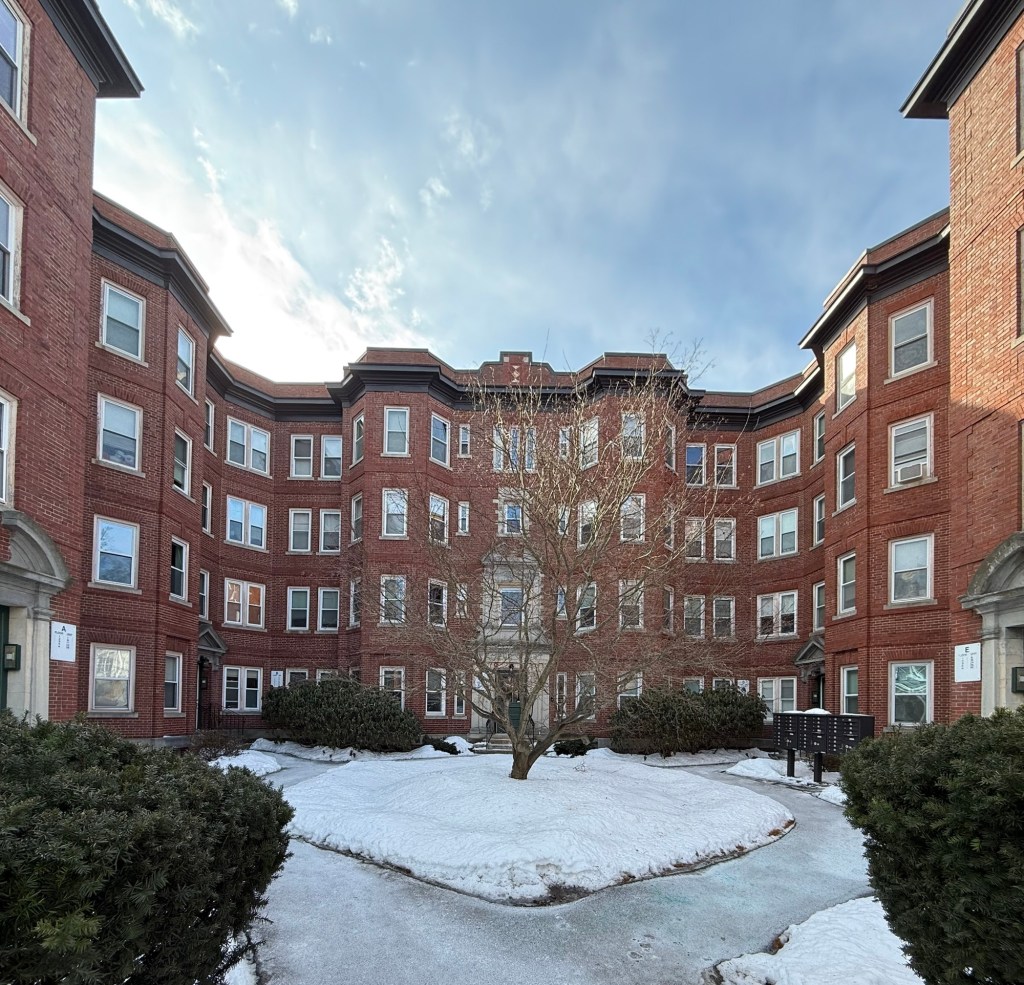
Constructed in 1912, Temple Court at 15 Lynde Street was erected on the site of two earlier buildings during a period of great population growth in Salem. The parcels here were acquired by Aroline C. Gove (1857-1939), a prominent local property-owner and developer between 1908 and 1911. Ms. Gove was a prominent Salem citizen and daughter of notable inventor and businesswoman Lydia Pinkham. With a business-oriented mindset like her mother, Aroline hired architect Harry Prescott Graves of Lowell to furnish plans for an apartment building on this site. Completed in 1912, the apartment building, known as Temple Court, included 36 units with two-, three-, and four-room suites with a live-in janitor. The building is unique for Salem as a courtyard style building, more common in Boston and Brookline. The building’s large mass is broken up by its setback with the U-shaped form and central landscaped courtyard, series of projecting octagonal bays, and multiple entrances. Temple Court was converted to condominiums in the 1980s.

Elias Gates House // 1843

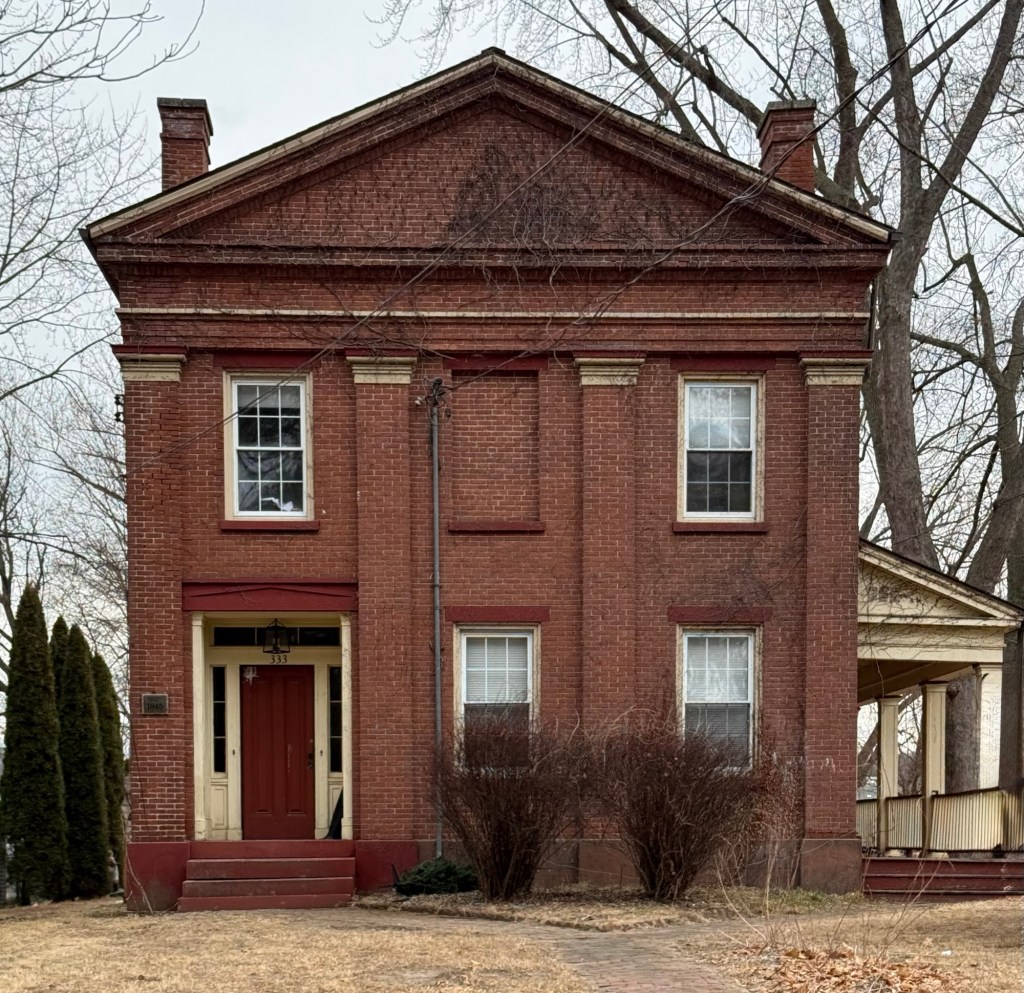
In 1843, Elias Gates (1801-1886) a young farmer, purchased land from the family of his wife, Mary A. Stedman, and had this handsome brick, Greek Revival style house built. The family would reside here less than ten years, and relocate to Albany, where Elias worked as a bookseller. The house was purchased numerous times throughout the 19th and 20th centuries, and operated as a farmhouse until much of the land was sold and subdivided for new housing. The Gates House is a great example of the Greek Revival style with a side hall plan, recessed entry with original sidelights and transom, and bold facade with brick pilasters dividing the bays with brick entablature and gable end facing the street.