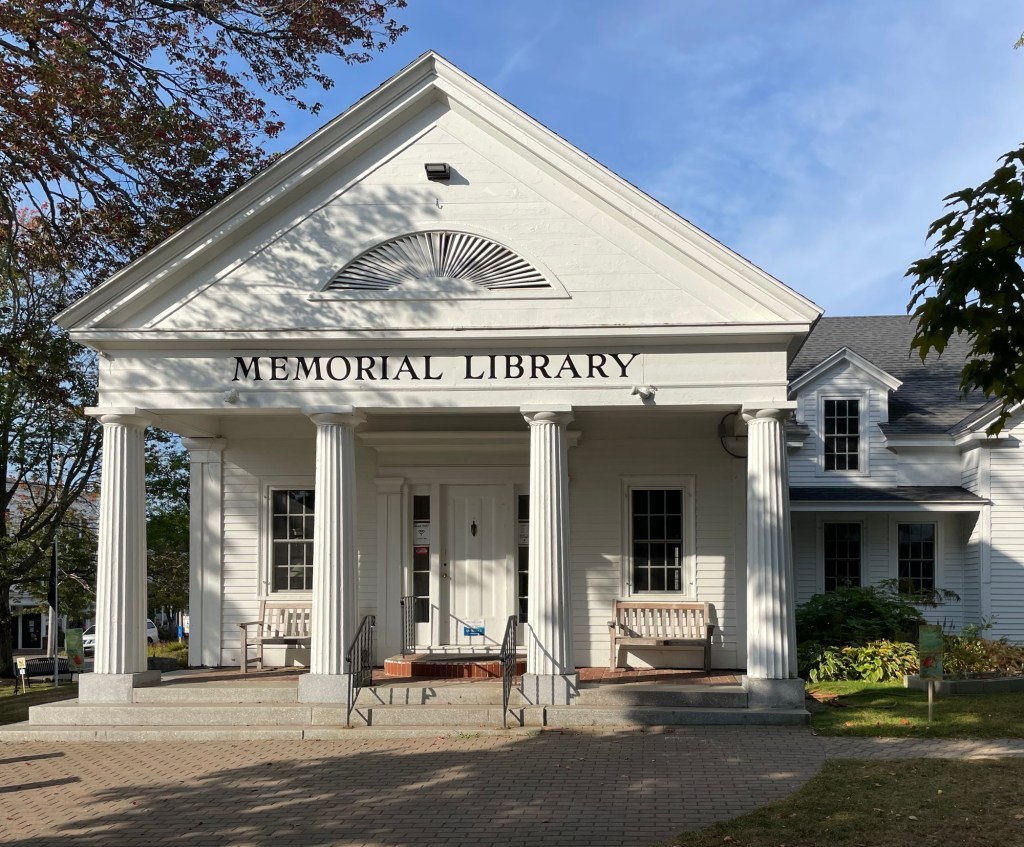
In 1906, the citizens of Boothbay Harbor voted to establish a free public library for all to enjoy. In 1923, the need for more library space, along with a desire for a World War I Memorial, led to the approval of a bond for the purchase of a 1842 Greek Revival style house on Oak Street. The building was remodelled for use as a library by the Boston architect William Stanley Parker, and was enlarged in 1966 to a design by Parker’s son, Stanley Jr. The temple-front, Neo-Classical entry was added at this time and harkens back to the original classical style Greek Revival home, while clearly showing a grander scale seen in the 20th century.
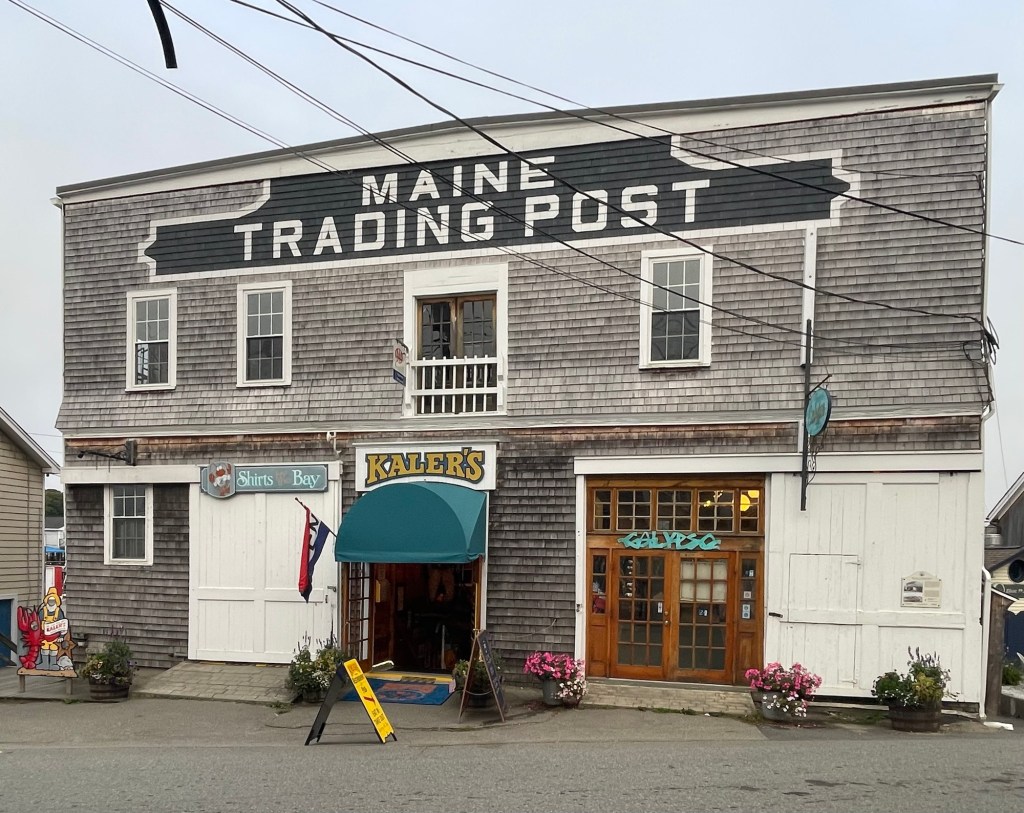
This vernacular, shingled structure was built in 1908 to house two very different modes of transportation, horses and automobiles. The structure here is located in the charming village of Boothbay Harbor, Maine. Sherman’s Livery and Garage held stalls for horses on the ground floor with an elevator that moved hay, carriages and sleighs to the upper floor. Owners of horses could board them here and many would rent their horses to visitors who arrived to town by steamer, from this location. The building was set up for automobiles as well, but that began in earnest by 1915 when two Ford touring cars were added to the inventory here. Today, the building is known as the Maine Trading Post and houses Kaler’s Restaurant.
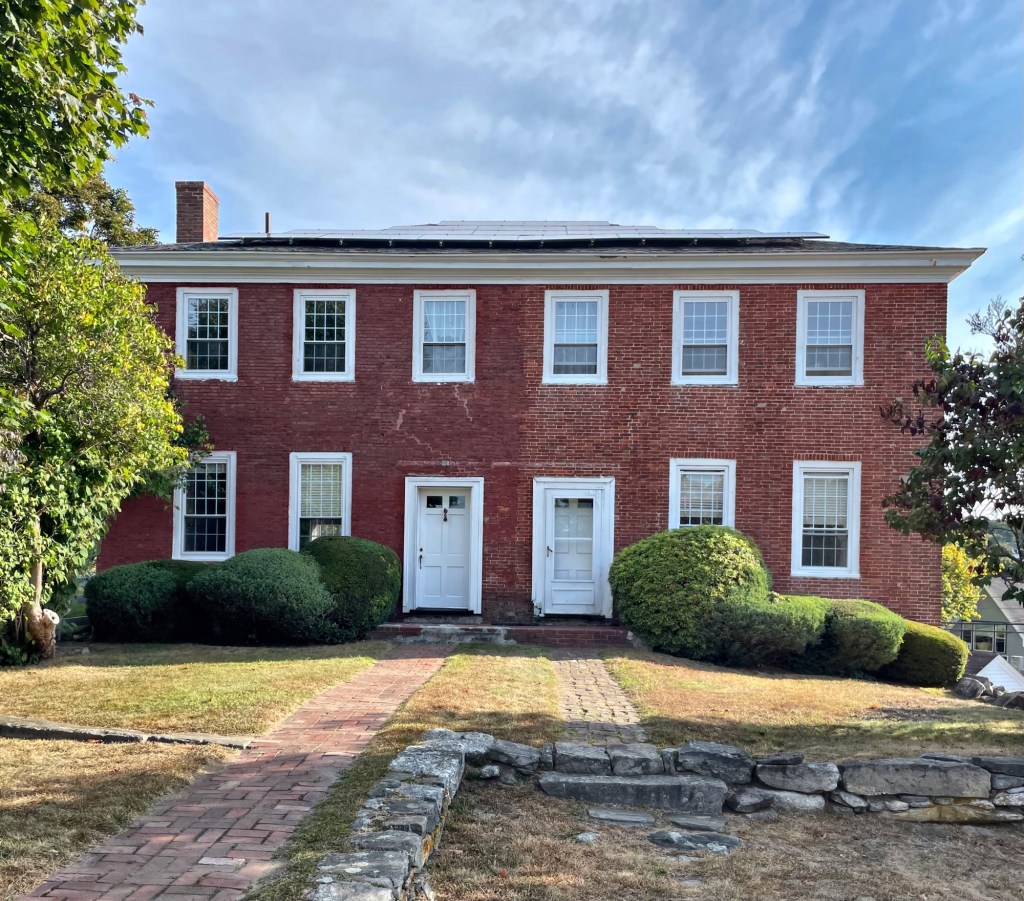
The Auld-McCobb House is set on a rocky ledge overlooking the absolutely charming downtown Boothbay Harbor, Maine. The brick, Federal-period double-house was built in 1807 for Jacob Auld and Joseph McCobb, two prominent local merchants. The two were engaged in a business partnership that included fishing, shipbuilding, and general mercantile pursuits, and were a dominant force in the local economy in the first quarter of the 19th century. The duo owned a good bit of land in town, eventually selling the five-acre Burnt Island to the Federal Government for a new lighthouse. McCobb married Auld’s sister in 1807, and it is thought that this is what necessitated the house’s construction at the time. The house is interesting, not only as a rare example of a double-house of the period, but also as one of the first (and only) brick homes in Boothbay Harbor.
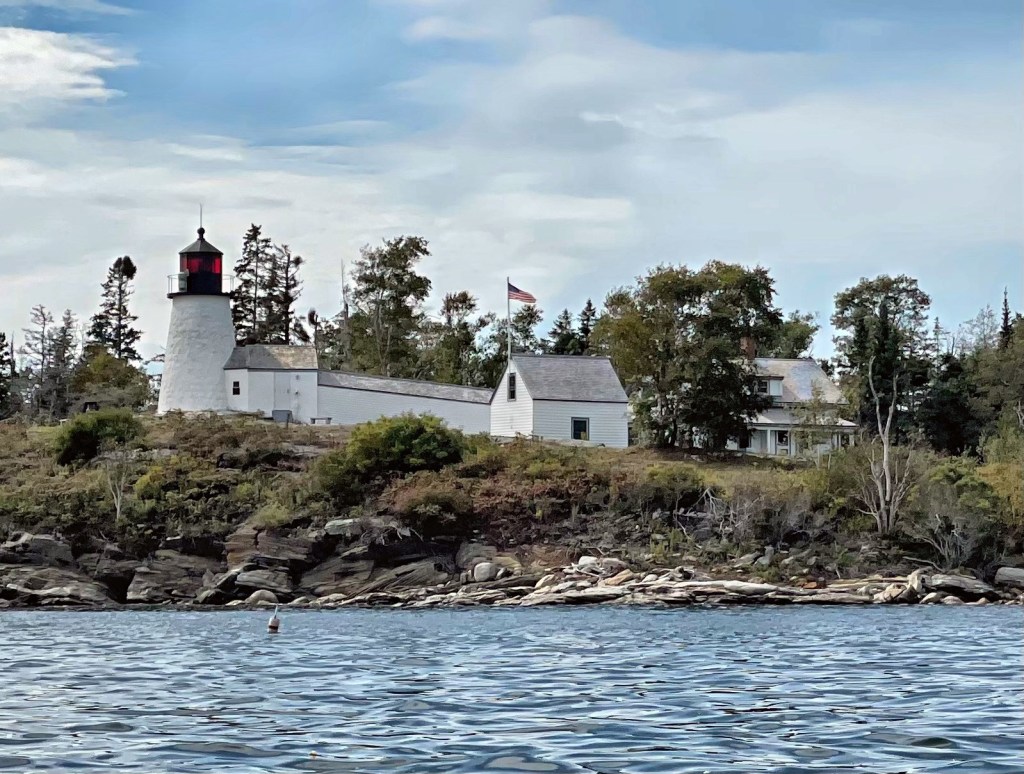
The Burnt Island Light Station was built in 1821 on the west side of the entrance to Boothbay Harbor, opposite the Spruce Point Inn (which I kayaked from to get a better view of this lighthouse). The federal government purchased the island for $150 from local businessmen Jacob Auld and Joseph McCobb. The government’s builders constructed a stone lighthouse and keeper’s dwelling using granite blocks cut from the island. The lighthouse was built on Burnt Island, which took its name from the historic practice of burning the island’s vegetation in order to keep the land clear for sheep grazing. Its purpose was the guidance of ships, the carriers of cargo destined for the development of industry and commerce, into Boothbay Harbor over a mile away. Built just one year before Maine became a state, the Burnt Island Light Station has served mariners for over 200 years. In fact, it’s considered the state’s oldest unaltered lighthouse, and it was manned until 1988 when the light was automated. In 1998, the island and light station were transferred to the State of Maine Department of Marine Resources as part of the Maine Lighthouse Program.
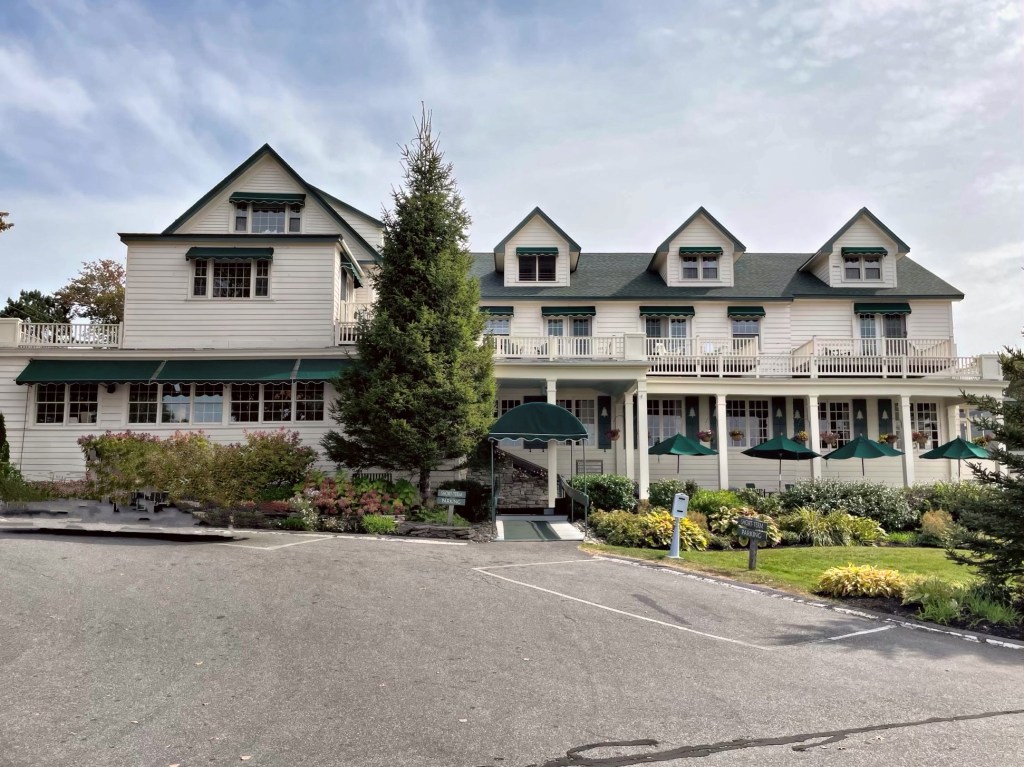
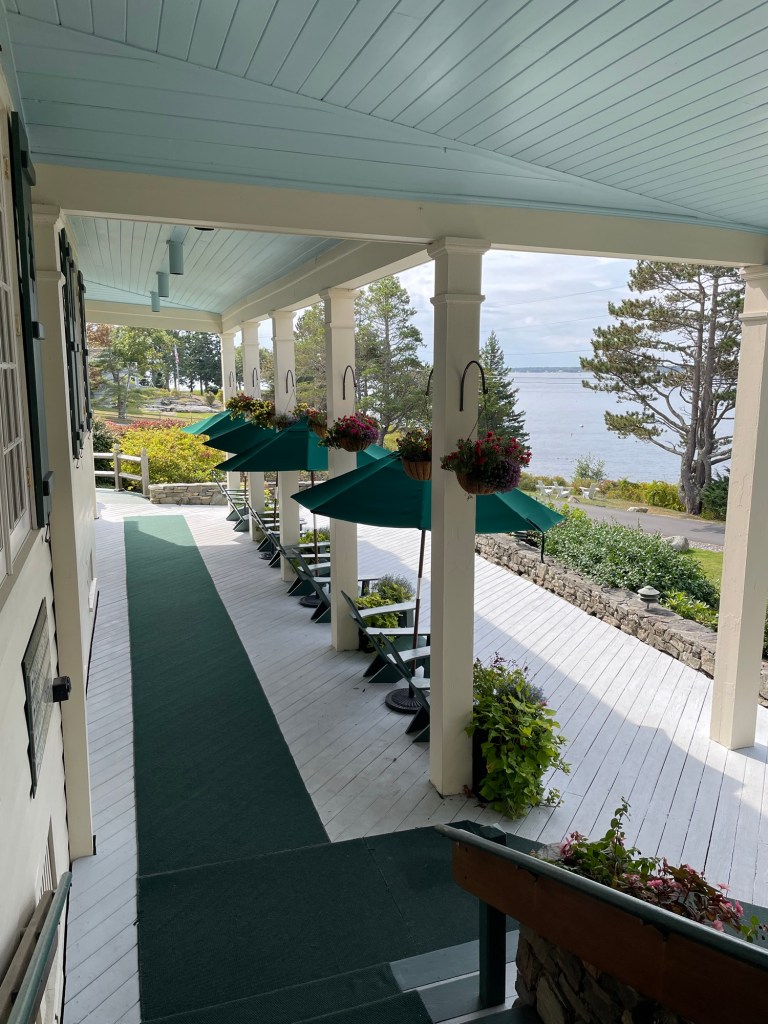
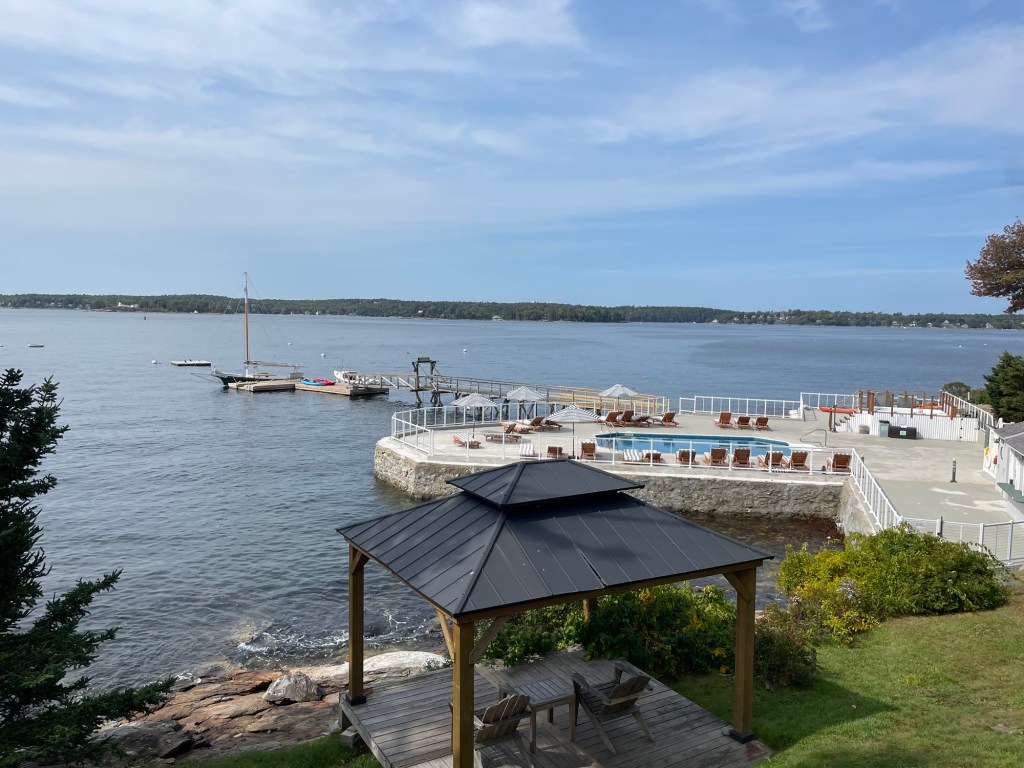
Spruce Point Inn sits amongst acres of pristine pine forests on the shore of the rugged coastline in Boothbay Harbor, in Mid-Coast Maine. The Inn had its beginnings in the 1890s as a hunting and fishing lodge when the peninsula was an undeveloped and remote point on the outer edge of Boothbay Harbor. The enchanting location off the beaten path attracted rusticators, who sought to escape the hot and polluted air of Boston and other cities, for the coastal breezes on Spruce Point. Private cottages were built nearby the old lodge, and frequented by summer rusticators year-after-year. By the 1940s the lodge was converted to an inn and many of the private summer cottages surrounding were acquired and rented out for summers. The buildings exhibit the warm, natural materials typical of the region, with weathered shingles and expansive porches that invite guests to take in the ocean breeze. Inside, the beadboard walls, wood floors, and fireplaces paired with period-appropriate furnishings really provide an authentic historic feeling. The resort’s first saltwater pool was constructed in a rocky outcropping right at the coastline and was recently restored, providing visitors a unique experience to swim in a historic saltwater pool just over the ocean! Over the years, the inn has undergone several renovations and expansions, ensuring that it continues to meet the needs of modern travelers while preserving its historical significance. The Spruce Point Inn is more than just a place to stay; it is a part of the rich history of Boothbay Harbor and ongoing legacy, a historic getaway that blends both luxury and history in a setting unlike any other.
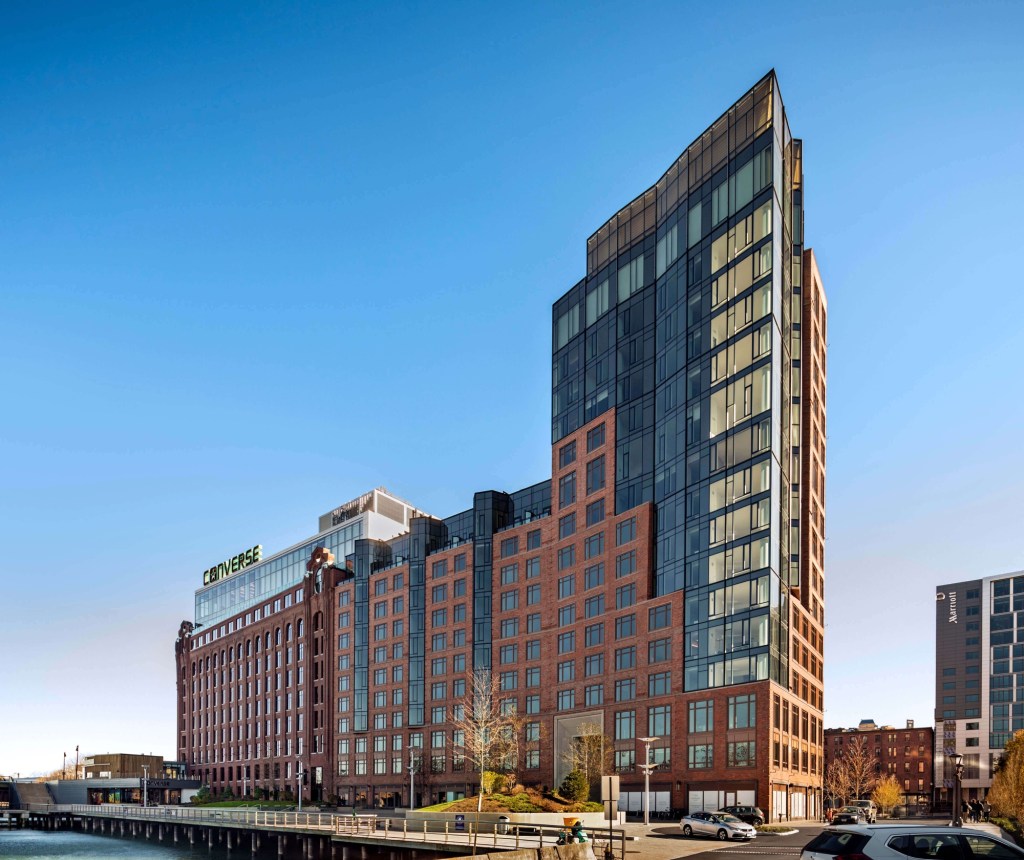
New buildings in Boston rarely are contextual and so often take no cues from their surroundings, but Lovejoy Wharf, one of my favorite 21st century buildings in the city breaks that mold. Completed in 2017, the contemporary building is clearly modern, but takes important cues in the design and materials to relate it to the surrounding industrial context surrounding the site. The Lovejoy Wharf condominium building was designed by the great Robert A.M. Stern Architects and incorporates red brick facades, stacked bay windows, and a glass curtain wall, which effortlessly blend old with new. A glass tower breaks free from the masonry mass at its corner, which leads into the denser, more modern West End buildings while the eastern side closely follows the old Schraft’s Candy Factory (now Converse Headquarters building) brick industrial style. Additionally, the developer, Related Beal, took a gamble by not including parking in the facility, hoping the unit owners would instead use local public transportation (or walk), it seems to have been a success and promotes healthy urbanism. What do you all think of this contemporary building?
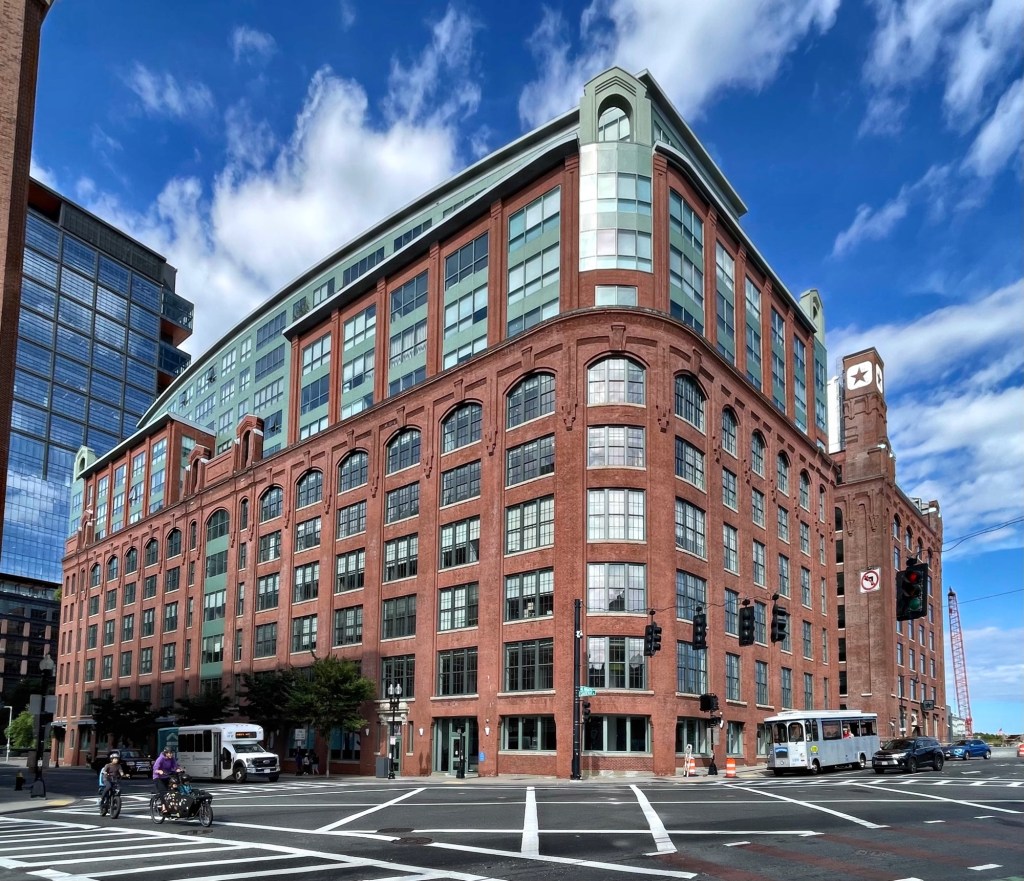
Originally constructed in 1906 for the Austin Biscuit Company, this building on Causeway Street serves as both a gateway into Boston from the north and as an excellent example of adaptive reuse with thoughtful additions. The massive structure, which was originally two separate but connected buildings are a significant example of the panel brick construction with Romanesque detailing. Part-owner of the site, Edmund Dwight Codman hired his brother, architect Stephen Russell Hurd Codman (1867-1944) and business partner Constant-Desire Despradelle (1862-1912) to design the building which was immediately rented out to the Austin Biscuit Company and the American Glue Company. When opened, the Boston Daily Globe wrote that it was “…a large new building of a thousand windows, a building which on fine days is flooded with sunshine and good air”. By the late 1900s, the building was altered and suffering from deferred maintenance, with an unknown fate. Luckily by 2001, the local architectural firm of Finegold Alexander, was hired to re-envision the building. They converted the two connected buildings into a unified mixed-use residential condominium and retail/office complex. The adaptive reuse of this building provided for 108 dwelling units in the top six floors (in the addition), offices on floors two through six, retail space on the first floor and garage parking in the basement. This is one of my favorite success stories in Boston architecture and historic preservation!
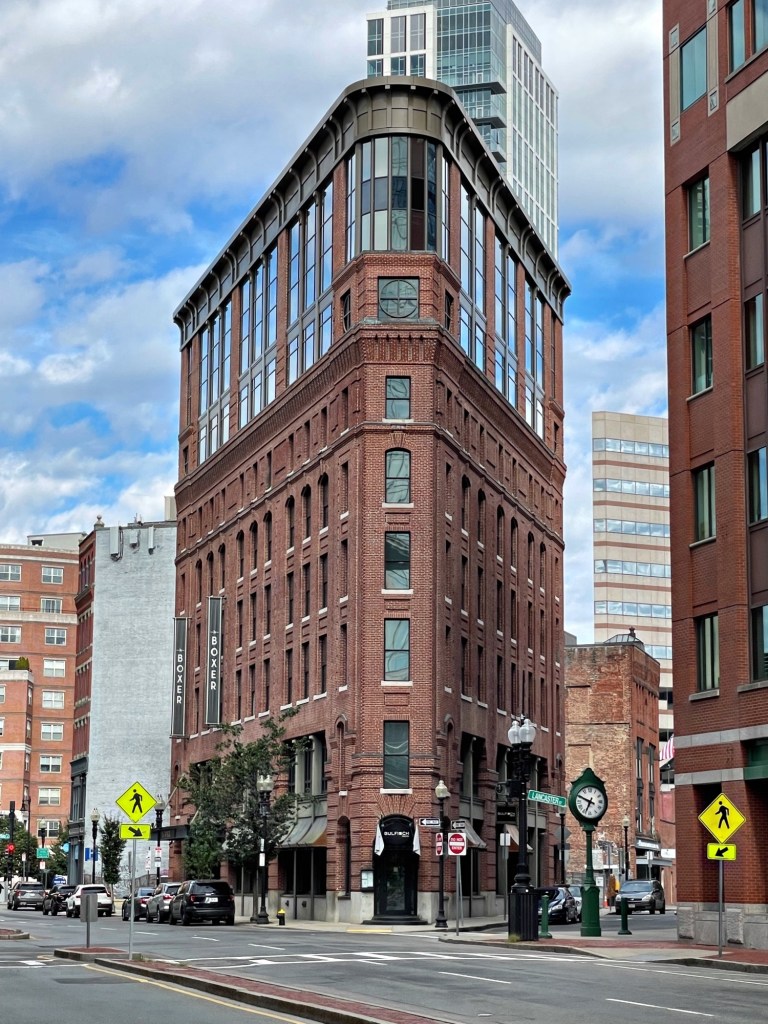
The interesting street-layout of the Bulfinch Triangle area of Boston created some oddly shaped triangular building lots which for decades, saw only small, modest wood-frame structures built upon them. By 1900, Boston’s own Flatiron Building (built two years before New York’s more iconic example) was constructed on this site and it has been an icon ever since. The structure was built by ownerCharles Pelham Curtis III (1860-1948), who was born in Boston and graduated from Harvard Law School and became a police commissioner and attorney in the city before moving into real estate development. He hired architect Stephen Codman to design this commercial block, which was rented out to local businesses and professional offices. The building has been home to a hotel for a number of decades, with a major renovation undertaken beginning in 2000, 100 years after the building was constructed. Three floors were added to the top of the original six-story, which are Modernistic in design with large expanses of windows within three center bays that align with the bays of the original building and which are defined by brick piers. The hotel today, The Boxer Hotel, perfectly blends the history of the building with modernity and style. What a gem of a building!
Who doesn’t love a good flatiron building?! This charming three-story with Mansard roof building is located in the Bulfinch Triangle district of Boston. The triangular-shaped building was built around 1860 as an apothecary shop for Dr. Thomas Leighton Jenks (1829-1899), a doctor who was born in Conway, New Hampshire, but left for Boston while still a teenager. When the Mexican-American War broke out in 1846 he enlisted in the Navy, where he served for three years in the hospital ward of the frigate U.S.S. United States. Upon returning from the war, Jenks attended Harvard Medical School, and wrote his thesis on Syphilis. Dr. Jenks apprenticed in a building on this site under Dr. Samuel Trull. He likely redeveloped or modernized the 1850s building, adding the mansard roof by the 1860s. During the Civil War, Dr. Jenks served as a front line surgeon. After returning home, he grew tired of the medical profession, and got involved with local politics. He was elected as an alderman, Massachusetts state representative, and in later years he earned appointments as Chairman of the Boston Board of Police, and Chairman of the Board of Commissioners of Public Institutions. He tragically collapsed and died in 1899 at a Boston courthouse. As a tribute to his birthplace, Dr. Jenks made a provision in his will for the funds necessary to build a public library in Conway, New Hampshire, which is still in use today. Somehow, the old Dr. Jenks Apothecary Shop has survived all this time as the city grows and changes all around it. The building saw life later as a restaurant and offices.
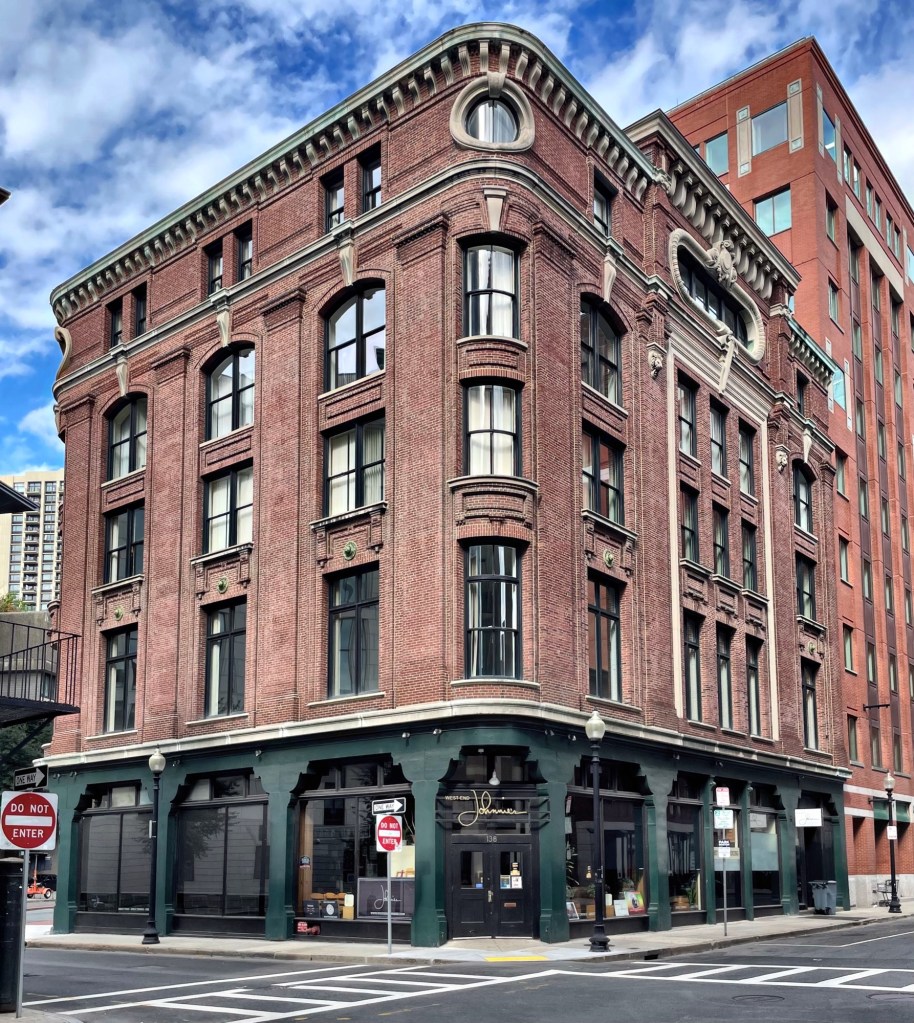
Similar to the Heywood Brothers & Wakefield Co. Building on Portland Street in the Bulfinch Triangle Historic District, the equally stunning building here was also designed by the same architect in a matching style. The building was constructed in 1896 by owner Catherine E. Tarbell , and the Boston branch of the National Casket Company moved in as tenants soon after its completion as part of its national expansion. The company would become the largest manufacturer and supplier of caskets in New England by 1906. The Tarbell building was designed by Stephen Codman in the Beaux-Arts style and is notable for its use of oxeye windows, rounded corners, and engaged pilastered facades. The company held its regional headquarters and sales offices from this building, which benefited from rail access for shipping caskets all over the region. The building is one of the finest examples of the Beaux Arts and Classical Revival styles in Boston.
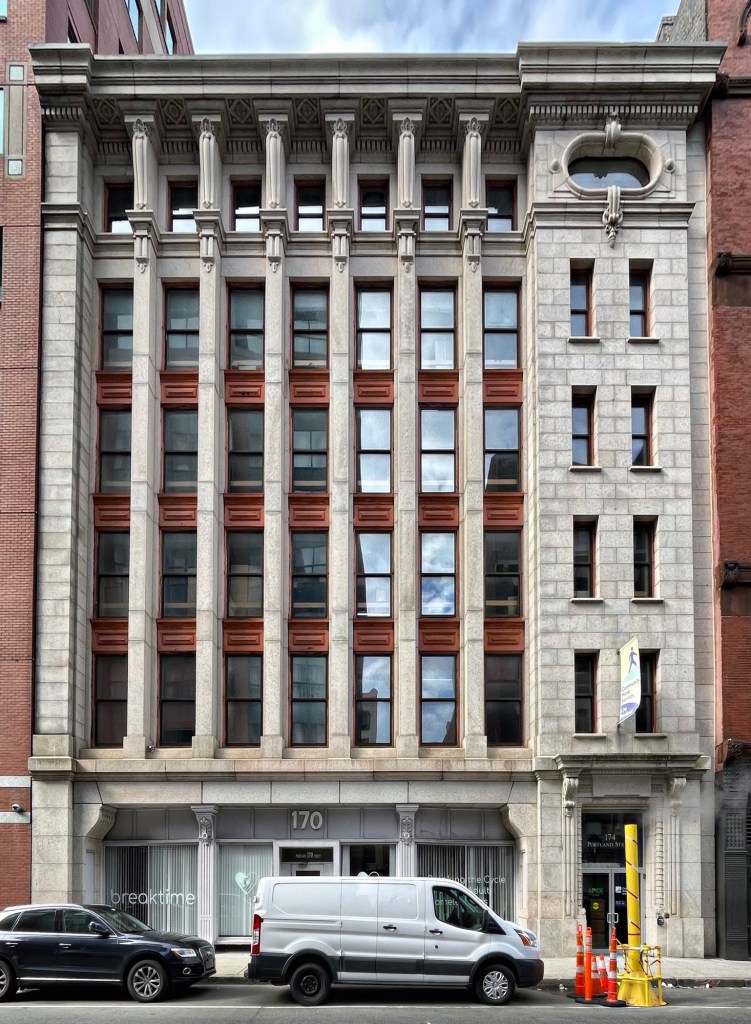
Nearly a decade after the heirs of Peter Bent Brigham and his wealthy estate erected the Peter B. Brigham building in the Bulfinch Triangle Historic District of Boston, they would again develop more of the block the trust owned, building this stately commercial building. Much of the Peter Bent Brigham Building was rented to the Heywood Brothers & Company and Wakefield Company, both furniture makers. Heywood Brothers was established in 1826, Wakefield Company in 1855, with both firms producing wicker and rattan furniture. The companies merged in 1897 and moved into this building constructed by the Brigham estate that same year. The building was designed in a unique version of the Beaux Arts and Classical Revival styles by relatively unknown architect Stephen Russell Hurd Codman (1867-1944), a first cousin of more famous architect and interior designer, Ogden Codman. Stephen Codman opened a firm with the French-born architect, Constant Desire Despradelle, designing some landmark buildings in Boston together. The Heywood Brothers & Wakefield Company Building on Portland Street is a distinctive granite-faced building standing six-stories tall with engaged box columns spanning four floors and dividing the bays of the facade.
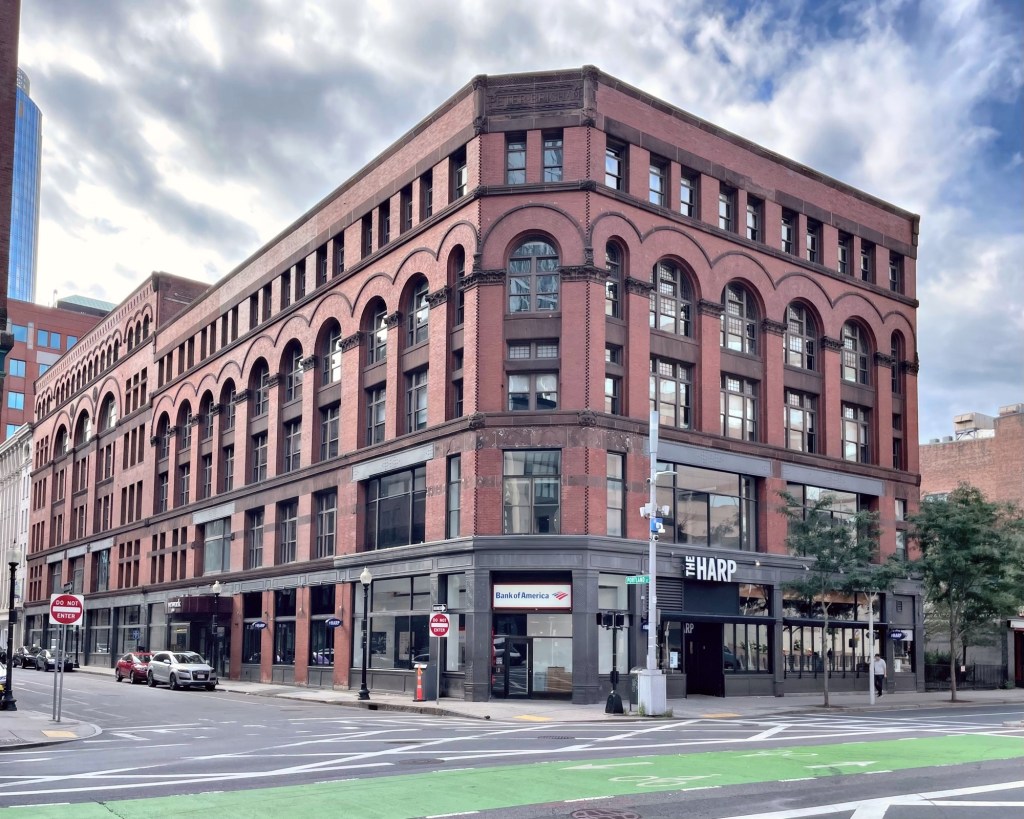
Located at the corner of Causeway and Portland streets in the Bulfinch Triangle Historic District of Boston, you will find the Peter Bent Brigham Building, one of the best examples of the Richardsonian Romanesque architecture style in the city. The building was built by the estate of Peter Bent Brigham (1807-1877), an interesting character in Boston’s history. Peter B. Brigham was born in Vermont and eventually moved to Boston and began his career selling fish and oysters in Boston. A self-made, hardworking man, Peter would eventually own a restaurant in the city and began making connections with the movers and shakers of town. With his success, he began investing in real estate and would become a founding director of the Fitchburg Railroad. Peter died in 1877, he never married nor had children. His estate valued in the millions and was to be spent 25 years after his death, for a hospital “for the care of sick persons in indigent circumstances”. The money appreciated to $2,000,000 by 1902 and was used to establish the Peter Bent Brigham Hospital, now Brigham and Women’s Hospital. His family, who also received a substantial amount of money in the will, built this building, hiring the firm of Hartwell & Richardson to design the 1888 corner and the later, larger 1891 addition. The commercial building was rented to stores and professionals and even retains Peter B. Brigham’s name in the facade carved in terra cotta.
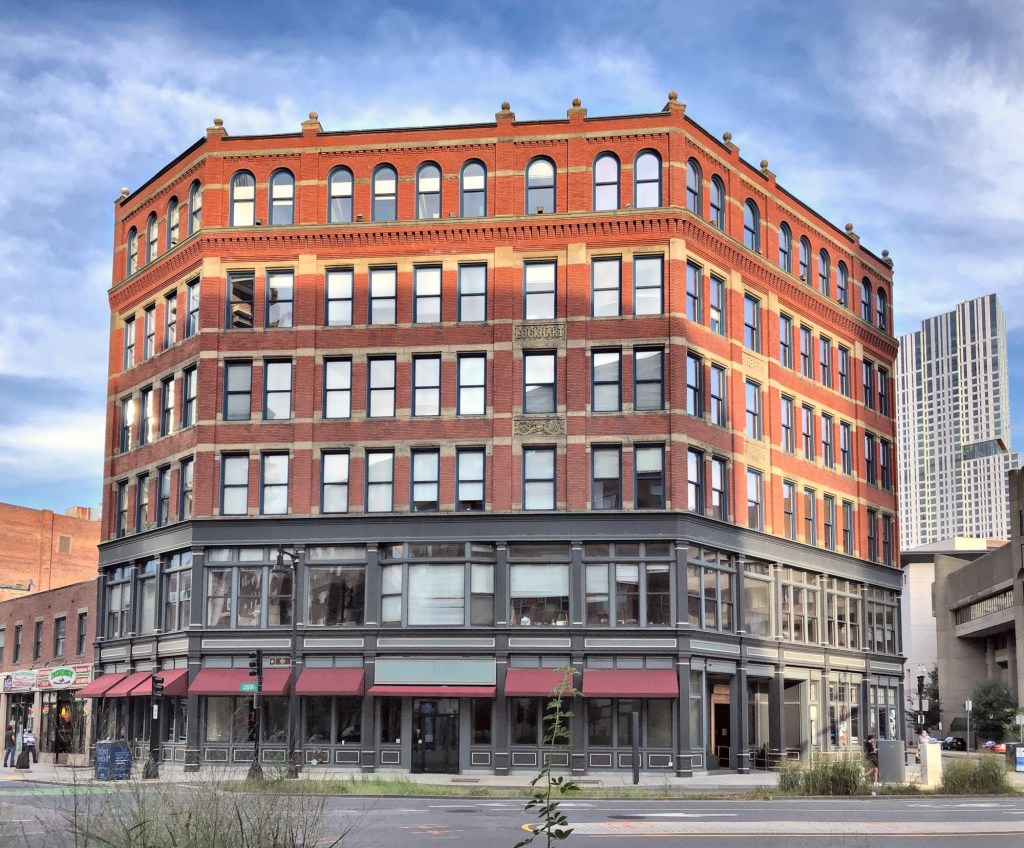
This six-story brick and sandstone building at Causeway and Staniford streets near North Station in Boston was built in 1887 as the headquarters and sales center for William L. Lockhart & Co., manufacturers and wholesale dealers of coffins, caskets, and undertakers’ supplies, which at the time was considered the largest establishment of its kind in New England. The company had its factory in East Cambridge and built this structure as offices and sales rooms. The building is an excellent example of the Romanesque Revival style, which is typified by the use of round arched windows at the top floor and the use of inlaid carved stone panels. Frederick Nason Footman a relatively unknown architect is said to have designed the building for the Lockhart Company, with the building serving as an important piece of the company’s portfolio. Shop space was created on the street level, with the company’s offices, salesrooms and casket hardware department occupying the second floor, show rooms on the third floor, shipping department on the fourth floor and storage on the fifth and sixth floors. While the adjacent parcels have been razed and are still vacant, this building serves as an important visual gateway into what was once the West End, a neighborhood that was almost entirely demolished during urban renewal.
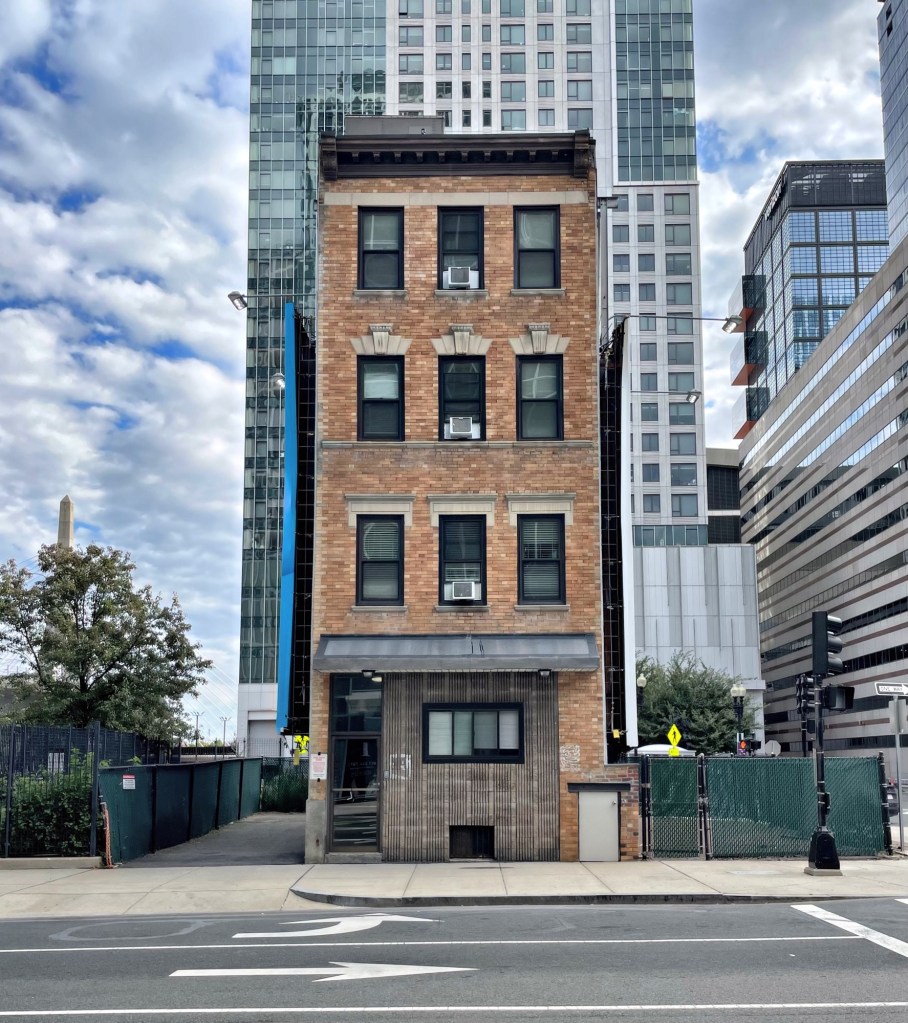
Originally built in the 1870s, and largely remodeled in the early 1900s, this charming building has been known locally as “The Last Tenement” of the old West End of Boston. Once part of an unbroken a row of 30 brick tenements along the east side of Lowell Street, this building typified much of the West End of Boston, a vibrant and dynamic immigrant neighborhood. Dwarfed by larger, modern apartment towers and highway off-ramps, this stand-alone building is a survivor, and should really be preserved! Here is a little history on The Last Tenement that I found. The building was originally built as a three-story residence just after the Civil War by furniture dealer, George M. Rogers. The building was rented to four families in the 1880 census, showing the diversity of the region with 20 people residing in the building of Irish, English, and German-Jewish backgrounds. At the turn of the century, an elevated rail line was laid out down Lowell Street. After WWII, the neighborhood would see a terrible demise, that has been widely told. City leaders effectively considered the vibrant immigrant neighborhood a slum, and in an effort to redevelop it to bring back middle-class families (and their tax dollars) handed much of the neighborhood to developers to start over, with little more than lip service for the displaced. This building, now with an address of 42 Lomasney Way, was occupied for some time by “Skinny” Kazonis, a low-level Mafia associate of the Angiulo Brothers, which was a leading gang in the North End until the Winter Hill Gang decided to run rackets in the area. The property sold, and residential units have been rented and the building maintained, with the assistance of a billboard for additional income for the owner. The Last Tenement showcases the strength and resilience of the old West End and will hopefully remain as a reminder of the vibrant neighborhood that was razed and replaced with mediocrity.

 Buildings of New England