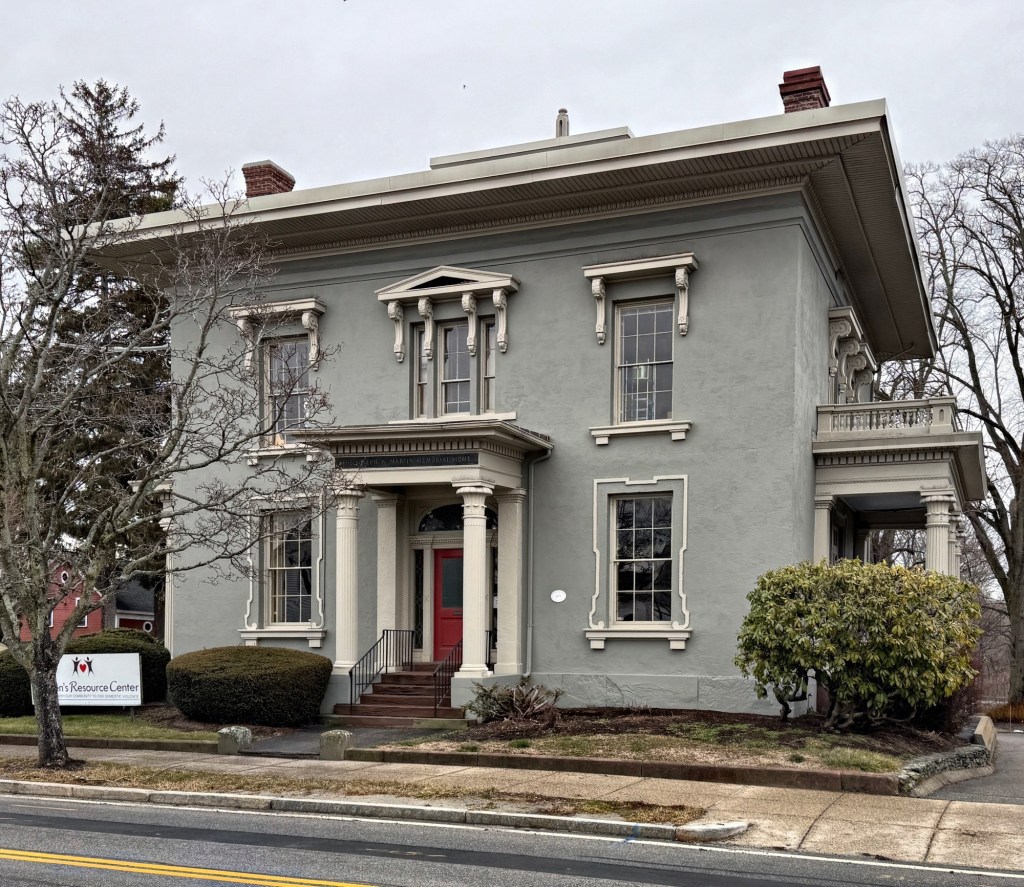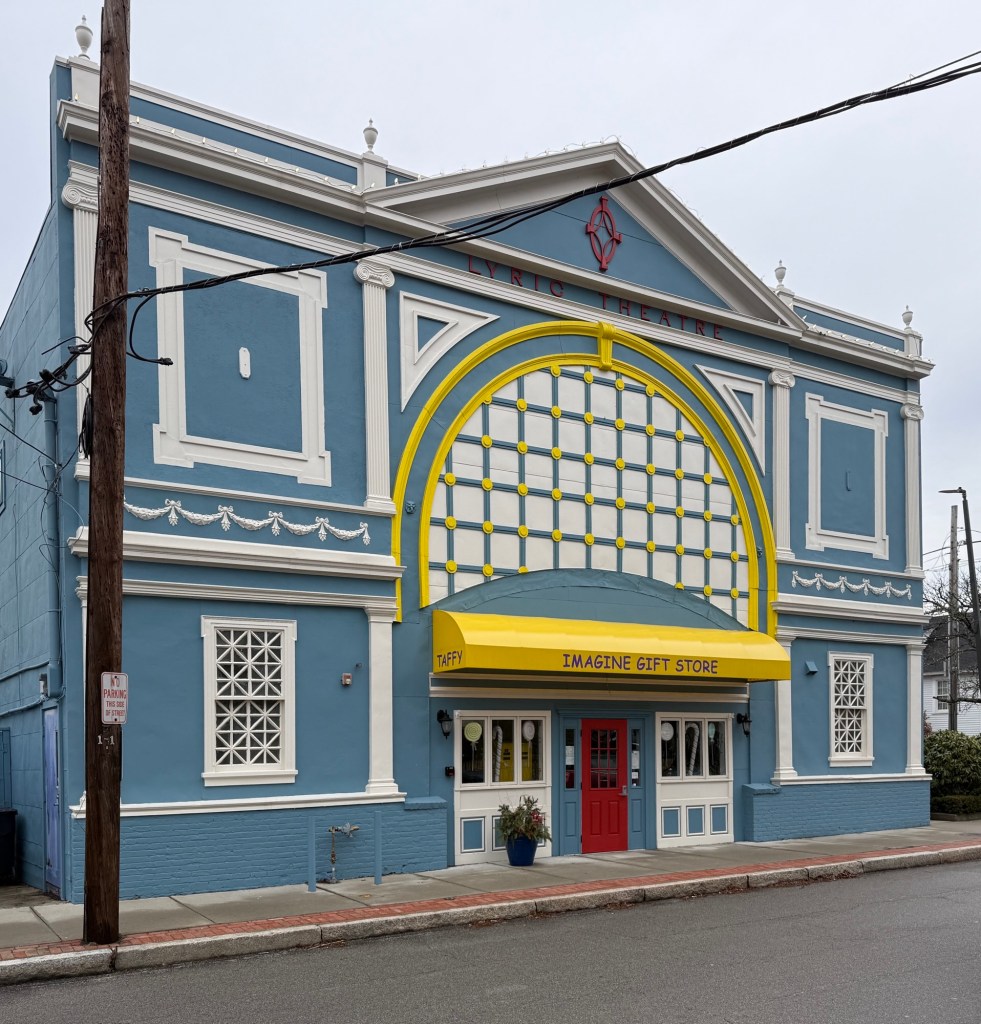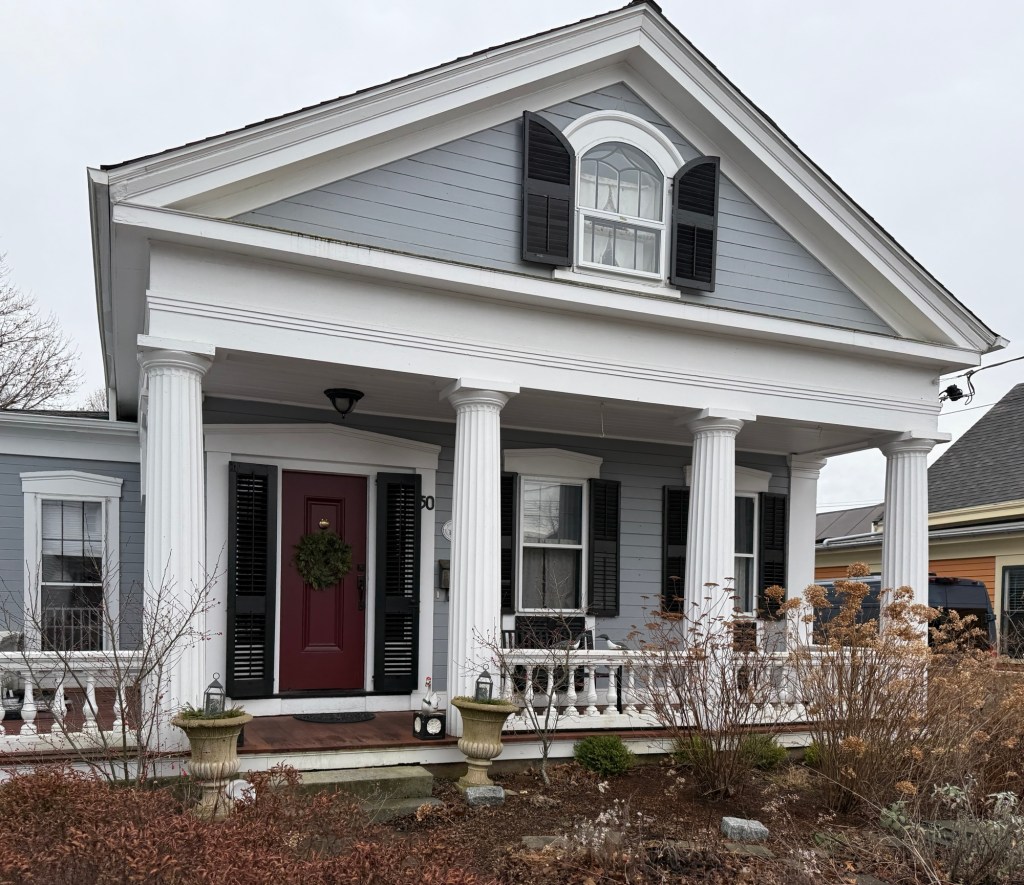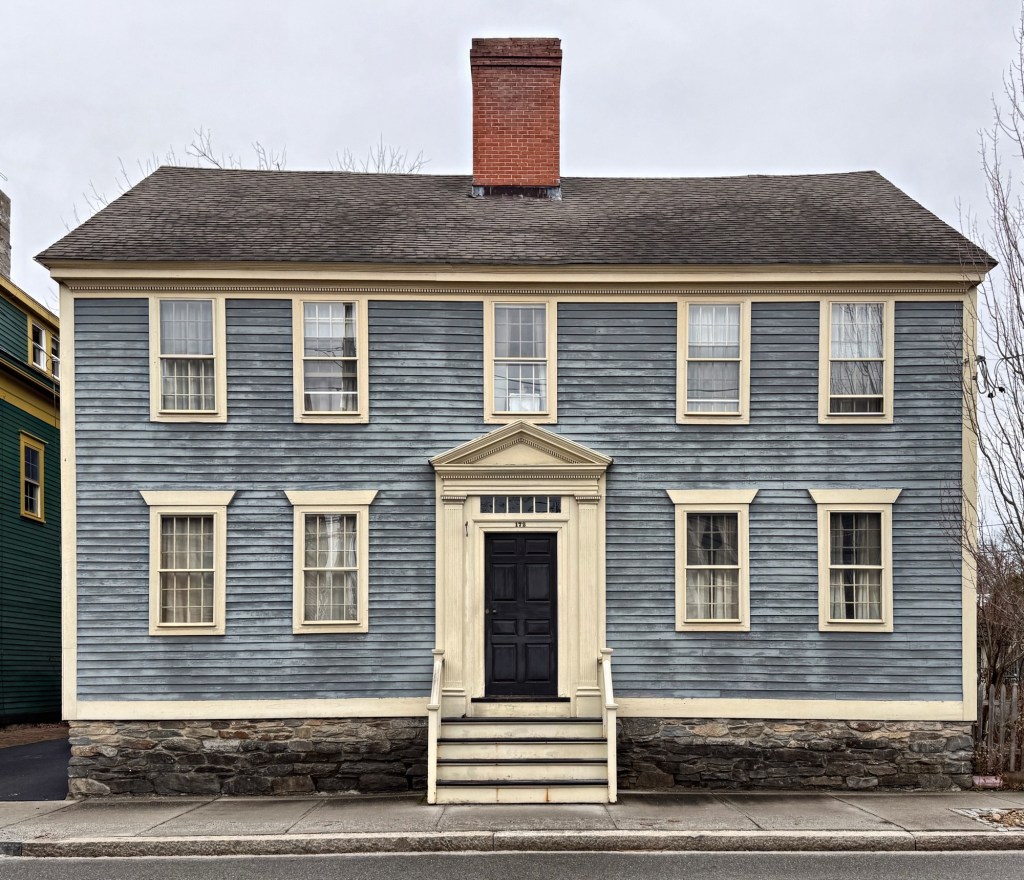
John Larchar House // c.1820

The John Larchar House at 282 Benefit Street in Providence is one of the many stately Federal period homes in the city designed by great architect, John Holden GreeneJohn Larchar (also spelled Larcher), was born in Providence in 1787 and worked in local businesses, eventually becoming a bank director that was involved in many mercantile pursuits. The residence remained in John’s family long after his death in 1863, and has been maintained so well by subsequent owners. The 2½-story, brick Federal house features stone trim, four chimneys, a central elliptical fanlight doorway, modillion cornice and amazing 12-over-12 windows. The cupola at the roof appears to be a is a mid-19th-century addition, possibly after John’s death. The garage and two-story side addition dates to the 1960s but does not detract from the architectural integrity of the home. 

Stephen Hopkins House // 1743

The Stephen Hopkins House is a Colonial-era house in the East Side neighborhood of Providence, and has survived waves of commercialization and redevelopment for nearly 300 years. The home is associated with Founding Father of the United States, Stephen Hopkins (1707–1785), who served as Governor of the Colony of Rhode Island and Providence PlantationsChief Justice of the Rhode Island Supreme Court, and was a signer of both the Continental Association and Declaration of Independence. In 1742, Stephen Hopkins purchased a one-story cottage built in 1707 on Main Street, and enlarged the original house to its present size by 1743, incorporating the original cottage as the rear ell. The eight-room residence was occupied by Gov. Hopkins, his family, as well as enslaved Africans who lived under the same roof until his death in 1785. During his ownership, George Washington slept here, twice. After 150 years of successive ownership, in 1928, the house was moved to its current location at the corner of Hopkins and Benefit Streets to facilitate the construction of the new Providence County Courthouse complex. The Hopkins House was restored by architectural historian and architect, Norman M. Isham, and is owned by The National Society of the Colonial Dames of America, operating it as a historic house museum. The Gov. Stephen Hopkins House is a National Historic Landmark.

Tully Bowen House // 1853

Designed by great architect, Thomas Tefft, this three-bay, three-story brownstone house located at 389 Benefit Street in Providence, was built for Tully D. Bowen, a cotton manufacturer. The house, one of the finest Italianate style mansions in the state, is constructed of brownstone and features a recessed arched entrance surrounded by a flat-headed Doric-pilastered frame, pedimented first-floor windows resting on brackets with the alternation of flat and pedimented heads at the second story, and quoining at the corners. The property also retains its original Tefft-designed brick and brownstone carriage house. Thomas Tefft, who was just 27 at the time of designing this house and corresponding brownstone and iron gate, would become one of America’s finest architects before he died in Florence with a fever in 1859 at just 33 years old. The residence was converted to 12 apartments in 1941 and the carriage house was converted to residential use as well. Even with the subdividing the interior spaces of the residence and carriage house, the Bowen property remains in a great state of preservation and is one of the finest homes in Providence.

Pierce-Guild Lightning Splitter House // 1781

The Pierce-Guild House at 53 Transit Street in the Fox Point neighborhood of Providence, Rhode Island, is one of the most iconic and photographed residences in the state. Known as a “lightning splitter”, the unique name is taken from local folklore that the sharp angle of the gable roof will deflect or split lightning if struck. Whether or not this superstition is true, the unique house form numbers to less than a dozen in Rhode Island. This house, arguably the most well-known for its location off Benefit Street, was originally built in 1781 as a modest 1-1/2-story cottage with a gambrel roof for Daniel Pierce (Pearce), a tailor. In 1844, the property was sold to George Guild, a grocer, who modernized the house by creating the massive gable roof to provide a narrow third floor, which was illuminated by the end windows and a diminutive dormer at the roof. The house retains much of its character, after a restoration by owners in the mid-late 20th century.

Old Stone Bank // 1896

The Old Stone Bank was founded in 1819 as the first savings bank in Providence, Rhode Island, but originally under the name, Providence Institution for Savings. A constantly growing volume of business influenced the erection, in 1854, of a building for the exclusive purposes of the bank at 86 South Main Street, near College Hill. Designed by C.J. and R.J. Hall, the original stone bank stood one-story tall with a gable roof. Success and further expansion of the institution led to the erection, in 1896, of the present building, which served as the main office. Designed by the local architectural firm of Stone, Carpenter & Willson, the present domed banking structure is said to have incorporated parts of the 1854 building, and expanded the rest to the landmark we see today. The Beaux Arts/Neo-Classical banking structure is constructed of granite, with a Classical pedimented entry of monumental Corinthian columns atop the staircase, but the highlight of the building has to be the gold-leaf-and-copper domed roof which partially served as a skylight for the banking hall inside. Offices relocated to a new building in the late 1960s. The banking institution closed in the 1980s and following acquisitions and insolvency, the main bank was sold in 1995 to Brown University for $1.15 million to house the Haffenreffer Museum of Anthropology‘s collection of Native American artifacts. Years later, Brown decided it was unfeasible to house the collection in the building as the necessary alterations would have altered the historic character of the building, they then sold the building to an LLC in 2009. The Old Stone Bank is now a single-family home. Yes, you heard that right. The new owners have lovingly preserved this architectural marvel for all to enjoy as they stroll the city.

C & J Mauran Company Warehouse // c.1820

In Providence, even industrial warehouses are architecturally interesting to look at! This is the C & J Mauran Company Warehouse at 369 South Main Street in Providence’s East Side neighborhood. The building was constructed around 1820 for brothers, Carlo (1779-1844) and Joshua Mauran (1782-1847), who were wealthy merchants who stored goods from their ships trading in the Indies here. Before all of this, the site was home to an earlier structure from the 1770s, built by Deacon Joseph Sheldon, and the site was occupied by a warehouse, later owned by his son, Christopher Sheldon, and was known as the “Slave Pen” for its use of holding and transporting enslaved people. The “slave pen” burned in 1801 and the structure was later rebuilt by the Earle Brothers, and then again (the current structure) by Carlo and Joshua Mauran. Later in the 19th century, a brick façade and storefront were added to the building as the street shifted firmly to commercial uses, with noxious industrial buildings moving further to the periphery of the established College Hill neighborhood. From 1856 to 1939, the Ferry Coal Yard Company and the National Coal Company stored coal in the building After WWII, the City of Providence took the building and adjacent block by eminent domain to make way for urban renewal, and luckily for us, the building was rehabilitated rather than demolished at this time. The structure was converted to office use, and was again restored in the 2010s by Newport Collaborative Architects.

Brown-Crocker House // c.1836

In 1829, Riley Brown, a housewright, purchased a house lot at the corner of Thayer and Transit streets in Providence, and by 1836, built this charming gambrel-roofed cottage, which is one of the most charming in the city. Riley Brown lived in the house next-door at 6 Thayer Street (1829) and on available land, built this 1-1/2-story dwelling on a full-height raised basement on speculation. It is possible that the house could have dated to the 18th century, and was possibly moved to the site from a nearby location, given the distinct gambrel roof and Georgian qualities. The residence here was sold in 1836 to John Crocker, who resided here with his family until his death in 1865. The Brown-Crocker House stands out for its unusually high basement of brick and stone, with a stair ascending up to the central entry and the gentle saltbox roof off the rear. Two shed dormers were likely added in the 20th century to make the house’s second floor more liveable.

Clark & Nightingale Block // c.1815

In the early 19th century of Providence, wealthy merchants dabbled in real estate and urbanism, not only as an income-producing investment, but also to serve as a buffer to obscure unsightly industrial and wharf uses from their mansions on College Hill. This is the Clarke & Nightingale Block, a c.1815 vernacular Federal style row of residences above commercial storefronts on South Main Street. The block was developed by the heirs of wealthy merchants, Joseph Innes Clark (1745-1808) and Joseph Nightingale (1747-1797), and constructed of brick and stone, providing a handsome structure facing the wealthy residences to their east, and obscuring the view of industrial buildings closer to the river. The block was gutted and rehabilitated as part of the East Side Renewal project in the early 1970s. Arguably the only thing Urban Renewal did right was select restoration of significant buildings within seas of the destruction and scars on the landscape the program left behind.

William Smith House // c.1826

The William Smith House at 18 James Street in the Fox Point neighborhood of Providence’s East Side, is similar to its neighbor, the William Woodward House in style and design details. Smith, a carpenter by trade, possibly built this house himself, with inspiration or plans by local architect, John Holden Greene, who designed many similar homes in the city around this time. The residence was built around 1826 and it was built into the steeply sloping hill on its raised granite foundation. Besides its elegant proportions, the house features a shallow hipped roof with monitor, fanlight over the door, and brownstone sills and lintels.

Walker – Russell House // 1797

In 1797, housewright Calvin Walker acquired a house lot on Transit Street in Providence’s Fox Point/East Side neighborhood and built this Federal period residence for his family. The three-bay Federal style home was a side-hall form with off-center entry and a monitor roof. In 1824, Calvin sold the residence to his daughter, Mary and her husband, Daniel Russell, a grocer and shoemaker, for $250. By the 20th century, the house was altered with later siding and a new entry, which were later restored by later owners, back to the home’s original grandeur. The blind fan with engaged columns adorned by rounded capitals, really enhances the design. The Walker-Russell House remains as an excellent example of a Federal style residence in Providence built for middle-class residents.