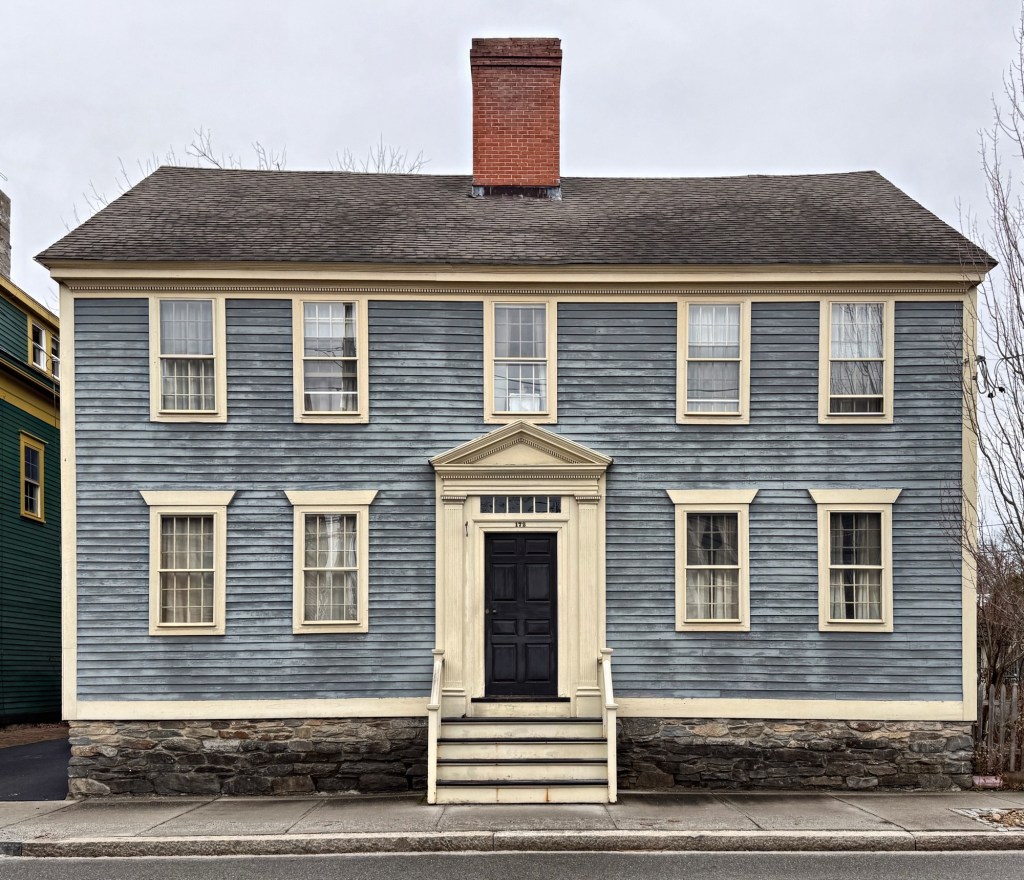
This stately two-story, five-bay Colonial house at 172 Water Street in Warren, Rhode Island, is significant as a well-preserved Georgian style residence that has connections to a prominent local family. It is unclear who originally owned the residence, but by the mid-19th century, the property was owned by John C. Hoar, a blockmaker for the maritime trade. Passed through members of the Hoar family into the mid-19″ century, owned by John Champlain Hall (1818-1912), the son of John C. Hoar, who actually changed his last name from Hoar to Hall in 1867, but it is unclear why. John C. Hall worked as a carpenter and builder in town, building homes and commercial buildings for area residents, including his own shop nearby.
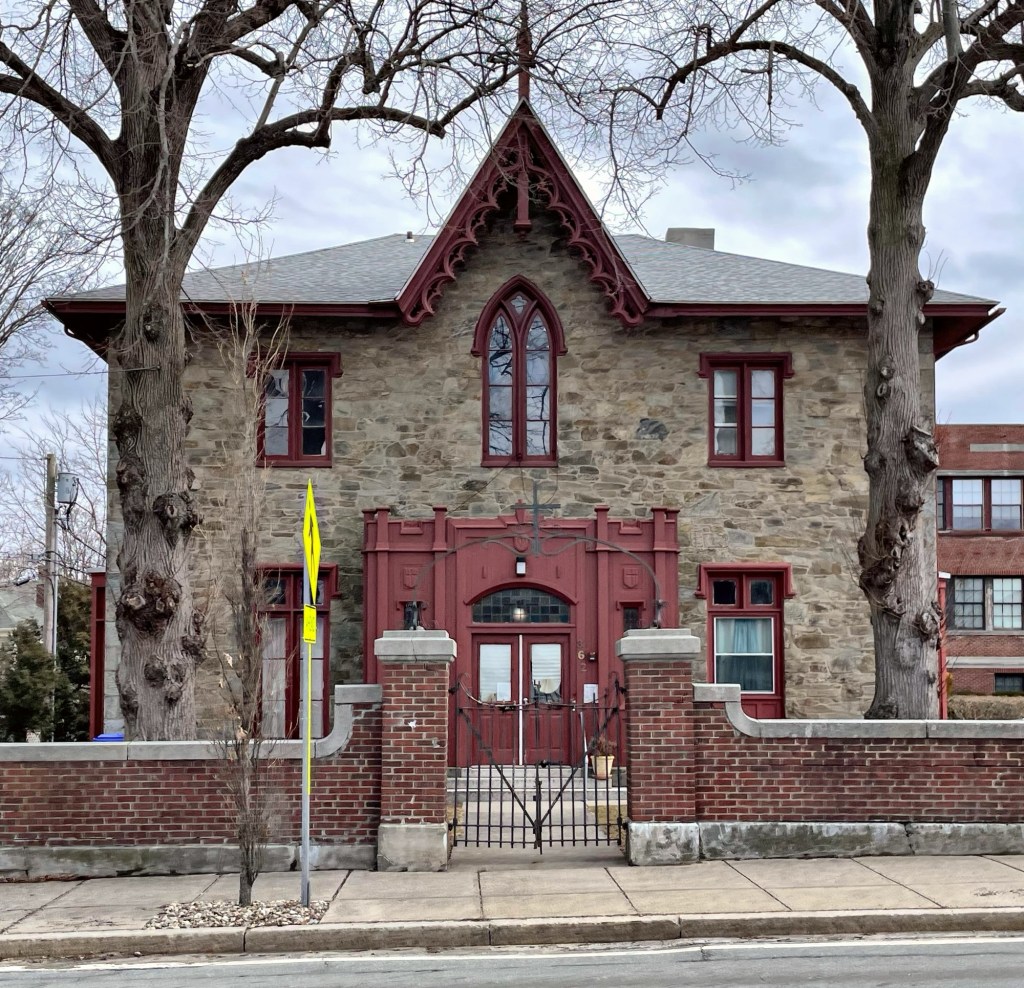
A big departure from the less ornate, yet classically proportioned Georgian and Federal style homes in Warren, Rhode Island, this Gothic Revival beauty on the town’s Main Street stands out for its detail and materiality. Built as a quintessential Gothic “cottage,” the facade of the Dow-Starr House in Warren has also been graced by a three-sectioned Gothic Revival porch as illustrated in Alexander Jackson Downing’s plan books from the 1840s. As completed, this house followed almost exactly Andrew Jackson Downing’s Design II as illustrated in Cottage Residences 1842 ; it differed only in its use of speckled fieldstone over coursed ashlar. The house was later acquired by and used as a convent for the St. Jean Baptiste Church in Warren, who also built a school building behind. The house has seen some alterations, but remains an important architectural landmark of the town.
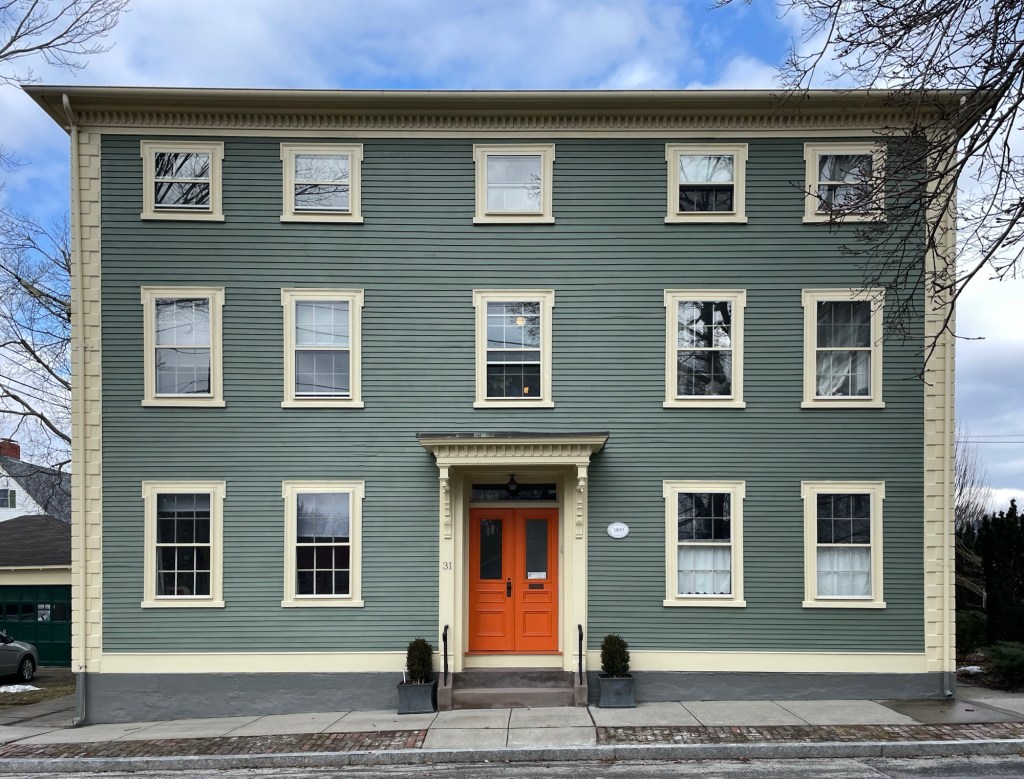
This stately three-story Federal style mansion on Baker Street in the lovely town of Warren, Rhode Island, was built in 1809 as a gift from a father to his daughter as a wedding gift. The house was funded by James Maxwell, of the local family of merchants and slave traders, for his daughter Martha “Patty” Maxwell and her soon-to-be husband, Samuel Randall. Judge Randall operated a school in town and published three local newspapers, the Telescope, the Clarion, and the Telegraph, all rather short-lived. In 1822, he was appointed judge of the court of common pleas for Bristol County, Rhode Island, and served in that capacity until 1824, when he was made justice of the supreme court of the state. The pop of color at the entry and the bracketed, Victorian era door hood complete the facade to give it some serious curb-appeal.
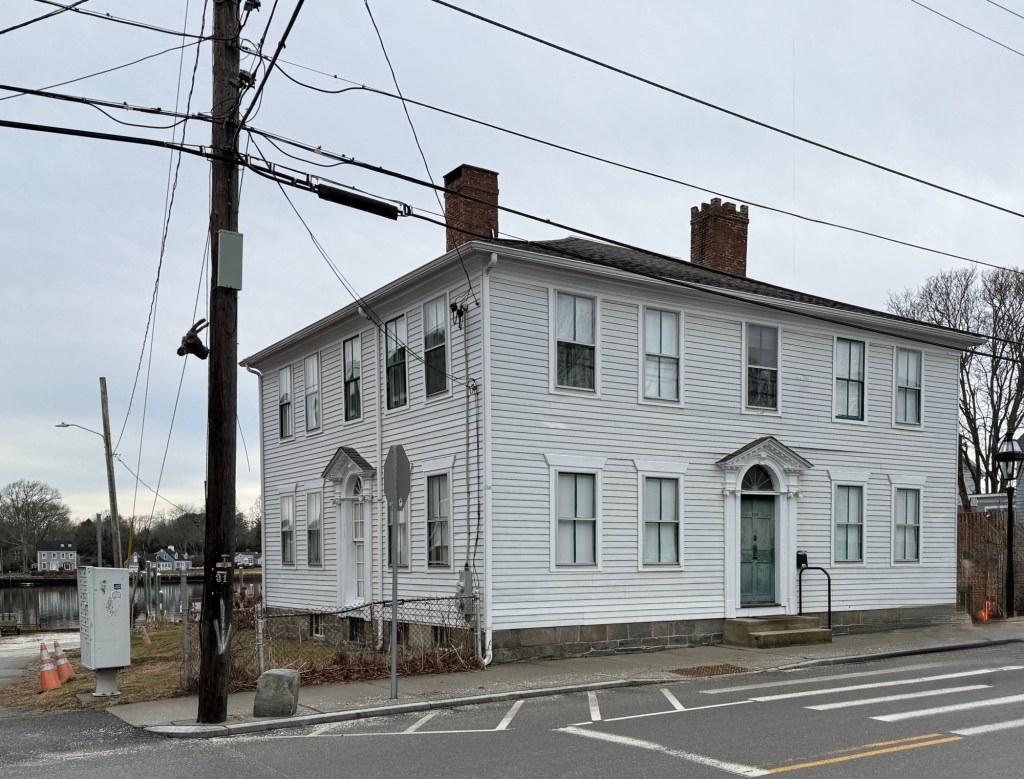
This house, located on Water Street in Warren, Rhode Island, is said to have been built in the 1760s, but its present appearance in the Federal style is credited to owner, Caleb Carr (1768-1853). In around 1790, Caleb fully renovated the property in the Federal style for his residence and as a tavern, with an elegant fanlighted door put on each facade—one for household use, the other for tavern customers. The property was inherited by his son, Captain Caleb Carr Jr., who continued as a tavern owner, but was also an important shipbuilder and operator of the ferry to Barrington, which docked at the end of the street. The Carr Tavern is today covered with later aluminum siding and has Victorian-era two-over-two windows but if restored, would shine as one of the best Federal style homes in town!
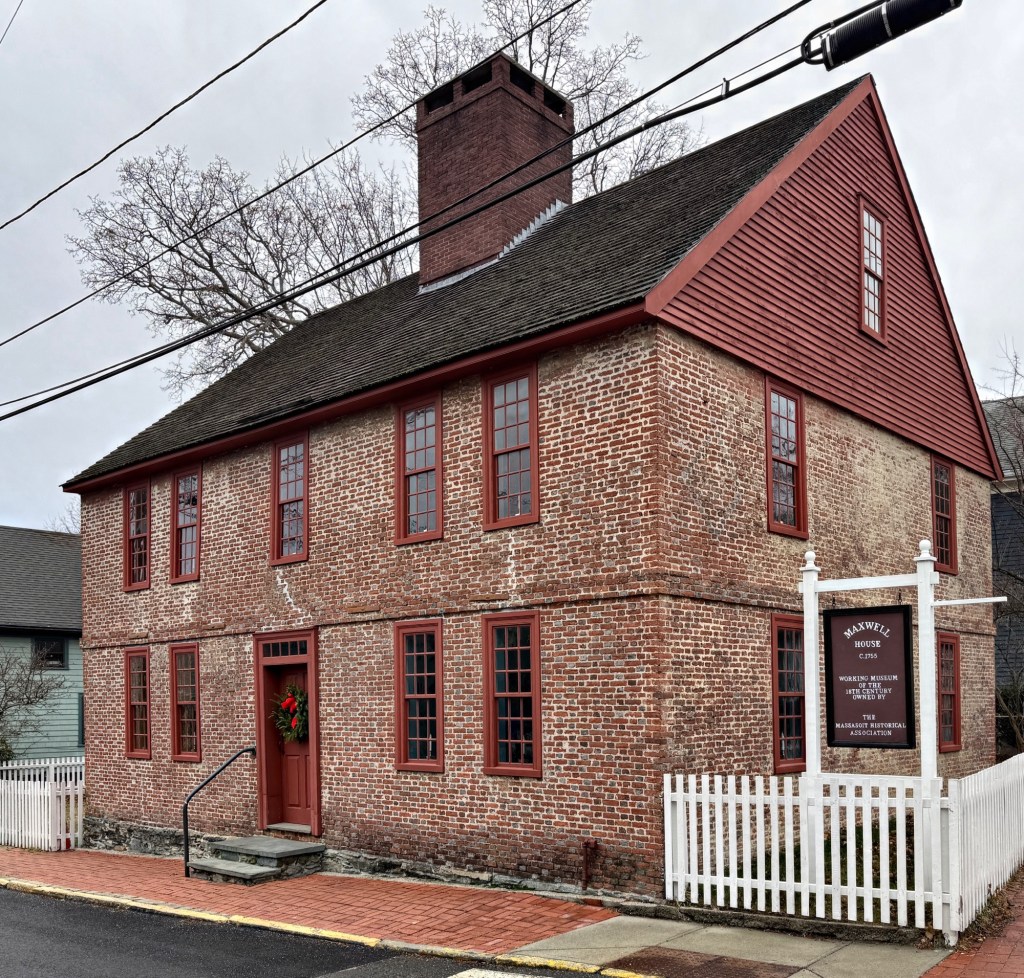
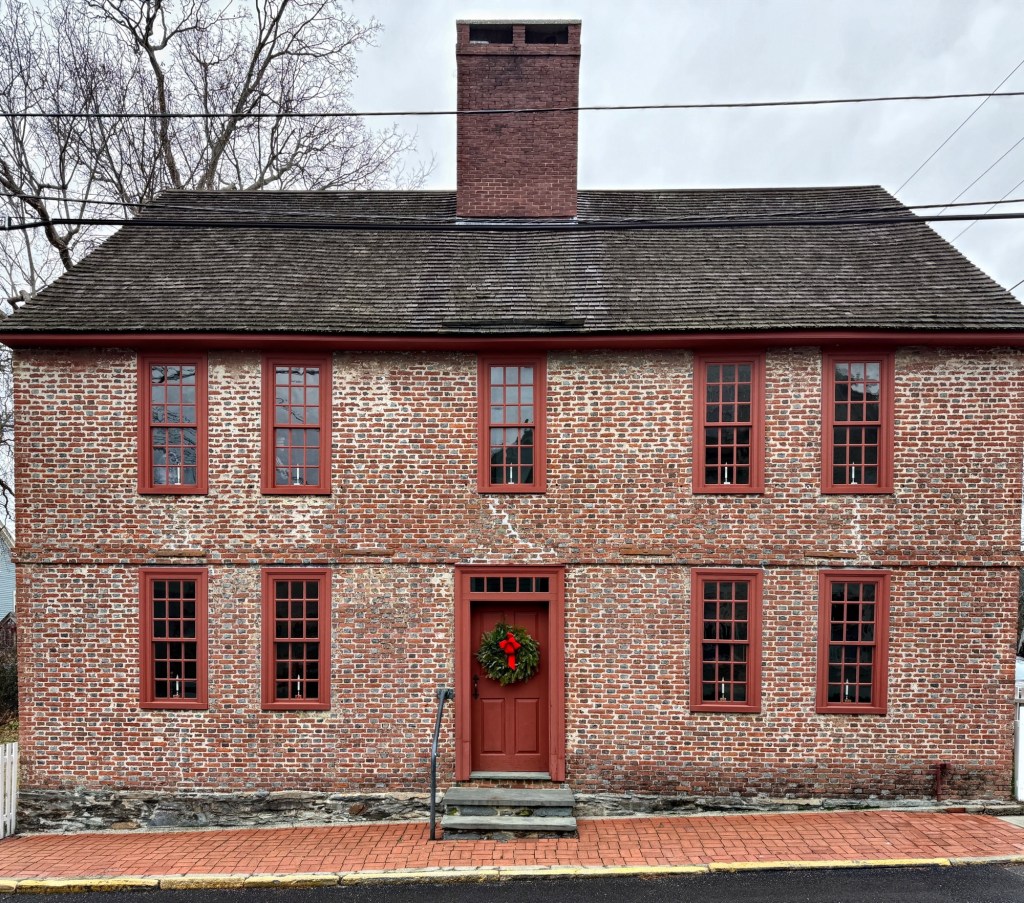
The Maxwell House in Warren, Rhode Island, is a striking example of mid-18th-century colonial architecture and one of the oldest brick dwellings in the waterfront town. Built before 1755, the house is one of the finest brick Georgian-era residences in New England with its characteristic Flemish bond brickwork, fieldstone foundation, wood-frame gable ends, and massive central chimney that anchors its historic pre-Revolutionary form. Originally constructed for the Reverend Samuel Maxwell (1688-1778) and later home to members of the Maxwell family, prominent shipowners, merchants, and slave-owners in town. The Maxwell family’s wealth was tied to the maritime economy of the era, which tells the story of many Rhode Island merchants of the time, who participated in the trans-Atlantic slave trade that enriched local elites and shaped the region’s economic growth, a history that communities are increasingly confronting alongside preservation efforts to this day. Today, the Maxwell House serves as a house museum preserved by the Massasoit Historical Association, who (hopefully) share the full story of the house, from its architecture to funding to construct it.
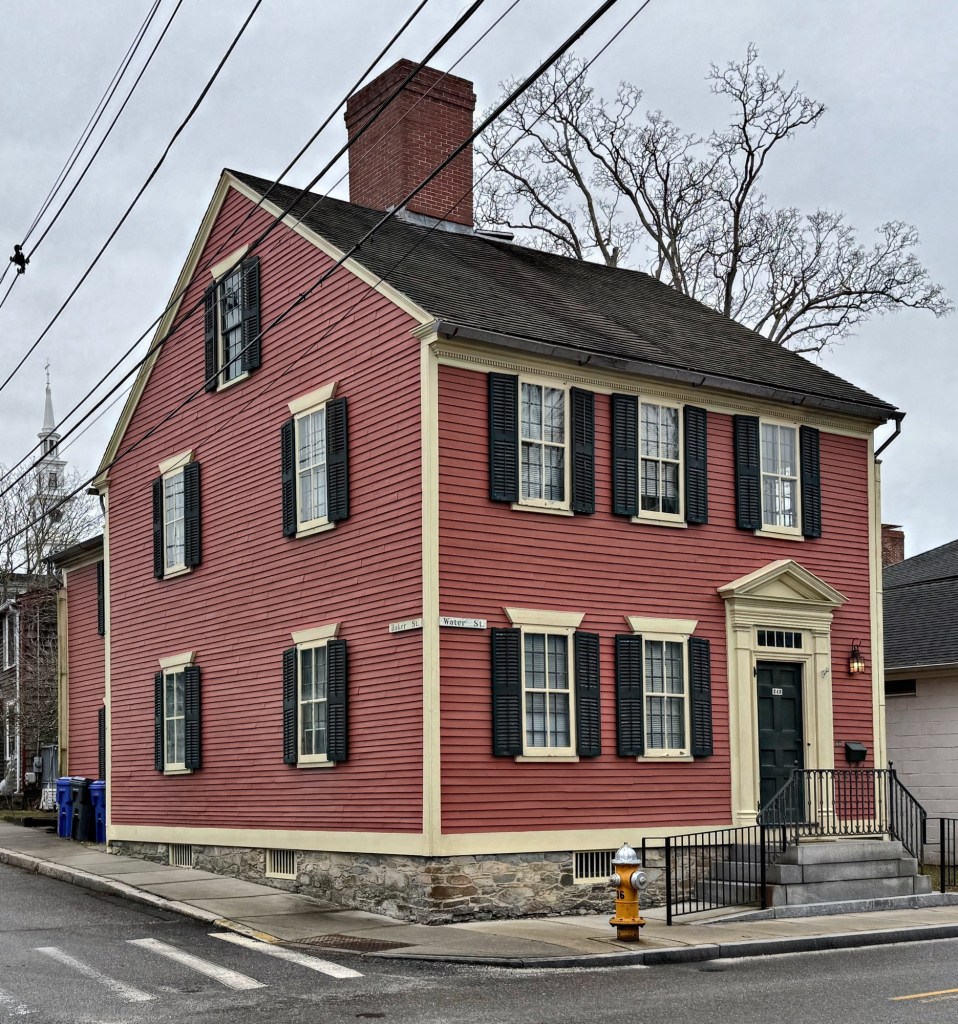
Located at the corner of Water and Baker streets in Warren, Rhode Island, this Georgian Colonial-era home oozes charm! Built by shipwright William Hill, as a three bay, two storied residence in 1761, this Colonial “half-house” was later owned by mariner William Collins who managed a wharf nearby. The home was later inherited by his son, Capt. Haile Collins (1798-1863). The two-story house with three-bay-façade and side-hall entry is a great example of a Georgian residence with raised stone foundation with entry accessed by double-run brownstone steps, massive central chimney, and the pedimented entry with transom and pilastered enframement. The home was eventually covered with asphalt shingle siding and was threatened with demolition in the 1980s until it was purchased and restored by Lombard John Pozzi, a prominent local force in architecture and historic preservation, who restored many old houses in the region.
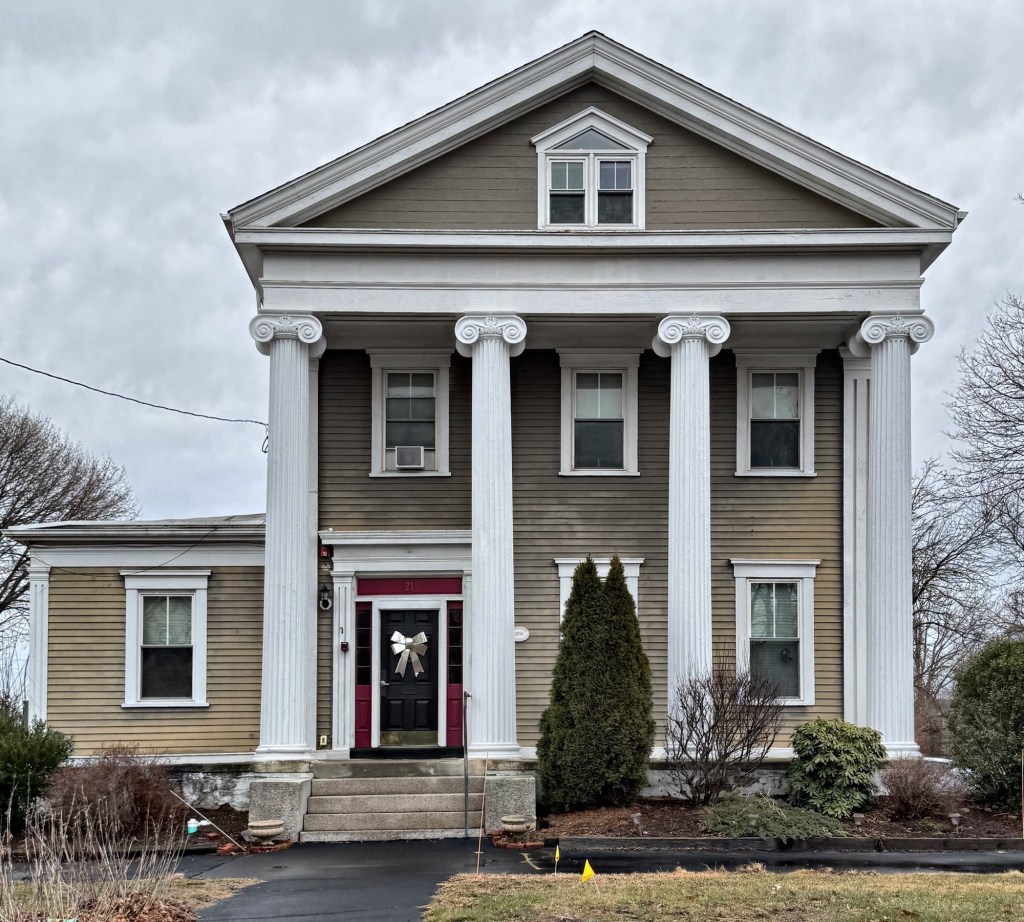
The only two-story temple-front Greek Revival style house in Warren, Rhode Island, the Judge Alfred Bosworth House on Federal Street, is believed to be the work of great architect Russell Warren. Alfred Bosworth (1812-1862) ran a law office in Warren and Providence and represented Warren in the General Assembly from 1839 until 1854 and then served as a justice on the Rhode Island Supreme Court. Bosworth was of counsel for Rhode Island in suits growing out of the boundary question between Rhode Island and Massachusetts, specifically around Fall River. Judge Bosworth died at home in 1862 and his widow, Anne, lived here afterwards. At the end of the century the Bosworth House was converted to an ice cream parlor, named Maxfield’s, which became a very popular attraction in town. The company, owned by Nathaniel and Julia Maxfield, attracted throngs of local residents every summer who would eat ice cream on the front yard of the house. Maxfield’s was even frequented by Providence writer, H. P. Lovecraft, when he was a young man. During the mid-1900s, the house served as a nursing home until 1988, when owners restored the house back to a residence and removed the asphalt siding that was added to the exterior around the time of the Great Depression.
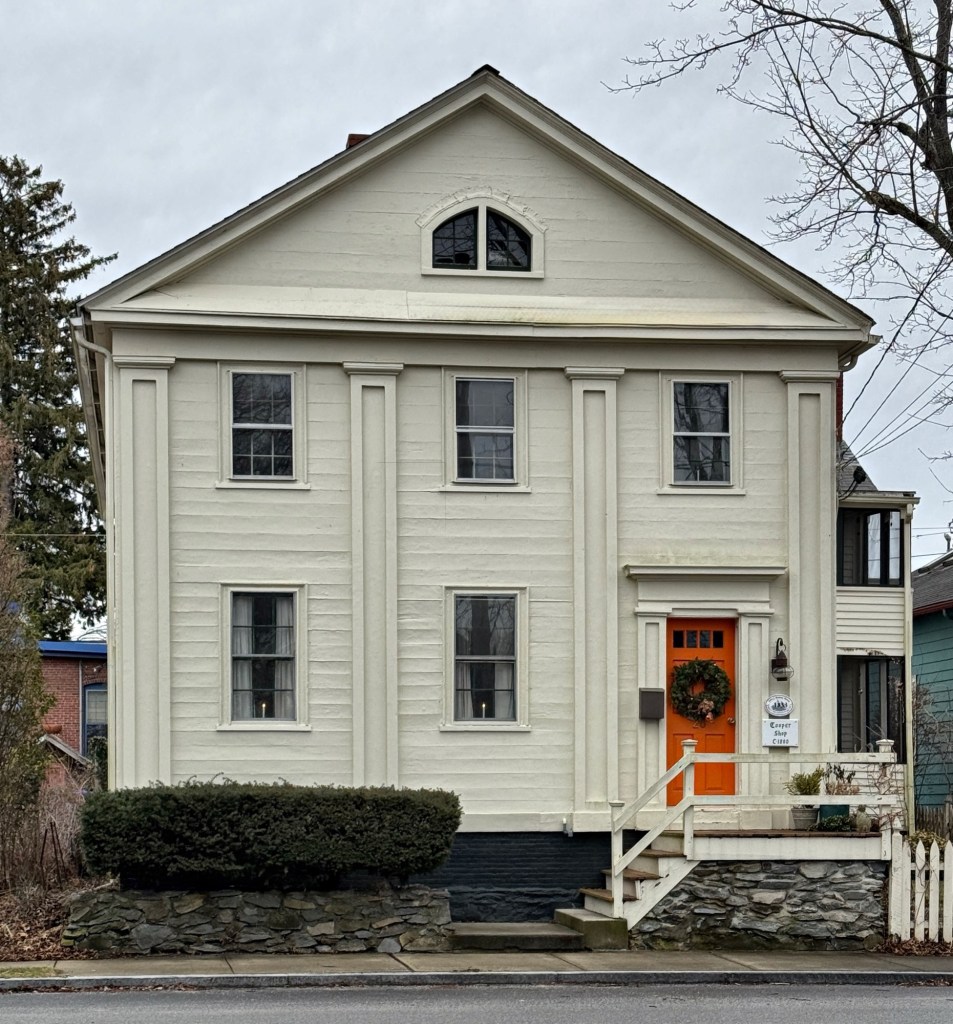
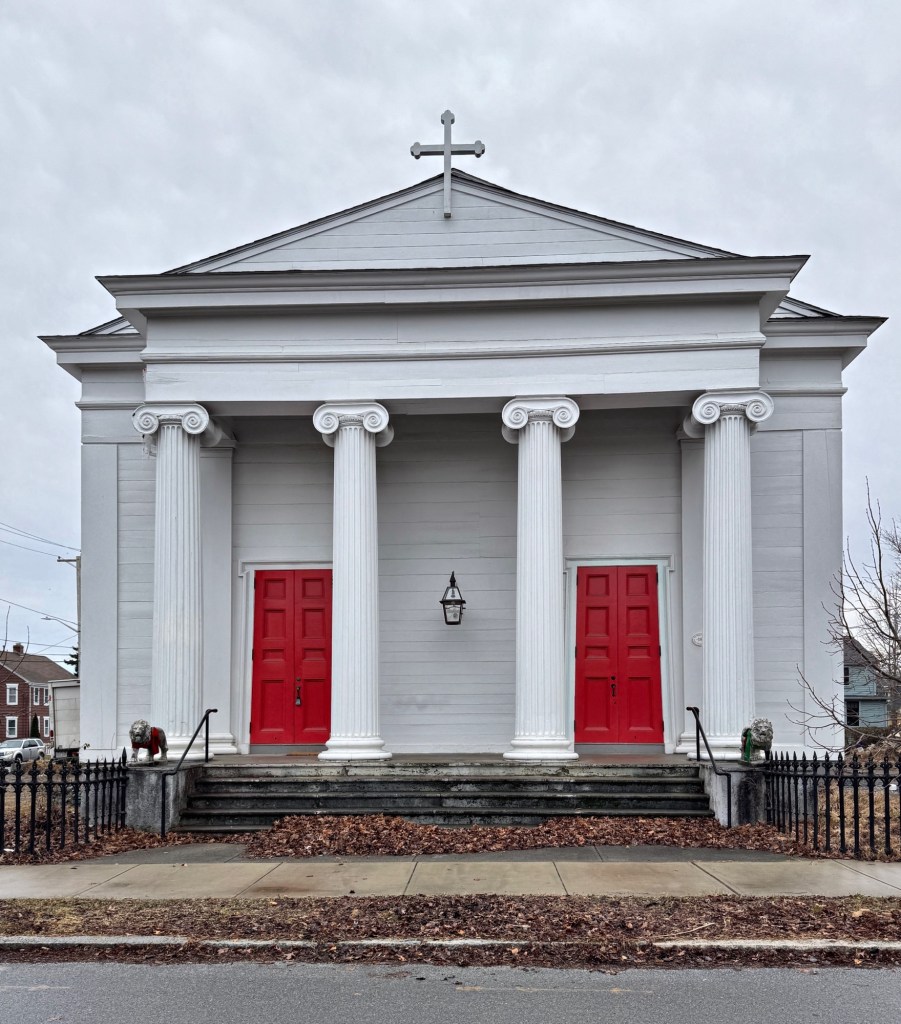
This stunning Greek Revival house on Lyndon Street in Warren, Rhode Island, was according to historians, built around the turn of the 19th century as a cooper shop! A cooper as a professional, would make wooden barrels, tubs, and casks from wooden staves, which were all made in this building before it was converted and renovated around 1830 in the Greek Revival style for Deacon John J. Bickner, who was likely affiliated with the Episcopal Church across the street, which was designed by architect, Russell Warren. Due to the connection, it is possible that the renovation for Bickner was undertaken by Russell Warren as well. On its facade, the house has two-story applied pilasters which break up the bays and smooth flushboard siding which makes the house even more stately!
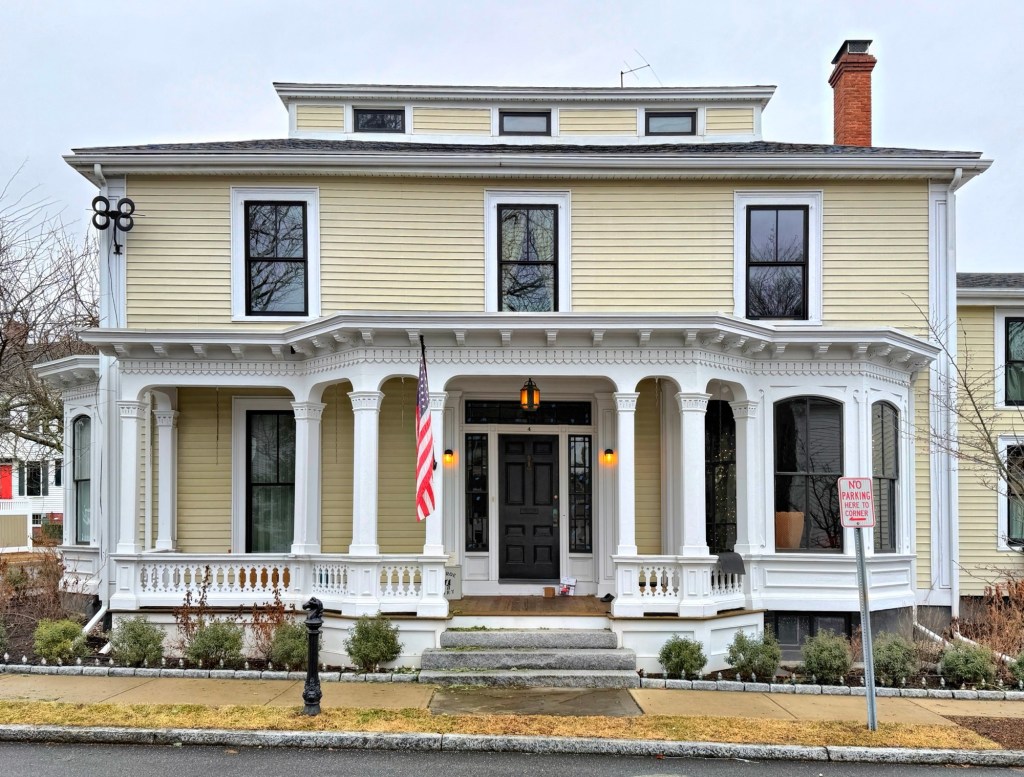
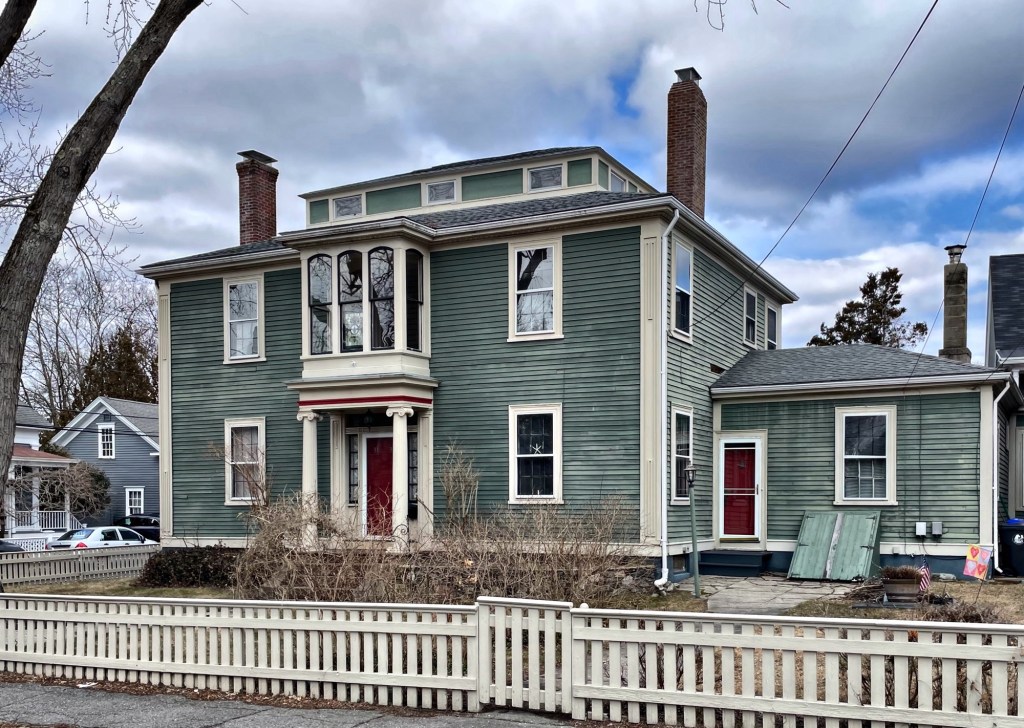
While a part of this Warren, Rhode Island, home may date from as early as the late 18th century, it was completely “modernized” in the mid-19th century by owner, Lewis T. Hoar, a successful housewright, giving us the playful design we see today. Lewis Thomas Hoar (1810-1881) worked in partnerships, building many of the stately Italianate style residences in the village of Warren before entering politics, where he was elected as a state representative. Rather than building his own home from scratch, Lewis updated an earlier Federal period house, retaining its Federal-era hipped roof with monitor, but added the more intricate bay windows and porch, embellished with carved balustrade, brackets and ornament. The large property even retains a Second Empire style stable or barn, which has been preserved by later owners.
Charles Wheaton (1761-1863) enlisted in the his local militia at just 14 years old and served in Colonel Robert Elliott’s Regiment of Artillery to protect Narragansett Bay. After the war, Charles settled in Warren, Rhode Island, and married Abigail Miller. They would have at least nine children, with one of their children, Charles Wheaton, Jr., (1791-1863) marrying Abiah Goodwin Turner in 1815, the daughter of a wealthy sea captain. Around the time of their marriage, they built this house on Liberty Street in Warren in the Federal style with a three bay facade, monitor on hip roof, and portico at the entrance with Ionic columns. By the end of the 19th century, the house was enlarged and a bay window was added over the entry portico.
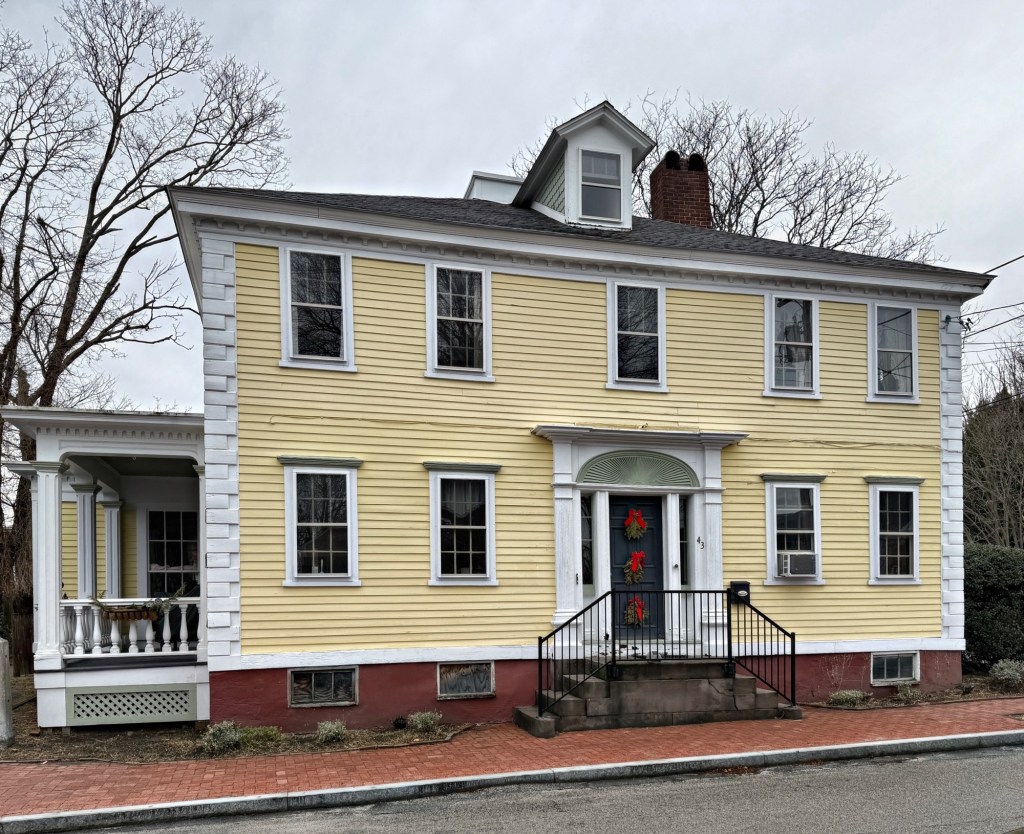
One of the great Federal style homes in the charming downtown of Warren, Rhode Island, the Salisbury-Johnson House at 43 Miller Street features many of the hallmarks of the prominent architectural style. The main body of the house was constructed by 1823 after Theophilus Salisbury (1781-1835) purchased the house lot at the corner of Union Street, possibly being moved from another site to the present location at this time. The two-story, five-bay façade is detailed by quoined corners and an exceptional center entrance with sidelights and large, elliptical blind fan carved from a single piece of wood. After later owners, the property was purchased by Rodolphus B. Johnson (1816-1884), a wealthy shipping agent who owned whaling ships and ran a wharf at the foot of Johnson Street nearby.
Built in 1803 for Captain Level Maxwell (1754-1828), this five-bay, Federal style house built of brick, is located on Main Street in Warren, Rhode Island, and has ties to the community’s maritime past. The original owner, Level Maxwell, was a member of the wealthy Maxwell Family who built their wealth in shipbuilding and the triangle trade. Level Maxwell was a captain and invested in ships, including the schooner Abigail, which would become Warren’s first slave ship in 1789, two years after slave trading had been declared illegal for Rhode Island residents. The Abigail was designed with a middle deck less than five feet high, where the kidnapped Africans would be imprisoned, with sources stating that 64 African men, women and children were forced onto the ship and then imprisoned for two months on the journey across the Atlantic. Eleven enslaved people died on the journey and were likely thrown overboard into the open sea, with the surviving 53 people sold into slavery in the Caribbean, with the Abigail returning home with the profits. It is unclear if Level Maxwell lived in this house or built it for sale, but the property was owned in the mid-19th century by George A. Barton, a merchant. The property was owned in the late 20th century by Mary King, who restored the old house and operated her antique store from the residence. Architecturally, the home exhibits many features of the Hazard-Gempp House nearby on Liberty Street, and was likely constructed by the same builder.
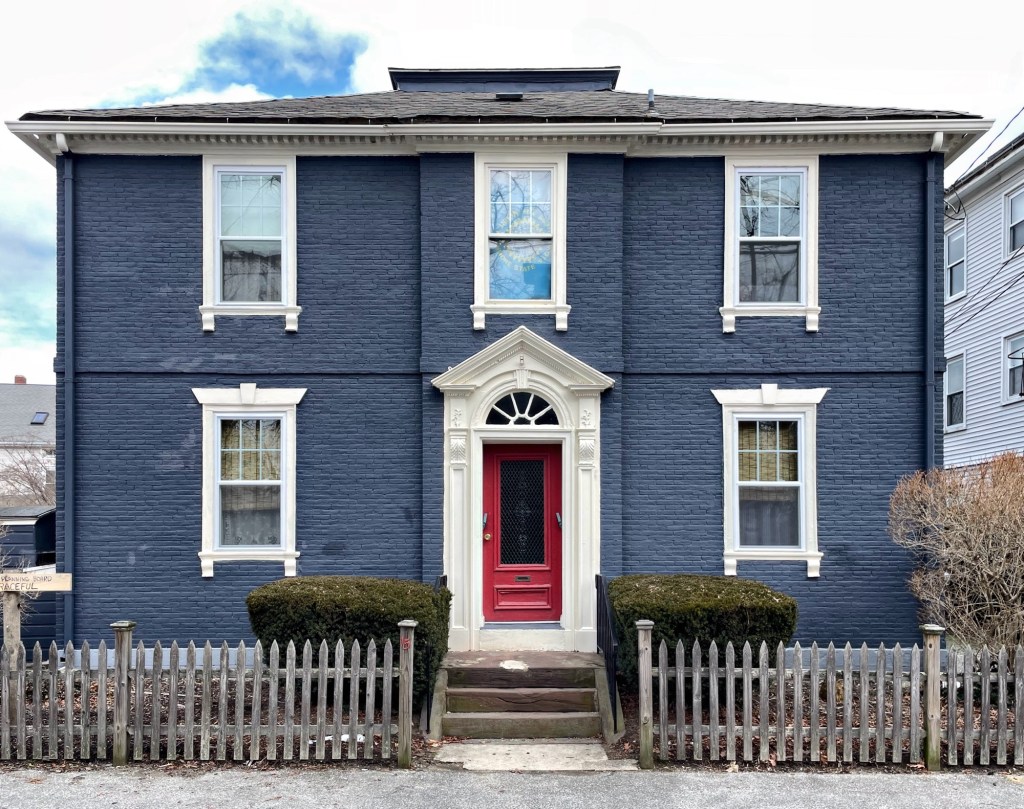
This elegant brick Federal style residence in Warren, Rhode Island, was built around the turn of the 19th century, sometime after Liberty Street was laid out in the mid-1790s. An excellent example of the Federal style finished in brick, the three-bay residence features a projecting belt course between the first and second stories, corbels and flared lintels at the windows, a hipped roof surmounted by a small, centered platform, and an elaborate entry with pediment and elliptical fanlight transom. The builder is not known at this time, but the house was owned by George C. Hazard and later inherited by his son, George G. Hazard and later by Mary Jane Hazard, who remarried to Lucius Warner. In the early 20th century, the property was purchased by Gottlieb and Louise Gempp, proprietors of the local American-German Club. Despite having its brick painted, the Hazard-Gempp House remains as one of the town’s great and well-preserved Federal period homes built of brick.