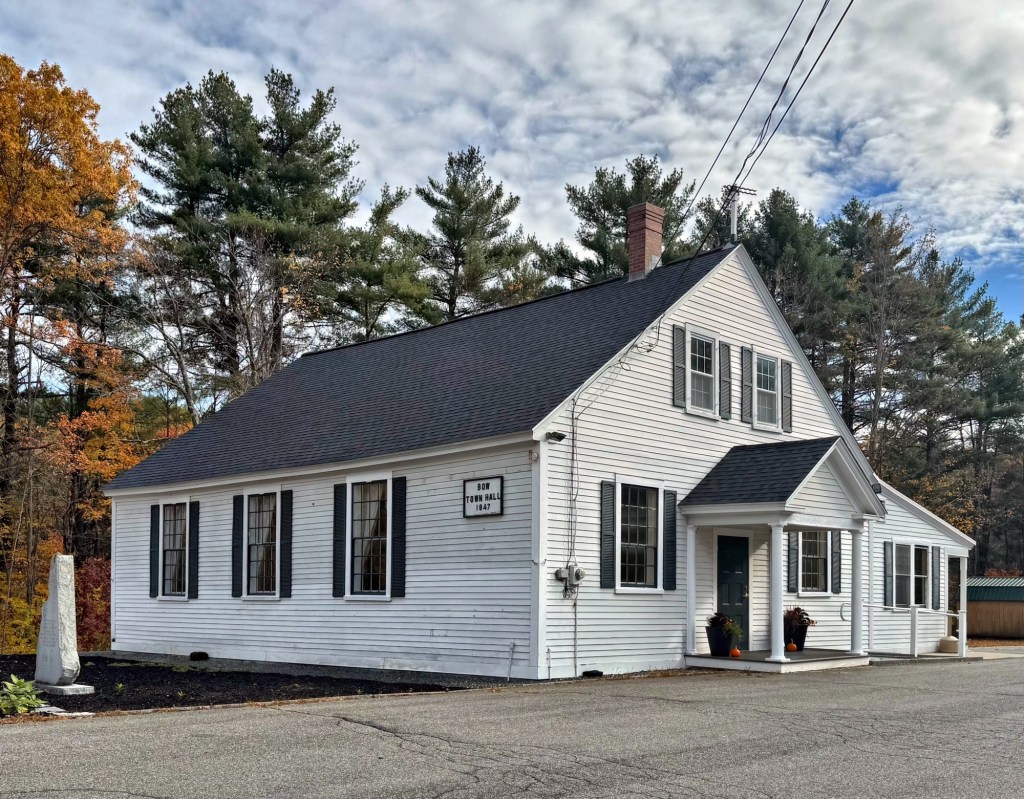
Bow Old Town Hall // 1847

The town of Bow, New Hampshire, was incorporated in 1727 and named after its location along a bend, or “bow” in the Merrimack River at its easternmost boundary. Early town meetings were held in the town meetinghouse of 1770, and the second meetinghouse of 1801, until the separation of church and state became official in New Hampshire in 1819, with the passage of the Toleration Act. Until 1819, residents in New Hampshire conducted town business and religious services in the same building, the town meetinghouse. However, as towns diversified and religious freedom prospered, citizens grew less comfortable supporting one particular religious denomination with taxpayer money. Bow eventually secured funding to erect its first purpose-built town hall in 1847, this vernacular, two-story building on Bow Center Road. The small building served as the town hall for over 100 years, when in 1957, a growing suburban population required a larger, more modern town hall. The old Town Hall of Bow now serves as a meeting place for Town organizations and is rented out to Town residents for events.
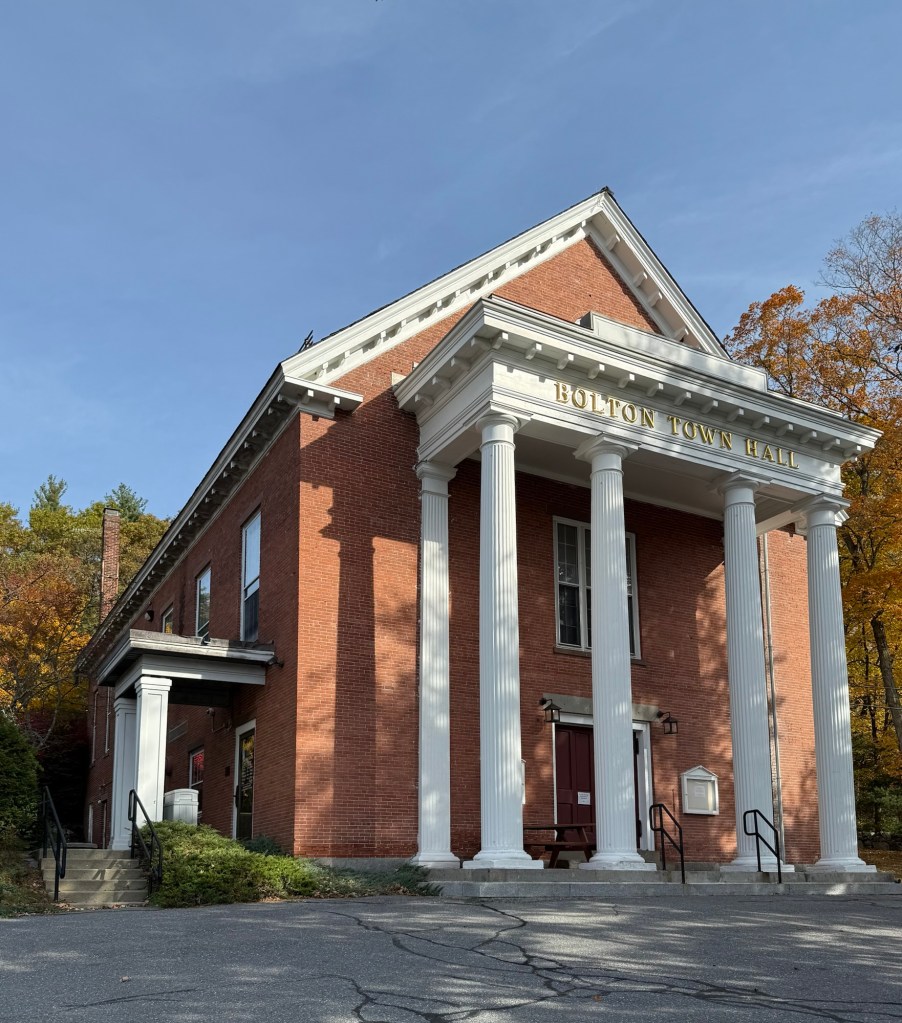
Bolton Town Hall // 1853

The Town Hall building in Bolton, Massachusetts, is significant as the hub of the town’s municipal activities for the past century and a half and architecturally as a mid-19th century town hall built in the transitional Greek Revival and Italianate styles. The structure was completed by the town in 1853 as a replacement for the former 1834 wood-frame town hall, which had burned down in 1851. The original wood-frame building was constructed at the time that municipal functions were being moved out of town meetinghouses across Massachusetts following the desire to separate church and government functions. Like many town halls of its era, the larger 1853 building was designed to accommodate multiple aspects of the community’s institutional and public life. The two-story building included a fireproof vault for town records, with town meetings held in the second floor meeting hall, with selectmen meeting in a room on the first floor. A small room was fitted for a library until the early 20th century when the town’s first purpose-built library was constructed farther down Main Street. The fairly unadorned Town Hall was modernized in around 1916 with the addition of the front portico and a rear addition. The Bolton Town Hall remains as a source of pride for the small, yet charming town of just under 6,000 residents.

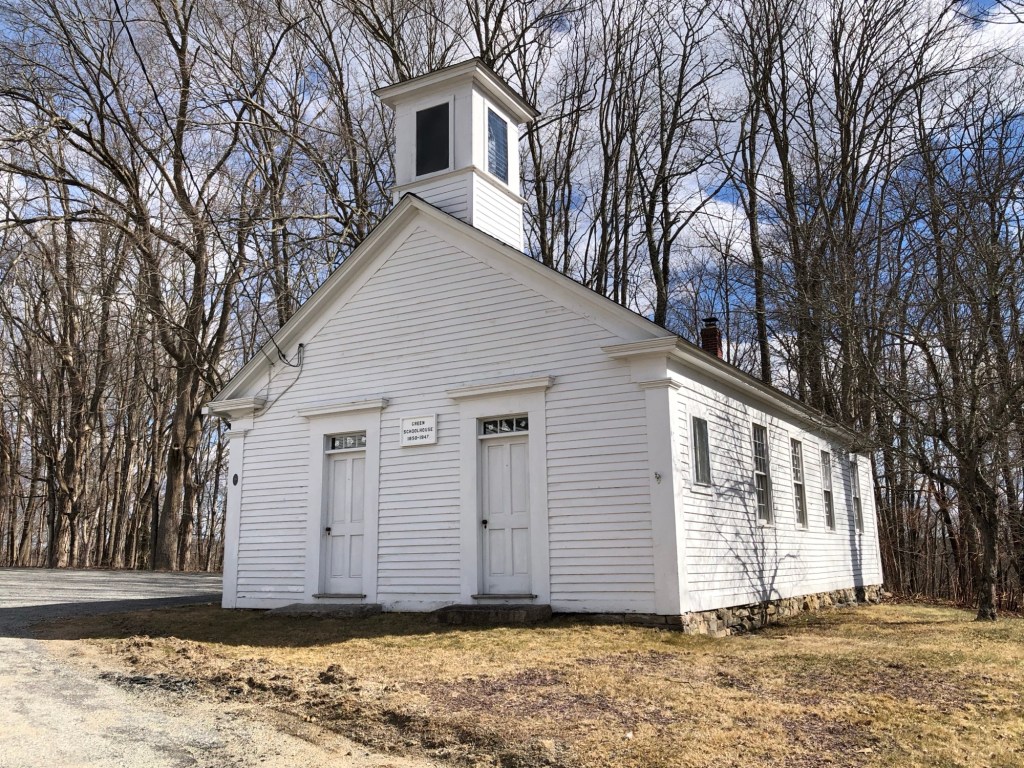
Canterbury Center District School // c.1860

The Center District Schoolhouse of Canterbury, Connecticut, sits behind the village church and is the town’s best-preserved example of a district schoolhouse. Built c.1860, the vernacular, Greek Revival one-room schoolhouse served the central village through the 19th and into the 20th centuries with its twin entry, double-hung windows to allow light and air into the classroom, and a belfry with bell to notify pupils when class was about to start. Like many similar one-room schools in rural New England, pupils attended class with neighbors and siblings in the small, intimate classroom of varied ages. 

Former Cornwall Public Library // 1908

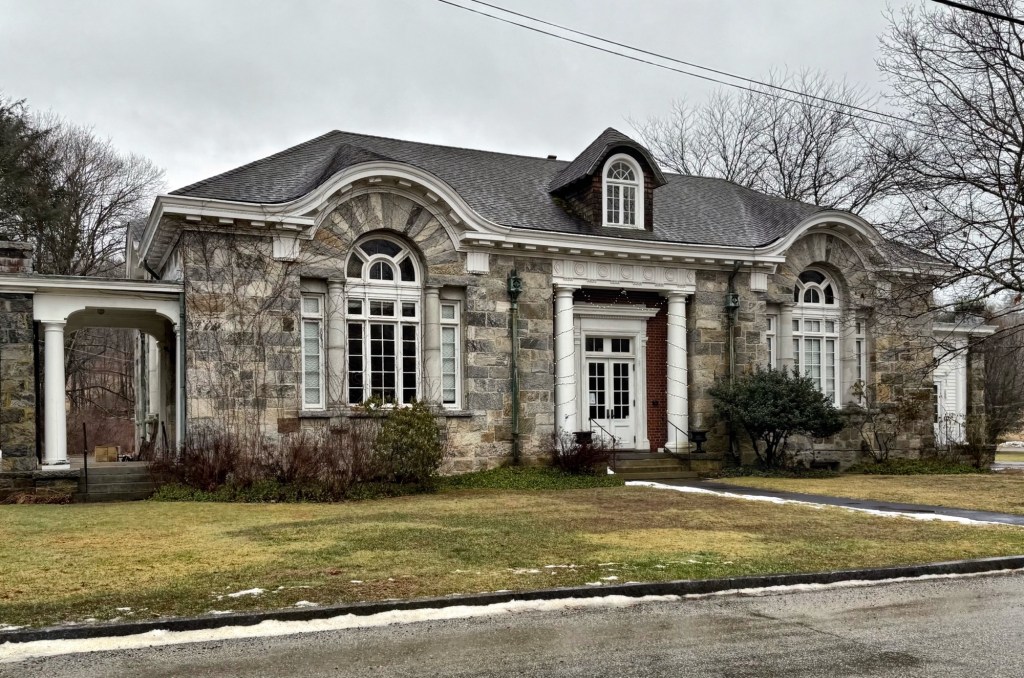
Constructed of random-coursed stone, this charming building in Cornwall, Connecticut, exhibits a prominent classical entry, Tuscan pilasters, and modillion eaves. This handsome structure was completed in late 1908 following a substantial donation to the town for it’s first purpose-built library by summer resident John E. Calhoun. Mr. Calhoun had cultivated an interest in architecture and is said to have designed the building, and later designed his own home in the village years later. The high-style architectural building documents the transformation of Cornwall from a sleepy agricultural town into a fashionable residential retreat in the late nineteenth and early twentieth centuries. The building operated as the town’s public library until 2002 when the contemporary library building was completed. This stone structure was converted to the town hall.

Foster-Beck House // c.1845

This attractive Greek Revival style residence with later porch was likely built in the 1840s and is one of the finest homes in the village of West Cornwall, Connecticut. The house was likely built for Stephen Foster (c.1816-1863), a merchant and railroad contractor who had constructed a portion of the Housatonic Line railroad near West Cornwall, further opening the village up to trade. Stephen and his wife, Helen, lived here for some time until around 1860 when they relocated to a larger, Italianate style mansion nearby. In 1867, this property was purchased by George Beck, a German immigrant and partner of the Vollmiller Shear Shop, who manufactured metal shears and scissors in West Cornwall. It is likely that Beck was owner of the house at the time the wrap-around porch with scroll-sawn columns.

Old Goshen Town Hall – Goshen Players // 1895

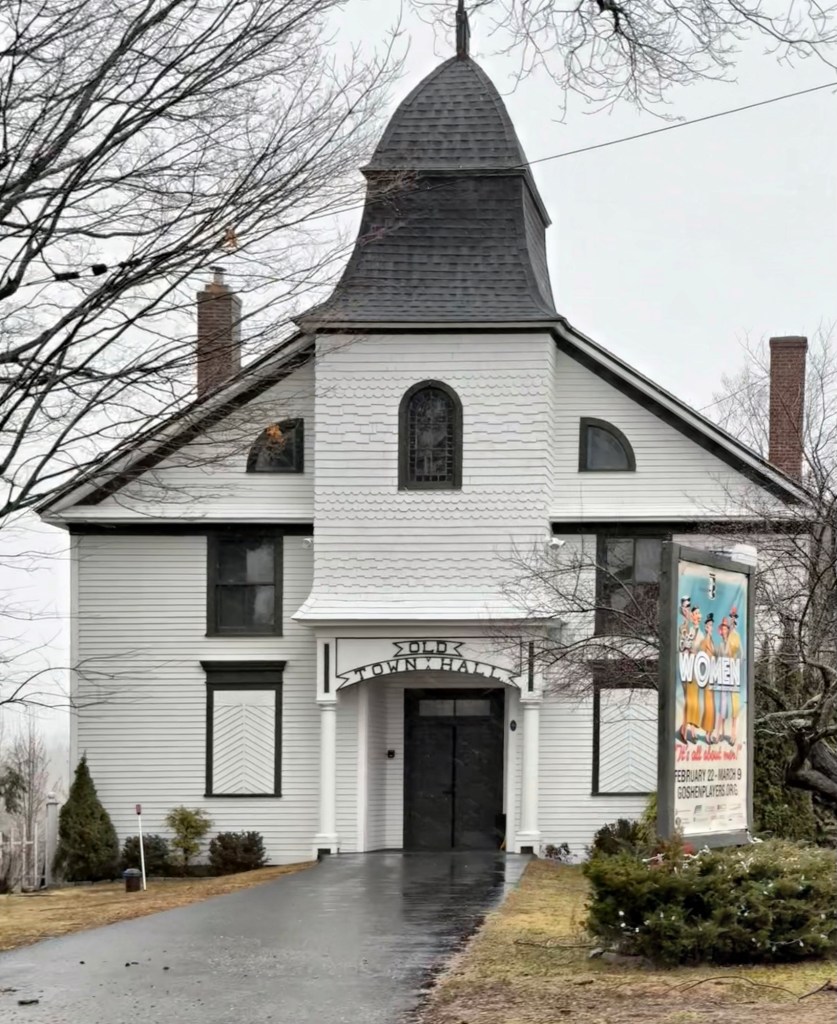
The first purpose-built official town building of Goshen, Connecticut, was this wood-frame structure at the main junction in the central village as the town’s first town hall. Built in 1895, the structure originally housed offices for the selectmen and town clerk, a fireproof vault for records, and a large audience-room with stage for town meetings and ceremonies. The building employs a more traditional form similar to the old Greek Revival meetinghouses built in New England in the first half of the 19th century, but with a shingled, Victorian entry tower with bell roof. When the Town of Goshen moved into its present town hall building, this structure became the home to the Goshen Players, a community theatre established in 1949, and is the second oldest continuously performing theatre group in the state.

Mallett Hall // 1886

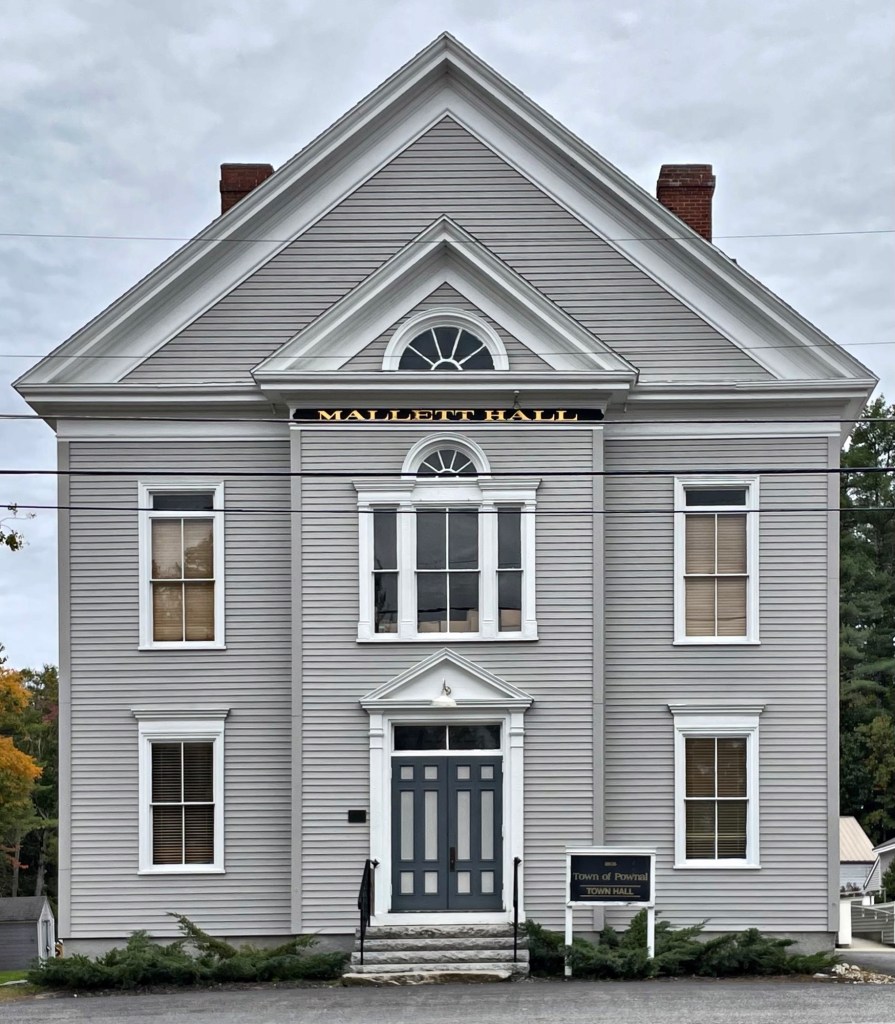
Built in 1886, Mallett Hall is one of the most interesting and significant buildings in the small town of Pownal, Maine. The town is located equidistant to the larger cities of Portland, Brunswick, and Lewiston, but retains a very rural charm. This hall was built following a town meeting on March 15, 1886, where an article was approved to appoint a committee charged with developing plans and estimates for a new town hall. The hall is named after Edmund Mallett, a businessman who partially funded its construction. The architect is not officially known, but estimates guess it was the work of Francis Fassett, a popular architect at the time in the area. In addition to housing town offices and functions, it has also served as a community center, hosting social events. The Colonial Revival style building takes strong cues from Greek Revival meeting houses in the area but exhibits a Palladian window and fanlight in the pediment.

Old New Ipswich Town Hall // 1817

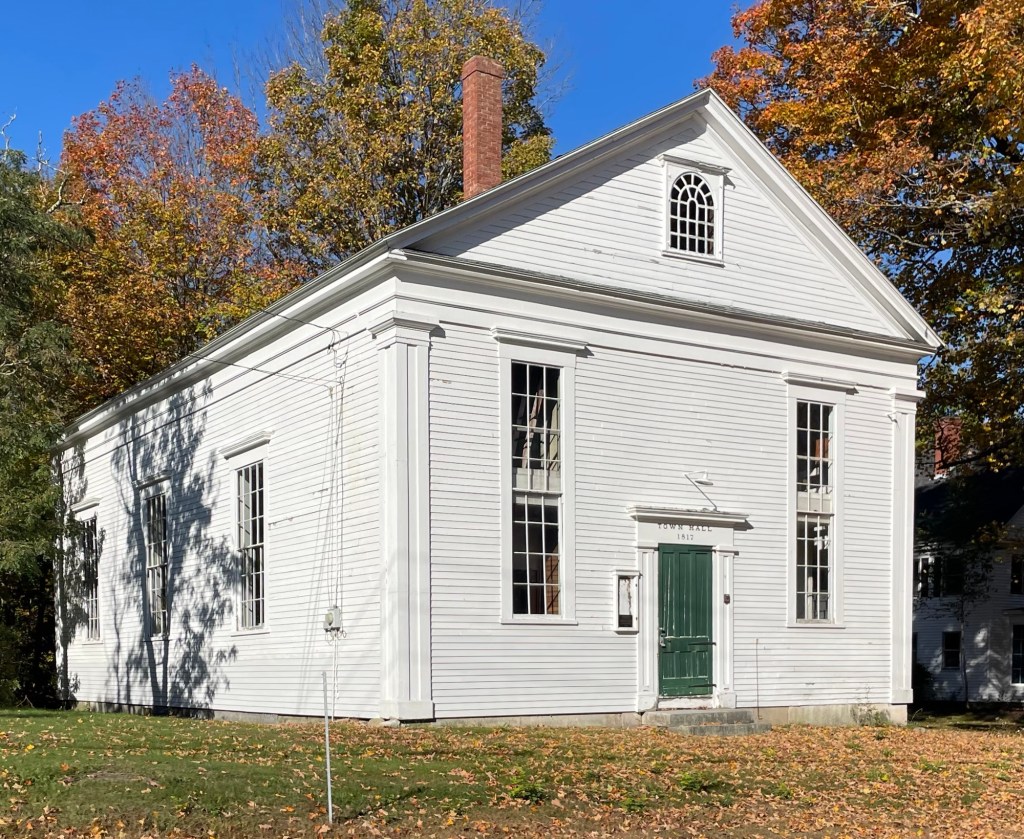
New Ipswich, New Hampshire, is a town that oozes New England charm! Winding back roads are lined with Colonial-era homes and buildings, lovingly maintained by stewards and neighbors to create the quintessential small town feeling. New Ipswich was granted in 1735 to 60 inhabitants of Ipswich, Massachusetts, where the name is derived, by colonial Governor Jonathan Belcher and the General Court of Massachusetts. European settlement began here in 1738, when Abijah Foster arrived to the area with his wife and infant daughter. At the center of town, a new Town Hall was built in 1817 as a combination town hall and private academy with funds provided by the town government and by the trustees of New Ipswich Academy. The building was constructed under the direction of Deacon Nathaniel Gould, using materials salvaged from a disused meetinghouse of 1770. The arched gable window is reputed to have been taken from the meeting house, as are twisted balusters on the gallery stairway inside. As completed in 1817, the building had a full second floor which provided the academy with a lecture room, a small library, and a laboratory, but that was taken over by 1869 when the Town renovated the building, removing a tower and belfry, and occupied the second floor spaces. The building is still owned by the town, and is used occasionally for civic functions, with town offices in a mundane, newer building a short distance away.

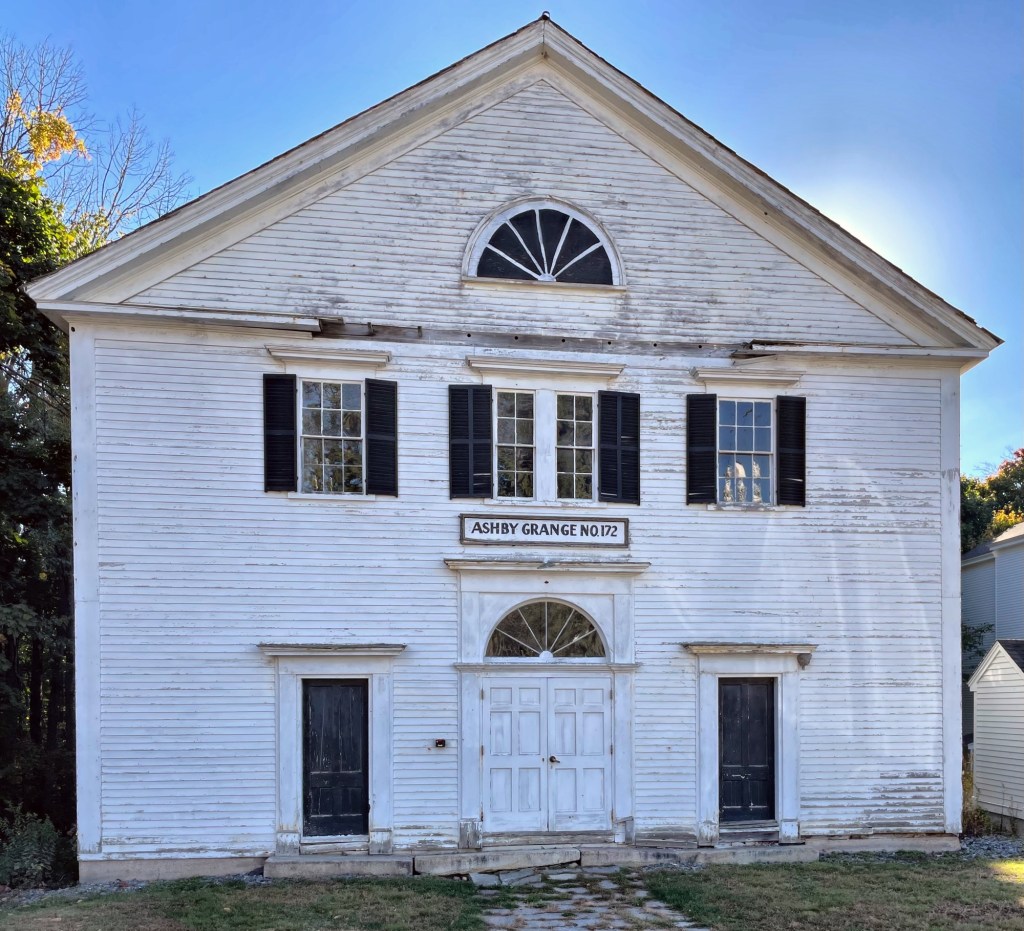
Old Ashby Academy – Ashby Grange Hall // 1820

In 1819, less than a decade after the First Parish Church in Ashby, Massachusetts was built, a group of parishioners split to form their own congregation, erecting this Federal style building as its new house of worship a year later. The congregation grew and eventually would build a new church, the Ashby Congregational Church, in 1835. The building was soon after, sold to a group of citizens interested in starting an academy. In 1836 they opened Ashby Academy, which offered education beyond the eighth grade for those who could afford it. Ashby Academy closed in 1860 and the Town of Ashby purchased the building in 1864 for a high school and town offices, a use that remained until a new school was built in 1902. Since the 1970s, the building has been occupied as a local grange hall, and maintained by a local group, the Friends of the Ashby Grange Hall. The building is a significant, transitional Federal/Greek Revival style building in town with its pediment and elliptical windows.

Dixmont Corner Church // 1834

Dixmont, a small rural town in central Maine was originally originally a land grant by the Commonwealth of Massachusetts (of which Maine was then a part) to Bowdoin College, which sold the first settlers their land for profit to build on their campus. As a result, the town was originally called “Collegetown”, which was obviously short-lived. Dr. Elijah Dix (1747-1809) of Boston, who never lived there but took an interest in its settlement, encouraged others to settle there, and when the town was officially incorporated in 1807, it named itself after Dix, as Dixmont. A “malignant fever” broke out among the settlers in the early years, also killing Elijah Dix while in Dixmont on a trip there in 1809, he was buried in the Dixmont Corner Cemetery. Elijah was the grandfather of reformer and nurse Dorothea Dix. The early settlers had this church built by 1834 by Rowland Tyler, a local master builder whose only other documented work is the 1812 City Hall of Bangor. The Dixmont Corner Church is one of Penobscot County’s oldest Gothic churches and also exhibits some Greek/Classical elements.