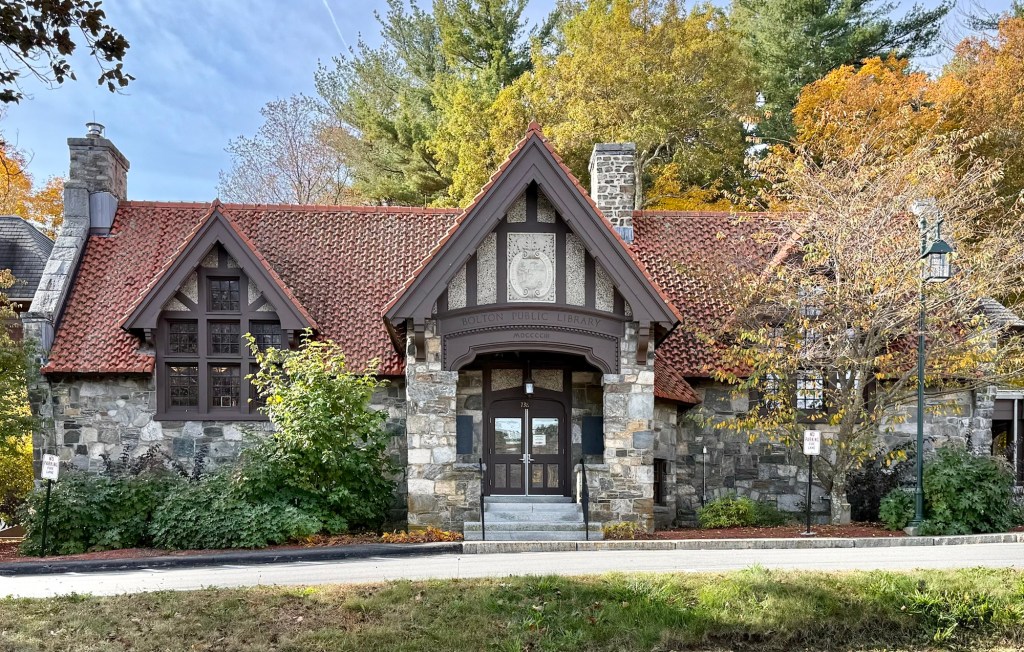
Bolton Public Library // 1903

The Bolton Public Library was established in 1859, when the town’s library collection was housed on a few shelves in the Selectmen’s room at the Town Hall. In the following decades it became clear to the community that a purpose-built library building should be constructed in town to house the growing collections there. At the time when wealthy benefactors donated funds for public libraries in towns and cities across New England, sisters Emma and Anna Whitney gifted their hometown of Bolton, $10,000 to build a dedicated library building in memory of their father, Captain Joseph Whitney in 1901. Completed in 1903, the Bolton Public Library was designed by the architectural firm Stone, Carpenter & Willson and built of local Bolton fieldstone in the Tudor Revival style. Of particular architectural merit is the red tile roof and three gabled bays with carved stucco and woodwork within half-timbered frames. The library was added onto in 2010 from plans by Lerner Ladds & Bartels Architects, who replicated key materials and forms so the new wing feels coherent with the original yet clearly differentiated.

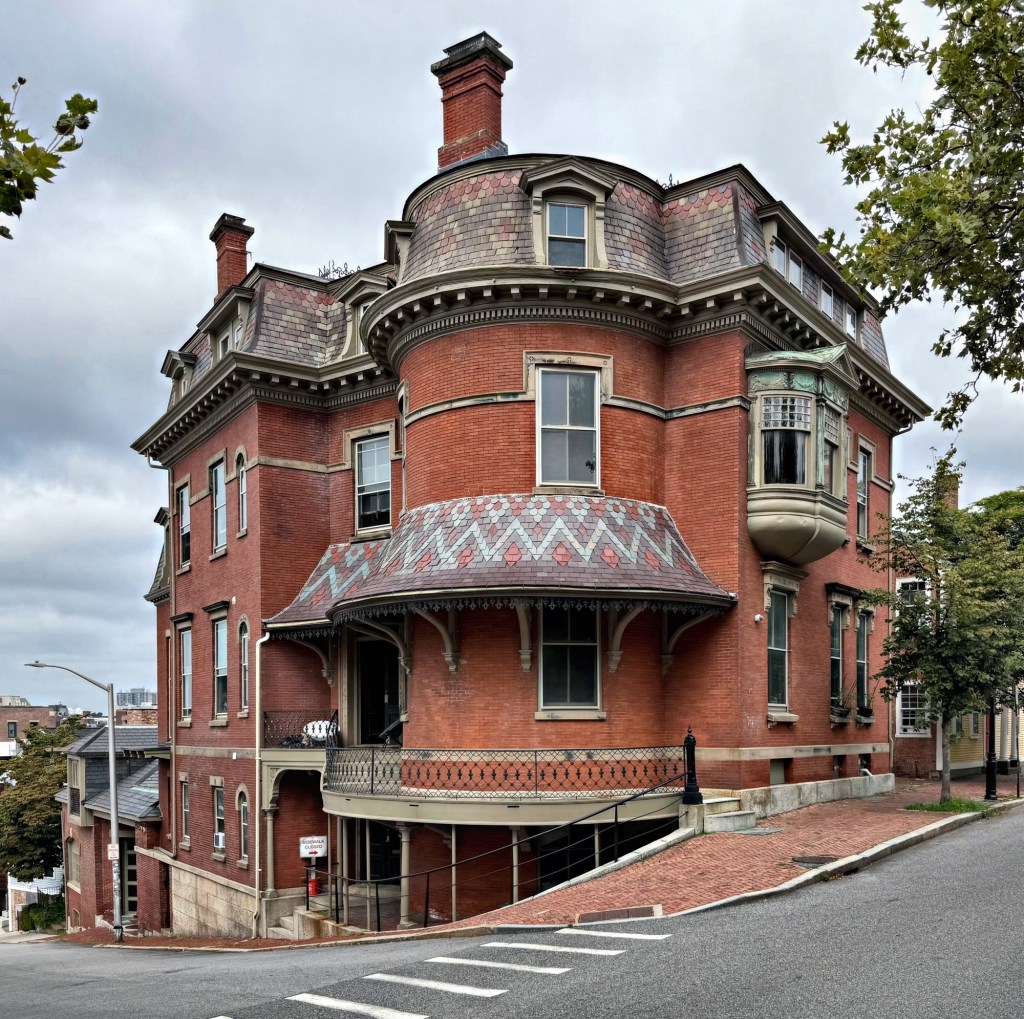
Ambrose Burnside House // 1866

What do this unique Victorian house and sideburns have in common? Well, you are about to find out!

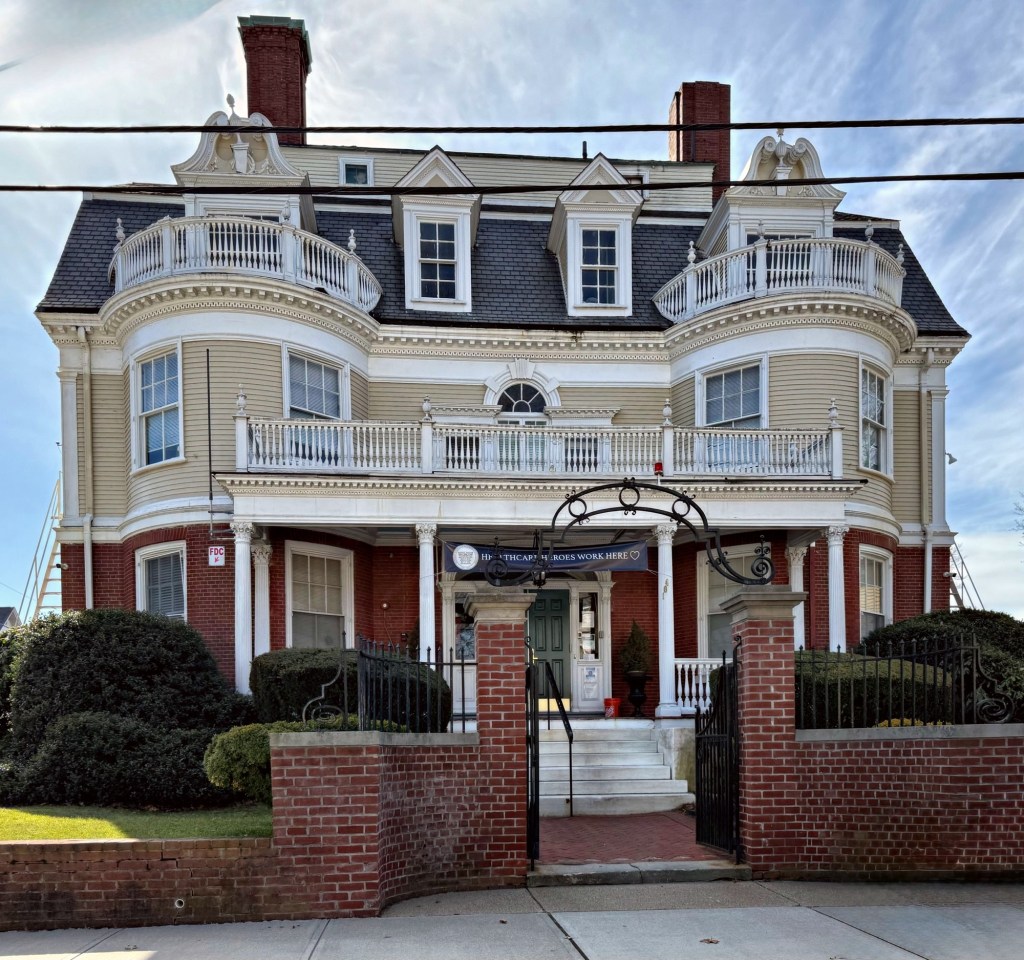
The Ambrose Burnside House is sited on an oddly shaped, and sloping corner lot on Benefit Street in Providence’s East Side neighborhood, and is one of the most unique Second Empire style residences in New England. The house was built in 1866 for General Ambrose Burnside (1824-1881), a Union general in the American Civil War, who returned to Providence and was about to begin a term as governor, followed by two terms in the United States Senate. Ambrose Burnside hired local architect, Alfred Stone, to design his new city mansion, which upon completion, was deemed one of the most “modern residences” in Providence. Built of brick with Nova Scotia stone with a concave slate mansard roof and one-of-a-kind rounded corner bay, the Ambrose Burnside House does not disappoint! Ambrose Burnside died in 1881 and the property was occupied by his sister-in-law until the property was sold in 1884 and housed the Providence Children’s Friend Society House for Aged Women and the Providence Association for the Benefit of Colored Children, providing shelter and food for elderly women and children of color without parents or guardians. After WWII, the Burnside House was converted to apartments.

Now, to the sideburns… Ambrose Burnside was noted for his unusual beard, joining strips of hair in front of his ears to his mustache but with the chin clean-shaven; the word burnsides was coined to describe this style. The syllables were later reversed to give sideburns.

Old Stone Bank // 1896

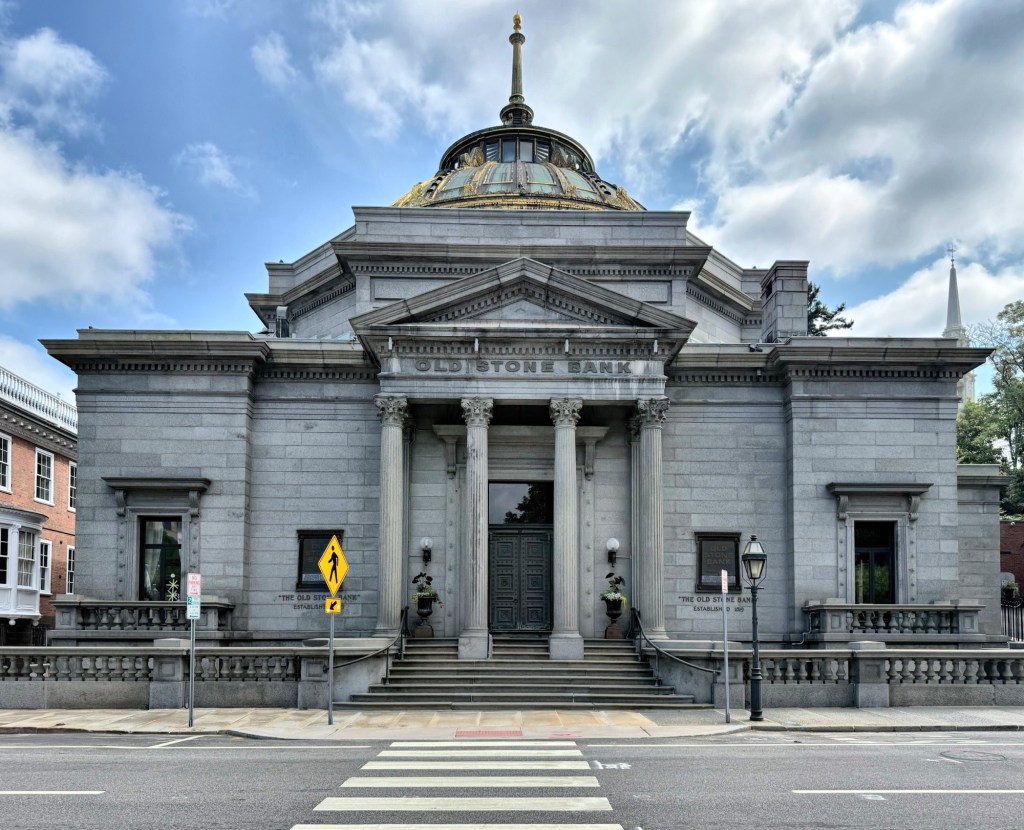
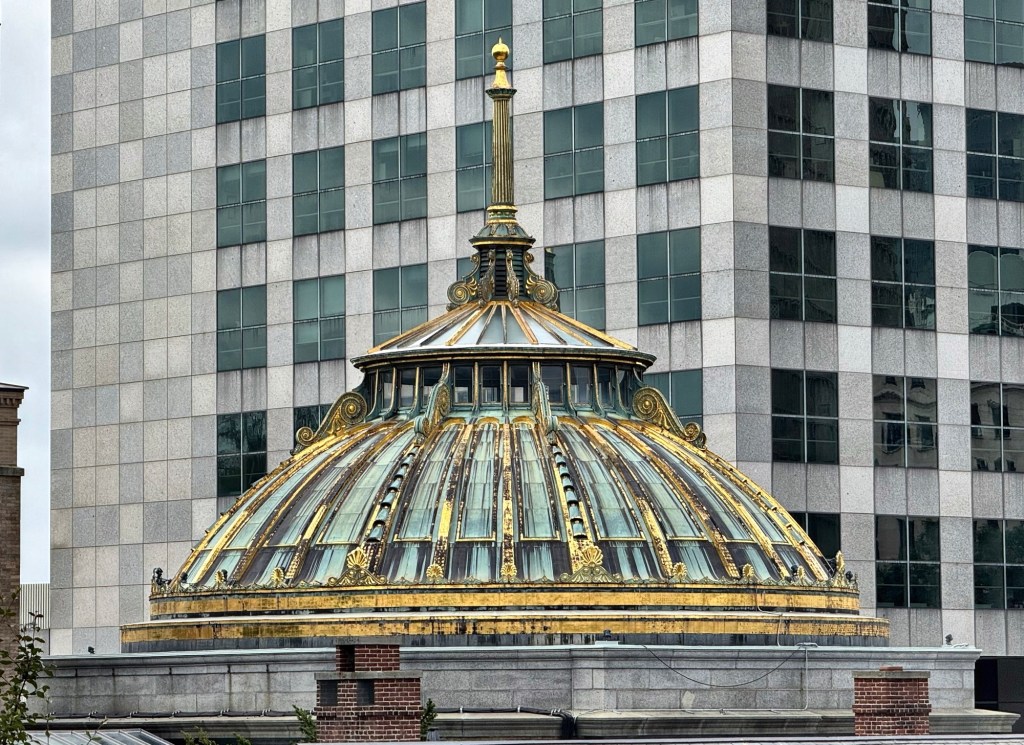
The Old Stone Bank was founded in 1819 as the first savings bank in Providence, Rhode Island, but originally under the name, Providence Institution for Savings. A constantly growing volume of business influenced the erection, in 1854, of a building for the exclusive purposes of the bank at 86 South Main Street, near College Hill. Designed by C.J. and R.J. Hall, the original stone bank stood one-story tall with a gable roof. Success and further expansion of the institution led to the erection, in 1896, of the present building, which served as the main office. Designed by the local architectural firm of Stone, Carpenter & Willson, the present domed banking structure is said to have incorporated parts of the 1854 building, and expanded the rest to the landmark we see today. The Beaux Arts/Neo-Classical banking structure is constructed of granite, with a Classical pedimented entry of monumental Corinthian columns atop the staircase, but the highlight of the building has to be the gold-leaf-and-copper domed roof which partially served as a skylight for the banking hall inside. Offices relocated to a new building in the late 1960s. The banking institution closed in the 1980s and following acquisitions and insolvency, the main bank was sold in 1995 to Brown University for $1.15 million to house the Haffenreffer Museum of Anthropology‘s collection of Native American artifacts. Years later, Brown decided it was unfeasible to house the collection in the building as the necessary alterations would have altered the historic character of the building, they then sold the building to an LLC in 2009. The Old Stone Bank is now a single-family home. Yes, you heard that right. The new owners have lovingly preserved this architectural marvel for all to enjoy as they stroll the city.

South Main Street Engine House, Providence // 1892

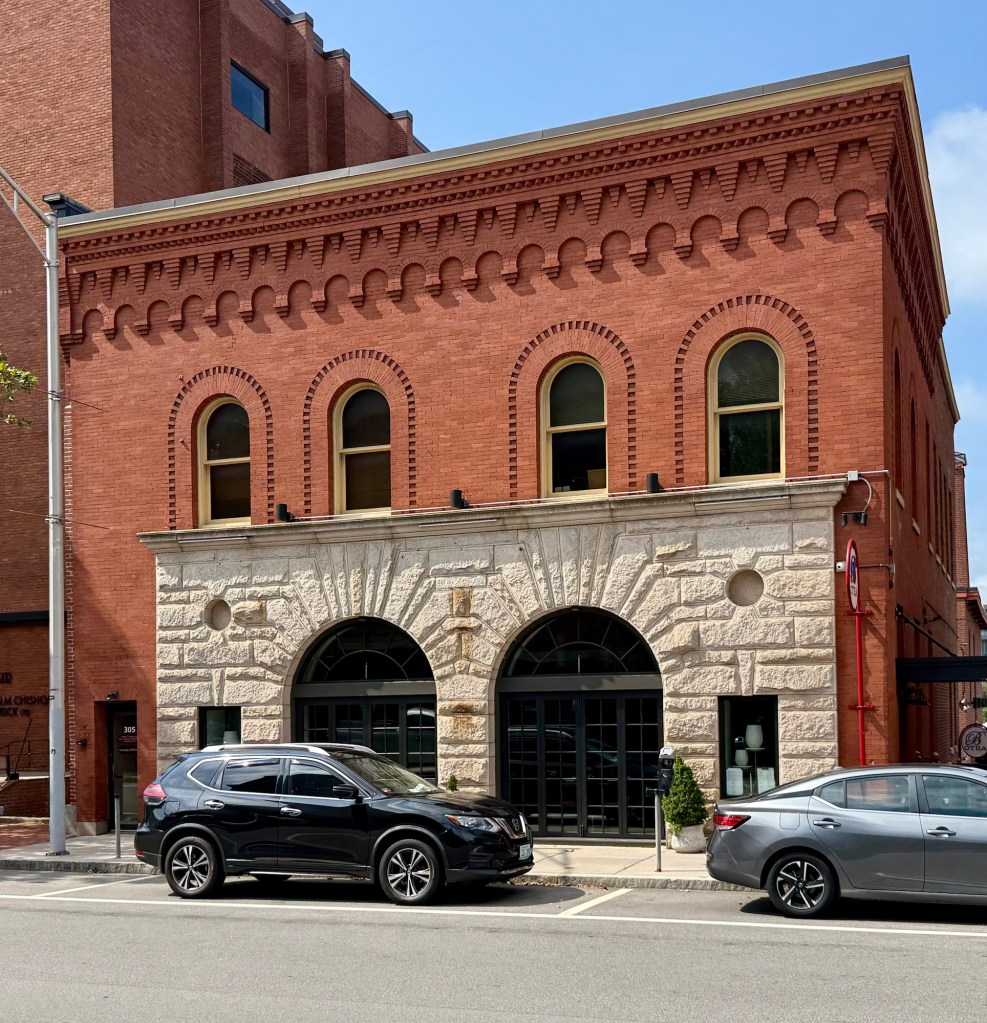
Built as a neighborhood fire station by the City of Providence in 1892, this handsome brick structure on South Main Street showcases how infrastructure and civic buildings can (and should) still contribute to the streetscape. Constructed along a streetscape of early 19th century brick buildings, the local architectural firm of Stone, Carpenter & Willson, sought to take cues of the materiality and massing of nearby structures, but employ new detailing and vocabulary for the fire station here. The result is a Romanesque style fire station with a pair of round-arched engine portals surrounded by stone facing, with the showstopping second floor and roofline with ornate brickwork around the arched windows and multi-staged corbeled cornice. The building with its smaller engine doors became obsolete with newer, larger fire trucks, and the building has since held a variety of commercial uses, today as a up-scale Italian restaurant.

Samuel B. Conant House // 1895

Built in 1895 for Samuel Conant, president of a Pawtucket printing firm, this stately residence is one of the finest Colonial Revival houses in Central Falls, Rhode Island. Designed by the Providence architectural firm of Stone, Carpenter & Willson, the house is brick on the first floor with clapboard siding above. The Contant house has a gambrel roof punctuated by several gable dormers. The main facade has two symmetrical round bays, which rise to the roof and are topped by low balustrades. A single-story porch extends between the center points of these bays, and is also topped by a low balustrade. Recognized for its architectural grandeur (inside and out), the house was individually listed on the National Register of Historic Places. The Conant House is now used as a nursing home and while the transition to this new use has required a number of interior alterations, these changes have been made with sympathy for the character of the house and many of them are reversible.

George H. Dart House // 1893

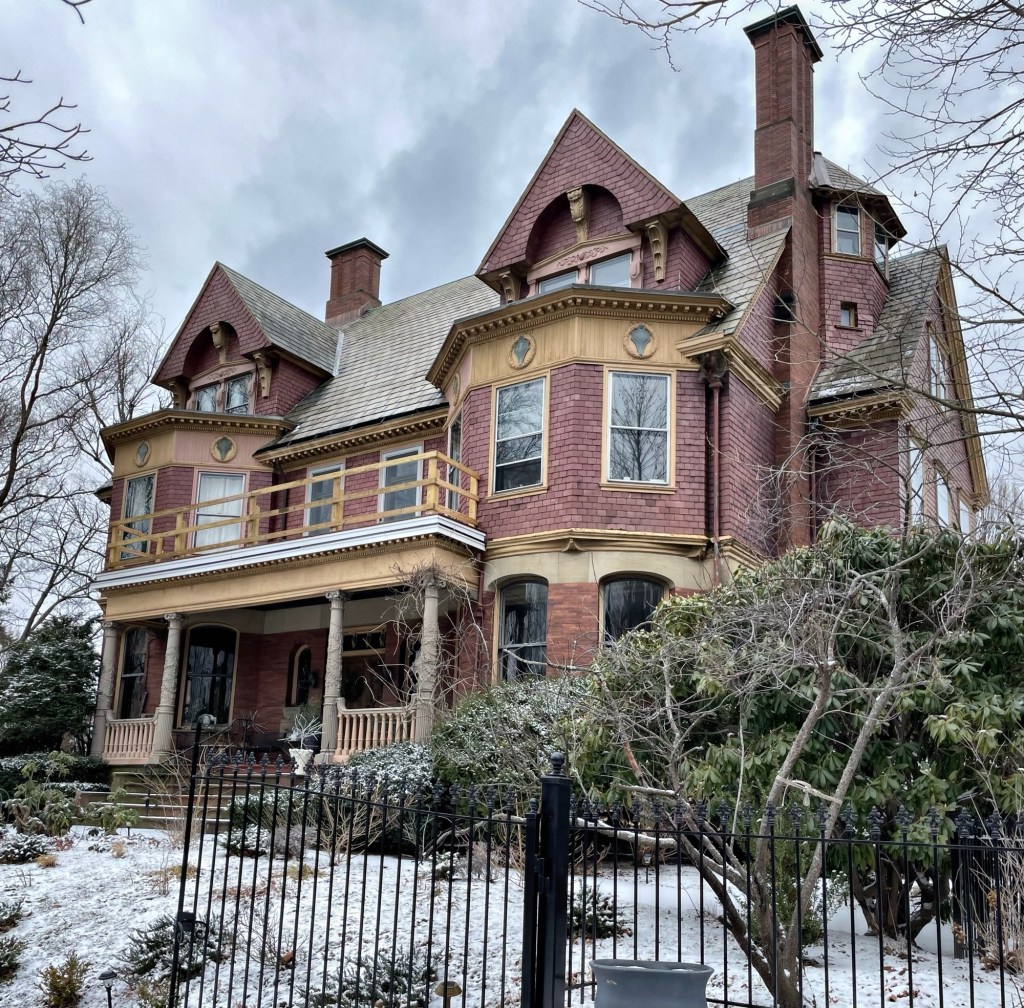
Arguably the most restrained and modestly detailed residence on Stimson Avenue in Providence is this residence, the George H. Dart House, a late-Queen Anne dwelling built in 1893. The original owner, George H. Dart (1845-1897) worked as the President of the Rhode Island Tool Company before his unexpected death in 1897.  Four years prior to his death, Mr. Dart hired the local architectural firm of Stone, Carpenter & Willson, to design this single-family residence, which employs Shingle and Queen Anne detailing under a two-story gambrel roof with overhanging eaves sheltering recessed porches and bay windows.

Joseph Fletcher House and Stable // 1889

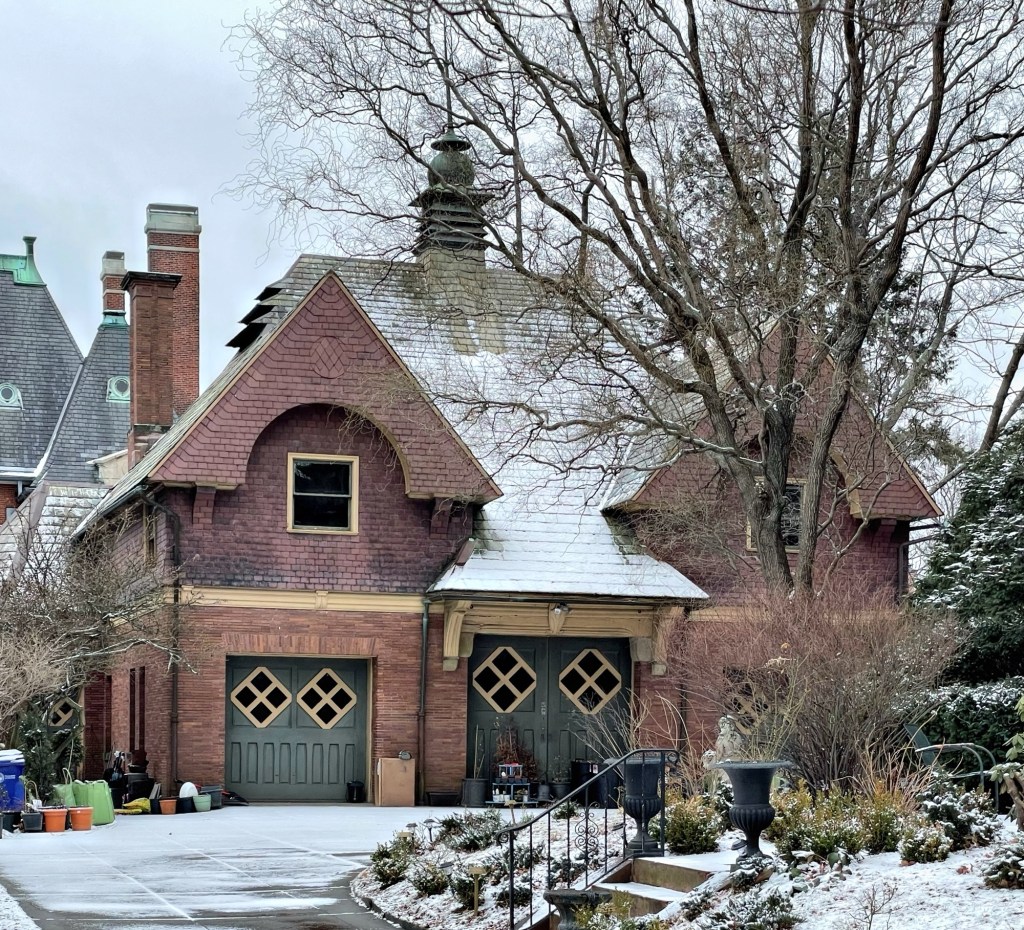
With red brick and slate siding and all the finest trimmings, this house looks like a present wrapped under the Christmas tree! The Joseph Fletcher House is located at 19 Stimson Avenue in Providence, Rhode Island, and is an excellent example of a Queen Anne residence with the innovative use of siding types often found in the style. The residence was built in 1889 for textile manufacturer, Joseph Edward Fletcher (1866-1924), the son of wealthy, English-born manufacturer, Charles Fletcher. The Fletcher house and adjacent stable were designed by Stone, Carpenter & Willson, one of the most prestigious architectural firms in New England at this period. It is believed that the site was developed by Charles Fletcher, as a wedding gift to his 23-year-old son and daughter-in-law following their marriage. The home was recently sold, and the interiors are as stunning as the exterior!

Warren Industrial Trust Building // 1906

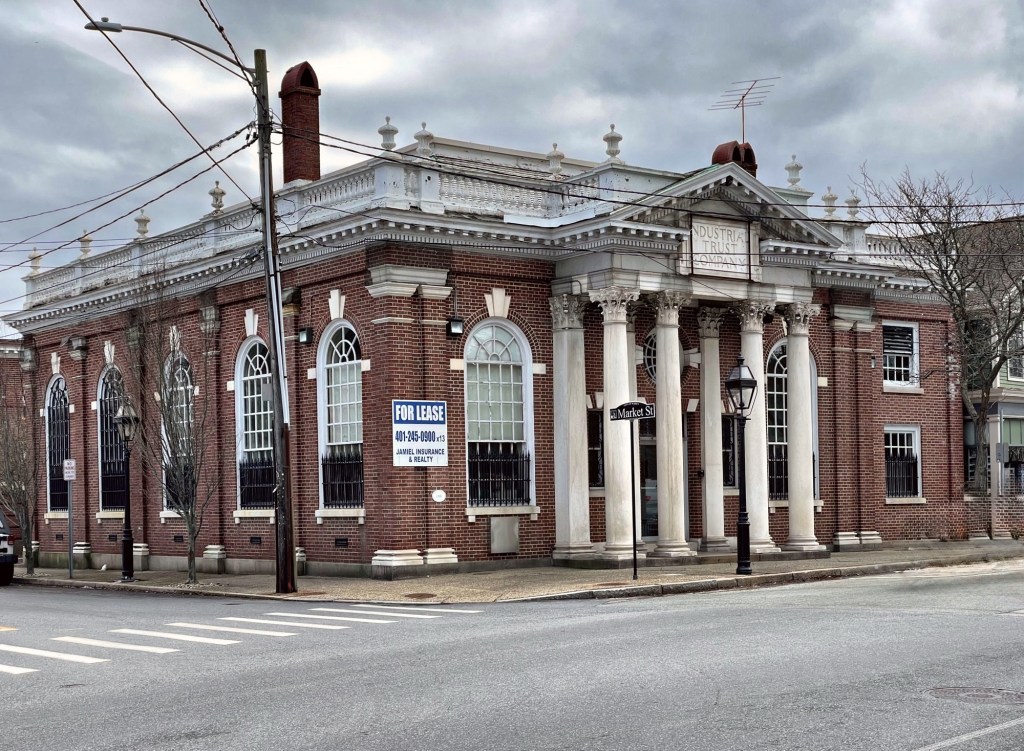
This monumental Georgian Revival bank building sits on Main Street in Warren, Rhode Island, and is one of the finest buildings of the style in the entire state. The Warren Industrial Trust in 1906 hired Edmund R. Willson of the Providence architectural firm of Stone, Carpenter & Willson to design the bank for the town after it had absorbed the town’s multiple banks, under one roof. Four Corinthian columns support a robust pediment over the entrance with the red brick elevations enlivened with arched windows, oversized keystones, and pilasters with contrasting capitals and bases. The building shows that Colonial Revival architecture, while often seen as a refined, classical style, can be festive and ornate.
Sayles Hall – Pembroke College – Brown University // 1907

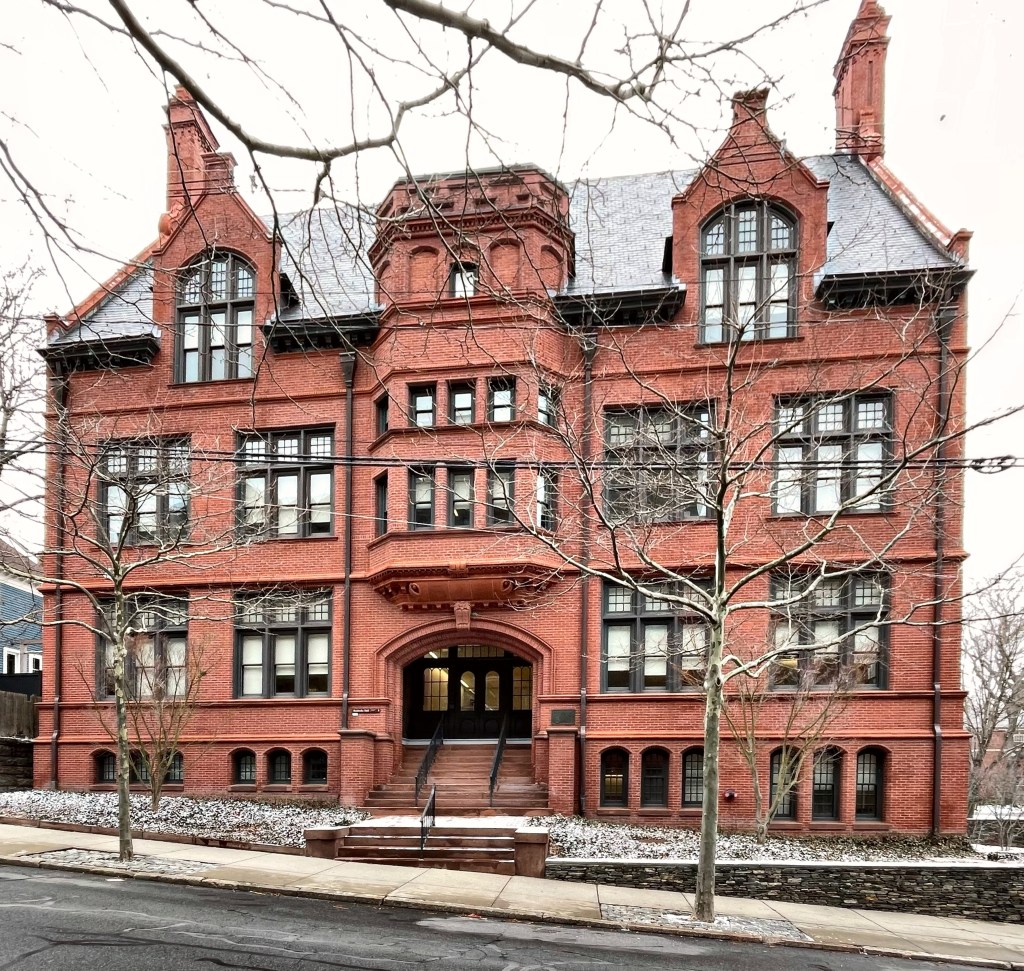
Sayles Hall was the second purpose-built building erected for Pembroke College, a women’s college affiliated with Brown University in Providence. Sayles was originally built as a gymnasium facility for female students and was designed by the same architects as Pembroke Hall, Stone, Carpenter and Willson. Architecturally, the building compliments Pembroke Hall which was built the decade prior with the use of red brick, terracotta trim, and arched openings and gabled pediments at the roof. The funds for the construction of the building were a gift from Frank A. Sayles (whom the building was originally named after). Until 1990, Sayles Gym was used for sports and offices by the Physical Education Department. In 2001, Sayles Hall was completely renovated and converted into classroom space, receiving a new name (Smith-Buonanno Hall). A great example of adaptive reuse!

Pembroke Hall – Brown University // 1896

Brown University from its founding in 1764 until 1891 never admitted women. Brown’s all-male student body was first challenged in 1874, when the university received an application from a woman (who to this day is still unnamed). The Advisory and Executive committees decided that admitting women at the time was not a good proposal, but they continued to revisit the matter annually until 1888, when they began work to establish a separate women’s college affiliated with Brown. After similar institutions like Radcliffe (affiliated with Harvard) and Barnard College (affiliated with Columbia) were established in 1879 and 1889 respectively, Brown had a blueprint for how to operated the new women’s college. Professors at Brown would work alongside women educators and taught many of the the same courses to men as they did for female students. Pembroke Hall was the first building for Pembroke College and was built in 1896 from plans by local firm Stone, Carpenter and Willson in the Elizabethan Revival style. The building was designed to be multi-purpose with administrative offices, classrooms, reception rooms, and a library in the attic. Pembroke College was officially merged with Brown University in 1971, which was long overdue. The building is one of the finest on Brown’s now co-educational Ivy-league campus.