Old Goshen Town Hall – Goshen Players // 1895

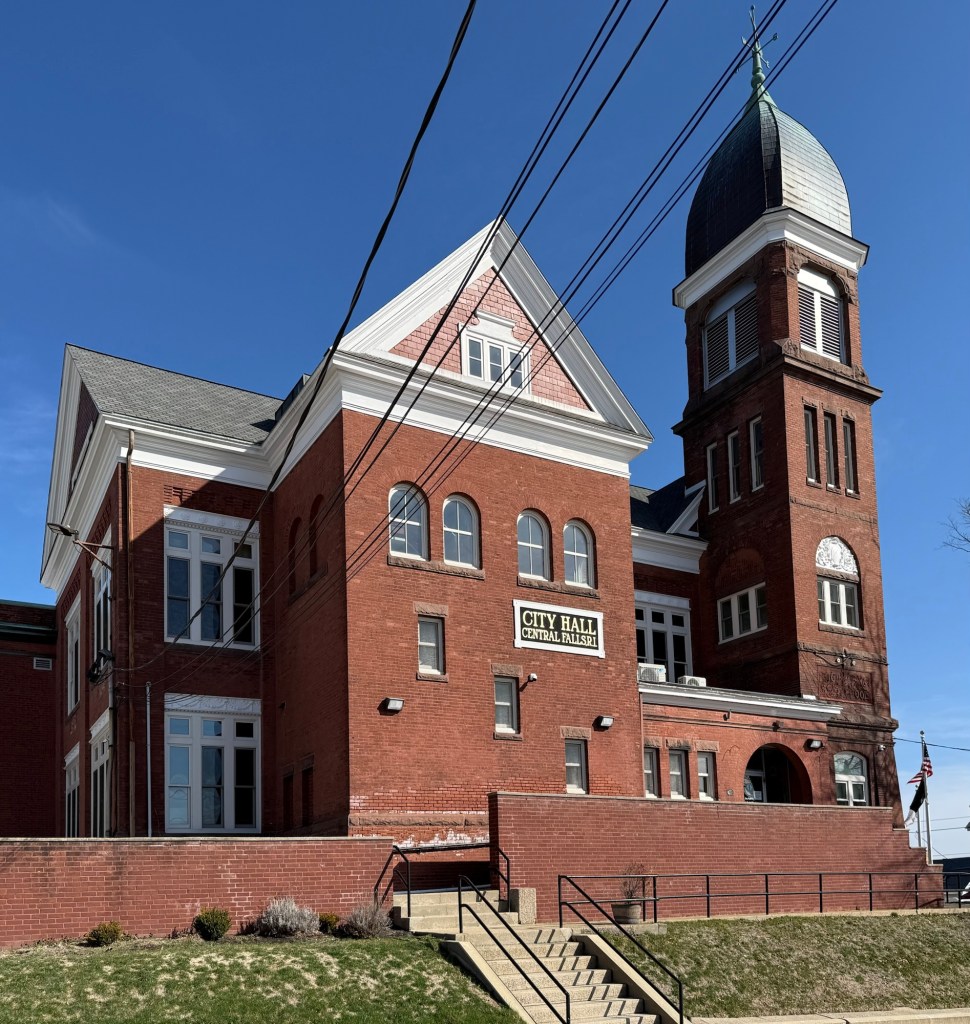
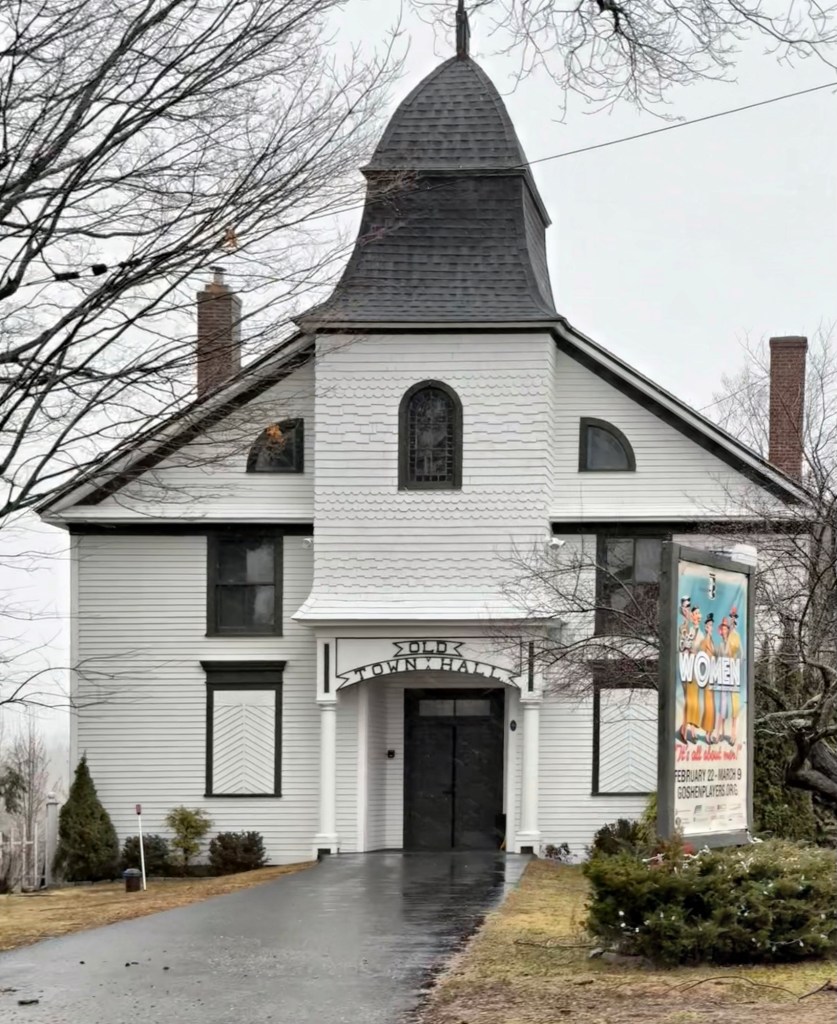
The first purpose-built official town building of Goshen, Connecticut, was this wood-frame structure at the main junction in the central village as the town’s first town hall. Built in 1895, the structure originally housed offices for the selectmen and town clerk, a fireproof vault for records, and a large audience-room with stage for town meetings and ceremonies. The building employs a more traditional form similar to the old Greek Revival meetinghouses built in New England in the first half of the 19th century, but with a shingled, Victorian entry tower with bell roof. When the Town of Goshen moved into its present town hall building, this structure became the home to the Goshen Players, a community theatre established in 1949, and is the second oldest continuously performing theatre group in the state.

Danvers Town Hall // 1854

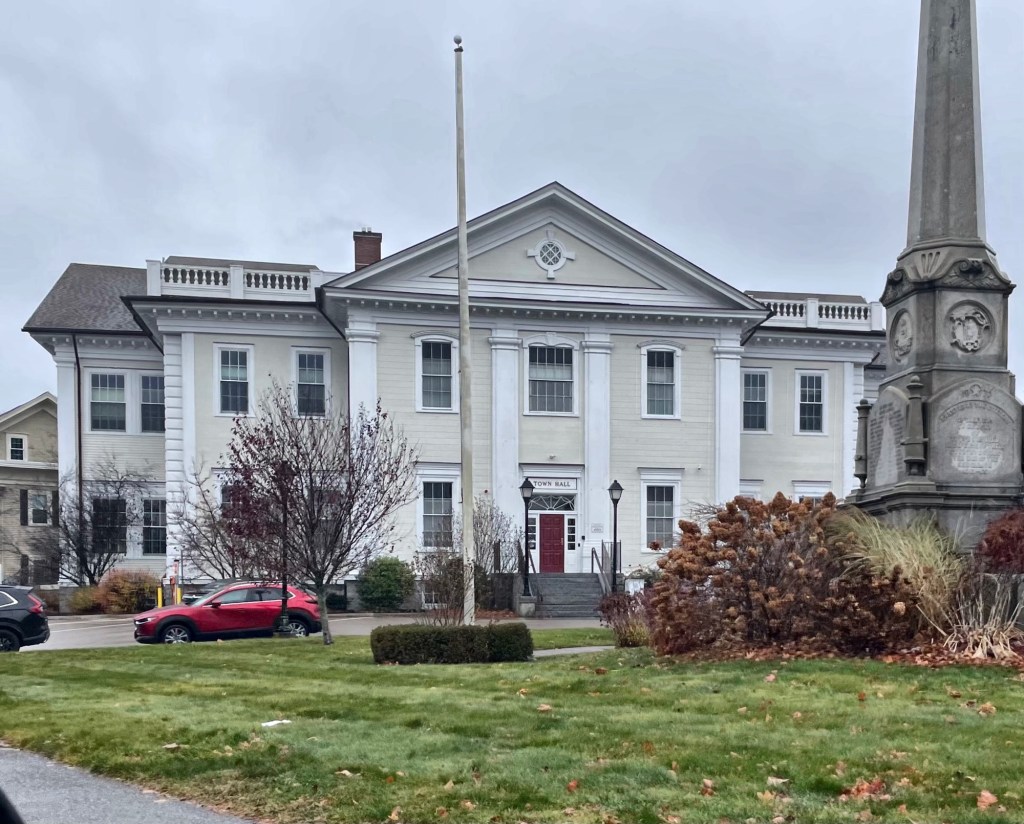
The land that is now Danvers, Massachusetts, was once owned by the Naumkeag branch of the Massachusett tribe. Permanent European settlement began in 1636, when present-day Danvers was known as Salem Village, a village of Salem. The historical event for which Danvers is best-known is the Salem witch trials of 1692, which began in the home of Rev. Samuel Parris, in Salem Village. Danvers officially separated from Salem in 1752 and is likely named after Sir Danvers Osborn, a Colonial Governor of New York. In 1757, Massachusetts incorporated Danvers as a town and, according to legend, King George II later vetoed this act of incorporation and returned his decree with the message, “The King Unwilling.” They simply ignored this royal veto, which was later included on the town’s seal! Danvers would eventually build a central town hall building , this structure, in 1854 which partially functioned as a high school as well. Plans were drawn by the Salem architectural firm of Emmerton & Foster in a pleasing blending of Greek Revival and Italianate styles. As the town grew, the building was expanded in 1883, and in the 1890s. When a new, purpose-built high-school was constructed elsewhere in town in the early 1930s, it was decided to renovate the town hall building. Due to financial constraints during the Great Depression, the town got a lifeline by the Federal government, who in 1934, appropriated $6,500 to the town for a renovated town hall as part of the New Deal. Additional funds from the WPA went to murals (many of which still adorn the walls inside). Architect Lester S. Couch of Danvers, a partner in the firm Little & Browne, oversaw the renovations in the Colonial Revival style.

Georgetown Town Hall // 1905

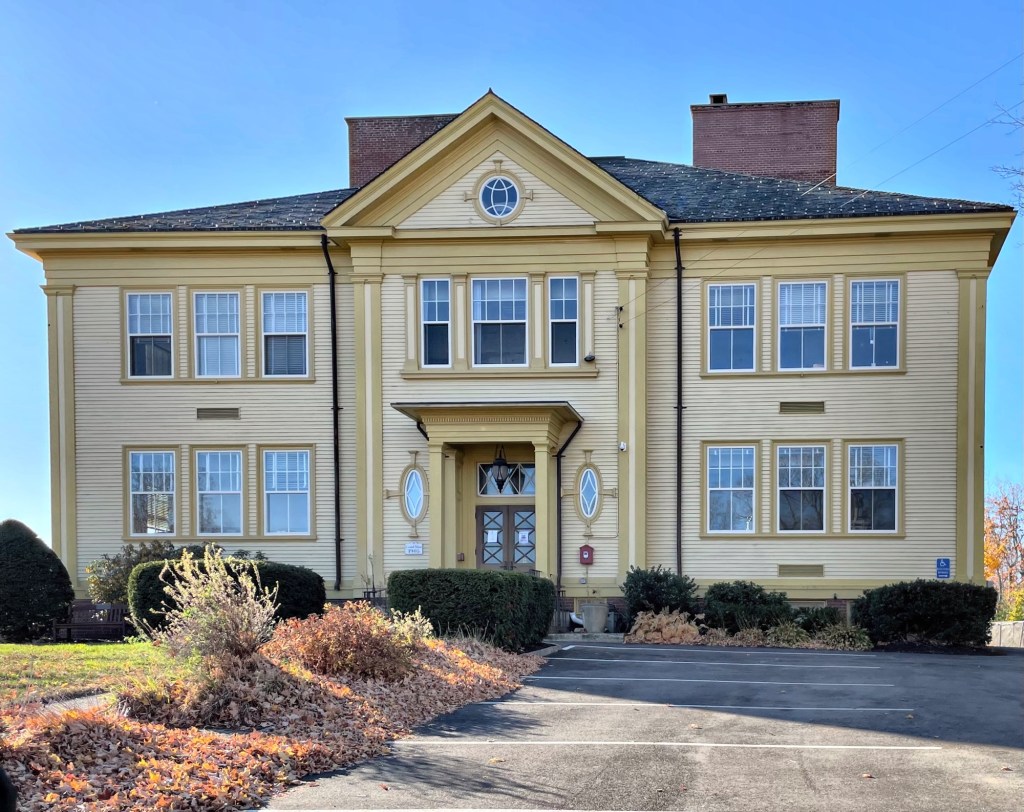
Welcome to Georgetown! The Georgetown Central School, now known as the Memorial Town Hall, stands near the historic commercial center of Georgetown, Massachusetts, a rural community in Essex County located about 28 miles north of Boston. The two story wood-frame building was built in 1905 to a design by the Boston architectural firm of Cooper and Bailey, and located at the site of an earlier one-room schoolhouse built in the 18th century. It was Georgetown’s first multi-room school building, and was built after the town’s first high school/town hall burned down in 1898. The Colonial Revival style school building was eventually outgrown and was no longer needed as an educational facility. It was converted to municipal offices in 1974, a use that has remained ever since. The town has taken pride in this building, restoring much of the exterior details and slate roof.

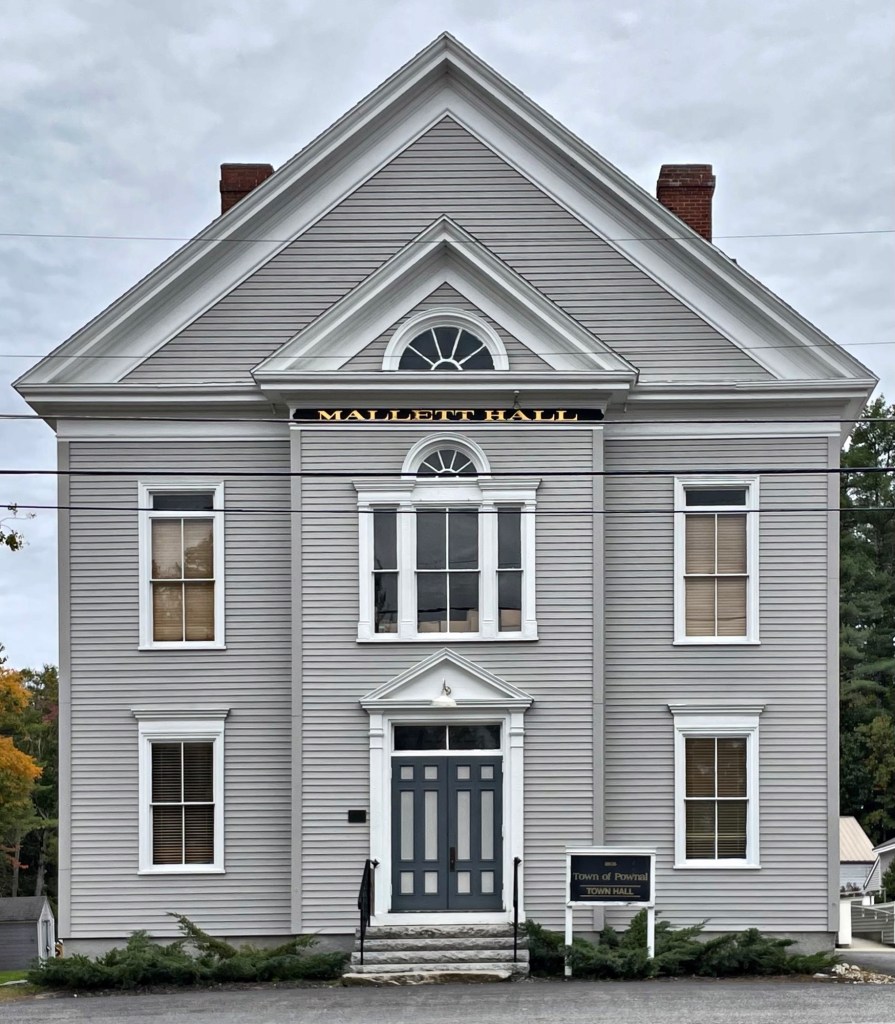
Mallett Hall // 1886

Built in 1886, Mallett Hall is one of the most interesting and significant buildings in the small town of Pownal, Maine. The town is located equidistant to the larger cities of Portland, Brunswick, and Lewiston, but retains a very rural charm. This hall was built following a town meeting on March 15, 1886, where an article was approved to appoint a committee charged with developing plans and estimates for a new town hall. The hall is named after Edmund Mallett, a businessman who partially funded its construction. The architect is not officially known, but estimates guess it was the work of Francis Fassett, a popular architect at the time in the area. In addition to housing town offices and functions, it has also served as a community center, hosting social events. The Colonial Revival style building takes strong cues from Greek Revival meeting houses in the area but exhibits a Palladian window and fanlight in the pediment.

New Gloucester Town Hall // 1886

New Gloucester, Maine was established in 1736 under a Massachusetts Bay Colony grant of a 6-square-mile tract of land in the Maine Territory to sixty inhabitants from the Gloucester fishing village on Cape Ann. The first white settlers here built cabins in the forests in the 1740s, which were largely abandoned from 1744–1751 due to the heightened native tribe attacks during King George’s War. As the Native Americans gradually withdrew to Canada, the settlers moved out into their own newly built homes and the town has grown ever-since. New Gloucester was incorporated on March 8, 1774, and was named New Gloucester after Gloucester, Massachusetts, the native home of a large share of the early settlers, as Maine was still a territory of Massachusetts until 1820. Previous to 1886, the First Baptist Church was used for a town meeting house, but in that year the new Town Hall, this building, was dedicated. The building is Queen Anne in style with varied siding, applied ornament in the gable, with a more Classical portico at the entrance.

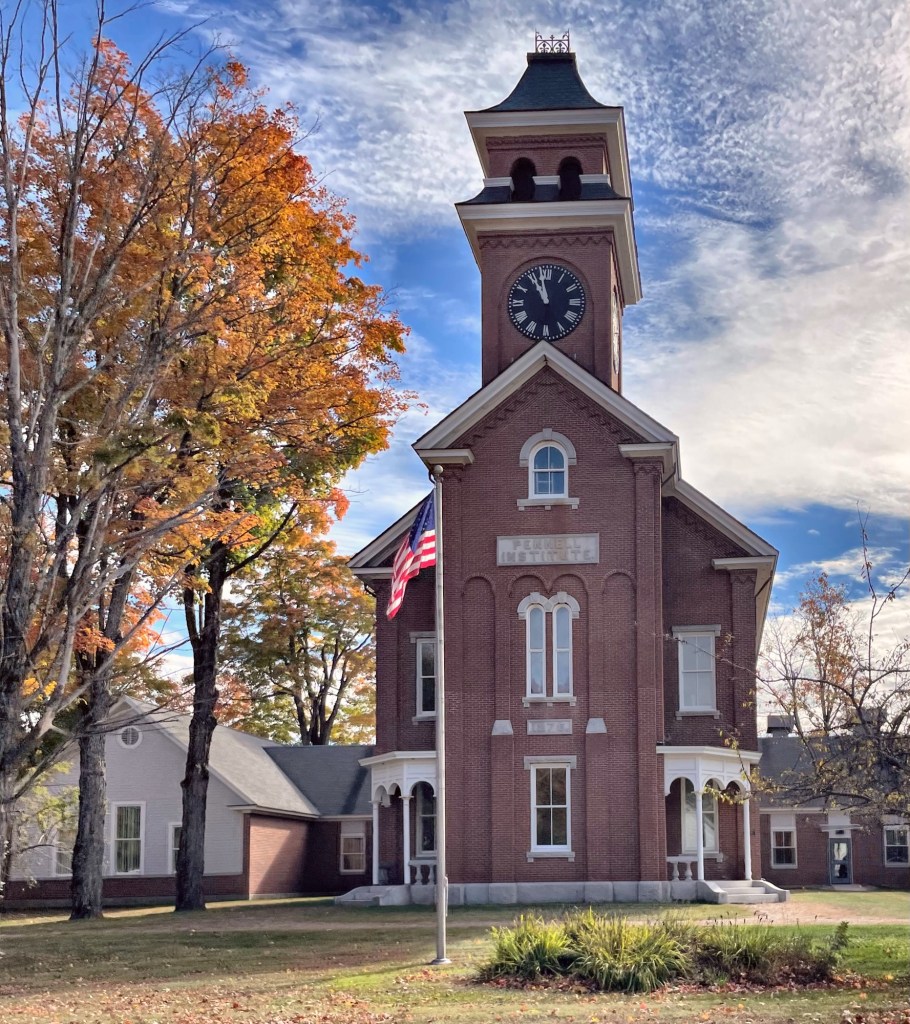
Pennell Institute Building – Gray Town Hall // 1886

The Pennell Institute was built in 1886 as a privately funded, public school for the town of Gray, Maine. By 1870, Gray High School was located in the former Town Hall, and due to increased enrollment and ever-cramped quarters, demand for a standalone school was of grave importance. As a result, local resident Henry Pennell decided he would help his hometown. Henry Pennell (1803-1884) as a young man, worked as a butcher and traveled to Portland to sell his cuts of meat, later buying and selling livestock. After the Civil War, he dealt in real estate and mortgages, was sheriff of Cumberland County (1857-1858) and served in the State Senate (1872-1873), and became the richest man in the town of Gray. Mr. Pennell, who himself, never had received much formal education, saw the value in it for the youth of the town. Construction started on the school in 1876, where the foundation was laid, but it would take ten years until after the death and bequeathing of his estate in his will, that the building would be completed in 1886. Henry Pennell left the town the school building, the lot it stood on, a trust fund of $25,000 for the school’s general expenses, and a special fund of $5,000 for the library and for laboratory equipment and supplies. The school closed with students educated at a larger, modern building. After disputes between the Town of Gray and the local school district, the building has now been home to the Gray Town Hall, with the town clearly showing pride in their Italianate style building.

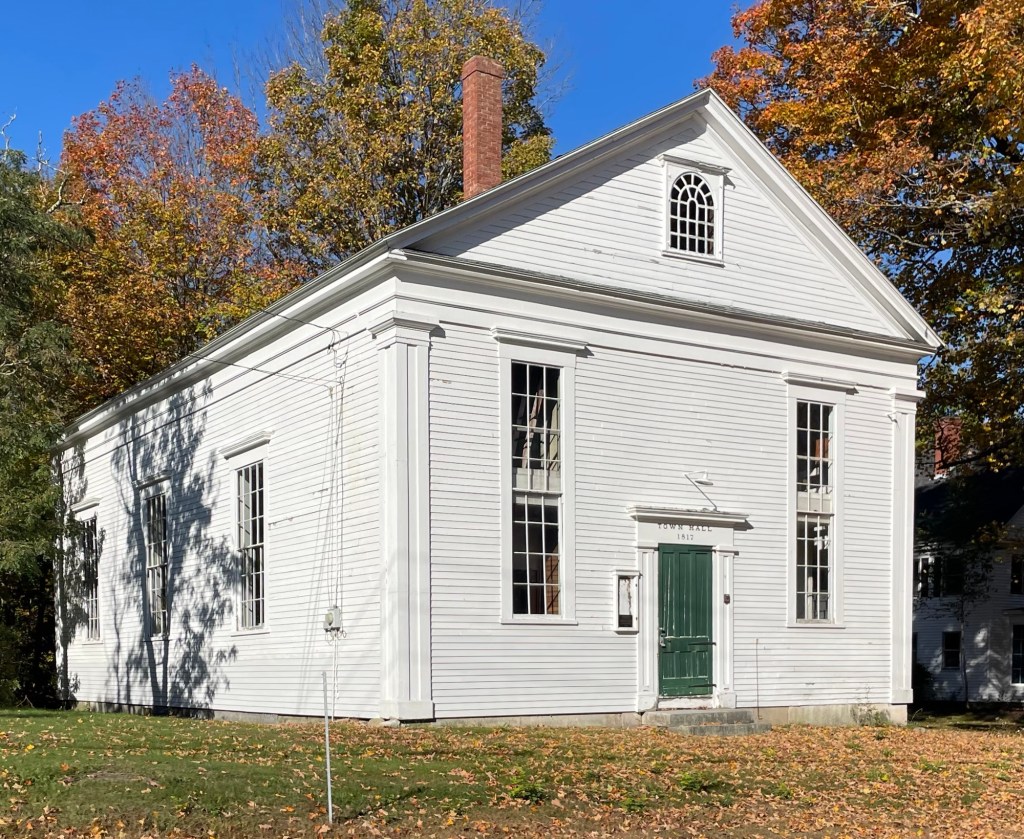
Old New Ipswich Town Hall // 1817

New Ipswich, New Hampshire, is a town that oozes New England charm! Winding back roads are lined with Colonial-era homes and buildings, lovingly maintained by stewards and neighbors to create the quintessential small town feeling. New Ipswich was granted in 1735 to 60 inhabitants of Ipswich, Massachusetts, where the name is derived, by colonial Governor Jonathan Belcher and the General Court of Massachusetts. European settlement began here in 1738, when Abijah Foster arrived to the area with his wife and infant daughter. At the center of town, a new Town Hall was built in 1817 as a combination town hall and private academy with funds provided by the town government and by the trustees of New Ipswich Academy. The building was constructed under the direction of Deacon Nathaniel Gould, using materials salvaged from a disused meetinghouse of 1770. The arched gable window is reputed to have been taken from the meeting house, as are twisted balusters on the gallery stairway inside. As completed in 1817, the building had a full second floor which provided the academy with a lecture room, a small library, and a laboratory, but that was taken over by 1869 when the Town renovated the building, removing a tower and belfry, and occupied the second floor spaces. The building is still owned by the town, and is used occasionally for civic functions, with town offices in a mundane, newer building a short distance away.

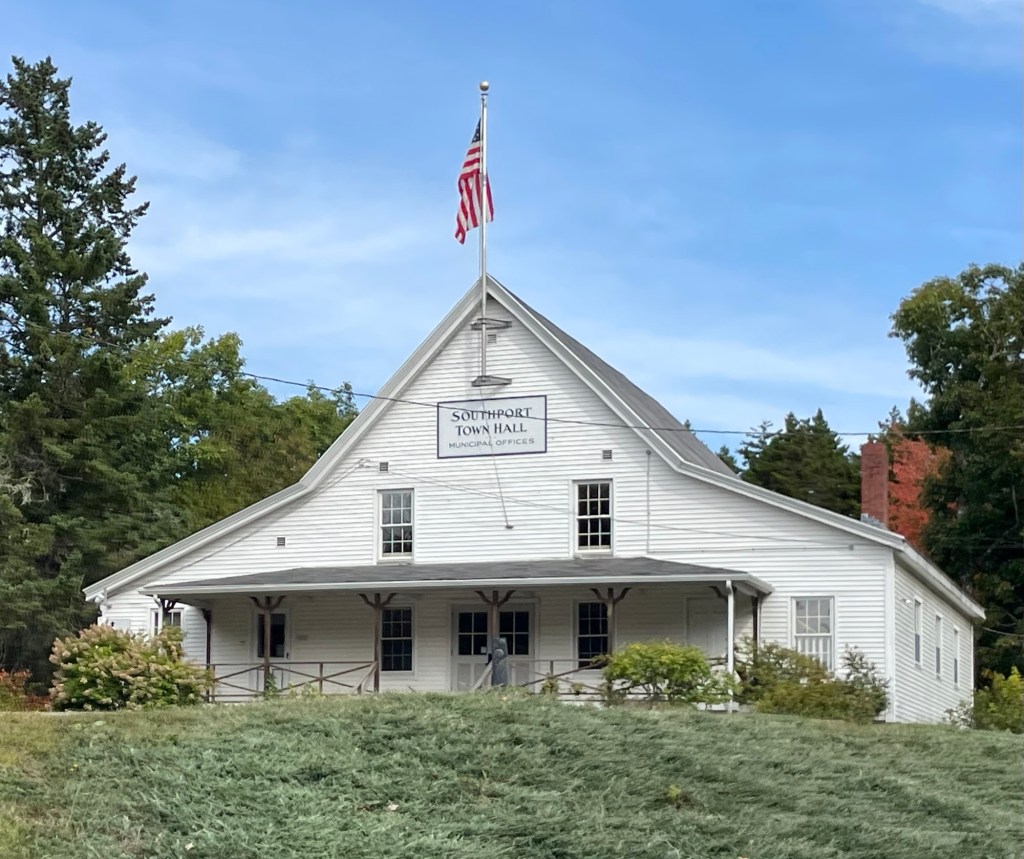
Southport Town Hall // 1866

While staying at the Spruce Point Inn in Boothbay Harbor, Maine, I took the chance to visit the nearby island-town of Southport! The town of Southport incorporated in 1842 when it separated from Boothbay and became known as Townsend, Maine. Just eight years later, in 1850, Townsend changed its name to Southport, after SouthportEngland. The town has a population of just over 600, which grows in the summer months as the island and nearby Squirrel Island (also a part of Southport) has many summer homes dotted along the coastline. The present-day Southport Town Hall was built in 1866 by the Ladies Sewing Circle of the Southport Methodist Episcopal Church as a meeting place for the women of town to meet and socialize, it also was rented to the town for town meetings. Eventually, the town purchased the building in 1900, where it has remained the town hall ever since.

Killingly Town Hall // 1876

The economic center of the town of Killingly, Connecticut is the village of Danielson, which is located at the confluence of the Quinebaug and Five Mile rivers. The area developed as an industrial village and prospered as the town’s center through the late 19th and early 20th centuries. The present-day town hall building was originally constructed in 1876, not as a civic building, but as a multi-purpose music hall and G.A.R. Hall. The Victorian/Ruskinian Gothic style building was constructed of brick with stone trim. The building was later acquired by the town in 1906 and has served as the town offices ever since. Besides the unfortunate replacement windows, the building is well-preserved by the town.

Old Chaplin Town Hall // 1840

The area that is now Chaplin, Connecticut was settled in the 18th century. The impetus to separate the community occurred due to the difficulty of area residents in reaching the churches in nearby town centers. Benjamin Chaplin (1719-1795), bequeathed funds for the establishment of a church near his (now no longer standing) home. A village center developed around the church, and the town was incorporated in 1822. The village is unusual in Connecticut for its relatively late development, and because the center is not near usable water power, and was bypassed by railroads, it was not affected by later industrialization. The main street is extremely well-preserved and a visual link to 19th century Connecticut. In 1840, the town erected this one-story Greek Revival building to serve as the town hall. The gable end reads as a pediment with the walls constructed of smooth vertical boards. The town outgrew this building and it became the town’s museum after the present town hall building was constructed in the northern part of the village. The museum closed and the building appears unused today. Hopefully the town can find a way to use the structure and maintain it.