Wayland Railroad Depot // 1881

The Wayland Railroad depot in Wayland, Massachusetts, was built in 1881 by the Massachusetts Central Railroad, which was later absorbed as part of the Boston and Maine Railroad. The line operated both passenger and freight service, with this structure serving as the passenger station and freight at the nearby structure, also built in 1881. Regular train service helped develop Wayland Center into a more prosperous Boston suburb, but industry and larger developments did not occur like in other communities. In its heyday, the Wayland station was manned by an agent with a small office in the building. The station agent was responsible for nearly all aspects of the operations from selling tickets; handling mail, baggage, and freight; keeping financial and operating records; and even maintaining the grounds. After WWII, car ownership and highway expansion harmed the rail industry and trains ceased to run in Wayland. To save the building from eventual demolition, the Town of Wayland purchased the old depots, which since the 1980s, has been leased to “The Wayland Depot“, a charitable women’s consignment craft shop with retail space in the station. The former rail line has largely been converted to a rail trail for pedestrians and bicyclists to traverse the old railroad right-of-way.
White-Dickey Cottage // c.1844

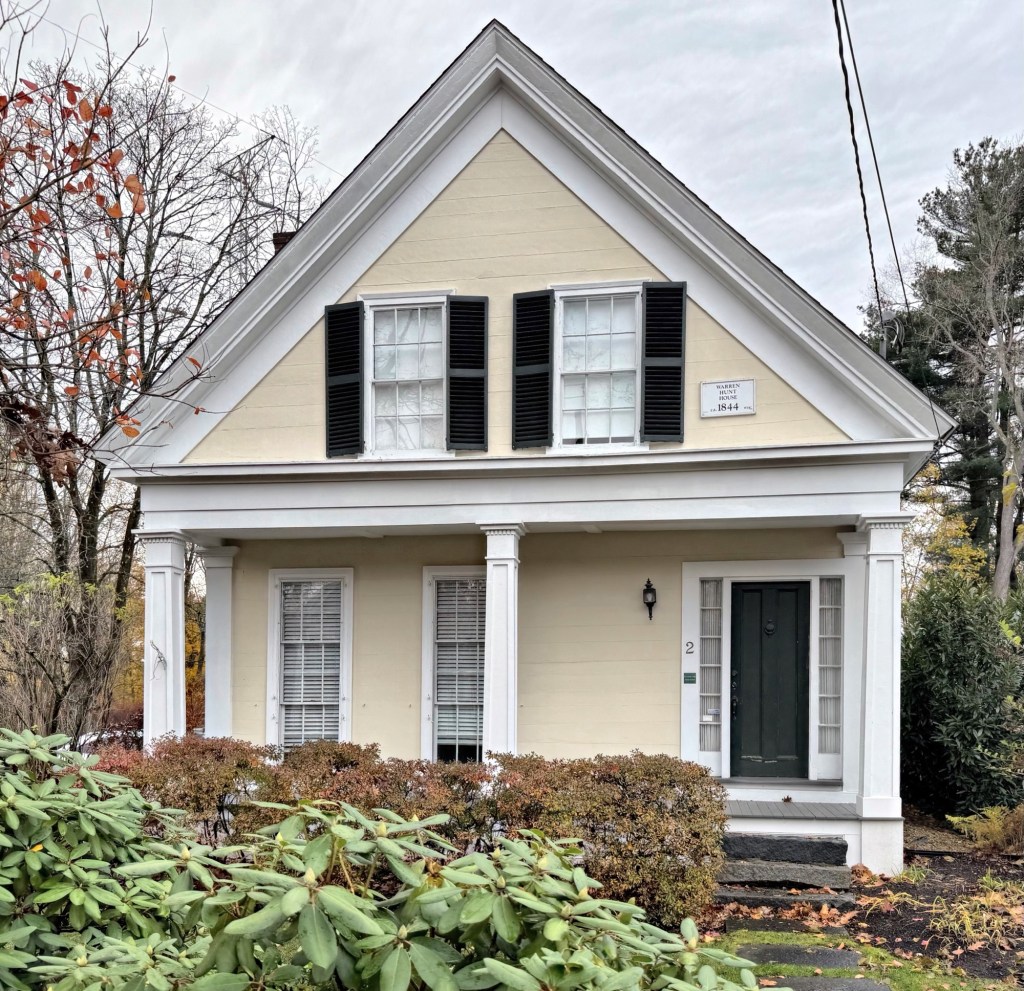
Located in the Wayland Center village, this c.1844 Greek Revival style cottage stands out not for flourish or scale, but for its excellent design, proportions, and state of preservation. The three-bay facade has a recessed first story set under the pediment extending over the open porch. The pediment is carried by squared, tapered columns with dentils and the facade retains its unique flush-board siding and triple-hung first-story window sash. The house was built by 1844 for Warren Hunt, who operated a small dry goods store near the town common. Not long after he had the house built, Hunt sold the property and store to Luther B. White (1822-1884), who lived here for at least two decades. In 1888, Mrs. Alice Dickey and her husband, Charles F. Dickey, a carpenter, purchased the house and expanded it at the rear.

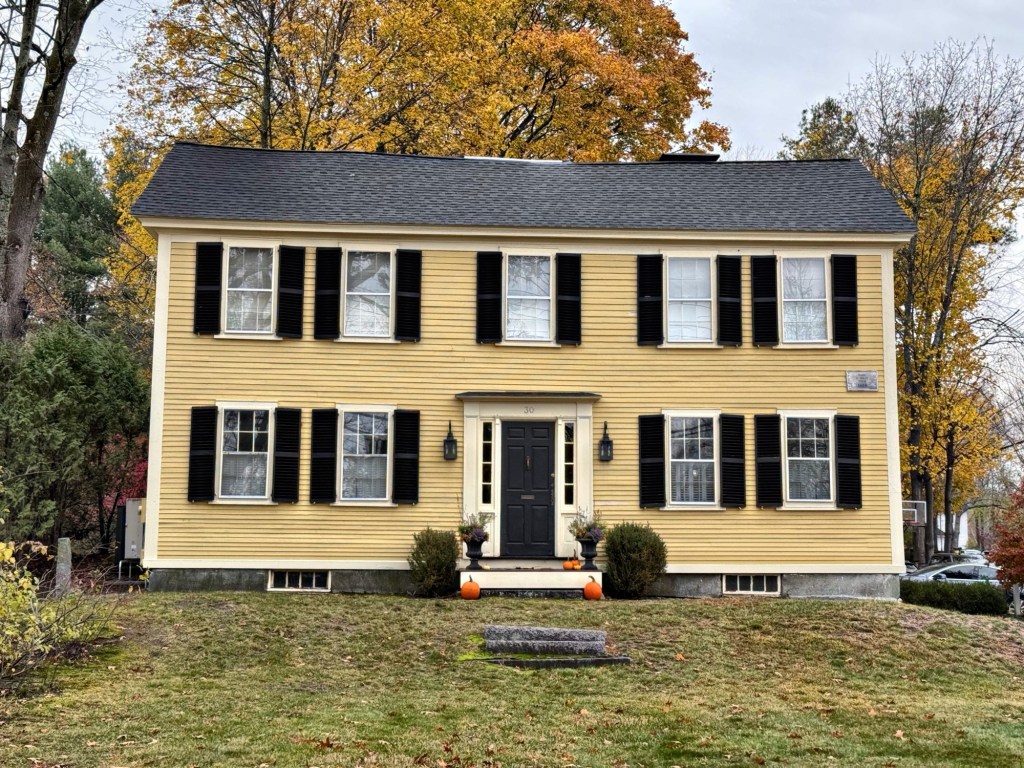
Sibley-Bennett House // c.1818

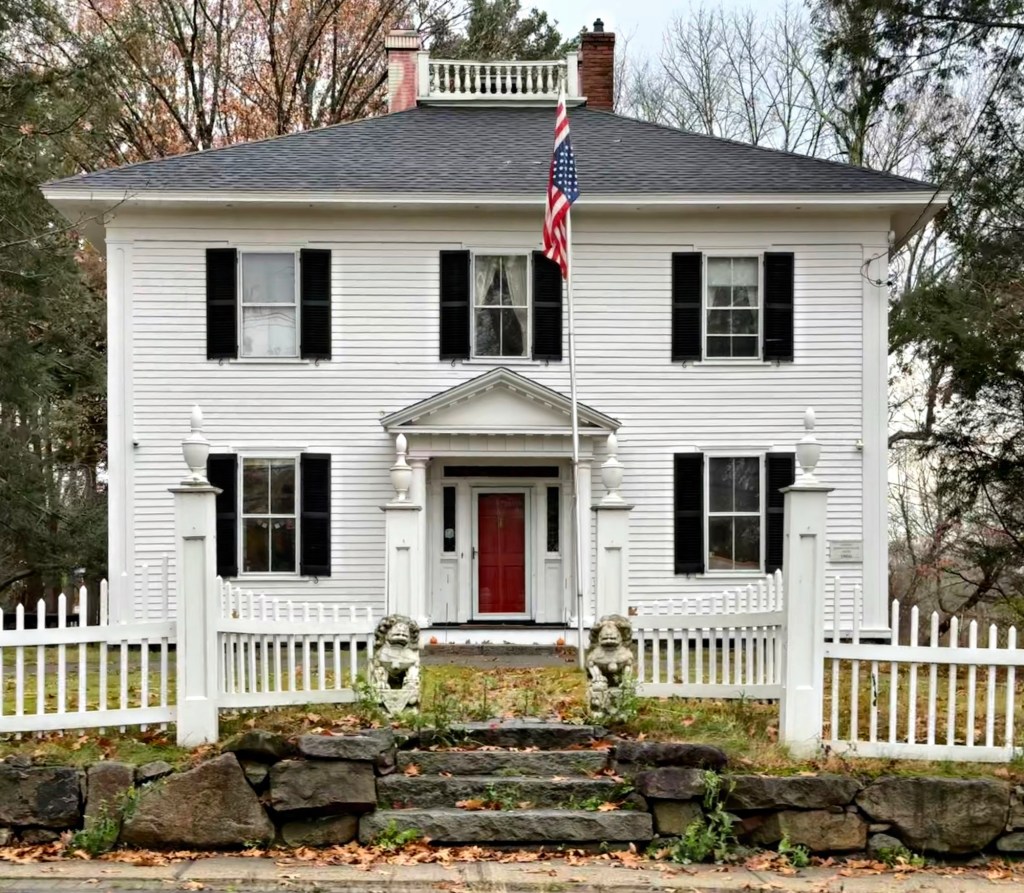
One of the many great old houses in Wayland, Massachusetts, is this well-proportioned Federal style residence at 30 Cochituate Road. The house was built sometime between 1818 and 1821 when owner Mark C. Sibley (1792-1876) married his first wife, Nancy Rice. Mark Sibley was the innkeeper at the Pequod Inn (no longer extant) that had served as an inn and stagecoach stop from when it was built in 1771. Mark Sibley remarried after Nancy died in 1839 and relocated to Weston. The Sibley House was acquired numerous times by real estate speculators. From 1886 until 1922, the property was owned by Anna Bennett, a widow. The five-bay, two-story Federal style house has a center entrance and six-over-six double-hung windows, all with a historically appropriate color scheme.

Old Wayland Town House – Lovell’s Market // 1841

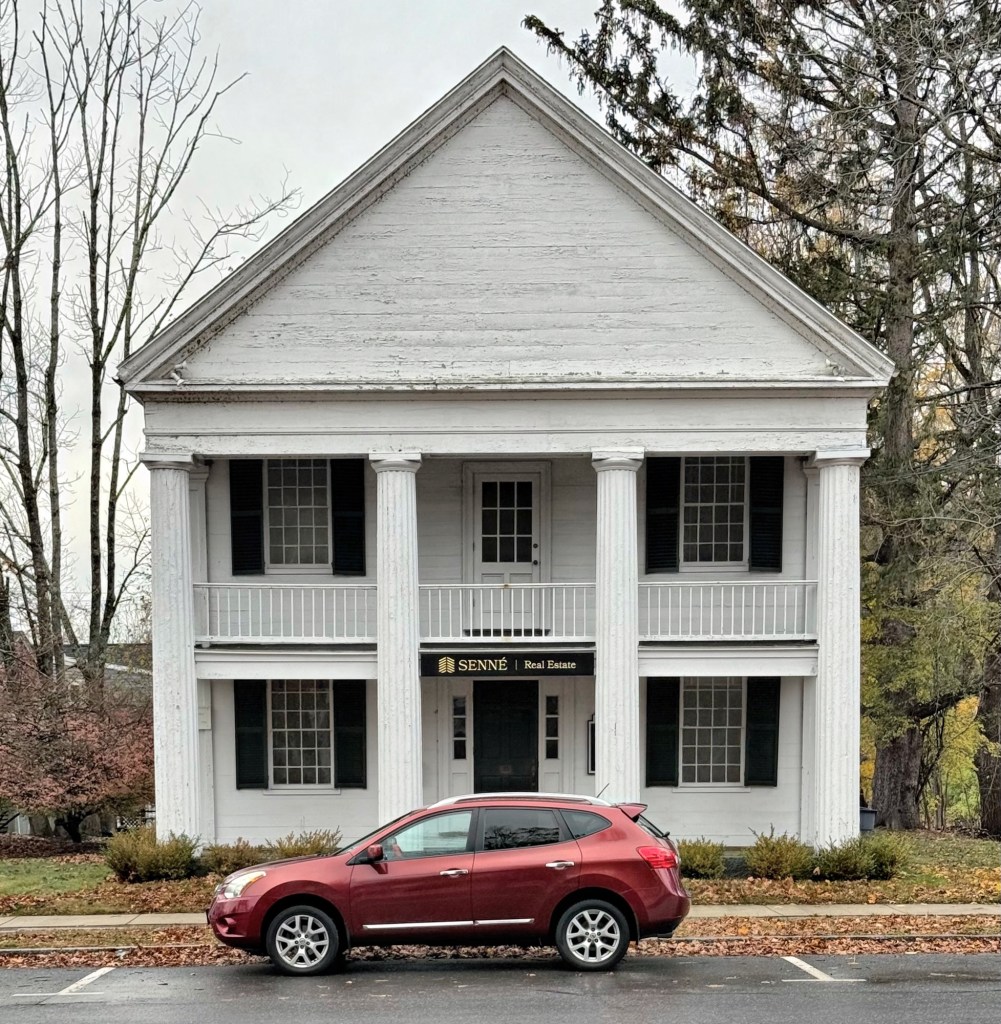
The Old Wayland Town House on Cochituate Road is an imposing Greek Revival temple-front building that has served various uses for the community. The structure was built in 1841 to serve as Wayland’s first municipal building and it was referred to as the Town House, with a large classroom and a small entry space on the first floor and a town meeting hall on the second. In 1850, the Wayland Free Public Library was opened in the building, in a small room in the front of the building. The small building was quickly outgrown for its civic uses, and in 1878, Wayland built a new, large Stick style town hall (demolished in 1958). The old Town House was sold to Lorenzo Knight Lovell (1837-1909), who soon after converted the Town House into a dry goods and grocery store known as Lovell’s Market. Following Lorenzo Lovell’s death, his son William S. Lovell ran the store until about 1922 when he leased the building to Lawrence Collins, who remained here for nearly 60 years operating his own store. Collins Market was eventually purchased in the late 1980s and converted to office space, which remains today.

Pousland House // c.1865

Built around 1865, this stately residence in Wayland, Massachusetts, was originally owned by sea captain, Edward Pousland who came to Wayland with his family around 1859. Interestingly, Mr. Pousland continued working as a sea captain, travelling to Salem and Beverly, where he would be at sea for months at a time. Likely due to his profession, the house features a ‘widow’s walk’, a common feature of houses by the sea where folklore holds that the wives of ships’ captains looked out for the return of their husbands. Edward, his wife Hannah W. (Langmaid) Pousland lived in this house at least until Edward’s death. After successive ownership, the property was purchased by Jonathan Maynard Parmenter (1831-1921), who gifted the house to the First Parish Church across the street, for use as a parsonage a use that continued until 1984 when the church sold the house back into private ownership. The house, designed in the Italianate style, was “modernized” in the early 20th century with Colonial Revival alterations, which added the portico and likely removed the brackets at the eaves.

First Parish Church, Wayland // 1814

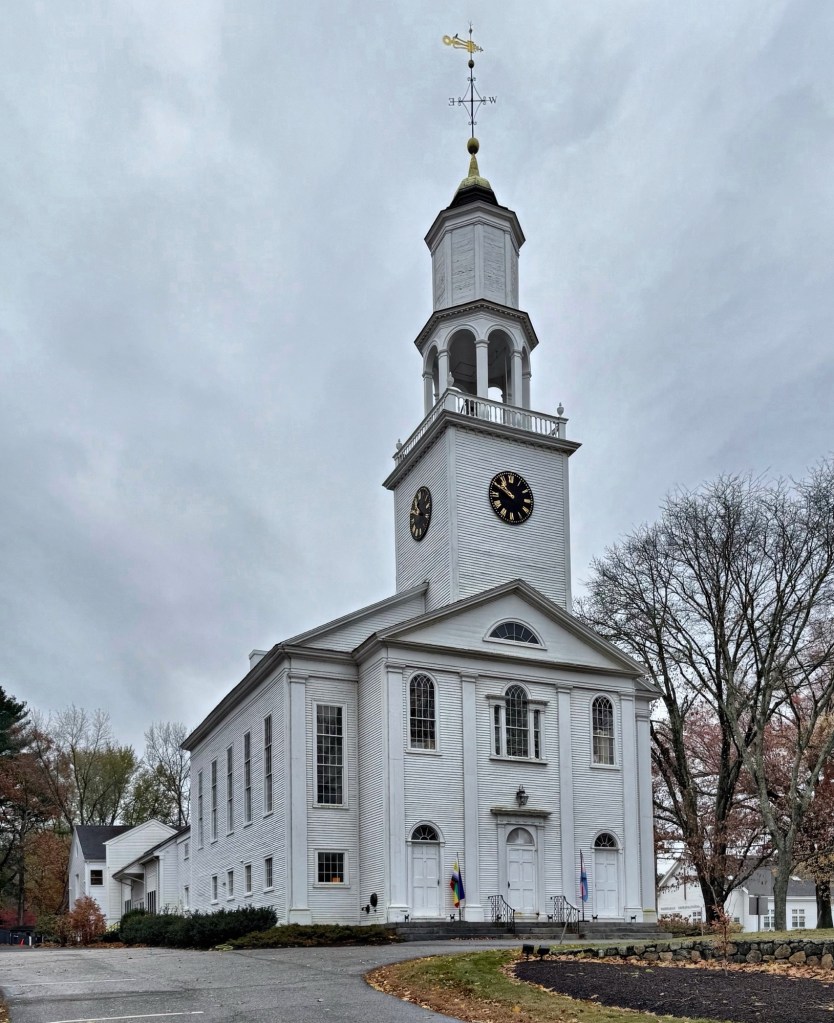
The First Parish Church of Wayland, Massachusetts, is an iconic church that displays the typical early 19th-century meetinghouse form with Federal-style elaboration. Built in 1814, the church is two-stories with a five-bay gabled-front structure with a projecting enclosed portico of three entrance bays, and a four-stage bell tower that rises above the façade. Today known as Wayland, the town was originally called East Sudbury, after it split away from the western parish in 1780. In 1835, members of town meeting voted to rename East Sudbury “Wayland” in honor of Dr. Francis Wayland, a temperance advocate, abolitionist, and then president of Brown University. The First Parish Church of Wayland was built by Andrews Palmer of Newburyport, who used an Asher Benjamin design. The bell was cast by Paul Revere and Sons and first lifted into the bell tower in 1814. The property also includes the historic, twelve-bay horse/carriage sheds where parishioners would “park” their horses and carriages while attending services.

Prospect Hill Tower // 1903

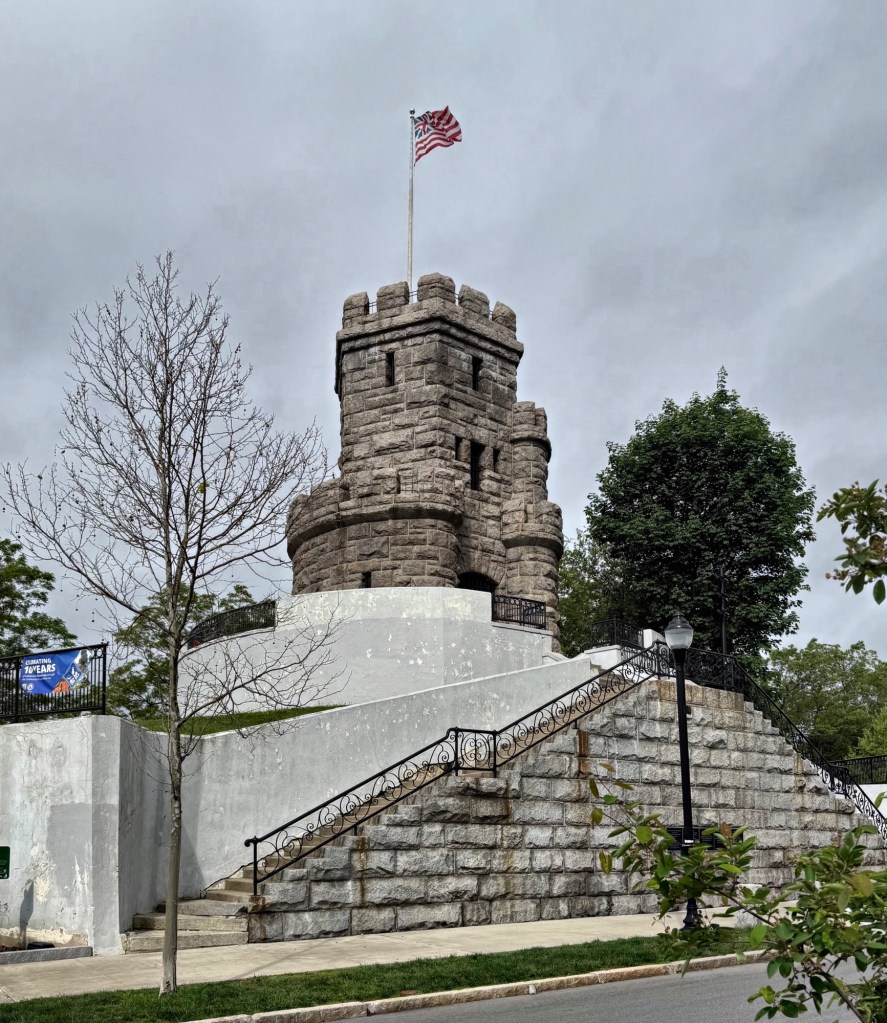
Originally part of the town of Charlestown, Massachusetts, Prospect Hill is now located in the nearby town of Somerville, established in 1842. As one of the hills closest to the city of Boston, the hill played a pivotal role in the line of defensive works constructed after the Battle of Bunker Hill. The area developed slowly, with old farms around Prospect Hill, largely subdivided in the late 19th century for residential development. Around this time, in 1886, the Prospect Hill Park Association was formed, and in 1898, land here was purchased for a public park. The focal point of the iconic neighborhood park is the stone castle structure at the top. Completed in 1903 to commemorate soldiers of the Revolutionary and Civil wars, the rusticated granite tower was designed by Ernest W. Bailey, the City Engineer of Somerville, who also worked to landscape the surrounding park. The granite blocks were shipped in from Deer Isle, Maine. By the 1960s, the structure began to suffer from deferred maintenance. The City of Somerville added the concrete retaining walls to shore up the landscape, which worked for some time. Decades later in the early 2000s, the structure was at risk of further deterioration. Through Community Preservation Act funds, the tower and surrounding landscape were restored and made safer, making this important memorial accessible and enhanced for all to enjoy. 

Louville V. Niles House // 1887

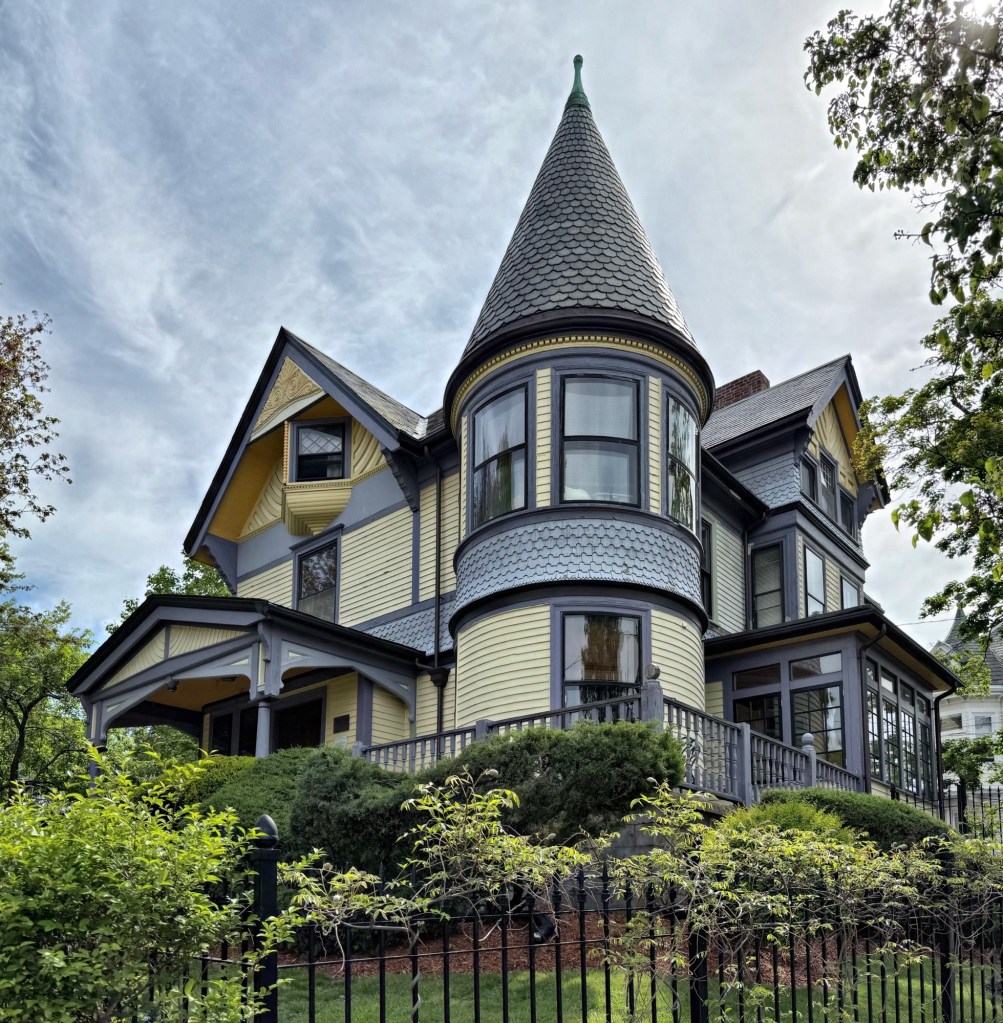
Louville Varanus Niles (1839-1928) was born in Maine and came to Boston in 1860 for the chance to make his fortune. In 1870, he formed a partnership with his two brothers in the provisions business under the name Niles Brothers. The company would later merge with the Boston Packing and Provision Company. Niles moved from Boston to Somerville in 1882, purchasing the Bradshaw estate on Walnut Street. He remained in the house until he decided to redevelop the property, building a number of dwellings on the former estate bounded by Walnut, Boston and Munroe streets. For his own residence, Louville hired the firm of T. B. Blaikie and Son, who designed this beautiful example of a Queen Anne style house in 1887. The building has irregular massing, with numerous gables and rooflines. There is a prominent two-story, rounded tower at the corner, capped with a conical roof, and applied ornament in the gable ends, all common features in this style in the Victorian period. The owners have painted the house to accent the many unique details found here. 

Hollander Apartment Buildings // 1892

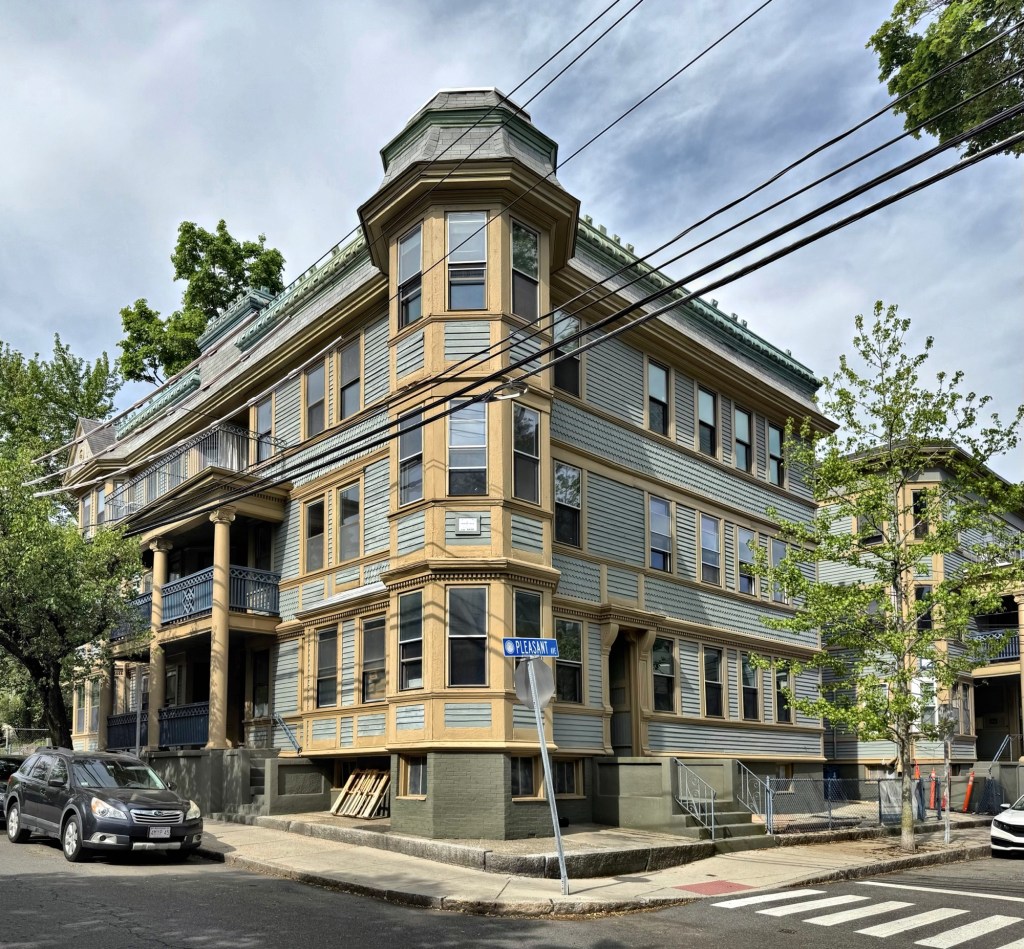
These two stunning apartment buildings were constructed in the early 1890s in the Prospect Hill neighborhood of Somerville. Known as the Hollander Blocks after their original owner, Theodore Clarence Hollander, the two apartment buildings are some of the finest in the Boston suburbs. Both detached buildings follow a traditional three-decker block massing and form, but are decorated with varied siding, two-story columned porticos, and elaborate cornice. 

First United Methodist Church of Somerville // 1874

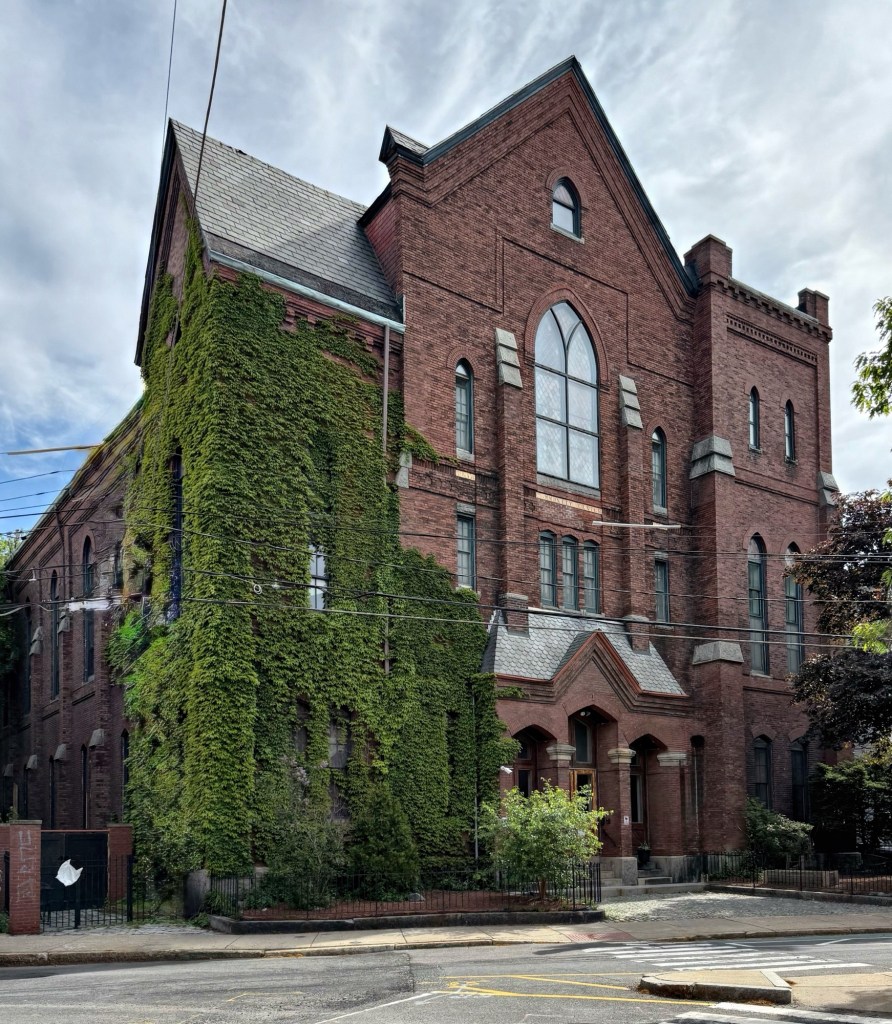
This handsome Victorian Gothic church sits on Summer Street in Somerville, defining the northern edge of the Union Square area. The church was built for the local Methodist congregation, which was established in 1855. The group would meet in local meeting halls and houses until this building was completed in 1874. The towering brick church was once even taller, but its steeple came down following the Great New England Hurricane of 1938. The church closed in the second half of the 20th century and the building was used by the Somerville Community News for years until it was purchased by a developer and converted to condominiums.