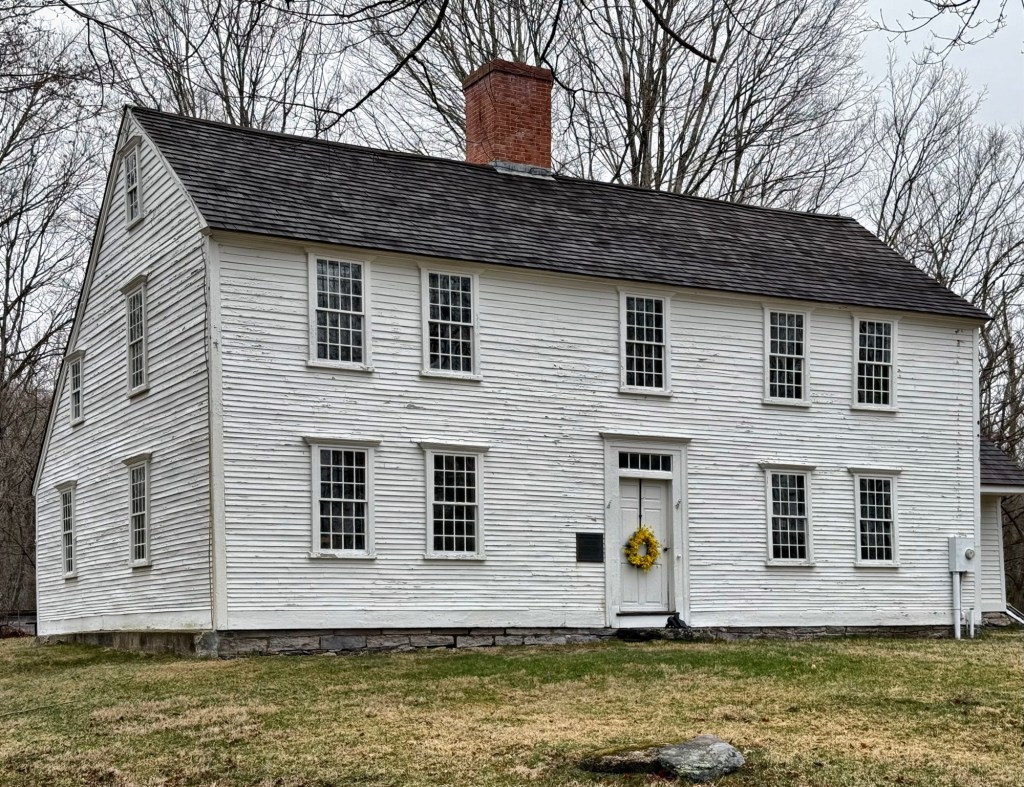
General John Thomas House // c.1761

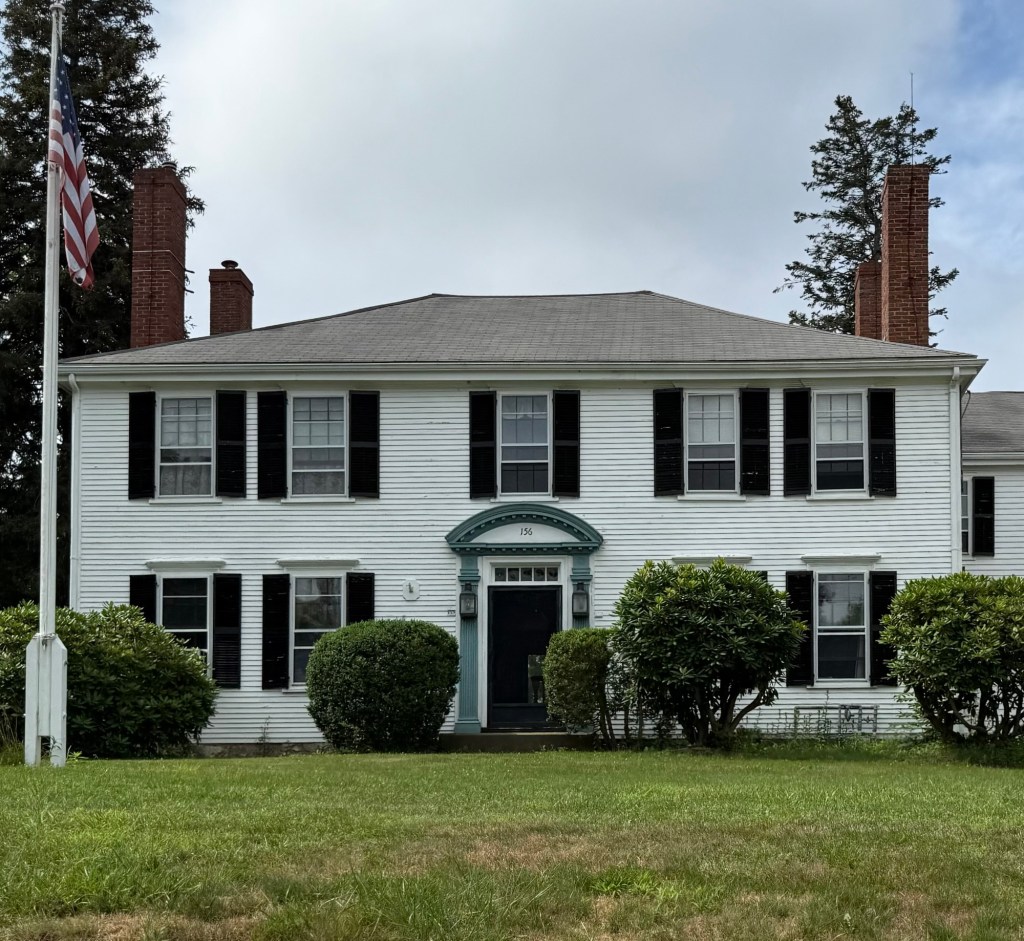
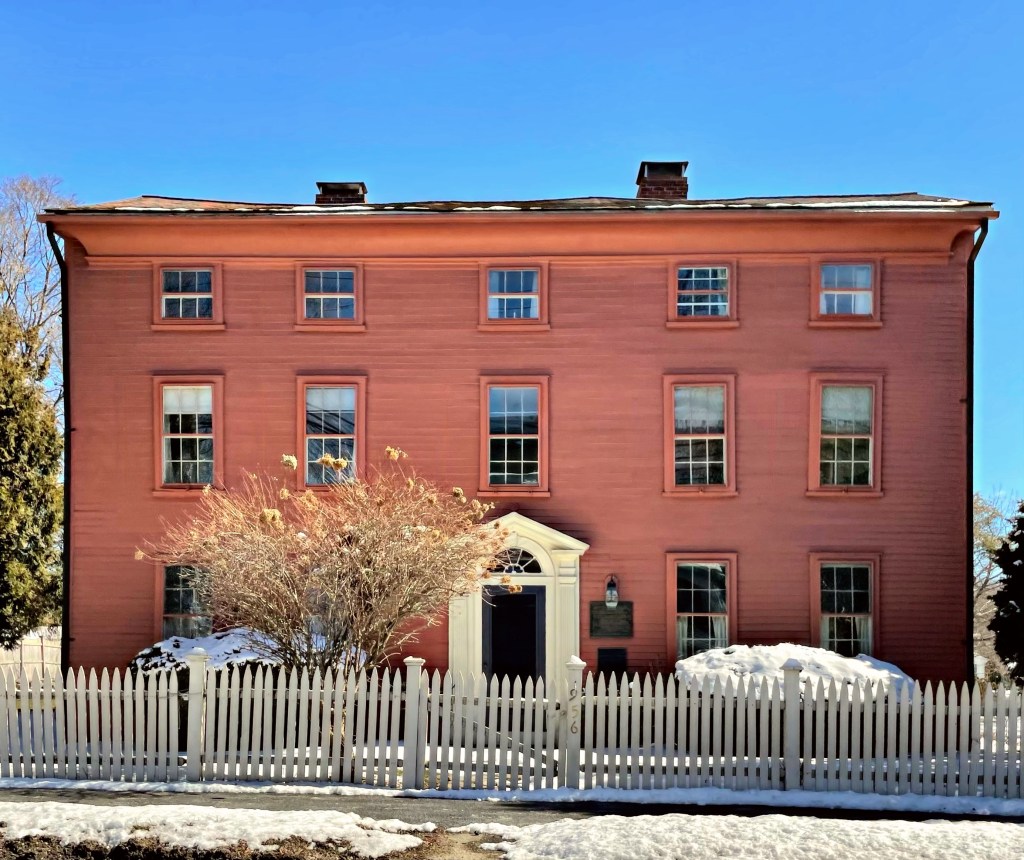
The General John Thomas House at 156 Main Street in Kingston, Massachusetts, is significant as a pre-Revolution Georgian style residence and for its connections with a notable Patriot. General John Thomas (1724-1776) was born in Marshfield and later studied medicine, completing his studies in 1746 at the age of 22. He practiced medicine until being appointed in March 1746, as assistant surgeon by Governor William Shirley in Samuel Waldo’s regiment. Liking military service, in 1747 he traded his post as surgeon for that of a lieutenant. By the time of the French and Indian War he had risen to colonel in the militia. After the war, he married Hannah Thomas in 1761 and either built or moved into this house in Kingston, where he practiced medicine. In the years leading up to the American Revolution, John Thomas was a Brigadier, and briefly resigned from the ranks, disappointed that while four major generals were named, he was not on the list. Congress was then trying to name no more than one major general from each state, and Artemas Ward was given preference. George Washington implored him to remain, and John Thomas returned to service. The Congress resolved that he would be given precedence over all other brigadiers in the army. On the night of March 4, 1776, he led his division to fortify the Dorchester Heights, overlooking the south harbor at Boston, by using cannon that Henry Knox had brought from Fort Ticonderoga. From that position, he threatened the British fleet and the British were forced to withdraw, evacuating Boston on March 17. Thomas was finally named a major general. Soon after, Thomas was assigned to command in Canada and take charge of the Canadian invasion. He joined the army besieging Quebec and remained there until he died of Smallpox in June 1776, not living long enough to see a free America. The John Thomas House is a lasting and important physical vestige of his legacy.

Old Town House, Marblehead // 1727

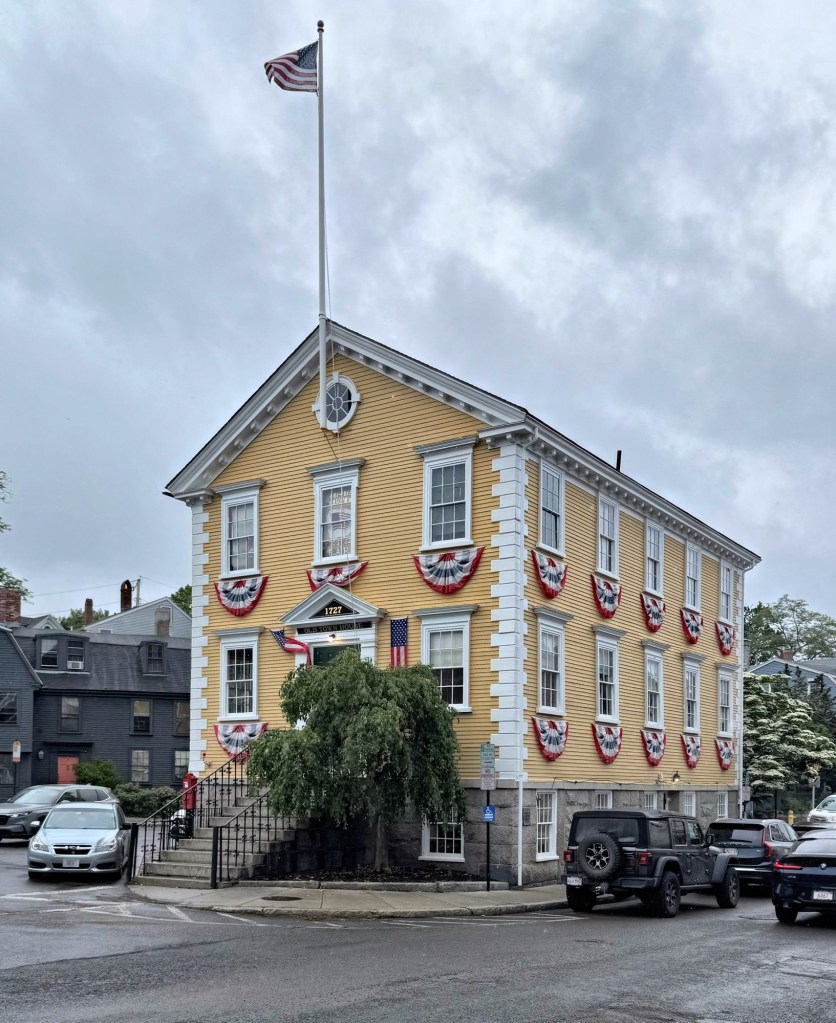
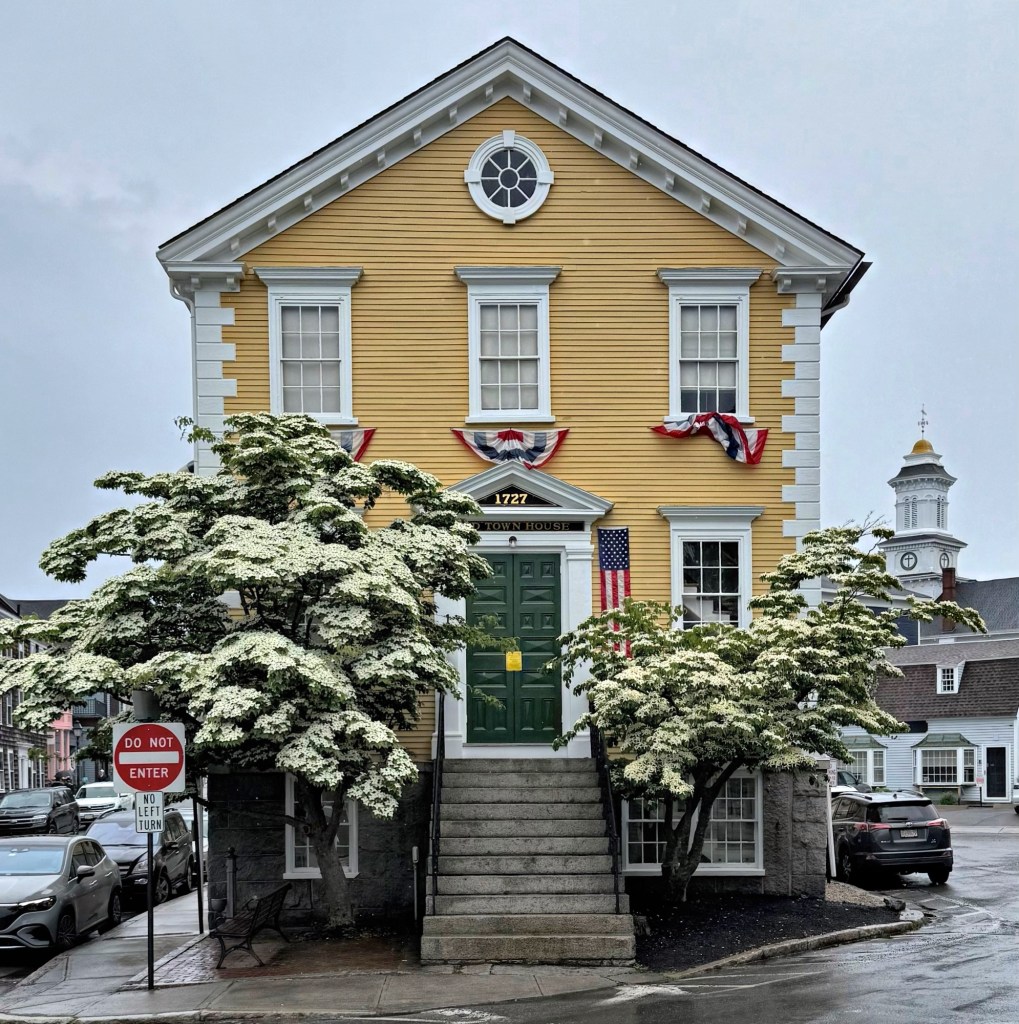
By the early 18th century, Marblehead had grown from a small fishing village to one of the most affluent and influential seaports in the colonies. This new wealth and the increasing secularization of government led town officials in 1727 to fund and build a Town House, to replace the Old Meeting House from 1696. The upper level of the building served as a town hall, while the lower level was originally used as a market. The Town House was later the gathering place to protest the Stamp Act and the Boston Port Act, and was a primary location for Sons of Liberty to meet and discuss Revolution. After Independence, the Town House was host to such dignitaries as presidents George Washington, Adams, Jackson and Munroe, Samuel Adams, John Hancock and the Marquis de Lafayette. The building would eventually be replaced as the town hall when the new Abbot Hall was built in 1876. The top floor became the GAR Museum, established after the Civil War as The Grand Army of the Republic veterans organization. The main floor houses meeting and exhibition space. The iconic Revolutionary-era Georgian building has been lovingly maintained and restored for nearly 300 years, a testament to the historic and architectural significance of this handsome structure.

Huntington Homestead // c.1715

The Huntington Homestead in Scotland, Connecticut, was the birthplace and boyhood home of Samuel Huntington (1731–1796), a Founding Father, a signer of the Declaration of Independence and a distinguished statesman during the Revolutionary War and early Republic. The remarkably well-preserved site includes an eighteenth century house on its original foundation surrounded by acres of farmland and is now protected as a museum. The house was built sometime between the transfer of land in 1715 from Deacon Joseph Huntington to his son Nathaniel, and Nathaniel’s marriage in 1723 to Mehetabel Thurston. As originally constructed, the house consisted of a two-story structure with an end chimney on the west end and one large room on each floor. By the time of Nathanielís death in 1767, the house had been doubled in size with the addition of two rooms west of the chimney, giving the house its current five-bay form. The Georgian style Colonial-era home features a symmetrical facade, twelve-over-twelve windows, and a saltbox roof and is one of the finest Colonial-era homes in this part of the state.

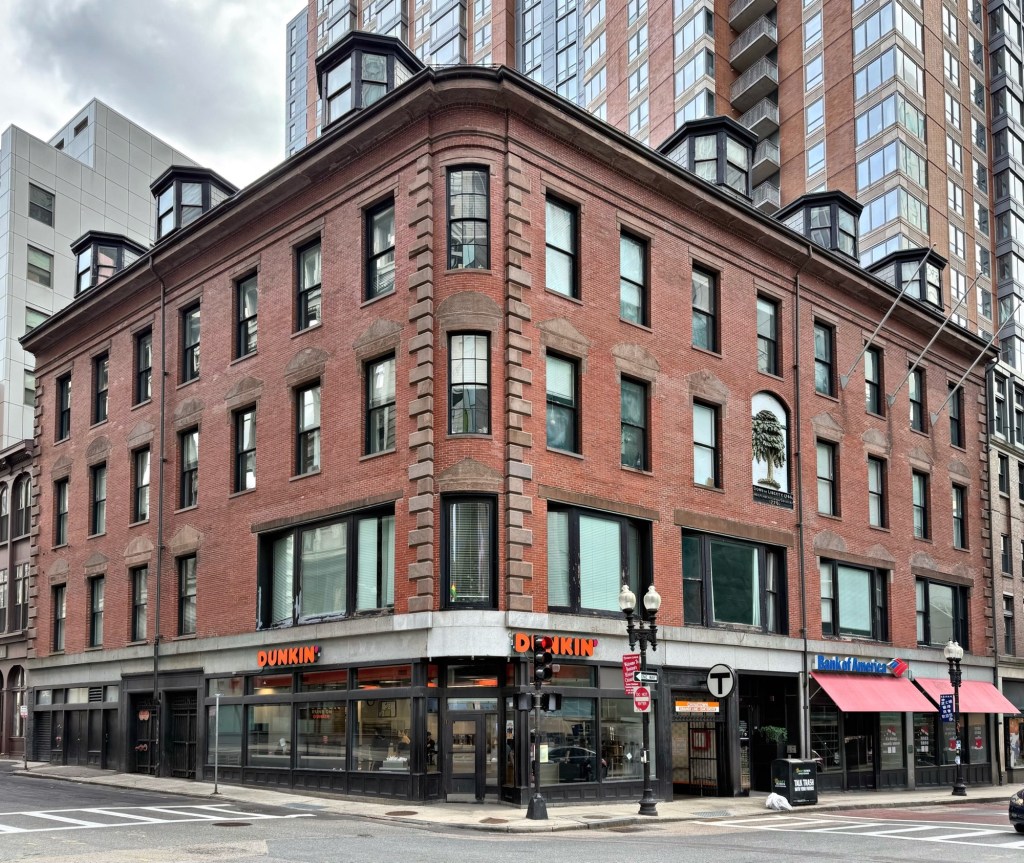
Liberty Tree Block // 1850

The Liberty Tree Block is located at one of Boston’s oldest and most important intersections, Boylston and Essex streets. It is said that near this site, the Liberty Tree stood, and where in 1765, Patriots in Boston staged the first act of defiance against the British government under its branches, The Stamp Act protests. The tree became a rallying point for the growing resistance to the rule of Britain over the American colonies. The Liberty Tree was cut down by British Loyalists in 1775, but the tree’s symbolism lives on in the building constructed on the site 75 years later. Nineteenth-century real estate developer David Sears had this commercial block built in 1850, which housed stores at the street with ballrooms on the upper floors. The Liberty Tree Block is best-known and named so due to the wooden relief plaque of the Liberty Tree on the Washington Street elevation. The motif stands 8′ high and 5′ wide and was carved by ship carvers. The bas relief is inscribed with “Liberty–1765” across the top, “Law and Order” at its roots, and at the bottom, “Sons of Liberty, 1765. Independence of their Country, 1776.” The building (and its carving) are protected Landmarks in Boston.

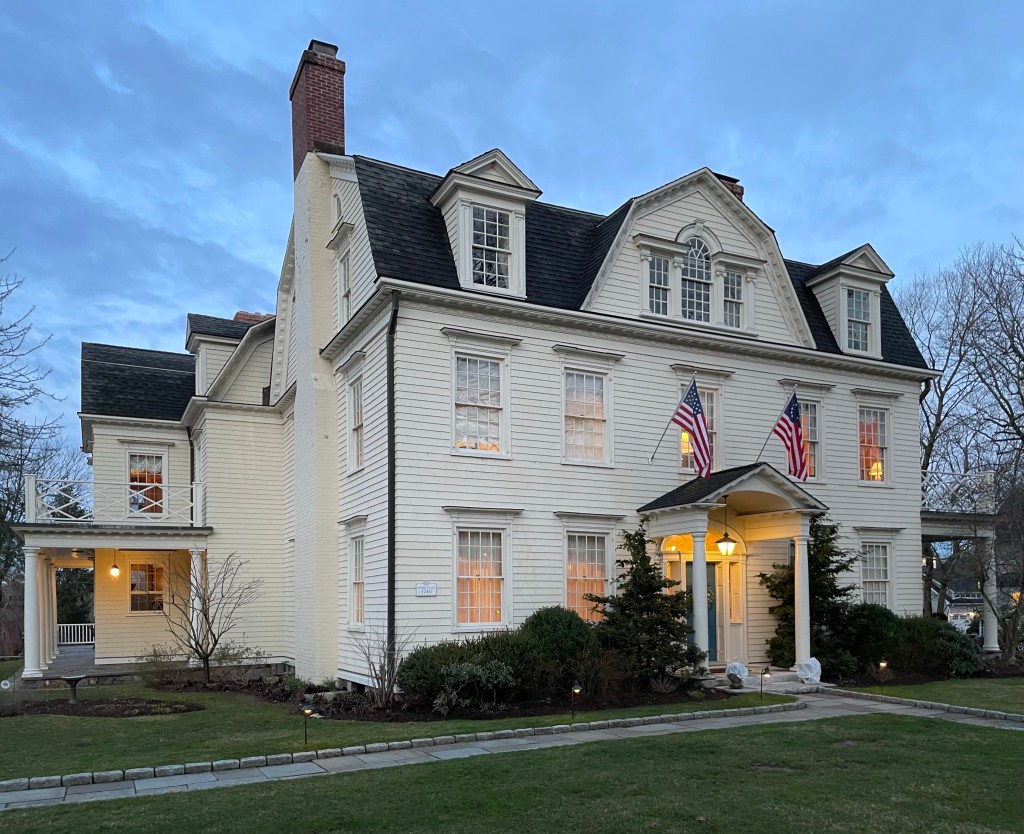
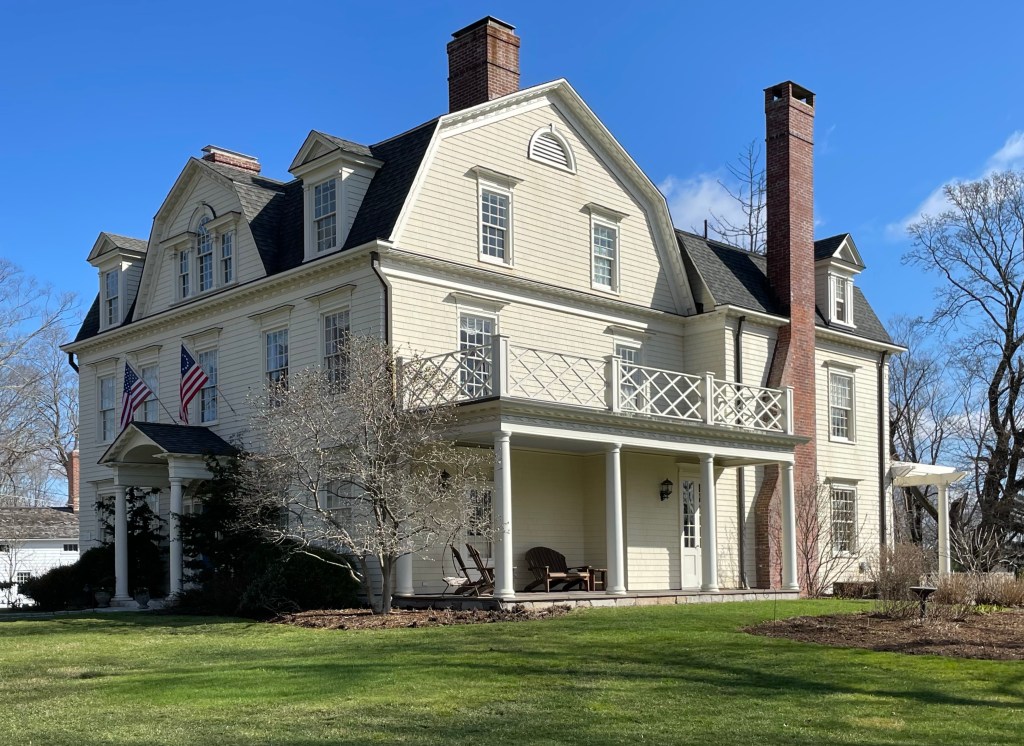
The Fountain Inn // 1740

Located on Main Street in idyllic Ridgefield, in Fairfield County, Connecticut, The Fountain Inn provides one of the most welcoming and historical bed and breakfast experiences in New England! The Fountain Inn was built in 1740 as a “city home in the country” for David Hoyt, who showed off his wealth and stature in the young town by having such a high-style home built at the time. Decades later during the Revolutionary War, David Hoyt’s house became a part of the Battle of Ridgefield. After defeating the Colonial militia elsewhere on Main Street, British Gen. William Tryon‘s troops turned their attention to nearby Keeler Tavern, the local militia’s headquarters, which just happened to be neighbors with the mansion owned by David Hoyt, a known Loyalist. General Tryon’s troops practiced their artillery-firing skills on the building pummeling it with cannonballs, sending a message to the head of the local militia. David Hoyt formally demanded a cease-fire, as he was concerned about wayward cannonballs damaging his home. By 1790, with Ridgefield’s British influence diminishing by the day, David Hoyt finally left his Connecticut home and sailed back to England. The home was expanded and modernized over the next two hundred years until the present owners purchased the property and underwent a massive restoration of the Colonial house inside and out as their family residence. In the past year, the inn opened as the Fountain Inn so-named after a Cass Gilbert-designed fountain across the street.

John Tillinghast House // c.1758

Built about 1758, this Georgian house in Newport was the home of John Tillinghast, a representative to the Rhode Island General Assembly in 1744 and 1749, and a wealthy merchant and ship owner. It is not unlikely to assume that Tillinghast was involved in the slave trade and transportation of goods in the Indies, like many other wealthy Rhode Island merchants at the time. During the American Revolution, General Nathanael Greene was quartered in this house. Greene was born to a Quaker family in what is now Warwick, Rhode Island, but because of his military affairs, the pacifist Quakers disowned him. After several decisive victories against the British in the Carolinas, Greene was named Commander of the Southern Army, second in command to George Washington! Also during this time, two of Greene’s aides are said to have visited him while he resided at the house. One was the Lithuanian General Thaddeus Kosciuszko, an engineer who designed fortifications along Delaware River and West Point. Another was the Inspector-General of the Continental Army, German-born Friedrich von Steuben. This house is significant and shows the international nature of the War for Independence, which saw American forces joined by French forces and German mercenaries to fight the British. In the early 19th century, the home was occupied by William C. Gibbs, Governor of Rhode Island from 1821-1824. The high-style Georgian home has been enlarged over the years, but remains one of the most significant properties in the town!

Faulkner Homestead // 1707

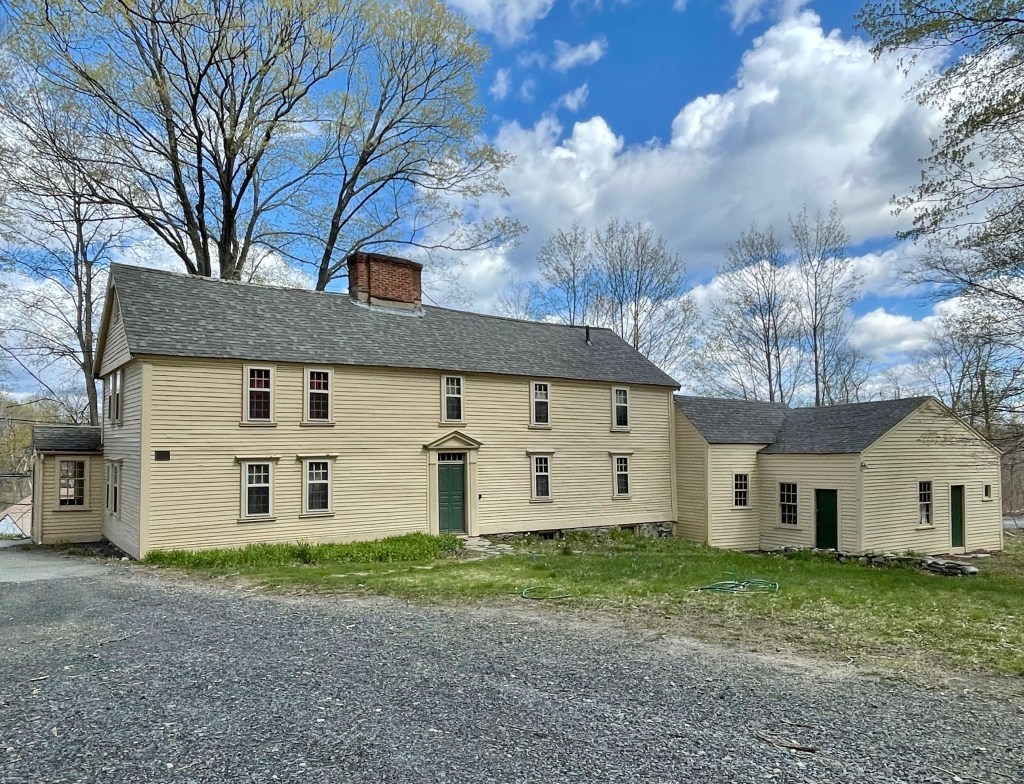
One of three pre-1725 houses in South Acton, the Faulkner Homestead is the best preserved First Period house in the area and displays elements from its First Period construction date of 1707 and from the later Georgian period. The home was built for Ephraim Jones, who was one of the first millers starting what was to become the Faulkner mills located near the old homestead. The home was known as a Garrison House, built as a refuge for the settlers in times of Indian raids, but there is no record that it was ever used for that purpose. In the 1730s, the home was rented by Ammi R. Faulkner (1692-1756), who purchased it years after he moved in. The Faulkner Homestead remained in the Faulkner Family for over 300 years, when it sold our of the family in the 1940s.

Joseph Reynolds House // 1698

This three-story wood-frame house is one of the oldest buildings in Bristol and the oldest known three-story building in Rhode Island. The home was built by Joseph Reynolds (1679-1759), a patriarch in the Reynolds Family, who later built the Reynolds-DeWolf House I featured previously. The house is five bays wide and three deep with the roof extending lower to the rear, giving the house a classic New England saltbox appearance. Joseph built this house, and also operated a tannery and gristmill on his land. The home is nationally significant as during the ownership of the house by his son Joseph II, Marquis de Lafayette occupied the north parlor chamber. Lafayette was a general in the Continental Army and was responsible for the defense of Bristol and Warren from September 7 to 23, 1778 during failed military operations to drive the British from occupied Newport. The home was added onto and altered in 1790 to give it the current design, with Federal detailing. The home remained in the Reynolds Family until 1930.

Cummings-Abbott House // c.1735

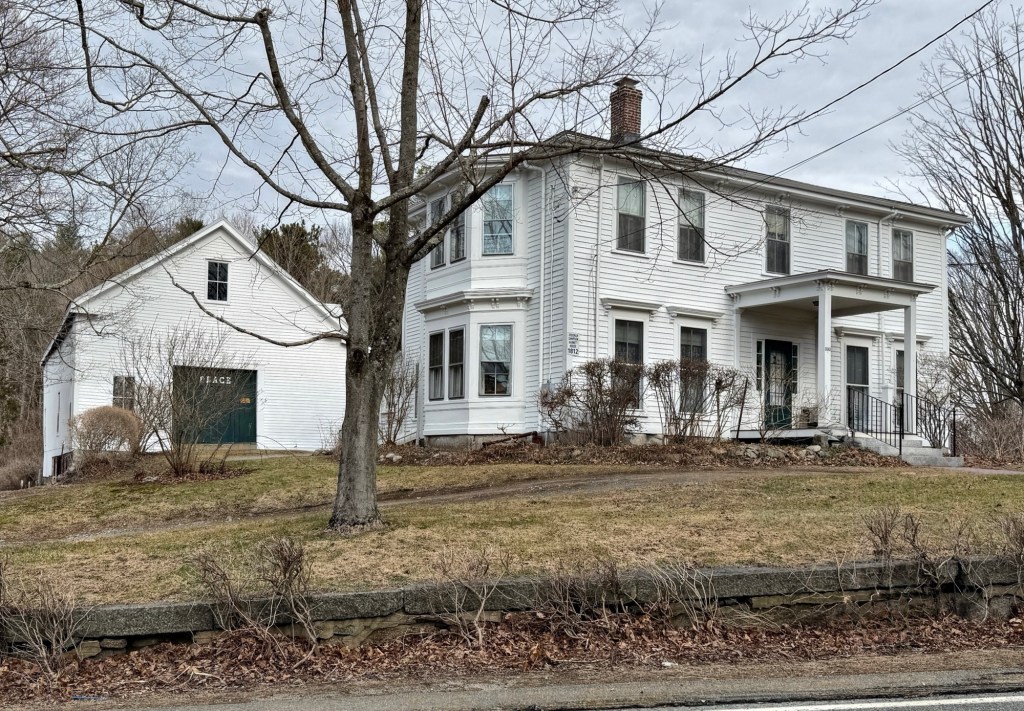
Samuel Cummings (1709-1772) married Prudence Lawrence (1715-1796) and moved to Hollis, NH from Groton, MA. The couple had a home built in town and raised at least four children, Samuel Jr., Mary, Sibbel, and Prudence. The original house built by Cummings was a single-story, four room, center chimney type. After his death in 1772, the property passed to Cummings’ son, Samuel Cummings, Jr., an acknowledged Tory. Interestingly, Samuel’s sister Prudence was an ardent patriot, who moved to Pepperell, MA and married a militia man, David Wright. While the Revolutionary War was raging, Prudence visited her brother in the old family home, when she overheard her brother Samuel talk to his friend, a British army officer about passing information to the British. Prudence returned to Pepperell and gathered the women of the town. Then a 35-year-old mother of five, she organized 30 or 40 of them into a militia called ‘Mrs. David Wright’s Guard.’ The women dressed in their husbands’ clothes and carried whatever they could for weapons. As the men had probably taken muskets with them, the women probably used farm implements such as pitchforks. The women patrolled the roads leading into town. The group eventually captured two British soldiers on horseback and let them go only once they agreed to never come back to the colony. Due to this event, Prudence never spoke to her loyalist brother again.

In the 1850s, the house was owned by Superintendent of Schools, Levi Abbott and his wife, Matilda. It was the Abbotts who reportedly added a second story to the house with a hip roof, cornice and corner pilasters, giving it the appearance we see today.

Old North Church // 1723

One of the most visited buildings in New England is the stunning Old North Church in the North End of Boston. Old North Church (originally Christ Church in the City of Boston) was established when the cramped original King’s Chapel, then a small wooden structure near Boston Common, proved inadequate for the growing number of Anglicans in the former Puritan stronghold. Subscriptions for a new church were invited in 1722. The sea captains, merchants, and artisans who had settled in Boston’s North End contributed generously to the building fund, and construction began in April, 1723. The church was designed by William Price, though heavily influenced by Christopher Wren’s English churches.

Before the American Revolution, both Patriots and Tories were members of the church, and often sat near each-other in pews, clearly adding to bubbling tensions. The enduring fame of the Old North began on the evening of April 18, 1775, when the church sexton, Robert Newman, and Vestryman Capt. John Pulling, Jr. climbed the steeple and held high two lanterns as a signal from Paul Revere that the British were marching to Lexington and Concord by sea across the Charles River and not by land. This fateful event ignited the American Revolution.

A full scale restoration of Old North was carried out in 1912-14 under the direction of architect R. Clipson Sturgis and a number of 19th century alterations were then eliminated. In this work, floor timbers and gallery stairs were replaced, the original arched window in the apse at the east end was replaced, and the old square box pews and raised pulpit were reconstructed. Additionally, the interior woodwork was incorrectly repainted white rather than the rich variety of original colors described in the early documents of the church, clearly submitting to Colonial Revival sensibilities. The iconic white steeple is also not original. The original steeple of the Old North Church was destroyed by the 1804 Snow hurricane. A replacement steeple, designed by Charles Bulfinch, was toppled by a hurricane in 1954. The current steeple uses design elements from the original and the Bulfinch version. Even with all these differences, Old North lives up to her name and stands proudly as a symbol of freedom and revolution.