Charles H. Owens House // 1906

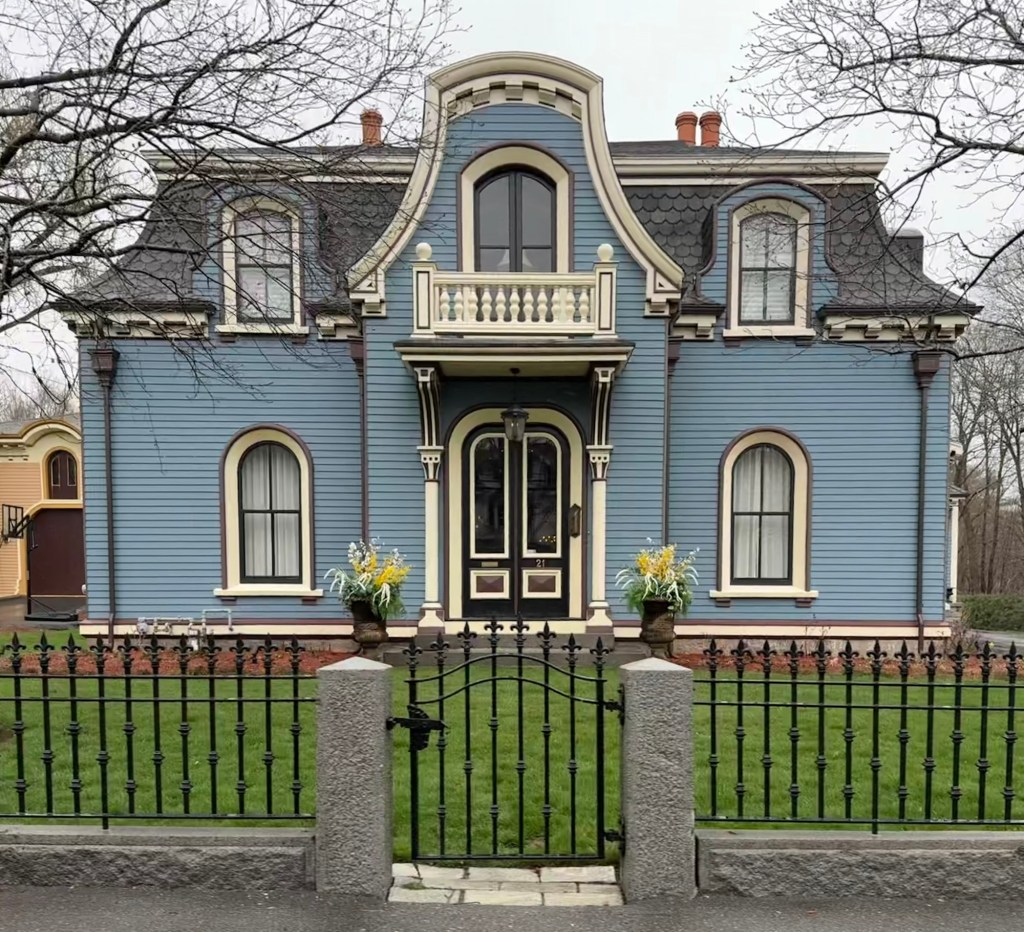
This stately house on Powell Street in Brookline, Massachusetts, was built in 1906 for Charles H. Owens, Jr., and his wife, Nellie. Charles was a “house decorator”, who built the house next door just two years earlier before moving into this larger home in 1906. Both houses were designed by the architectural firm of Loring & Phipps, who Owens likely collaborated on commissions with in his career. The house is 2 1/2-stories with a shallow hip roof and is an excellent example of an academic interpretation of the Colonial Revival style. The principal facade has flush board siding with round-arched windows on the first floor along with a squat fanlight transom over the center entrance.

John R. Perry House // 1904

This lovely Colonial Revival style house on Powell Street in Brookline was built in 1904 for Charles H. Owens, Jr., an interior designer who just two years later, built another home next door that he would reside in with his own family. This house was rented to John R. Perry, who was also listed as a “decorator” in city directories and president of Perry, Lewis & Whitney, a design firm. The house (like its neighbor built two years later), was designed by the architectural firm of Loring and Phipps and was oriented southward to face the side yard. The Perry House features small projecting oriel windows, a broad gambrel roof, and an entrance portico supported by Tuscan columns.

George and Annie Andrews House // 1899

By the end of the 19th century, Brookline’s connection to Boston via the streetcars opened the town up to suburban development unlike anything seen before. From this, Boston businessmen could move to the suburbs for more land and live in larger single-family homes while commuting to the city for work. This large house in the Cottage Farm neighborhood was built in 1899 on speculation and purchased by George and Annie Andrews, who two years later, built a stable on the adjacent lot. Architect Robert Coit, specialized in large suburban houses, primarily in the Boston-area suburbs, and showcased his design talents for this Tudor Revival home. Tudor Revival style ornament include the second story over-hangs supported on brackets, the diamond pane sash and casement windows, vergeboard with finials, and portico with steep gable.

Hugh G. Brown House // 1905

Eclectic houses of the late 19th and early 20th centuries are my favorite as they showcase how architects of the time blend features and break the strict mold of academic styles. This example is found in the Cottage Farm neighborhood of Brookline and dates to 1905. Designed by relatively unknown architect, Alfred Lyman Darrow, who studied at MIT, before opening his own practice. The house was first owned by Hugh G. Brown, who founded the Brown’s News Company and the Hotel & Railroad News Company. The house exhibits half-timbering in the gable ends and decorative corbelled chimneys that derive from the Tudor Revival; the front porch parapet appears to derive from the Spanish Mission style; along with stucco siding and unique windows typical of the Arts and Crafts movement.

Kramer-Duane House // 1895

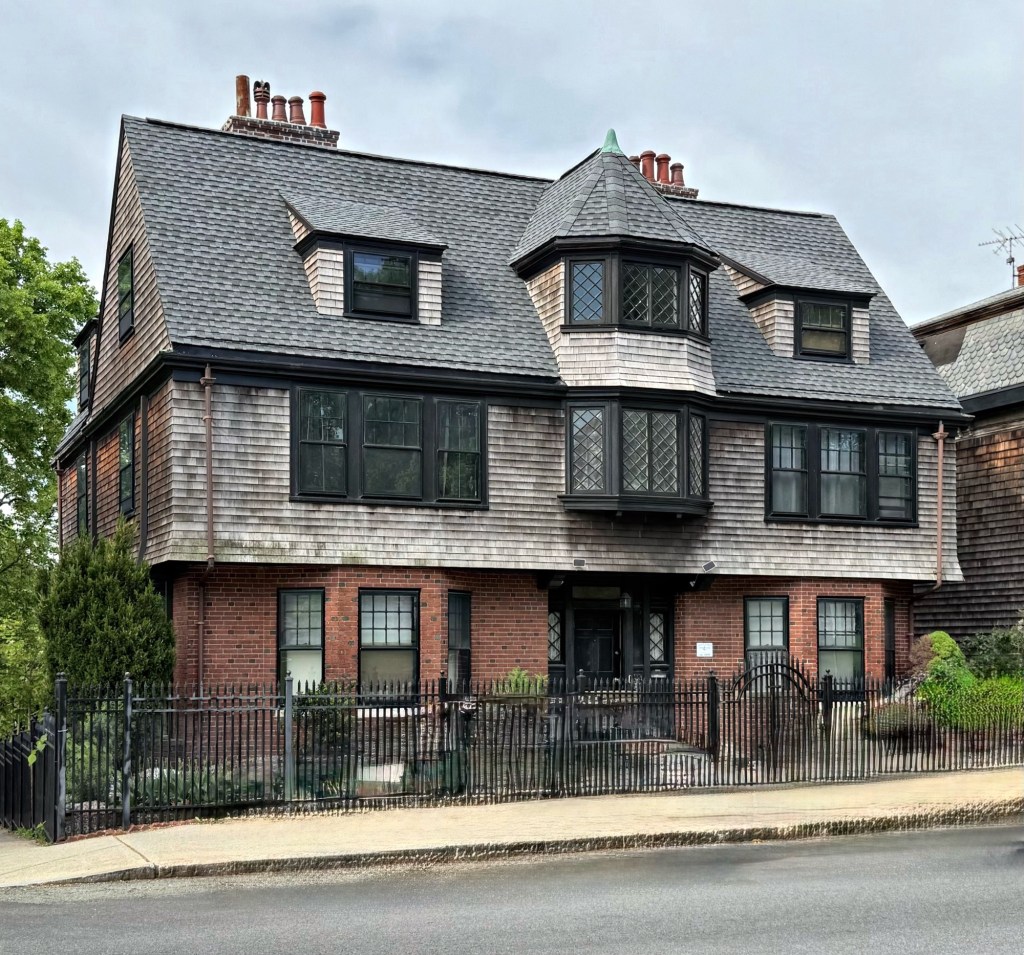
One of five houses built by developer Albert Jewell along Powell Street in the Cottage Farm neighborhood of Brookline, this residence stands out for its materiality and stately design. The house was designed by J. Williams Beal, an architect who trained at Massachusetts Institute of Technology and then worked for McKim, Mead & White before opening his own business. The house was first purchased from Mr. Jewell by Grace and Edwin Kramer, who worked as superintendent for R. H. White & Co., the large dry goods store in Boston. The next long-term owner was Harry B. Duane, a wealthy grocer. The Kramer-Duane House is unique for the stone veneer at its facade, gambrel roof covered in slate, and varied window styles including: bay windows, dormer windows, and an eyebrow dormer window at the roof.

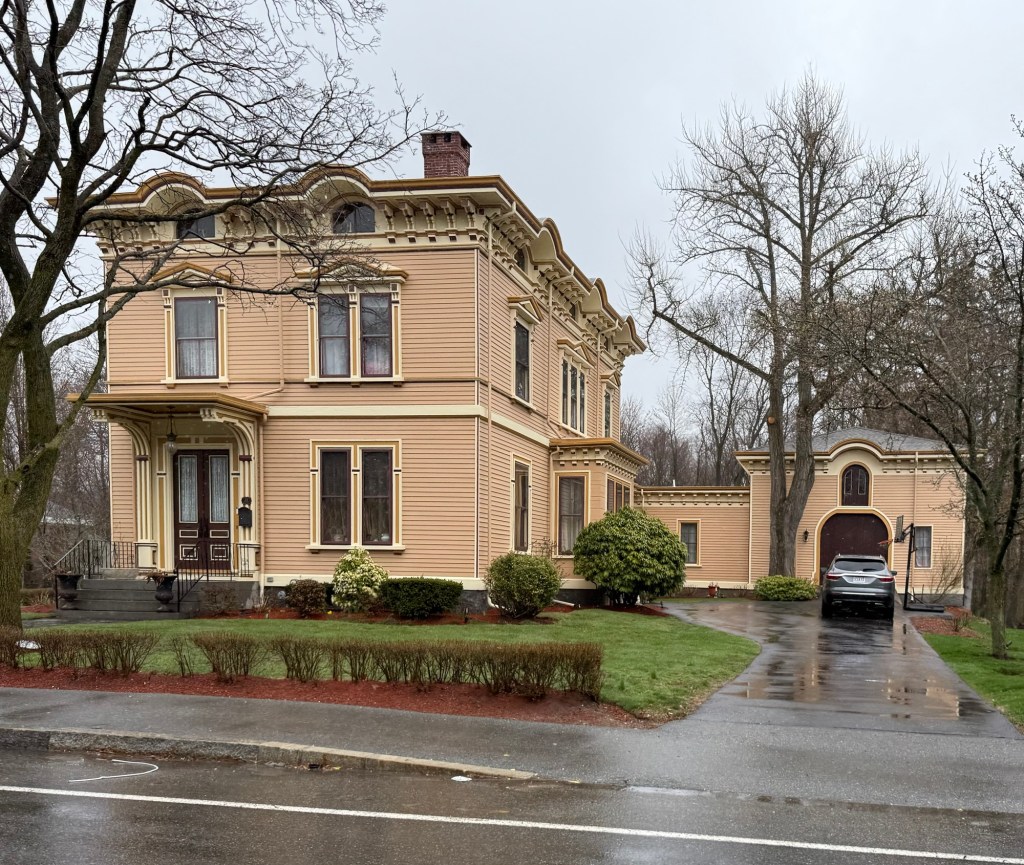
Dana-Jewell House // 1872

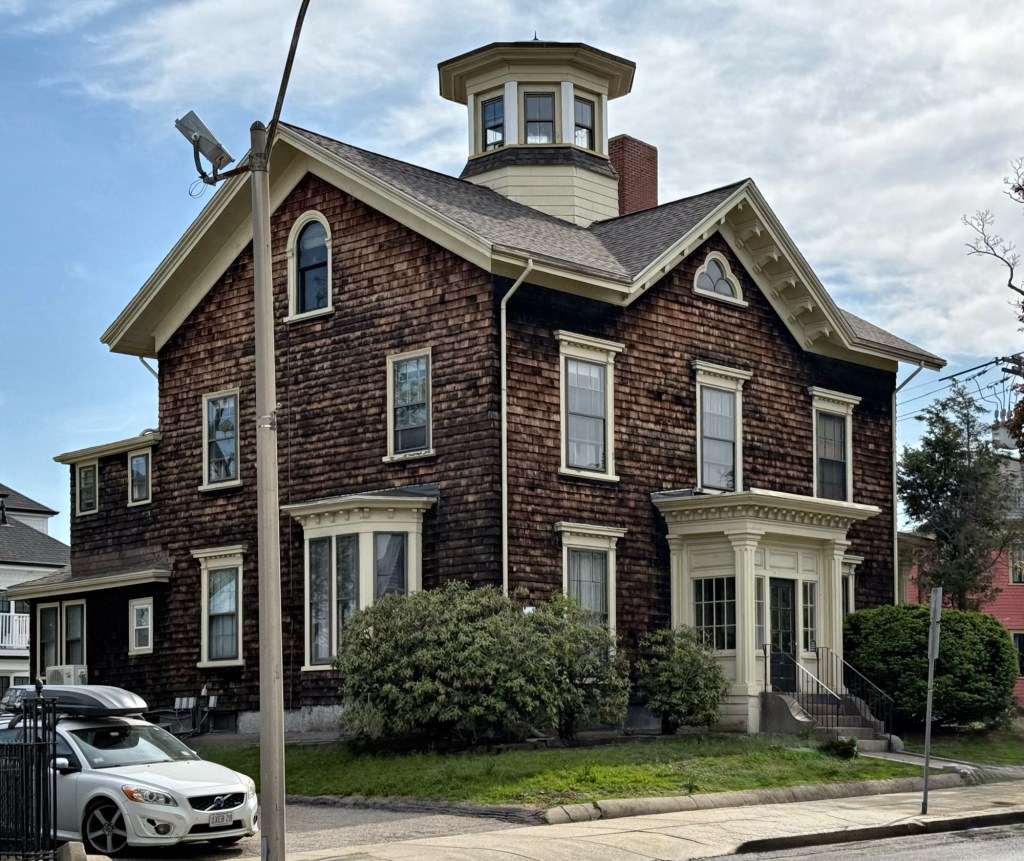
This house at the corner of Freeman and Powell streets in the Cottage Farm area of Brookline, Massachusetts, was one of the first to be built on Sears family land in the years following the death of the family patriarch, David Sears. In 1871, Dennison Dean Dana (1827-1899) purchased land here from the Sears heirs and constructed this Italianate house with three-story square tower. Dana owned the house through the 1880s, and by 1893 it had been acquired by Albert L. Jewell, a real estate developer who added the large veranda and a two-story addition to the house, and would subdivide the property, developing fashionable houses along Powell Street to the south. The house (while clad in asbestos shingles since the 1960s) is an important early residence in the neighborhood which is today, dominated by late 19th and 20th century architecture.

James Adams Farmhouse // c.1785

This handsome New England farmhouse is located in rural Canterbury, Connecticut, and showcases the type of farmhouses available to local wealthy residents in the late 18th and early 19th centuries. The construction dates to about 1785, just after James Adams, a Lieutenant in the American Revolution, purchased land here. The property remained in the Adams Family until 1859. The structure rests on
a fieldstone foundation and is sheathed with clapboards. The Georgian farmhouse incorporates a five-bay facade with central entry with five-light transom and a large stone central chimney and jettied gable ends on the sides.

Captain John Clark House // 1802

The Captain John Clark House in Canterbury, Connecticut, is one of the finest examples of the Federal style of architecture in New England, and has remained in a fine state of preservation since its construction in the early 19th century. The house was built by 1802 for John Clark (1731-1834), who purchased an earlier home on the site from and had it either taken down or enlarged to its present appearance. The mansion is symmetrical with five bays, central entry and twin chimneys projecting through the hipped roof. The central bay is a showstopper with its triangular pediment at the roofline containing a fanlight, Palladian window at the second floor, and main entrance with its own pediment, sidelights, fanlight transom, all framed by two-story columns. The house’s south facade is equally beautiful with its own Palladian window and entrance.

Westminster Meetinghouse // 1770

The Westminster Meetinghouse (aka the Westminster Congregational Church) was built in 1770 by Canterbury, Connecticut residents who in the 1760s, created a separate religious jurisdiction, the Westminster Society, due to their reluctance to travel long distances to Canterbury village for required religious services. Local resident John Parks donated land to be used as a public green, as well as a site for a cemetery and this meetinghouse. Sherebiah Butts, captain of the local militia, was engaged as master builder and architect, who along with his sons and other helpers, constructed the church by 1770. The original church, originally a square-plan meetinghouse, initially faced east, but was rotated to face south by around 1840, when the entire structure was remodelled in the prevailing Greek Revival style. The church is said to be one of the oldest continually utilized meetinghouses in Connecticut.

Dr. Andrew Harris House // c.1820

This house is located across from the iconic Prudence Crandall House in Canterbury, Connecticut, and is another excellent example of a high-style Federal home in the town’s main village. Built in circa 1820, this residence was the home of Dr. Andrew Harris (1787-1840), one of two physicians in Canterbury in the early 19th century. After Dr. Harris’ death, the property was owned by Hiram and Nancy Waldo, who altered the house with the addition of a Victorian observatory at the rear, two-over-two sash windows, and an entry porch with paired door entrance.