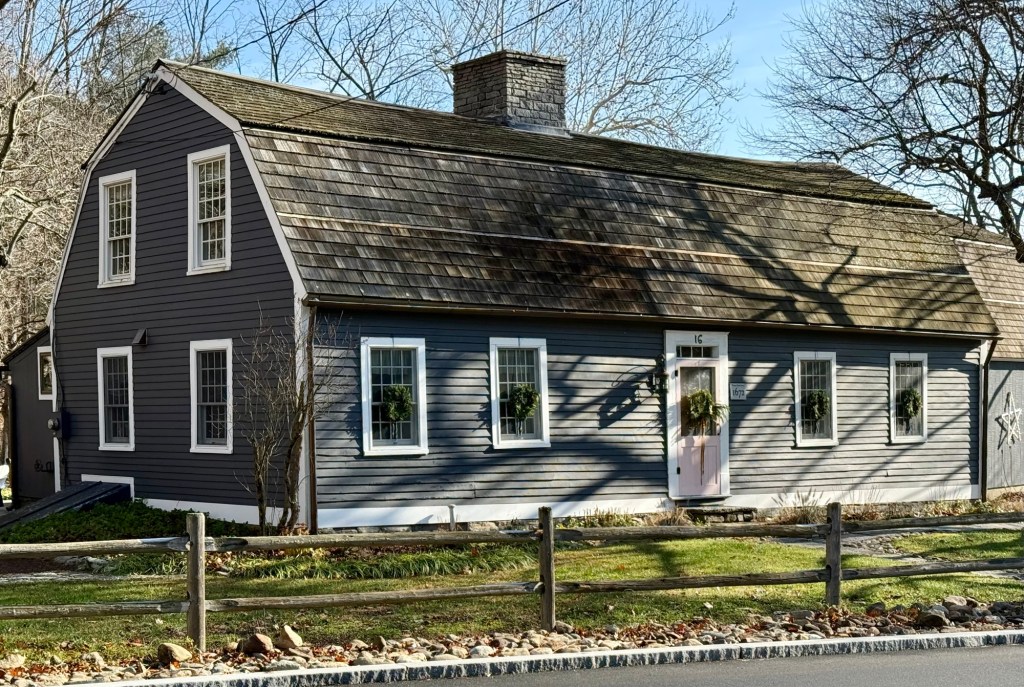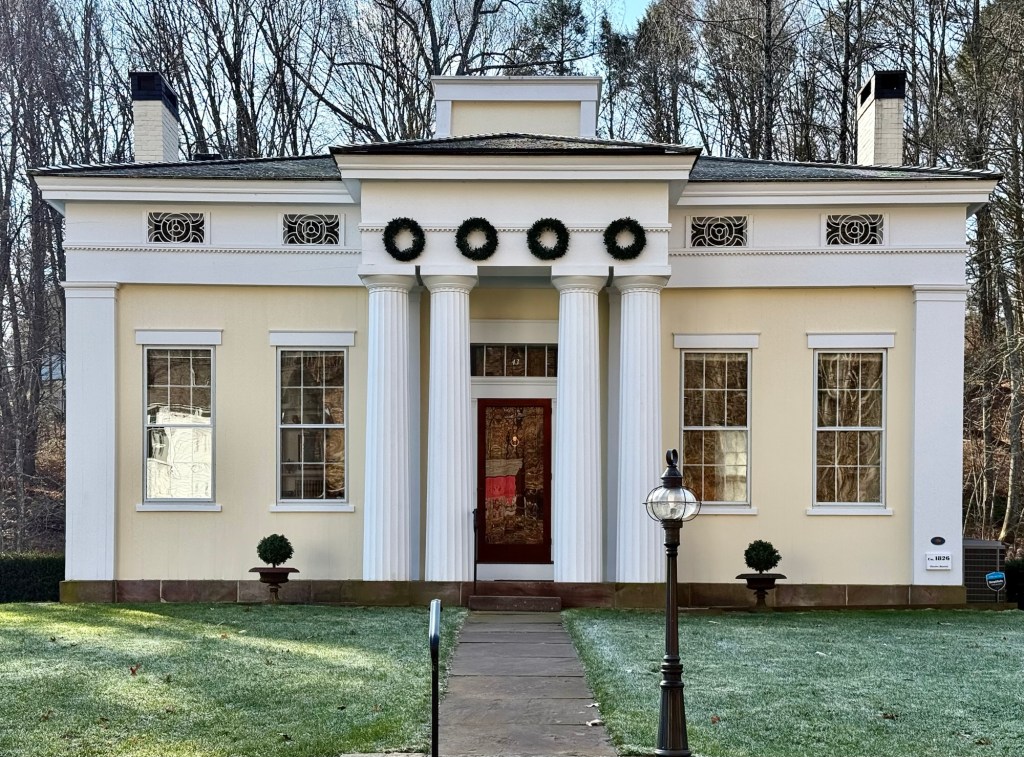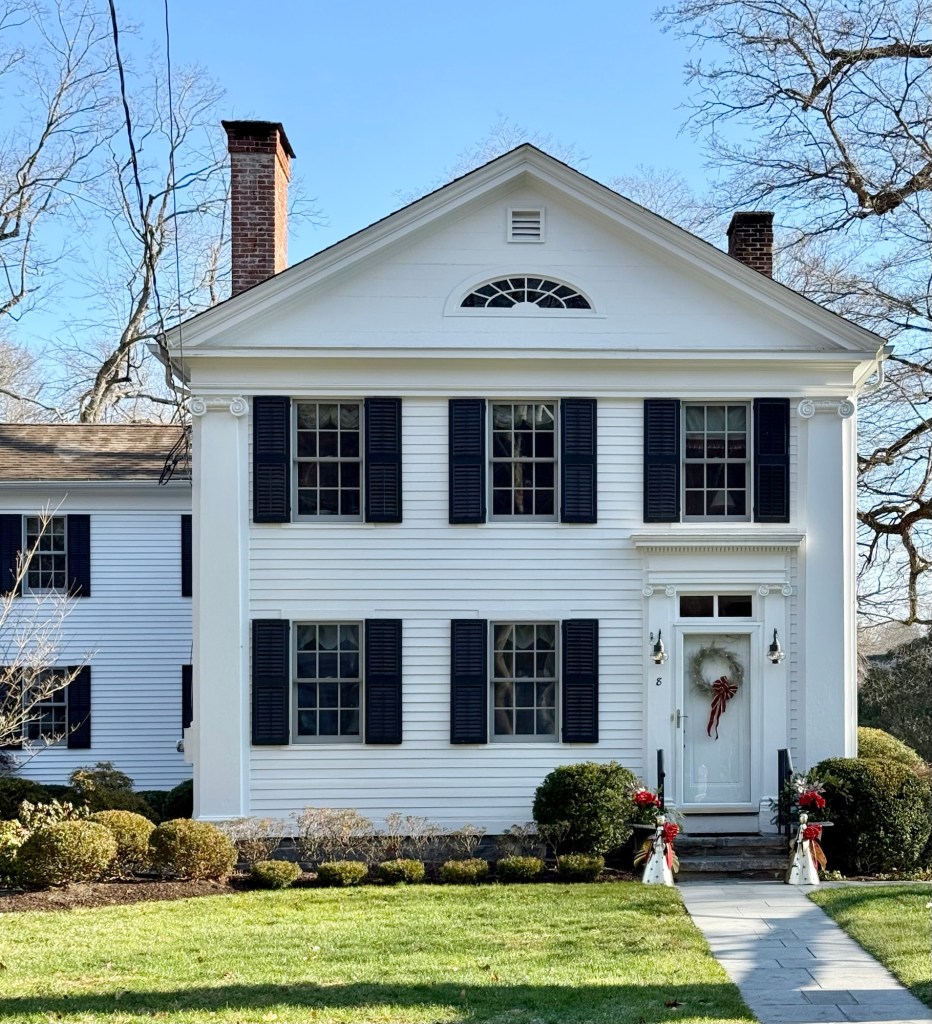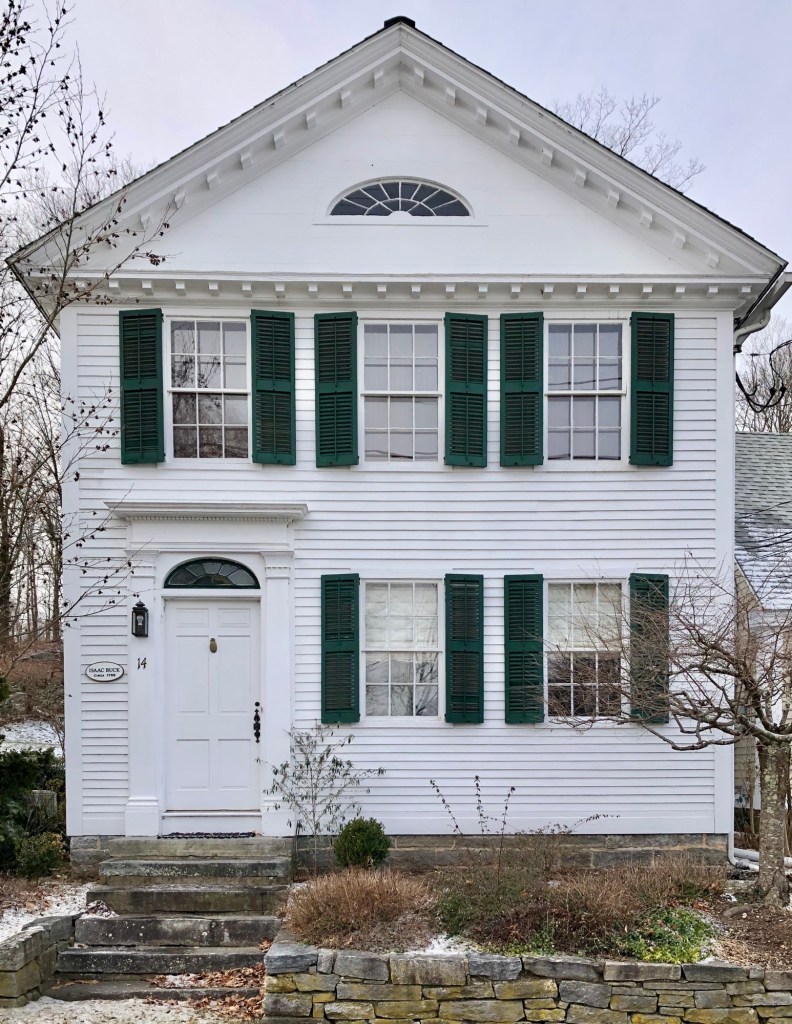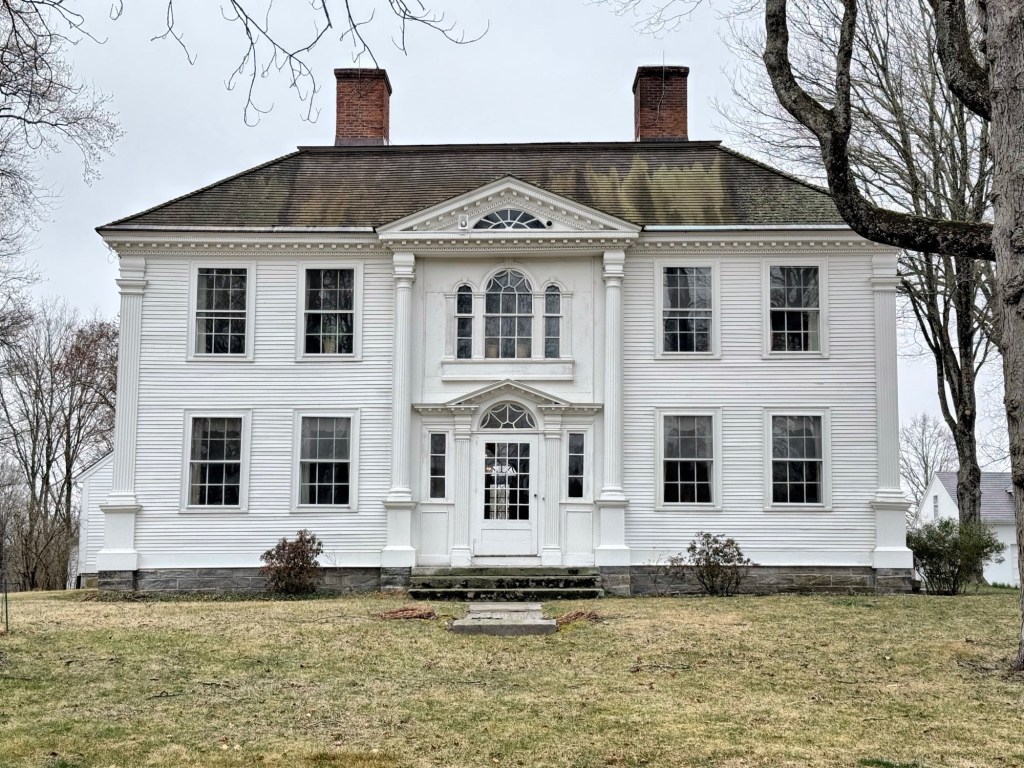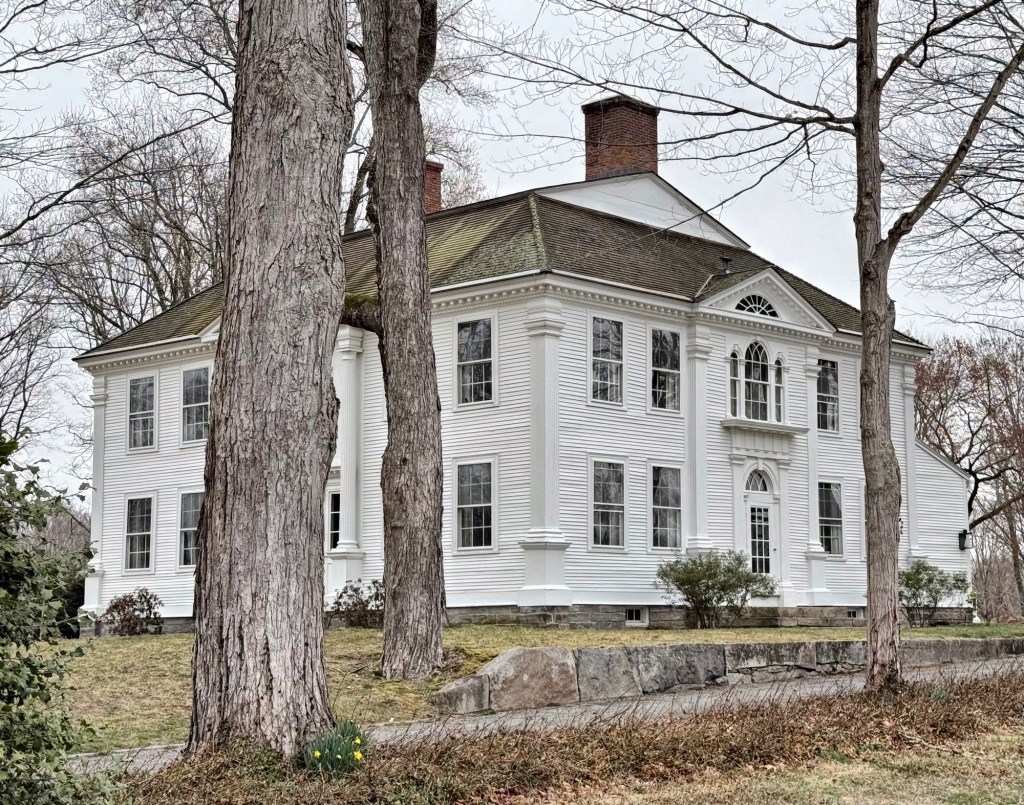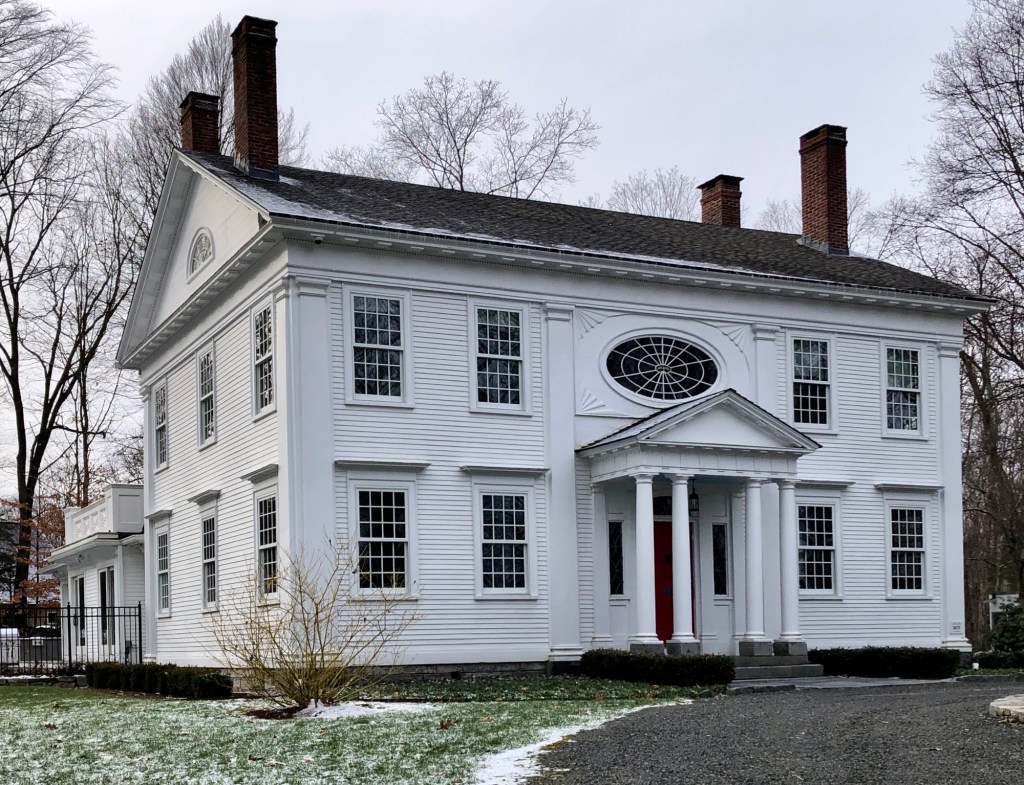
Captain John Clark House // 1802

The Captain John Clark House in Canterbury, Connecticut, is one of the finest examples of the Federal style of architecture in New England, and has remained in a fine state of preservation since its construction in the early 19th century. The house was built by 1802 for John Clark (1731-1834), who purchased an earlier home on the site from and had it either taken down or enlarged to its present appearance. The mansion is symmetrical with five bays, central entry and twin chimneys projecting through the hipped roof. The central bay is a showstopper with its triangular pediment at the roofline containing a fanlight, Palladian window at the second floor, and main entrance with its own pediment, sidelights, fanlight transom, all framed by two-story columns. The house’s south facade is equally beautiful with its own Palladian window and entrance.

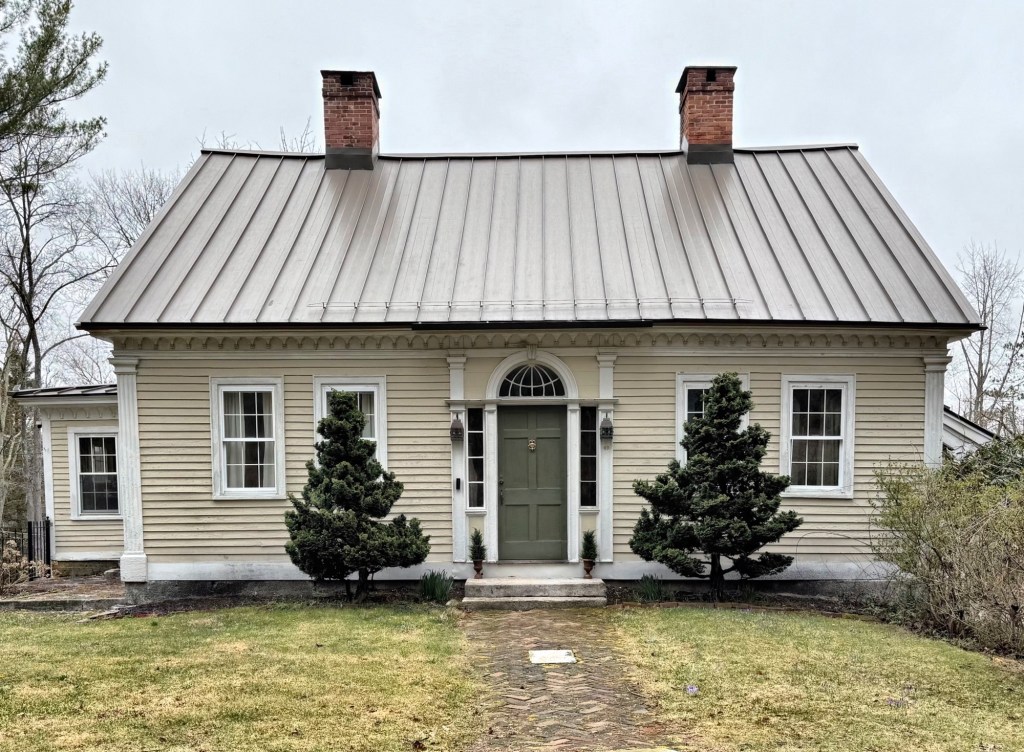
Dr. Andrew Harris House // c.1820

This house is located across from the iconic Prudence Crandall House in Canterbury, Connecticut, and is another excellent example of a high-style Federal home in the town’s main village. Built in circa 1820, this residence was the home of Dr. Andrew Harris (1787-1840), one of two physicians in Canterbury in the early 19th century. After Dr. Harris’ death, the property was owned by Hiram and Nancy Waldo, who altered the house with the addition of a Victorian observatory at the rear, two-over-two sash windows, and an entry porch with paired door entrance.

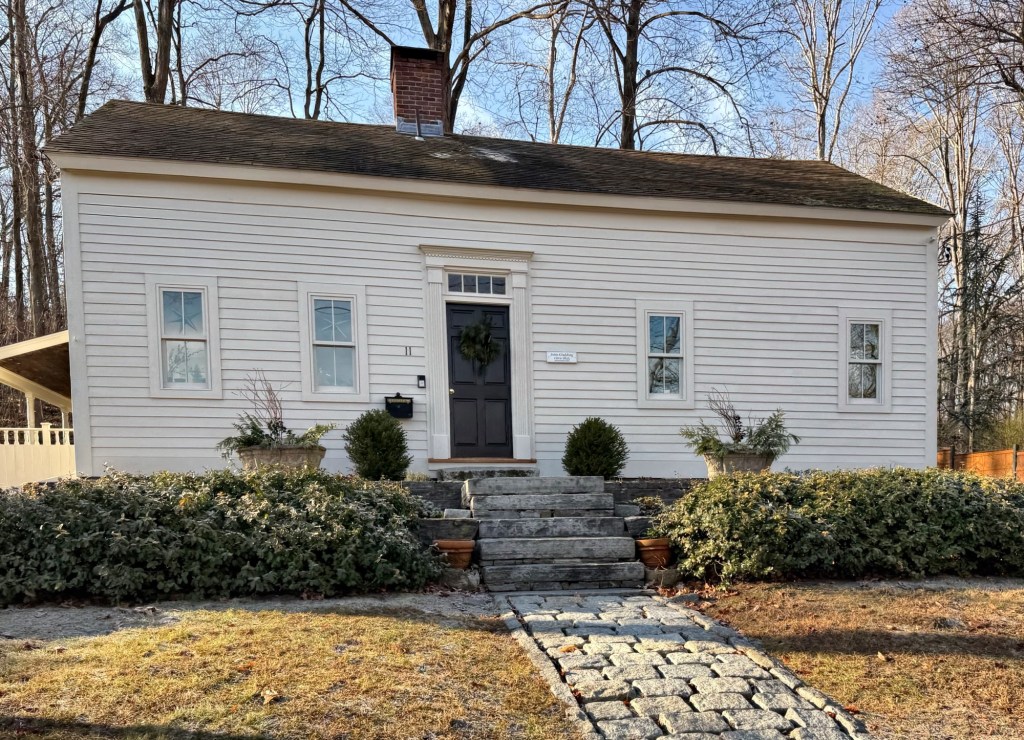
Levally-Crandall House // c.1820

This attractive Federal-style Cape house is located in Canterbury, Connecticut, and is one of the very finest such houses of its type in the state. The house was built by William Levally, a successful millowner in town who married Patience Horton just prior. William died unexpectedly in 1841, and the property was inherited by Patience, who then married Hezekiah Crandall, also a millowner, who was also the brother of Prudence Crandall, the teacher who operated the famous African American girls boarding school in Canterbury Center in the 1830s. Hezekiah and his sister later migrated to Kansas, after essentially being pushed out of town. The Levally-Crandall House stands out for its proportions, exterior moldings, and ornate entry with pilasters, sidelights, and a molded, keyed arched transom. The house has been lovingly preserved by the successive owners, who clearly take pride in owning such a piece of history.

David Nevins House // c.1746

This house across from the Town Green in Canterbury, Connecticut, is believed to have been built by David Nevins, Sr. (1729-1758), a merchant who settled in Canterbury from Nova Scotia, Canada. Nevins tragically died in 1758 when overseeing the reconstruction of a bridge spanning the nearby Quinebaug River. It is said that while standing on a cross-beam, giving directions to the workmen, David Nevins lost his balance and fell into the river and was swept away and drowned. The property remained in the Nevins Family until 1842, upon which, it served as a parsonage for the Congregational Church, just across the street. The clapboard exterior, small-pane sash, center-chimney plan, and five-bay facade of this house give it architectural significance as a representative example of 18th-century Connecticut architecture. The stately Georgian doorway with swan’s neck pediment was installed by a local house restorer based upon physical evidence uncovered during the house’s restoration (and removal of Victorian-era porch) and while may be conjectural, it enhances the already beautiful old home.

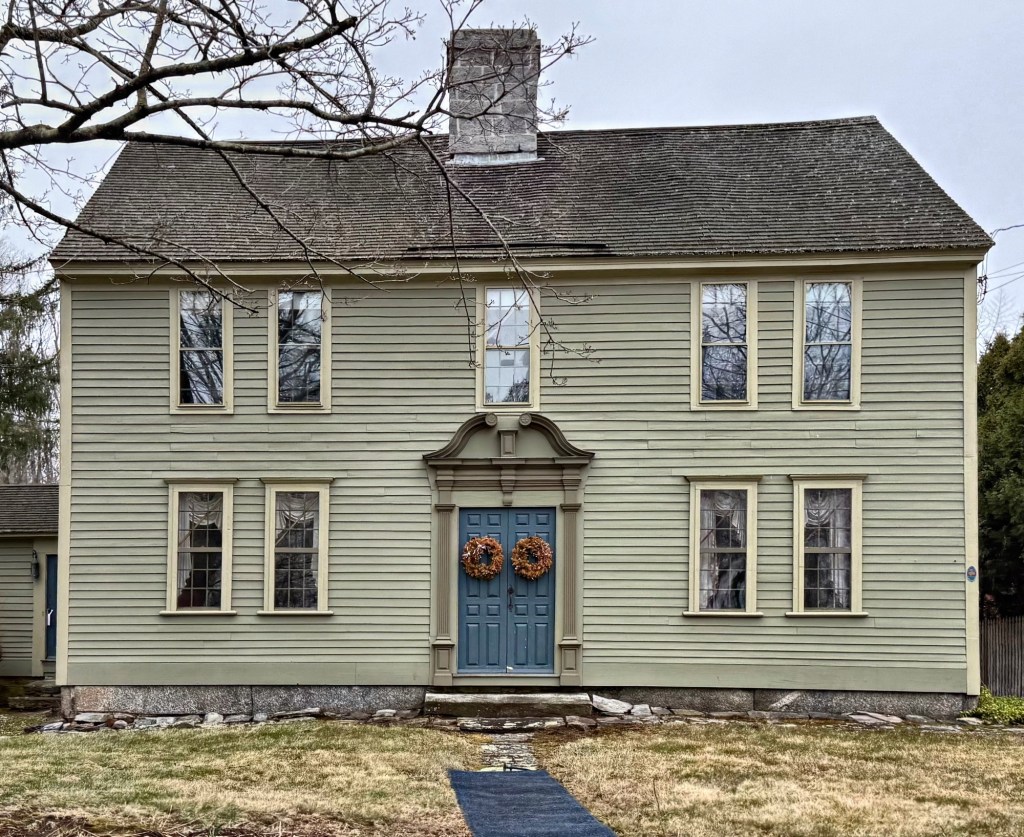
John Carter House // c.1765

One of the many stunning and well-preserved Colonial homes in Canterbury, Connecticut is this residence, the John Carter House on S. Canterbury Road. Records show that the house was built around 1765 for John Carter and his wife, Mary Smith. This house is a good example of the domestic architecture of 18th-century Connecticut and while there have been some changes over time, it continues to exhibit all the major hallmarks of the colonial type, such as a center-chimney plan, clapboard exterior, and five-bay facade. The house originally had a saltbox roof sloping to the rear, but was removed sometime in the 19th or 20th centuries, likely when the projecting Colonial Revival-era porch was added at the entrance. What a spectacular home!

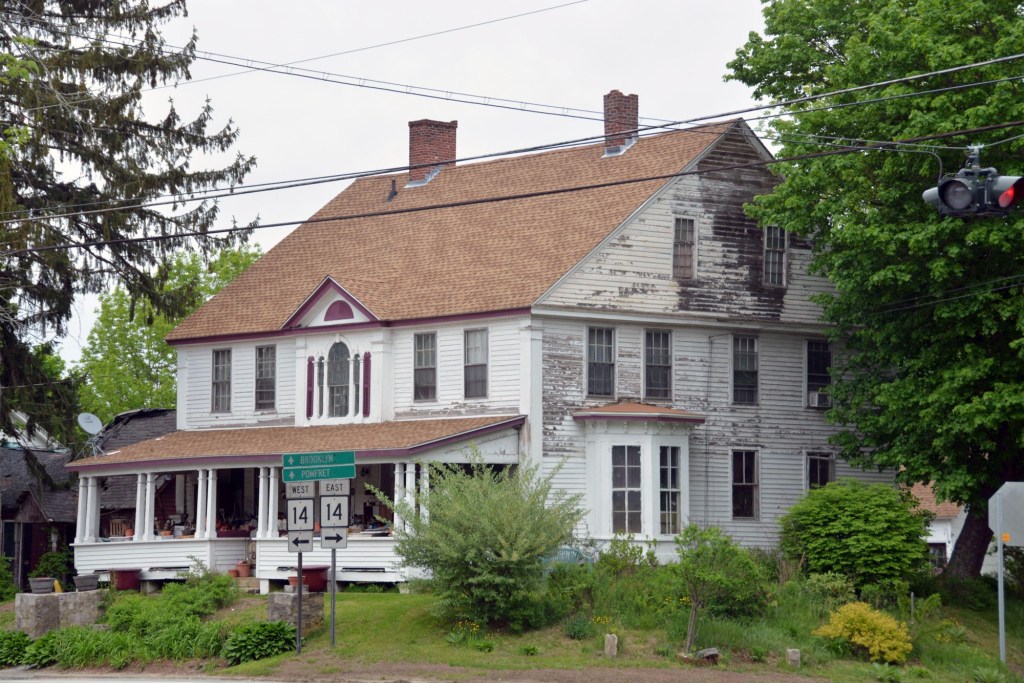
William Moore House // 1803-2019

Formerly located at the intersection of two historic turnpikes in Canterbury, Connecticut, the William Moore House was a historic and architecturally significant residence that stood over 200 years until its demolition in 2019. The large, Federal style house was built in 1803 for William Moore, a merchant who operated a store and also served as the town postmaster. The upper floor of this house at one time accommodated a ballroom where the local Masonic organization met. Later in the 19th century, the house became the home of prominent merchant, banker, and politician Marvin H. Sanger, Connecticut Secretary of State from 1873 to 1876. In 1921, it was the home of Lillian Frink when she became one of the first women ever elected to the Connecticut General Assembly, along with four other women elected that same year. The house with its projecting center pedimented bay, elaborate corner pilasters on pedestals, and elegant Palladian window represented the height of country Federal-period architecture until destroyed by a fire in 2018, leading the town to raze the building a year later in 2019. The lot remains vacant as of 2025.

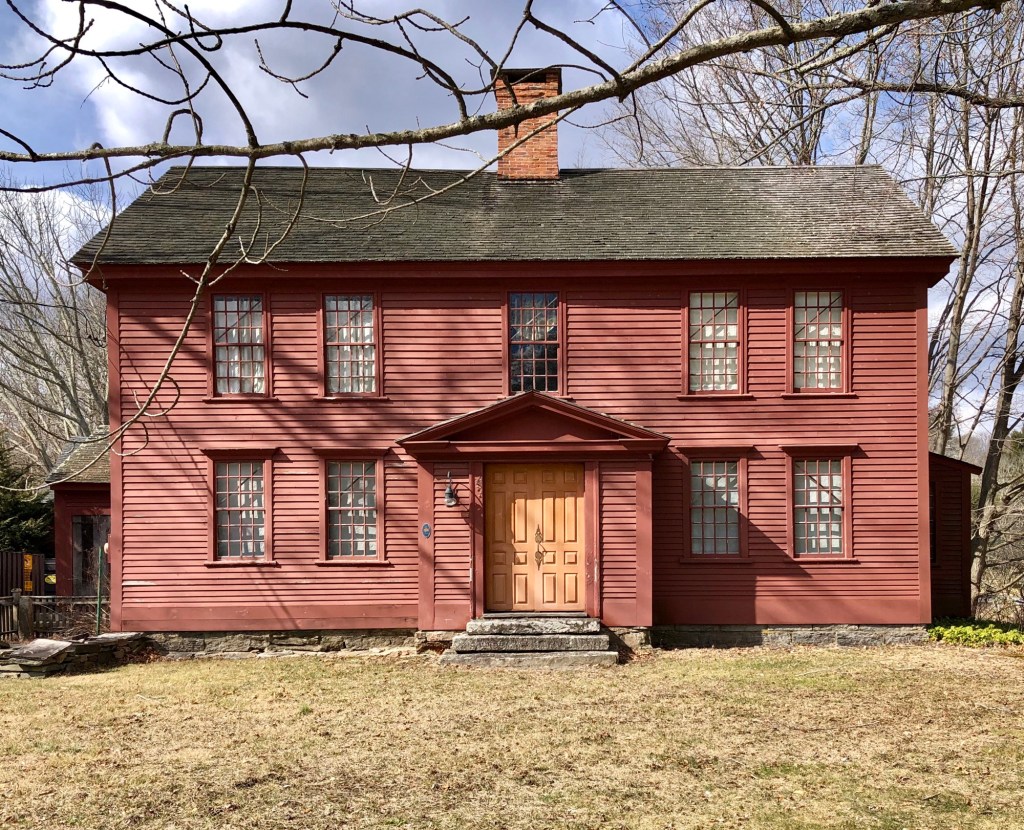
Samuel Pellett House // c.1752

The Samuel Pellett House in Canterbury, Connecticut, dates to the mid-18th century and is an excellent example of a Colonial-era home in this part of the state. Research in the land records suggests that this house may date from the time of Samuel Pellett’s second marriage in 1752 to Hannah Underwood. The couple planted two sycamore trees in front of the house to signify husband and wife but one was lost in the 1938 hurricane while the other survives to this day. According to historians, Sarah Harris Fayerweather, the first Black student at Prudence Crandall’s school nearby, worked as a servant in this house, then owned by Jedediah Shepard. The Pellett House is an excellent example of a Colonial Georgian home in Connecticut, with clapboard siding, center chimney, five-bay facade and small pane sash windows. 

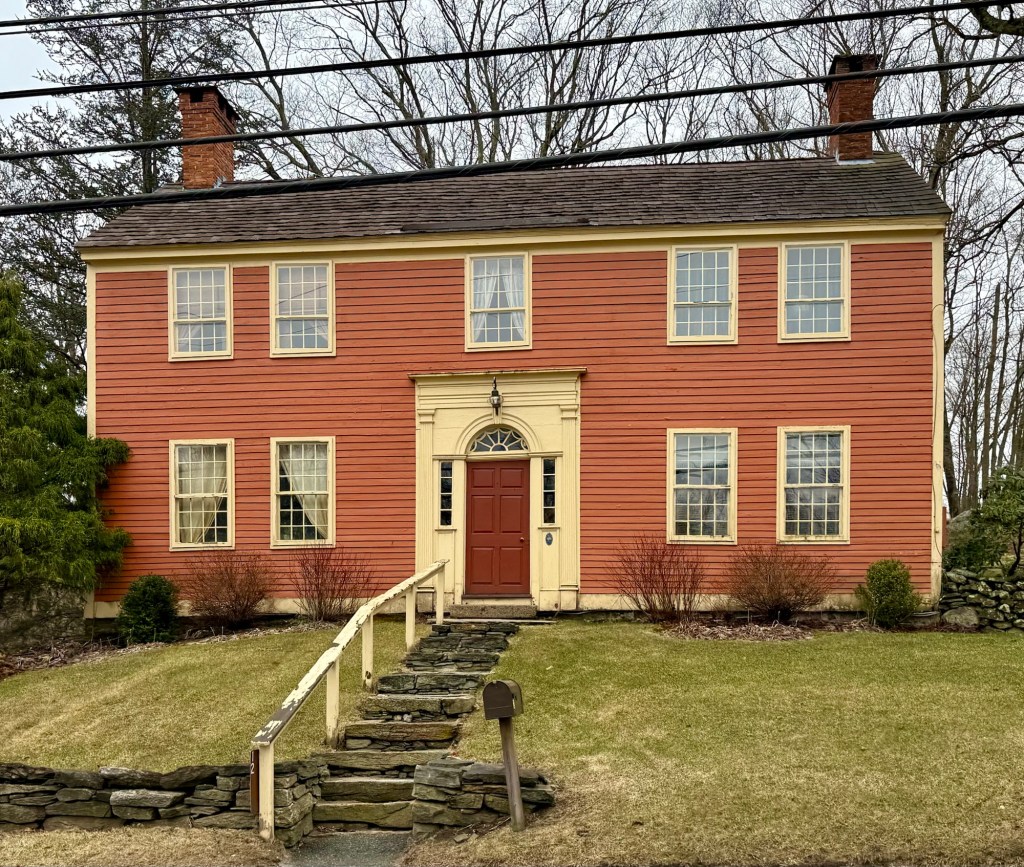
Turnpike House // c.1810

This house in Canterbury, Connecticut, is known as the Turnpike House and dates to the early 19th century. A great example of a Federal style residence, the symmetrical, five-bay home exhibits pair chimneys, multi-light double-hung windows, and an elaborate center entry with sidelights and fanlight transom. The house was built along the Windham Turnpike (now Connecticut Route 14), which was an early toll road established in 1795. Behind the main block of the house is a squat gambrel-roofed ell, that is believed to be made from an older house that previously stood on this site, perhaps dating as early as 1745. According to tradition, this early house, which was also at one time supposedly used as a jail, was the home of Rev. Dr. James Coggswell when he ran a school for boys in Canterbury. One of his pupils at that school was Benedict Arnold, the infamous turncoat.

Huntington Homestead // c.1715

The Huntington Homestead in Scotland, Connecticut, was the birthplace and boyhood home of Samuel Huntington (1731–1796), a Founding Father, a signer of the Declaration of Independence and a distinguished statesman during the Revolutionary War and early Republic. The remarkably well-preserved site includes an eighteenth century house on its original foundation surrounded by acres of farmland and is now protected as a museum. The house was built sometime between the transfer of land in 1715 from Deacon Joseph Huntington to his son Nathaniel, and Nathaniel’s marriage in 1723 to Mehetabel Thurston. As originally constructed, the house consisted of a two-story structure with an end chimney on the west end and one large room on each floor. By the time of Nathanielís death in 1767, the house had been doubled in size with the addition of two rooms west of the chimney, giving the house its current five-bay form. The Georgian style Colonial-era home features a symmetrical facade, twelve-over-twelve windows, and a saltbox roof and is one of the finest Colonial-era homes in this part of the state.

Barnes-Kellogg House // 1809

The main village in Cornwall, Connecticut, looks like a postcard. Mature trees and beautiful, historic homes line the bucolic streets with sweeping views of the Litchfield Hills in the distance; it is what many envision when they think of “New England charm”. This stately Federal style mansion is sited deep on its lot beyond a field and dates to the first decades of the 19th century, it is the village’s grandest early home. The house was built for Amos Barnes, but supposedly remained unfinished when he died suddenly. Barnes’ widow sold the property to the local Foreign Mission School as a dormitory for students. The school’s (in my opinion, problematic) mission was to educate students of non-Christian cultures, including Native Americans, East Asian, and Hawaiian pupils, for them to become missionaries, preachers, translators, teachers, and health workers in their native communities in the Christian faith. These types of programs furthered the erasure of other cultures and promoted Christianity in all corners of the world, but I digress. In 1826, this home was acquired by Frederick Kellogg, the long-time town clerk and Judge of Probate, who owned the property
until his death in 1891.

Hidden Valley Castle // 1921

Photo from listing.

A castle can be found in the small town of Cornwall, Connecticut! Set amongst 275 acres of woodland and streams, with several outbuildings on the property, this whimsical castle looks like it was dropped here from Cornwall, England, but it actually dates to the 1920s. Hidden Valley Castle, had its beginnings when socialite Charlotte Bronson Hunnewell Martin envisioned building a unique country retreat for herself and her husband, Dr. Walton Martin, in the Litchfield Hills of Connecticut as a summer retreat. Just before this, Charlotte had bought a group of 20 brownstones in Manhattan on 48th and 49th Streets, between Second and Third Avenues, and converted them into charming townhouses around a central Italian-inspired garden. Called Turtle Bay Gardens, the houses were highly acclaimed and almost immediately attracted prominent and celebrated residents. The Cornwall Castle was designed by architect, Edward Clarence Dean, who also redesigned the Turtle Bay Gardens for the couple. Dr. Martin imported many of the materials as well as the 100 workmen required to build the castle, a project that lasted five years. Charlotte would also have a cottage built on the estate and hired young Italian artist, Vincenzo Rondinone, to be her resident artist on the estate to create unique vases, bowls, and pots to be used at the house and to be given as gifts to visitors and friends. The property was restored in recent years and put up for sale, with the cottage sold as a separate dwelling.

Foster-Beck House // c.1845

This attractive Greek Revival style residence with later porch was likely built in the 1840s and is one of the finest homes in the village of West Cornwall, Connecticut. The house was likely built for Stephen Foster (c.1816-1863), a merchant and railroad contractor who had constructed a portion of the Housatonic Line railroad near West Cornwall, further opening the village up to trade. Stephen and his wife, Helen, lived here for some time until around 1860 when they relocated to a larger, Italianate style mansion nearby. In 1867, this property was purchased by George Beck, a German immigrant and partner of the Vollmiller Shear Shop, who manufactured metal shears and scissors in West Cornwall. It is likely that Beck was owner of the house at the time the wrap-around porch with scroll-sawn columns.

Birdsey Hall // c.1804

Built circa 1804 in the form of an English country estate house, Birdsey Hall stands as the finest property in the town of Goshen, Connecticut. The residence was built for Birdsey Norton (1763-1812), a wealthy cheese merchant who was said to have been inspired to build a country estate after travelling the American south on business. The high-style Federal/Adamesque mansion features expansive grounds bounded by brick walls and Victorian gardens. The property was later owned by Fred Favorite and Robert Devoe, friends of Liberace, who operated an antique store. Birdsey Hall remains one of the finest Federal estates in Connecticut.

Myron Norton House // 1840

The Myron Norton House, built in 1840, is located in the central village in Goshen, Connecticut. Built of stone, the house is unique as the only example of a stone house in the village, and the only Greek Revival house that departs from the usual gable-roofed form, having a square plan and hipped roof with monitor. The home was built for Myron Norton (1788-1853) and his wife, Caroline (Marsh) Norton, who outlived her husband by 23 years, living here until her death in 1876. Myron Norton made his fortune patenting and selling pineapple cheese molds, where he pressed the curds from local cows in wooden pineapple-shaped molds to give them the desired shape. It is the house that cheese built!

Thompson-Sperry House // 1803

In 1803, General David Thompson (1766-1827) and his wife, Sybil (Norton) Thompson, moved into this recently completed Federal style residence on North Street, the main road through Goshen Village, Connecticut. David Thompson was a merchant and partner in the firm Wadhams & Thompson, occupying a store nearby the Congregational Church. Business partners David Thompson and David Wadhams built near-identical houses across the street from each other, though the Wadhams house has since been gut renovated and lost much of its original fabric. The Thompson House stands out for its Palladian second-story window, glazed with interlacing arcs. The property was owned at the end of the 19th century by Albert Sperry, a Civil War veteran.