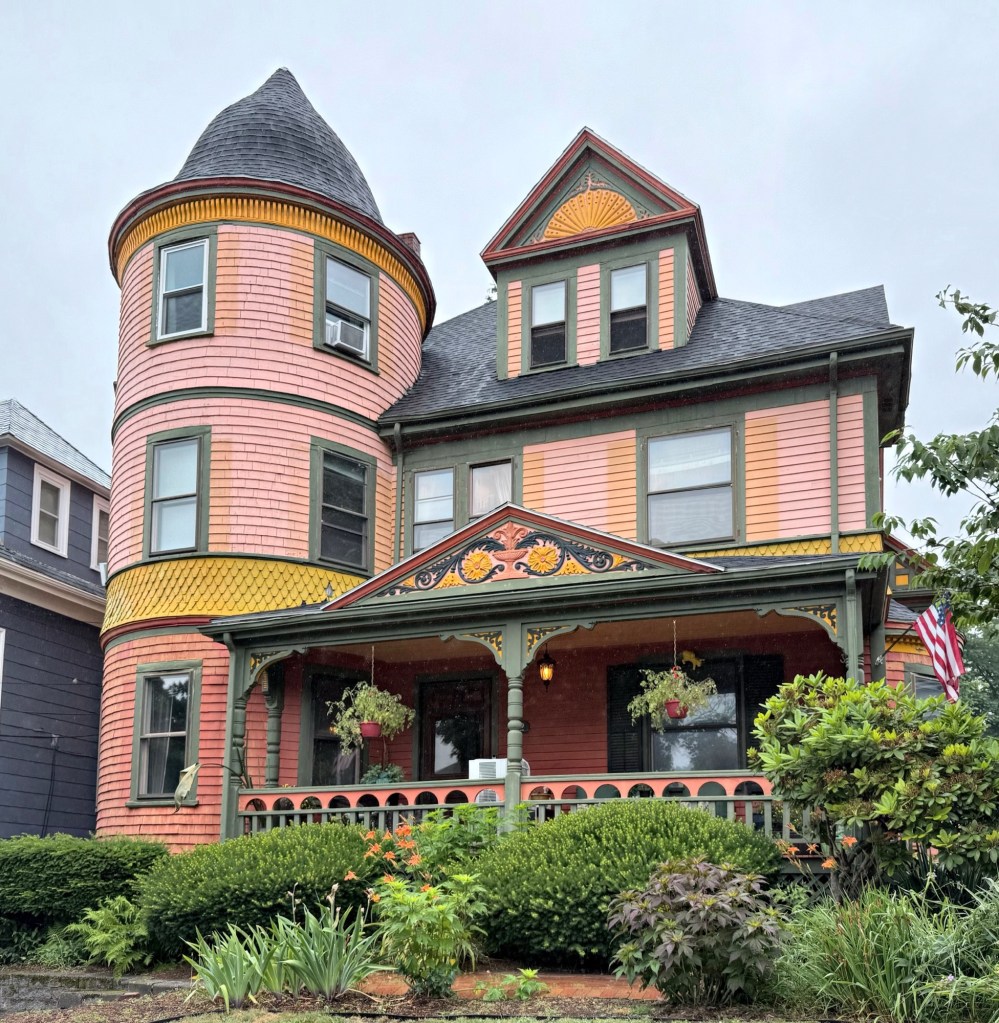
Higgins-Little House // 1890

This “painted lady” on Roslin Street is one of the many fine Queen Anne Victorian houses in the Ashmont Hill neighborhood in Dorchester, Massachusetts. The residence was built in 1890 for original owner, Lewis H. Higgins, a master mariner who was born in Wellfleet before moving to Boston. Higgins seemingly resided here with his family for a short time until the house was sold in 1893 to Samuel and Grace Little. The house is perched on a hill and features a prominent rounded corner tower. The original porch with turned posts and gable detailing stand out with the intricate paint scheme used to highlight all of the amazingly preserved ornamentation. While paint schemes like these are not historic, they do bring joy to owners and passersby, and help viewers appreciate the care that these stewards take in maintaining their old homes.

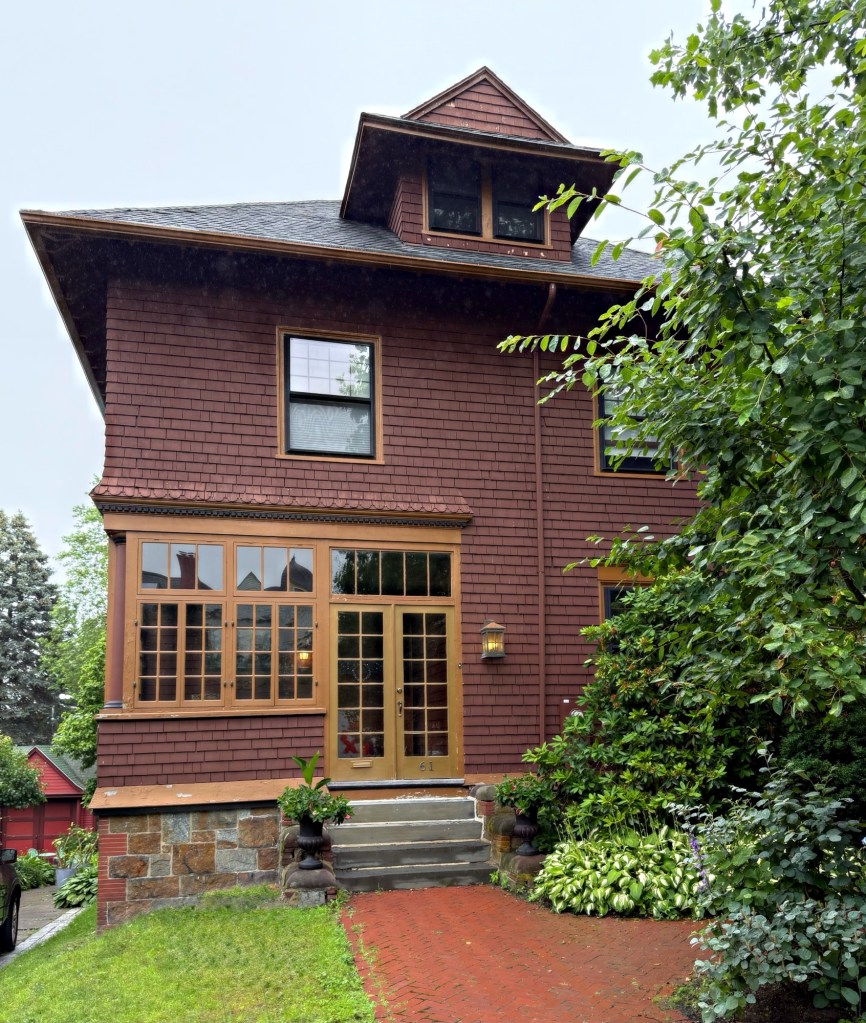
Harrison H. Atwood House // 1888

When an architect designs their own home, you know it will be something special. This house on Alban Street in Ashmont Hill, Dorchester, was built in 1888 and designed by owner-architect, Harrison H. Atwood (1863-1954). The unique Shingle style residence features a plain, boxy form and is capped by a pyramidal hipped roof with a center dormer. The recessed side entry porch is enclosed by large windows with multi pane sash which is surmounted by flared shingles. Besides being a residential architect, Harrison Henry Atwood also was appointed as the 5th City Architect of Boston, designing schools and firehouses, and served as a member of the Massachusetts House of Representatives. While the Atwood House may appear modest from the street, the house stretches back toward the rear of the lot and is larger than meets the eye, also the interior was lavishly decorated with much of the original millwork and mantels intact. 

Dillaway House // 1889

One of the finest and refined examples of the Shingle style in Boston can be found on Alban Street in the Ashmont Hill section of Dorchester, a lovely, walkable neighborhood where you can find timeless examples of just about any Victorian-era architectural style. Built for Charles F. Dillaway, a banker in Boston, this home was designed by local architect, Edwin J. Lewisarchitect for many houses in the Ashmont area.  Lewis’s designs are distinguished by their crisp geometry, often with horizontal lines emphasized and small-paned windows. The house has been slightly modernized by later owners who added new siding within the inset porch and a more moody color scheme. 

Mumford House // 1877

Set back behind a manicured lawn on the charming Alban Street in the Ashmont Hill neighborhood of Dorchester, this Victorian era residence was both a family home as well as a finishing school for young ladies. The house at 35 Alban Street was completed in 1877 for the Reverend Thomas James Mumford, pastor of the Third Church of Dorchester and anti-slavery advocate, who died the year his home was completed. His widow, Elizabeth Goodrich Warren Mumford (1834-1897) would inherit the home from her husband and for supplemental income to maintain the home, she opened the Mrs. Mumford’s Finishing School for Young Ladies, a school to educate and teach young girls manners and religion. Elizabeth Mumford would also publish books on how to conduct classes for Sunday School, Kindergarten, and the home. The Mumford House is a great example of a Stick style residence with less exuberance than some other examples. The picket frieze, applied stickwork on the siding, and more ornate porch are all typical of the style. 

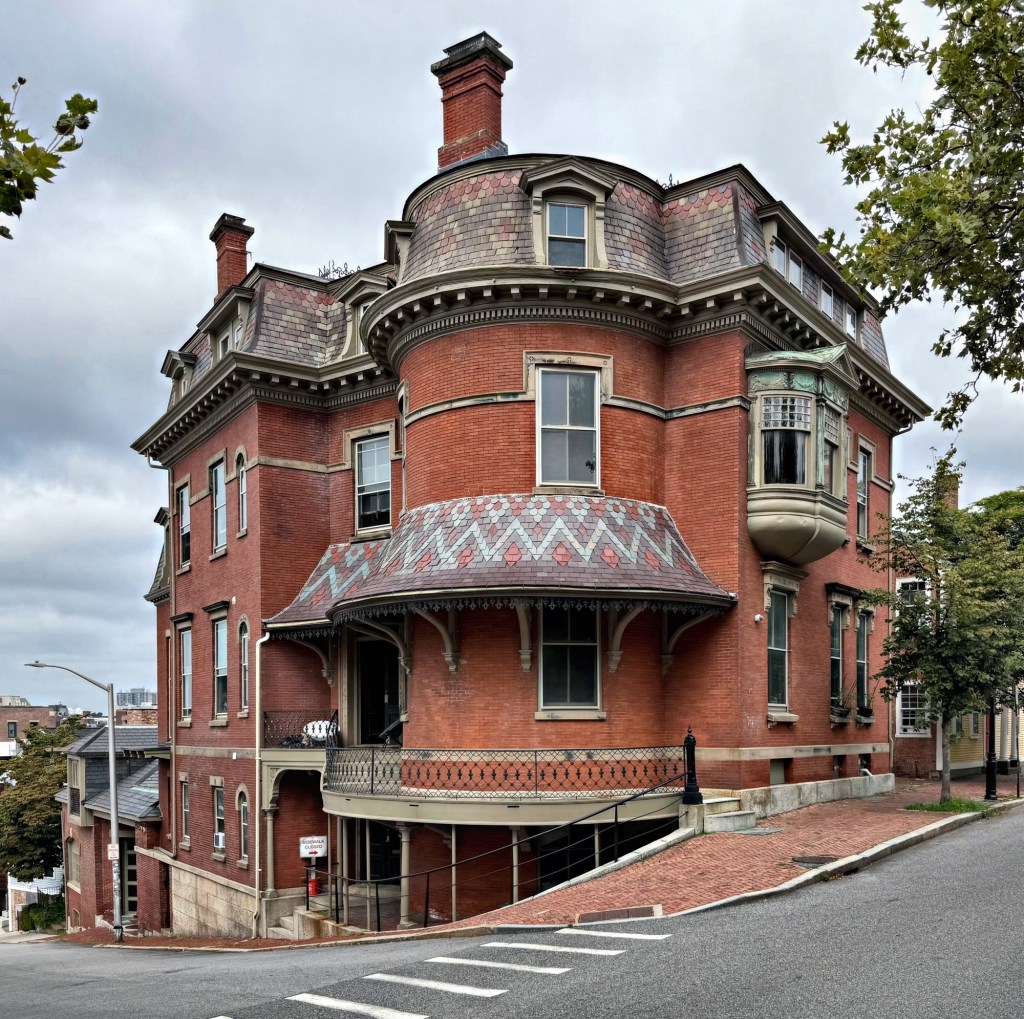
Chansonetta Stanley Emmons House // 1893

Chansonetta Stanley Emmons (1858-1937) was born in Kingfield, Maine, and was one of the great women photographers in the 19th and early 20th century, often depicting domestic life and New England scenes. The young Chansonetta Stanley grew interested in photography after her brothers’ (Francis E. and Freelan O. Stanley) dry-plate printing invention, they also invented the steam-powered automobile known as the Stanley Steamer. She married James Nathaniel Whitman Emmons in 1887 and in 1894, James hired architect Henry McLean, to design a residence for him and Chansonetta, this lovely home on Harley Street on Ashmont Hill. The couple occupied the house until 1898, when James died of blood poisoning at the age of 41. Chansonetta sold the home and moved to Newton, where her two brothers lived and operated their business. The house blends Queen Anne and Colonial Revival styles and originally had a conical roof over the corner rounded bay. The roof was replaced with a flat roof at about the time of the large balcony and extended dormer.

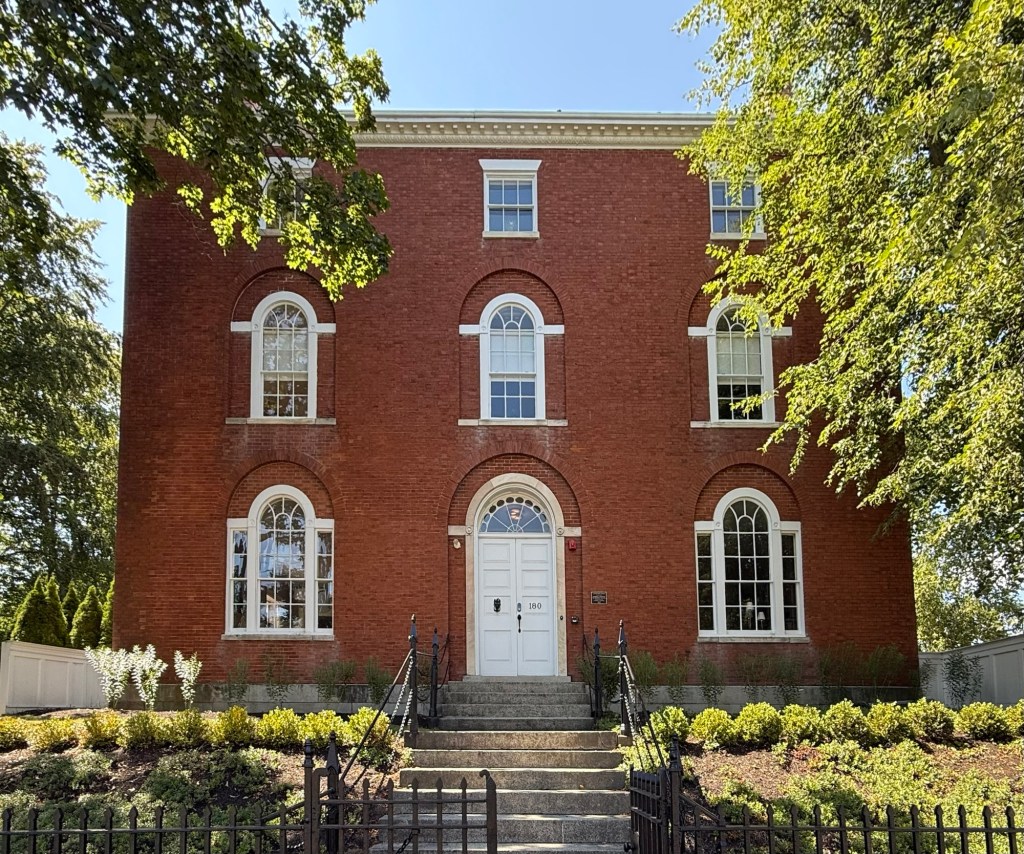
Richard Trevett House // 1730

Richard Trevett Jr. (1690-1749) was a wealthy shipwright and sparmaker (a carpenter who finishes and installs spars, masts, and cargo booms) in Marblehead, and part of a wealthy shipowning family. He would build this house on Washington Street (originally named King Street before the Revolution) and reside here with his family. Trevett lived here for just a few years until the death of his father, and he sold the property, which was later purchased by Joseph Pedrick, a wealthy ship owner, who’s son, John Pedrick, built an even larger mansion down the street. By the turn of the 19th century, this house was owned by Captain Samuel Horton, a commander in the Revolution under General John Glover. After the war, Samuel Horton engaged in mercantile pursuits, importing goods from all over the world. He likely brought home pineapples similar to the pineapple motif over the doorway from plantations in the Caribbean and South America as well.

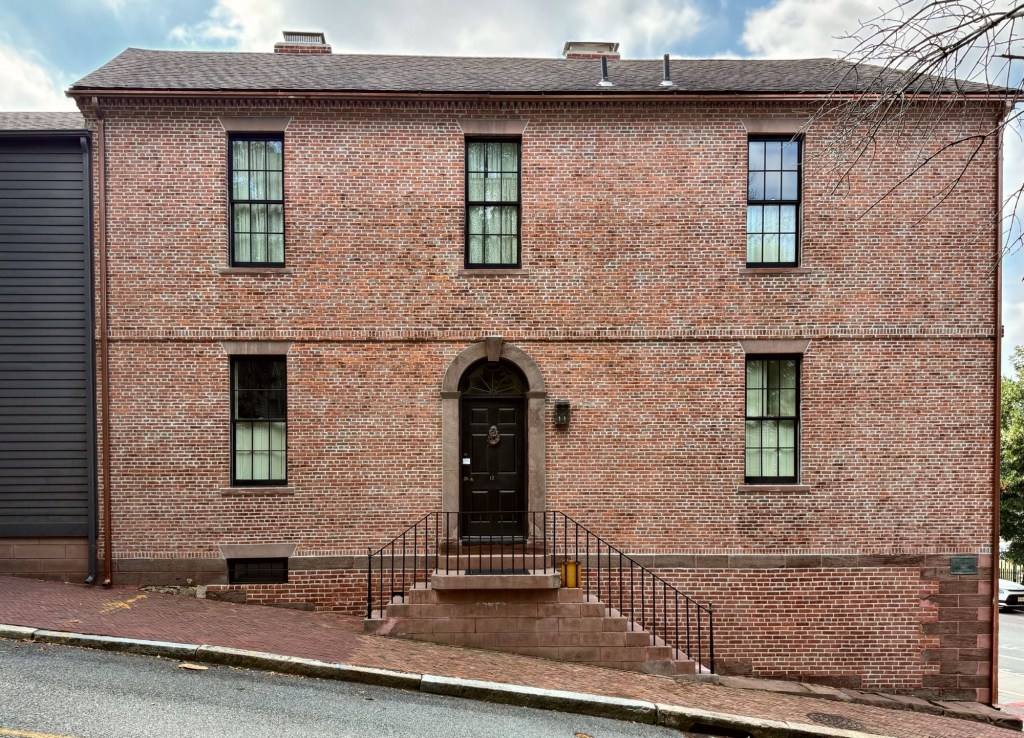
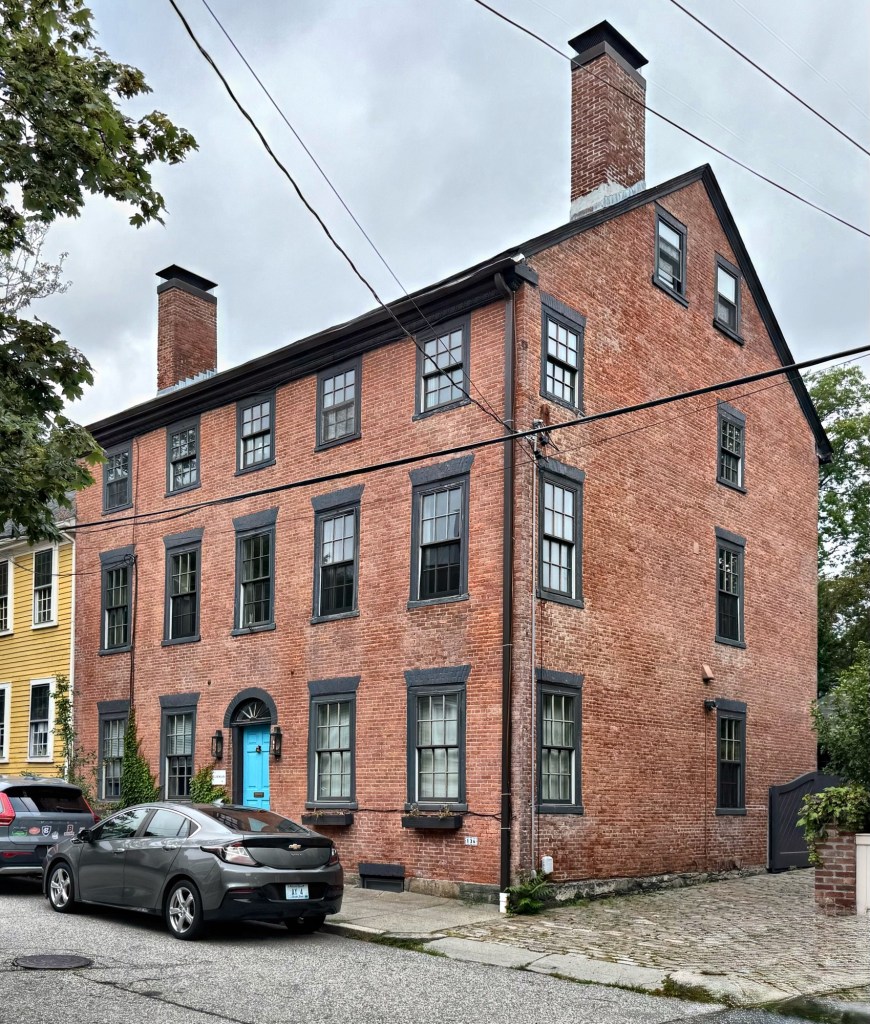
Pedrick Mansion // c.1756

One of the great Colonial-era houses of Marblehead is this stately residence, the John Pedrick Mansion on Washington Street. The house dates to about 1756 and was built for John Pedrick (1733-1780), a wealthy shipping merchant. According to ‘The History and Traditions of Marblehead’, Pedrick’s “ships sailed to nearly every port in England, Spain, and the West Indies, and his transactions were with some of the largest mercantile houses of Europe. At one time, it is said, he owned twenty-five vessels engaged in the foreign trade.” The Revolutionary War, which proved so disastrous to the merchants of Marblehead, bore with especial severity upon Major Pedrick, as several of his vessels were destroyed by British cruisers in Massachusetts Bay, and many others rotted in port from blocades and engagements. The property was likely modernized after John Pedrick’s death in 1780 with a more Federal form, possibly adding the third floor and shallow hipped roof. The building’s facade is scored to resemble ashlar masonry, giving it a more stately appearance, but the bright blue really diminishes the feature, which should typically be colored a natural stone.

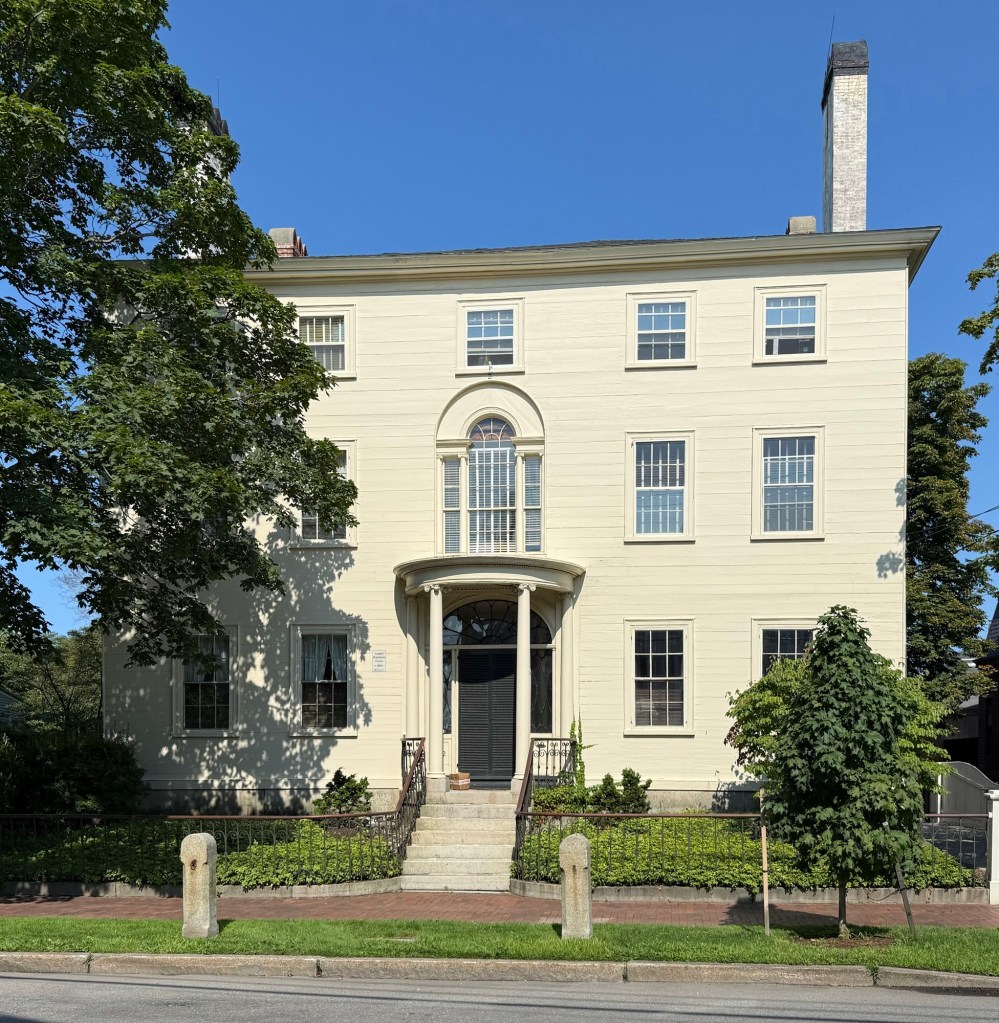
Elbridge Gerry House // c.1734

The Elbridge Gerry House is a historic house on Washington Street in Marblehead, Massachusetts that was built by local merchant, Thomas Gerry around the time of his marriage to Elizabeth Greenleaf. Architectural evidence suggests that the house was a two-story L-shaped Georgian frame structure, that in about 1820, was raised to its present three-story form in the Federal style. It was in this house that Founding Father, Elbridge Gerry (1744-1814) was born, and spent many formative years in. Gerry was a wealthy merchant, politician, and diplomat who served as the fifth vice president of the United States  under President James Madison from 1813 until his death in 1814, and is arguably best-known for Gerrymandering. The term, originally written as “Gerry-mander,” first was used on March 26, 1812, in the Boston Gazette — a reaction to the redrawing of Massachusetts state senate election districts under then-Gov. Elbridge Gerry. One of the remapped, contorted districts in Essex County (where Marblehead is located) was said to resemble the shape of a mythological salamander, hence the name “Gerry-mander”. The newly drawn state senate district in Essex County was lampooned in cartoons as a strange winged dragon, clutching at the region. Elbridge Gerry would live mostly in Cambridge and the family home was sold by around 1820 and modernized about that time.

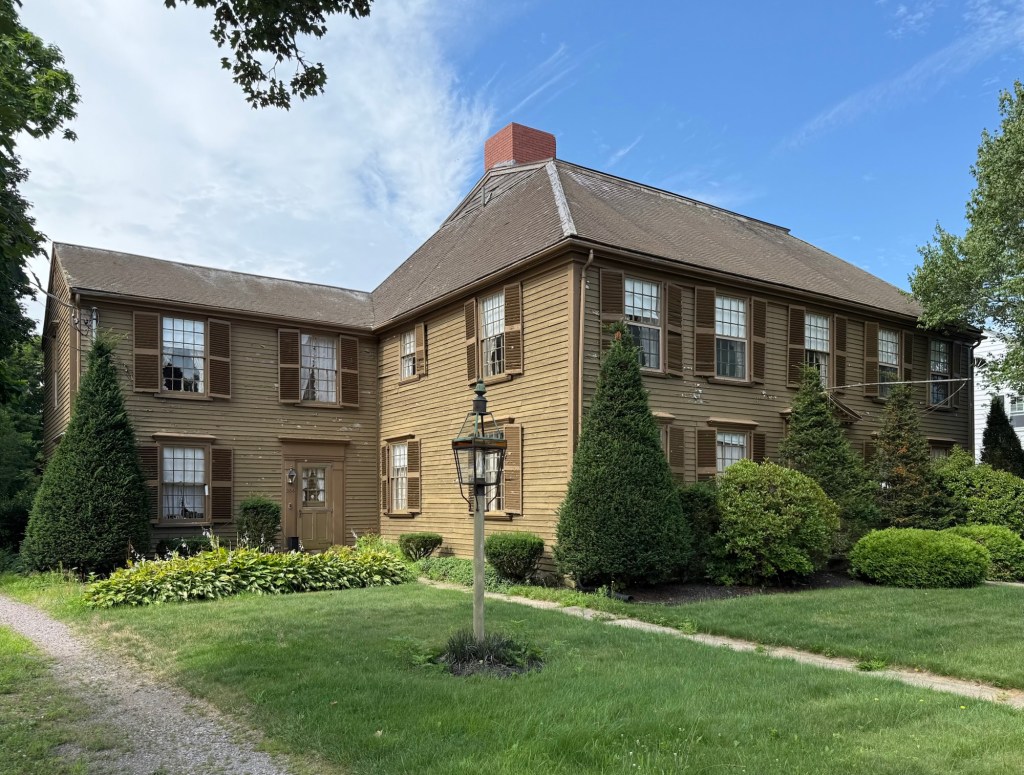
Thomas Gerry House – Hearth and Eagle House // 1717

This house has a lot of history! Originally built around 1717 by Ephraim Sanders, this house on Franklin Street in Marblehead was later purchased by Thomas Gerry (1702-1774), a merchant who operated ships out of Marblehead, and father to Elbridge Gerry, the fifth Vice President of the United States. The home was likely a three-bay, side hall Georgian house and expanded to the current five-bay configuration by Thomas Gerry around 1750. Thomas Gerry was born in Derbyshire, England, but came to Marblehead by around 1730 and was active in local politics and had a leading role in the local militia, later speaking out against the Crown and sought independence. Thomas Gerry died in 1774, and did not get to see the Revolution nor his son become a Founding Father. The property was later the home of one of his granddaughters, Sarah Gerry Conklin, and her husband, Frederick Conklin, an infantry captain, who housed officers in command of nearby Fort Sewall during the War of 1812. In the 1940s, historical novelist Anya Seton after researching her genealogy, led her to base her 1948 novel, The Hearth and Eagle, on the history of the seaside town. She set the novel in the Hearth and Eagle Inn, based on the Gerry House here.

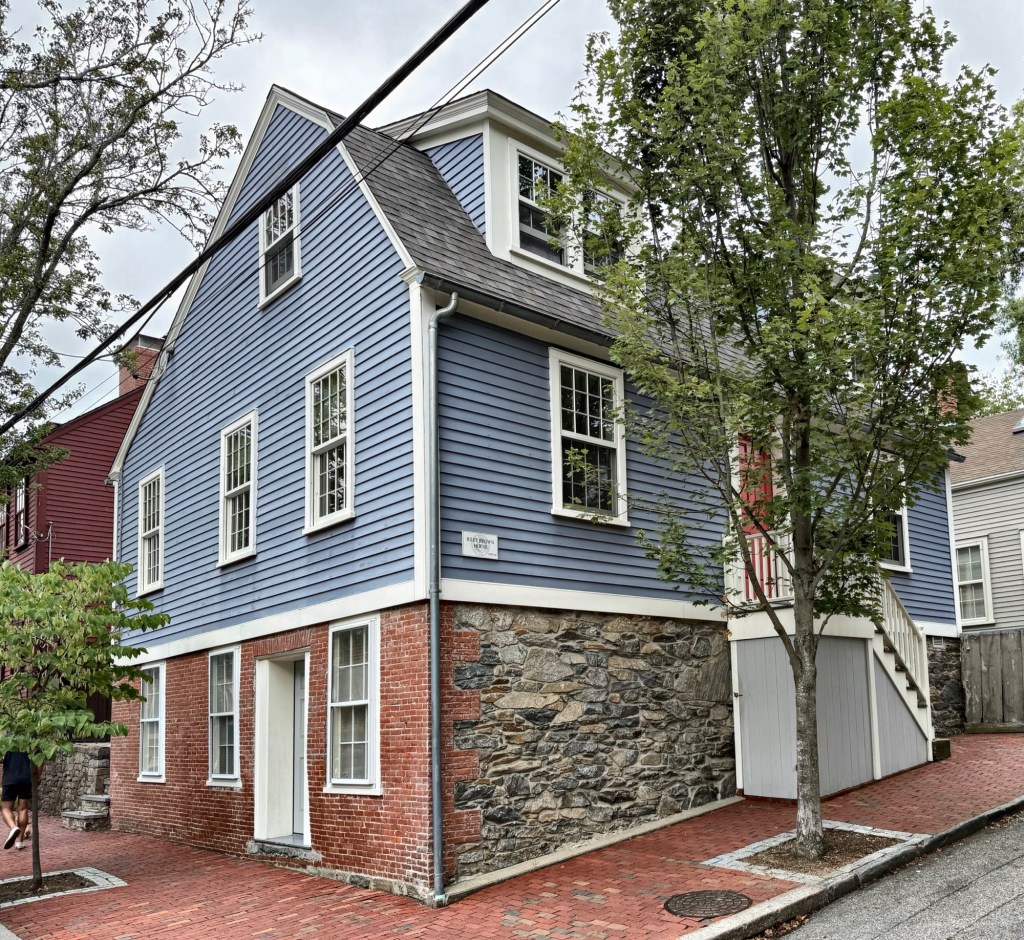
Joshua Orne House // c.1750

Joshua Orne (1708-1772) was born in Marblehead and attended local schools there. He would marry Sarah Gale, and they had one son together, Azor Orne, who would become a merchant, politician and patriot, fighting in the American Revolution. Sarah Gale died in 1743 and Joshua would remarry to Annis Stacey, having one child together, Joshua Orne Jr., who was a Patriot and fought in the Revolution, fighting alongside his half-brother, Azor. Joshua Orne and Annis owned a c.1663 house on this site and appear to have completely rebuilt the house or greatly modernized it around 1750. Joshua was a cordwainer and shipowner and later got involved with discussions of revolution and liberation from England. He likely inspired his sons to follow-suit and shared the same beliefs and values, though Joshua Sr. would die in 1772, not seeing the beginning of the War, nor freedom from tyranny. The house would be inherited by Joshua Jr. and later deeded to his son-in-law, John Bubier Prentiss, a shipmaster, who likely added the Federal period doorway and pedimented dormers.