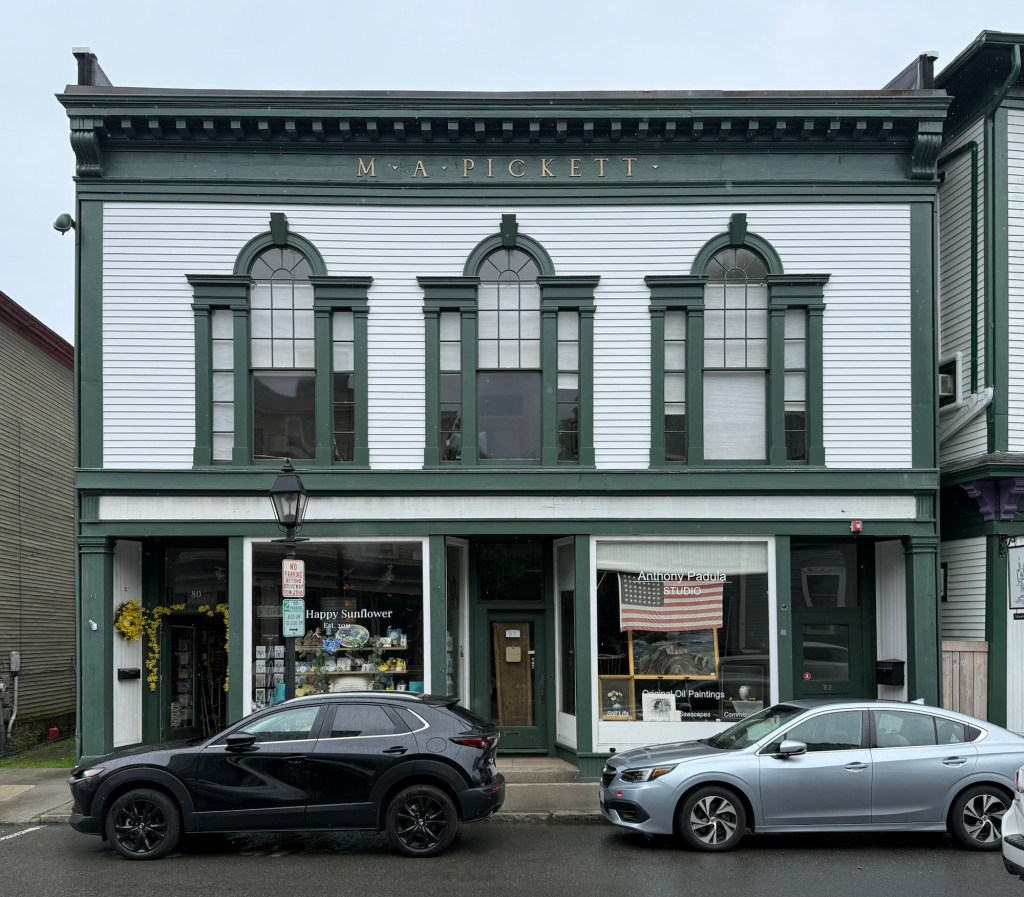
M. A. Pickett Building // 1902

The M. A. Pickett Building on Washington Street in Marblehead is a spectacular example of a commercial building of the early 20th century designed in the Colonial Revival style. The building was designed in 1902 by the firm of Peare & Quiner, who worked mostly in the North Shore of Massachusetts and funded by members of the M.A. Pickett Association, a fraternal organization founded in the late 19th century and named after Moses A. Pickett (1780-1853), who left his entire will to: “comfort the widow and the fatherless, the aged, the sick, and the unhappy”, also donating his home to the use and funding for its preservation. In 1866, a hand-drawn fire engine named after M. A. Pickett, was used by a group of volunteer firefighters, who later would create the club named after Mr. Pickett. The building originally held a barber shop and a creamery on the ground floor with a meeting hall and billiards room above for members of the Pickett Association. Today, the building is lovingly maintained, including the three stunning Palladian windows at the third floor.
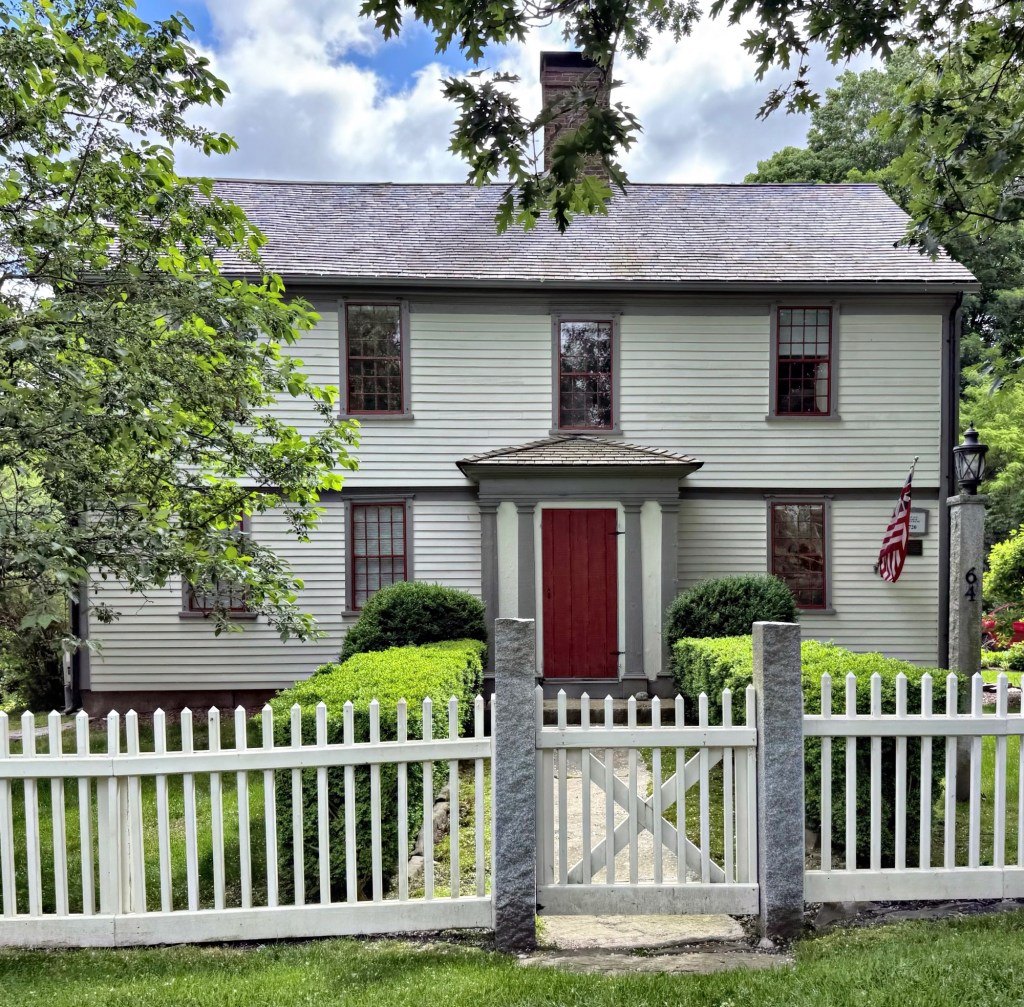
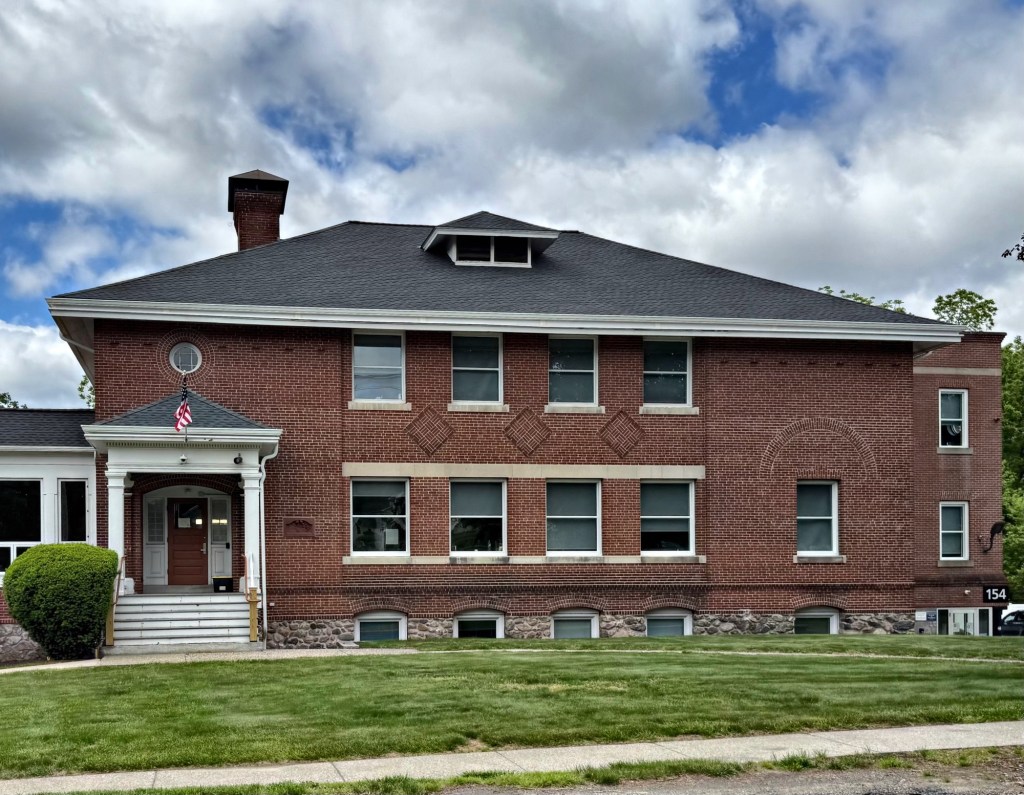
Warren Homestead // 1727

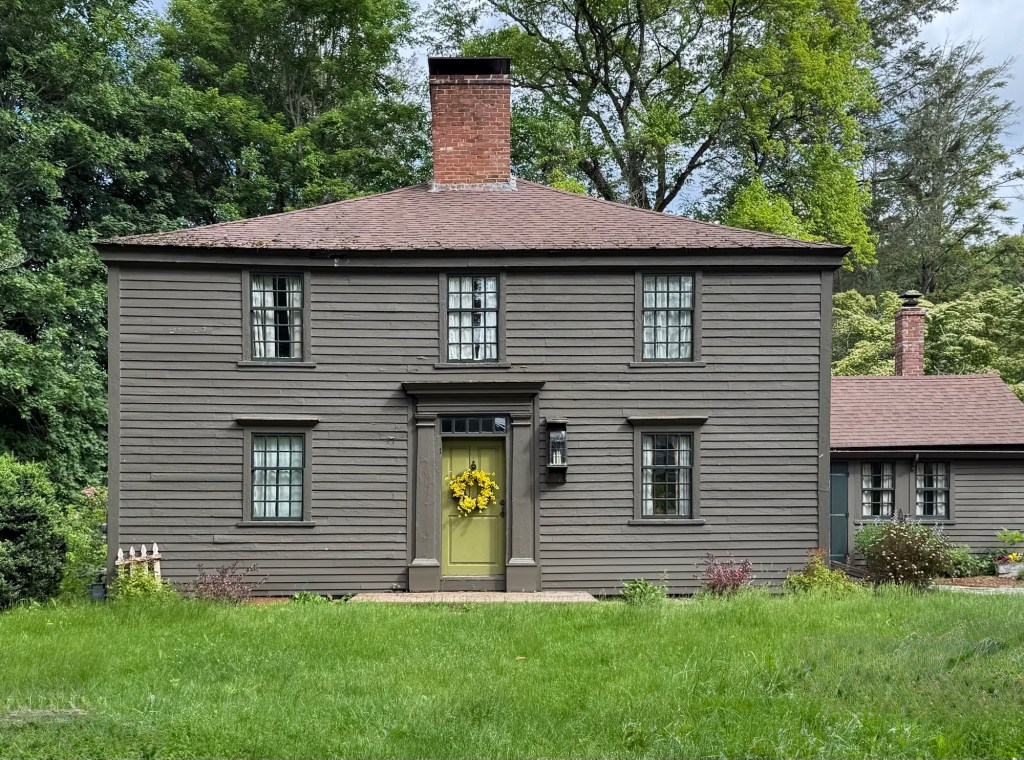
The old Jonah Warren Homestead of Westborough, Massachusetts, was built in 1727 on the Old Connecticut Path, a former Native American trail, and is among the earliest and best-preserved examples of 18th-century domestic architecture in Westborough. The Colonial-era house was built for Jonah Warren (1700-1780) and his wife Elizabeth Seaverns (1700-1775), who moved from Watertown to Westborough in 1720, the couple would have 13 children. The home remained in the family for generations. Jonah was a tanner by trade, but also sold wooden shingles, cut from nearby cedar swamps. In 1778, the couple’s son, Aaron, owned the house, as he returned home to take care of his aging father. The property was later owned by Aaron’s son, David Warren, and later passed to his only child, a daughter, Mary Waterman Warren (1799-1858), who married Josiah Fay (1797-1869) in 1838. The home was inherited by Hercules Warren Fay, a Harvard-educated reverend and author. The homestead remained in the family until the last of Hercules’ children died in 1957. The Warren Homestead remains as one of the finest and best-preserved Colonial-era residences in Central Massachusetts.

Lyman School for Boys – Elms Cottage // 1906

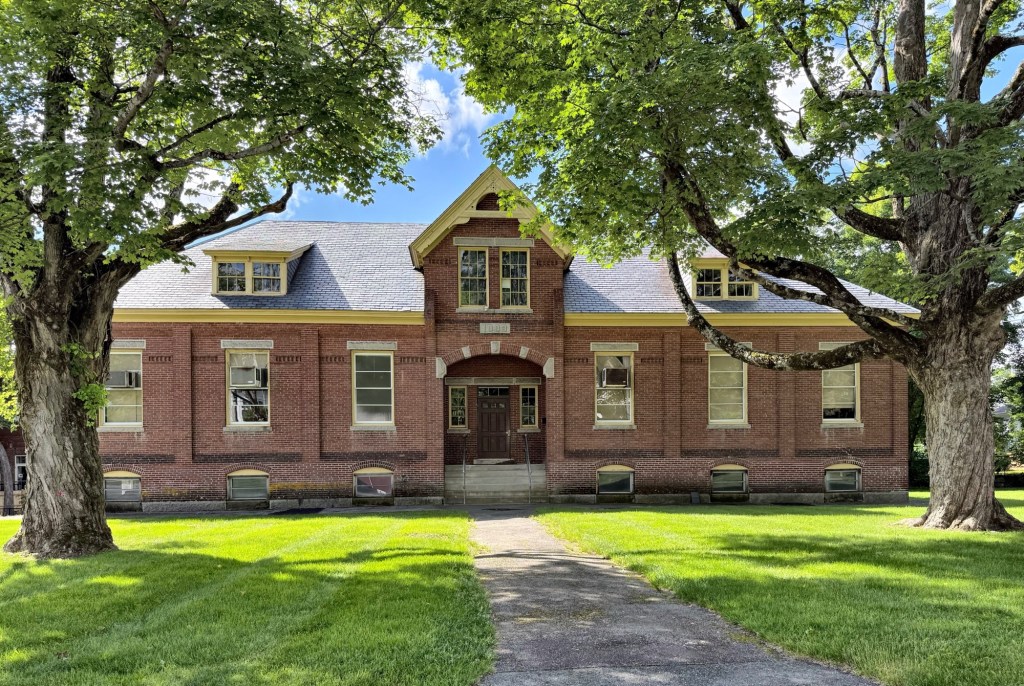
The former Lyman School for Boys was established in Westborough as the Massachusetts State Reform School in 1847, the first state-operated reform school in the country. Initially located on the eastern shore of Lake Chauncy and dominated by a single massive building, but its early history was plagued by conflict between inmates and administration. In 1885, legislative action authorized the Trustees to purchase and prepare a new site, the first in the state system to be developed on the dispersed cottage plan, the school thrived throughout the 19th century and into the 20th century until its eventual closure in about 1974. This cottage, known as Elms Cottage, provided rooms for the young men at the school, providing sanitary and well-appointed lodging as they were “reformed” to graduate and enter society. Each cottage was ruled by a cottage master and usually a cottage matron. This husband-and-wife team lived in a cottage apartment and was on duty 24 hours a day, often overseeing the young boys and strictly disciplining them, without much oversight. Many of the cottages and other buildings on the campus were demolished after the school closed, but the Elms Cottage, designed in the Arts and Crafts style, was restored.

Parker-Maynard Homestead // 1777

Hidden away on a quiet country road in Westborough, Massachusetts, the Parker-Maynard Homestead sits as one of the best-preserved and significant properties in town. Revolutionary War veteran Isaac Parker (1750-1798), after the war, acquired land in town and built a farmhouse here around 1777. Upon the time of his death in 1798, his property listed in his will included: a homestead farm, grist mill, saw mill, a small dwelling house, a horse stable, and a pew at the town meetinghouse. The property was acquired by brothers Ebenezer and Ephraim Maynard, who lived in the house together with their respective families. The Maynard brothers worked as wheelwrights and had their shop on the property for years. Ephraim Maynard’s eldest son, Horace Maynard (1814-1882) was born here and after graduating from Amherst College, moved to Tennessee to teach law at East Tennessee University before getting into politics. Horace served in Congress between 1858-1873 as a representative from Knoxville. He spent much of his first two terms in Congress fighting to preserve the Union, and during the Civil War, he consistently urged President Abraham Lincoln to send Union forces to free East Tennessee from its Confederate occupiers. After the war, he was appointed minister to Constantinople by President Grant in 1875. In 1880 he returned to the United States and was appointed Postmaster General by President Rutherford B. Hayes. Horace owned the family homestead following the death of his father and uncle, and often returned to Westborough to see family and get away from politics.

Pine Grove Cemetery Mausoleum & Chapel // c.1875 & 1904

Mausoleum

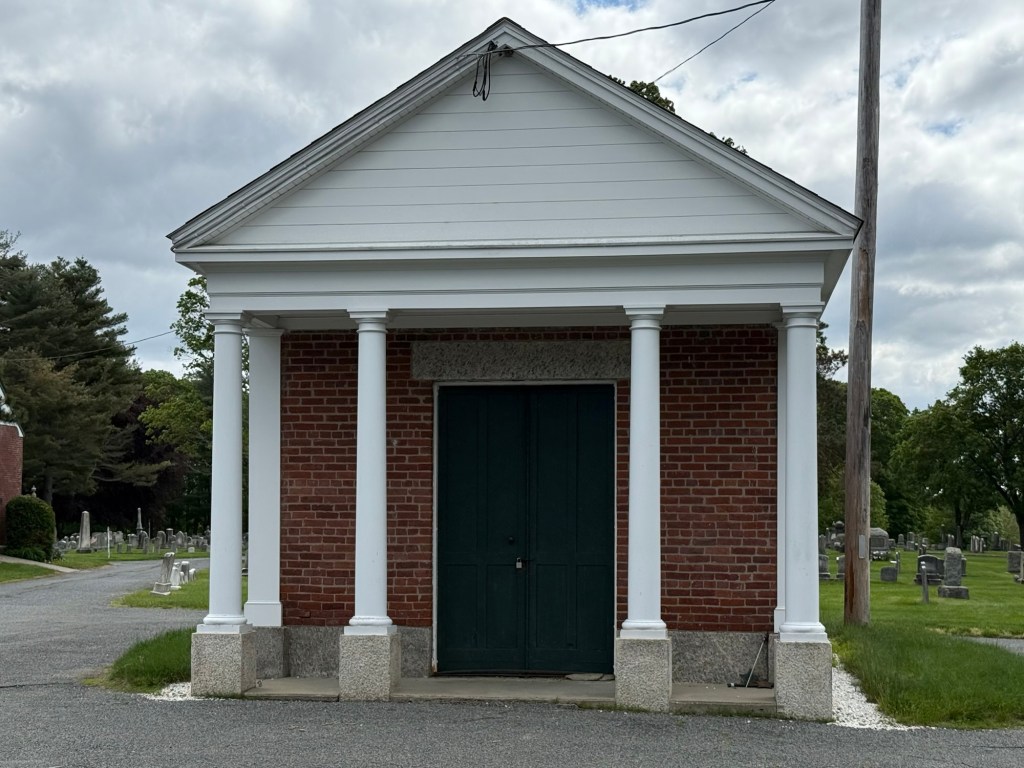
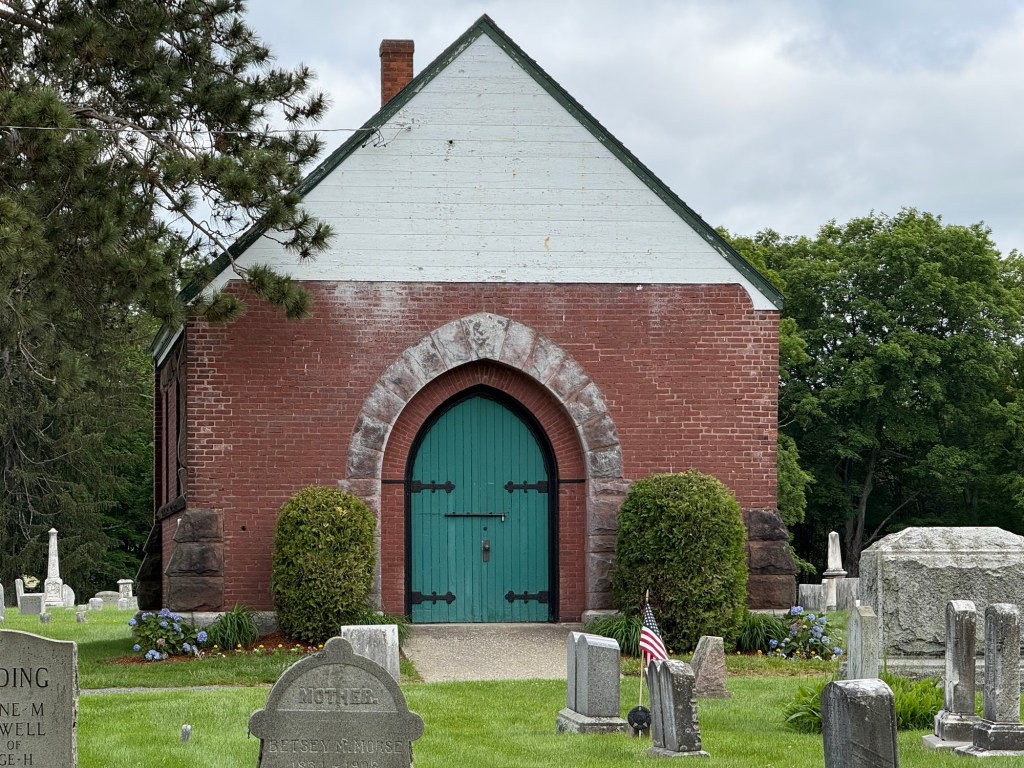
The mausoleum and the Jonas A. Stone Memorial Chapel are two historic structures located in the Pine Grove Cemetery of Westborough, Massachusetts. Land here was acquired in 1746 by the Reverend Ebenezer Parkman, and it comprised of a pine lot of sixteen acres on the road to Mendon (now South Street). Nearly 100 years later, in 1844, the lot was deeded to the town as a new cemetery, as the older cemeteries were quickly becoming crowded. It was named Pine Grove after the historic use of the grounds. Due to the rural cemetery movement, which sought to reimagine cemeteries as a beautiful park-like setting, not a simple burial ground, many Westborough families purchased plots here and some even moved their loved ones to the new family plot, in the “new” Pine Grove Cemetery.

Chapel

The Mausoleum was built sometime in the mid-19th century and is a modest, Greek Revival style structure of granite and brick construction. Four Doric columns support the portico and wooden roof which serves as a pediment above. The Jonas A. Stone Memorial Chapel was built in 1904 following a bequest to the town from the will of Jonas Adams Stone (1821-1900), and additional donation by his brother, Nymphas Stone. The Victorian Gothic chapel is built of brick and brownstone with a wooden gable and roof. The structure was damaged during the destructive 1938 New England Hurricane, but restored and is an important local landmark today.

Gilman Morse House // c.1850

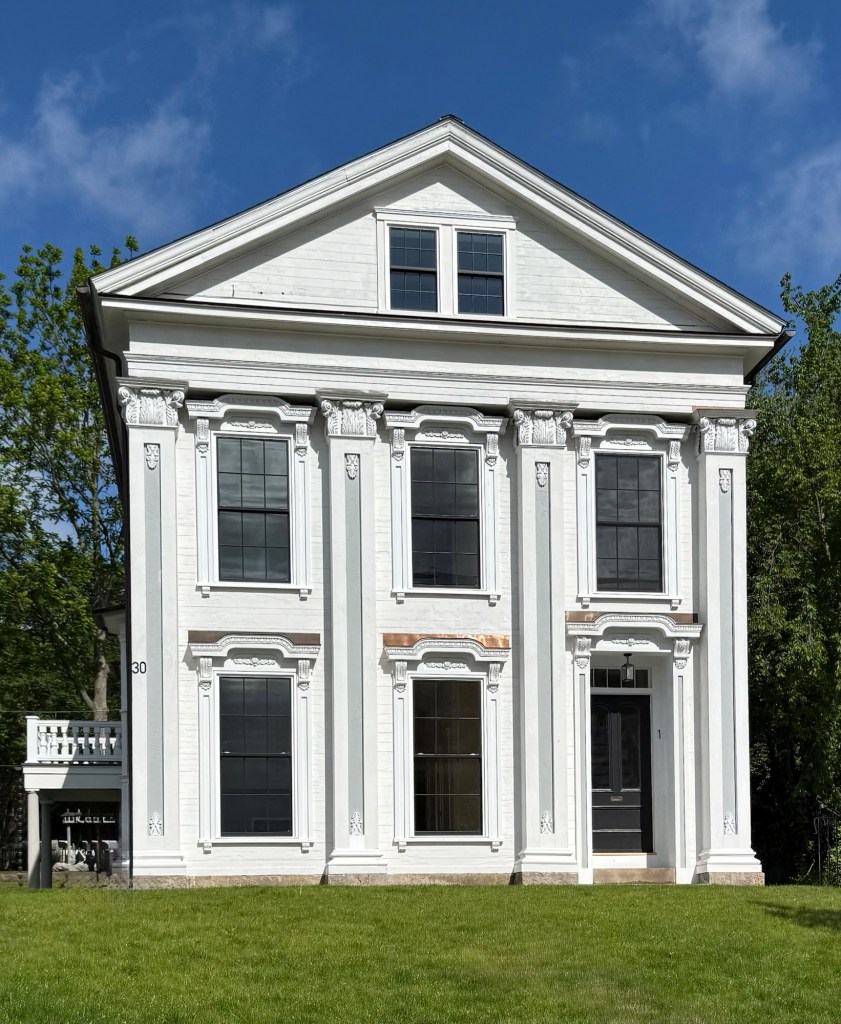
As the town of Westborough emerged from rural agricultural community to commercial center, connections to Worcester and Boston via rail service opened the town to prosperity. As businessmen accumulated wealth, these merchants built stately homes to showcase their position in the community. Before the Civil War, the Greek Revival style was ever-popular in Westborough, even though the style was already waning in popularity in larger cities. This is the Gilman Morse House, built around 1850 for Mr. Gilman Wood Morse (1810-1899) on East Main Street. Morse was a merchant in town and clearly did well for himself, building this stately house for his family. The residence is Greek Revival in style with its facade bays broken up by pilasters capped with Corinthian capitals adorned by acanthus leaves. The house also features ornate window and door hoods, showcasing the emerging Italianate style influence.

Sibley House – Westborough Historical Society Building // 1844

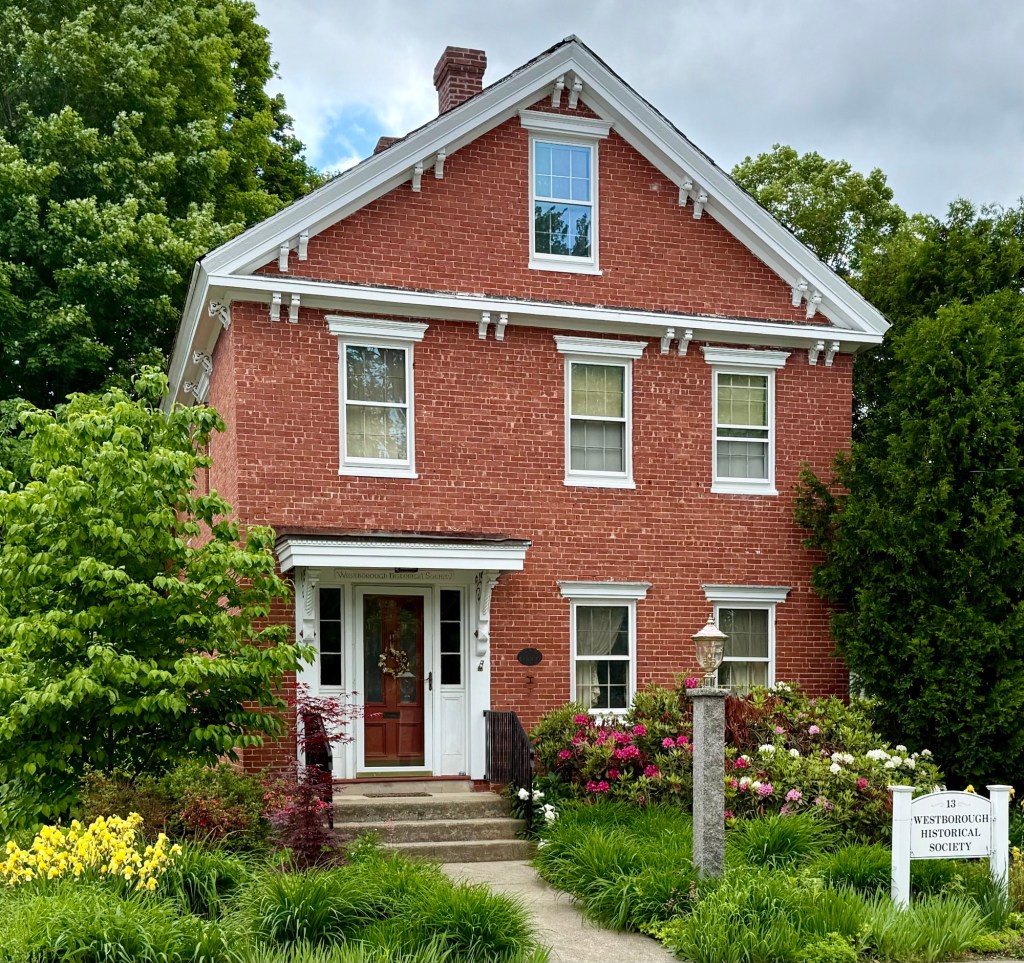
The Sibley House is a historic house museum as well as the headquarters of the Westborough Historical Society. Located on Parkman Street in the center of Westborough, Massachusetts, the transitional Greek Revival/Italianate style house was built in 1844, by William Sibley, who was a blacksmith and wheelwright. Soon after the house was built, William married Jane Caroline Gibson, and the couple raised five children here. William joined Westborough’s Company K, 13th Massachusetts Regiment during the Civil War and was wounded at Antietam. After the war, William returned home and he and his brother Frank began to manufacture sleighs.  At one point, they produced as many as 300 a year! The Sibley House was purchased by the Westborough Historical Society in 1990, nearly 100 years after the society was established in 1889. The house is open to visitors and provides a glimpse into daily life for Westborough citizens at the time. 

Westborough Rail Station // 1899

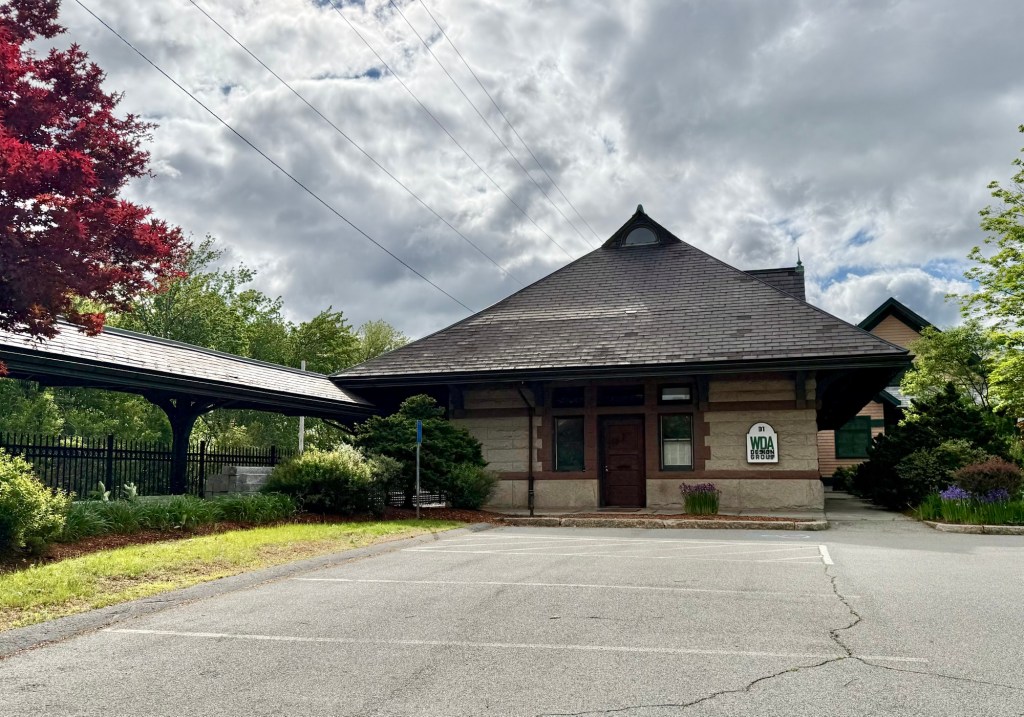
The Boston-Worcester Railroad roared into Westborough Square in 1834 and opened the once rural community to commerce and trade from its larger neighbors. The depot was in the center of the village and facilitated a development boom of commercial buildings. By the later 19th century, the Boston and Albany Railroad controlled the railway service and had built up an extensive passenger and freight service. The company sought to straighten out the track, thus increasing its speed and efficiency, so the B&A relocated the track in 1899 from the center of Westborough to its present elevated site on East Main Street, outside the commercial core of the town. The new station was built in 1899 and is a late example of the region’s many Richardsonian Romanesque stations, constructed of rusticated pale granite with contrasting brownstone trim; copper ornament; and a simple rectangular-plan structure topped by a low, overhanging hipped roof. Decades before this station was built, the Boston & Albany Railroad in 1881, hired renowned architect Henry Hobson Richardson to design a series of passenger stations. Over the next five years, Richardson was responsible for nine B&A stations, primarily closer to Boston and the nearer suburbs. After Richardson’s death in 1886, the B&A commissioned his successors, Shepley Rutan & Coolidge, to design 23 additional stations between 1886 and 1894. The unofficial style of B&A stations remained after 1894 and was employed in Westborough to a lesser ornate scale. Train service to town ceased here, but the tracks remain active. The former station was converted to office use. 

Westborough Arcade // 1890

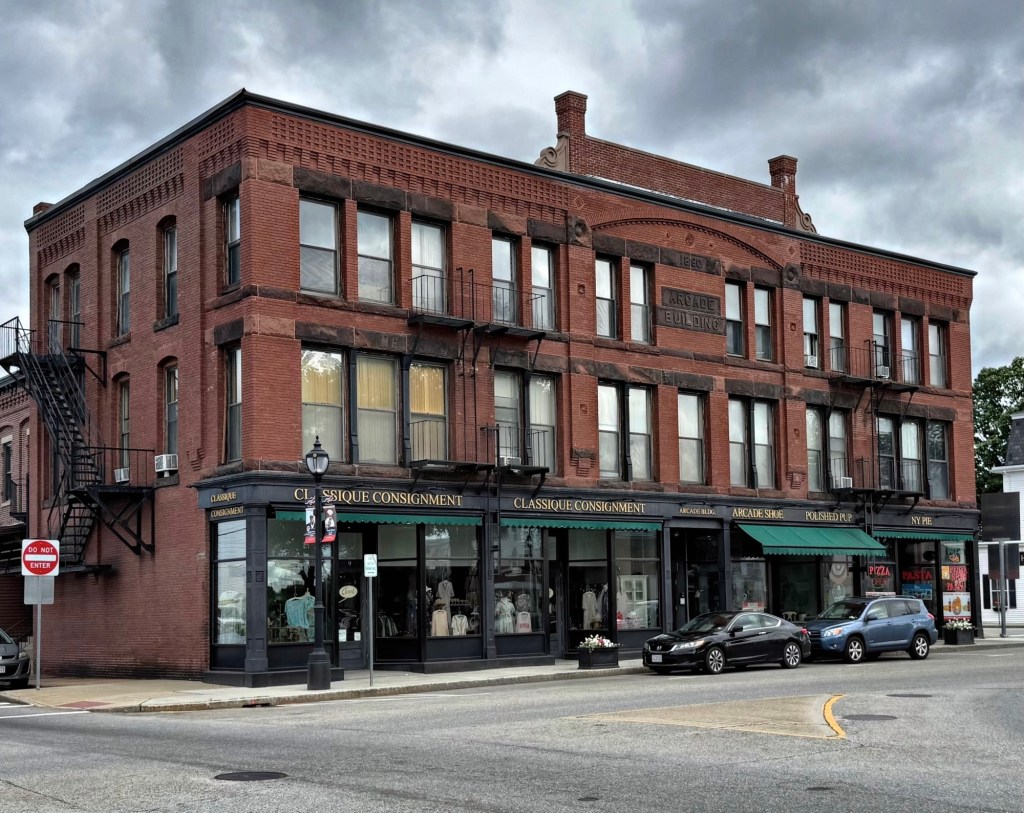
 The Second Meeting House of Westborough, Massachusetts, was built on this important site in the center of the village in 1749. It was a plain, wooden building and was used for both church services and town meetings, since church and state were essentially inseparable at the time. When a new church was built in 1837, this building was purchased and converted to commercial use. The first floor of the building was raised, and another floor was added underneath. The steeple was also removed. The building then became known as “The Arcade Building,” a kind of mall with small shops opening onto the porch. By the end of the 19th century, the old wooden building was nearing 150 years old and owners decided to demolish the structure, and replace it with a more permanent and stately block. The New Arcade was built in 1890 and is more Romanesque in style. The handsome brick block has retail spaces on the ground floor with residences above, a great example of mixed-use.

Harvey School // 1883

Built to meet the needs of an expanding and prosperous community, the Harvey School in Westborough, Massachusetts, was built as a neighborhood school and is both historically and architecturally significant. Located on Phillips Street, a residential, tree-lined street just north of the commercial center of town, the Harvey School was built in 1883 under the supervision of Dr. Edwin Bayard Harvey, a local doctor who served on the town’s School Committee and as superintendent of schools from 1887-1890. As a State Senator he introduced a bill in 1884, which became law, to provide free textbooks for schoolchildren of Massachusetts. The Queen Anne style school building was in plan, designed by Dr. Harvey, who hired the Worcester-based architectural firm of Barker & Nourse, to furnish plans and design the building itself. The school would eventually close in 1980 as many local schools were consolidated, and the building was rented to the Boy Scouts and the Westborough Community Chorus. Recent attention on the under-utilized building has initiated more discussion on the future of the building, which may eventually house a regional emergency communications center.